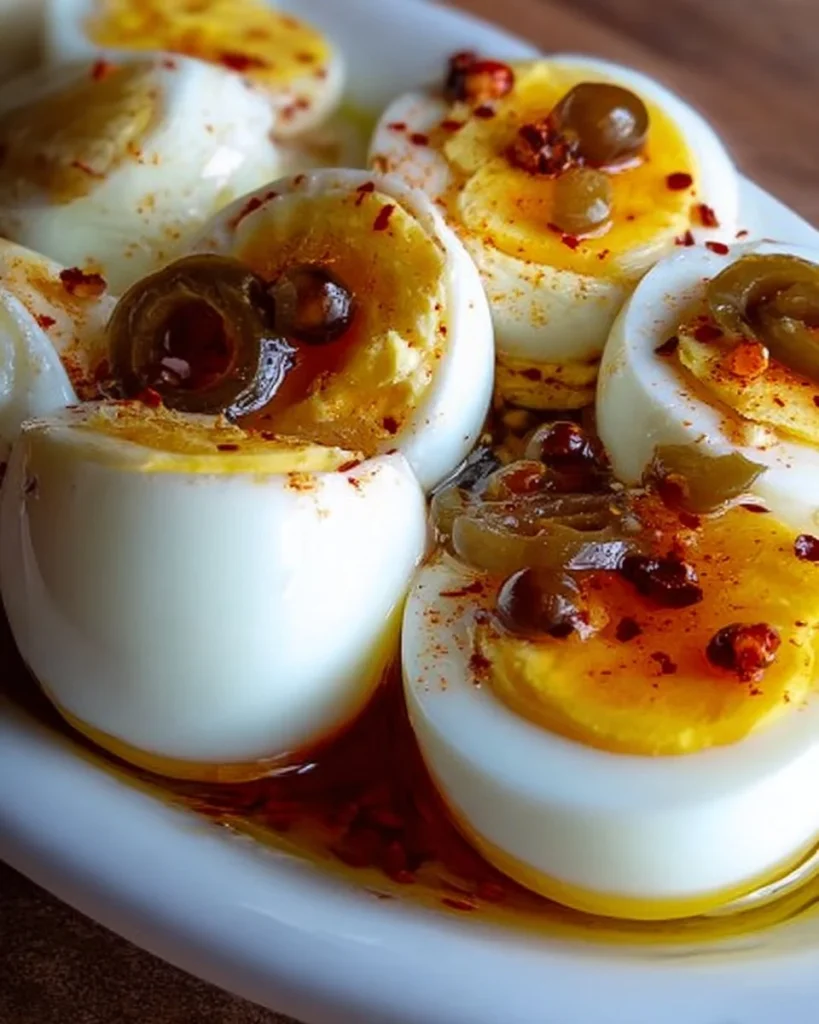
There’s something beautifully nostalgic about the sight and smell of classic pickled eggs. As you open a jar, your senses awaken with the tangy aroma of vinegar mixed with spices, evoking memories of summer picnics and cozy gatherings. The eggs, gleaming with a glossy sheen, beckon you closer, their vibrant hues reminding you that simple ingredients can create magic. A bite reveals a firm outer layer giving way to a tender, creamy yolk, beautifully infused with rich flavors. Each mouthful dances on your palate, a symphony of savory and zesty notes that leave you yearning for more.
For those who appreciate heartfelt flavors and delightful textures, pickled eggs deliver an unforgettable experience. Their delightful crunch and satisfying creaminess enhance any dish, transforming an everyday meal into something extraordinary. As you savor each bite, the subtle spiciness coupled with the refreshing tang creates a balance that’s nothing short of delightful. Whether enjoyed as a snack, an appetizer, or a side dish, these gems offer comfort and joy with every taste.
Why You’ll Love This Classic Pickled Eggs
Classic pickled eggs are more than just a culinary creation; they are a celebration of flavors, tradition, and versatility. These delightful treats shine at potluck gatherings, where they steal the spotlight, making friends and family ask for the recipe! Their incredible tanginess cuts through rich foods, making them ideal alongside barbecued meats or as a component in a vibrant salad.
Not only do they satisfy your taste buds, but they also offer a fun twist on protein-packed snacks. Each egg bursts with flavor yet remains low in calories, making them a guilt-free indulgence perfect for any occasion. Easy to prepare and budget-friendly, pickled eggs stand out as a remarkable way to prolong the life of hard-boiled eggs while adding an exciting layer of taste.
Preparation Phase & Tools to Use
To embark on your pickling adventure, gather a few essential tools that help streamline the process. Each item plays a vital role in crafting your savory masterpiece.
- Mason Jar: An airtight, clean glass jar holds the eggs and allows the brine to work its magic. Choose a jar big enough to fit all the eggs snugly.
- Saucepan: This is where you create your brine. A medium-sized saucepan allows for even heating and thorough mixing of your pickling ingredients.
- Ladle: Use a ladle to pour the hot brine over the eggs with precision, ensuring that each egg gets its fair share of flavor.
- Measuring Cups and Spoons: Accurate measurements lead to perfect flavor balances, so keep these handy.
Preparation tips include cleaning your jar thoroughly to ensure the integrity of your pickled eggs and using fresh spices for optimal flavor. When cooking eggs, a gentle boil ensures they cook evenly, resulting in perfectly hard-boiled eggs ready for your brine.
Ingredients for Classic Pickled Eggs
Creating these pickled delights is straightforward, requiring just a handful of ingredients:
- 6 hard-boiled eggs: The stars of the show. Fresh eggs with a nice yellow yolk provide a creamy texture.
- 1 cup vinegar: White vinegar offers a sharp tang, while apple cider vinegar presents a lighter, fruitier flavor. Feel free to experiment with both!
- 1/2 cup water: Diluting the vinegar balances the acidity, creating the perfect brine.
- 1 teaspoon salt: A crucial component that enhances flavors and contributes to the pickling process.
- 1 tablespoon sugar: This adds a subtle sweetness, beautifully complementing the vinegar.
- 1 teaspoon mustard seeds: Their warm, slightly spicy flavor heightens your pickling experience.
- 1 teaspoon peppercorns: These add warmth and complexity to the brine.
- 1-2 garlic cloves (optional): For added depth and a piquant kick, consider including garlic.
- 1 bay leaf (optional): A comforting hint of earthiness.
- Beet juice for color (optional): If you long for a vibrant hue, beet juice beautifully dyes the eggs.
How to Make Classic Pickled Eggs
Bringing this recipe to life is a rewarding experience. Follow these simple steps for perfectly pickled eggs:
-
Prepare the Eggs: Begin by placing your hard-boiled eggs into a clean mason jar, arranging them gently to avoid cracking.
-
Create the Brine: In a saucepan, combine the vinegar, water, salt, sugar, mustard seeds, and peppercorns. Optional ingredients like garlic and the bay leaf can join the party here, enhancing flavor.
-
Heat the Mixture: Place the saucepan on medium heat and bring the mixture to a gentle boil. Stir regularly until the salt and sugar dissolve, releasing enticing aromas that invite excitement.
-
Pour the Brine: Carefully ladle the hot brine over the eggs, ensuring they are fully submerged. If you’re aiming for those gorgeous colors, pour in a splash of beet juice, too.
-
Seal and Cool: Tightly seal the jar and allow it to cool at room temperature. As it cools, the flavors meld and deepen.
-
Refrigerate: Once cooled, transfer the jar to the refrigerator. Allow the eggs to pickle for at least 24 hours – the longer they sit, the more robust the flavor becomes.
Chef’s Notes & Helpful Tips
- Make-Ahead: These eggs can be made several days in advance. They only get better over time, making them perfect for meal prep or parties.
- Cooking Alternatives: If you prefer less hands-on work, try using an air fryer or oven to cook the eggs more gently, preventing cracks that can impact the brining process.
- Customization Ideas: Infuse your brine with fresh herbs like dill or tarragon for a fresh twist. You can also incorporate slices of onion or jalapeño for an extra kick!
Common Mistakes to Avoid
Creating mouthwatering pickled eggs is simple, but a few common pitfalls can derail your efforts. Keep these tips in mind:
- Overcooking Eggs: Avoid boiling eggs too long, leading to a greenish-gray ring around the yolk and a sulfuric taste. Perfectly hard-boiled eggs should cook for about 9-12 minutes.
- Skipping the Cool Down: Pouring hot brine directly into a room-temperature jar can cause it to shatter. Allow the brine to cool slightly before pouring.
- Insufficient Pickling Time: For maximum flavor infusion, don’t skip the wait. Patience yields rich, tangy goodness.
What to Serve With Classic Pickled Eggs
These vibrant gems shine bright when paired with various dishes, enhancing your culinary spread. Enjoy these serving suggestions:
- Salads: Toss sliced pickled eggs into a green salad for a delightful twist.
- Charcuterie Board: Lay them alongside meats, cheeses, and artisanal breads for an impressive centerpiece.
- Deviled Eggs: Use pickled eggs to create a unique version of this classic appetizer with a tangy bite.
- Sandwiches: Layer them into sandwiches for an unexpected crunch and vibrant flavor.
- Tacos: Add slices to fish or meat tacos for a zesty complement.
- Breakfast Bowls: Incorporate them into grain or veggie bowls for protein and flavor.
- Snacks: Enjoy them solo as a satisfying, protein-rich snack!
Storage & Reheating Instructions
Store your pickled eggs in the fridge. They can last up to 3-4 months, provided the eggs remain submerged in brine. For optimal freshness, skip the freezer; thawing can detract from their delightful texture.
Simply enjoy them cold straight out of the jar or slice them into salads and sandwiches.
Estimated Nutrition Information
Approximate values per pickled egg:
- Calories: 80
- Protein: 7g
- Fat: 5g
- Carbohydrates: 1g
- Sodium: 150mg
(Note: Values may vary based on specific ingredients and brands used.)
FAQs
Can I use fresh eggs for pickling?
Fresh eggs have thick membranes, making them harder to peel. It’s best to use eggs that are a week or two old for easier peeling.
How long will pickled eggs stay good?
If stored properly in the refrigerator, pickled eggs can last up to 3-4 months.
Do pickled eggs need to be pasteurized?
No, the combination of vinegar, salt, and sugar acts as a natural preservative that prevents bacterial growth.
Can I use other types of vinegar?
Absolutely! Experimenting with rice vinegar or red wine vinegar can yield delightful variations, each with its distinct flavor profile.
Why are my pickled eggs turning grey?
If you overboil the eggs or don’t let the brine cool before pouring, gray rings may form around the yolk due to a reaction between the iron in the yolk and sulfur in the white.
Conclusion
Classic pickled eggs are a delightful testament to the power of simple ingredients. As you sit down to enjoy these tangy bites, allow yourself to relish the flavors and memories they invoke. Gather your loved ones, share stories, and indulge in this timeless treat that promises to elevate your dining experience. With their irresistible tang and creamy texture, pickled eggs will find a cherished spot in your culinary repertoire. So don your apron, grab those eggs, and embark on this flavor-packed adventure today! You won’t regret it.
Print
Classic Pickled Eggs
- Total Time: 30 minutes
- Yield: 6 servings 1x
- Diet: Vegetarian
Description
Tangy and flavorful pickled eggs that are perfect for snacks, appetizers, or side dishes.
Ingredients
- 6 hard-boiled eggs
- 1 cup vinegar
- 1/2 cup water
- 1 teaspoon salt
- 1 tablespoon sugar
- 1 teaspoon mustard seeds
- 1 teaspoon peppercorns
- 1–2 garlic cloves (optional)
- 1 bay leaf (optional)
- Beet juice for color (optional)
Instructions
- Prepare the eggs: Begin by placing your hard-boiled eggs into a clean mason jar, arranging them gently to avoid cracking.
- Create the brine: In a saucepan, combine the vinegar, water, salt, sugar, mustard seeds, and peppercorns. Optional ingredients like garlic and the bay leaf can join the party here, enhancing flavor.
- Heat the mixture: Place the saucepan on medium heat and bring the mixture to a gentle boil. Stir regularly until the salt and sugar dissolve.
- Pour the brine: Carefully ladle the hot brine over the eggs, ensuring they are fully submerged. Pour in a splash of beet juice if desired.
- Seal and cool: Tightly seal the jar and allow it to cool at room temperature.
- Refrigerate: Once cooled, transfer the jar to the refrigerator. Allow the eggs to pickle for at least 24 hours.
Notes
These eggs can be made several days in advance. They improve in flavor the longer they sit.
- Prep Time: 15 minutes
- Cook Time: 15 minutes
- Category: Appetizer
- Method: Pickling
- Cuisine: American
Nutrition
- Serving Size: 1 egg
- Calories: 80
- Sugar: 1g
- Sodium: 150mg
- Fat: 5g
- Saturated Fat: 1g
- Unsaturated Fat: 4g
- Trans Fat: 0g
- Carbohydrates: 1g
- Fiber: 0g
- Protein: 7g
- Cholesterol: 186mg
Keywords: pickled eggs, snack, appetizer, potluck, tangy, easy recipe