Ingredients
For the Focaccia
- 3 cups (375 g) all-purpose flour
- 1½ cups (360 ml) lukewarm water
- 2 tsp (7 g) instant yeast
- 1½ tsp salt
- 3 tbsp olive oil, plus more for the pan and topping
For the Topping
- 1–2 tbsp fresh rosemary, finely chopped
- Flaky sea salt, for sprinkling
Ingredient Notes and Smart Substitutions
All-purpose flour. All-purpose flour works beautifully here and keeps the recipe accessible. If you want a chewier crumb with bigger holes, you can swap in bread flour, which has a higher protein content. Because bread flour absorbs a little more water, you may find the dough slightly stiffer, but it should still be soft and sticky.
Lukewarm water. Aim for roughly 100-110°F (38-43°C): warm to the touch, never hot. Water that is too hot can kill the yeast, and water that is too cold will slow the rise considerably.
Instant yeast. Instant yeast can be mixed directly with the liquid or flour. If you only have active dry yeast, you can use the same amount, but allow the yeast to sit in the warm water for a few extra minutes until foamy, and expect the rise to take a little longer.
Olive oil. Since olive oil is a star flavor here, use a good-quality extra-virgin olive oil. Do not be shy with it. The oil in the pan is what fries the bottom of the bread into a golden, crisp crust.
Fresh rosemary. Fresh herbs make a real difference in aroma. If you must use dried rosemary, use about one-third of the amount and crumble it between your fingers first.
Flaky sea salt. Flaky salt such as Maldon gives crunchy bursts of flavor. Coarse kosher salt is an acceptable substitute, but use a lighter hand.
Instructions
In a large mixing bowl, combine the lukewarm water and instant yeast and let it sit for 2-3 minutes. Add the flour, salt, and 3 tablespoons of olive oil. Stir with a wooden spoon or sturdy spatula until all the flour is incorporated and a soft, sticky dough forms.
There is no need to knead. Simply mix until no dry patches remain. The dough will look shaggy and wet, and that is exactly what you want. Resist the urge to add extra flour; the high hydration is the secret to a light, open crumb.
Cover the bowl loosely with plastic wrap or a clean kitchen towel. Place it in a warm, draft-free spot and let the dough rise for about 1 to 1½ hours, or until it has doubled in size and looks bubbly on the surface.
If your kitchen is cool, try placing the bowl in an oven that is turned off with only the light on, or near (not on) a warm appliance. A longer rise in a cooler room is perfectly fine; just wait for the visual cues rather than watching the clock.
Generously coat a 9×13-inch baking pan with olive oil, covering the bottom and sides. Then drizzle a little extra oil across the bottom of the pan. This may look like a lot, but it is what creates a beautifully crisp, golden, almost fried crust on the underside of the focaccia.
Drizzle a little olive oil over your hands so the sticky dough does not cling to them. Gently transfer the risen dough into the prepared pan. Using your fingertips, carefully stretch the dough toward the edges.
If the dough resists or springs back, stop and let it rest for about 10 minutes, then try again. Gluten needs a moment to relax. Allow the dough to settle naturally rather than forcing it into the corners. It will continue to spread as it rises.
Cover the pan loosely with a clean towel or plastic wrap and let the dough rise again for 30-45 minutes, until it looks noticeably puffy and airy. While it rests, preheat your oven to 425°F (220°C).
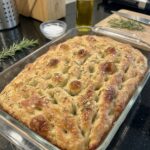
Drizzle the surface generously with olive oil. With well-oiled fingertips, press deep dimples all over the dough, pushing down toward the bottom of the pan without fully deflating it. These dimples catch pools of olive oil and give focaccia its classic look and texture.
Scatter the finely chopped fresh rosemary evenly across the surface. Drizzle with a little more olive oil, letting some settle into the dimples, then finish with a generous but even sprinkle of flaky sea salt.
Place the pan in the preheated oven and bake for 22-28 minutes, until the focaccia is deeply golden brown, puffed, and crisp around the edges. The bottom should be lightly crisp while the inside stays soft, tender, and airy.
Remove the pan from the oven and let the focaccia rest for about 10 minutes. Carefully transfer it to a cutting board and slice into squares or long strips. Serve warm for the best flavor and texture.