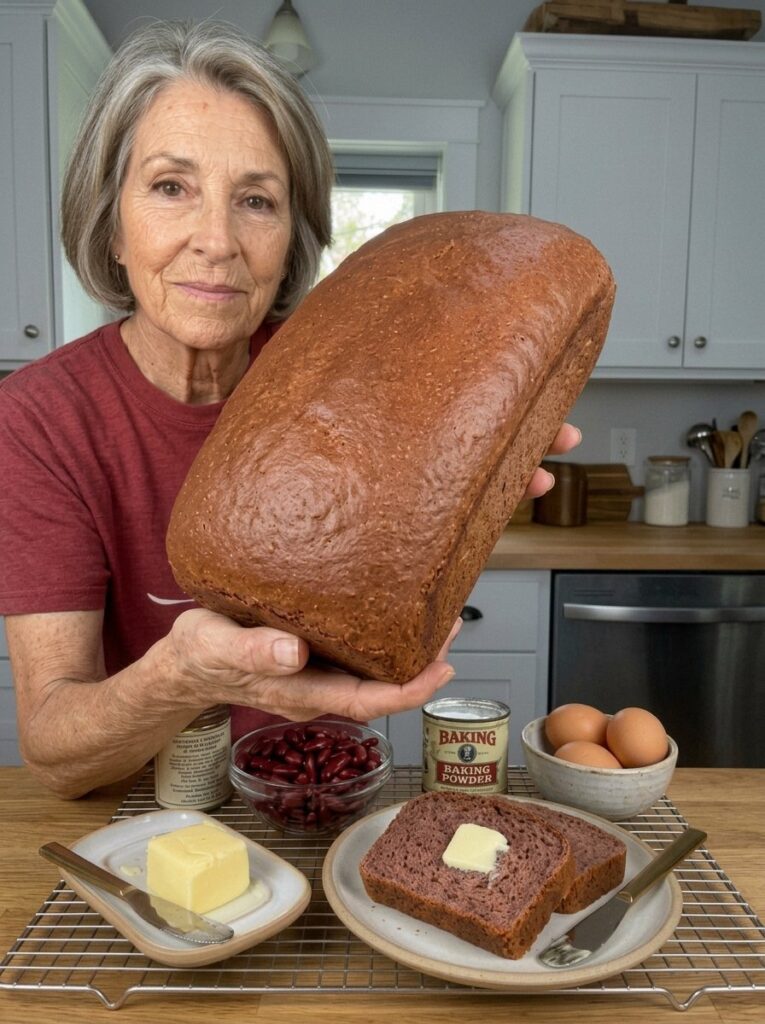
If you’ve ever wished for a simple loaf that gives you real protein in every slice, without special flours, yeast, or complicated steps, this 3-ingredient high-protein kidney bean bread is worth trying. It uses cooked kidney beans, eggs, and baking powder, and a blender does most of the work.
The result is a dense, moist, sliceable loaf with a deep reddish-brown crust and a soft, tender crumb. It toasts well, holds spreads nicely, and works for breakfast, lunch, or a light dinner.
This guide covers the full recipe, why it works, how to get the best texture, how to store it, serving ideas, variations, and answers to common questions.
What Is Kidney Bean Bread?
Kidney bean bread is a flourless, bean-based loaf. Instead of wheat flour, cooked kidney beans are blended into a smooth batter and bound with eggs. Baking powder gives it lift so it bakes up into a loaf rather than a dense brick.
Legumes in baking are not a new idea. Bean-based brownies, blondies, and flatbreads have been popular for years, and this recipe applies the same logic to a sandwich-style loaf. Kidney beans are a good choice because they are:
- Sturdy and starchy, which helps the loaf hold together
- Mild in flavor once blended and baked
- Rich in protein and fiber
- Inexpensive and easy to find, especially canned
The deep red color of the beans also gives the loaf its distinctive brown-mauve crumb, as you can see in the finished loaf pictured above.
Why You’ll Love This Recipe
1. It really is just three ingredients
Cooked kidney beans, eggs, and baking powder. No flour, no yeast, no sugar, no oil in the batter, and no proofing time.
2. It’s high in protein
Both main ingredients contribute protein. The eggs add complete protein and structure, and the beans add plant protein and fiber. Together they make a loaf that is far more filling than a typical slice of white sandwich bread.
3. It’s naturally flourless
There is no wheat flour in the recipe, which makes it a convenient option for people who limit refined flour. If you need it strictly gluten-free, check that your canned beans and baking powder are labeled gluten-free, since cross-contamination can occur during processing.
4. It takes about an hour, start to finish
Roughly 10 minutes of prep, 30–40 minutes of baking, and about 20 minutes of cooling.
5. It’s meal-prep friendly
The loaf slices neatly, refrigerates for several days, and freezes well, so you can bake once and have bread ready for the week.
Ingredients
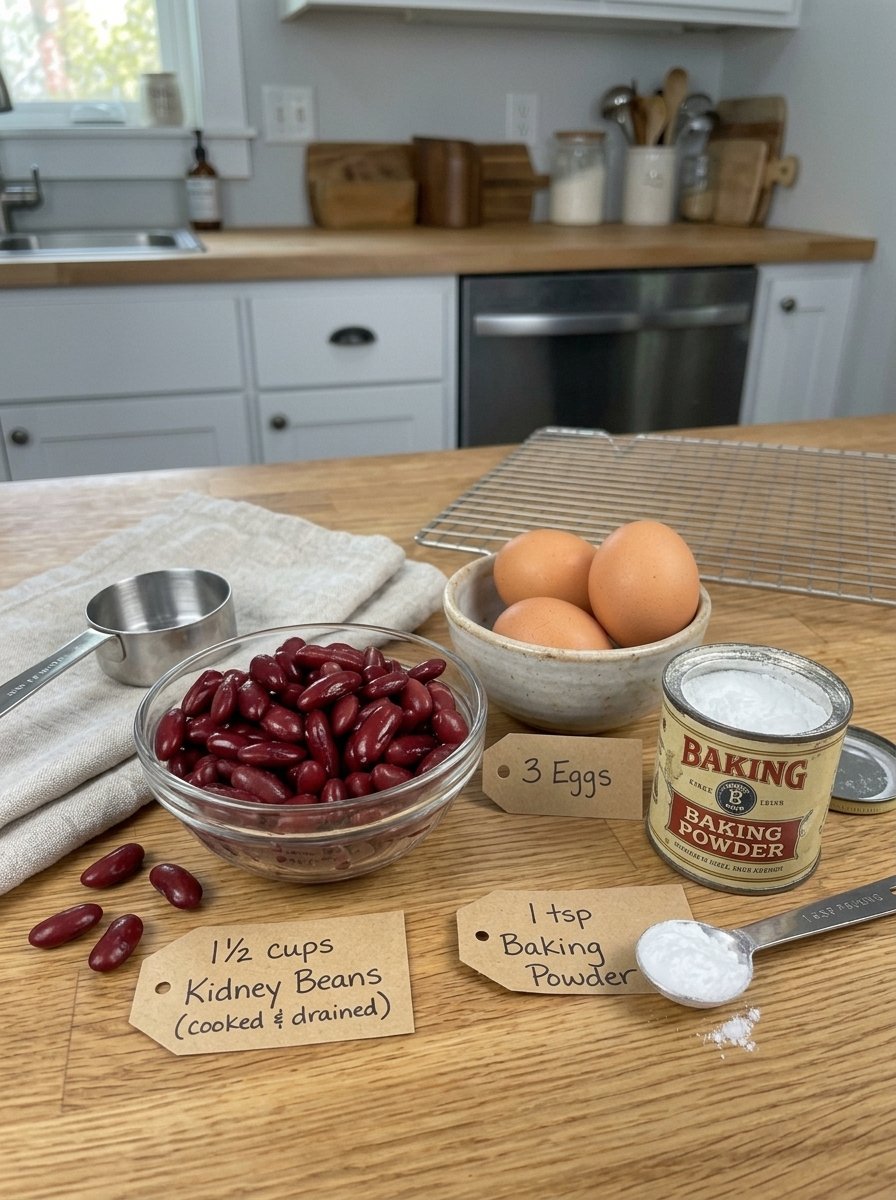
You only need three things:
- 1½ cups (about 250 g) cooked kidney beans, drained and rinsed
- 3 large eggs
- 1 tsp (5 g) baking powder
You’ll also need a little oil or butter, or a sheet of parchment paper, for the loaf pan.
A note on the beans
Canned kidney beans are the easiest option. They are already fully cooked, which matters for safety (see the safety section below). If you cook dried beans yourself, make sure they are boiled until completely soft, then drain and cool them before measuring.
A note on the eggs
Use large eggs at room temperature if you can. Room-temperature eggs blend more evenly into the beans and help produce a smoother batter.
A note on the baking powder
Check that your baking powder is fresh. Old baking powder loses strength, and your loaf may bake up flatter and denser. A quick test is to stir a little into hot water. If it fizzes right away, it’s still active.
Equipment
- Blender or food processor
- Small loaf pan, about 8×4 inches (20×10 cm)
- Parchment paper (optional but helpful)
- Spatula
- Clean kitchen towel or paper towels
- Wire cooling rack
- Serrated knife
How to Make 3-Ingredient Kidney Bean Bread
Step 1: Prepare the kidney beans
Preheat your oven to 350°F (175°C).
Lightly grease a small loaf pan, or line it with parchment paper so the loaf lifts out easily later.
Drain the kidney beans and rinse them thoroughly under cold water. This removes the canning liquid and excess salt. Then pat the beans gently with a clean kitchen towel or paper towel to remove surface moisture. This step matters because extra water makes the batter too thin, and a wet batter can lead to a gummy center.
Step 2: Blend the ingredients
Add the kidney beans, eggs, and baking powder to a blender or food processor.
Blend for 1–2 minutes, stopping to scrape down the sides as needed. You want a mixture that is very smooth and creamy, with no large pieces of bean left. The batter should be thick but pourable, similar to a thick pancake batter or cake batter.
If you see skin fragments or bean chunks, keep blending. A smoother batter gives a softer, more even loaf.
Step 3: Transfer to the pan
Pour the batter into your prepared loaf pan. Use a spatula to smooth the top into an even layer, then tap the pan lightly on the counter once or twice to release any large air bubbles.
Step 4: Bake
Place the pan in the preheated oven and bake for 30–40 minutes, until the bread is firm in the center and lightly golden around the edges. A toothpick inserted into the center should come out mostly clean.
Oven temperatures vary, so start checking around the 30-minute mark. Overbaking is the most common way to end up with a dry loaf.
Step 5: Cool the bread
Remove the pan from the oven and let the loaf cool in the pan for about 10 minutes. Then carefully lift it out and transfer it to a wire rack to cool completely.
Don’t skip this. The crumb continues to set as it cools, and slicing too early can cause crumbling or a damp, sticky center.
Step 6: Slice and serve
Once fully cool, use a sharp serrated knife to cut even slices. Serve fresh, or toast the slices for a firmer, slightly crisp texture. A thin pat of butter melts nicely on a warm slice, as shown in the photo.
Tips for the Best Kidney Bean Bread
Drain and dry the beans well. Excess moisture is the biggest threat to texture. After rinsing, pat the beans dry.
Rinse canned beans thoroughly. Rinsing removes extra sodium and the starchy liquid that can affect flavor and moisture.
Blend until completely smooth. The smoother the batter, the more uniform and soft the loaf. If your blender struggles, add the eggs first, then the beans, so the liquid helps the blades catch.
Don’t overbake. When the center is firm and the toothpick comes out mostly clean, take it out. The loaf keeps cooking from residual heat.
Cool before slicing. This is the key to clean slices and a properly set center.
Toast for best texture. Toasting turns the slightly soft crumb into something crisp outside and tender inside, and it’s especially good with savory toppings.
Important Food Safety Note About Kidney Beans
Raw or undercooked kidney beans contain a natural compound called phytohaemagglutinin, which can cause nausea, vomiting, and stomach upset. This is why kidney beans must be fully cooked before eating.
- Canned kidney beans are already cooked and safe to use as directed.
- Dried kidney beans must be soaked and then boiled thoroughly until completely tender before you use them in this recipe. Do not rely on a slow cooker at low temperatures, as it may not reach a high enough temperature to neutralize the compound.
Since this recipe bakes a blended batter, always start with beans that are already fully cooked.
Nutrition Overview
Exact numbers depend on your beans and eggs, but here is a rough estimate for the whole loaf and per slice, assuming 8–10 slices:
| Whole loaf (approx.) | Per slice (approx.) | |
|---|---|---|
| Calories | 530–560 | 55–70 |
| Protein | 40 g | 4–5 g |
| Carbohydrates | 60 g | 6–7 g |
| Fiber | 15 g | 1.5–2 g |
| Fat | 15 g | 1.5–2 g |
These are estimates only. For precise values, enter your specific products into a nutrition calculator. The takeaway is that this bread is low in calories per slice while still delivering protein and fiber, which makes it satisfying.
What Does It Taste Like?
Expect a mild, savory, slightly earthy flavor. It is not sweet, and it doesn’t taste strongly of beans once baked, though a subtle bean note is there. The texture is closer to a dense, moist quick bread or a savory sponge than to a fluffy yeast loaf.
It won’t behave exactly like wheat bread. It is softer, more tender, and more delicate. Treat it as a high-protein bread alternative rather than an exact replica of a bakery sandwich loaf, and you’ll enjoy it more.
Serving Ideas
Here are easy ways to enjoy your kidney bean bread:
1. Savory toast. Toast a slice and top it with avocado, a fried or soft-boiled egg, and a pinch of salt and pepper.
2. Cottage cheese toast. Spread cottage cheese on a toasted slice and add sliced tomato, cucumber, and herbs for a high-protein snack.
3. Simple high-protein sandwich. Use two slices with turkey, chicken, tuna salad, or egg salad, plus lettuce and tomato.
4. Open-faced veggie toast. Layer hummus, roasted vegetables, or sliced peppers on top, with a little cheese if you like.
5. Alongside soup or salad. A slice or two makes a hearty side for tomato soup, lentil soup, chili, or a big green salad.
6. Buttered and warm. Sometimes the simplest option wins. Warm slice, a little butter, done.
7. Meal-prep portions. Slice and freeze individual portions so you can pull out a slice and toast it straight from frozen.
Easy Variations to Try
The base recipe is intentionally minimal, but once you’ve made it, you can customize it. These are optional additions that go beyond the three-ingredient version:
- Herbed loaf: Blend in a teaspoon of dried oregano, thyme, or Italian seasoning.
- Garlic and onion: Add ½ teaspoon of garlic powder and onion powder for a savory profile.
- Cheesy loaf: Stir in a handful of shredded cheese after blending.
- Seeded top: Sprinkle sesame, sunflower, or pumpkin seeds over the batter before baking.
- Spiced version: Add a pinch of paprika, cumin, or chili flakes.
- A little salt: A small pinch of salt can lift the flavor, especially if you rinse the beans well.
Keep in mind that every addition changes the texture slightly, so start small.
Troubleshooting Common Problems
My loaf is too wet or gummy in the middle.
The beans were probably too wet, or the loaf was sliced before it cooled. Dry the beans well, bake until the center is firm, and cool completely.
My loaf is dry.
It was likely overbaked. Check it earlier next time and remove it as soon as the center is firm.
My loaf is flat or dense.
Check that your baking powder is fresh. Also make sure the batter was blended thoroughly and don’t leave it sitting for a long time before baking.
There are bean pieces in the bread.
Blend longer and scrape the sides of the blender. A food processor may leave a coarser texture than a high-speed blender.
It crumbles when I slice it.
Cool it completely and use a sharp serrated knife with a gentle sawing motion.
It stuck to the pan.
Line the pan with parchment paper or grease it well.
Storage Instructions
Refrigerator
Store the completely cooled bread in an airtight container in the refrigerator for up to 4 days. Because it is egg-based and moist, refrigeration is the safest choice rather than leaving it on the counter.
Freezer
For longer storage, slice the loaf and place a piece of parchment paper between slices. Transfer them to a freezer-safe bag or container and freeze for up to 2 months.
Thawing and reheating
Thaw slices in the refrigerator or at room temperature, then toast them for the best texture. You can also toast straight from frozen, adding a minute or so.
Time and Yield
- Prep time: About 10 minutes
- Cooking time: 30–40 minutes
- Cooling time: About 20 minutes
- Total time: About 1 hour
- Yield: 1 small loaf, approximately 8–10 slices
Who Is This Bread Good For?
This loaf can suit a range of eating styles:
- People who want more protein at breakfast or lunch
- People limiting refined flour or grains
- Meal preppers who want a make-ahead bread
- Budget-conscious cooks, since the ingredients are inexpensive
- Beginner bakers, since there is no kneading, rising, or shaping
If you have an egg or legume allergy, this recipe is not suitable. If you manage a medical condition or follow a specific therapeutic diet, check with your healthcare provider about whether this fits your needs.
Frequently Asked Questions
Can I use canned kidney beans?
Yes. Canned beans are the easiest option. Drain and rinse them well, then pat them dry.
Can I use dried kidney beans?
Yes, but they must be fully cooked first. Soak them, boil them until completely tender, drain, cool, and measure 1½ cups before using.
Can I use other beans?
Other soft, cooked beans such as black beans, pinto beans, or white beans can work, though the color, flavor, and moisture level will vary. You may need to adjust how well you dry the beans.
Does it taste like beans?
It has a mild, earthy, savory flavor. Most people find it pleasant, especially when toasted and topped with something flavorful.
Is this bread gluten-free?
The recipe contains no wheat flour, so it is naturally flourless. If you need to avoid gluten strictly, confirm that your canned beans and baking powder are labeled gluten-free.
Can I make it without a blender?
A blender or food processor works best. You could mash the beans extensively by hand, but the texture will be coarser and less loaf-like.
Can I double the recipe?
Yes, but use a larger loaf pan and expect a longer bake time. Check for doneness with a toothpick and keep an eye on the center.
Why do I need to let it cool completely?
The structure continues to set as the loaf cools. Cutting too early can make the center seem wet and cause the slices to fall apart.
Can I freeze kidney bean bread?
Yes. Slice it, separate the slices with parchment, and freeze for up to 2 months.
How do I know when it’s done?
The center should feel firm, the edges should be lightly golden, and a toothpick inserted into the middle should come out mostly clean.
Can I add flavorings?
Yes. Herbs, spices, garlic powder, or cheese are good additions. Add them in small amounts so the batter stays balanced.
Final Thoughts
This 3-ingredient high-protein kidney bean bread shows how far a few simple ingredients can go. With beans, eggs, and baking powder, you get a flourless loaf that is filling, flexible, and easy to prepare ahead. The keys are well-drained beans, a very smooth batter, careful baking, and patience while it cools.
Once you’ve mastered the base recipe, try it toasted with avocado and egg, as a sandwich bread, or alongside a warm bowl of soup. Bake a loaf on the weekend, slice and freeze it, and you’ll have a high-protein option ready all week.
If you try it, leave a comment with how it turned out and what you topped it with.
Print
3-Ingredient High-Protein Kidney Bean Bread
Ingredients
You only need three things:
- 1½ cups (about 250 g) cooked kidney beans, drained and rinsed
- 3 large eggs
- 1 tsp (5 g) baking powder
You’ll also need a little oil or butter, or a sheet of parchment paper, for the loaf pan.
A note on the beans
Canned kidney beans are the easiest option. They are already fully cooked, which matters for safety (see the safety section below). If you cook dried beans yourself, make sure they are boiled until completely soft, then drain and cool them before measuring.
A note on the eggs
Use large eggs at room temperature if you can. Room-temperature eggs blend more evenly into the beans and help produce a smoother batter.
A note on the baking powder
Check that your baking powder is fresh. Old baking powder loses strength, and your loaf may bake up flatter and denser. A quick test is to stir a little into hot water. If it fizzes right away, it’s still active.
Instructions
Preheat your oven to 350°F (175°C).
Lightly grease a small loaf pan, or line it with parchment paper so the loaf lifts out easily later.
Drain the kidney beans and rinse them thoroughly under cold water. This removes the canning liquid and excess salt. Then pat the beans gently with a clean kitchen towel or paper towel to remove surface moisture. This step matters because extra water makes the batter too thin, and a wet batter can lead to a gummy center.
Add the kidney beans, eggs, and baking powder to a blender or food processor.
Blend for 1–2 minutes, stopping to scrape down the sides as needed. You want a mixture that is very smooth and creamy, with no large pieces of bean left. The batter should be thick but pourable, similar to a thick pancake batter or cake batter.
If you see skin fragments or bean chunks, keep blending. A smoother batter gives a softer, more even loaf.
Pour the batter into your prepared loaf pan. Use a spatula to smooth the top into an even layer, then tap the pan lightly on the counter once or twice to release any large air bubbles.
Place the pan in the preheated oven and bake for 30–40 minutes, until the bread is firm in the center and lightly golden around the edges. A toothpick inserted into the center should come out mostly clean.
Oven temperatures vary, so start checking around the 30-minute mark. Overbaking is the most common way to end up with a dry loaf.
Remove the pan from the oven and let the loaf cool in the pan for about 10 minutes. Then carefully lift it out and transfer it to a wire rack to cool completely.
Don’t skip this. The crumb continues to set as it cools, and slicing too early can cause crumbling or a damp, sticky center.
Once fully cool, use a sharp serrated knife to cut even slices. Serve fresh, or toast the slices for a firmer, slightly crisp texture. A thin pat of butter melts nicely on a warm slice, as shown in the photo.