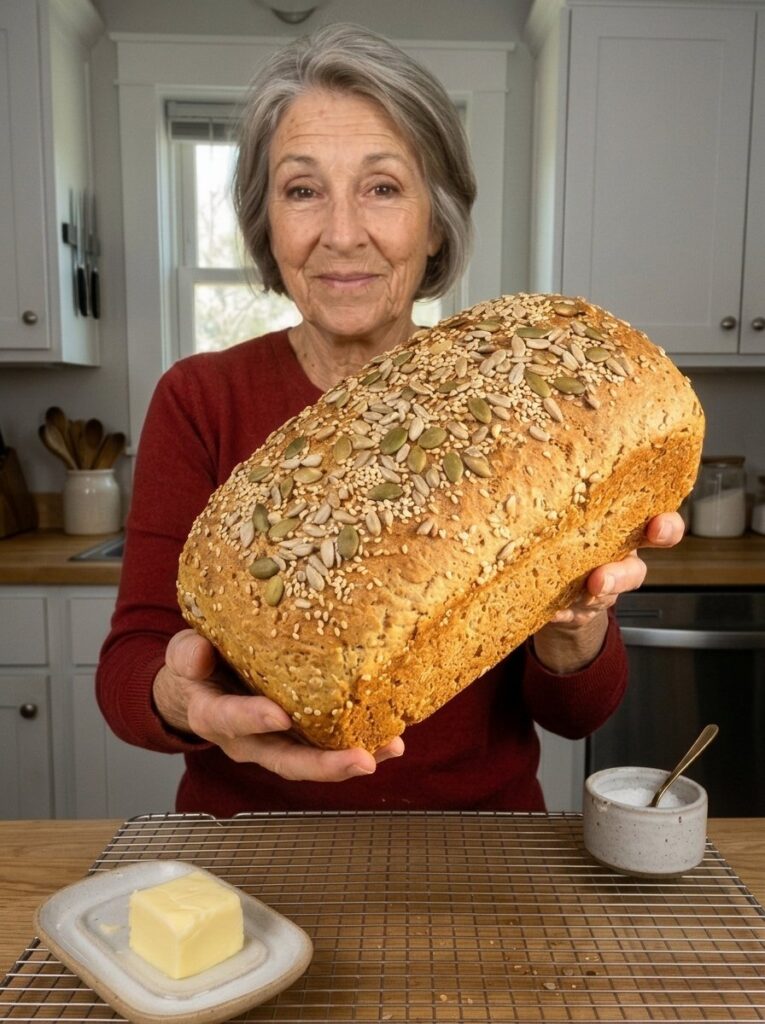
If you have ever wished you could pull a warm, homemade loaf out of the oven without proofing dough, kneading for ten minutes, or waiting hours for anything to rise, this 3-ingredient oat flour bread is for you. It is a simple, hearty, tender loaf made from finely ground oat flour, eggs, and baking powder. You whisk, mix, pour, and bake. That is the whole method.
The result is a golden, seed-topped loaf with a naturally nutty flavor and a satisfying, slightly dense crumb. It slices well once cooled, toasts beautifully, and works for everything from avocado toast to a soup-side companion. In this guide, you will find the full recipe, the reasons it works, practical tips for the best texture, serving ideas, storage instructions, substitutions, and answers to the most common questions.
Why You Will Love This Oat Flour Bread
There are plenty of quick breads out there, but this one stands out for a few reasons.
- Only three core ingredients. Oat flour, eggs, and baking powder do all the heavy lifting. Salt and seeds are optional extras that add flavor and crunch.
- No yeast. You do not need to activate anything, wait for a rise, or worry about the temperature of your kitchen.
- No kneading. There is no dough to work. The batter is mixed in one bowl with a spatula or whisk.
- Beginner friendly. If you can crack an egg and stir, you can make this bread.
- Naturally gluten-free when you choose the right oats. Oats do not contain wheat gluten, so using certified gluten-free oat flour makes this loaf suitable for people avoiding gluten.
- Great for meal prep. The loaf freezes well when sliced, so you can toast a piece whenever you want one.
- Hearty and satisfying. The eggs give the loaf structure and moisture, while the oats provide a mild, nutty flavor that feels wholesome.
What Is Oat Flour Bread?
Oat flour bread is a loaf made with ground oats in place of wheat flour. Because oat flour does not contain the gluten network that gives traditional bread its chew and rise, recipes need a different way to build structure. In this recipe, that job belongs to the eggs. When whisked well and baked, eggs set into a firm, tender framework that holds the oat flour together. Baking powder adds a little lift, so the loaf is not a dense brick.
This makes the bread a yeast-free quick bread, closer in method to banana bread or cornbread than to a sourdough or sandwich loaf. The texture is tender, moist, and slightly dense, with a mild, naturally savory flavor. It is not trying to imitate fluffy white bread, and that is part of its charm. It is its own thing: hearty, rustic, and delicious.
Ingredients for 3-Ingredient Oat Flour Bread
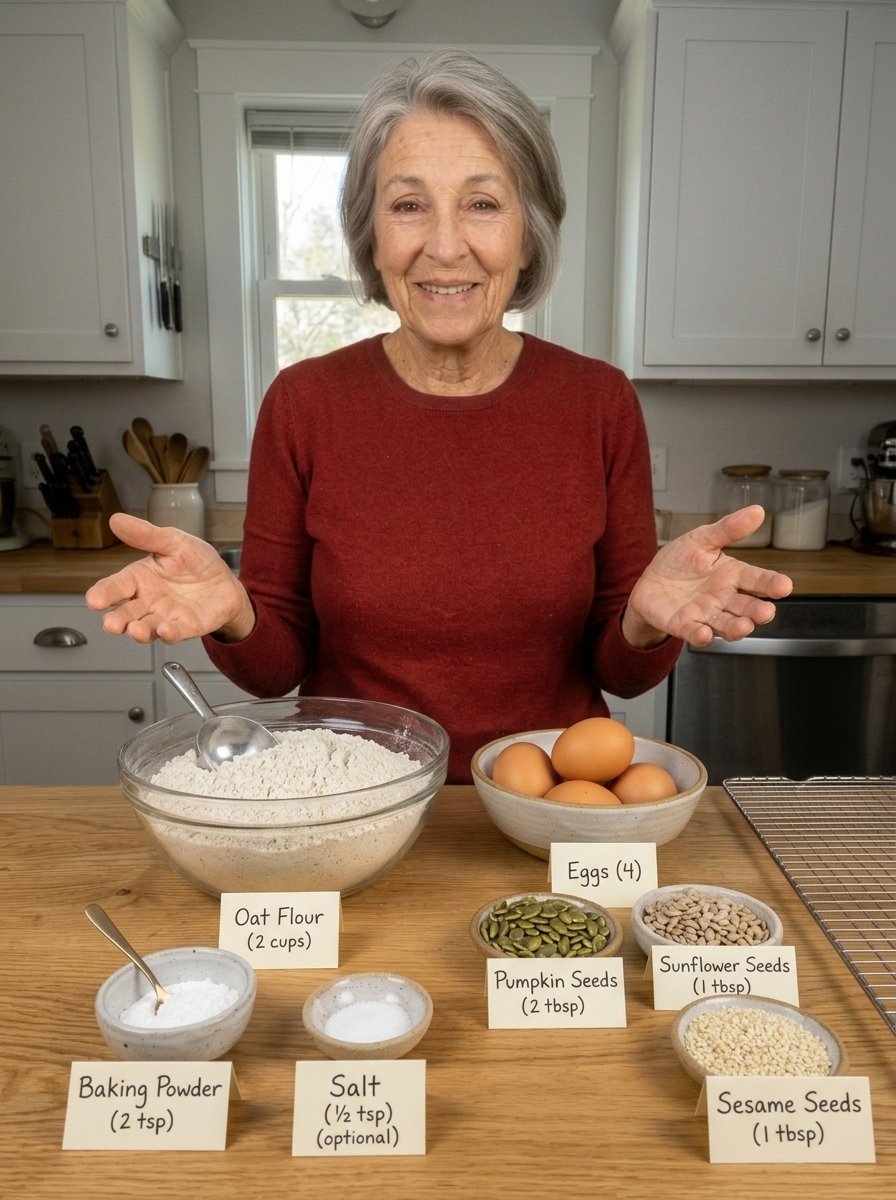
Here is everything you need for one 9 × 5-inch loaf.
The three main ingredients
- 2 cups (200 g) finely ground oat flour
- 4 large eggs, at room temperature
- 2 teaspoons (8 g) baking powder
Optional add-ins and toppings
- ½ teaspoon salt, for extra flavor
- 2 tablespoons pumpkin seeds
- 1 tablespoon sunflower seeds
- 1 tablespoon sesame seeds
The seeds are not required, but they give the loaf a crunchy, bakery-style top and make it look especially appealing. If you prefer a plain loaf, simply skip them.
A Note on Oat Flour
Oat flour is simply oats ground into a fine powder. You can buy it ready-made, or you can make your own by blending rolled oats in a blender or food processor until they resemble flour. If you make your own, measure after blending, not before. Because rolled oats take up a different amount of space than the flour they become, measuring the ground flour (2 cups or 200 g) is the reliable way to get the right amount.
A fine, even grind matters. Coarse bits can make the crumb rougher and less cohesive. If your homemade flour feels gritty, sift it and re-blend the larger pieces.
How to Make 3-Ingredient Oat Flour Bread, Step by Step
Total time: about 1 hour 50 minutes to 2 hours 20 minutes, including baking and cooling. Active time is only about 10 minutes.
- Preheat the oven. Heat your oven to 350°F (180°C). Line a 9 × 5-inch (23 × 13 cm) loaf pan with parchment paper, leaving a little overhang on the long sides so you can lift the loaf out easily later.
- Prepare the oat flour. If you are using homemade oat flour, blend rolled oats until finely ground and measure out 2 cups (200 g). Sift out any larger pieces if the flour feels coarse.
- Whisk the eggs. Crack the eggs into a large mixing bowl. Whisk vigorously for 1 to 2 minutes, until the yolks and whites are fully combined and the mixture looks slightly foamy. This step adds air and helps the loaf bake up lighter.
- Add the oat flour. Gradually add the oat flour to the beaten eggs, stirring with a spatula or whisk until a thick, uniform batter forms. Scrape the sides and bottom of the bowl so no dry flour is left behind.
- Add the baking powder. Add the baking powder and the optional salt. Fold gently until evenly distributed. Avoid overmixing so the batter stays light.
- Rest the batter. Let the batter stand for about 5 minutes. This gives the oat flour time to absorb moisture. The batter should be thick but spreadable.
- Fill the pan. Pour the batter into the prepared loaf pan. Spread it into the corners with a spatula and smooth the top.
- Add the seeds. Sprinkle the pumpkin, sunflower, and sesame seeds evenly over the surface. Press them in gently so they stay put while baking.
- Bake. Place the pan on the center rack and bake for 40 to 50 minutes, until the loaf is firm, lightly golden, and cooked through. A toothpick inserted into the center should come out without wet batter. If the top browns too fast, loosely cover it with aluminum foil for the remaining time.
- Cool in the pan. Set the pan on a wire rack and let it rest for 10 to 15 minutes so the loaf begins to firm up.
- Remove from the pan. Lift the bread out using the parchment overhang, peel off the parchment, and set the loaf directly on the wire rack.
- Cool completely. Allow 45 to 60 minutes for the bread to cool all the way through. This is important, because the interior finishes setting as it cools.
- Slice and serve. Use a sharp serrated knife to cut the loaf into 8 to 10 slices. Serve as is or toast for a firmer texture.
Tips for the Best Oat Flour Bread
Simple recipes depend on technique. These tips make the difference between a good loaf and a great one.
Use Finely Ground Oat Flour
A fine, even texture creates a smoother crumb. Store-bought oat flour is usually consistent, while homemade flour can vary. When in doubt, blend a little longer and sift.
Choose Certified Gluten-Free Oats When Needed
Oats are naturally gluten-free, but they can pick up traces of wheat, barley, or rye during growing and processing. If you are baking for someone who avoids gluten, look for oat flour labeled certified gluten-free.
Bring the Eggs to Room Temperature
Room-temperature eggs blend more evenly into the batter and help produce a consistent texture. If you forget to take them out ahead of time, place whole eggs in a bowl of warm tap water for a few minutes.
Whisk the Eggs Thoroughly
Whisking for 1 to 2 minutes incorporates air. Since eggs are the main structure in this loaf, this small step helps the bread feel lighter.
Let the Batter Rest
A brief 5-minute rest lets the oat flour hydrate. Oat flour is thirsty, and giving it time to absorb moisture leads to a more even consistency.
Do Not Overmix After Adding Baking Powder
Once the baking powder goes in, fold gently and only until combined. Overmixing can knock out some of the air you worked to create.
Use Parchment Paper
Parchment with an overhang makes removing the loaf effortless and protects the bottom from sticking, which can be a challenge with egg-based breads.
Add the Seeds Just Before Baking
Sprinkle the seeds right before the pan goes in the oven and press them gently into the batter. They will bake into the crust and stay in place when you slice.
Cool Completely Before Slicing
This is the tip people skip most often, and it matters. Oat-based bread needs time to set as it cools. If you cut too early, the center can seem gummy and the slices may break apart. Patience pays off with clean, tidy slices.
Toast for the Best Texture
Lightly toasting a slice gives it a firmer exterior and a more bread-like bite. It also makes the loaf especially good with savory or sweet toppings.
Texture and Flavor: What to Expect
This bread is tender, hearty, moist, and slightly dense. The flavor is mild and nutty, with a naturally savory character that works well with both sweet and savory toppings. The crust turns golden and slightly crisp, and the seeds add pops of crunch.
It will not taste exactly like a yeasted wheat sandwich loaf, and it is best to go in with that expectation. Think of it as a sturdy, wholesome bread that shines when toasted and topped. The egg-forward structure also makes it a nice option for people who want a bread with a more filling feel.
Serving Ideas for Oat Flour Bread
This loaf is versatile. Here are some of the best ways to enjoy it.
- Classic breakfast toast. Spread warm slices with butter and a drizzle of honey.
- Avocado toast. Top with mashed avocado, black pepper, and a squeeze of lemon juice.
- Egg breakfast. Serve toasted slices with scrambled eggs, fried eggs, or sliced boiled eggs.
- Creamy toppings. Spread with cream cheese, cottage cheese, or your favorite soft cheese.
- Open-faced sandwiches. Layer sliced tomatoes, cucumber, fresh herbs, and cheese.
- Nut butter toast. Add almond butter or peanut butter and a few banana slices.
- Soup and salad. Serve alongside vegetable soup, lentil soup, or a fresh green salad.
Easy Variations and Substitution Ideas
The base recipe is intentionally simple, which also makes it easy to adapt. If you want to experiment, change one thing at a time so you can see how it affects the loaf.
- Skip the seeds. The bread works perfectly well plain. The seeds add crunch and visual appeal, but they are optional.
- Switch the seeds. Try flax seeds, poppy seeds, or chopped nuts if you prefer a different topping. Press them in gently so they stick.
- Add herbs for a savory loaf. A small amount of dried rosemary, thyme, or garlic powder can complement the nutty flavor. Add them with the baking powder.
- Go slightly sweeter at the table. Instead of changing the batter, lean on toppings such as honey, jam, or sliced fruit with nut butter.
The core recipe relies on eggs for structure, so swapping them out is not recommended without testing a separate egg-free formula. Likewise, keep the oat flour fine and the baking powder fresh, since both affect the final rise and crumb.
Troubleshooting Common Problems
My bread is gummy in the center. Most often this comes from slicing too early or underbaking. Make sure a toothpick comes out clean, and let the loaf cool completely, up to 60 minutes, before cutting.
My loaf is too dense. Check that your baking powder is fresh, that your eggs were whisked well, and that you did not overmix after adding the baking powder. Remember that this is a slightly dense bread by nature.
The top is browning too quickly. Loosely cover the loaf with aluminum foil for the remaining baking time. Ovens vary, so keep an eye on it during the final 15 minutes.
The bread crumbles when sliced. Use a sharp serrated knife, make sure the loaf has cooled fully, and consider slicing a little thicker. Toasting also firms up the slices.
The batter seems too thick or too runny. The batter should be thick but spreadable. Inconsistent results usually come from measuring oat flour before it is ground or from a coarse grind. Measure after blending, or weigh the flour at 200 g for the most reliable result.
How to Store Oat Flour Bread
Because this bread contains eggs and has a moist crumb, storage deserves a little care.
- Room temperature. Refrigerate the bread within 2 hours of baking rather than leaving it out for several days.
- Refrigerator. Let the loaf cool completely, then store it in an airtight container for up to 4 to 5 days.
- Freezer. Slice the fully cooled bread and freeze it in a freezer-safe bag or airtight container for up to 2 months. Place parchment paper between slices so they do not stick together.
- Reheating. Toast refrigerated slices until warm and lightly crisp. You can also warm them in a preheated 325°F (160°C) oven for about 5 minutes.
- From frozen. Place frozen slices directly in the toaster if it has a suitable frozen-bread setting, or thaw briefly before toasting.
- Make ahead. Bake the loaf in advance, cool it completely, slice it, and freeze individual portions for quick breakfasts and snacks.
Recipe Details at a Glance
- Prep time: 10 minutes
- Batter resting time: 5 minutes
- Cook time: 40 to 50 minutes
- Cooling time: 55 to 75 minutes
- Total time: about 1 hour 50 minutes to 2 hours 20 minutes
- Yield: 1 loaf (8 to 10 slices)
- Difficulty: Easy
- Category: Homemade bread, breakfast
- Diet: Gluten-free when certified gluten-free oat flour is used
- Method: Yeast-free quick bread
- Oven temperature: 350°F (180°C)
- Pan size: 9 × 5-inch (23 × 13 cm) loaf pan
Frequently Asked Questions
Is this oat flour bread really made with only three ingredients?
Yes. The core recipe uses oat flour, eggs, and baking powder. Salt and the seed toppings are optional additions that improve flavor and appearance, but the bread works without them.
Do I need yeast to make oat flour bread?
No. This is a yeast-free quick bread. The baking powder provides lift, so there is no proofing, kneading, or rising time.
Is oat flour bread gluten-free?
Oats are naturally gluten-free, but cross-contamination can occur during processing. To keep the recipe gluten-free, use certified gluten-free oat flour or certified gluten-free rolled oats.
Can I make my own oat flour at home?
Yes. Blend rolled oats in a blender or food processor until they reach a fine, flour-like consistency. Measure 2 cups (200 g) after blending and sift out any large pieces.
Why do I have to let the batter rest?
Oat flour absorbs moisture slowly. A 5-minute rest lets it hydrate, which creates a more even consistency and helps the loaf bake up better.
How do I know when the bread is done?
The loaf should be firm, lightly golden, and cooked through. A toothpick inserted into the center should come out without wet batter, usually after 40 to 50 minutes at 350°F (180°C).
Why is my bread gummy inside?
Gumminess usually means the loaf was cut before it cooled or was slightly underbaked. Cool it completely, about 45 to 60 minutes after removing it from the pan, so the interior can set.
How long does oat flour bread last?
Stored in an airtight container in the refrigerator, it keeps for 4 to 5 days. Sliced and frozen with parchment between the slices, it keeps for up to 2 months.
Can I freeze this bread?
Yes. Slice the completely cooled loaf, place parchment between the slices, and freeze in a freezer-safe bag or airtight container. Toast slices straight from the freezer if your toaster has a suitable setting, or thaw briefly first.
What can I serve with oat flour bread?
It pairs well with butter and honey, avocado, eggs, cream cheese, cottage cheese, nut butter and banana, or a bowl of vegetable or lentil soup.
Final Thoughts
This 3-ingredient oat flour bread proves that homemade bread does not have to be complicated. With oat flour, eggs, and baking powder, you can have a golden, seed-topped loaf in about two hours, most of which is hands-off baking and cooling time. It is hearty, nutty, and wonderfully versatile, whether you serve it warm with butter, toasted with avocado, or alongside a bowl of soup.
Keep the key habits in mind: use finely ground oat flour, whisk the eggs well, let the batter rest, avoid overmixing, and cool the loaf completely before slicing. Do those things, and you will end up with a reliable, delicious everyday bread you can bake again and again.
Print
3-Ingredient Oat Flour Bread
- Total Time: 1 hour 50 minutes to 2 hours 20 minutes
Ingredients
Here is everything you need for one 9 × 5-inch loaf.
The three main ingredients
- 2 cups (200 g) finely ground oat flour
- 4 large eggs, at room temperature
- 2 teaspoons (8 g) baking powder
Optional add-ins and toppings
- ½ teaspoon salt, for extra flavor
- 2 tablespoons pumpkin seeds
- 1 tablespoon sunflower seeds
- 1 tablespoon sesame seeds
The seeds are not required, but they give the loaf a crunchy, bakery-style top and make it look especially appealing. If you prefer a plain loaf, simply skip them.
Instructions
Total time: about 1 hour 50 minutes to 2 hours 20 minutes, including baking and cooling. Active time is only about 10 minutes.
- Preheat the oven. Heat your oven to 350°F (180°C). Line a 9 × 5-inch (23 × 13 cm) loaf pan with parchment paper, leaving a little overhang on the long sides so you can lift the loaf out easily later.
- Prepare the oat flour. If you are using homemade oat flour, blend rolled oats until finely ground and measure out 2 cups (200 g). Sift out any larger pieces if the flour feels coarse.
- Whisk the eggs. Crack the eggs into a large mixing bowl. Whisk vigorously for 1 to 2 minutes, until the yolks and whites are fully combined and the mixture looks slightly foamy. This step adds air and helps the loaf bake up lighter.
- Add the oat flour. Gradually add the oat flour to the beaten eggs, stirring with a spatula or whisk until a thick, uniform batter forms. Scrape the sides and bottom of the bowl so no dry flour is left behind.
- Add the baking powder. Add the baking powder and the optional salt. Fold gently until evenly distributed. Avoid overmixing so the batter stays light.
- Rest the batter. Let the batter stand for about 5 minutes. This gives the oat flour time to absorb moisture. The batter should be thick but spreadable.
- Fill the pan. Pour the batter into the prepared loaf pan. Spread it into the corners with a spatula and smooth the top.
- Add the seeds. Sprinkle the pumpkin, sunflower, and sesame seeds evenly over the surface. Press them in gently so they stay put while baking.
- Bake. Place the pan on the center rack and bake for 40 to 50 minutes, until the loaf is firm, lightly golden, and cooked through. A toothpick inserted into the center should come out without wet batter. If the top browns too fast, loosely cover it with aluminum foil for the remaining time.
- Cool in the pan. Set the pan on a wire rack and let it rest for 10 to 15 minutes so the loaf begins to firm up.
- Remove from the pan. Lift the bread out using the parchment overhang, peel off the parchment, and set the loaf directly on the wire rack.
- Cool completely. Allow 45 to 60 minutes for the bread to cool all the way through. This is important, because the interior finishes setting as it cools.
- Slice and serve. Use a sharp serrated knife to cut the loaf into 8 to 10 slices. Serve as is or toast for a firmer texture.
- Prep Time: 10 minutes •
- Cook Time: 40 to 50 minutes