Ingredients
- 1 cup (200 g) dry red lentils
- ¾ cup (180 ml) water, for soaking and blending as needed
- 1 teaspoon baking powder
- ½ teaspoon salt (optional, for extra flavor)
You will also need parchment paper or a little oil to prepare the loaf pan, and a blender. A high-speed blender gives the smoothest batter, but any blender that can fully puree the soaked lentils will work.
Why Red Lentils Work So Well for Bread
Red lentils are a smart choice for a blended batter. They are small, and once softened by soaking they puree easily into a smooth mixture. That smoothness matters, because a batter with gritty lentil pieces bakes into a loaf with an uneven texture.
Soaking is the key step. Soaking helps the lentils blend into a smooth batter and improves the texture of the finished loaf. Skipping it makes the blending harder and can leave a grainy result, so give the lentils their 2 to 3 hours.
Instructions
Measure 1 cup (200 g) of dry red lentils and place them in a fine-mesh strainer. Rinse thoroughly under cool running water, gently stirring the lentils with your fingers to remove any dust or residue. Keep rinsing until the water runs mostly clear, then let the excess water drain. Rinsing helps remove excess starch and any dust.
Transfer the rinsed lentils to a bowl and cover them with plenty of water. Let them soak for approximately 2 to 3 hours, or until they have softened. If your kitchen is particularly warm, soak them in the refrigerator instead. Once softened, drain the soaking water completely and rinse the lentils again.
Preheat your oven to 350°F (175°C). Line a small loaf pan, approximately 8 × 4 inches (20 × 10 cm), with parchment paper. Leave a little overhang on the sides so you can lift the bread out easily after baking. If you do not have parchment paper, grease the pan thoroughly with a little oil so the loaf does not stick.
Place the drained red lentils in a blender and add approximately ½ cup (120 ml) of fresh water to begin blending. Blend until the mixture is as smooth as possible, stopping to scrape down the sides if needed. If the blender struggles, add a little more water, one tablespoon at a time.
The batter should be thick and smooth but still pourable, similar to a thick pancake batter. Avoid making it too watery, because excess moisture can prevent the loaf from setting properly.
Transfer the blended lentil batter to a mixing bowl if you need more room to stir. Add 1 teaspoon of baking powder and the optional ½ teaspoon of salt. Mix gently until the ingredients are evenly distributed.
Avoid overmixing once the baking powder has been added. For the best rise, transfer the batter to the prepared pan soon after mixing.
Pour the batter into the prepared loaf pan, using a spatula to scrape the bowl clean. Spread it evenly into the corners and gently smooth the surface. Tap the pan lightly on the counter once or twice to release any large air bubbles.
The batter may look different from traditional bread dough because it contains no wheat flour or yeast. That is completely normal for a blended lentil loaf.
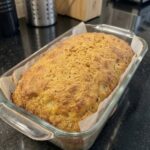
Place the loaf pan on the center rack of the preheated oven. Bake for approximately 40 to 50 minutes, depending on the thickness of the loaf and your oven. The surface should look set, and the edges may become lightly golden. Avoid opening the oven repeatedly during the first 30 minutes, as this can interfere with the baking process.
Insert a toothpick or thin skewer into the center of the loaf. It should come out without wet batter clinging to it. The loaf should feel firm enough to hold its shape, although the inside will naturally be more moist and delicate than conventional sandwich bread.
If the center is still wet, return the loaf to the oven for another 5 to 10 minutes and check again. If the top is browning too quickly, loosely cover it with aluminum foil.
Remove the pan from the oven and let the bread rest in the pan for approximately 10 to 15 minutes. Carefully lift the loaf out using the parchment paper and transfer it to a wire rack. Let it cool completely for approximately 45 to 60 minutes before slicing.
Do not skip this step. Lentil bread needs time for the interior to firm up. Slicing too early can cause the loaf to crumble or feel gummy.
Once the loaf has cooled, use a sharp serrated knife to cut it into even slices. Serve the bread as it is, or lightly toast the slices for a firmer texture and a golden finish. Add your favorite toppings for an easy breakfast, sandwich, or snack.