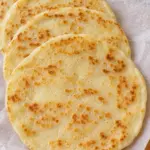
Ingredients
- 1 cup fine white rice flour (about 150 g)
- 1 cup whole milk (240 mL)
- 1 large egg
Ingredient Notes and Substitutions
Fine White Rice Flour
Rice flour is the foundation of this recipe, so the type you choose matters. Use regular fine white rice flour, which is made from long- or medium-grain rice and has a neutral flavor. It gives the flatbreads a tender, soft texture.
Do not substitute sweet rice flour, also known as glutinous rice flour. Sweet rice flour is much stickier and more elastic, and it makes a chewier, gummier result. Brown rice flour is another option, but it is more coarse and nutty, so the flatbreads will be heartier and a little less delicate.
For the most accurate results, weigh the flour. One cup is about 150 g here. If you measure by volume, spoon the flour into the cup and level it off rather than scooping directly from the bag, which packs it down. Because rice flour can vary by brand and grind, a very fine texture gives the smoothest batter.
Whole Milk
Whole milk adds richness, a mild dairy flavor, and the liquid the rice flour needs to hydrate. Its fat helps keep the flatbreads tender and soft. Lower-fat milk will work, but the flavor and tenderness will be slightly less rich. Use room-temperature or cool milk, which blends into the egg more easily than ice-cold milk.
If you need a dairy-free version, an unsweetened plant-based milk can work in its place, though the flavor and texture may change. Choose a plain, unsweetened option, and expect to adjust the batter with a splash more liquid if it seems thick.
The Egg
The egg acts as a binder and adds structure, which is especially important in a recipe without gluten. It helps the thin batter set into a flexible round that can be flipped without falling apart. A large egg is best. If you need an egg-free option, this particular recipe depends on the egg for structure, so you would need a different, purpose-built egg-free formula.
Instructions
In a mixing bowl, beat the egg with about half of the milk. Gradually whisk in the rice flour, adding it a little at a time so no lumps form. Then whisk in the remaining milk until the batter is smooth and pourable. It should be thin and flow easily, like crepe batter. Rest the batter for 5 minutes. This short pause gives the rice flour time to absorb the liquid, which improves the texture and helps the flatbreads cook evenly.
Step 2: Heat the Skillet
Preheat a dry 8-inch nonstick skillet over medium-low heat. Use a dry pan, with no oil or butter, so the flatbreads develop dry golden spots rather than frying. Medium-low heat is important. A pan that is too hot will brown the underside before the batter has a chance to set, while a pan that is too cool will make the bread pale and slow to cook. Stir the batter from the bottom just before pouring, because rice flour settles quickly.
Step 3: Pour and Cook
Pour in about a quarter of the batter and immediately tilt the skillet to spread it into a 6- to 7-inch round. Work quickly, since the batter begins to set as soon as it touches the pan. Cook for 2 to 3 minutes, until the surface turns matte, the edges release easily, and the underside has golden spots. The matte surface is the key sign. When the top no longer looks wet or shiny, the flatbread is ready to flip.
Step 4: Flip and Finish
Slide a wide spatula underneath, flip, and cook for 1 to 2 minutes more, until the second side is lightly spotted and the center is fully set. A wide spatula supports the whole round, which reduces the chance of cracks or tears.
Step 5: Stack and Serve
Repeat with the remaining batter, stirring before each pour. Stack the cooked flatbreads on a plate under a clean kitchen towel to keep them soft. The towel traps steam, which keeps the flatbreads tender and flexible. Serve them warm.