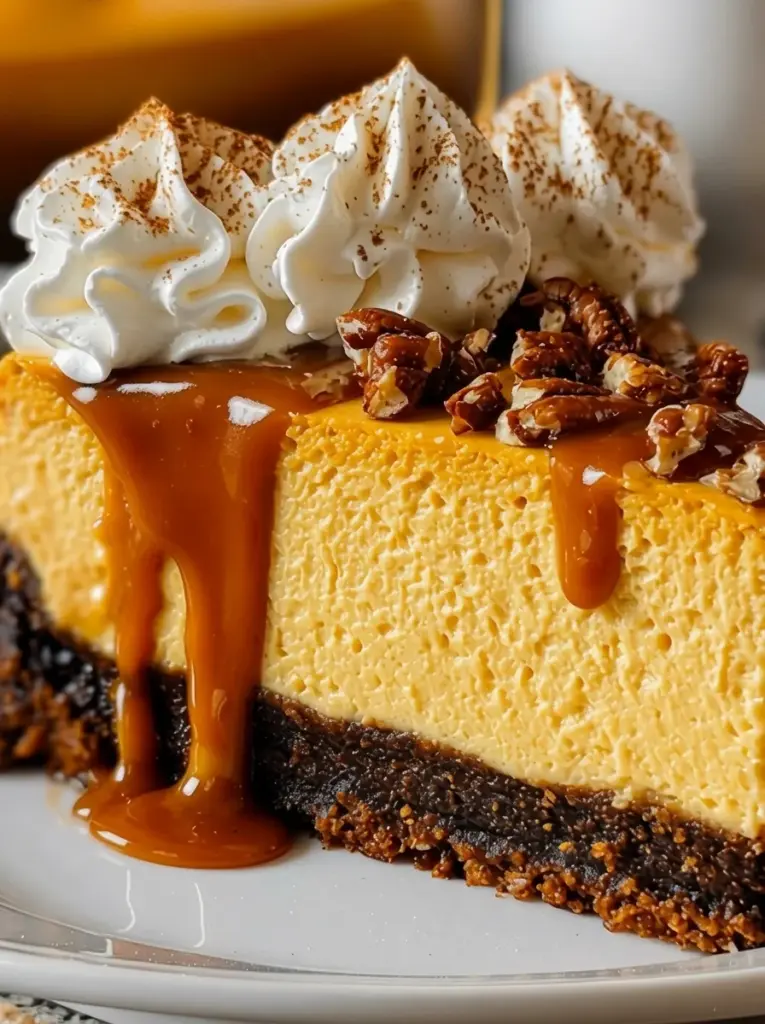
Creamy Pumpkin Cheesecake with Pecan Gingersnap Crust
SEO title: Creamy Pumpkin Cheesecake with Pecan Gingersnap Crust (Easy, No-Crack Recipe)
Meta description: Silky, spiced pumpkin cheesecake on a buttery pecan gingersnap crust. Step-by-step recipe with tips for a crack-free, ultra-creamy fall dessert.
Focus keyword: pumpkin cheesecake with gingersnap crust
Suggested URL slug: creamy-pumpkin-cheesecake-pecan-gingersnap-crust
The Best Creamy Pumpkin Cheesecake with Pecan Gingersnap Crust
If there is one dessert that captures the cozy spirit of autumn, it is pumpkin cheesecake. This creamy pumpkin cheesecake with a pecan gingersnap crust takes that classic and makes it even better: a velvety, lightly spiced pumpkin filling sits on a buttery, crunchy base made from toasted pecans and spicy gingersnap cookies. Each slice delivers three textures at once, a crisp and nutty crust, a dense and silky filling, and a soft cloud of whipped cream on top.
This is the recipe to make for Thanksgiving, Friendsgiving, holiday dinners, or any weekend when the air turns crisp and you want something special in the oven. It is also one of the best make-ahead desserts you can bake, because it actually tastes better after a night in the refrigerator. If you have ever worried about cracked tops, soggy crusts, or a filling that turns out dry or grainy, you are in good hands. This guide walks through every step and explains the reasons behind each technique, so you can bake a bakery-quality pumpkin cheesecake at home with confidence.
Below you will find the full ingredient list, detailed instructions, troubleshooting advice, make-ahead and storage tips, creative variations, and answers to the most common questions about baking pumpkin cheesecake.
Why This Pumpkin Cheesecake Is So Good
There are plenty of pumpkin cheesecake recipes out there, so here is what makes this one stand out.
The crust is the star. Instead of a plain graham cracker base, this cheesecake uses crushed gingersnaps combined with finely chopped pecans. Gingersnaps bring warm ginger, cinnamon, and molasses flavor that pairs perfectly with pumpkin, while the pecans add a toasty richness and a satisfying crunch. Toasting the pecans first deepens the flavor even more.
The filling is genuinely creamy. Full-fat cream cheese, a touch of sour cream, and a spoonful of cornstarch create a texture that is dense but silky, never gummy and never dry. The pumpkin flavor is clear and bright, balanced by a careful blend of fall spices.
It is built to avoid cracks. The recipe uses a low oven temperature, careful mixing, and a slow cooling process, the three biggest factors in baking a smooth, crack-free top.
It is a make-ahead dream. The cheesecake needs to chill for several hours anyway, which means you can finish it a day or two before your event and spend the actual holiday relaxing.
It looks impressive with little effort. A swirl of whipped cream, a handful of candied pecans, and a drizzle of caramel turn a simple cheesecake into a showstopper.
Ingredients for Pumpkin Cheesecake with Pecan Gingersnap Crust
This recipe makes one 9-inch cheesecake, serving 10 to 12 slices. Be sure to let the cream cheese, eggs, and sour cream come to room temperature before you begin.
For the Pecan Gingersnap Crust
- 1½ cups gingersnap cookie crumbs (about 30 cookies)
- ¾ cup pecans, finely chopped
- 2 tbsp brown sugar
- ½ tsp ground cinnamon
- 6 tbsp unsalted butter, melted
- Pinch of salt
For the Pumpkin Cheesecake Filling
- 24 oz (three 8-oz blocks) full-fat cream cheese, softened to room temperature
- ¾ cup granulated sugar
- ¼ cup packed light brown sugar
- 1 can (15 oz) 100 percent pure pumpkin puree (not pumpkin pie filling)
- 3 large eggs, at room temperature
- ½ cup sour cream, at room temperature
- 1 tbsp cornstarch
- 2 tsp pure vanilla extract
- 1½ tsp ground cinnamon
- ½ tsp ground ginger
- ¼ tsp ground nutmeg
- ⅛ tsp ground cloves
- ½ tsp salt
For Serving
- Sweetened whipped cream
- Chopped toasted or candied pecans
- Caramel sauce (optional)
- A light dusting of cinnamon (optional)
Ingredient Notes and Helpful Substitutions
Gingersnap Cookies
Gingersnaps are crisp, spicy cookies with a deep molasses flavor, and they make a more interesting crust than plain graham crackers. Choose the crunchy, snappy style rather than soft ginger cookies, since crisp cookies crush into fine crumbs that hold together well. You can crush them in a food processor or place them in a zip-top bag and roll over them with a rolling pin. If you cannot find gingersnaps, graham crackers, speculoos (Biscoff) cookies, or digestive biscuits are good substitutes. Add an extra half teaspoon of ground ginger if you use graham crackers.
Pecans
Pecans add buttery, toasty richness and crunch. For the best flavor, toast them in a dry skillet or a 350°F oven for 5 to 7 minutes until fragrant, then cool and chop them finely. Walnuts or almonds can stand in if needed, but pecans have the sweetest, mellowest flavor for this dessert.
Cream Cheese
Use full-fat block cream cheese, not whipped tub cream cheese and not low-fat versions. Block cream cheese has the right density and fat content for a firm, creamy set. Softening it completely is crucial. Cold cream cheese leaves tiny lumps that never fully smooth out. Leave the blocks on the counter for about 1 to 2 hours, or unwrap them and microwave for 10 seconds at a time until soft but not melted.
Pumpkin Puree
Always buy 100 percent pure pumpkin puree. Pumpkin pie filling already contains sugar and spices and will throw off the balance of this recipe. If your puree seems especially watery, blot it between layers of paper towels or cook it down in a saucepan for a few minutes. Removing extra moisture helps the cheesecake set up firm and sliceable.
Eggs and Sour Cream
Eggs give the cheesecake structure, and room-temperature eggs blend more evenly into the batter. Sour cream adds a gentle tang that balances the sweetness and keeps the filling tender. Full-fat Greek yogurt can replace sour cream in a pinch.
Cornstarch
A single tablespoon of cornstarch helps the filling set smoothly and reduces the chance of cracking. It is a simple insurance policy that you will not taste.
Spices
The combination of cinnamon, ginger, nutmeg, and cloves is classic pumpkin spice. If you prefer, you can replace the individual spices with about 2½ teaspoons of store-bought pumpkin pie spice. Fresh, fragrant spices make a noticeable difference, so replace any that have been in the cabinet for more than a year.
Equipment You Will Need
- 9-inch springform pan (3 inches deep is ideal)
- Food processor or rolling pin and zip-top bag
- Electric hand mixer or stand mixer with paddle attachment
- Large mixing bowls and a rubber spatula
- Aluminum foil, if you plan to use a water bath
- A large roasting pan, for the optional water bath
- A thin knife for loosening the edges
How to Make Creamy Pumpkin Cheesecake with Pecan Gingersnap Crust
Step 1: Prep the Pan and Preheat the Oven
Position an oven rack in the center of the oven and preheat to 350°F (175°C). Lightly grease the bottom and sides of a 9-inch springform pan. If you are using a water bath, wrap the outside of the pan with two layers of heavy-duty aluminum foil to prevent leaks.
Step 2: Make the Pecan Gingersnap Crust
In a food processor, pulse the gingersnaps until they form fine crumbs. Add the chopped pecans, brown sugar, cinnamon, and salt, and pulse a few times to combine. Pour in the melted butter and pulse until the mixture looks like wet sand and holds together when pinched. If you are making the crust by hand, mix everything in a bowl with a fork.
Press the crumb mixture firmly into the bottom of the pan and about 1 inch up the sides. A flat-bottomed measuring cup or drinking glass helps you pack it tightly and evenly. Bake for 10 minutes, then remove it from the oven and let it cool while you make the filling. Lower the oven temperature to 325°F (165°C).
Step 3: Beat the Cream Cheese
In a large bowl, beat the softened cream cheese on medium speed for about 2 minutes, until completely smooth and creamy, scraping down the bowl and beaters as needed. Do not skip the scraping. Hidden lumps of cream cheese at the bottom of the bowl are the most common reason for a lumpy filling.
Step 4: Add the Sugars and Cornstarch
Add the granulated sugar, brown sugar, and cornstarch, and beat on medium-low speed until smooth and well blended, about 1 minute. Scrape down the sides of the bowl.
Step 5: Mix in the Pumpkin, Sour Cream, and Spices
Add the pumpkin puree, sour cream, vanilla, cinnamon, ginger, nutmeg, cloves, and salt. Mix on low speed until the batter is uniform in color and texture. Mixing on low keeps extra air out of the batter, and trapped air is a major cause of puffing and then cracking.
Step 6: Add the Eggs One at a Time
Add the eggs one at a time, mixing on low speed just until each one disappears into the batter. Stop mixing as soon as the last egg is incorporated. Overbeating after the eggs go in leads to a puffy cheesecake that sinks and cracks as it cools.
Step 7: Fill the Crust
Pour the batter over the cooled crust and smooth the top with a spatula. Gently tap the pan on the counter a few times to release any large air bubbles. Pop any bubbles on the surface with a toothpick.
Step 8: Bake the Cheesecake
Bake at 325°F for 60 to 70 minutes. For the best texture, set the springform pan inside a larger roasting pan and pour hot water into the roasting pan until it reaches about halfway up the sides of the springform. This water bath provides gentle, even heat and a humid environment that helps prevent cracks. If you skip the water bath, place a pan of hot water on the lower rack to add moisture to the oven.
The cheesecake is done when the edges are set and the center still jiggles slightly, like gelatin, when you nudge the pan. The center will firm up as it cools. An instant-read thermometer inserted into the center should read about 150°F.
Step 9: Cool Slowly
Turn off the oven and crack the door open. Let the cheesecake rest inside for 1 hour. This gradual cooling prevents the sudden temperature change that causes cracks. Then remove it from the oven and the water bath, take off the foil, and run a thin knife around the edge to loosen the filling from the pan. Let it cool on a wire rack to room temperature, about 1 more hour.
Step 10: Chill Thoroughly
Cover the cooled cheesecake loosely and refrigerate for at least 6 hours, preferably overnight. Chilling is what gives cheesecake its dense, sliceable, creamy texture. Do not rush this step.
Step 11: Decorate and Serve
Release the springform ring and slide the cheesecake onto a serving plate. Top with sweetened whipped cream, chopped pecans, a drizzle of caramel, and a light dusting of cinnamon. For clean slices, dip a sharp knife in hot water and wipe it dry between each cut.
Tips for a Perfect, Crack-Free Pumpkin Cheesecake
Start with room-temperature ingredients. Cream cheese, eggs, and sour cream blend smoothly when they are at the same temperature. Cold ingredients cause lumps and overmixing.
Mix on low speed. The goal is to combine, not to whip. Too much air makes the cheesecake rise and then collapse.
Do not overbake. Overbaked cheesecake turns dry, crumbly, and cracked. Pull it from the oven while the center still wobbles.
Use a water bath if you can. It is the most reliable way to guarantee a creamy texture and an even surface. If you are nervous about leaks, use an oven bag or double-wrap the pan in foil.
Cool gradually. Letting the cheesecake rest in the turned-off oven, then on the counter, and finally in the refrigerator protects it from temperature shock.
Press the crust firmly. A tightly packed crust stays crisp and cuts cleanly. Baking it briefly first helps it set and resist sogginess.
Resist opening the oven. Opening the door during baking drops the temperature and invites cracks. Check through the window until the final 10 minutes.
Be patient with chilling. A cheesecake that has chilled overnight slices more cleanly and tastes better, because the spices and flavors have time to meld.
Troubleshooting Common Cheesecake Problems
My cheesecake cracked. Common causes are overmixing, overbaking, a hot oven, or cooling too quickly. If it happens, do not worry. A layer of whipped cream, caramel, or sour cream topping hides cracks beautifully, and the taste is not affected.
The filling is lumpy. The cream cheese was probably too cold or not beaten well before other ingredients were added. Always beat the cream cheese alone first and scrape the bowl often.
The center is runny after chilling. The cheesecake was likely underbaked, or the pumpkin puree was too watery. Make sure the edges are set and the center has just a gentle wobble before removing it from the oven.
The crust is soggy. Prebake the crust, use a well-wrapped pan if baking in a water bath, and avoid letting water seep in. Pressing the crust firmly also helps.
The top is browned or dark. Your oven may run hot. Use an oven thermometer to check, and tent the cheesecake loosely with foil if the surface darkens before the center is set.
The texture is dense or rubbery. Overbaking or too many eggs can lead to a rubbery texture. Follow the recipe measurements and check for doneness early.
Creative Variations
Maple pecan topping. Simmer chopped pecans in a little butter and maple syrup until glossy, then spoon over the chilled cheesecake.
Salted caramel pumpkin cheesecake. Swirl salted caramel sauce into the batter before baking, or drizzle it generously over the top before serving.
Bourbon spice. Stir one tablespoon of bourbon into the filling for a warm, grown-up flavor. Add it with the vanilla.
Mini cheesecakes. Bake the filling in a muffin tin with crust-lined liners for individual servings. Reduce the baking time to about 20 to 25 minutes.
Chocolate drizzle. Melt dark chocolate and drizzle it over the top for a rich contrast to the spiced pumpkin.
Cranberry swirl. Serve each slice with a spoonful of tart cranberry compote to brighten the richness.
Brown butter upgrade. Brown the butter for the crust before mixing it with the crumbs. The nutty flavor deepens the pecan notes.
How to Store, Make Ahead, and Freeze
Make ahead: This cheesecake is ideal for baking one to two days before serving. Keep it covered in the refrigerator and add toppings just before serving.
Refrigerating: Store leftover cheesecake, covered, in the refrigerator for up to 5 days.
Freezing: Freeze the whole cheesecake or individual slices. Chill completely first, then freeze uncovered for about 2 hours until firm. Wrap tightly in plastic wrap and then foil, and freeze for up to 2 months. Thaw overnight in the refrigerator, and add whipped cream and garnishes after thawing.
What to Serve with Pumpkin Cheesecake
This dessert is rich, so keep the accompaniments simple. A dollop of softly whipped cream is classic, and a drizzle of caramel adds sweetness. Pair slices with hot coffee, chai, spiced tea, or a latte for a cozy ending to a meal. For adults, a glass of dessert wine, spiced rum cocktail, or a dry sparkling wine makes a lovely match.
Frequently Asked Questions
Can I use fresh pumpkin instead of canned?
Yes, but fresh pumpkin puree holds much more moisture. Roast the pumpkin until tender, puree it until smooth, and then drain or cook it down until it is thick, like canned puree. Excess moisture can cause a soft, underset cheesecake.
Do I really need a water bath?
It is not mandatory, but it is the best way to get a smooth, creamy, crack-free cheesecake. If you skip it, bake at the same temperature, place a pan of hot water on the lower oven rack, and watch the cheesecake closely toward the end of baking.
How do I know when the cheesecake is done?
The edges should be set and slightly puffed, and the center should wobble slightly when the pan is gently shaken. An instant-read thermometer should read about 150°F in the center.
Can I make this cheesecake without a springform pan?
Yes. Use a deep 9-inch cake pan lined with parchment paper, leaving overhang to lift the cheesecake out after chilling. A springform pan is easier for releasing and serving.
Can I make the crust without nuts?
Yes. Replace the pecans with an extra ¾ cup of gingersnap crumbs, plus about 1 tablespoon more melted butter if the mixture seems dry.
Can this recipe be made gluten-free?
Use certified gluten-free gingersnaps. The rest of the ingredients are naturally gluten-free, but check the labels on your cornstarch, vanilla, and spices.
Why did my cheesecake sink in the middle?
Sinking usually results from overmixing, which adds air, or from cooling too quickly. Mix on low and cool gradually in the turned-off oven.
Can I reduce the sugar?
You can lower the sugar slightly, but the amount used here balances the tang of the cream cheese and sour cream and helps the texture. Reductions of a couple of tablespoons are generally fine.
How far ahead can I make pumpkin cheesecake?
It keeps well for up to 5 days in the refrigerator, and tastes best after at least one night of chilling. For holidays, baking it a day or two ahead is ideal.
Final Thoughts: A Fall Dessert Worth Baking Every Year
Creamy pumpkin cheesecake with a pecan gingersnap crust is everything a fall dessert should be: warmly spiced, luxuriously smooth, and full of contrast between its crunchy base and silky filling. It looks elegant, tastes unforgettable, and fits easily into a busy holiday schedule because it is best made ahead.
Bake it once and it is likely to become a tradition. Follow the tips for room-temperature ingredients, gentle mixing, slow cooling, and thorough chilling, and you will be rewarded with a flawless cheesecake every time. If you try it, leave a rating and a comment below, and tell us how you topped yours. Happy baking!