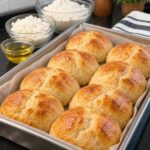
Ingredients
The ingredient list is refreshingly short:
- 2½ cups prepared self-rising flour, spooned and leveled (300 g)
- 1 cup cottage cheese (225 g)
- 2 tablespoons olive oil (30 ml)
That is the entire list. Let’s look at why each one earns its place.
Self-Rising Flour: The Structure and the Rise
Self-rising flour is all-purpose flour that already contains a leavening agent and salt. Because those components are built in, you do not need to add baking powder or salt separately, and you do not need yeast. The flour starts working as soon as it meets moisture, which is why this dough should be mixed and baked without much delay.
It is important to measure the flour correctly. Spoon the flour into your measuring cup and level it off with the back of a knife. Scooping directly from the bag packs the flour down, and you can end up with far more than the recipe calls for. Too much flour is the most common reason quick breads turn out dense. If you own a kitchen scale, weighing out 300 grams is the most reliable method.
Cottage Cheese: The Moisture and Tenderness
Cottage cheese is the secret behind the texture of these rolls. When blended until smooth, it disappears into the dough, leaving behind moisture, a subtle creamy taste, and a soft, tender crumb. You will not see lumps in the finished rolls, and the flavor is mild and pleasant rather than cheesy or tangy.
For the best results, use a thick cottage cheese. If yours looks watery or has a lot of liquid sitting around the curds, drain it briefly before measuring. Excess liquid can make the dough too wet and tempt you to add extra flour, which leads to denser rolls.
Instructions
Preheat your oven to 375°F (190°C). Line a baking sheet with parchment paper, or lightly grease it with cooking spray. Parchment is ideal because it prevents sticking and makes cleanup effortless.
Step 2: Blend the Cottage Cheese
Place the cottage cheese in a blender or food processor and blend until completely smooth and creamy. Stop to scrape down the sides if needed. Blending thoroughly is worth the extra minute because it helps the cottage cheese mix evenly into the dough and gives the rolls a softer, more even texture.
Step 3: Combine the Ingredients
In a large mixing bowl, add the blended cottage cheese and the olive oil. Stir until combined. Then add the self-rising flour gradually, mixing with a wooden spoon or spatula until a soft dough forms. Adding the flour a little at a time gives you better control over the consistency.
Step 4: Bring the Dough Together
Lightly flour your work surface and your hands. Transfer the dough to the surface and gently fold it a few times until it comes together. This is not the same as kneading yeast bread. You are only shaping the dough, not developing gluten, so keep your handling light.
The dough should be slightly sticky but manageable. If it is very sticky, sprinkle on a little extra flour, just enough to make it workable. Resist the urge to add too much. Extra flour is the quickest route to heavy, dry rolls.
Step 5: Divide the Dough into Eight Portions
Divide the dough into 8 approximately equal portions. Gently roll each piece between your hands to form a round ball. For a rustic, homemade look, do not worry about making every roll perfectly smooth. The slightly uneven surface is part of the charm, and it bakes into those craggy, golden patches that look so appealing.
Step 6: Arrange the Rolls on the Baking Sheet
Place the dough balls on the prepared baking sheet, leaving about 2 inches of space between them. Gently press each one to flatten it slightly so the rolls bake evenly. The space gives them room to expand in the oven without merging into one another.
Step 7: Bake Until Golden
Place the baking sheet on the center rack of the preheated oven. Bake for approximately 20 to 25 minutes, or until the rolls are lightly golden on top and cooked through. The bottoms should be lightly browned, and the centers should no longer look doughy. Ovens vary, so start checking around the 20-minute mark.
Step 8: Cool Slightly and Serve
Remove the rolls from the oven and let them rest on the baking sheet for about 5 minutes. Then transfer them to a wire rack to cool slightly. Serve warm with butter, olive oil, or your favorite savory spread.