Ingredients
This recipe makes 6 small dinner rolls.
- 1 cup (245 to 250 g) plain Greek yogurt
- 1 cup (125 to 130 g) self-rising flour
- 1 large egg, for brushing the tops (optional)
For a strict three-ingredient version, the egg is optional. The yogurt and self-rising flour are the two ingredients needed for the dough itself. The egg simply gives the tops a shiny, golden finish.
Ingredient notes
Plain Greek yogurt. Choose thick Greek yogurt. Full-fat and low-fat plain Greek yogurt both work well. Regular yogurt is thinner, so it can make the dough too sticky to shape. Make sure the yogurt is plain and unsweetened so the rolls taste like bread rather than dessert.
Self-rising flour. This is all-purpose flour that has been mixed with baking powder and salt. It is what makes these rolls rise without yeast. If you want to weigh your flour, the target is about 125 to 130 grams per cup, which is the most reliable way to avoid dry, dense rolls.
Egg (optional). A single beaten egg brushed over the tops gives the rolls a glossy, bakery-style golden color. If you skip it, the rolls will still bake perfectly well, but the tops may look a little less shiny.
Instructions
Here is exactly how to make Greek yogurt dinner rolls from start to finish.
Preheat your oven to 375°F (190°C). Line a baking sheet with parchment paper, or lightly grease a baking dish.
The pan you choose affects the final texture. A small baking dish lets the rolls sit close together, which helps them develop soft, tender sides. A baking sheet gives each roll a little more crust all the way around.
Add the Greek yogurt to a medium mixing bowl. Gradually add the self-rising flour, stirring with a spoon or spatula until a soft dough begins to form.
Keep mixing just until there are no dry patches of flour. The dough should be slightly sticky but still hold together when scooped.
Lightly flour your work surface and your hands. Transfer the dough to the surface and gently bring it together.
Do not knead it like traditional bread dough. Simply fold it over itself once or twice if needed to make it easier to handle. If the dough is extremely sticky, sprinkle on a small amount of extra flour, using as little as possible so the rolls do not turn out dry.
Divide the dough into 6 equal portions for small dinner rolls. With lightly floured hands, gently shape each portion into a ball, taking care not to compress the dough too tightly.
Place the rolls on the prepared baking sheet, leaving a little space between them so they have room to expand.
For a golden, glossy finish, beat the egg in a small bowl and lightly brush it over the tops of the rolls.
You can skip this step if you prefer to keep things as simple as possible. The rolls will still bake without an egg wash, although their tops may look a little less shiny.
Place the rolls in the preheated oven and bake for about 20 to 25 minutes, depending on their size and the type of pan you used.
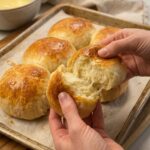
The rolls should be lightly golden on top and firm enough to hold their shape. Check the bottoms as well to make sure they are cooked through. If the tops brown too quickly while the centers are still doughy, loosely cover them with foil and continue baking until done.
Remove the rolls from the oven and let them rest for about 5 minutes. If you want to prevent the bottoms from becoming damp from trapped steam, move them to a wire rack.
Allow them to cool slightly before serving, but try to enjoy them while they are still warm for the softest texture.
Serve the rolls warm with butter, alongside soup or a family dinner, or split them open for small sandwiches.