Ingredients
Here is everything you need to make one large loaf.
- 4 cups (480 g) all-purpose flour or bread flour
- 2¼ teaspoons (7 g) active dry yeast or instant yeast
- 1½ cups (360 ml) warm water
- 1 tablespoon granulated sugar
- 1½ teaspoons salt
- 2 tablespoons olive oil
- 1 tablespoon olive oil or water, for brushing the top (optional)
- 1 teaspoon sesame seeds, for topping (optional)
A Closer Look at the Ingredients
Flour. Both all-purpose flour and bread flour work well. All-purpose flour gives a slightly softer, more tender crumb, while bread flour has a higher protein content and creates a chewier, more structured loaf. Choose whichever you have on hand. If you bake bread often, a kitchen scale is the best investment you can make, because weighing your flour is far more accurate than scooping it with a measuring cup.
Yeast. This recipe works with either active dry yeast or instant yeast. Active dry yeast is typically dissolved in warm water with a little sugar until foamy, which also proves that it is alive. Instant yeast can be mixed directly with the dry ingredients. Both give excellent results.
Warm water. The temperature matters. The water should feel comfortably warm, like a pleasant bath, but never hot. Water that is too hot can damage the yeast and prevent your dough from rising properly.
Sugar. One tablespoon is not there to make the bread sweet. It gives the yeast something to feed on and helps the crust brown beautifully.
Salt. Salt controls fermentation and adds flavor. Bread without enough salt tastes flat, so do not skip it.
Olive oil. Two tablespoons in the dough contribute a soft crumb and a faint, pleasant richness. An optional brush of olive oil on top before baking adds a little extra color and flavor.
Sesame seeds. Optional but highly recommended for texture, aroma, and appearance.
Instructions
Follow these steps for a golden, bakery-style loaf.
In a large mixing bowl, combine the warm water, sugar, and active dry yeast. Let the mixture stand for about 5 to 10 minutes, until it becomes foamy. That foam is a sign that the yeast is alive and ready to work. If you are using instant yeast, you can skip this step and mix the yeast directly with the flour instead.
Add the flour, salt, and olive oil to the yeast mixture. Stir with a wooden spoon until a rough dough forms and most of the flour is incorporated. If you are using instant yeast, combine the flour, yeast, sugar, and salt first, then add the warm water and olive oil.
Do not worry if the dough looks shaggy at this stage. It will come together beautifully once you start kneading.
Transfer the dough to a lightly floured surface and knead for about 8 to 10 minutes, until it is smooth, soft, and elastic. To knead, push the dough away from you with the heel of your hand, fold it back over itself, give it a quarter turn, and repeat.
If the dough is very sticky, sprinkle on a little flour at a time, taking care not to add too much. The finished dough should remain soft and slightly tacky. Too much flour is the most common reason homemade bread turns out dense.
Lightly oil a clean bowl and place the dough inside, turning it once to coat. Cover with a clean kitchen towel or plastic wrap and leave it in a warm, draft-free place for about 1 to 1½ hours, or until doubled in size.
Rely on the dough rather than the clock. A cooler kitchen means a slower rise, and a warm kitchen means a faster one. The dough is ready when it looks puffy and has roughly doubled in volume.
Gently press the dough to release excess air. Turn it onto a lightly floured surface and shape it into a long oval loaf. Fold the sides inward if needed, then roll the dough gently to create an even shape. Pinch the seam closed and place the loaf seam-side down on a parchment-lined baking sheet.
A tight, even shape helps the bread hold its form and rise upward in the oven instead of spreading flat.
Cover the shaped loaf loosely and let it rise for another 30 to 45 minutes, until visibly puffy. Meanwhile, preheat your oven to 400°F (200°C).
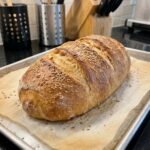
Using a sharp bread knife or lame, make 2 to 3 shallow diagonal slashes across the top of the loaf. These cuts allow the bread to expand as it bakes and give it that classic bakery appearance. If you like, lightly brush the surface with olive oil or water and sprinkle with sesame seeds.
Bake for approximately 25 to 35 minutes, or until the loaf develops a golden-brown crust and sounds hollow when tapped on the bottom. If you use a thermometer, the center should reach approximately 190 to 200°F (88 to 93°C).
Remove the bread from the oven and transfer it to a wire rack. Let it cool for at least 30 minutes before slicing. This is the hardest step, because the aroma is irresistible, but cutting too early can make the inside gummy, even when the bread is fully baked. Waiting helps the interior finish setting while preserving its soft, fluffy texture.