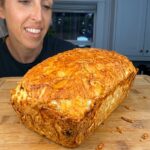
Ingredients
One of the best parts of this recipe is how short the ingredient list is. You only need three things:
- 1½ cups (340 g) cottage cheese — Full-fat or low-fat both work, depending on the texture and richness you prefer. Full-fat will yield a slightly more tender, moist crumb, while low-fat keeps things a bit lighter.
- 3 large eggs — These help bind the batter and add structure, protein, and a subtle richness.
- 2 cups (240 g) self-rising flour — This is the leavening agent in the recipe, so there’s no need for additional yeast or baking powder.
That’s it. No sugar, no oil, no butter, no yeast. Just three simple pantry and fridge staples that come together into a genuinely delicious loaf.
A Quick Note on Self-Rising Flour
If you don’t have self-rising flour on hand, you can make your own substitute by combining all-purpose flour with baking powder and a pinch of salt. For every cup of all-purpose flour, whisk in about 1½ teaspoons of baking powder and ¼ teaspoon of salt. This DIY version works just as well in this recipe and is a handy trick to remember for other quick bread recipes too.
Optional Tips for the Best Cottage Cheese Bread ✨
Getting a perfect loaf every time comes down to a few small but important details:
- Choose your cottage cheese wisely. Full-fat cottage cheese will give you a richer, more tender bread, while low-fat versions create a slightly lighter texture. Neither is “wrong” — it’s simply a matter of preference.
- Blend for smoothness. If your cottage cheese has large curds, pulse it briefly with the eggs in a blender or food processor before adding the flour. This creates a smoother batter and a more uniform crumb, without visible curds throughout the bread.
- Don’t overmix. Once you add the self-rising flour, stir just until everything is combined. Overmixing develops gluten unnecessarily and can lead to a denser, tougher loaf instead of the light, tender texture you’re going for.
- Use the right pan. A standard loaf pan (roughly 9×5 inches) will give you the classic shape and even baking. Using a pan that’s too large or too small can throw off your bake time and final texture.
- Let it cool fully. This is the step most people want to skip, but patience really does pay off here. Cutting into the bread while it’s still warm can cause it to look gummy or underbaked, even if it isn’t. Letting it cool completely allows the crumb structure to set properly.
- Smooth the top before baking. A quick pass with a spatula before it goes into the oven helps create an even, attractive golden top.
Instructions
Start by adding the cottage cheese and eggs to a large mixing bowl. Stir thoroughly until the eggs are fully incorporated and the mixture looks creamy and well combined. If you want an extra-smooth texture with no visible curds, transfer the cottage cheese and eggs to a blender and pulse until mostly smooth before moving on to the next step. This step is optional but recommended if you’re serving the bread to picky eaters or simply prefer a more uniform texture.
Sprinkle the self-rising flour into the cottage cheese and egg mixture. Using a spatula or wooden spoon, gently stir until a thick, soft batter forms and all of the flour is fully incorporated — you shouldn’t see any dry streaks or pockets of flour. Be careful not to overmix at this stage. A few gentle folds is all it takes to bring everything together; overworking the batter can result in a denser, chewier loaf rather than the soft, tender crumb this bread is known for.
Preheat your oven to 350°F (175°C) so it’s fully heated by the time your batter is ready. While the oven warms up, lightly grease a standard loaf pan with butter, oil, or nonstick spray, or line it with parchment paper for even easier removal later. Transfer the thick batter into the prepared pan, using a spatula to gently smooth the top. This small step helps the loaf bake evenly and gives it a neat, attractive finish.
Place the loaf pan in your preheated oven and bake for approximately 40–50 minutes. You’ll know it’s done when the top is lightly golden and the loaf feels firm to the touch in the center. For extra assurance, insert a toothpick into the middle of the loaf — it should come out mostly clean, without wet batter clinging to it. Ovens vary, so start checking around the 40-minute mark. If the top is browning faster than the inside is cooking, loosely tent the loaf with a piece of foil for the remaining bake time to prevent over-browning while the center finishes cooking through.
Once baked, remove the bread from the oven and let it rest in the pan for about 10–15 minutes. This brief resting period allows the structure to firm up slightly, making it easier to remove without breaking. Carefully turn the loaf out onto a wire rack to finish cooling completely — this typically takes another hour or so, depending on your kitchen’s temperature. Resist the urge to slice into it early. Letting the bread cool fully ensures clean slices and the best possible texture. Once cooled, slice into even pieces and enjoy fresh, toasted, or however you like it best.