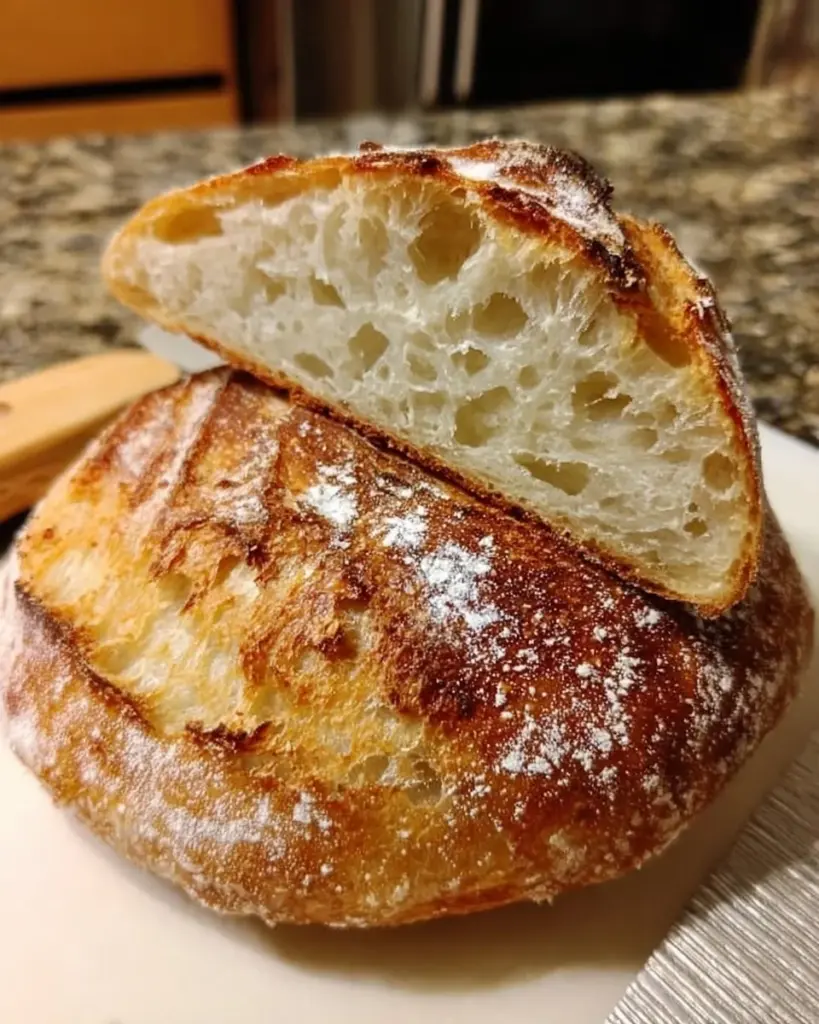
The aroma wafting through your kitchen as a loaf of freshly baked sourdough bread emerges from the oven is nothing short of heavenly. Imagine the sound of a crisp crust cracking as you slice into the warm dough, revealing its soft, airy interior. The moment you raise the first bite to your lips, the tangy notes of sourdough greet your senses, perfectly balanced with a hint of sweetness from the fermentation process. Each bite offers a delightful contrast; the crunchy exterior gives way to a moist, chewy crumb, a textural dance that leaves you craving more. This is not just bread; it’s a warm embrace, a nourishing connection to the age-old craft of baking that invites you to slow down and savor the moment.
Lazy Baker’s No-Bulk-Fermentation Sourdough Bread epitomizes the beauty of simplicity and flavor. It brings together humble ingredients and transforms them into a loaf that showcases a symphony of flavors—from the nutty notes of the bread flour to the slight tang of the sourdough starter. The magic happens with minimal fuss, making it perfect for anyone eager to embrace the sourdough experience without the daunting complexities of traditional recipes. So whether you’re a seasoned baker or just dipping your toe into the world of homemade bread, this recipe offers great satisfaction with less time commitment.
Why You’ll Love This Lazy Baker’s No-Bulk-Fermentation Sourdough Bread
This recipe stands out for several compelling reasons. First and foremost, it allows for a spontaneous baking experience. With no bulk fermentation required, you can whip up a delicious loaf on a whim, making it perfect for a cozy weekend morning or a last-minute gathering. The flavors that develop during the dough’s resting phase reward you with a loaf that tastes as though it has taken days to create.
Moreover, you enjoy the rustic charm of sourdough without the pressure of mastering intricate techniques. The simple method invites a delightful drizzle of honey or a slather of creamy butter while also pairing beautifully with savory spreads or soups. Imagine serving it at a family gathering or a warm slice accompanying your morning coffee—each bite evokes a sense of comfort and joy.
Preparation Phase & Tools to Use
Getting started with this recipe requires just a few essential tools that enhance your baking experience and ensure perfect results.
- Large mixing bowl: A sturdy bowl enables you to comfortably mix the dough without spilling.
- Bench scraper: This tool assists in folding and shaping the dough efficiently, minimizing the mess on your counter.
- Banneton: A proofing basket that gives your dough structure during the final rise, enhancing its shape and crust.
- Dutch oven: This acts as an oven within your oven, trapping steam and creating a beautifully crispy crust.
- Kitchen scale: For precise measurements, especially with the weight of bread flour and water.
Preparation tips abound, too! Always be sure to measure your ingredients accurately, and give your sourdough starter a good feed a few hours before you begin to ensure it’s bubbly and lively.
Ingredients for Lazy Baker’s No-Bulk-Fermentation Sourdough Bread
Gather these simple yet powerful ingredients:
- 500g bread flour: This flour creates the ideal structure for lovely chewy results. If you prefer, you can substitute with all-purpose flour, but the texture may vary slightly.
- 350ml water: Use lukewarm water to help activate your starter effectively. If you’re interested, sparkling water can add an ever-so-slight lift.
- 100g sourdough starter: Your beloved starter is the magical yeast culture that brings life to the dough and creates that delightful tanginess. If you’re in a pinch, a store-bought sourdough starter can be an adequate substitute.
- 10g salt: Essential for flavor enhancement and regulating yeast activity.
How to Make Lazy Baker’s No-Bulk-Fermentation Sourdough Bread
- In a large bowl, combine the bread flour and water. Stir until no dry flour remains; the mixture should appear shaggy.
- Add the sourdough starter and salt to the dough. Mix until everything comes together, feeling the texture shift and meld.
- Cover the bowl tightly with a damp cloth for a resting period of 30 minutes. This resting time, known as autolyse, allows the flour to absorb the water and helps develop gluten.
- After 30 minutes, stretch and fold the dough directly in the bowl every 30 minutes for a total of 2 hours. This is your workout session—but don’t worry, it’s rewarding!
- Transfer the dough to a lightly floured surface and shape it into a ball. Place it seam side up in a floured banneton and let it rise for 2-3 hours at room temperature, or if time allows, overnight in the fridge for an extra depth of flavor.
- Preheat your oven to 230°C (450°F), placing your Dutch oven inside to heat up as well.
- Once preheated, carefully remove the Dutch oven. Gently place the dough inside, cover it, and bake for 30 minutes.
- After 30 minutes, remove the lid and continue baking for an additional 15-20 minutes until the crust is a deep golden brown and gloriously crackly.
- Transfer the bread onto a wire rack and allow it to cool completely before slicing. Resisting the temptation at this stage yields better flavor and texture!
Chef’s Notes & Helpful Tips
- Make-ahead tips: Prepare the dough the night before and let it rise in the refrigerator overnight for a deeper flavor. Take it out the next morning, and you’re ready to bake!
- Cooking alternatives: If you don’t have a Dutch oven, you can bake without it on a preheated baking stone or tray. Just set an oven-safe pan on the bottom rack filled with water to create steam.
- Customization ideas: Feel free to add ingredients like chopped herbs, seeds, or even cheese for an exciting twist!
Common Mistakes to Avoid
- Skipping the rest periods can lead to dense bread. Allow that gluten to develop!
- Under-measuring or over-measuring ingredients can throw off the dough’s balance. Trust your scale for perfect precision.
- Don’t rush the cooling process. Slicing too soon results in a gummy interior. Patience truly pays off here!
What to Serve With Lazy Baker’s No-Bulk-Fermentation Sourdough Bread
Enjoy this beautiful loaf with:
- Creamy avocado toast: A splash of lime juice and fresh herbs turn it into a breakfast dream.
- Homemade soups: Dipping into rich, hearty soups enhances the flavors of both.
- Charcuterie boards: Pair with a selection of cheeses, meats, and fruits for a festive gathering.
- Egg dishes: A perfect sidekick to scrambled eggs or an omelet.
- Pesto spread: Bold, basil-infused pesto atop the bread creates a fresh appetizer.
- Jam or honey: Sweet toppings complement the sour notes beautifully at breakfast or tea time.
- Bruschetta: Top it with tomatoes and basil for a refreshing Italian flair.
Storage & Reheating Instructions
Store your sourdough bread at room temperature in a paper bag for up to three days. If you wish to keep it longer, freeze it in a freezer bag with the air squeezed out. When ready to enjoy, simply thaw at room temperature or pop slices directly into a toaster. For a freshly baked crust, warm it in the oven at 180°C (350°F) for about 10 minutes.
Estimated Nutrition Information
Approximate values per slice (based on 12 slices):
- Calories: 120
- Carbohydrates: 22g
- Protein: 3g
- Fats: 0.5g
- Fiber: 1g
Note: Values may vary based on specific ingredient brands and measurements.
FAQs
1. How do I know if my sourdough starter is active enough?
Your starter should be bubbly and have doubled in size within 4-6 hours of feeding. A “float test” can also indicate readiness—drop a small spoonful into a glass of water; if it floats, it’s go-time!
2. Can I make this bread gluten-free?
While traditional sourdough relies on gluten for texture, you can experiment with gluten-free flour blends. The result may differ, so perform small tests for best outcomes.
3. How do I achieve a better crust?
Adding steam in the first part of the baking process, either with a Dutch oven or water in an oven-safe pan, creates that desirable crackling crust.
4. Why didn’t my bread rise?
Several factors can affect rise: an inactive starter, not enough warmth during fermentation, or insufficient stretching and folding. Patience and technique make all the difference!
5. Can I incorporate add-ins like nuts or fruit?
Absolutely! Add your favorite nuts or dried fruits during the stretching and folding steps for a delicious variation. Just keep in mind that add-ins can change the dough hydration level slightly; you might need to adjust the liquid.
Conclusion
There’s something inherently rewarding about creating your own bread, and with Lazy Baker’s No-Bulk-Fermentation Sourdough Bread, you can share the simple yet profound joy of homemade bread with loved ones. The flavors, textures, and aromas will draw everyone in, filling your home with warmth and comfort. Embrace this inviting recipe and delight in the satisfaction that only comes with sharing fresh, lovingly crafted sourdough. You won’t just be baking bread; you’ll be creating moments filled with love, laughter, and the joy of good food. So tie on your apron, breathe in that irresistible aroma, and let your sourdough journey begin!
Print
Lazy Baker’s No-Bulk-Fermentation Sourdough Bread
- Total Time: 55 minutes
- Yield: 12 slices 1x
- Diet: Vegetarian
Description
A simple and delicious sourdough bread recipe that requires no bulk fermentation, perfect for spontaneous baking.
Ingredients
- 500g bread flour
- 350ml lukewarm water
- 100g sourdough starter
- 10g salt
Instructions
- Combine the bread flour and water in a large bowl, stirring until no dry flour remains.
- Add the sourdough starter and salt, and mix until everything comes together.
- Cover the bowl with a damp cloth and let it rest for 30 minutes.
- Stretch and fold the dough every 30 minutes for a total of 2 hours.
- Transfer the dough to a floured surface and shape it into a ball, placing it seam side up in a floured banneton.
- Let it rise for 2-3 hours at room temperature or overnight in the fridge.
- Preheat the oven to 230°C (450°F) with a Dutch oven inside.
- Remove the Dutch oven, carefully place the dough inside, cover it, and bake for 30 minutes.
- Remove the lid and continue baking for 15-20 minutes until golden brown.
- Transfer the bread to a wire rack and cool completely before slicing.
Notes
For a deeper flavor, consider refrigerating the dough overnight before baking.
- Prep Time: 10 minutes
- Cook Time: 45 minutes
- Category: Bread
- Method: Baking
- Cuisine: European
Nutrition
- Serving Size: 1 slice
- Calories: 120
- Sugar: 0g
- Sodium: 400mg
- Fat: 0.5g
- Saturated Fat: 0g
- Unsaturated Fat: 0.5g
- Trans Fat: 0g
- Carbohydrates: 22g
- Fiber: 1g
- Protein: 3g
- Cholesterol: 0mg
Keywords: sourdough, bread, baking, no bulk fermentation, homemade bread