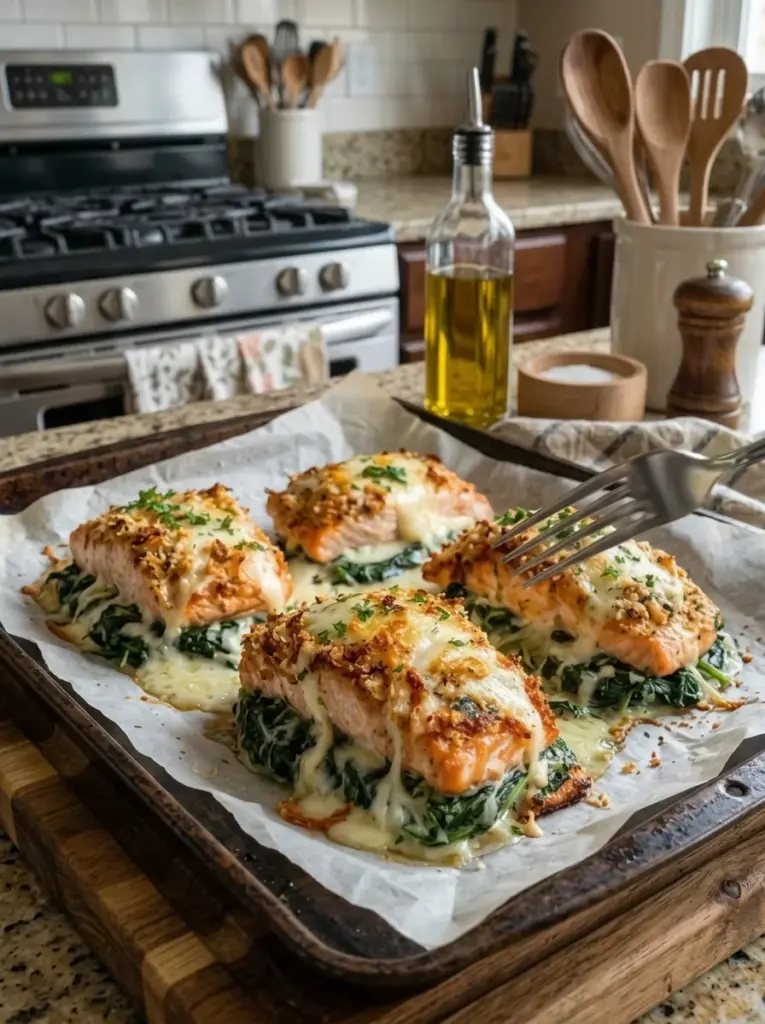
Mediterranean Baked Salmon with Spinach and Mozzarella: A Healthy Dinner That Feels Like a Treat
If you are looking for a dinner that is healthy, elegant, and easy enough for a weeknight, Mediterranean baked salmon with spinach and mozzarella checks every box. Tender, flaky salmon fillets are topped with a savory mixture of garlicky sauteed spinach, sun-dried tomatoes, and a lemony herb seasoning, then finished with a blanket of melted mozzarella. The result is juicy, flavorful, and satisfying, with all the bright, sunny flavors of the Mediterranean in every bite.
This recipe comes together in about 30 minutes using one skillet and one baking sheet, so cleanup is a breeze. It is rich in protein and heart-healthy omega-3 fats, and it pairs beautifully with rice, roasted potatoes, pasta, or a simple salad. It is impressive enough for guests and simple enough for a regular Tuesday night.
In this complete guide, you will find the full ingredient list, step-by-step instructions, tips for perfectly cooked salmon, variations, serving ideas, storage and reheating advice, and answers to frequently asked questions about making baked salmon with spinach and cheese.
Why You Will Love This Mediterranean Baked Salmon
It is ready in about 30 minutes. With only 10 minutes of hands-on prep and 12 to 15 minutes in the oven, this meal fits busy schedules.
It is healthy and satisfying. Salmon is a good source of protein and omega-3 fatty acids, and spinach adds iron and vitamins. Mozzarella is used in moderation for creamy, melty flavor.
It is full of flavor. Garlic, lemon, sun-dried tomatoes, oregano, and basil give the salmon a classic Mediterranean taste, while mozzarella adds a gentle, creamy richness.
It is a one-pan-style dinner. You cook the topping in one skillet and bake the salmon on a single sheet pan, which keeps the dishes to a minimum.
It is elegant but simple. The salmon looks like something from a restaurant menu, but the technique is easy.
It is easy to customize. Swap the cheese, add vegetables, or adjust the seasoning to suit your tastes.
It is naturally low-carb and gluten-free. Serve it with vegetables for a low-carb meal or over rice or pasta for a heartier plate.
Ingredients for Mediterranean Baked Salmon with Spinach and Mozzarella
This recipe serves 4.
For the Salmon
- 4 salmon fillets (5 to 6 oz each), skin-on or skinless
- 2 tbsp extra virgin olive oil
- 1 tbsp fresh lemon juice
- ¾ tsp salt
- ¼ tsp black pepper
- 1 tsp dried oregano
- ½ tsp garlic powder
- ½ tsp smoked paprika (optional)
For the Spinach and Sun-Dried Tomato Topping
- 1 tbsp extra virgin olive oil
- 4 cloves garlic, minced
- 6 cups (about 6 oz) fresh baby spinach
- ¼ cup chopped sun-dried tomatoes (oil-packed, drained)
- 1 tbsp fresh lemon juice
- 1 tsp dried basil or Italian seasoning
- ¼ tsp salt
- Pinch of red pepper flakes (optional)
- Optional: ¼ cup chopped marinated artichoke hearts
- Optional: 2 tbsp sliced kalamata olives
For the Cheese
- 1 cup shredded low-moisture mozzarella cheese (or 4 oz fresh mozzarella, sliced)
- 2 tbsp grated Parmesan cheese (optional)
For Garnish
- Fresh parsley or basil, chopped
- Lemon wedges
- Crumbled feta (optional)
Ingredient Notes and Substitutions
Salmon
Choose fresh or thawed frozen salmon fillets that are even in thickness, about 1 inch thick, so they cook evenly. Atlantic, Coho, sockeye, and king salmon all work, though they vary in fat content and cooking time. Skin-on fillets help the salmon stay moist while baking, and the skin easily releases after cooking. If using frozen salmon, thaw it completely in the refrigerator overnight and pat it dry before seasoning.
Spinach
Fresh baby spinach is tender and cooks quickly. It wilts down significantly, so it may look like a lot at first. If using frozen spinach, thaw it and squeeze out as much water as possible, using about 1 cup of packed frozen spinach. Kale, Swiss chard, or arugula can substitute, though they cook differently.
Sun-Dried Tomatoes
Sun-dried tomatoes provide a sweet, tangy, concentrated flavor that is signature to Mediterranean cooking. Oil-packed tomatoes are soft and ready to use after draining, while dry-packed tomatoes need to be soaked in hot water for 10 minutes first. If you prefer, use halved cherry tomatoes or roasted red peppers.
Mozzarella
Low-moisture shredded mozzarella melts evenly and browns nicely without releasing too much liquid. Fresh mozzarella is creamier but wetter, so pat it dry before using. Provolone, feta, or a mix of mozzarella and Parmesan are also delicious. Shredding your own cheese from a block gives the best melt.
Lemon and Herbs
Fresh lemon juice brightens the richness of the salmon and cheese. Oregano and basil are classic Mediterranean herbs, and fresh herbs added at the end give a fresh, aromatic finish. Dill and thyme are also nice alternatives.
Olive Oil
A good extra virgin olive oil adds fruity flavor and keeps the salmon moist. It also helps the seasonings stick and promotes browning.
Garlic
Fresh garlic is key to the flavor. Saute it gently so it becomes fragrant without burning, as burned garlic tastes bitter.
How to Make Mediterranean Baked Salmon with Spinach and Mozzarella
Step 1: Preheat the Oven and Prepare the Pan
Preheat the oven to 400°F (200°C). Line a rimmed baking sheet with parchment paper or lightly grease it. Parchment prevents the salmon from sticking and makes cleanup easy.
Step 2: Season the Salmon
Pat the salmon fillets dry with paper towels. Place them on the prepared baking sheet, skin side down if using skin-on. Drizzle with the olive oil and lemon juice. Season evenly with salt, pepper, oregano, garlic powder, and smoked paprika, and rub the seasonings gently into the flesh.
Step 3: Saute the Spinach Topping
Heat 1 tablespoon of olive oil in a large skillet over medium heat. Add the garlic and cook for 30 seconds, until fragrant. Add the spinach in batches, stirring as it wilts, about 2 to 3 minutes. Add the sun-dried tomatoes, lemon juice, basil, salt, and red pepper flakes. Cook for another minute, then remove from the heat. If the spinach releases a lot of liquid, drain it in a colander or press out the excess with a spoon. A drier topping keeps the salmon from becoming watery.
Step 4: Top the Salmon
Spoon the spinach mixture evenly over the top of each salmon fillet, pressing it gently so it stays in place. Add the artichokes and olives if using.
Step 5: Bake the Salmon
Bake the salmon for 10 to 12 minutes, until it is nearly cooked through. The exact time depends on the thickness of the fillets, so start checking at 10 minutes.
Step 6: Add the Cheese
Sprinkle the mozzarella and Parmesan over the spinach topping. Return the pan to the oven and bake for another 3 to 5 minutes, until the cheese is melted and bubbly and the salmon flakes easily with a fork. For a golden top, broil for 1 to 2 minutes at the end, watching carefully.
Step 7: Check for Doneness
The salmon is done when it flakes easily with a fork and the thickest part reaches an internal temperature of 145°F (63°C), according to USDA guidelines. Many cooks prefer salmon slightly under that mark, around 125 to 130°F for medium, but 145°F is the safe temperature recommended for fully cooked fish. The center will continue to cook slightly as it rests.
Step 8: Garnish and Serve
Rest the salmon for 2 to 3 minutes. Garnish with fresh parsley or basil, a squeeze of lemon, and crumbled feta if desired. Serve immediately.
Tips for Perfectly Baked Salmon
Pat the salmon dry. Removing surface moisture helps the seasonings stick and gives better texture.
Use fillets of even thickness. Uniform pieces cook at the same pace. If one end is thin, fold it under to even out the thickness.
Do not overcook. Salmon dries out quickly. Pull it from the oven when it flakes easily and is just opaque in the center.
Squeeze out the spinach. Excess liquid from the topping can make the salmon soggy and dilute the flavors.
Bring the salmon to room temperature. Let it sit on the counter for 10 to 15 minutes before baking for more even cooking.
Add the cheese later. Adding it near the end prevents it from overbrowning or becoming rubbery.
Use a thermometer. An instant-read thermometer is the best way to avoid overcooking or undercooking.
Finish with acid and herbs. Fresh lemon juice and herbs brighten the dish and balance the richness.
Rest before serving. A brief rest allows the juices to redistribute and keeps the fish moist.
Troubleshooting Common Problems
The salmon is dry. It was likely overcooked. Reduce the baking time, check early, and consider baking at a slightly lower temperature, such as 375°F, for thicker fillets.
The salmon is undercooked in the center. Return it to the oven for a few more minutes, checking every 2 minutes. Thick fillets may need extra time.
The topping is watery. The spinach released too much liquid. Squeeze it out well or cook it longer in the skillet to evaporate the moisture.
The cheese did not brown. Broil for 1 to 2 minutes at the end, or use a mix of mozzarella and Parmesan, which browns more readily.
The white albumin is showing. The white protein that appears on the surface of cooked salmon is harmless. Cooking at a gentler temperature or not overcooking reduces it.
The salmon sticks to the pan. Use parchment paper or a well-oiled pan.
It tastes bland. Season the salmon well with salt and add a squeeze of lemon, fresh herbs, or olives before serving.
Delicious Variations
Creamy spinach topping. Stir 2 ounces of cream cheese into the spinach mixture for a creamy, spinach-artichoke-style topping.
Feta and olive. Replace the mozzarella with crumbled feta and add chopped kalamata olives for a saltier, more Greek-inspired flavor.
Pesto salmon. Spread a spoonful of basil pesto over the salmon before adding the spinach and cheese.
Tomato and basil. Top with sliced cherry tomatoes and fresh basil in place of sun-dried tomatoes.
Lemon garlic butter. Brush the salmon with melted garlic butter and lemon juice before baking.
Foil packet method. Place each fillet with the topping on a piece of foil, seal into a packet, and bake for 15 to 18 minutes. Open, add cheese, and broil briefly.
Air fryer method. Cook the seasoned salmon at 400°F for 6 to 8 minutes, add the topping and cheese, and cook another 2 to 3 minutes.
Sheet-pan dinner. Surround the salmon with asparagus, cherry tomatoes, or baby potatoes tossed in olive oil.
Add artichokes. Mix chopped marinated artichoke hearts into the spinach topping for a classic Mediterranean twist.
Different fish. Use cod, halibut, trout, or arctic char in place of salmon, adjusting the baking time.
What to Serve with Mediterranean Baked Salmon
This salmon pairs well with a range of sides.
- Rice or orzo: lemon rice, garlic rice, or herbed orzo.
- Roasted vegetables: asparagus, zucchini, broccoli, or green beans.
- Roasted potatoes: crispy baby potatoes with olive oil and rosemary.
- Greek salad: tomatoes, cucumbers, olives, red onion, and feta.
- Quinoa or couscous: for a light, fluffy grain side.
- Crusty bread: to soak up the juices and olive oil.
For drinks, serve with a crisp white wine such as Sauvignon Blanc, Pinot Grigio, or Albarino. Sparkling water with lemon is a refreshing non-alcoholic option.
Storage, Reheating, and Food Safety
Refrigerating: Store leftover salmon in an airtight container in the refrigerator for up to 2 days. Cooked fish is best eaten fresh.
Reheating: Reheat gently in a 275°F oven, covered with foil, for 10 to 15 minutes, or microwave at 50 percent power in short intervals. Gentle reheating prevents the fish from drying out. Reheat until hot throughout.
Eating cold: Leftover salmon is delicious flaked over salads, tucked into wraps, or mixed into pasta.
Freezing: Freezing the cooked dish is not ideal, as the texture of the fish and cheese may change. You can freeze raw salmon fillets for up to 3 months.
Make ahead: Prepare the spinach topping up to a day ahead and refrigerate. Season and bake the salmon right before serving for the best texture.
Frequently Asked Questions
What temperature should I bake salmon at?
400°F is ideal for fillets about 1 inch thick, as it cooks them quickly while keeping them moist. Lower temperatures, around 350 to 375°F, are gentler and work well for thicker cuts.
How do I know when salmon is done?
Salmon is done when it flakes easily with a fork and is opaque throughout. The USDA recommends an internal temperature of 145°F for fish.
Should I bake salmon skin-side up or down?
Skin-side down. The skin protects the flesh from direct heat and helps keep it moist. It also releases easily from the cooked fillet.
Can I use frozen salmon?
Yes. Thaw it completely in the refrigerator, then pat it dry before seasoning and baking.
Can I use frozen spinach?
Yes. Thaw it and squeeze out all of the water before sauteing, so the topping is not soggy.
Can I make this without cheese?
Yes. Omit the mozzarella for a dairy-free version, and add a sprinkle of toasted breadcrumbs or pine nuts for texture.
Can I prepare it ahead of time?
You can make the topping ahead and season the salmon in advance, but bake it just before serving. Reheated salmon is less tender.
What can I serve with it for a low-carb meal?
Serve with roasted asparagus, zucchini noodles, cauliflower rice, or a green salad.
Is this recipe healthy?
It is a balanced meal with protein, healthy fats, and vegetables. Using moderate amounts of cheese keeps it lighter. Nutrition depends on ingredients and portion size.
Can I use another cheese?
Yes. Provolone, feta, Parmesan, goat cheese, or Gruyere are all good options.
Final Thoughts: A Light, Bright, and Delicious Weeknight Dinner
Mediterranean baked salmon with spinach and mozzarella proves that healthy food can be exciting, flavorful, and fast. Flaky salmon, garlicky spinach, sweet sun-dried tomatoes, and gooey mozzarella come together in a dish that is full of color and satisfying in every way. It is easy to make, easy to customize, and elegant enough to serve to company.
Preheat the oven, grab your salmon, and enjoy a dinner that feels special without much effort. If you try it, leave a comment and a star rating, and tell us how you served it. Happy cooking!