Mini No-Knead Rosemary Focaccia: Easy, Fluffy and Golden
SEO title: Mini No-Knead Rosemary Focaccia Recipe (Soft, Airy and Crispy)
Meta description: Make soft, airy rosemary focaccia with a crisp olive oil crust, no kneading and just 7 ingredients. This small 8×8 batch is ready in about 3 hours.
Suggested URL slug: /mini-no-knead-rosemary-focaccia
Focus keyword: no-knead rosemary focaccia
Secondary keywords: easy focaccia recipe, small batch focaccia, homemade focaccia bread, rosemary focaccia, 8×8 focaccia
Introduction
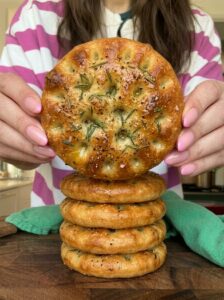
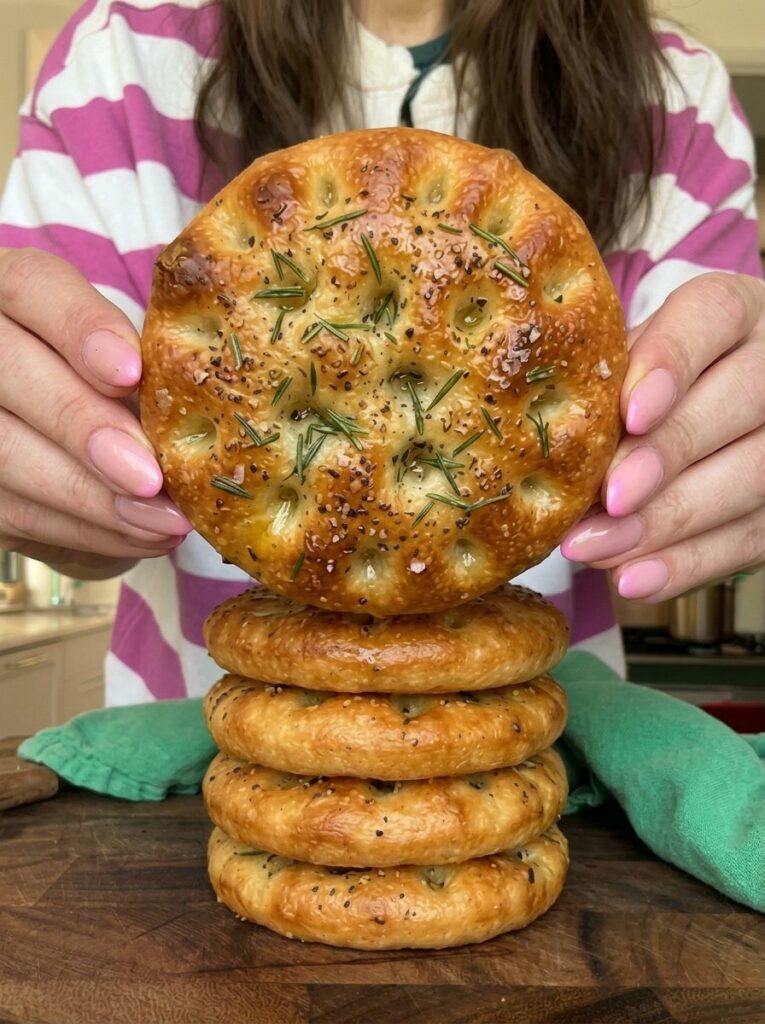
There are few things in the kitchen as satisfying as pulling a golden, fragrant tray of homemade bread out of the oven. This mini no-knead rosemary focaccia delivers that feeling without the usual bread-baking stress. It’s soft and airy, with a fluffy, chewy center, a crisp, olive-oil-kissed crust and plenty of fragrant rosemary in every bite.
You don’t need a stand mixer, a bread machine or any kneading skills. You stir the dough together in one bowl with a spoon, let time do the work, press in the classic dimples and bake. The recipe makes one small 8×8-inch focaccia, about 6 to 9 pieces. That’s enough for a cozy dinner or a small gathering, without a giant loaf going stale on the counter.
This guide covers everything you need: the full recipe, ingredient notes, step-by-step instructions, troubleshooting, flavor variations, serving ideas and storage tips.
Why You’ll Love This Rosemary Focaccia
No kneading required. The dough is wet and sticky on purpose. A wetter dough creates the light, open crumb that makes focaccia so appealing, and a spoon or spatula is all you need to mix it.
Simple pantry ingredients. Flour, water, yeast, honey or sugar, salt, olive oil and fresh rosemary. Nothing fancy or hard to find.
Small batch. This recipe fits an 8×8-inch pan, so it suits small households, weeknight dinners and anyone who wants fresh bread without leftovers.
Hands-off time. Active work is about 15 minutes. The rest is the dough rising while you do something else.
Big flavor. Olive oil in the dough, in the pan and on top gives a rich, golden crust. Rosemary adds an aromatic, savory note, and a pinch of flaky sea salt finishes it.
Endlessly versatile. Dip it, slice it into sandwiches, serve it with soup or set it out as an appetizer.
What Is Focaccia?
Focaccia is a flat, oven-baked Italian bread known for its dimpled surface, generous olive oil and tender crumb. Unlike a crusty sourdough boule or a sandwich loaf, it’s baked in a pan, so the bottom and edges fry in the oil and turn crisp and golden while the inside stays soft.
Those dimples hold pools of olive oil, herbs and salt, so every bite is seasoned. Rosemary is among the most popular toppings, and it works well because the herb’s piney, savory flavor pairs naturally with olive oil and sea salt.
Recipe Overview
| Prep time | About 15 minutes |
| First rise | About 1 to 1½ hours |
| Second rise | About 30 to 45 minutes |
| Bake time | 20 to 25 minutes |
| Total time | About 2½ to 3 hours |
| Yield | 1 small 8×8-inch focaccia (6 to 9 pieces) |
Ingredients
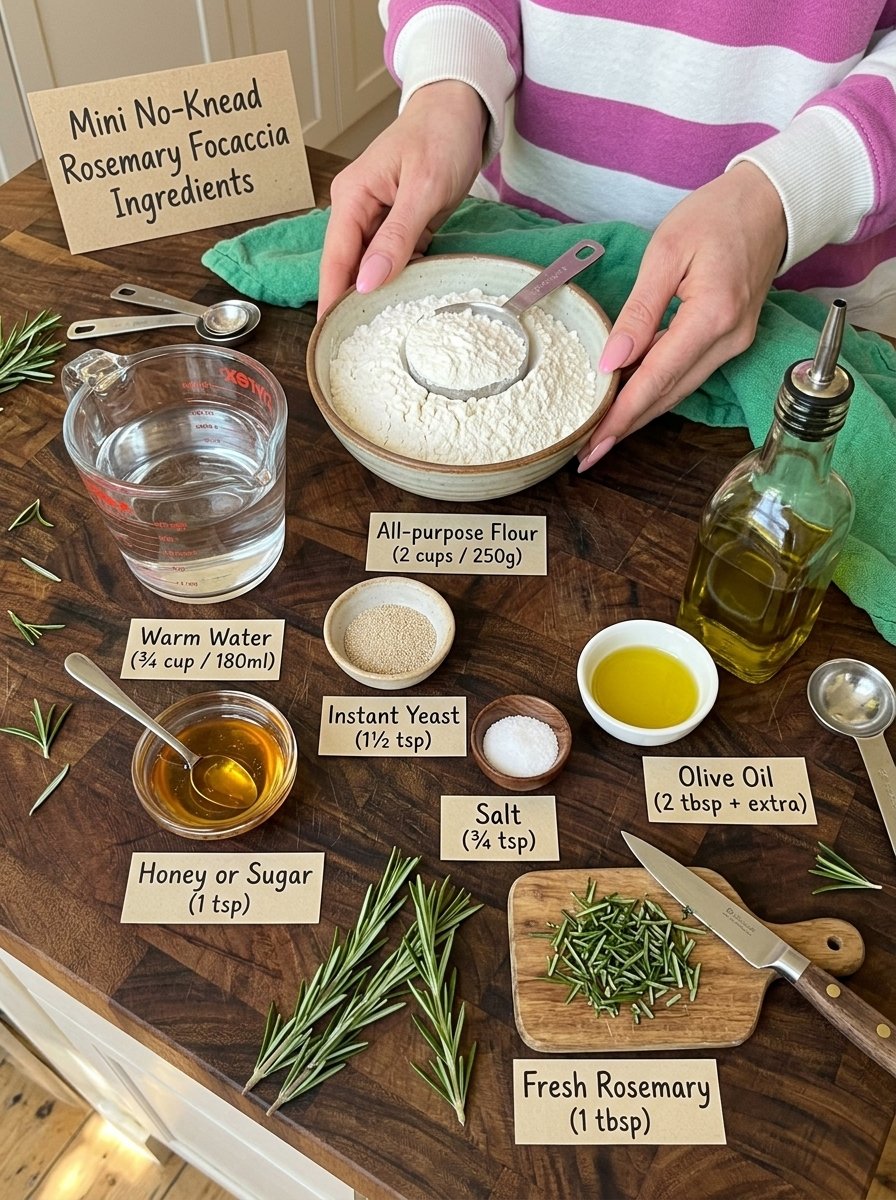
- 2 cups (250 g) all-purpose flour
- ¾ cup (180 ml) warm water
- 1½ tsp (5 g) instant yeast
- 1 tsp honey or granulated sugar
- ¾ tsp salt
- 2 tbsp olive oil, plus extra for the pan and topping
- 1 tbsp fresh rosemary, finely chopped
- Flaky sea salt, optional, for finishing
Ingredient Notes
All-purpose flour. It’s what most home kitchens already have, and it makes a soft, tender focaccia. If you measure by volume, spoon the flour into the cup and level it rather than scooping straight from the bag, which packs in too much flour. Weighing 250 g is the most accurate method. Too much flour makes the dough stiff and the bread dense, so aim for a soft, sticky dough.
Warm water. It should feel comfortably warm, not hot. Water that’s too hot can damage the yeast and stop the dough from rising properly.
Instant yeast. Instant yeast can be mixed straight into the water, and it’s reliable for a no-knead dough. The yeast, water and honey sit together for about 5 minutes first, so you can see it’s active before you add the flour.
Honey or sugar. A small amount gives the yeast something to feed on and adds a subtle hint of flavor and browning. Either works.
Olive oil. Use plenty. It goes in the dough, in the pan and on top. A good extra virgin olive oil adds noticeable flavor, so it’s worth using one you enjoy.
Fresh rosemary. Fresh gives the most fragrant flavor, though dried rosemary can be used if that’s what you have. Chop it finely so it distributes evenly through the dough and doesn’t leave sharp, tough pieces on the surface.
Flaky sea salt. This is optional but recommended. A light sprinkle adds crunch and brightens the whole loaf.
Equipment You’ll Need
- A large mixing bowl
- A wooden spoon or spatula
- Plastic wrap, a lid or a clean kitchen towel
- An 8×8-inch baking pan
- A pastry brush (optional, fingers work too)
- A cutting board and knife
How to Make Mini No-Knead Rosemary Focaccia
Step 1: Mix the Dough
Add the warm water, instant yeast and honey or sugar to a large mixing bowl. Let the mixture sit for about 5 minutes.
Add the flour, salt, olive oil and chopped rosemary. Stir with a wooden spoon or spatula until a soft, sticky dough forms and no dry flour remains. You don’t need to knead it. The dough will look shaggy and wet, and that’s what you want.
Step 2: Let the Dough Rise
Cover the bowl with plastic wrap, a lid or a clean kitchen towel. Put it in a warm, draft-free spot and let the dough rise for about 1 to 1½ hours, until it’s noticeably puffy and nearly doubled in size.
A warm kitchen may need less time, and a cool one may need longer. Judge by the dough’s appearance rather than the clock.
Step 3: Prepare the Baking Pan
Generously drizzle olive oil into an 8×8-inch baking pan. Spread it across the bottom and up the sides with your fingers or a pastry brush.
This oil keeps the focaccia from sticking and gives it deliciously crisp, flavorful edges. Don’t skimp.
Step 4: Transfer the Dough
Gently scrape the risen dough into the prepared pan and drizzle a little more olive oil over the top. With lightly oiled fingertips, gently stretch the dough toward the edges of the pan.
If the dough resists and springs back, let it rest for about 10 minutes, then try again. Don’t press too aggressively. You want to keep the air bubbles that formed during the rise.
Step 5: Let It Rise Again
Cover the pan loosely and let the dough rest for another 30 to 45 minutes, until visibly puffy and airy. While it rests, preheat your oven to 425°F (220°C).
Step 6: Create the Focaccia Dimples
Drizzle a little more olive oil over the surface. With your fingertips, press straight down into the dough to make deep dimples across the whole surface. Don’t flatten the dough completely.
Scatter the remaining fresh rosemary on top, and finish with a light sprinkle of flaky sea salt if you like.
Step 7: Bake the Focaccia
Bake in the preheated oven for about 20 to 25 minutes, until the focaccia is golden brown around the edges and across the top. The surface should look crisp and the center should feel light and airy.
Step 8: Finish With Olive Oil
Take the focaccia out of the oven and immediately drizzle a small amount of olive oil over the top. Let it cool in the pan for about 10 minutes, then move it to a cutting board. Slice into squares or rustic pieces and serve warm.
Tips for the Best Rosemary Focaccia
Keep the dough wet. It’s tempting to add flour when the dough feels sticky, but resist. A wetter dough produces a lighter, airier focaccia.
Be generous with olive oil. The oil on the pan and over the dough is what creates that crisp, golden crust. It’s also a big part of the flavor.
Watch the dough, not the clock. Rise times depend on your kitchen’s temperature. Look for a dough that’s puffy and nearly doubled after the first rise, and visibly airy after the second.
Be gentle when stretching and dimpling. The bubbles that form during fermentation give you an open, fluffy crumb. Use light, oiled fingertips and don’t deflate the dough.
Add flaky salt just before baking. A small sprinkle on top gives the finished loaf extra flavor and a pleasant crunch.
Choose fresh rosemary if possible. It has the best aroma, but dried rosemary works in a pinch. If you use dried, use a smaller amount, since it’s more concentrated.
Troubleshooting Common Focaccia Problems
My dough didn’t rise.
Check that your yeast is fresh and that your water was warm, not hot or cold. Rising in a draft or a cold room can slow things down significantly, so move the bowl somewhere warmer and give it more time.
The dough is too sticky to handle.
Stickiness is normal for focaccia. Oil your fingers and the spatula rather than adding more flour. Oil keeps the dough from clinging to your hands without changing its texture.
The dough keeps shrinking back when I stretch it.
That’s the gluten relaxing and tightening. Let it rest for about 10 minutes, then stretch again. It will spread much more easily.
My focaccia turned out dense.
Common causes are too much flour, not enough rise time or deflating the dough when shaping and dimpling. Next time weigh the flour, wait for the dough to look noticeably puffy and handle it gently.
The bottom isn’t crisp.
Make sure the pan has plenty of olive oil under the dough. The oil effectively fries the bottom and edges as it bakes.
The rosemary burned.
Fine rosemary on the surface can darken quickly. Press the sprigs gently into the dimples so they’re partly coated in oil, which helps protect them from the oven’s heat.
Flavor Variations to Try
Once you’ve made the classic version, there are plenty of ways to change it up. These are suggestions beyond the base recipe, so adjust to your taste:
- Garlic rosemary focaccia: Add thinly sliced or lightly crushed garlic to the dimples before baking.
- Cheesy focaccia: Top with grated Parmesan or mozzarella in the last few minutes of baking.
- Olive focaccia: Press halved olives into the dimples.
- Cherry tomato focaccia: Nestle halved cherry tomatoes into the dough for a juicy, colorful top.
- Lemon and herb: Add a little lemon zest along with the rosemary.
- Different herbs: Thyme or oregano work well in place of, or alongside, rosemary.
Serving Ideas
This focaccia is versatile enough to show up at almost any meal:
- With olive oil for dipping. Serve warm with extra virgin olive oil.
- With soup. It pairs well with tomato soup, creamy soups and hearty stews.
- Alongside mains. Serve it with pasta, roasted vegetables or grilled meats.
- As sandwich bread. Slice it horizontally and fill it for delicious sandwiches.
- As an appetizer. Cut into small pieces and serve with olives, cheese and dips.
- On its own. Enjoy it warm from the oven with a little butter or olive oil.
How to Store and Reheat Focaccia
Room temperature: Store completely cooled focaccia in an airtight container at room temperature for up to 2 days.
Freezing: For longer storage, wrap individual pieces tightly and freeze them in a freezer-safe bag or container for up to 2 to 3 months.
Reheating: Place the focaccia in a 350°F (175°C) oven for several minutes until warm and lightly crisp.
Avoid the fridge. Refrigeration can make the bread lose some of its soft texture, so only refrigerate if you really need to.
Frequently Asked Questions
Do I really not need to knead this focaccia dough?
Correct. The dough is stirred together until no dry flour remains, and the rising time develops the structure for you. Skipping the kneading is what makes this recipe so approachable.
Can I use dried rosemary instead of fresh?
Yes. Fresh rosemary gives the most fragrant flavor, but dried works if that’s what you have. Dried herbs are more concentrated, so you may want to use a little less.
Can I use honey or sugar?
Either one works. It feeds the yeast and adds a slight touch of flavor.
How do I know when the dough has risen enough?
After the first rise, the dough should be noticeably puffy and nearly doubled in size. After the second rise in the pan, it should look visibly puffy and airy.
What size pan should I use?
This recipe is written for a small pan of about 8×8 inches. A noticeably larger pan will give you a thinner focaccia.
Why is my dough so sticky?
It’s meant to be. A soft, slightly sticky dough produces a light and airy focaccia. Use oiled fingers or an oiled spatula rather than extra flour.
How many pieces does this make?
One 8×8-inch focaccia yields roughly 6 to 9 pieces, depending on how you cut it.
Can I freeze focaccia?
Yes. Wrap individual pieces tightly and freeze in a freezer-safe bag or container for up to 2 to 3 months. Reheat in a 350°F (175°C) oven until warm and lightly crisp.
Should I refrigerate leftover focaccia?
It’s best to avoid it. Refrigeration can dull the bread’s soft texture. Keep it airtight at room temperature for up to 2 days, or freeze it.
What can I serve with rosemary focaccia?
It goes well with soups, pasta, roasted vegetables and grilled meats, and it makes excellent sandwiches and appetizer boards.
Final Thoughts
This mini no-knead rosemary focaccia proves that bakery-style bread doesn’t have to be complicated. With a handful of simple ingredients, one bowl and a little patience, you get a soft, airy loaf with a crisp, golden, olive-oil-rich crust and the aroma of fresh rosemary.
Keep the dough soft and sticky, use plenty of olive oil, handle it gently when dimpling and let it rise until it’s puffy. Then slice it warm, dip it in olive oil or pile it with your favorite fillings. Once you’ve made it, it will probably become a regular in your kitchen.
If you try the recipe, leave a rating and a comment below, and share your favorite variations. Happy baking!
Print
Mini No-Knead Rosemary Focaccia
Ingredients
- 2 cups (250 g) all-purpose flour
- ¾ cup (180 ml) warm water
- 1½ tsp (5 g) instant yeast
- 1 tsp honey or granulated sugar
- ¾ tsp salt
- 2 tbsp olive oil, plus extra for the pan and topping
- 1 tbsp fresh rosemary, finely chopped
- Flaky sea salt, optional, for finishing
Ingredient Notes
All-purpose flour. It’s what most home kitchens already have, and it makes a soft, tender focaccia. If you measure by volume, spoon the flour into the cup and level it rather than scooping straight from the bag, which packs in too much flour. Weighing 250 g is the most accurate method. Too much flour makes the dough stiff and the bread dense, so aim for a soft, sticky dough.
Warm water. It should feel comfortably warm, not hot. Water that’s too hot can damage the yeast and stop the dough from rising properly.
Instant yeast. Instant yeast can be mixed straight into the water, and it’s reliable for a no-knead dough. The yeast, water and honey sit together for about 5 minutes first, so you can see it’s active before you add the flour.
Honey or sugar. A small amount gives the yeast something to feed on and adds a subtle hint of flavor and browning. Either works.
Olive oil. Use plenty. It goes in the dough, in the pan and on top. A good extra virgin olive oil adds noticeable flavor, so it’s worth using one you enjoy.
Fresh rosemary. Fresh gives the most fragrant flavor, though dried rosemary can be used if that’s what you have. Chop it finely so it distributes evenly through the dough and doesn’t leave sharp, tough pieces on the surface.
Flaky sea salt. This is optional but recommended. A light sprinkle adds crunch and brightens the whole loaf.
Instructions
Add the warm water, instant yeast and honey or sugar to a large mixing bowl. Let the mixture sit for about 5 minutes.
Add the flour, salt, olive oil and chopped rosemary. Stir with a wooden spoon or spatula until a soft, sticky dough forms and no dry flour remains. You don’t need to knead it. The dough will look shaggy and wet, and that’s what you want.
Cover the bowl with plastic wrap, a lid or a clean kitchen towel. Put it in a warm, draft-free spot and let the dough rise for about 1 to 1½ hours, until it’s noticeably puffy and nearly doubled in size.
A warm kitchen may need less time, and a cool one may need longer. Judge by the dough’s appearance rather than the clock.
Generously drizzle olive oil into an 8×8-inch baking pan. Spread it across the bottom and up the sides with your fingers or a pastry brush.
This oil keeps the focaccia from sticking and gives it deliciously crisp, flavorful edges. Don’t skimp.
Gently scrape the risen dough into the prepared pan and drizzle a little more olive oil over the top. With lightly oiled fingertips, gently stretch the dough toward the edges of the pan.
If the dough resists and springs back, let it rest for about 10 minutes, then try again. Don’t press too aggressively. You want to keep the air bubbles that formed during the rise.
Cover the pan loosely and let the dough rest for another 30 to 45 minutes, until visibly puffy and airy. While it rests, preheat your oven to 425°F (220°C).
Drizzle a little more olive oil over the surface. With your fingertips, press straight down into the dough to make deep dimples across the whole surface. Don’t flatten the dough completely.
Scatter the remaining fresh rosemary on top, and finish with a light sprinkle of flaky sea salt if you like.
Bake in the preheated oven for about 20 to 25 minutes, until the focaccia is golden brown around the edges and across the top. The surface should look crisp and the center should feel light and airy.
Take the focaccia out of the oven and immediately drizzle a small amount of olive oil over the top. Let it cool in the pan for about 10 minutes, then move it to a cutting board. Slice into squares or rustic pieces and serve warm.