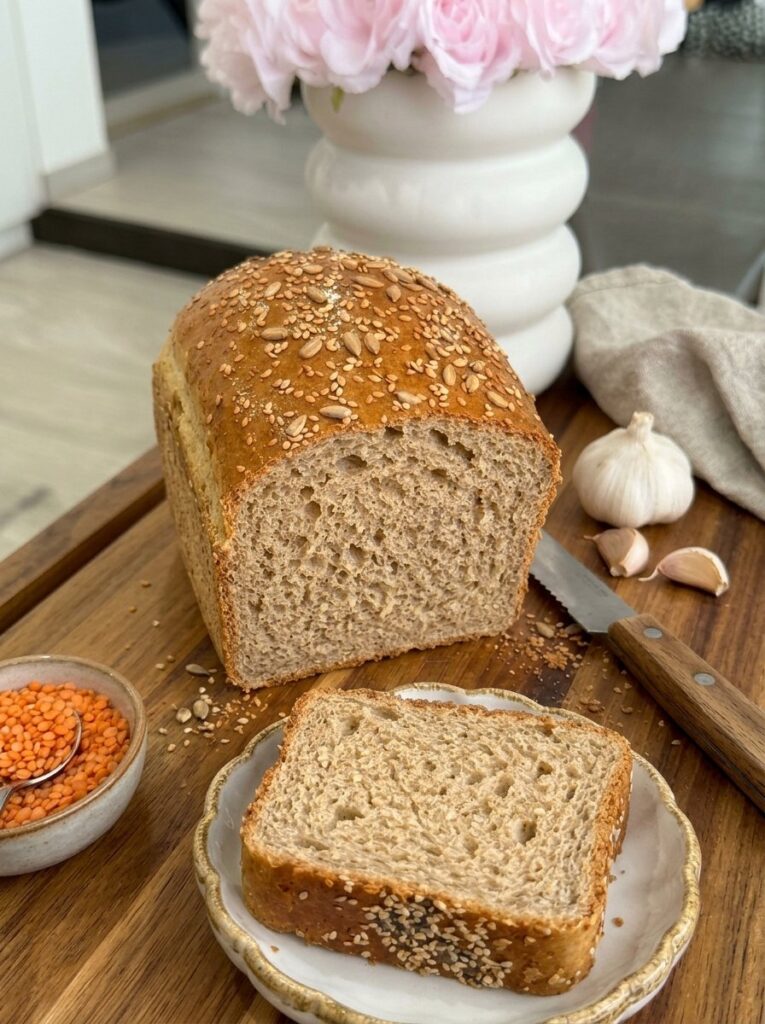
If you have ever wanted fresh homemade bread without the waiting, the kneading, or the sticky mess, this simple blender lentil bread is about to become your new favorite recipe. It is soft, hearty, and perfectly sliceable, and it is made with nothing more than dry red lentils, water, olive oil, and a few pantry staples. There is no flour, no yeast, and no kneading involved. You soak the lentils, blend everything into a smooth batter, pour it into a loaf pan, and let the oven do the rest.
The result is a golden, sesame-topped loaf with a tender, moist crumb that toasts beautifully and holds up to your favorite spreads, sandwich fillings, and soups. Whether you are looking for a flourless bread, a protein-rich alternative to store-bought sandwich bread, or simply a fun new way to use a bag of red lentils, this recipe delivers.
In this guide you will find the complete ingredient list, step-by-step instructions, troubleshooting tips, flavor variations, serving ideas, storage and freezing advice, and answers to the most common questions about making lentil bread at home.
What Is Blender Lentil Bread?
Blender lentil bread is a loaf made by blending soaked red lentils into a smooth, thick batter and baking it in a loaf pan. Instead of relying on wheat flour and yeast for structure, the bread gets its body from the natural starches and proteins in the lentils themselves. Baking powder, baking soda, and a splash of acid (apple cider vinegar or lemon juice) give the loaf lift so it does not turn out dense or heavy.
Because there is no dough to knead and no rising time to wait for, the hands-on work takes only about 15 minutes. Most of the total time is simple soaking and cooling, which means you can start the lentils in the morning or the night before and bake whenever you are ready.
The flavor is mild, savory, and slightly nutty. Red lentils are one of the most neutral-tasting lentil varieties, so the bread does not taste overpowering. Many people are surprised by how much it resembles a hearty whole grain loaf, especially once it is toasted.
Why You Will Love This Lentil Bread Recipe
There are plenty of reasons this recipe has a way of winning people over after the first slice:
- No flour required. The loaf is built entirely from lentils, so it is a great option when you are out of flour or want a break from wheat-based baking.
- No yeast and no kneading. There is nothing to proof, no dough to shape, and no rising time. If you have ever felt intimidated by bread baking, this is the easiest place to start.
- Made in a blender. The blender does all the heavy lifting. Cleanup is minimal, and the batter comes together in minutes.
- Simple, affordable ingredients. Dry red lentils are inexpensive and easy to find, and the rest of the ingredients are probably already in your kitchen.
- Soft and sliceable. When cooled completely, the loaf slices neatly into sturdy pieces that hold up to toasting and sandwiches.
- Hearty and satisfying. Lentils are naturally rich in plant-based protein and fiber, so a slice feels more filling than many standard breads.
- Great for meal prep. The loaf stores well in the refrigerator and freezes beautifully, so one bake gives you bread for the whole week.
- Easy to customize. Add garlic powder, dried herbs, or a seed topping to make the loaf your own.
Ingredients for Simple Blender Lentil Bread
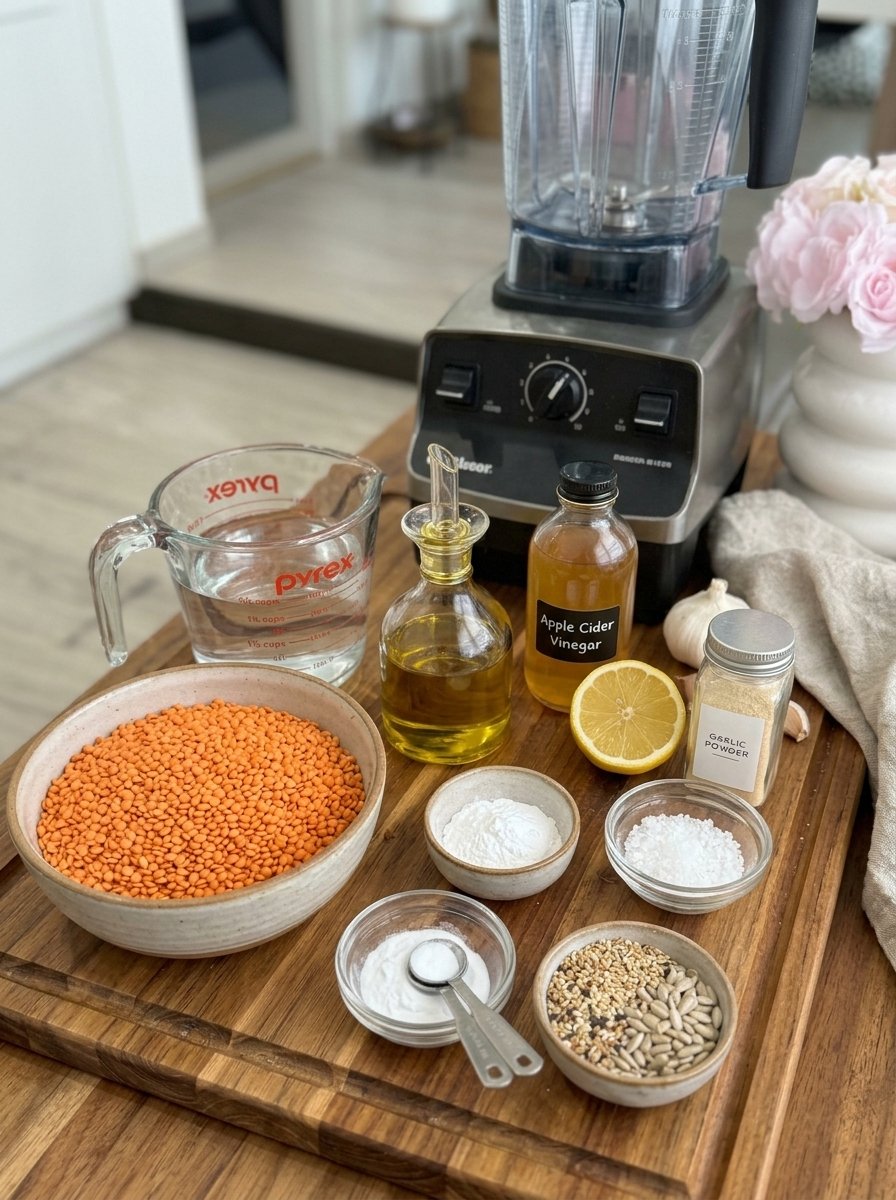
Here is everything you need to make one standard loaf:
- 2 cups dry red lentils
- 1½ cups water, plus extra for soaking
- ¼ cup olive oil
- 1 teaspoon baking powder
- ½ teaspoon baking soda
- 1 tablespoon apple cider vinegar or lemon juice
- ½ teaspoon salt
- ½ teaspoon garlic powder (optional)
- 1 tablespoon sesame seeds or mixed seeds for topping (optional)
A Closer Look at the Key Ingredients
Dry red lentils. Red lentils are the star of this recipe, and they are the best choice for blending. They are skinless and split, which means they soften quickly during soaking and break down into a very smooth batter. Brown or green lentils have tougher skins and a stronger flavor, so they tend to produce a grittier, earthier loaf. For the best texture, stick with red lentils.
Water. You use water twice: once for soaking the lentils, and once, in fresh form, as the liquid that helps the blender create a smooth batter. Always drain and rinse the soaked lentils before blending, and use fresh water in the blender rather than the soaking water.
Olive oil. The olive oil adds moisture and richness, and it helps keep the crumb tender instead of dry. You can substitute another neutral oil such as avocado oil if you prefer.
Baking powder and baking soda. Together, these leavening agents give the loaf lift and help create a lighter texture. The baking soda reacts with the acid in the batter, while the baking powder provides additional rise in the oven.
Apple cider vinegar or lemon juice. The acid activates the baking soda, which helps the loaf rise and become tender. You will not taste it in the finished bread.
Salt. Salt is essential for flavor. Lentils are mild on their own, and a little salt makes the bread taste like bread.
Garlic powder (optional). A half teaspoon adds a gentle savory note that makes the loaf especially good for sandwiches and toast with savory toppings.
Sesame seeds or mixed seeds (optional). Sprinkled over the top before baking, seeds create a beautiful bakery-style crust and add a pleasant crunch and nutty aroma.
Equipment You Will Need
- A high-powered blender (a standard blender can work, but you may need to blend longer and scrape the sides more often)
- A large bowl for soaking the lentils
- A fine-mesh strainer for rinsing and draining
- A standard 9 × 5-inch loaf pan
- Parchment paper (optional, but helpful for lifting the loaf out)
- A spatula for smoothing the top
- A wire cooling rack
- A sharp serrated knife for slicing
How to Make Simple Blender Lentil Bread
Step 1: Soak the Lentils
Rinse the dry red lentils thoroughly under cold running water until the water runs mostly clear. Place them in a large bowl, cover them with plenty of fresh water, and let them soak for 3 to 4 hours, until softened. The lentils will swell as they absorb water, so make sure the bowl is large enough and the water covers them by a couple of inches. Once soaked, drain them well and rinse again before using.
Soaking is the most important step for a smooth, tender loaf. Properly softened lentils blend into a creamy batter, while under-soaked lentils can leave small gritty bits in the finished bread.
Step 2: Prepare the Blender Batter
Add the drained lentils to a high-powered blender along with 1½ cups of fresh water, the olive oil, baking powder, baking soda, apple cider vinegar, salt, and garlic powder if you are using it. Blend until the mixture is completely smooth, pausing to scrape down the sides if necessary.
The batter should look thick, creamy, and pourable, similar to a thick pancake batter or a dense cake batter. If it is too thick for your blender to move, add a little more water, one tablespoon at a time, until it blends freely.
Step 3: Prepare the Loaf Pan
Preheat your oven to 350°F (175°C). Grease a standard 9 × 5-inch loaf pan, or line it with parchment paper, leaving a little overhang on the long sides. The overhang works like handles and makes it easy to lift the finished loaf out of the pan without breaking it.
Step 4: Fill the Pan
Pour the smooth lentil batter into the prepared loaf pan. Gently tap the pan on the counter a few times to release any large air bubbles, then smooth the surface with a spatula. If you like, sprinkle sesame seeds or mixed seeds over the top. Press them lightly with the back of the spatula so they stay in place during baking.
Step 5: Bake Until Set
Place the pan in the preheated oven and bake for approximately 50 to 60 minutes. The bread is ready when the loaf feels firm, the top is lightly golden, and a toothpick inserted into the center comes out without wet batter. Every oven is a little different, so start checking around the 50-minute mark. If the top begins to brown too quickly, loosely cover it with foil for the remainder of the baking time.
Step 6: Cool Before Slicing
Remove the loaf from the oven and let it rest in the pan for about 10 to 15 minutes. Then lift it out using the parchment overhang and transfer it to a wire rack. Allow it to cool completely, about an hour, before slicing.
This step matters more than you might think. Lentil bread continues to set as it cools. If you slice it while it is still warm, the interior can seem soft or gummy. Patience gives you clean, sturdy slices.
Step 7: Slice and Enjoy
Use a sharp serrated knife and a gentle sawing motion to cut the loaf into even slices. Serve the bread plain, toasted, or topped with your favorite spreads. You can expect about 10 to 12 slices from one loaf.
Recipe Details at a Glance
- Prep time: 15 minutes, plus 3 to 4 hours of soaking
- Bake time: 50 to 60 minutes
- Cooling time: 1 hour
- Total time: Approximately 5 to 6 hours, including soaking and cooling
- Yield: 1 loaf, approximately 10 to 12 slices
- Oven temperature: 350°F (175°C)
Tips for the Best Simple Blender Lentil Bread
A few small details make the difference between a good loaf and a great one.
1. Soak the lentils well. Allow at least 3 to 4 hours for soaking so the lentils soften enough to blend into a smooth batter. If you are short on time, you can use warm water to speed things up slightly, but do not skip the soak entirely.
2. Blend thoroughly. A smooth, even batter creates a tender texture and prevents whole lentil pieces from showing up in the finished bread. Take your time, stop to scrape the sides, and blend until you cannot see any flecks.
3. Check the consistency. The batter should be thick but pourable. If it seems too thick to blend, add a little water one tablespoon at a time. Avoid adding too much, because a very thin batter can lead to a dense, damp loaf.
4. Do not skip the acid. The apple cider vinegar or lemon juice reacts with the baking soda to help the loaf rise. Without it, the bread can turn out flatter and heavier.
5. Tap out the air bubbles. A few firm taps on the counter before baking help release large trapped bubbles, giving you a more even crumb.
6. Watch the top. If the crust browns faster than the center cooks, tent the loaf loosely with foil. This lets the inside finish baking without over-darkening the top.
7. Let it cool completely. Lentil bread firms up as it cools, making it much easier to slice neatly. This is the single best tip for a sliceable loaf.
8. Add your favorite flavor. Garlic powder, dried herbs, or seeds can give the bread extra personality. See the variations below for more ideas.
Flavor Variations to Try
Once you have made the basic recipe, it is easy to experiment. Here are a few simple ideas, all based on the original method:
- Herb loaf. Add 1 teaspoon of dried Italian seasoning, oregano, or thyme to the blender along with the other ingredients.
- Extra garlicky. Increase the garlic powder slightly, or sprinkle a little extra on top before baking.
- Seeded crust. Use a mix of sesame, sunflower, and pumpkin seeds on top for a bakery-style finish and extra crunch.
- Lemon and pepper. Use lemon juice as your acid and add a pinch of black pepper for a bright, savory twist.
- Smoky version. Add a pinch of smoked paprika for a warm, savory depth that is wonderful in sandwiches.
If you try a variation, keep the liquid and leavening amounts the same so the loaf rises and sets properly.
What to Serve With Lentil Bread
This versatile loaf works for breakfast, lunch, dinner, and snacks. Here are some of the best ways to enjoy it:
- Breakfast toast. Toast a slice and top it with avocado, eggs, or your favorite spread for a filling start to the day.
- Savory sandwiches. Use two slices to make a delicious sandwich with cheese, fresh vegetables, or turkey. The sturdy texture holds fillings well.
- Simple snack. Enjoy a warm slice with hummus, cream cheese, or a drizzle of olive oil.
- Soup side. Serve it alongside vegetable soup, lentil soup, or a fresh salad for a cozy, balanced meal.
- Toasted with toppings. Add butter, mashed avocado, or any savory spread for an easy snack that comes together in minutes.
How to Store Lentil Bread
Proper storage keeps your loaf fresh and ready for the week ahead.
- Room temperature: Store completely cooled bread in an airtight container for up to 2 days.
- Refrigerator: Keep it in an airtight container for up to 5 days. Refrigeration is the best option if you plan to eat the bread over several days.
- Freezer: Slice the cooled loaf, place parchment paper between the slices, and freeze in a freezer-safe bag for up to 2 months. The parchment keeps the slices from sticking together, so you can pull out exactly as many as you need.
- Reheating: Toast slices straight from the refrigerator or freezer, or warm them gently in a toaster oven. Toasting brings back a lightly crisp edge and makes the bread taste freshly baked.
Troubleshooting: Common Lentil Bread Problems
My loaf is gummy in the middle. This usually happens when the bread is sliced too early or underbaked. Make sure a toothpick comes out clean of wet batter, and let the loaf cool completely before cutting. If your oven runs cool, add 5 to 10 minutes of baking time and tent with foil.
The bread is dense. Check that your baking powder and baking soda are fresh, since old leavening loses its power. Also make sure you included the vinegar or lemon juice, and avoid over-thinning the batter with extra water.
There are bits of lentil in the bread. The lentils were probably not soaked long enough or not blended long enough. Next time, soak for the full 3 to 4 hours and blend until the batter is completely silky.
The top is browning too fast. Cover the loaf loosely with foil for the last part of baking. This protects the crust while the center finishes setting.
The loaf sticks to the pan. Grease the pan well or use parchment paper with an overhang. Let the loaf rest for 10 to 15 minutes before lifting it out.
The slices crumble. Make sure the bread has cooled completely and use a sharp serrated knife with a gentle sawing motion rather than pressing straight down.
Why Red Lentils Make Such a Good Bread Base
Lentils are one of the oldest cultivated foods in the world, and they have remained a pantry staple in kitchens everywhere because they are affordable, versatile, and easy to cook. Red lentils in particular are prized for how quickly they soften and how smoothly they blend. Unlike heartier varieties, they have no tough outer skin, which is exactly what you want for a batter that bakes into a tender crumb.
Lentils are also naturally rich in plant-based protein and dietary fiber, which is part of why this bread feels hearty and satisfying. Because the loaf contains no wheat flour, it can be a good option for people who are looking for a flourless bread. If you are following a gluten-free diet for medical reasons, be sure to check that your lentils and any added ingredients are labeled gluten-free, since cross-contamination can occur during processing.
This article is for general cooking inspiration and is not medical or nutritional advice. If you have specific dietary needs or allergies, check ingredient labels and talk with a qualified professional.
Frequently Asked Questions
Do I really need to soak the lentils?
Yes. Soaking softens the lentils so they blend into a smooth batter. Aim for at least 3 to 4 hours. Skipping the soak can leave the bread gritty and may affect how evenly it bakes.
Can I use a regular blender instead of a high-powered one?
Yes, but it may take longer. Blend in short bursts, scrape down the sides often, and add a tablespoon of water at a time if the blender struggles. The goal is a completely smooth batter.
Can I use brown or green lentils?
Red lentils work best because they are skinless and blend smoothly. Other varieties can be used, but they typically need longer soaking and produce a denser, earthier loaf with a less even texture.
Does lentil bread taste like lentils?
The flavor is mild, savory, and slightly nutty. Red lentils are among the gentlest-tasting varieties, and the salt, garlic powder, and seed topping make the loaf taste like a hearty homemade bread rather than a bean dish.
Is this bread really made without flour or yeast?
Yes. The structure comes from the blended lentils, and the lift comes from baking powder, baking soda, and a small amount of acid. There is no flour, no yeast, and no kneading.
Can I substitute the vinegar?
Yes. Lemon juice works equally well. The goal is to add a little acid to react with the baking soda.
Can I leave out the garlic powder?
Absolutely. The garlic powder is optional. Without it, the bread has a simpler, more neutral flavor that works well with sweet or savory toppings.
How do I know when the bread is done?
The loaf should feel firm, the top should be lightly golden, and a toothpick inserted in the center should come out without wet batter. This usually takes 50 to 60 minutes at 350°F (175°C).
Why do I have to wait for it to cool?
Lentil bread keeps setting as it cools. Slicing too early can make the inside seem soft or gummy, while a fully cooled loaf slices cleanly and holds together.
Can I freeze lentil bread?
Yes. Slice the cooled loaf, place parchment paper between the slices, and freeze in a freezer-safe bag for up to 2 months. Toast the slices straight from the freezer.
How many slices does one loaf make?
A standard 9 × 5-inch loaf yields approximately 10 to 12 slices.
Can I double the recipe?
You can bake two loaves by making the recipe twice, ideally blending each batch separately so the blender is not overloaded. Bake the pans side by side in the oven, and check for doneness at the 50-minute mark.
Final Thoughts
Simple blender lentil bread proves that great homemade bread does not need to be complicated. With just a handful of ingredients, a blender, and a loaf pan, you can bake a soft, hearty, and perfectly sliceable loaf with no flour, no yeast, and no kneading. The golden, seed-topped crust looks beautiful on the table, and the tender crumb is ready for everything from avocado toast to a sandwich packed with fresh vegetables.
Remember the three keys to success: soak the lentils well, blend until completely smooth, and let the loaf cool fully before slicing. Follow those, and you will have fresh, wholesome bread that keeps well all week and freezes for later.
If you enjoy this recipe, save it, share it with a friend who loves easy baking, and try a few of the flavor variations to make it your own. Happy baking!
Print
Simple Blender Lentil Bread
- Total Time: 1 hour
Ingredients
Here is everything you need to make one standard loaf:
- 2 cups dry red lentils
- 1½ cups water, plus extra for soaking
- ¼ cup olive oil
- 1 teaspoon baking powder
- ½ teaspoon baking soda
- 1 tablespoon apple cider vinegar or lemon juice
- ½ teaspoon salt
- ½ teaspoon garlic powder (optional)
- 1 tablespoon sesame seeds or mixed seeds for topping (optional)
A Closer Look at the Key Ingredients
Dry red lentils. Red lentils are the star of this recipe, and they are the best choice for blending. They are skinless and split, which means they soften quickly during soaking and break down into a very smooth batter. Brown or green lentils have tougher skins and a stronger flavor, so they tend to produce a grittier, earthier loaf. For the best texture, stick with red lentils.
Water. You use water twice: once for soaking the lentils, and once, in fresh form, as the liquid that helps the blender create a smooth batter. Always drain and rinse the soaked lentils before blending, and use fresh water in the blender rather than the soaking water.
Olive oil. The olive oil adds moisture and richness, and it helps keep the crumb tender instead of dry. You can substitute another neutral oil such as avocado oil if you prefer.
Baking powder and baking soda. Together, these leavening agents give the loaf lift and help create a lighter texture. The baking soda reacts with the acid in the batter, while the baking powder provides additional rise in the oven.
Apple cider vinegar or lemon juice. The acid activates the baking soda, which helps the loaf rise and become tender. You will not taste it in the finished bread.
Salt. Salt is essential for flavor. Lentils are mild on their own, and a little salt makes the bread taste like bread.
Garlic powder (optional). A half teaspoon adds a gentle savory note that makes the loaf especially good for sandwiches and toast with savory toppings.
Sesame seeds or mixed seeds (optional). Sprinkled over the top before baking, seeds create a beautiful bakery-style crust and add a pleasant crunch and nutty aroma.
Instructions
Rinse the dry red lentils thoroughly under cold running water until the water runs mostly clear. Place them in a large bowl, cover them with plenty of fresh water, and let them soak for 3 to 4 hours, until softened. The lentils will swell as they absorb water, so make sure the bowl is large enough and the water covers them by a couple of inches. Once soaked, drain them well and rinse again before using.
Soaking is the most important step for a smooth, tender loaf. Properly softened lentils blend into a creamy batter, while under-soaked lentils can leave small gritty bits in the finished bread.
Step 2: Prepare the Blender Batter
Add the drained lentils to a high-powered blender along with 1½ cups of fresh water, the olive oil, baking powder, baking soda, apple cider vinegar, salt, and garlic powder if you are using it. Blend until the mixture is completely smooth, pausing to scrape down the sides if necessary.
The batter should look thick, creamy, and pourable, similar to a thick pancake batter or a dense cake batter. If it is too thick for your blender to move, add a little more water, one tablespoon at a time, until it blends freely.
Step 3: Prepare the Loaf Pan
Preheat your oven to 350°F (175°C). Grease a standard 9 × 5-inch loaf pan, or line it with parchment paper, leaving a little overhang on the long sides. The overhang works like handles and makes it easy to lift the finished loaf out of the pan without breaking it.
Step 4: Fill the Pan
Pour the smooth lentil batter into the prepared loaf pan. Gently tap the pan on the counter a few times to release any large air bubbles, then smooth the surface with a spatula. If you like, sprinkle sesame seeds or mixed seeds over the top. Press them lightly with the back of the spatula so they stay in place during baking.
Step 5: Bake Until Set
Place the pan in the preheated oven and bake for approximately 50 to 60 minutes. The bread is ready when the loaf feels firm, the top is lightly golden, and a toothpick inserted into the center comes out without wet batter. Every oven is a little different, so start checking around the 50-minute mark. If the top begins to brown too quickly, loosely cover it with foil for the remainder of the baking time.
Step 6: Cool Before Slicing
Remove the loaf from the oven and let it rest in the pan for about 10 to 15 minutes. Then lift it out using the parchment overhang and transfer it to a wire rack. Allow it to cool completely, about an hour, before slicing.
This step matters more than you might think. Lentil bread continues to set as it cools. If you slice it while it is still warm, the interior can seem soft or gummy. Patience gives you clean, sturdy slices.
Step 7: Slice and Enjoy
Use a sharp serrated knife and a gentle sawing motion to cut the loaf into even slices. Serve the bread plain, toasted, or topped with your favorite spreads. You can expect about 10 to 12 slices from one loaf.
- Prep Time: 15 minutes, plus 3 to 4 hours of soaking
- Cook Time: 50–60 minutes