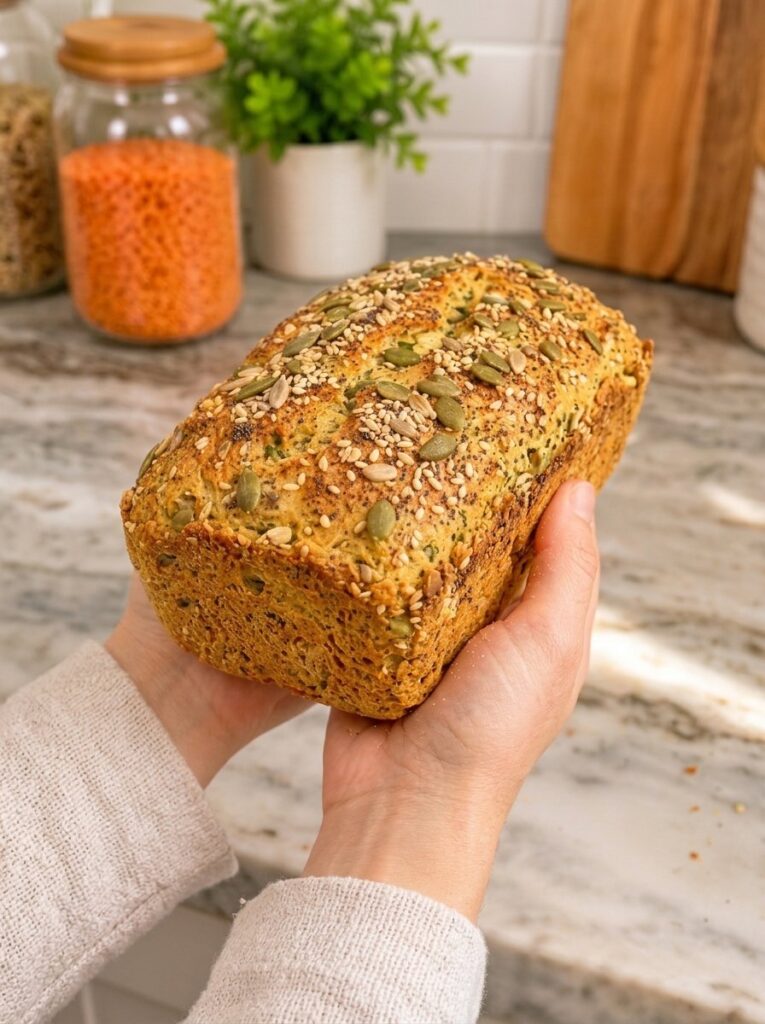
If you have ever wished you could pull a warm, golden, seed-crusted loaf of bread out of the oven without proofing yeast, kneading dough, or measuring a single scoop of flour, this recipe is for you. Blender lentil bread is exactly what it sounds like: a hearty, tender loaf made by blending soaked lentils with eggs, Greek yogurt, and olive oil, then baking the batter in a regular loaf pan. The result is a moist, satisfying bread with a lightly crisp crust, a naturally savory flavor, and a crunchy mixed-seed topping that makes every slice look as good as it tastes.
This simple lentil bread recipe has quickly become a favorite among home cooks looking for a high-protein bread that is also flourless, easy to prepare, and versatile enough for breakfast, lunch, and dinner. In this complete guide, you will find the full recipe, a detailed explanation of why it works, practical tips for getting the perfect texture, serving ideas, storage and freezing instructions, and answers to the most common questions.
What Is Blender Lentil Bread?
Blender lentil bread is a quick bread made from legumes instead of grain flour. Dry lentils are soaked in water until they soften, drained thoroughly, and then blended with eggs, plain Greek yogurt, olive oil, and a little water until the mixture becomes a smooth, thick batter. After the seasonings and baking powder are stirred in, the batter is poured into a parchment-lined 9 × 5-inch loaf pan, topped with seeds, and baked until the top is golden and the center is set.
Because the lentils themselves become the base of the bread, there is no need for wheat flour, almond flour, or any other flour substitute. There is also no yeast, no rising time, and no shaping. If you can operate a blender and a spatula, you can make this loaf.
The texture is different from a traditional sandwich loaf. It is denser, moister, and more tender, with a hearty bite that comes from the lentils. Think of it as a savory protein loaf that slices cleanly once cooled and toasts beautifully.
Why You Will Love This Lentil Bread Recipe
It is incredibly easy. The method is as simple as soaking, blending, stirring, pouring, and baking. The active time is only about 20 minutes, and most of the total time is hands-off soaking and cooling.
It is naturally protein-rich. Lentils, eggs, and Greek yogurt all contribute protein, which makes each slice filling and satisfying. It is a great choice if you want toast that keeps you full through the morning rather than leaving you hungry an hour later.
It is flourless and yeast-free. There is no traditional flour in the recipe and no yeast to activate, so there is no waiting for dough to rise. That makes it a practical option for anyone who wants to bake bread without the usual learning curve.
It can be gluten-free. When you use certified gluten-free ingredients, including lentils, baking powder, and rolled oats if you choose to add them, this loaf fits a gluten-free lifestyle. Always check labels, because lentils and oats can be exposed to gluten during processing.
It is versatile. Slice it for avocado toast, make a sandwich, serve it with soup, or enjoy it with nut butter. It works for breakfast, snacks, and side dishes alike.
It is meal-prep friendly. The loaf freezes well when sliced, so you can keep a stash ready and toast a piece whenever you need it.
It looks impressive. The crunchy topping of pumpkin seeds, sunflower seeds, sesame seeds, and poppy seeds gives the loaf a bakery-style appearance with almost no effort.
Recipe Overview
- Prep time: 15 minutes
- Soaking time: 4 to 8 hours, or overnight
- Bake time: 55 to 70 minutes
- Cooling time: about 1 hour 15 minutes
- Total time: approximately 6 hours 30 minutes to 10 hours 25 minutes, depending on soaking
- Active time: about 20 minutes
- Yield: 1 loaf (12 to 14 slices)
- Pan size: 9 × 5-inch loaf pan
- Oven temperature: 350°F (175°C)
- Difficulty: Easy
Ingredients for Blender Lentil Bread
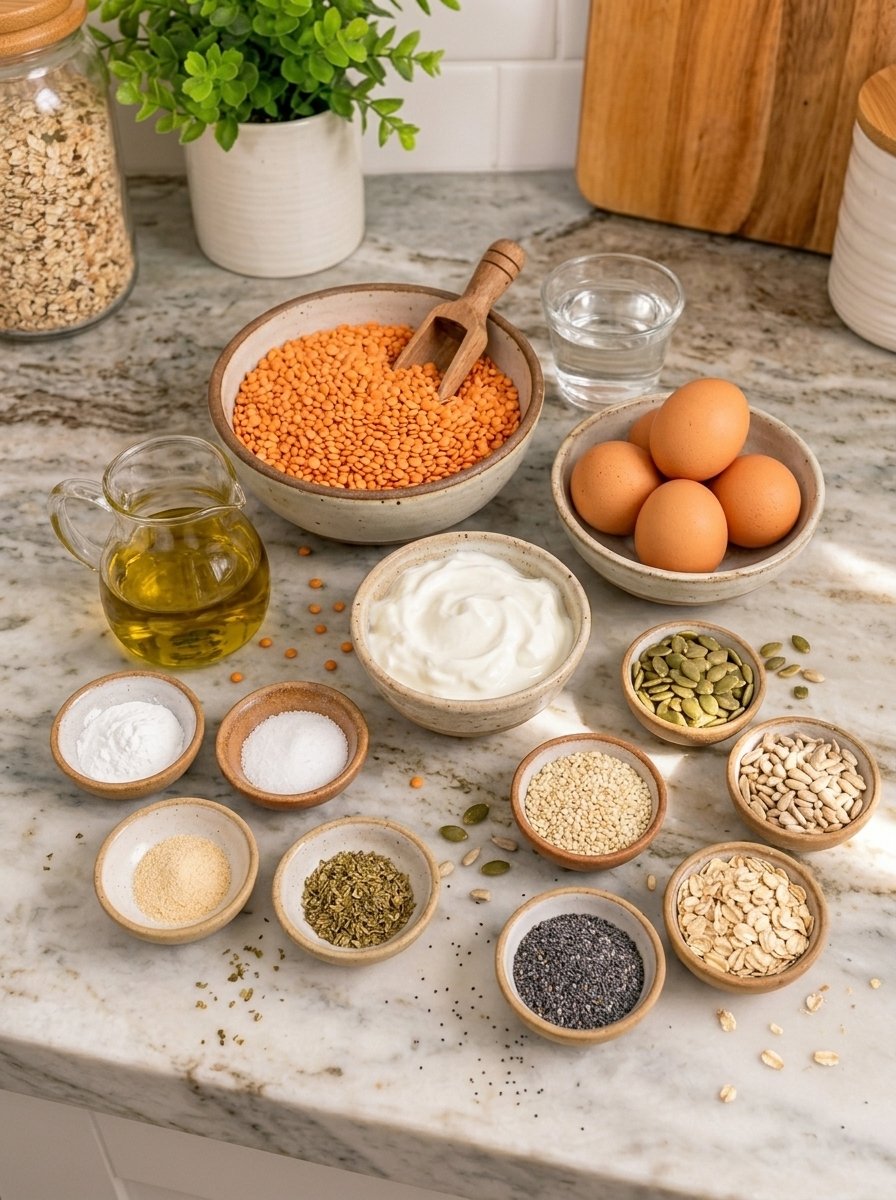
Here is everything you need to make one loaf:
- 2 cups (380 g) dry red or green lentils, rinsed
- 4 large eggs, at room temperature
- ½ cup (120 g) plain Greek yogurt
- ¼ cup (60 ml) olive oil
- ¼ cup (60 ml) water, plus extra if needed
- 2 teaspoons baking powder
- 1 teaspoon salt
- ½ teaspoon garlic powder, optional
- ½ teaspoon dried oregano or Italian seasoning, optional
- 1 tablespoon pumpkin seeds
- 1 tablespoon sunflower seeds
- 1 tablespoon sesame seeds
- 1 teaspoon poppy seeds, optional
- 1 teaspoon rolled oats, optional
Why Each Ingredient Matters
Lentils. They are the foundation of the loaf, providing structure, body, protein, and a mild earthy flavor. Soaking is essential because it softens them enough to blend into a smooth batter.
Eggs. Eggs bind the batter and give the bread its structure as it bakes. Using them at room temperature helps them blend evenly and supports a more uniform crumb.
Greek yogurt. Plain Greek yogurt adds moisture, tenderness, and a little tang, while also contributing protein. It keeps the interior soft rather than dry.
Olive oil. Olive oil enriches the loaf, improves the crumb, and adds a subtle savory depth that pairs naturally with lentils.
Water. A small amount of water helps the blender move the mixture along and lets you adjust the consistency of the batter.
Baking powder. This is the only leavening agent. It gives the loaf some lift so it is not overly dense.
Salt, garlic powder, and oregano. Lentils are mild, so seasoning matters. Salt is essential, while garlic powder and dried oregano or Italian seasoning add a gentle savory character that makes the bread taste like it belongs next to soup or a salad.
Seeds and oats. The topping adds crunch, visual appeal, and nutty flavor. Pumpkin, sunflower, sesame, and poppy seeds are classic, but you can customize the mix.
Red Lentils vs. Green Lentils: Which Should You Use?
Both red and green lentils work in this recipe, and the choice affects the final texture.
Red lentils generally produce a softer, smoother loaf. They break down easily, so they blend into a creamy batter and need less soaking time, typically 4 to 6 hours. If you want the most tender, bread-like crumb, red lentils are a great place to start.
Green lentils create a slightly heartier, more rustic texture. They are firmer, so they benefit from a longer soak of 8 hours or overnight. If you like a bread with more chew and a more pronounced lentil flavor, green lentils are an excellent option.
Whichever you choose, make sure they are thoroughly soaked. Under-soaked lentils will not blend smoothly, and the finished loaf may have a grainy texture.
How to Make Blender Lentil Bread: Step-by-Step Instructions
Step 1: Soak the Lentils
Place the rinsed lentils in a large bowl and cover them generously with cold water. Make sure they are completely submerged, with several inches of water above them, because the lentils will absorb water and increase in size. Soak red lentils for 4 to 6 hours, or green lentils for 8 hours or overnight, until they soften. Drain thoroughly, rinse under fresh running water, and let the excess water drain completely before blending.
Step 2: Prepare the Oven and Loaf Pan
Preheat your oven to 350°F (175°C). Line a standard 9 × 5-inch loaf pan with parchment paper, leaving some overhang on the sides so you can lift the loaf out easily later. Lightly grease the parchment if needed.
Step 3: Blend the Lentils and Wet Ingredients
Add the soaked and well-drained lentils to a high-speed blender. Add the eggs, Greek yogurt, olive oil, and water. Blend for 2 to 3 minutes, stopping occasionally to scrape down the sides if necessary. You want the mixture to be as smooth as possible, with no large pieces of lentil remaining. If your blender is small, blend in batches.
Step 4: Add the Seasonings
Transfer the blended mixture to a large mixing bowl. Add the salt, garlic powder, and dried oregano or Italian seasoning, if using. Stir gently until the seasonings are evenly distributed.
Step 5: Incorporate the Baking Powder
Add the baking powder and gently fold it in with a spatula until evenly incorporated. Avoid overmixing. The batter should be thick but pourable, similar to a thick cake batter. If it is too thick to spread easily, add 1 tablespoon of water at a time until the consistency is suitable.
Step 6: Transfer the Batter to the Loaf Pan
Pour the batter into the prepared pan. Use a spatula to spread it evenly into the corners and smooth the surface. Gently tap the pan against the countertop to release any large air bubbles.
Step 7: Add the Seed Topping
Sprinkle the pumpkin seeds, sunflower seeds, sesame seeds, poppy seeds, and rolled oats evenly over the surface. Gently press the larger seeds into the batter so they stay put during baking without sinking too deeply.
Step 8: Bake Until Firm and Golden
Place the loaf pan on the center rack of the preheated oven. Bake for 55 to 70 minutes, depending on your oven and the type of lentils used. The top should be golden brown, the center should feel firm, and a toothpick inserted into the middle should come out without wet batter. For the most reliable check, the center should reach approximately 200 to 205°F (93 to 96°C). If the topping browns too quickly, loosely cover the loaf with aluminum foil for the final part of baking.
Step 9: Rest and Remove From the Pan
Remove the loaf from the oven and let it rest in the pan for 15 minutes. Then lift it out using the parchment paper and transfer it to a wire rack.
Step 10: Cool Completely and Slice
This step matters more than you might think. Let the bread cool completely, preferably for about 1 hour, before slicing. Use a sharp serrated bread knife to cut clean, even slices. Enjoy at room temperature or lightly toasted with your favorite toppings.
Tips for the Best Blender Lentil Bread
Small details make a big difference with a legume-based loaf. Keep these tips in mind:
Soak the lentils properly. Soaking softens the lentils and makes them far easier to blend. Rushing this step is the most common reason for a grainy loaf.
Drain thoroughly. Remove as much soaking water as possible before blending. Excess moisture can make the bread too wet and prevent the center from setting properly.
Blend until smooth. Blend long enough to break the lentils down completely. A smooth batter creates a more uniform texture without gritty pieces.
Add the baking powder last. Stir it in just before transferring the batter to the pan so you preserve its leavening power.
Check the batter consistency. The batter should be thick but pourable. If it is too thick, add water 1 tablespoon at a time.
Do not skip the cooling time. Lentil bread needs time to firm up after baking. Slicing too early can leave the center gummy or cause the slices to crumble.
Customize the topping. Pumpkin, sunflower, sesame, flax, and poppy seeds, along with rolled oats, all work well. Mix and match based on what you have.
Use a thermometer if you can. An internal temperature of roughly 200 to 205°F (93 to 96°C) is the most dependable sign that the center is done.
Troubleshooting Common Problems
The center is gummy or wet. This usually means the lentils were not drained well enough, the loaf was underbaked, or it was sliced before cooling. Drain more thoroughly next time, check the internal temperature, and allow the full cooling time.
The texture is grainy. The lentils were probably under-soaked or under-blended. Soak longer, especially with green lentils, and blend for the full 2 to 3 minutes, working in batches if your blender is small.
The loaf is too dense. Make sure your baking powder is fresh, and avoid overmixing after adding it. Adding it at the end and folding gently helps preserve lift.
The top is browning too fast. Loosely tent the loaf with aluminum foil during the last part of baking so the center can finish cooking without over-browning the seeds.
The slices crumble. This almost always comes down to cutting the loaf while it is still warm. Let it cool fully and use a sharp serrated knife with a gentle sawing motion.
The batter is too thick to spread. Stir in water 1 tablespoon at a time until it can be spread easily into the corners of the pan.
Serving Ideas for Lentil Bread
This loaf is a blank canvas for both savory and lightly sweet toppings. Here are some of the best ways to enjoy it:
- Avocado toast: Spread mashed avocado over toasted slices and finish with sea salt, black pepper, and a squeeze of lemon juice.
- Eggs and herbs: Serve with scrambled, fried, or sliced hard-boiled eggs and fresh herbs for a protein-packed breakfast.
- Cream cheese and tomatoes: Spread with cream cheese and top with fresh tomato slices and cracked black pepper.
- Nut butter toast: Enjoy with peanut butter or almond butter for a filling breakfast or snack.
- Hummus toast: Spread with hummus and add cucumber slices, paprika, and a drizzle of olive oil.
- Cheesy toast: Top with melted cheddar or mozzarella for a warm, savory snack.
- Classic butter: Toast a slice and spread with butter to serve alongside your morning coffee or tea.
- Soup companion: Serve alongside creamy vegetable soup, tomato soup, or lentil soup.
It also makes a sturdy sandwich bread, and the savory flavor works well with fillings like turkey, roasted vegetables, or sliced cheese.
How to Store Lentil Bread
Because this bread contains eggs and yogurt and has a moist interior, proper storage is important.
- Room temperature: Refrigerate the loaf within 2 hours of baking once it has cooled.
- Refrigerator: Store completely cooled slices in an airtight container for up to 5 days.
- Freezer: Slice the cooled loaf and place parchment paper between individual slices. Transfer to a freezer-safe bag or container and freeze for up to 2 months.
- Thawing: Thaw individual slices in the refrigerator, or reheat them directly from frozen.
- Reheating: Toast refrigerated or frozen slices in a toaster until warmed through and lightly crisp. You can also warm them in a skillet over medium-low heat.
- Meal prep: Freeze slices individually with parchment between them so you can remove and reheat only what you need.
Easy Variations to Try
Once you are comfortable with the base recipe, there are plenty of ways to make it your own while keeping the same method:
- Change the seed mix. Swap in flax seeds or use more of your favorite seeds for a different flavor and crunch.
- Adjust the seasoning. Use Italian seasoning instead of oregano for a more herbal profile, or leave out the optional seasonings for a milder loaf.
- Switch the lentil type. Try red lentils for a softer crumb or green lentils for a heartier one.
- Top with oats. A sprinkle of rolled oats adds a rustic look and a slightly chewy crunch.
If you change the quantities of the main ingredients, keep an eye on the batter consistency and the baking time, since the loaf needs to set fully in the center.
Frequently Asked Questions
Is blender lentil bread gluten-free?
The recipe contains no wheat flour, so it can be gluten-free when made with certified gluten-free ingredients. Check the labels on your lentils, baking powder, and rolled oats, since cross-contact can occur during processing.
Do I have to soak the lentils?
Yes. Soaking softens the lentils so they blend into a smooth batter. Red lentils typically need 4 to 6 hours, while green lentils do best with 8 hours or overnight.
Can I use canned or pre-cooked lentils?
This recipe is developed for dry lentils that have been soaked, and the moisture level is balanced around that method. Pre-cooked lentils hold more water, which could make the batter too wet and affect how the center sets.
Does it taste like lentils?
It has a mild, earthy, savory flavor rather than a strong lentil taste. The garlic powder, oregano, olive oil, and seeds help round it out, and red lentils tend to be the mildest.
Why is my lentil bread gummy in the middle?
The most common causes are insufficiently drained lentils, underbaking, and slicing before the loaf has cooled. Drain well, bake until the center reaches about 200 to 205°F (93 to 96°C), and let it cool for about an hour.
Is this a high-protein bread?
It is naturally protein-rich thanks to the lentils, eggs, and Greek yogurt, which is part of why it is so filling.
Can I make it ahead?
Yes. The loaf keeps in the refrigerator for up to 5 days and in the freezer for up to 2 months when sliced and stored with parchment between the slices.
Do I need a high-speed blender?
A high-speed blender makes it easier to get a smooth batter. If your blender is smaller, blend the mixture in batches so everything is fully broken down.
What can I use instead of Greek yogurt?
Plain Greek yogurt is what the recipe was developed with, so it gives the most reliable results. If you substitute, keep the batter thick but pourable and adjust with water as needed.
What pan size should I use?
Use a standard 9 × 5-inch loaf pan lined with parchment paper so the loaf lifts out easily.
Final Thoughts
This blender lentil bread proves that great homemade bread does not have to be complicated. With just a bowl of soaked lentils, a few pantry staples, and a blender, you can bake a hearty, tender, seed-topped loaf that is flourless, yeast-free, and packed with protein. It is easy enough for beginners, practical for busy weeks, and flexible enough to suit everything from avocado toast to a bowl of soup.
Soak your lentils tonight, blend and bake tomorrow, and let the loaf cool before slicing. Once you taste a toasted slice with your favorite topping, this simple lentil bread recipe is likely to become a regular in your kitchen. Save it, share it, and enjoy every crunchy, golden bite.
Print
Simple Blender Lentil Bread
- Total Time: 6 hours 25 minutes to 10 hours 40 minutes
Ingredients
Here is everything you need to make one loaf:
- 2 cups (380 g) dry red or green lentils, rinsed
- 4 large eggs, at room temperature
- ½ cup (120 g) plain Greek yogurt
- ¼ cup (60 ml) olive oil
- ¼ cup (60 ml) water, plus extra if needed
- 2 teaspoons baking powder
- 1 teaspoon salt
- ½ teaspoon garlic powder, optional
- ½ teaspoon dried oregano or Italian seasoning, optional
- 1 tablespoon pumpkin seeds
- 1 tablespoon sunflower seeds
- 1 tablespoon sesame seeds
- 1 teaspoon poppy seeds, optional
- 1 teaspoon rolled oats, optional
Instructions
Place the rinsed lentils in a large bowl and cover them generously with cold water. Make sure they are completely submerged, with several inches of water above them, because the lentils will absorb water and increase in size. Soak red lentils for 4 to 6 hours, or green lentils for 8 hours or overnight, until they soften. Drain thoroughly, rinse under fresh running water, and let the excess water drain completely before blending.
Step 2: Prepare the Oven and Loaf Pan
Preheat your oven to 350°F (175°C). Line a standard 9 × 5-inch loaf pan with parchment paper, leaving some overhang on the sides so you can lift the loaf out easily later. Lightly grease the parchment if needed.
Step 3: Blend the Lentils and Wet Ingredients
Add the soaked and well-drained lentils to a high-speed blender. Add the eggs, Greek yogurt, olive oil, and water. Blend for 2 to 3 minutes, stopping occasionally to scrape down the sides if necessary. You want the mixture to be as smooth as possible, with no large pieces of lentil remaining. If your blender is small, blend in batches.
Step 4: Add the Seasonings
Transfer the blended mixture to a large mixing bowl. Add the salt, garlic powder, and dried oregano or Italian seasoning, if using. Stir gently until the seasonings are evenly distributed.
Step 5: Incorporate the Baking Powder
Add the baking powder and gently fold it in with a spatula until evenly incorporated. Avoid overmixing. The batter should be thick but pourable, similar to a thick cake batter. If it is too thick to spread easily, add 1 tablespoon of water at a time until the consistency is suitable.
Step 6: Transfer the Batter to the Loaf Pan
Pour the batter into the prepared pan. Use a spatula to spread it evenly into the corners and smooth the surface. Gently tap the pan against the countertop to release any large air bubbles.
Step 7: Add the Seed Topping
Sprinkle the pumpkin seeds, sunflower seeds, sesame seeds, poppy seeds, and rolled oats evenly over the surface. Gently press the larger seeds into the batter so they stay put during baking without sinking too deeply.
Step 8: Bake Until Firm and Golden
Place the loaf pan on the center rack of the preheated oven. Bake for 55 to 70 minutes, depending on your oven and the type of lentils used. The top should be golden brown, the center should feel firm, and a toothpick inserted into the middle should come out without wet batter. For the most reliable check, the center should reach approximately 200 to 205°F (93 to 96°C). If the topping browns too quickly, loosely cover the loaf with aluminum foil for the final part of baking.
Step 9: Rest and Remove From the Pan
Remove the loaf from the oven and let it rest in the pan for 15 minutes. Then lift it out using the parchment paper and transfer it to a wire rack.
Step 10: Cool Completely and Slice
This step matters more than you might think. Let the bread cool completely, preferably for about 1 hour, before slicing. Use a sharp serrated bread knife to cut clean, even slices. Enjoy at room temperature or lightly toasted with your favorite toppings.
- Prep Time: 4 hours 15 minutes to 8 hours 15 minutes
- Cook Time: 55–70 minutes