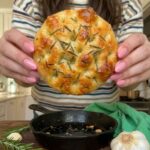
Ingredients
The ingredient list is short, but each item matters.
For the Focaccia Dough
- ½ cup + 2 tbsp (80 g) all-purpose flour
- ¼ cup (60 ml) lukewarm water
- ¼ tsp instant yeast
- ¼ tsp salt
- 1 tsp olive oil
For the Garlic Rosemary Topping
- 1–2 tbsp olive oil, for the skillet and the topping
- 1 small garlic clove, finely minced
- ½–1 tsp fresh rosemary, finely chopped
- Flaky sea salt, for sprinkling
Ingredient Notes
All-purpose flour works well here and keeps the recipe accessible. Bread flour gives a slightly chewier crumb, but it isn’t necessary. Weighing the flour (80 g) is the most reliable method because scooped cups can vary a lot, and with a dough this small a few extra spoonfuls change the texture noticeably.
Instant yeast can be stirred straight into the water. If you only have active dry yeast, the water should be a little warmer, and you may need to wait slightly longer for it to foam.
Lukewarm water should feel barely warm on your wrist, not hot. Water that is too hot can kill the yeast and leave you with dense bread.
Olive oil is a main flavor in focaccia, so use one you enjoy. Extra-virgin olive oil adds a fruity, peppery depth.
Fresh rosemary is strongly recommended. Dried rosemary can be woody and sharp, while fresh rosemary stays fragrant and tender as it bakes.
Flaky sea salt adds crunch and bursts of salinity on top. Maldon or a similar flaky salt works best, but coarse kosher salt is an acceptable substitute.
Instructions
Time overview: Prep is about 10 minutes, the first rise takes 1–1½ hours, the second rise takes 20–30 minutes, and baking takes 15–20 minutes. The total is roughly 1 hour 45 minutes to 2 hours 30 minutes, and almost all of it is hands-off.
In a small mixing bowl, combine the lukewarm water and instant yeast. Let the mixture sit for 2–3 minutes so the yeast can begin to activate.
Add the flour, salt, and 1 teaspoon of olive oil. Stir with a spoon or spatula until everything comes together into a soft, slightly sticky dough. Scrape down the sides of the bowl so no flour is left behind.
You don’t need to knead. Mix just until no dry patches remain. The dough should look shaggy and feel tacky, and that stickiness is what produces an airy center.
Cover the bowl with plastic wrap or a clean kitchen towel. Leave it in a warm, draft-free spot for about 1 to 1½ hours, until the dough looks puffy, bubbly, and noticeably larger.
Rising time depends on your kitchen temperature. In a cool room it may take longer, and in a warm kitchen it may be ready sooner. Go by how the dough looks rather than the clock. Visible bubbles and clear expansion are the signs you want.
Lightly coat your 6–8-inch oven-safe skillet with olive oil, covering the bottom and the sides. Drizzle a little extra oil into the bottom. This pool of oil gives the focaccia its signature crisp, almost fried bottom and golden edges.
Lightly oil your hands, since the dough is sticky, and gently transfer the risen dough into the skillet. Carefully stretch it toward the edges without pressing out all the air. Those bubbles are what keep the bread fluffy.
If the dough springs back and won’t stretch, rest it for 5–10 minutes and try again. Relaxed gluten stretches much more easily.
Cover the skillet loosely with a towel or plastic wrap and let the dough rise for another 20–30 minutes, until puffy and airy. While it rests, preheat your oven to 400°F (200°C).
In a small bowl, combine the remaining olive oil, the finely minced garlic, and the chopped rosemary. Stir well so the garlic and herbs are distributed throughout the oil. Let it sit for a few minutes while the dough finishes rising so the flavors can infuse.
Drizzle the garlic rosemary oil evenly over the dough, making sure some garlic and rosemary land across the top. With oiled fingertips, press deep dimples into the dough, taking care not to deflate it completely. These dimples are the hallmark of focaccia, and they collect pools of flavorful oil as it bakes.
Finish with a light, even sprinkle of flaky sea salt.
Place the skillet in the preheated oven and bake for 15–20 minutes, until the focaccia is puffed, golden brown, and crisp around the edges. The center should stay soft and chewy, and the bottom should have a lightly crisp crust.
Watch the garlic. Finely minced garlic can brown quickly, and burnt garlic turns bitter. If the top darkens too fast, loosely cover the focaccia with foil for the rest of the bake.
Carefully remove the skillet from the oven (the handle will be hot!) and let the focaccia rest for about 5 minutes. If you like, brush the top with a little extra olive oil while it’s still warm. Loosen the edges with a spatula, then move it to a cutting board or serve it straight from the skillet once it’s safe to handle.
Slice into wedges and enjoy it warm.