Cranberry Orange Scones: The Ultimate Buttery, Bakery-Style Recipe
· @oussama
Cranberry orange scones are buttery, tender and lightly crisp outside, with juicy tart cranberries and bright orange zest in every bite. This easy recipe makes 8 bakery-style scones in about an hour, finished with a sweet orange glaze that sets into a thin, shiny shell.
If you have been searching for the best cranberry orange scones recipe, you are in the right place. These scones need no special equipment, no yeast and no long rise. They are ready for breakfast, brunch, holiday mornings, bake sales or a quiet afternoon tea.
Why you will love this cranberry orange scones recipe
A good scone is a balancing act. It should be rich but not heavy, tender but not crumbly, sweet but not cloying. This recipe gets that balance from a few simple choices.
- Cold butter and cold cream. Small pieces of cold butter melt in the oven and release steam, which creates flaky layers and a soft interior.
- Fresh orange zest. The zest holds the orange oil, so it gives a far brighter citrus aroma than juice alone.
- Tart cranberries. Their sharp flavor cuts through the buttery dough and keeps each bite lively instead of sugary.
- A short chill. Fifteen minutes in the fridge firms the butter again, so the scones hold their wedge shape and rise instead of spreading.
- A simple orange glaze. Powdered sugar and fresh juice add a sweet, citrusy finish that looks as good as it tastes.
Because the dough is mixed by hand in two bowls, cleanup is easy. You can also shape and chill the scones ahead of time, which makes this one of the most beginner-friendly baked goods you can make.
What do cranberry orange scones taste like?
Think of a classic English-style scone with a festive twist. The crumb is soft and slightly flaky, with a gentle vanilla note from the cream and egg. The orange zest gives a floral, sunny aroma, and the cranberries add small pockets of tart, chewy fruit. The glaze adds a final layer of sweetness without hiding the flavor of the dough.
These scones are especially popular in autumn and winter because cranberries and oranges are at their best in cold months. Yet the flavors are bright enough to enjoy in spring and summer too, especially with a pot of tea.
Cranberry orange scones recipe card
This recipe makes 8 scones and takes about 50 minutes from start to finish, including chilling and baking.
- Prep time: 15 minutes
- Chilling time: 15 minutes
- Baking time: 18-22 minutes
- Oven temperature: 400°F (200°C)
- Yield: 8 scones
Ingredients for cranberry orange scones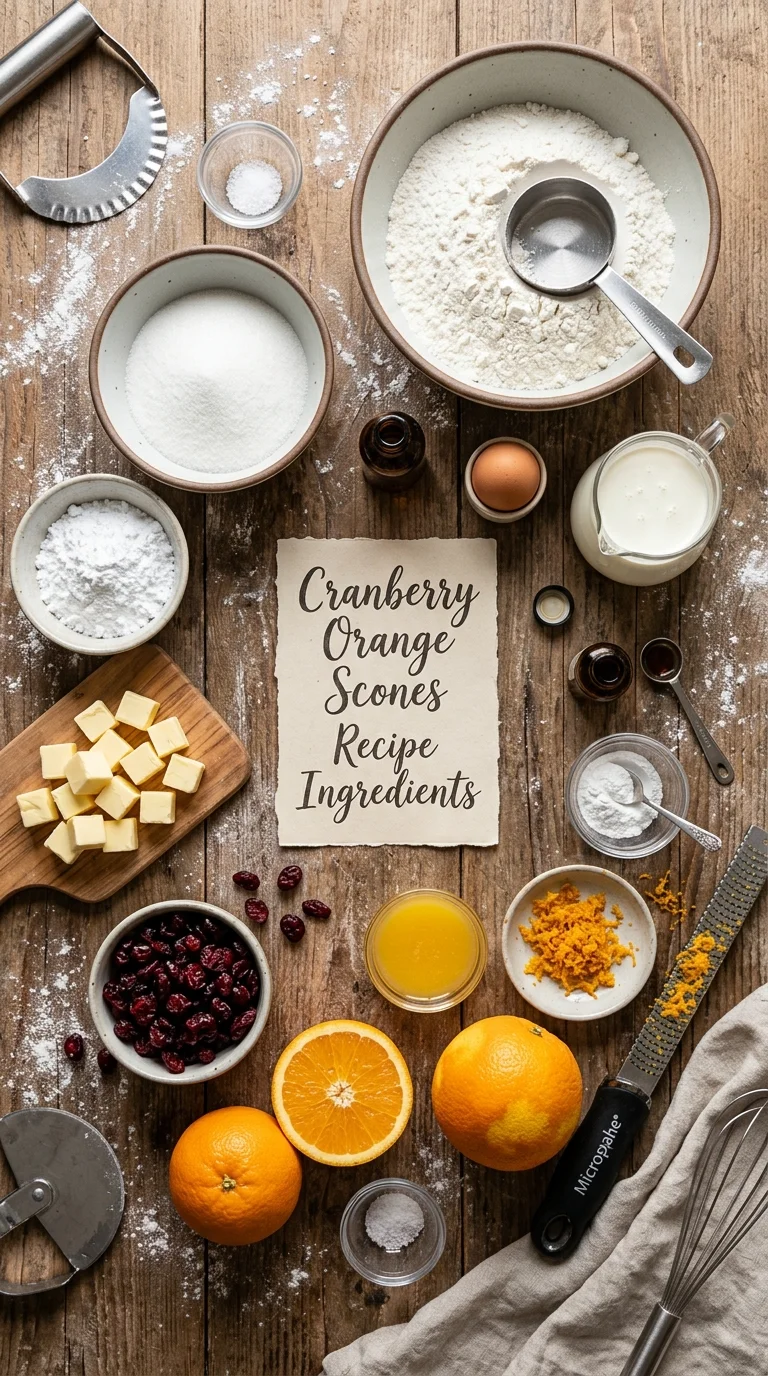
For the scones
- 2 cups (250 g) all-purpose flour
- ⅓ cup (65 g) granulated sugar
- 2½ teaspoons baking powder
- ¼ teaspoon salt
- 6 tablespoons (85 g) cold unsalted butter, cubed
- ½ cup (60 g) dried cranberries
- 1 tablespoon freshly grated orange zest
- ⅔ cup (160 ml) cold heavy cream
- 1 large egg
- 1 teaspoon vanilla extract
For the orange glaze
- ½ cup (60 g) powdered sugar
- 1-2 tablespoons fresh orange juice
- ½ teaspoon orange zest, optional
Equipment you will need
- Large mixing bowl and a small bowl
- Pastry cutter, two forks or your fingertips
- Baking sheet and parchment paper
- Microplane or fine grater for the zest
- Wire cooling rack
How to make cranberry orange scones, step by step
Follow these eight steps for tall, tender scones with a golden crust. Read through them once before you start, because timing and temperature matter.
Step 1: Prepare the oven
Preheat your oven to 400°F (200°C) and line a baking sheet with parchment paper. A hot oven is important: it sets the outside quickly and gives the scones a strong rise.
Step 2: Mix the dry ingredients
In a large bowl, whisk together the flour, sugar, baking powder and salt. Add the orange zest and dried cranberries, then stir so the zest and fruit are spread evenly. Rubbing the zest into the sugar with your fingers for a few seconds first releases even more orange oil.
Step 3: Cut in the butter
Add the cold butter cubes to the flour mixture. Use a pastry cutter or your fingertips to work the butter into the flour until it looks like coarse crumbs, with a few pea-sized pieces left. Those larger pieces are what make the scones flaky.
Tip: Keep the butter cold. If it starts to soften, pop the bowl in the fridge for 10 minutes.
Step 4: Combine the wet ingredients
In a separate bowl, whisk together the heavy cream, egg and vanilla extract. Pour the wet mixture into the dry ingredients and stir gently with a fork until a soft, slightly shaggy dough forms. A few dry spots are fine. Overmixing develops gluten and makes scones tough.
Step 5: Shape the scones
Transfer the dough to a lightly floured surface and gently bring it together. Pat it into a circle about 1 inch (2.5 cm) thick. Cut the circle into 8 wedges and place them on the prepared baking sheet, leaving a little space between each. Refrigerate for 15 minutes so the butter firms up before baking.
Step 6: Bake
Bake for 18-22 minutes, until the edges are lightly golden and the tops are set. Let the scones cool on the baking sheet for 5 minutes, then move them to a wire rack.
Step 7: Make the orange glaze
In a small bowl, whisk together the powdered sugar and 1 tablespoon of orange juice. Add more juice a few drops at a time until the glaze is thick but pourable. Stir in the optional orange zest.
Step 8: Glaze and serve
Once the scones have cooled slightly, drizzle the glaze over the tops. Let it set for a few minutes, then serve with coffee, tea or a glass of milk. Glazing while the scones are still hot makes the glaze melt and run off, so wait until they are just warm.
Tips for perfect cranberry orange scones
These small habits separate good scones from bakery-quality scones.
- Use fresh orange zest. It gives a much brighter citrus aroma than juice alone. Zest the orange before you juice it, and avoid the bitter white pith.
- Do not overwork the dough. Mix only until the ingredients come together. A shaggy dough is a good sign.
- Keep the butter cold. Cold butter creates steam pockets that make a light, flaky texture.
- Prefer fresh cranberries? Replace the dried cranberries with ¾ cup (75 g) chopped fresh or frozen cranberries. If they are frozen, do not thaw them first, or they will bleed color into the dough.
- Want a sweeter finish? Sprinkle the tops with coarse sugar before baking for a sparkly, crunchy crust.
- Want extra orange flavor? Add ¼ teaspoon of orange extract to the dough, if you have it.
- Cut straight down. When you slice the wedges, press the knife straight down instead of dragging it. Dragging seals the edges and limits the rise.
Ingredient notes and substitutions
Knowing why each ingredient is there makes it easier to adapt the recipe with confidence.
Flour. All-purpose flour gives a tender but sturdy crumb. Measure by spooning flour into the cup and leveling it, or better, use a kitchen scale (250 g). Packed flour makes dry, dense scones.
Butter. Unsalted butter lets you control the salt. If you only have salted butter, reduce the added salt to a pinch. Cut the butter into small cubes and keep it in the fridge until the moment you need it.
Heavy cream. Cream adds fat and moisture, which gives a rich, soft interior. In a pinch, you can use cold whole milk with an extra tablespoon of butter, although the texture will be slightly less rich.
Dried cranberries. Sweetened dried cranberries are the easiest option and add chewy sweetness. If yours are very dry or hard, soak them in hot water for 5 minutes, drain and pat them dry before using.
Baking powder. Check the date on your tin. Old baking powder is one of the most common reasons scones stay flat.
Cranberry orange scones troubleshooting
If your scones did not turn out as expected, one of these fixes will usually help.
- Scones are dry or crumbly: Too much flour or overbaking. Weigh the flour and bake only until just golden.
- Scones are tough: The dough was overmixed. Stir only until a shaggy dough forms.
- Scones spread flat: The butter was warm or the baking powder was old. Chill the dough and use fresh baking powder.
- Scones are pale on top: The oven was too cool. Check the temperature with an oven thermometer.
- Glaze is too thin: Too much juice. Whisk in more powdered sugar a teaspoon at a time.
- Glaze is too thick: Too little juice. Add juice a few drops at a time.
Cranberry orange scone variations
Once you have the base recipe down, it is easy to make it your own.
- White chocolate cranberry orange scones. Fold in ½ cup of white chocolate chips with the cranberries for a sweeter, dessert-style scone.
- Orange cranberry pecan scones. Add ½ cup of toasted, chopped pecans or walnuts for crunch.
- Orange cream glaze. Replace the juice in the glaze with 1 tablespoon of cream plus a little zest for a softer, creamier finish.
- Brown sugar scones. Swap the granulated sugar for light brown sugar for a hint of caramel.
- Mini scones. Cut the dough into 16 smaller wedges and bake for 12-15 minutes. They are perfect for parties and tea trays.
- Drop scones. Skip the shaping and scoop the dough onto the baking sheet with a spoon for a rustic look.
Serving ideas
Cranberry orange scones are best enjoyed fresh and slightly warm, and they pair well with many breakfast and brunch favorites.
- Serve warm with butter or orange marmalade.
- Pair with a cappuccino, latte or Earl Grey tea.
- Add fresh berries and Greek yogurt for a brunch plate.
- Serve alongside scrambled eggs and fresh fruit for a cozy breakfast.
- Stack them on a platter for a holiday brunch, Christmas morning or Thanksgiving breakfast.
- Wrap two or three in parchment with a ribbon for a homemade gift.
How to store cranberry orange scones
Scones taste best on the day they are baked, but they keep well when stored properly.
- Room temperature: Keep in an airtight container for up to 2 days.
- Refrigerator: Store for up to 4 days, although refrigeration may firm them up. Warm them briefly before serving.
- Freezer: Freeze unglazed scones for up to 2 months. Thaw and warm them in the oven, then add the glaze.
Make-ahead and freezing tips
Scones are one of the easiest baked goods to prepare in advance, which makes them ideal for holidays and busy mornings.
- Freeze the unbaked dough. Shape and cut the wedges, then freeze them on a tray until solid. Transfer them to a freezer bag for up to 2 months.
- Bake from frozen. Place the frozen wedges on a lined baking sheet and bake at 400°F (200°C) for 22-26 minutes. There is no need to thaw.
- Prep the night before. Cut the wedges, cover them and refrigerate overnight. Bake them fresh in the morning.
- Reheat leftovers. Warm scones in a 350°F (175°C) oven for 5-8 minutes to bring back their crisp edges and soft centers.
Cranberry orange scones FAQ
Can I use fresh cranberries instead of dried? Yes. Use ¾ cup (75 g) of chopped fresh or frozen cranberries. Keep frozen berries frozen so they do not stain the dough. Fresh cranberries are more tart, so you may want to add a tablespoon of extra sugar.
Why are my scones dry? Dry scones usually come from too much flour or too long in the oven. Weigh your flour, or spoon and level it, and check the scones at 18 minutes. They should be golden at the edges, not dark.
Can I make cranberry orange scones without heavy cream? Yes. Cold whole milk or half-and-half works, although the scones will be a little less rich. Buttermilk also works and adds a pleasant tang.
Do I have to chill the dough? It is not required, but a 15-minute chill helps a lot. It keeps the butter cold, reduces spreading and gives a taller, flakier scone.
Can I use orange juice instead of zest? Zest is the key to bright orange flavor. Juice adds moisture that can change the dough, so use it in the glaze instead.
How do I know when the scones are done? Look for lightly golden edges and tops that feel set when gently pressed. A toothpick inserted in the center should come out clean or with a few dry crumbs.
Can I double the recipe? Yes. Make two separate batches of dough, or double everything and divide the dough into two circles. Bake both sheets on the center rack one at a time for even browning.
Are these scones vegan or gluten-free? This recipe uses butter, cream and egg, so it is not vegan. For gluten-free scones, try a 1:1 gluten-free baking flour blend and expect a slightly more delicate crumb.
Final thoughts
The secret to bakery-style scones comes down to three habits: cold butter, a light touch when mixing and fresh orange zest. Together with tart cranberries and a sweet citrus glaze, they make every bite bright, buttery and delicious.
This cranberry orange scones recipe is simple enough for beginners and special enough for holiday tables. Bake a batch this weekend, share them with friends and family, and enjoy the aroma of orange and butter filling your kitchen.
Print
🍊🫐✨ Cranberry Orange Scones
Ingredients
For the scones
- 2 cups (250 g) all-purpose flour
- ⅓ cup (65 g) granulated sugar
- 2½ teaspoons baking powder
- ¼ teaspoon salt
- 6 tablespoons (85 g) cold unsalted butter, cubed
- ½ cup (60 g) dried cranberries
- 1 tablespoon freshly grated orange zest
- ⅔ cup (160 ml) cold heavy cream
- 1 large egg
- 1 teaspoon vanilla extract
For the orange glaze
- ½ cup (60 g) powdered sugar
- 1–2 tablespoons fresh orange juice
- ½ teaspoon orange zest, optional
Equipment you will need
- Large mixing bowl and a small bowl
- Pastry cutter, two forks or your fingertips
- Baking sheet and parchment paper
- Microplane or fine grater for the zest
- Wire cooling rack
Instructions
Follow these eight steps for tall, tender scones with a golden crust. Read through them once before you start, because timing and temperature matter.
Preheat your oven to 400°F (200°C) and line a baking sheet with parchment paper. A hot oven is important: it sets the outside quickly and gives the scones a strong rise.
In a large bowl, whisk together the flour, sugar, baking powder and salt. Add the orange zest and dried cranberries, then stir so the zest and fruit are spread evenly. Rubbing the zest into the sugar with your fingers for a few seconds first releases even more orange oil.
Add the cold butter cubes to the flour mixture. Use a pastry cutter or your fingertips to work the butter into the flour until it looks like coarse crumbs, with a few pea-sized pieces left. Those larger pieces are what make the scones flaky.
Tip: Keep the butter cold. If it starts to soften, pop the bowl in the fridge for 10 minutes.
In a separate bowl, whisk together the heavy cream, egg and vanilla extract. Pour the wet mixture into the dry ingredients and stir gently with a fork until a soft, slightly shaggy dough forms. A few dry spots are fine. Overmixing develops gluten and makes scones tough.
Transfer the dough to a lightly floured surface and gently bring it together. Pat it into a circle about 1 inch (2.5 cm) thick. Cut the circle into 8 wedges and place them on the prepared baking sheet, leaving a little space between each. Refrigerate for 15 minutes so the butter firms up before baking.
Bake for 18-22 minutes, until the edges are lightly golden and the tops are set. Let the scones cool on the baking sheet for 5 minutes, then move them to a wire rack.
In a small bowl, whisk together the powdered sugar and 1 tablespoon of orange juice. Add more juice a few drops at a time until the glaze is thick but pourable. Stir in the optional orange zest.
Once the scones have cooled slightly, drizzle the glaze over the tops. Let it set for a few minutes, then serve with coffee, tea or a glass of milk. Glazing while the scones are still hot makes the glaze melt and run off, so wait until they are just warm.