Soft and Fluffy No-Knead Potato Bread: Easy Homemade Recipe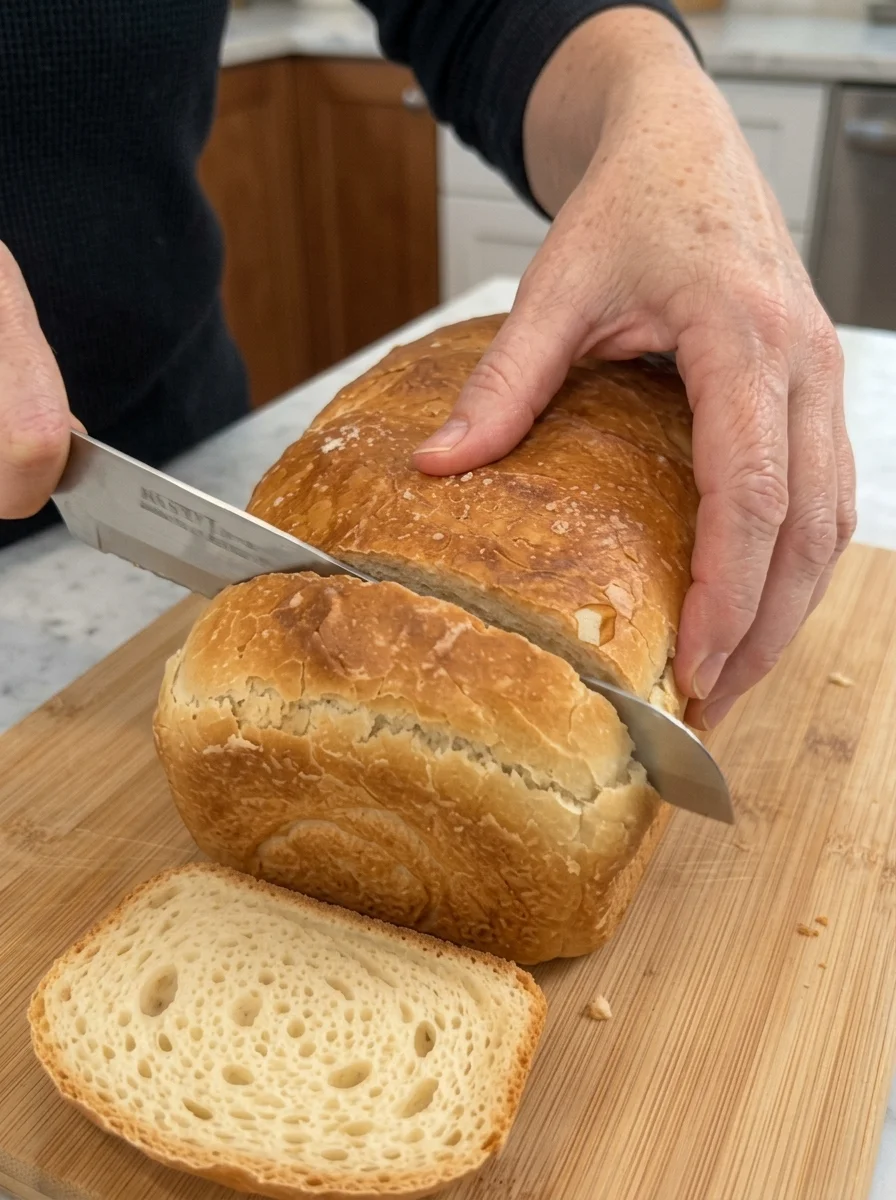
· @oussama
This homemade potato bread is incredibly soft, fluffy and moist, with a tender crumb and a lightly golden crust. Mashed potatoes keep the bread fresh and soft for longer, and the best part is that you do not need to knead the dough. A wooden spoon and a bowl are all you need.
If you have ever wanted to bake fresh bread at home but felt put off by kneading, this no-knead potato bread recipe is for you. The dough is mixed in minutes, rises on its own and bakes into a golden loaf that is perfect for sandwiches, toast and soup.
Why you will love this no-knead potato bread
Potato bread has been a favorite for generations because it is naturally moist and tender. This version makes it even easier.
- No kneading required. Stir the dough with a spoon until no dry flour remains. Time does the work that kneading would normally do.
- Extra soft and fluffy. The starch in mashed potato holds moisture, which gives a plush, pillowy crumb.
- Stays fresh longer. Potato bread resists drying out, so slices stay soft for days instead of going stale overnight.
- Simple, affordable ingredients. You need flour, one potato, milk, yeast, sugar, butter and salt.
- One bowl, one loaf pan. Cleanup is quick, and there is no mixer or special equipment to find.
- Great for beginners. The dough is forgiving, and the visual cues in the recipe make it easy to know when each stage is done.
What does potato bread taste like?
Potato bread tastes mild, lightly sweet and buttery, with a soft, springy texture. It does not taste like potato. Instead, the potato makes the crumb moist and tender and gives the crust a gentle golden color. It is closer to a soft sandwich loaf than a chewy, rustic bread.
That soft texture makes it ideal for school lunches, grilled cheese, French toast, egg sandwiches and simple buttered toast. It also slices cleanly once cooled, which makes it a great everyday loaf.
No-knead potato bread recipe details
This recipe makes 1 loaf. Most of the time is hands-off rising.
- Preparation time: 15-20 minutes
- Rising time: 1½-2 hours
- Baking time: 30-40 minutes
- Total time: approximately 2½-3 hours
- Yield: 1 loaf
- Oven temperature: 180°C (350°F)
- Loaf pan size: approximately 23 x 13 cm
Ingredients for soft potato bread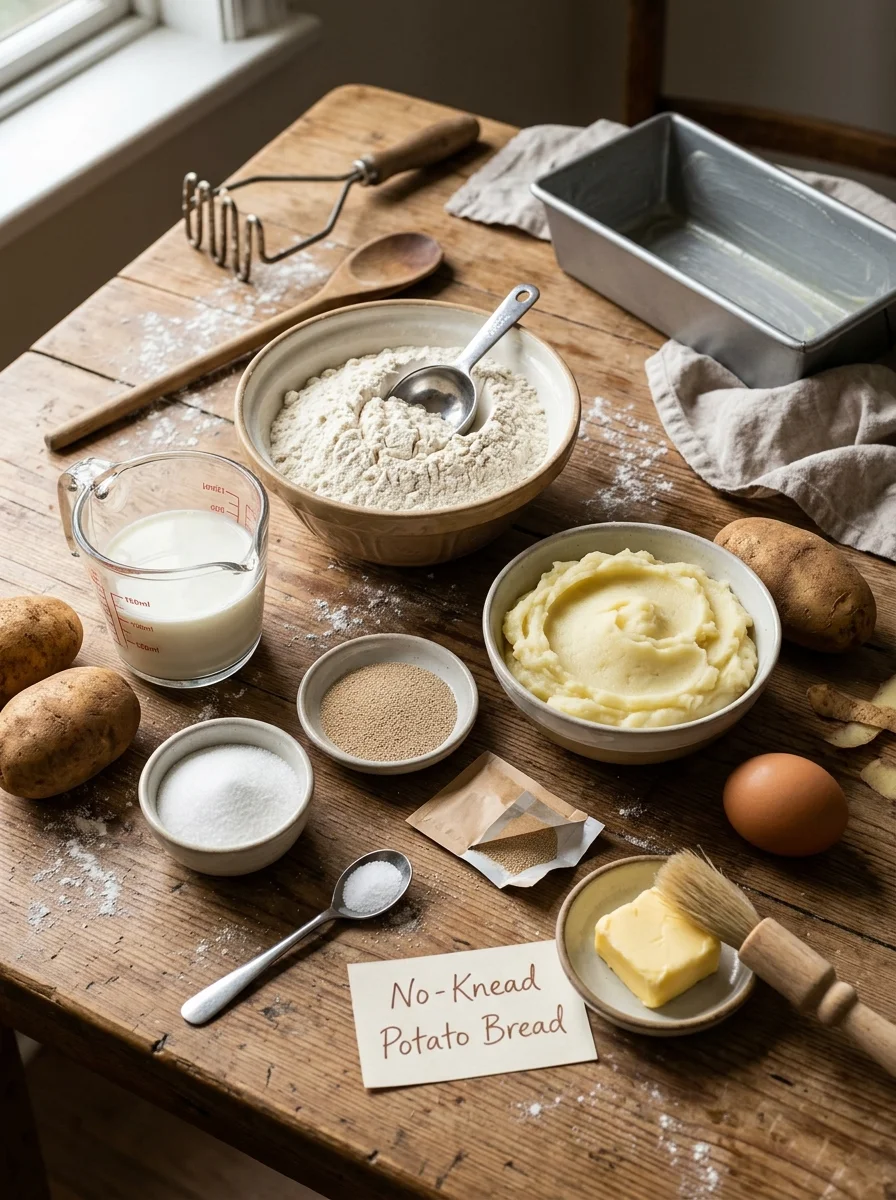
- 300 g all-purpose flour or bread flour (approximately 2½ cups)
- 200 g cooked, mashed potato (about 1 medium-large potato)
- 120-160 ml warm milk, added gradually
- 7 g instant yeast (2¼ teaspoons)
- 25 g sugar (about 2 tablespoons)
- 30 g melted butter (about 2 tablespoons)
- 1 teaspoon salt
- 1 egg, optional, for a richer loaf
- A little milk or melted butter for brushing
Equipment you will need
- Large mixing bowl and a wooden spoon
- Loaf pan, approximately 23 x 13 cm
- Potato masher or fork
- Spatula
- Clean kitchen towel or plastic wrap
- Pastry brush
- Wire cooling rack
How to make no-knead potato bread, step by step
Follow these eight steps for a soft, golden loaf. Read through them once first, since the rising times depend on how warm your kitchen is.
Step 1: Prepare the potatoes
- Peel and boil the potato until completely tender.
- Drain it well and mash until smooth, without adding milk or butter.
- Let the mashed potato cool until lukewarm.
Step 2: Activate the yeast
- In a large bowl, combine the warm milk, sugar and instant yeast.
- If you are using active dry yeast, let the mixture stand for 5-10 minutes until foamy.
- Make sure the milk is warm, not hot. Hot milk can kill the yeast.
Step 3: Mix the dough
- Add the mashed potato and melted butter to the yeast mixture.
- Add the flour and salt.
- Mix with a wooden spoon until everything is combined and no dry flour remains.
- The dough should be soft, sticky and slightly stretchy. Add the remaining milk only if needed.
Step 4: First rise
- Cover the bowl with a clean kitchen towel or plastic wrap.
- Leave it in a warm place for 60-90 minutes, or until the dough has approximately doubled in size.
Step 5: Shape the loaf
- Lightly grease a loaf pan measuring approximately 23 x 13 cm.
- Transfer the sticky dough into the pan using a spatula.
- Smooth the top with slightly wet or greased hands.
Step 6: Second rise
- Cover loosely and let the dough rise for another 30-45 minutes, until puffy and close to the top of the pan.
- Meanwhile, preheat the oven to 180°C (350°F).
Step 7: Bake
- Brush the top lightly with milk for a soft crust.
- Bake for 30-40 minutes, until golden brown and cooked through.
- If the top browns too quickly, cover it loosely with aluminum foil.
Step 8: Cool and serve
- Remove the loaf from the pan and place it on a wire rack.
- Brush the top with melted butter for an extra-soft crust, if desired.
- Let the bread cool for at least 30-45 minutes before slicing.
How to tell when potato bread is done
- Color: The top should be deep golden brown.
- Sound: Tap the bottom of the loaf. It should sound hollow.
- Temperature: The center should read about 93-96°C (200-205°F) on an instant-read thermometer.
- Feel: The sides should feel firm, and the loaf should spring back slightly when pressed.
Tips for extra-soft potato bread
These habits help you get a tall, fluffy loaf every time.
- Use smooth mashed potatoes. Lumps can create an uneven crumb.
- Let the potatoes cool. Very hot potatoes can damage the yeast.
- Add milk gradually. Different potatoes contain different amounts of moisture, so start with the lower amount.
- Keep the dough soft. Adding too much flour can make the bread dense.
- Allow enough rising time. The dough should become noticeably puffy before baking. Cool kitchens may need extra time.
- Do not slice while hot. Cooling helps the crumb set and prevents a gummy texture.
- Use wet hands. Sticky dough is normal. Wet or greased hands make it easy to handle.
Ingredient notes and substitutions
- Potatoes. Starchy potatoes such as russet or Yukon Gold work best. Plain mashed potato is ideal, so do not add butter, milk or seasoning. Leftover mashed potato works if it is unseasoned, and instant mashed potato flakes can be used if prepared with water only.
- Flour. All-purpose flour gives a soft, tender loaf. Bread flour gives a slightly chewier, taller one. Both work well.
- Milk. Whole milk gives the softest crumb. Water can replace it, though the bread will be a little less rich. Plant milks also work.
- Yeast. Instant yeast can be mixed straight in. Active dry yeast needs a few minutes to foam first.
- Butter. Melted butter adds flavor and softness. Olive oil or a neutral oil can replace it.
- Egg. The egg is optional. It makes the crumb richer and the color deeper, but the bread is delicious without it.
- Sugar. A small amount feeds the yeast and adds gentle sweetness. Honey can be used in the same quantity.
Potato bread troubleshooting
- Dough did not rise: The yeast may be old, or the milk was too hot or too cold. Check the expiry date and use lukewarm milk.
- Bread is dense: Too much flour was added, or the dough did not rise long enough. Keep the dough sticky and let it become puffy.
- Bread is gummy inside: It was sliced too soon or underbaked. Cool completely and check the center temperature.
- Top browns too quickly: Cover loosely with foil for the last 10-15 minutes of baking.
- Crust is too hard: Brush with melted butter right after baking and cover with a clean towel while it cools.
- Dough is too sticky to handle: That is normal for no-knead dough. Use a spatula and wet hands instead of adding more flour.
- Loaf collapsed in the oven: The second rise went too long. Bake when the dough is just near the top of the pan.
Potato bread variations
Once you are comfortable with the base recipe, try one of these easy twists.
- Cheese potato bread. Stir ½ cup of grated cheddar into the dough for a savory loaf.
- Herb potato bread. Add 1-2 tablespoons of chopped chives, rosemary or thyme.
- Garlic potato bread. Mix in 1 teaspoon of garlic powder, then brush the baked loaf with garlic butter.
- Seeded top. Brush the loaf with milk and sprinkle sesame, sunflower or pumpkin seeds on top before baking.
- Potato rolls. Divide the dough into 8-10 pieces, place them in a greased baking dish and bake for 20-25 minutes.
- Whole wheat blend. Replace up to 100 g of the flour with whole wheat flour, and add a splash more milk if the dough feels stiff.
Serving ideas
- Serve warm with butter and honey.
- Make soft sandwiches with cheese, eggs or vegetables.
- Toast slices and spread with jam.
- Serve alongside soup or stew.
- Use it for breakfast toast or lunchbox sandwiches.
- Turn day-old slices into French toast or bread pudding.
- Cube leftovers and bake them into crunchy croutons.
Storage instructions
- Room temperature: Store in an airtight bag for 2-3 days.
- Refrigerator: Refrigeration can dry out bread, so use it only when necessary.
- Freezer: Slice the completely cooled loaf and freeze for up to 2-3 months.
- Reheating: Toast slices directly from frozen or warm them briefly in the oven.
Make-ahead tips
- Overnight rise. After mixing, cover the bowl and refrigerate the dough overnight. Let it come to room temperature for about 30 minutes, then continue with the shaping step.
- Freeze in slices. Slice the cooled loaf before freezing, so you can take out only what you need.
- Refresh a day-old loaf. Wrap it in foil and warm it in a 160°C (325°F) oven for 10 minutes.
No-knead potato bread FAQ
Why add potato to bread? Mashed potato adds moisture and starch, which makes the crumb soft and helps the loaf stay fresh longer.
Can I make potato bread without kneading? Yes. This dough is stirred with a spoon and left to rise. The long rise lets the gluten develop on its own, so there is no need to knead.
Can I use leftover mashed potatoes? Yes, as long as they are plain. Mashed potatoes with butter, milk or seasoning will change the dough, so adjust the milk and salt if you use them.
Can I use instant mashed potato flakes? Yes. Prepare them with water only, according to the package, and measure about 200 g once cooled.
Why is my dough so sticky? This is a high-moisture, no-knead dough, so stickiness is normal. Use a spatula and wet hands instead of adding extra flour, which would make the bread dense.
Can I use active dry yeast instead of instant? Yes. Use the same amount, and let it stand in the warm milk and sugar for 5-10 minutes until foamy before mixing.
Can I make it dairy-free? Yes. Use a plant-based milk and replace the butter with oil or dairy-free butter.
How do I get a softer crust? Brush the top with milk before baking and with melted butter right after baking. Let the loaf cool under a clean towel.
How long does homemade potato bread last? It stays fresh for 2-3 days at room temperature in an airtight bag, and up to 2-3 months in the freezer when sliced.
Final thoughts
This soft and fluffy no-knead potato bread proves that homemade bread does not have to be hard. With a mashed potato, a few pantry ingredients and a little patience, you get a tender, golden loaf that stays soft for days.
Make it for sandwiches, serve it warm with butter and honey, or slice and freeze it for busy mornings. Once you try it, it may become your go-to homemade loaf.
Print
🥔🍞 Soft & Fluffy No-Knead Potato Bread
Ingredients
- 300 g all-purpose flour or bread flour (approximately 2½ cups)
- 200 g cooked, mashed potato (about 1 medium-large potato)
- 120–160 ml warm milk, added gradually
- 7 g instant yeast (2¼ teaspoons)
- 25 g sugar (about 2 tablespoons)
- 30 g melted butter (about 2 tablespoons)
- 1 teaspoon salt
- 1 egg, optional, for a richer loaf
- A little milk or melted butter for brushing
Equipment you will need
- Large mixing bowl and a wooden spoon
- Loaf pan, approximately 23 x 13 cm
- Potato masher or fork
- Spatula
- Clean kitchen towel or plastic wrap
- Pastry brush
- Wire cooling rack
Instructions
Follow these eight steps for a soft, golden loaf. Read through them once first, since the rising times depend on how warm your kitchen is.
Step 1: Prepare the potatoes
- Peel and boil the potato until completely tender.
- Drain it well and mash until smooth, without adding milk or butter.
- Let the mashed potato cool until lukewarm.
Step 2: Activate the yeast
- In a large bowl, combine the warm milk, sugar and instant yeast.
- If you are using active dry yeast, let the mixture stand for 5-10 minutes until foamy.
- Make sure the milk is warm, not hot. Hot milk can kill the yeast.
Step 3: Mix the dough
- Add the mashed potato and melted butter to the yeast mixture.
- Add the flour and salt.
- Mix with a wooden spoon until everything is combined and no dry flour remains.
- The dough should be soft, sticky and slightly stretchy. Add the remaining milk only if needed.
Step 4: First rise
- Cover the bowl with a clean kitchen towel or plastic wrap.
- Leave it in a warm place for 60-90 minutes, or until the dough has approximately doubled in size.
Step 5: Shape the loaf
- Lightly grease a loaf pan measuring approximately 23 x 13 cm.
- Transfer the sticky dough into the pan using a spatula.
- Smooth the top with slightly wet or greased hands.
Step 6: Second rise
- Cover loosely and let the dough rise for another 30-45 minutes, until puffy and close to the top of the pan.
- Meanwhile, preheat the oven to 180°C (350°F).
Step 7: Bake
- Brush the top lightly with milk for a soft crust.
- Bake for 30-40 minutes, until golden brown and cooked through.
- If the top browns too quickly, cover it loosely with aluminum foil.
Step 8: Cool and serve
- Remove the loaf from the pan and place it on a wire rack.
- Brush the top with melted butter for an extra-soft crust, if desired.
- Let the bread cool for at least 30-45 minutes before slicing.