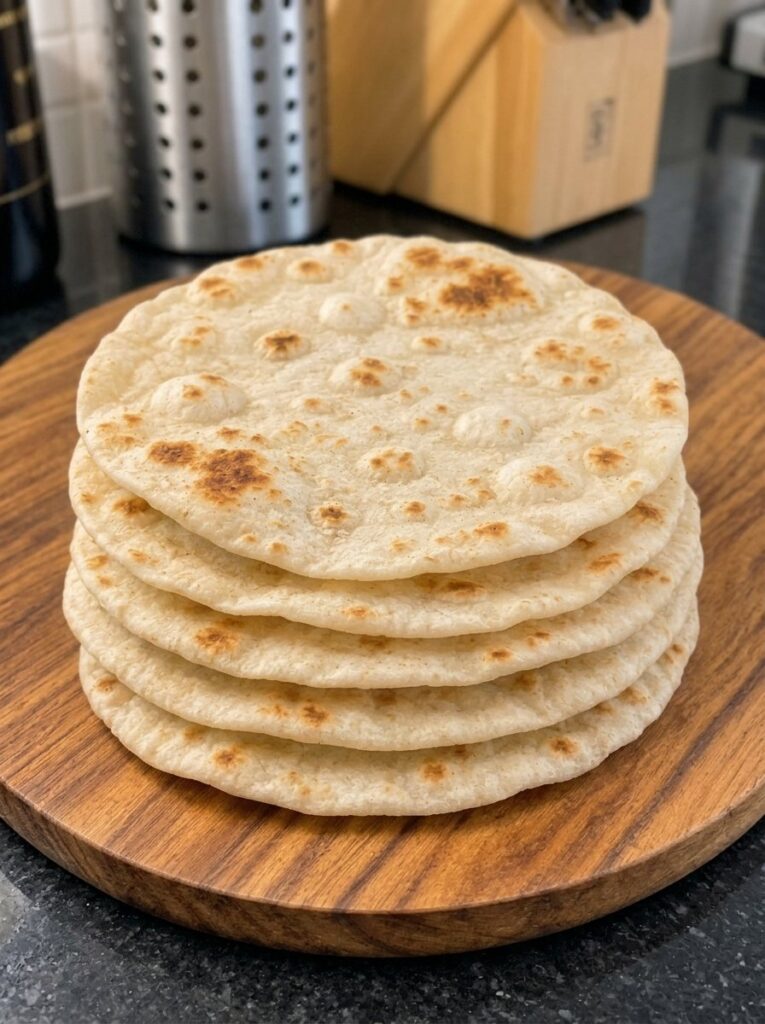
3-Ingredient Fluffy Rice Flour Flatbread: Soft, Tender, and Gluten-Free
If you have ever searched for a gluten-free flatbread that is soft, flexible, and made without a long ingredient list, this rice flour flatbread is the recipe to bookmark. It needs only three ingredients: white rice flour, boiling water, and salt. There is no yeast, no rising time, and no complicated technique, and the flatbreads cook in a dry skillet in about a minute or two per side.
The result is a stack of tender, lightly toasted flatbreads with delicate steam bubbles and golden-brown spots. They are mild and slightly nutty in flavor, so they suit almost anything you serve them with, from creamy hummus to a bubbling vegetable tagine.
In this guide you will find the full recipe, the science behind why the hot-water method works, troubleshooting tips, serving ideas, storage instructions, and answers to common questions. Whether you are new to gluten-free baking or just want a quick homemade bread for dinner tonight, you can make these flatbreads with confidence.
Why You’ll Love This 3-Ingredient Rice Flour Flatbread
Plenty of flatbread recipes look simple, but gluten-free versions often call for several specialty flours, binders, or gums. This one skips all of that. Here is what makes it worth making:
- Only three ingredients. White rice flour, boiling water, and salt are all you need. A little extra rice flour is used for dusting.
- No yeast and no rising. You can go from a bowl of flour to warm flatbread in under an hour.
- Naturally gluten-free. When you use certified gluten-free rice flour, the flatbreads suit gluten-free diets.
- Soft and pliable. Done right, they bend and fold without cracking, so they work as wraps, scoops, and side breads.
- No oil needed. They cook in a dry skillet, which keeps the flavor clean and the process simple.
- Beginner-friendly. The dough is forgiving, and the parchment paper trick makes rolling easy.
- Great for meal prep. They refrigerate and freeze well, and reheat in under a minute.
What Is Rice Flour Flatbread?
Rice flour flatbread is a flat, unleavened bread made from finely ground rice instead of wheat. Rice-based flatbreads appear in many cuisines around the world. Some are made with cooked rice dough, others with batters, and others with the hot-water method used here.
The hot-water method is the key to this recipe. Rice flour contains no gluten, so it cannot form the stretchy network that wheat dough relies on. Pouring boiling water over the flour hydrates it quickly and partially gelatinizes the starch. That turns a dry, crumbly flour into a soft, moldable dough that you can shape by hand and roll out between sheets of parchment.
Ingredients for Rice Flour Flatbread
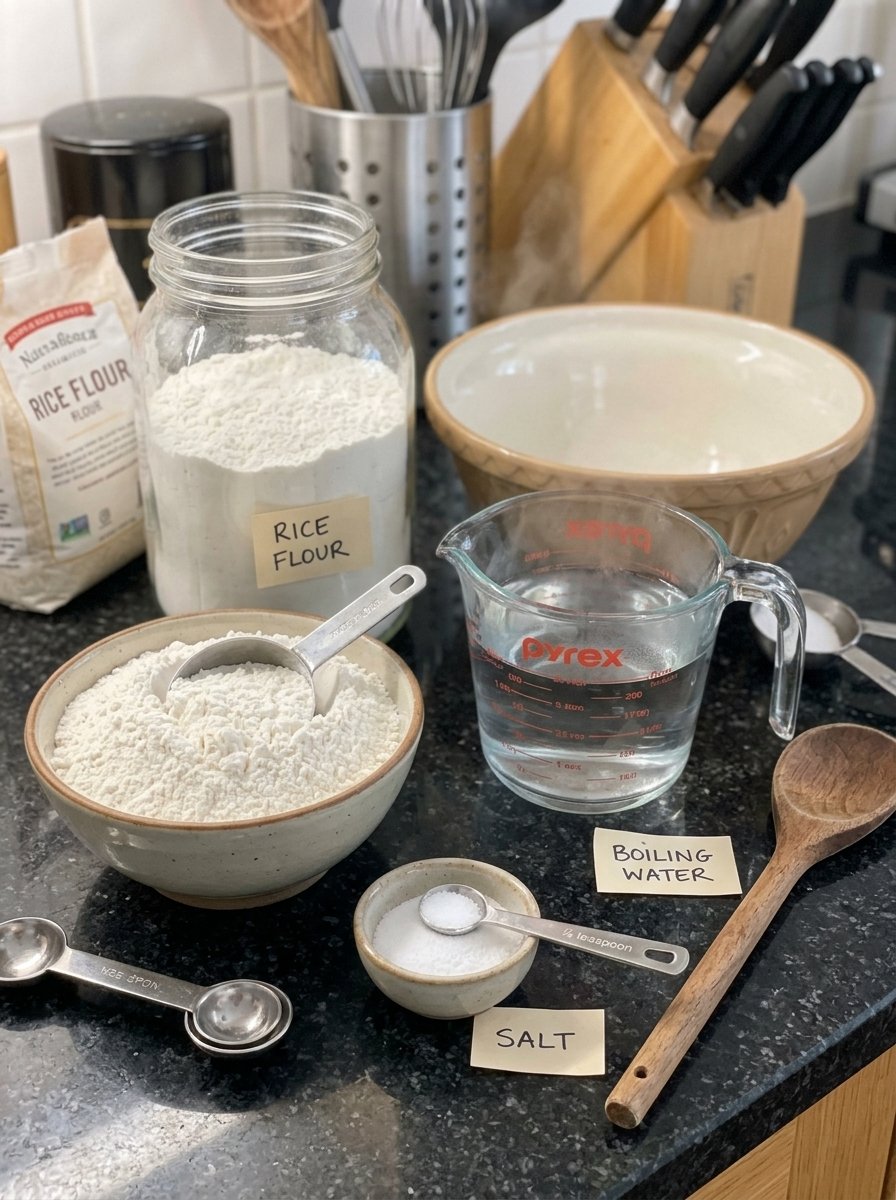
You only need a handful of pantry staples:
- 2 cups (320 g) finely ground white rice flour
- 1¼ to 1½ cups (300 to 360 ml) boiling water, added gradually
- ½ teaspoon (3 g) salt
- 2 to 3 tablespoons rice flour, for dusting and shaping as needed
Ingredient Notes
White rice flour. Choose a finely ground white rice flour for the smoothest dough and the most tender flatbread. Coarser flours can produce a slightly gritty, more fragile result. If you are cooking gluten-free for medical reasons, look for flour labeled certified gluten-free, since cross-contact can happen during processing.
Boiling water. The water must be truly hot. Lukewarm water will not hydrate the flour the same way, and the dough will be dry, cracky, and hard to shape. Add the water gradually, because different brands absorb different amounts.
Salt. Just half a teaspoon gives the flatbread a balanced, savory flavor. Fine salt dissolves most evenly.
Equipment You’ll Need
- A large heatproof mixing bowl
- A sturdy wooden spoon or whisk
- Parchment paper (two sheets per flatbread, reusable during rolling)
- A rolling pin
- A nonstick skillet or well-seasoned cast-iron pan
- A thin spatula
- A clean kitchen towel
How to Make Rice Flour Flatbread (Step by Step)
Step 1: Combine the Dry Ingredients
Place the white rice flour and salt in a large heatproof bowl. Stir briefly with a wooden spoon or whisk so the salt is distributed evenly through the flour.
Step 2: Add the Boiling Water
Carefully pour about 1¼ cups (300 ml) of boiling water into the flour while stirring continuously with a sturdy wooden spoon. Keep mixing until the water is absorbed and the flour forms a rough, crumbly dough.
If the mixture looks too dry, add more boiling water one tablespoon at a time. The goal is a dough that is moist and moldable, not wet or runny.
Step 3: Let the Dough Cool
Let the mixture rest for about 5 to 8 minutes, until it is cool enough to handle safely. During this time the rice flour keeps absorbing the hot water, and the dough becomes easier to work with.
Step 4: Bring the Dough Together
With clean hands, gently press and knead the dough for 2 to 3 minutes until it forms a relatively smooth, cohesive mass. Remember that rice flour has no gluten, so the dough will not become stretchy like wheat dough. That is normal.
- If the dough feels too dry or cracks a lot, add warm water one teaspoon at a time.
- If it feels sticky, dust it lightly with rice flour.
Step 5: Divide the Dough
Divide the dough into 8 equal portions and roll each gently between your palms into a ball. Keep the dough you are not working with covered by a clean kitchen towel or plastic wrap, because rice flour dough dries out quickly.
Step 6: Shape the Flatbreads
Place one dough ball between two sheets of parchment paper and press it gently with your hands. Roll it into a circle about 6 to 7 inches (15 to 18 cm) wide and 2 to 3 mm thick.
Peel away the top sheet of parchment, then lift the flatbread with the bottom sheet and release it onto your hand or straight into the skillet. Repeat with the remaining dough balls.
Step 7: Heat the Skillet
Set a nonstick skillet or well-seasoned cast-iron pan over medium to medium-high heat and let it heat thoroughly. Keep the pan dry, since no oil is needed.
Step 8: Cook the First Side
Place one flatbread in the hot skillet. Cook for about 1 to 2 minutes, until the surface looks dry, small bubbles appear, and the underside develops a few light golden spots.
Step 9: Flip and Finish Cooking
Flip the flatbread with a thin spatula and cook the second side for another 1 to 2 minutes, until lightly toasted and cooked through. If you like, flip it once more briefly to encourage extra puffing. Avoid overcooking, which makes rice flour flatbread dry and brittle.
Step 10: Keep the Flatbreads Soft
Move each cooked flatbread straight onto a clean kitchen towel. Stack them as they finish and fold the towel over the top. The trapped warmth and moisture keep them soft and flexible.
Step 11: Rest and Serve
When all the flatbreads are cooked, let the covered stack rest for about 5 minutes, then serve warm.
Tips for the Best Rice Flour Flatbread
Rice flour behaves differently from wheat flour, so a few small habits make a big difference.
Use fine white rice flour. Finely ground flour makes a smoother dough and a more tender flatbread.
Always start with boiling water. Hot water hydrates the flour and partially gelatinizes the starch, which is what makes the dough easy to shape.
Add the water gradually. Brands differ in how much liquid they absorb, so you may not need all of it.
Keep the dough covered. Rice flour dough dries out fast. Cover it while you divide and shape.
Use parchment paper. Rolling between two sheets prevents sticking and makes the flatbreads easy to transfer.
Don’t roll too thin. Aim for about 2 to 3 mm. Thinner flatbreads tend to turn crisp or brittle.
Cook over moderate heat. Very high heat dries out the outside before the inside is tender.
Avoid overcooking. A minute or two per side is usually enough.
Stack while warm. Covering the finished flatbreads with a towel keeps them soft.
Keep it gluten-free. Use certified gluten-free flour, and check any toppings or accompaniments too.
Troubleshooting Common Problems
My dough is cracking at the edges when I roll it.
The dough is probably too dry. Knead in warm water, one teaspoon at a time, until it is smooth and supple. Also make sure you keep the unused dough covered while you work.
My dough is sticky and hard to handle.
Dust it lightly with rice flour and knead briefly. Letting it rest a few more minutes can also help, since the flour keeps absorbing moisture as it sits.
My flatbreads turned out dry and brittle.
This usually comes from rolling too thin, cooking too long, or using heat that is too high. Roll to 2 to 3 mm, cook over medium heat, and take the flatbreads off as soon as they are lightly toasted.
My flatbreads are gummy in the middle.
The dough may have had too much water, or the pan was not hot enough. Reduce the water slightly next time and let the skillet heat thoroughly before cooking.
The flatbreads didn’t puff.
Puffing varies with the flour brand, thickness, and heat. Even without big puffs, small bubbles and golden spots are a good sign. A brief second flip can encourage more puffing.
The dough tastes bland.
Rice flour is naturally mild, which is part of its charm. If you want more flavor, serve the flatbreads brushed with olive oil, garlic, and parsley, or pair them with bold dips and stews.
Serving Ideas for Rice Flour Flatbread
Because the flavor is mild and the texture soft, these flatbreads go with almost everything:
- Hummus and baba ganoush. Serve warm with creamy hummus, smoky baba ganoush, and a drizzle of olive oil.
- Moroccan vegetable tagine. Tear off pieces and use them to scoop up a vegetable tagine or chickpea stew.
- Lentil soup. Enjoy them alongside a bowl of lentil or vegetable soup.
- Chicken and vegetable wraps. Fill with grilled chicken, lettuce, tomato, cucumber, and your favorite sauce.
- Garlic and herb oil. Brush lightly with olive oil mixed with garlic and fresh parsley.
- Curry and grilled meat. Serve with your favorite curry, grilled chicken, or roasted vegetables.
- Avocado and eggs. Top with mashed avocado, scrambled eggs, and freshly ground black pepper for a quick breakfast.
Easy Variations to Try
Once you are comfortable with the base recipe, a few simple additions can change the character of the flatbread:
- Herb flatbread: Stir a tablespoon of finely chopped parsley or cilantro into the dry ingredients.
- Garlic flatbread: Brush the finished flatbreads with garlic-infused olive oil right after cooking.
- Spiced flatbread: Add a pinch of cumin or ground coriander to the flour for a warm, earthy note.
- Sesame flatbread: Press a few sesame seeds into the surface before cooking.
Add dry flavorings in small amounts. Too many extras can affect the texture of the dough.
Storage and Reheating
Room temperature. These flatbreads are best fresh. If necessary, keep them wrapped in a clean kitchen towel for a few hours and eat them the same day.
Refrigerator. Let them cool completely, then store in an airtight container or food-safe bag for up to 3 days.
Freezer. Stack completely cooled flatbreads with parchment between each one, place them in a freezer-safe bag, and freeze for up to 2 months.
Reheating. Sprinkle a flatbread lightly with water and warm it in a covered skillet over low heat for about 30 to 60 seconds per side.
From frozen. Thaw in the refrigerator or at room temperature, then reheat gently in a covered skillet until soft and warm.
Make ahead. You can prepare the dough shortly before cooking, but for the best texture, shape and cook the flatbreads fresh rather than storing uncooked dough for long.
Recipe Card: 3-Ingredient Fluffy Rice Flour Flatbread
- Prep time: 15 minutes
- Resting time: 5 to 8 minutes
- Cook time: 20 to 25 minutes
- Total time: about 40 to 48 minutes
- Yield: 8 flatbreads
- Difficulty: Easy
- Category: Homemade bread / gluten-free flatbread
- Cooking method: Stovetop
- Texture: Soft, tender, lightly chewy, with delicate bubbles and toasted spots
- Flavor: Mild, delicate, and slightly nutty
- Main ingredients: Rice flour, water, and salt
Frequently Asked Questions
Is rice flour flatbread gluten-free?
Rice is naturally gluten-free, so this flatbread is gluten-free when you use certified gluten-free rice flour and check that any additional ingredients or toppings are suitable.
Can I use brown rice flour instead of white rice flour?
This recipe was developed with finely ground white rice flour, which gives the softest, most tender result. Brown rice flour is coarser and absorbs water differently, so the dough and texture will change. If you try it, add water gradually and expect a denser flatbread.
Can I use cold or warm water instead of boiling water?
Boiling water is essential. It hydrates the flour and partially gelatinizes the starch, which makes the dough pliable. Cooler water usually gives a dry, crumbly dough that cracks when rolled.
Do I need to add oil?
No. The dough needs no oil, and the flatbreads cook in a dry skillet. You can brush them with olive oil after cooking for extra flavor.
Why does the dough need to cool before kneading?
Resting for 5 to 8 minutes lets the flour finish absorbing the hot water and makes the dough safe and comfortable to handle.
Why does rice flour dough dry out so quickly?
Rice flour dough has no gluten network to hold in moisture, so the surface dries fast when exposed to air. Covering the dough with a towel or plastic wrap while you work prevents this.
Can I make this without parchment paper?
You can, but it is harder. Rice flour dough is delicate, and parchment prevents sticking and tearing. If you skip it, dust the surface and rolling pin with rice flour and handle the dough gently.
Can I make the dough ahead of time?
For the best texture, shape and cook the flatbreads fresh. Dough stored for a long time can dry out and become harder to roll.
How thick should the flatbreads be?
Aim for about 2 to 3 mm. This keeps them tender and flexible after cooking.
How do I keep the flatbreads soft after cooking?
Stack them on a clean kitchen towel as they come off the pan and cover them with the towel. Let the stack rest for about 5 minutes before serving.
Can I freeze rice flour flatbread?
Yes. Cool them completely, stack with parchment between each one, and freeze in a freezer-safe bag for up to 2 months. Reheat gently in a covered skillet.
What can I eat with rice flour flatbread?
They pair well with dips like hummus and baba ganoush, soups, curries, stews, grilled meats, and roasted vegetables. They also work as simple wraps.
Final Thoughts
This 3-ingredient rice flour flatbread proves that good gluten-free bread does not need to be complicated. With white rice flour, boiling water, and salt, you can make soft, tender flatbreads with golden-brown spots and delicate bubbles in under an hour. The main points are to use boiling water, keep the dough covered, roll it to 2 to 3 mm, cook over moderate heat, and stack the finished flatbreads under a towel so they stay soft.
Once you have made them, you will find yourself reaching for this recipe again and again, for weeknight dinners, soup nights, or any time you want a warm, homemade bread without the wait. Serve them fresh, share them with friends and family, and enjoy.
Print
3-Ingredient Fluffy Rice Flour Flatbread
- Total Time: 40 to 48 minutes
Ingredients
You only need a handful of pantry staples:
- 2 cups (320 g) finely ground white rice flour
- 1¼ to 1½ cups (300 to 360 ml) boiling water, added gradually
- ½ teaspoon (3 g) salt
- 2 to 3 tablespoons rice flour, for dusting and shaping as needed
Ingredient Notes
White rice flour. Choose a finely ground white rice flour for the smoothest dough and the most tender flatbread. Coarser flours can produce a slightly gritty, more fragile result. If you are cooking gluten-free for medical reasons, look for flour labeled certified gluten-free, since cross-contact can happen during processing.
Boiling water. The water must be truly hot. Lukewarm water will not hydrate the flour the same way, and the dough will be dry, cracky, and hard to shape. Add the water gradually, because different brands absorb different amounts.
Salt. Just half a teaspoon gives the flatbread a balanced, savory flavor. Fine salt dissolves most evenly.
Instructions
Step 1: Combine the Dry Ingredients
Place the white rice flour and salt in a large heatproof bowl. Stir briefly with a wooden spoon or whisk so the salt is distributed evenly through the flour.
Step 2: Add the Boiling Water
Carefully pour about 1¼ cups (300 ml) of boiling water into the flour while stirring continuously with a sturdy wooden spoon. Keep mixing until the water is absorbed and the flour forms a rough, crumbly dough.
If the mixture looks too dry, add more boiling water one tablespoon at a time. The goal is a dough that is moist and moldable, not wet or runny.
Step 3: Let the Dough Cool
Let the mixture rest for about 5 to 8 minutes, until it is cool enough to handle safely. During this time the rice flour keeps absorbing the hot water, and the dough becomes easier to work with.
Step 4: Bring the Dough Together
With clean hands, gently press and knead the dough for 2 to 3 minutes until it forms a relatively smooth, cohesive mass. Remember that rice flour has no gluten, so the dough will not become stretchy like wheat dough. That is normal.
- If the dough feels too dry or cracks a lot, add warm water one teaspoon at a time.
- If it feels sticky, dust it lightly with rice flour.
Step 5: Divide the Dough
Divide the dough into 8 equal portions and roll each gently between your palms into a ball. Keep the dough you are not working with covered by a clean kitchen towel or plastic wrap, because rice flour dough dries out quickly.
Step 6: Shape the Flatbreads
Place one dough ball between two sheets of parchment paper and press it gently with your hands. Roll it into a circle about 6 to 7 inches (15 to 18 cm) wide and 2 to 3 mm thick.
Peel away the top sheet of parchment, then lift the flatbread with the bottom sheet and release it onto your hand or straight into the skillet. Repeat with the remaining dough balls.
Step 7: Heat the Skillet
Set a nonstick skillet or well-seasoned cast-iron pan over medium to medium-high heat and let it heat thoroughly. Keep the pan dry, since no oil is needed.
Step 8: Cook the First Side
Place one flatbread in the hot skillet. Cook for about 1 to 2 minutes, until the surface looks dry, small bubbles appear, and the underside develops a few light golden spots.
Step 9: Flip and Finish Cooking
Flip the flatbread with a thin spatula and cook the second side for another 1 to 2 minutes, until lightly toasted and cooked through. If you like, flip it once more briefly to encourage extra puffing. Avoid overcooking, which makes rice flour flatbread dry and brittle.
Step 10: Keep the Flatbreads Soft
Move each cooked flatbread straight onto a clean kitchen towel. Stack them as they finish and fold the towel over the top. The trapped warmth and moisture keep them soft and flexible.
Step 11: Rest and Serve
When all the flatbreads are cooked, let the covered stack rest for about 5 minutes, then serve warm.
- Prep Time: 15 minutes
- Cook Time: 20 to 25 minutes