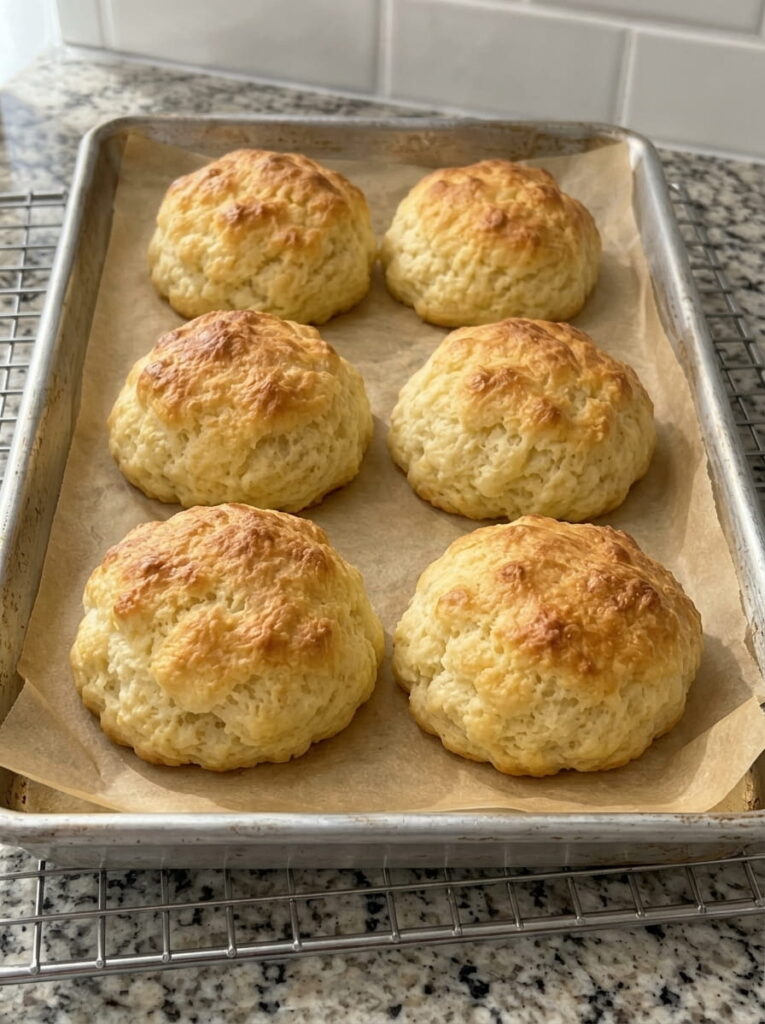
3-Ingredient High-Protein Cottage Cheese Dinner Rolls 🥣🥖
Fresh, warm dinner rolls usually mean yeast, kneading, and waiting for dough to rise. These cottage cheese dinner rolls skip all of that. With just three ingredients (cottage cheese, eggs, and self-rising flour), you get soft, fluffy rolls with golden, craggy tops and a tender, slightly chewy middle. They’re also high in protein, thanks to the cheese and eggs.
The method is as simple as the ingredient list: blend, mix, scoop, and bake. From the first stir to the first bite takes about 35 minutes, and most of that is oven time. They suit breakfast, sandwiches, a bowl of soup, or a weeknight dinner where you suddenly realize you want bread.
This guide covers the full recipe, step-by-step instructions, and the tips that keep the rolls fluffy instead of dense. You’ll also find ingredient notes, a homemade self-rising flour substitute, troubleshooting, variations, storage and freezing advice, and answers to common questions.
Recipe at a Glance
- Makes: 6 dinner rolls
- Prep time: 10 minutes
- Bake time: 22-28 minutes
- Oven temperature: 375°F (190°C)
- Difficulty: Very easy
Why You’ll Love These 3-Ingredient Dinner Rolls
Only three ingredients. Cottage cheese, eggs, and self-rising flour are all you need.
No yeast, no kneading, no rising. The leavening is already in the flour, so there’s no proofing and no waiting.
High in protein. Cottage cheese and eggs give each roll a solid protein boost compared with a standard dinner roll.
Soft and fluffy. Blended cottage cheese keeps the crumb moist and tender.
Quick. About 10 minutes of prep and under 30 minutes in the oven.
Versatile. Serve them plain, buttered, as sandwich buns, or with soup.
Easy to flavor. A pinch of garlic powder, herbs, or shredded cheese turns them into something special.
Beginner-friendly. It’s hard to go wrong with a stir-and-scoop dough.
Ingredients for Cottage Cheese Dinner Rolls
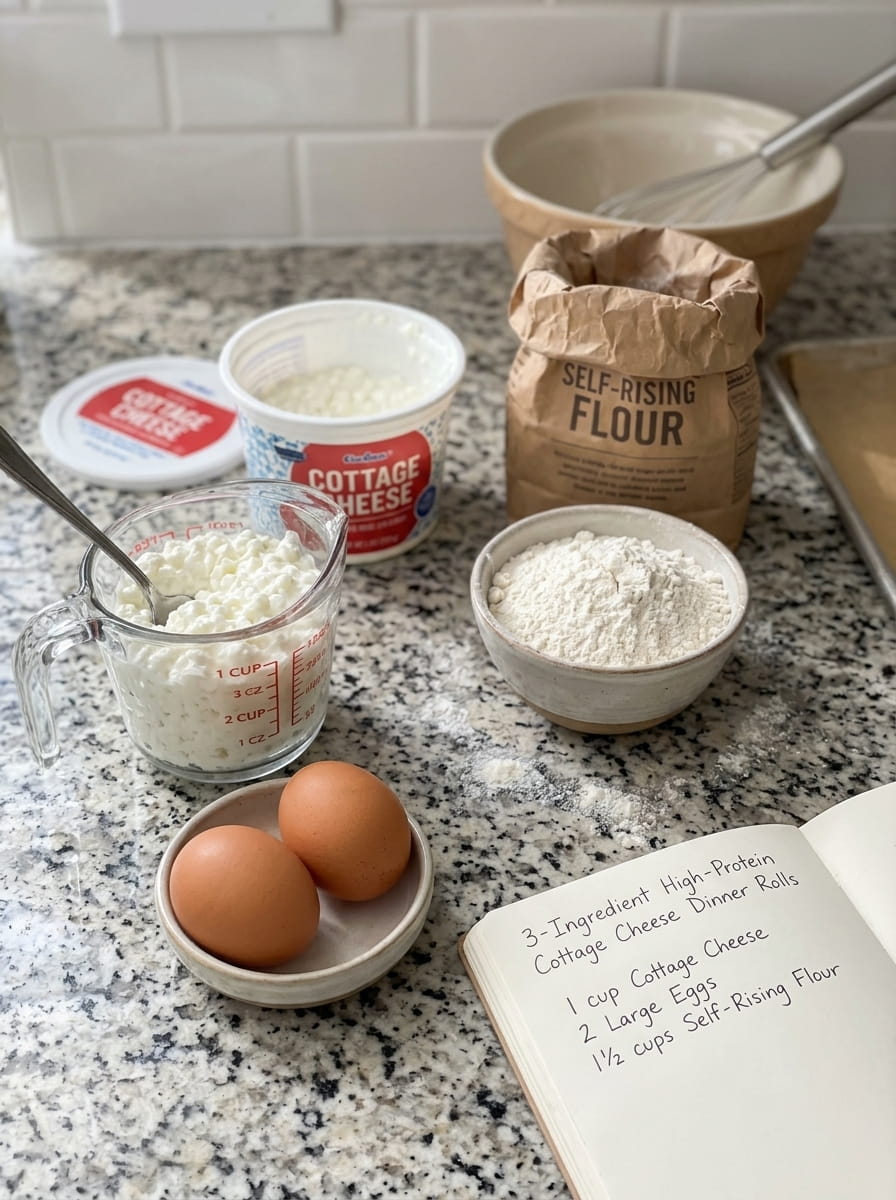
- 1 cup (225 g) cottage cheese
- 2 large eggs
- 1½ cups (180 g) self-rising flour
Ingredient Notes and Tips
Cottage cheese. Full-fat or low-fat both work. Full-fat gives a richer flavor and a softer, moister crumb. Low-fat rolls are slightly drier but still good. If your cottage cheese looks very wet, drain it briefly in a fine-mesh strainer so the dough doesn’t turn sticky. Blending it smooth gives the most even, bread-like texture, while leaving some curds gives a rustic, slightly cheesy result.
Eggs. Eggs bind the dough and add structure and lift. Use large eggs at room temperature so they blend smoothly into the cottage cheese. Cold eggs are fine too, but the mixture may take a few extra seconds to combine.
Self-rising flour. This is all-purpose flour with baking powder and salt already mixed in, which is what lets the rolls rise without yeast. Measure by weight (180 g) if you can. If you’re using cups, spoon the flour into the cup and level it off instead of scooping, since packed flour makes dense rolls. Check the date on the bag, because the baking powder loses strength over time.
Don’t Have Self-Rising Flour?
You can make a substitute. For every 1 cup (120 g) of all-purpose flour, whisk in 1½ teaspoons of baking powder and ¼ teaspoon of salt. For this recipe, that means 1½ cups (180 g) of all-purpose flour, 2¼ teaspoons of baking powder, and a generous ⅓ teaspoon of salt. Whisk thoroughly so the leavening is evenly distributed.
Equipment You’ll Need
- A blender, food processor, or immersion blender (or a bowl and fork if you prefer rustic rolls)
- A large mixing bowl
- A spatula
- A baking sheet
- Parchment paper or a silicone baking mat
- A large spoon or ice cream scoop
- A wire cooling rack
How to Make Cottage Cheese Dinner Rolls (Step by Step)
Before you begin, preheat your oven to 375°F (190°C) and line a baking sheet with parchment paper.
Step 1: Blend the Wet Ingredients
Add the cottage cheese and eggs to a blender or food processor. Blend for 20-30 seconds, until smooth and creamy. If you prefer, whisk them together in a bowl and leave some small curds for a more rustic texture.
Step 2: Add the Flour
Pour the blended mixture into a large bowl and add the self-rising flour. Stir with a spatula until just combined. The dough will be thick, sticky, and scoopable, more like a drop biscuit dough than a kneaded bread dough. Don’t overmix. A few small streaks of flour are fine.
Step 3: Scoop the Rolls
Using a large spoon or a ¼-cup scoop, drop 6 equal mounds of dough onto the prepared baking sheet, spacing them about 2 inches apart. Don’t smooth them. The rough, craggy surface bakes into a golden, crisp-edged top. For rounder rolls, wet your hands lightly and gently shape each mound.
Step 4: Bake
Bake for 22-28 minutes, until the rolls are deep golden brown on top and feel firm. A toothpick inserted into the center should come out clean, and the bottoms should sound hollow when tapped. If the tops brown too quickly, tent the pan loosely with foil for the last 5-8 minutes.
Step 5: Cool and Serve
Transfer the rolls to a wire rack and let them cool for at least 10 minutes. They’re lovely warm, with the crumb still tender, but the centers need that short rest to set. Brush with melted butter if you like, and serve.
Expert Tips for the Best Cottage Cheese Rolls
1. Blend the cottage cheese for a smoother crumb. Curds can leave moist pockets. Blending gives a more even, bread-like roll.
2. Don’t overmix. Stir only until the flour disappears. Overworking the dough can make the rolls tough.
3. Use fresh self-rising flour. Old flour has weak leavening and gives flat, dense rolls.
4. Measure accurately. Too much flour makes dry rolls, and too little makes them spread. Use a scale if possible.
5. Scoop right away. The baking powder starts working as soon as it’s wet, so get the dough into the oven promptly.
6. Leave room between rolls. They expand a little, and space helps the sides brown and cook through.
7. Bake until deep golden. Pale rolls can be gummy in the center. Look for a rich golden color.
8. Brush with butter. A little melted butter right out of the oven softens the crust and adds shine and flavor.
9. Let them rest. A 10-minute cool-down firms up the interior and makes the texture better.
Troubleshooting Common Problems
My rolls are dense. The flour may have been packed into the measuring cup, the dough overmixed, or the self-rising flour too old. Weigh the flour, mix gently, and check the date.
My rolls are gummy inside. They were probably underbaked, or the cottage cheese was very wet. Bake until deep golden and drain wet cottage cheese first.
My rolls spread flat. The dough may be too wet, or the leavening may be weak. Drain the cottage cheese, measure the flour carefully, and use fresh flour.
The tops are pale. Bake a few minutes longer, or move the pan to a higher rack for the last 5 minutes.
The bottoms are too dark. Use a lighter-colored baking sheet or double up the pans, and keep the rack in the middle of the oven.
The rolls taste bland. Self-rising flour has only a little salt. Add a pinch of salt, garlic powder, or herbs, or brush the baked rolls with seasoned butter.
The rolls taste too much like cheese. Blend the cottage cheese until completely smooth, which mellows the flavor.
The dough is too sticky to scoop. Add a tablespoon more flour, or drain the cottage cheese better next time.
Recipe Variations and Add-Ins
Garlic herb rolls. Stir in ½ teaspoon of garlic powder and 1 teaspoon of Italian seasoning or dried parsley. Brush the baked rolls with garlic butter.
Cheddar jalapeño rolls. Fold in ¼ cup of shredded cheddar and 1-2 tablespoons of diced pickled jalapeños.
Everything bagel rolls. Sprinkle everything bagel seasoning on top before baking.
Parmesan rolls. Stir in 2 tablespoons of grated Parmesan and a pinch of black pepper.
Rosemary rolls. Add 1 teaspoon of chopped fresh rosemary and a little flaky salt on top.
Sweet breakfast rolls. Add 1 tablespoon of sugar or honey and ½ teaspoon of cinnamon, and serve with butter or jam.
Seeded rolls. Top with sesame, poppy, or sunflower seeds for a bakery-style finish.
Mini rolls. Use a tablespoon to make 12 small rolls, and bake for 15-18 minutes.
Sandwich buns. Shape larger mounds and flatten them slightly. Bake a few minutes longer, and cool completely before slicing.
Make them with whole wheat. Replace part of the self-rising flour with whole wheat flour, and add a splash more cottage cheese or a tablespoon of milk if the dough seems stiff. Texture will be a bit denser.
Gluten-free option. A gluten-free self-rising flour blend may work. Results vary by brand, so test a small batch.
What to Serve with Cottage Cheese Dinner Rolls
- Soups and stews: tomato, chicken noodle, or vegetable soup
- Pasta and Italian dishes: spaghetti, lasagna, or chicken parmesan
- Roast chicken or grilled meats
- Salads: Caesar, Greek, or a simple green salad with a hearty topper
- Breakfast: with eggs, avocado, or butter and jam
- Sandwiches: split them for turkey and cheese, egg salad, or chicken salad
- Spreads: butter, cream cheese, hummus, or honey
How to Store, Freeze, and Reheat
Room temperature: Once completely cool, store the rolls in an airtight container for up to 1 day. Because they contain dairy and eggs, it’s best to refrigerate them after that.
Refrigerator: Store in an airtight container for up to 4-5 days.
Freezer: Freeze cooled rolls in a freezer bag for up to 3 months. Thaw at room temperature, or reheat straight from frozen.
Reheating: Warm rolls in a 350°F (175°C) oven for 5-8 minutes, or microwave for 15-20 seconds. For a crisp exterior, split and toast them.
Nutrition Overview
These rolls provide protein from the cottage cheese and eggs, along with carbohydrates from the flour. They contain no added sugar or oil in the base recipe. Exact calories and macros depend on the brand of cottage cheese, whether you use full-fat or low-fat, and the size of each roll. Check your labels or use a nutrition calculator if you’re tracking intake. If you manage a health condition, check with your healthcare provider about how these rolls fit your plan.
Frequently Asked Questions
Can I taste the cottage cheese in these rolls?
Only slightly. Blending the cottage cheese smooth mellows its flavor, and the baked rolls taste like soft, mildly savory bread.
Do I have to use self-rising flour?
It’s what makes this recipe work with three ingredients. You can make a substitute with all-purpose flour, baking powder, and salt, as described above.
Can I use low-fat or fat-free cottage cheese?
Yes. Low-fat works well. Fat-free can give a drier, less tender roll, and it often has more liquid, so drain it first.
Do I need to blend the cottage cheese?
No, but blending gives a smoother, more bread-like texture. If you skip it, the rolls will be a bit more rustic with small cheesy pockets.
Why is my dough so sticky?
It’s meant to be thick and sticky, like biscuit dough. If it’s too wet to hold a mound, add a tablespoon of flour or drain the cottage cheese better.
Can I make the dough ahead of time?
It’s best baked right away, since the baking powder activates once the flour is moistened. Baking promptly gives the best rise.
Can I use a muffin tin?
Yes. Spoon the dough into a greased or lined muffin tin for neater, rounder rolls. Bake for about 20-25 minutes.
Can I double the recipe?
Yes. Double all three ingredients and bake 12 rolls on one or two baking sheets. If using two trays, rotate them halfway.
Why did my rolls come out flat?
Old self-rising flour, too much liquid, or overmixing are the usual causes. Check the date, drain the cottage cheese, and stir gently.
Are these rolls gluten-free?
Not as written. They use wheat-based self-rising flour. You can try a gluten-free self-rising blend, but results vary.
Can I add herbs and cheese?
Yes. Stir in herbs, garlic powder, or shredded cheese. Keep add-ins to about ¼ cup so the dough still holds together.
Can I make them into sandwich buns?
Yes. Make larger mounds, flatten them slightly, and bake until deep golden. Cool fully before slicing.
What size will the rolls be?
Each of the 6 rolls is roughly 3 inches wide. For smaller rolls, make 8-12 and shorten the baking time.
Can I use an air fryer?
It can work for a small batch. Bake at 325°F (165°C) for 15-20 minutes, checking for doneness, and make sure the dough has room to expand.
How do I know when the rolls are done?
They should be deep golden brown, firm to the touch, and a toothpick inserted in the center should come out clean.
Final Thoughts
These 3-ingredient cottage cheese dinner rolls prove that homemade bread can be fast and simple. With just cottage cheese, eggs, and self-rising flour, you get soft, fluffy, protein-rich rolls with golden tops and a tender middle, with no yeast and no waiting.
Keep a container of cottage cheese and a bag of self-rising flour on hand, and you’re always about 35 minutes from warm rolls. Serve them with soup, tuck them into a sandwich, or eat them plain with butter. ❤️
If you try these rolls, leave a comment and a star rating, and share the recipe with a friend who loves easy bread. Enjoy! 🥣🥖
Print
3-Ingredient High-Protein Cottage Cheese Dinner Rolls
Ingredients
- 1 cup (225 g) cottage cheese
- 2 large eggs
- 1½ cups (180 g) self-rising flour
Instructions
Before you begin, preheat your oven to 375°F (190°C) and line a baking sheet with parchment paper.
Add the cottage cheese and eggs to a blender or food processor. Blend for 20-30 seconds, until smooth and creamy. If you prefer, whisk them together in a bowl and leave some small curds for a more rustic texture.
Pour the blended mixture into a large bowl and add the self-rising flour. Stir with a spatula until just combined. The dough will be thick, sticky, and scoopable, more like a drop biscuit dough than a kneaded bread dough. Don’t overmix. A few small streaks of flour are fine.
Using a large spoon or a ¼-cup scoop, drop 6 equal mounds of dough onto the prepared baking sheet, spacing them about 2 inches apart. Don’t smooth them. The rough, craggy surface bakes into a golden, crisp-edged top. For rounder rolls, wet your hands lightly and gently shape each mound.
Bake for 22-28 minutes, until the rolls are deep golden brown on top and feel firm. A toothpick inserted into the center should come out clean, and the bottoms should sound hollow when tapped. If the tops brown too quickly, tent the pan loosely with foil for the last 5-8 minutes.
Transfer the rolls to a wire rack and let them cool for at least 10 minutes. They’re lovely warm, with the crumb still tender, but the centers need that short rest to set. Brush with melted butter if you like, and serve.