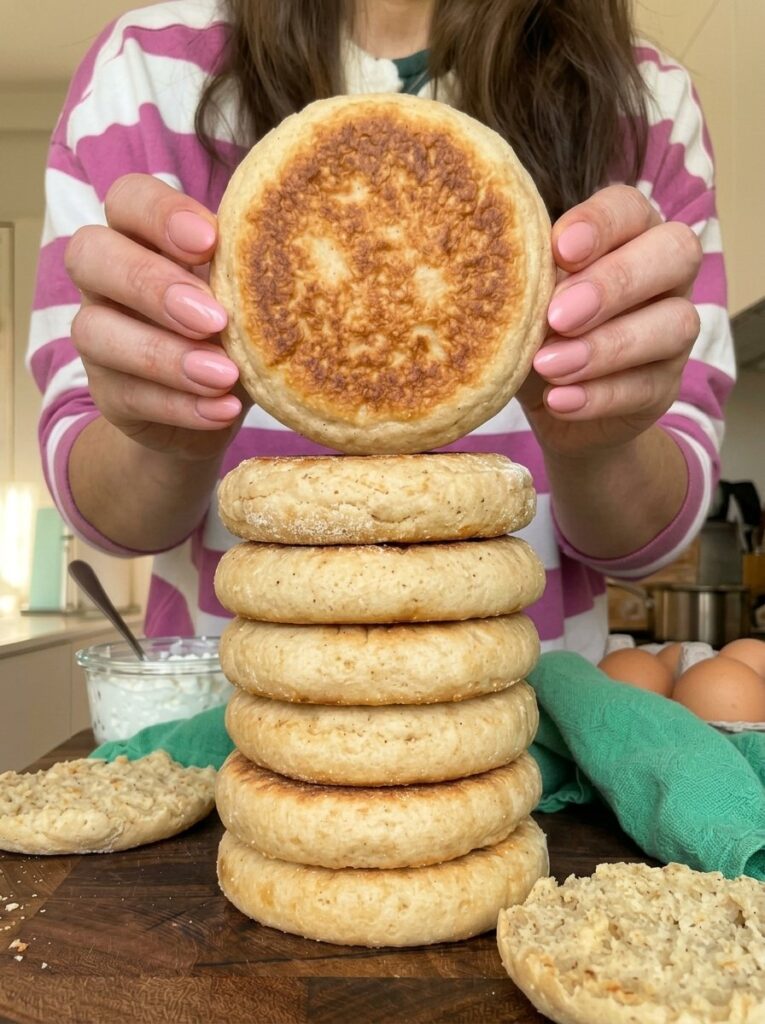
4-Ingredient High-Protein Cottage Cheese English Muffins
SEO Title: 4-Ingredient High-Protein Cottage Cheese English Muffins (Easy Skillet Recipe)
Meta Description: Make soft, nooks-and-crannies-style cottage cheese English muffins with just 4 ingredients. No yeast, no waiting, cooked in a skillet. Perfect high-protein breakfast!
Suggested URL Slug: /cottage-cheese-english-muffins-high-protein
Primary Keyword: cottage cheese English muffins
Secondary Keywords: high-protein English muffins, 4-ingredient English muffins, no-yeast English muffins, cottage cheese bread recipe, healthy breakfast recipe, skillet English muffins
If you love a warm, toasty English muffin but don’t want to deal with yeast, proofing time, or a long ingredient list, this recipe is for you. These 4-ingredient high-protein cottage cheese English muffins come together with pantry staples and a quick whirl in the blender. There is no rising time and no complicated technique, just a soft, slightly sticky dough that cooks in a skillet and turns golden and tender.
The star of the recipe is cottage cheese. Blended with eggs, it makes a creamy base that adds moisture, a gentle tang, and a boost of protein to every bite. Toast them, and you get crisp edges, a soft center, and a sturdy base for everything from breakfast sandwiches to peanut butter toast.
In this guide, you’ll find the full recipe, step-by-step instructions, troubleshooting advice, serving ideas, storage tips, and answers to common questions, so your muffins turn out right the first time.
Why You’ll Love These Cottage Cheese English Muffins
Here is why this recipe has earned a permanent spot in the breakfast rotation:
- Only 4 ingredients. Cottage cheese, eggs, self-rising flour, and salt. That’s the whole list.
- No yeast and no proofing. Traditional English muffins need hours of rising. This dough is ready to shape in minutes.
- High in protein. Cottage cheese and eggs are both protein-rich foods, so these muffins are more filling than a typical bread-based breakfast.
- Made on the stovetop. No oven needed. A covered skillet does all the work, which is great for hot days, small kitchens, or dorm cooking.
- Great for meal prep. They keep well in the fridge and freeze beautifully, so you can have a homemade breakfast ready all week.
- Versatile. Sweet or savory, plain or loaded, they work with almost any topping.
- Beginner-friendly. If you can stir, cut, and flip, you can make these.
What Are Cottage Cheese English Muffins?
Cottage cheese English muffins are a quick, yeast-free take on the classic English muffin. Instead of building structure through fermentation, this recipe relies on the combination of eggs, cottage cheese, and self-rising flour (which contains its own leavening). The result is a tender, bread-like muffin with a mild flavor, a golden exterior, and a soft interior that splits open with a fork.
They won’t be identical to the yeasted, bakery-style version with its deep nooks and crannies, but they come surprisingly close in texture once split and toasted. They’re also much faster, and they offer more protein and a slightly richer, creamier crumb.
Ingredients
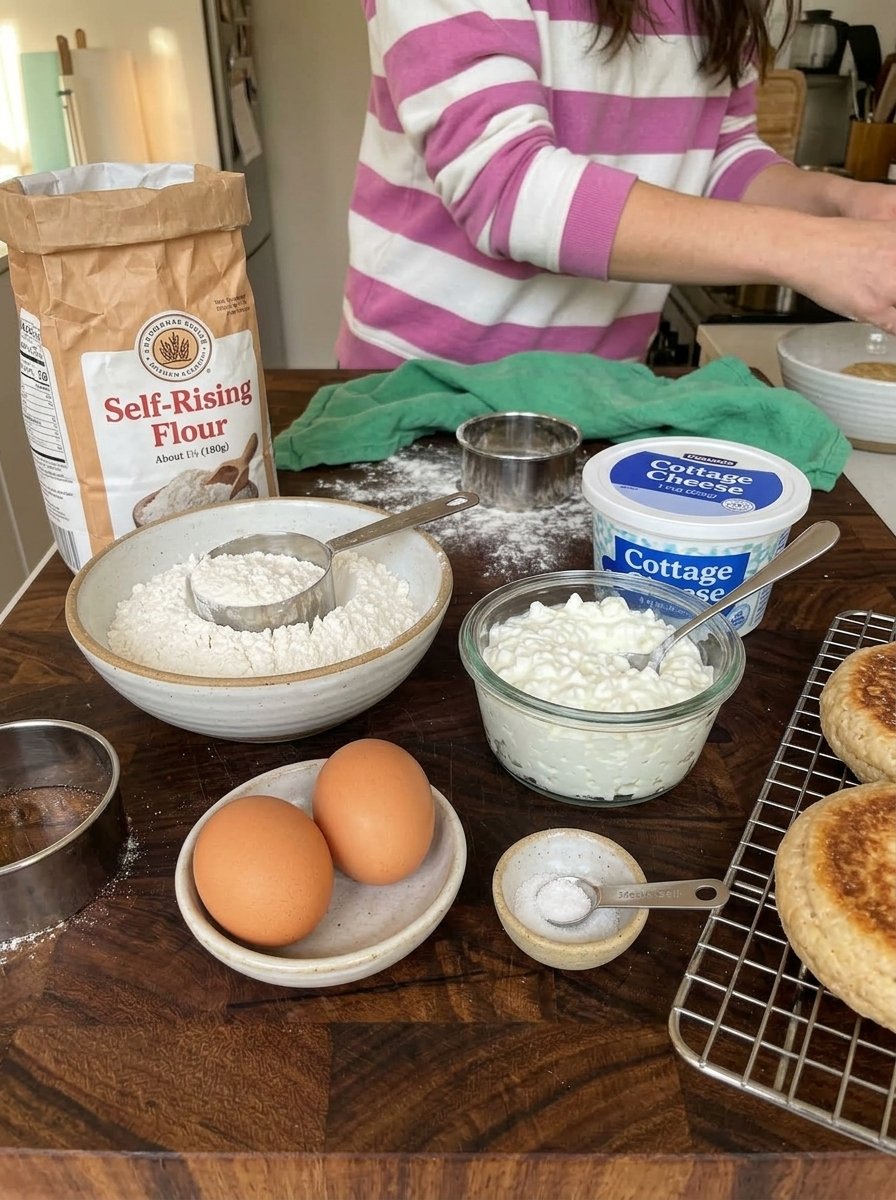
You only need four ingredients:
- 1 cup (225 g) cottage cheese: full-fat or low-fat both work
- 2 large eggs
- 1½ cups (180 g) self-rising flour
- ½ tsp salt
You’ll also want a little butter or oil for greasing the skillet, plus extra flour for dusting your hands and work surface.
Ingredient Notes and Substitutions
Cottage cheese. Small-curd and large-curd both work, especially if you blend them. Full-fat cottage cheese gives a richer, more tender muffin, while low-fat gives a lighter result with slightly less richness. If your cottage cheese looks watery, drain off the extra liquid first, because too much moisture can make the dough overly sticky.
Eggs. Large eggs provide structure, richness, and extra protein. Bring them to room temperature if you can, as they blend more smoothly into the cottage cheese.
Self-rising flour. This is flour that already contains baking powder and salt, which is what lets the muffins puff slightly without yeast. If you don’t have it, you can make a substitute. For each 1 cup of all-purpose flour, whisk in 1½ teaspoons of baking powder and ¼ teaspoon of salt. Since this recipe calls for 1½ cups of flour, scale that up accordingly, and reduce the added salt a little since you’re also adding ½ teaspoon separately.
Salt. A small amount of salt brings out the flavor of the cottage cheese and keeps the muffins from tasting flat.
Tips for the Best Cottage Cheese English Muffins
A few small habits make a big difference:
- Choose your cottage cheese wisely. Use full-fat or low-fat depending on your preference. If the container has a lot of liquid sitting on top or pooled at the bottom, drain it off before measuring.
- Blend until smooth. Blending the cottage cheese and eggs together creates a softer, more uniform texture and removes any visible curds.
- Don’t overmix after adding flour. Stir just until no dry flour remains. Gentle mixing keeps the muffins tender instead of dense or chewy.
- Flour or oil your hands. The dough is slightly sticky, which is normal. A light coating on your hands and work surface makes shaping much easier.
- Cook on medium-low heat. This is the most important tip. The goal is a golden outside and a fully cooked center. High heat will brown the surface long before the inside sets.
- Cool before splitting. Let the muffins rest for a few minutes so the interior finishes setting, then split them with a fork.
- Toast before serving. Toasting the split sides creates those crisp edges and a satisfying contrast with the soft middle.
How to Make Cottage Cheese English Muffins
Prep Time: About 15 minutes
Cooking Time: 10–14 minutes per batch
Total Time: About 30–40 minutes
Yield: Approximately 6 English muffins
Step 1: Prepare the Cottage Cheese Mixture
Add the cottage cheese and eggs to a blender or food processor. Blend until smooth and creamy, which usually takes under a minute. Scrape down the sides once to make sure everything is combined.
If you’d rather keep a little texture, you can whisk the cottage cheese and eggs together thoroughly in a bowl instead. The muffins will have tiny curds throughout, which some people enjoy.
Step 2: Add the Flour
Pour the cottage cheese mixture into a large mixing bowl. Add the self-rising flour and salt. Stir gently with a spatula until a soft, slightly sticky dough forms and no dry flour remains.
Resist the urge to keep mixing. Overworking the dough can make the finished muffins tougher. The dough should look soft and cohesive, not smooth like bread dough.
Step 3: Shape the English Muffins
Lightly flour your work surface and your hands. Turn the dough out and gently pat it into a flat round about ½ to ¾ inch (1.5–2 cm) thick.
Use a round biscuit cutter or a drinking glass to cut out about 6 muffins. Gather the scraps, gently reshape them, and cut a few more. Dip your cutter in flour between cuts so it doesn’t stick.
Step 4: Prepare the Skillet
Heat a large nonstick or lightly greased skillet over medium-low heat. Add a small amount of butter or oil if needed to prevent sticking. A skillet with a tight-fitting lid is ideal, since covering the pan traps steam and helps the centers cook through.
Step 5: Cook the Muffins
Place the muffins in the warm skillet, leaving a little space between each one so they can puff slightly. Cover with the lid and cook for about 5 to 7 minutes on the first side.
Carefully flip the muffins and continue cooking, covered, for another 5 to 7 minutes. They should be lightly golden on both sides and cooked through in the center.
If the outsides are browning too quickly, lower the heat and keep cooking until the middle is fully set. Patience here pays off. A muffin that’s golden outside but doughy inside is almost always a sign the heat was too high.
To check for doneness, press gently on the side of a muffin. It should feel springy and firm, not squishy. You can also insert a toothpick into the center, which should come out clean or with just a few dry crumbs.
Step 6: Cool and Toast
Transfer the cooked muffins to a wire rack and let them cool for several minutes. Once they’ve cooled slightly, split them open with a fork, which gives you the classic craggy English muffin texture. Toast the cut sides until golden and crisp.
Troubleshooting Common Problems
My muffins are doughy in the middle. The heat was likely too high, or they weren’t cooked long enough. Lower the heat to medium-low, keep the lid on, and extend the cooking time on each side by a minute or two.
The dough is too sticky to handle. Slightly sticky is expected, but if it’s unmanageable, your cottage cheese may have been too wet. Dust your hands and surface with a bit more flour, and next time drain the cottage cheese before measuring.
The muffins are dense or tough. This usually comes from overmixing after the flour is added. Mix only until combined, and handle the dough gently when shaping.
They didn’t puff up. Check that your self-rising flour is fresh. Leavening loses strength over time, so an old bag may not give you much lift. If you’re using a homemade substitute, make sure your baking powder is still active.
They stick to the pan. Use a nonstick skillet or add a thin layer of butter or oil. Let the pan warm up before adding the muffins.
The bottoms are too dark. Your burner may run hot. Reduce to low, or move the pan slightly off center for gentler heat.
Flavor Variations to Try
Once you’ve mastered the basic recipe, it’s easy to customize. Because the base is mild, it welcomes a wide range of add-ins. Fold any of these into the dough along with the flour, keeping amounts modest so the dough stays workable:
- Everything-bagel style: Add a sprinkle of everything bagel seasoning on top before cooking.
- Herb and garlic: Stir in finely chopped chives, parsley, or a pinch of garlic powder.
- Cheesy: Add a small handful of shredded cheddar or Parmesan.
- Cinnamon: Add a little cinnamon for a lightly sweet version that pairs well with butter or nut butter.
- Black pepper: A few grinds of black pepper add warmth and make them great for sandwiches.
If you add extra ingredients, you may need to cook a minute or two longer, so check the centers before removing them from the pan.
Serving Ideas
These muffins are a blank canvas. Here are some ways to enjoy them:
- Breakfast sandwiches: Layer with a fried or scrambled egg, avocado, and your favorite savory fillings.
- Cream cheese and herbs: Spread on cream cheese and sprinkle with fresh herbs for a light, fresh bite.
- Classic butter: Spread butter on while the muffins are still warm and let it melt into the nooks.
- Avocado toast style: Top with mashed avocado and a pinch of salt.
- Savory and fresh: Add cottage cheese, sliced tomato, or other vegetables.
- Quick snack: Toast and spread with peanut butter or another favorite spread.
For a sweet option, try ricotta or Greek yogurt with sliced fruit and a drizzle of honey. For a more filling lunch, use them as the base for a mini open-faced sandwich with turkey, lettuce, and mustard.
Why Cottage Cheese Works So Well in Baking
Cottage cheese is a bit of a secret weapon in high-protein cooking. When blended, it becomes smooth and creamy, and it contributes moisture and tenderness without making the batter taste cheesy. Its mild tang is similar to yogurt or buttermilk, which is why it works well in breads, pancakes, and muffins.
Because cottage cheese is naturally higher in protein than many other dairy ingredients, it’s a popular choice for people looking to add more protein to their meals. Combined with eggs, it creates a base that is both nourishing and satisfying. If you’re curious about exact nutrition numbers, they will vary by brand and by whether you use full-fat or low-fat cottage cheese, so it’s best to calculate them using the labels on your specific ingredients.
Storage
Refrigerator: Store cooled English muffins in an airtight container in the refrigerator for up to 4 days.
Freezer: For longer storage, wrap the muffins individually and freeze for up to 2 to 3 months. Wrapping them one by one makes it easy to grab just what you need.
Reheating: Thaw at room temperature and toast before serving, or toast directly from frozen for a quick breakfast. Toasting from frozen may take a little longer, so keep an eye on them.
Meal-prep tip: Make a double batch on the weekend, split the muffins before freezing, and pop them straight into the toaster on busy mornings.
Frequently Asked Questions
Can I make these without a blender?
Yes. Whisk the cottage cheese and eggs together very thoroughly in a bowl. The muffins will have a bit more texture from the curds, but they’ll still taste great.
Can I use all-purpose flour instead of self-rising flour?
You can, but you’ll need to add leavening. Mix baking powder and a little salt into the all-purpose flour (about 1½ teaspoons of baking powder and ¼ teaspoon of salt per cup of flour) so the muffins can rise.
Do I need to use full-fat cottage cheese?
No. Both full-fat and low-fat work. Full-fat creates a richer, more tender crumb, while low-fat gives a slightly lighter result. Just drain any excess liquid.
Can I bake these in the oven instead?
This recipe is designed for a covered skillet, which gives a gentle, even heat and a classic English muffin look. If you want to experiment with oven baking, expect a different texture, and keep a close eye on them, since timing will vary.
Why do I need to cover the skillet?
The lid traps steam and heat, which helps the centers cook through while the outside turns golden. Without it, the outsides may brown before the middle is done.
Are these gluten-free?
Not as written, since they use wheat-based self-rising flour. You could experiment with a gluten-free self-rising blend, but results may differ in texture and moisture.
Can I make the dough ahead of time?
The leavening in self-rising flour starts working once it’s moistened, so the dough is best cooked soon after mixing. For make-ahead convenience, cook the muffins and refrigerate or freeze them instead.
How do I get the best nooks and crannies?
Split the cooled muffins with a fork rather than cutting them with a knife. The fork tears the interior and creates rough, craggy surfaces that crisp up beautifully when toasted.
Can I double the recipe?
Absolutely. Double all the ingredients and cook the muffins in batches, keeping the skillet at medium-low heat. Keep finished muffins on a wire rack so they don’t steam and soften.
Are these good for kids?
Yes. They’re mild, soft, and easy to eat, and they pair well with familiar toppings like butter, jam, or cream cheese.
Final Thoughts
These 4-ingredient cottage cheese English muffins prove that a satisfying, high-protein breakfast doesn’t need to be complicated. With a blender, a bowl, and a skillet, you can have fresh homemade muffins in about half an hour, and the leftovers keep well for busy mornings ahead.
Remember the keys to success: blend the cottage cheese and eggs until smooth, mix the dough gently, cook over medium-low heat with the lid on, and always toast after splitting. Follow those simple steps and you’ll get golden, tender muffins every time.
Whether you pile them with eggs and avocado, smear them with cream cheese, or enjoy them plain with butter, they’re a simple recipe you’ll want to make again and again. Give them a try, and let me know in the comments how you served yours!
Print
4-Ingredient High-Protein Cottage Cheese English Muffins
Ingredients
You only need four ingredients:
- 1 cup (225 g) cottage cheese: full-fat or low-fat both work
- 2 large eggs
- 1½ cups (180 g) self-rising flour
- ½ tsp salt
You’ll also want a little butter or oil for greasing the skillet, plus extra flour for dusting your hands and work surface.
Ingredient Notes and Substitutions
Cottage cheese. Small-curd and large-curd both work, especially if you blend them. Full-fat cottage cheese gives a richer, more tender muffin, while low-fat gives a lighter result with slightly less richness. If your cottage cheese looks watery, drain off the extra liquid first, because too much moisture can make the dough overly sticky.
Eggs. Large eggs provide structure, richness, and extra protein. Bring them to room temperature if you can, as they blend more smoothly into the cottage cheese.
Self-rising flour. This is flour that already contains baking powder and salt, which is what lets the muffins puff slightly without yeast. If you don’t have it, you can make a substitute. For each 1 cup of all-purpose flour, whisk in 1½ teaspoons of baking powder and ¼ teaspoon of salt. Since this recipe calls for 1½ cups of flour, scale that up accordingly, and reduce the added salt a little since you’re also adding ½ teaspoon separately.
Salt. A small amount of salt brings out the flavor of the cottage cheese and keeps the muffins from tasting flat.
Instructions
Prep Time: About 15 minutes
Cooking Time: 10–14 minutes per batch
Total Time: About 30–40 minutes
Yield: Approximately 6 English muffins
Add the cottage cheese and eggs to a blender or food processor. Blend until smooth and creamy, which usually takes under a minute. Scrape down the sides once to make sure everything is combined.
If you’d rather keep a little texture, you can whisk the cottage cheese and eggs together thoroughly in a bowl instead. The muffins will have tiny curds throughout, which some people enjoy.
Pour the cottage cheese mixture into a large mixing bowl. Add the self-rising flour and salt. Stir gently with a spatula until a soft, slightly sticky dough forms and no dry flour remains.
Resist the urge to keep mixing. Overworking the dough can make the finished muffins tougher. The dough should look soft and cohesive, not smooth like bread dough.
Lightly flour your work surface and your hands. Turn the dough out and gently pat it into a flat round about ½ to ¾ inch (1.5–2 cm) thick.
Use a round biscuit cutter or a drinking glass to cut out about 6 muffins. Gather the scraps, gently reshape them, and cut a few more. Dip your cutter in flour between cuts so it doesn’t stick.
Heat a large nonstick or lightly greased skillet over medium-low heat. Add a small amount of butter or oil if needed to prevent sticking. A skillet with a tight-fitting lid is ideal, since covering the pan traps steam and helps the centers cook through.
Place the muffins in the warm skillet, leaving a little space between each one so they can puff slightly. Cover with the lid and cook for about 5 to 7 minutes on the first side.
Carefully flip the muffins and continue cooking, covered, for another 5 to 7 minutes. They should be lightly golden on both sides and cooked through in the center.
If the outsides are browning too quickly, lower the heat and keep cooking until the middle is fully set. Patience here pays off. A muffin that’s golden outside but doughy inside is almost always a sign the heat was too high.
To check for doneness, press gently on the side of a muffin. It should feel springy and firm, not squishy. You can also insert a toothpick into the center, which should come out clean or with just a few dry crumbs.
Transfer the cooked muffins to a wire rack and let them cool for several minutes. Once they’ve cooled slightly, split them open with a fork, which gives you the classic craggy English muffin texture. Toast the cut sides until golden and crisp.