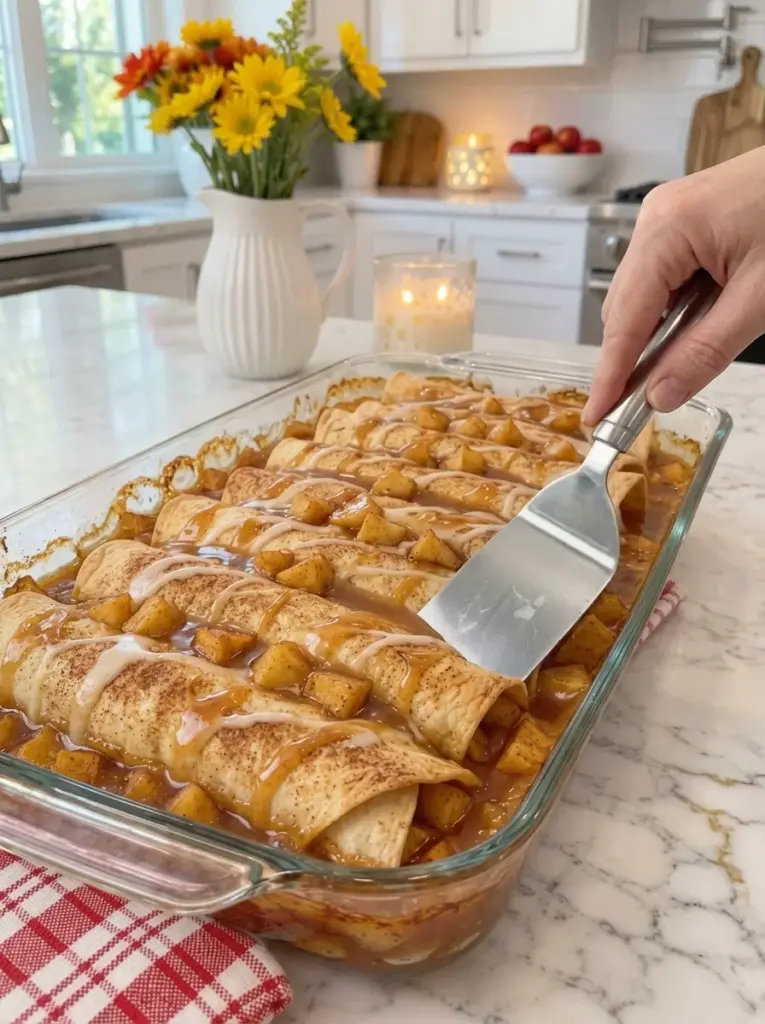
Apple Pie Enchiladas wrap tender cinnamon apples in soft flour tortillas, cover them with a buttery brown sugar sauce, and bake until the edges turn golden. They offer familiar apple-pie flavor in an easy rolled dessert, with a soft, saucy base and lightly toasted exposed tops. Serve warm with vanilla ice cream or a spoonful of whipped cream.
Cooking the filling first gives you control over the apple texture before the tortillas go into the oven. A little cornstarch thickens the apple juices so the filling stays inside the rolls instead of flooding the baking dish. The separate cinnamon-butter sauce adds sweetness and moisture while the enchiladas bake.
This is a dessert variation using flour tortillas as wrappers. The tortillas soften in the sauce rather than becoming flaky pie pastry, so expect a tender rolled dessert with some golden edges. The recipe is useful for a family dinner, a fall gathering, or a holiday dessert when you want apple filling without preparing a pie crust.
Recipe development note: This is an original, untested recipe formulation. The quantities and method are a practical starting point; apple variety, tortilla thickness, and baking dish material can affect the timing and finished texture.
Recipe at a Glance
- Yield: 8 dessert enchiladas
- Servings: 8, one roll each
- Prep time: About 20 minutes
- Stovetop time: About 15 minutes
- Baking time: About 25–30 minutes
- Resting time: 10 minutes
- Total time: Approximately 1 hour 10–15 minutes
- Oven temperature: 350°F
- Pan: A 9-by-13-inch baking dish
Some preparation can overlap with cooking the apples, but allow a little flexibility the first time. The rolls need a brief rest after baking because the apple filling and sugar sauce are very hot straight from the oven.
What Makes This Dessert Work
A cooked filling prevents the tortillas from browning before the apples become tender. Small, even apple pieces soften more predictably than large chunks. Thickening the apple juices separately from the sauce also keeps the filling cohesive while leaving enough liquid around the rolls for a spoonable finish.
The sauce uses butter, brown sugar, water, and a little cinnamon. It begins thin and becomes more concentrated during baking and cooling. You do not need to cook it to a candy stage, and it should not be expected to turn into a firm caramel coating.
Flour tortillas are flexible enough to enclose the filling. Brief warming helps prevent cracking, especially if the tortillas have been refrigerated. Rolling snugly without stretching gives the apples room to sit inside without tearing through the wrapper.
Ingredients
For the Cinnamon Apple Filling
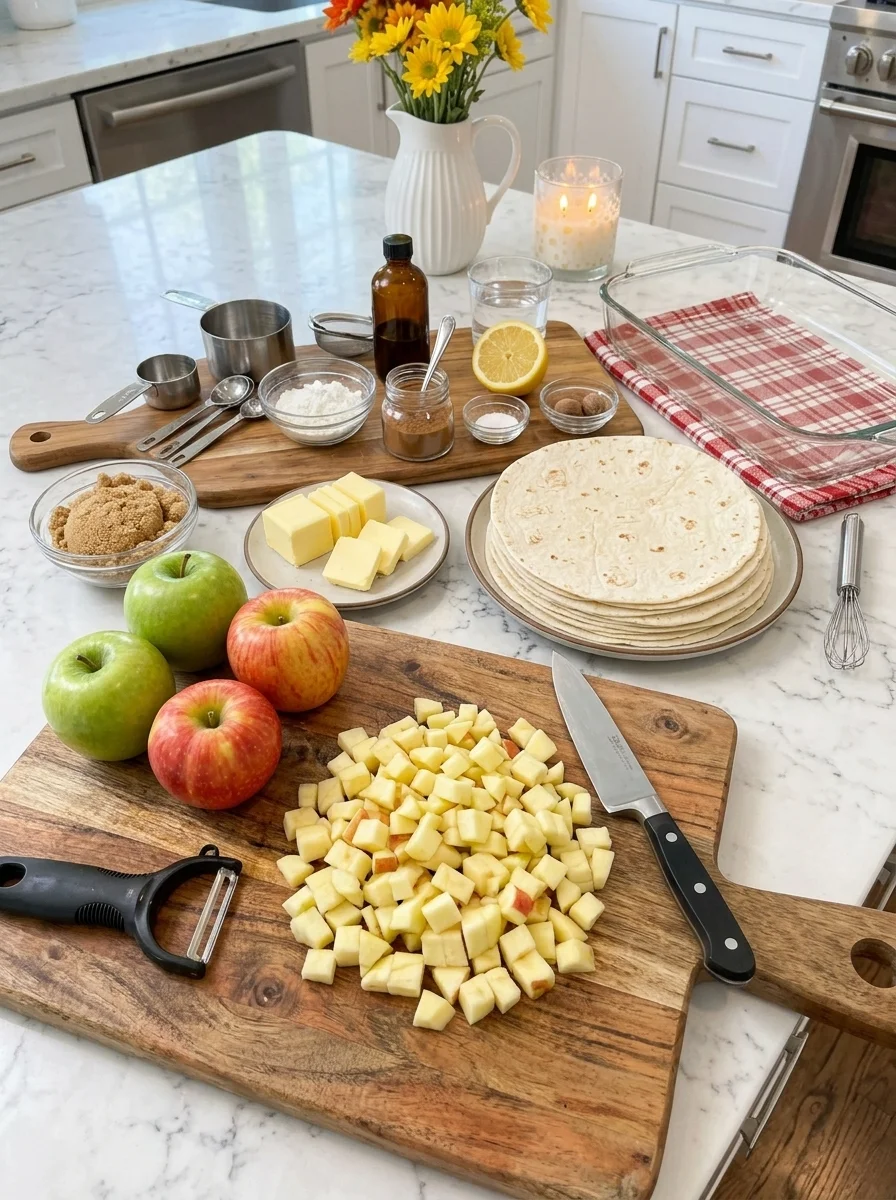
- 4 medium firm apples, about 5 cups peeled, cored, and diced
- 2 tablespoons unsalted butter
- ¼ cup packed light brown sugar
- 1½ teaspoons ground cinnamon
- ⅛ teaspoon ground nutmeg, optional
- 1 tablespoon fresh lemon juice
- 2 tablespoons water, plus more only if needed
- 2 teaspoons cornstarch
- 1 tablespoon cold water, for the cornstarch slurry
- 1 teaspoon vanilla extract
- Small pinch of salt
For the Enchiladas
- 8 soft flour tortillas, approximately 8 inches across
- A little butter or cooking spray, for the baking dish
For the Cinnamon Brown Sugar Sauce
- 4 tablespoons unsalted butter
- ½ cup packed light brown sugar
- ½ cup water
- ½ teaspoon ground cinnamon
- ½ teaspoon vanilla extract
- Small pinch of salt
Optional for Serving
- Vanilla ice cream
- Whipped cream
- Chopped toasted pecans or walnuts
- A small drizzle of caramel sauce
The recipe uses six tablespoons of butter and three-quarters of a cup of brown sugar in total, divided between the filling and sauce. Keep those portions separate so the filling is not accidentally made with the full amount.
Choosing the Apples
Firm apples that hold some shape during cooking are a good fit. Granny Smith gives a tart contrast to the sweet sauce. Honeycrisp, Braeburn, or a mixture of firm sweet and tart apples can also work. Their cooking times and juice release will vary.
Peel the apples for a softer filling without strips of skin. Core thoroughly and dice into pieces roughly a quarter to a half inch across. Very large chunks make rolling harder and can leave uneven pockets inside the tortillas.
The measured prepared volume is more useful than the count alone. Four unusually large apples may give substantially more than five cups. Save excess filling for another use rather than overstuffing the tortillas or crowding the baking dish.
Tortilla Selection
Choose fresh, soft flour tortillas around eight inches across. Very small tortillas will not hold the same amount of filling, while large burrito tortillas create a thicker wrapper and may require a different arrangement in the pan.
Corn tortillas are not a direct substitution for this dessert. Their flavor and flexibility differ, and they may crack without a separate preparation method. Specialty low-carbohydrate or gluten-free tortillas also vary in how they soften under sauce, so treat those as experimental adaptations.
Check the tortillas before filling. If they feel stiff, warm briefly in a covered microwave-safe stack with a barely damp paper towel or according to the package instructions. They should become pliable, not wet or steaming hot.
Equipment
You will need a peeler, knife, cutting board, large skillet or saucepan for the apples, a small saucepan for the sauce, and a 9-by-13-inch baking dish. Measuring cups and spoons, a small bowl for the slurry, and a spatula or serving spoon complete the setup.
A glass, ceramic, or metal baking dish can be used if suitable for the oven. Cooking and browning may vary by material. Avoid thermal shock with glass dishes, and follow the manufacturer’s instructions when moving them between temperature extremes.
Set the baking dish on a stable heatproof surface after baking. The sauce can bubble around the edges, so use oven mitts and keep the dish level when transferring it.
How to Make Apple Pie Enchiladas
1. Prepare the Oven and Dish
Preheat the oven to 350°F. Lightly grease a 9-by-13-inch baking dish. Set out the tortillas so they are ready once the filling has cooled enough to handle.
Measure the filling and sauce ingredients separately. This is especially useful for the butter, brown sugar, cinnamon, water, and vanilla, which appear in more than one part of the recipe.
2. Peel and Dice the Apples
Wash, peel, core, and dice the apples into small, similar pieces. Measure about five cups of prepared apple. Toss with the lemon juice while preparing the skillet.
Small pieces are easier to enclose in the rolls and soften more evenly. If using two apple varieties, keep the pieces similar in size and check both for tenderness during cooking.
3. Cook the Filling
Melt two tablespoons butter in a large skillet over medium heat. Add the apples, quarter cup brown sugar, one and a half teaspoons cinnamon, optional nutmeg, two tablespoons water, and a small pinch of salt.
Cook, stirring occasionally, for about eight to twelve minutes, until the apples are almost as tender as you want them in the finished dessert. If the pan dries before the apples soften, add water a tablespoon at a time. If the apples release a lot of liquid, let some evaporate before thickening.
4. Thicken the Apple Juices
Mix two teaspoons cornstarch with one tablespoon cold water until smooth. Stir into the simmering apples and cook for another one to two minutes, stirring gently, until the juices look glossy and cling to the fruit.
The mixture should be moist but not swimming in thin liquid. Remove from the heat and stir in one teaspoon vanilla. Let cool for about ten minutes, until warm enough to handle comfortably without softening the tortillas excessively.
5. Make the Sauce
In a small saucepan, combine four tablespoons butter, half a cup brown sugar, half a cup water, half a teaspoon cinnamon, and a small pinch of salt. Warm over medium heat, stirring until the butter melts and the sugar dissolves.
Bring to a gentle simmer for about two minutes, then remove from the heat and stir in half a teaspoon vanilla. The sauce will be relatively thin at this stage. Do not keep reducing it until thick like candy syrup; baking will concentrate it further.
6. Warm and Fill the Tortillas
Warm the tortillas briefly if needed to make them flexible. Divide the apple filling into eight roughly equal portions. Place a portion slightly below the center of each tortilla, keeping a border around the edges.
Depending on how much the apples cooked down, each portion will be roughly a third to half a cup. Use the actual cooked filling to divide evenly rather than forcing a fixed volume into every tortilla. Save any excess that would make the rolls difficult to close.
7. Roll and Arrange
Fold the sides inward slightly, then roll the tortilla around the filling. Keep the roll snug without pulling hard enough to split the wrapper. Arrange seam-side down in the prepared dish.
The rolls can sit close together, but do not crush them. If your tortillas are much larger or your dish unusually narrow, use another suitable dish rather than forcing a second layer of rolls on top.
8. Add the Sauce
Stir the warm sauce and pour evenly over the rolls, letting some settle between them and around the bottom of the dish. Spoon a little over any very dry exposed sections.
You do not need to submerge the tortillas. The exposed upper surfaces can become lightly golden, while the lower sections soften in the syrup. Too much additional liquid would make the dish unnecessarily soggy.
9. Bake Until Hot and Golden
Bake uncovered for approximately twenty-five to thirty minutes, until the filling is hot, the sauce bubbles around the edges, and the exposed tortilla surfaces are lightly golden. Begin checking earlier if using a dark metal dish or thin tortillas.
If the tops darken before the center is hot, cover loosely with foil and continue baking. If reheating an assembly made with refrigerated filling, allow additional time as needed rather than assuming it will match the freshly assembled batch.
10. Rest and Serve
Let the dish stand for about ten minutes. The sauce will settle and thicken somewhat as it cools. Use a broad spatula or spoon to lift each roll with some of the sauce.
Serve warm with optional ice cream, whipped cream, or nuts. Caramel sauce is an extra rather than a necessity; taste the dessert first because the brown sugar sauce already provides plenty of sweetness.
Tips for Tender Apples and Neat Rolls
Cook the apples until nearly tender before assembling. The oven stage heats the dessert and changes the tortilla texture, but it should not be relied on to transform large, raw apple chunks into a smooth filling.
Allow the filling to cool briefly, especially if the tortillas are thin. Very hot filling can make the wrappers slippery and fragile. Completely refrigerator-cold filling is workable, but it extends the baking time.
Keep the seam underneath. A tight seal like a pastry crust is not required, but rolling evenly and arranging the tortillas close together helps them stay closed. A little filling escaping into the sauce is not a failure.
Use a moderate amount of filling. Overstuffed tortillas are more likely to split and harder to serve. If you have a little extra apple mixture, refrigerate it separately and use it as a topping for oatmeal or yogurt within a short storage window.
Understanding the Sauce Texture
The sauce is a brown sugar-butter syrup, not a traditional cream caramel. It may look thin when first poured into the pan and somewhat separated when very hot. Stirring before pouring and spooning the pan juices over servings helps distribute the butter and syrup.
Apples and tortillas both influence the final texture. Juicy filling adds liquid, while tortillas absorb some syrup. The ten-minute rest gives the liquid time to settle, but the dessert should still have sauce rather than becoming a dry tray of rolls.
If the sauce seems excessive, serve with a slotted spatula and spoon on the amount you prefer. Do not keep baking solely to evaporate every drop; the tortillas can become tough before the pan is dry.
Troubleshooting
The Tortillas Crack
They may be stale, too cold, or unsuitable for rolling. Warm briefly before filling, use fresh soft flour tortillas, and avoid overfilling. If one splits slightly, place the damaged side against the neighboring roll and handle gently when serving.
The Filling Is Watery
The apples may have released more juice than expected, or the slurry may not have simmered long enough to thicken. Reduce excess liquid before assembling. If correcting cooked filling, add a small additional slurry only as needed and cook until the starch thickens.
The Apples Are Too Firm
Some varieties need more stovetop time. Continue cooking with a small splash of water before filling the tortillas. Check a few pieces rather than relying only on the clock.
The Tops Become Tough
Overbaking or leaving too much dry tortilla exposed can contribute. Spoon sauce over the tops before baking and check promptly near the end of the suggested time. Cover loosely if more heating is needed after the surface has browned.
The Dessert Is Too Sweet
Use tart apples and skip optional caramel. You can reduce the filling sugar modestly to suit the fruit, but the sauce will still be sweet. Large changes to the sauce sugar also change its texture, so make those cautiously.
Variations
With Canned Apple Pie Filling
Prepared filling can replace the homemade apple mixture for convenience. You will need enough to divide among eight tortillas; start with roughly four cups and adjust to the thickness and fruit content. Chop oversized apple slices if needed and omit the separate filling butter, sugar, spices, slurry, and water unless deliberately adjusting flavor.
Prepared filling is often sweeter and thicker than homemade. Taste before adding cinnamon or extra sweetener, and retain the sauce as a separate component. Check the can’s quantity rather than assuming every brand supplies the same usable volume.
With Nuts
Add a small amount of chopped toasted pecans or walnuts to the filling or scatter over individual servings. Nuts change the texture and introduce an allergen, so keep them separate when serving a group if necessary.
With a Cheesecake Accent
Serve a small spoonful of sweetened cream cheese mixture alongside rather than adding a large untested quantity inside every tortilla. A dairy filling changes storage and reheating considerations and may loosen during baking.
With Raisins or Dried Cranberries
Add a few tablespoons to the apple mixture while cooking. They absorb some liquid and add concentrated sweetness. Use a modest amount so the apples remain the main filling.
With Different Spices
A small pinch of ginger or allspice can join the cinnamon. Start lightly; a combination of several strong spices can overwhelm the apple flavor. Keep the base recipe simple before deciding how much additional seasoning you prefer.
Serving Ideas
Vanilla ice cream is a familiar match for warm cinnamon apples. Add it just before serving so it creates a cool contrast without melting over the entire baking dish. Whipped cream is lighter in texture, while plain Greek yogurt can provide a tangier accompaniment.
For a dessert buffet, cut each roll in half after the brief rest and serve smaller portions with a spoonful of sauce. This is a plated or bowl dessert rather than a tidy handheld snack, especially once ice cream is added.
If serving after a large holiday meal, a half roll may be enough. Keep the toppings separate so guests can choose the sweetness and richness they want.
Make-Ahead Options
Prepare the apple filling up to two days ahead and refrigerate promptly in a covered container. Prepare the sauce separately and refrigerate it as well. Warm the sauce gently until pourable before assembly.
For the best tortilla texture, roll and add sauce close to baking time. Long storage after saucing allows the tortillas to absorb more liquid and become softer. If assembling a few hours ahead, refrigerate covered and expect a more tender wrapper.
Bake refrigerated assemblies until hot throughout, allowing extra time as necessary. Follow your baking dish manufacturer’s guidance when moving chilled glass or ceramic into an oven. Do not assume a dish can tolerate sudden temperature changes safely.
Storage and Reheating
Refrigerate leftovers promptly in a shallow covered container at 40°F or below and use within three days. Do not leave the dessert out for more than two hours, or one hour when the surrounding temperature exceeds 90°F. Store ice cream and other toppings separately.
Reheat covered portions in a 325°F oven until hot throughout, then uncover briefly if desired to dry the top slightly. A microwave is convenient for a single serving but produces a softer tortilla. Reheat leftovers to 165°F, checking the center of the filling.
You can freeze fully baked, promptly cooled portions in freezer-safe containers for up to two months for quality. Thaw in the refrigerator before reheating. The wrappers may soften and the sauce may separate somewhat, so freezing is a convenience option rather than a promise of fresh-baked texture.
General leftover handling guidance is available from the USDA Food Safety and Inspection Service. Adding a fresh topping or reheating a portion does not restart the original storage period.
Frequently Asked Questions
Do I need to peel the apples?
Peeling gives the most consistent soft filling. Leaving the skins on is possible, but the texture will be more noticeable, especially with thicker-skinned apples. Wash thoroughly either way.
Can I use raw apples inside the tortillas?
This recipe is designed around cooked filling. Raw apples release moisture and may stay firm before the tortillas brown. Cook them first for more control over tenderness and sauce consistency.
Can I use a smaller baking dish?
Only if the rolls fit in a single layer with adequate space. A crowded or stacked arrangement heats differently. For a smaller household, halve the recipe and use a dish that holds four rolls comfortably.
Can I make the rolls crisp like churros?
The sauce makes this a soft baked dessert. A dry, crisp tortilla dessert requires a different method and less liquid contact. Expect lightly golden upper edges here rather than a uniformly crunchy shell.
Can I double the recipe?
Yes, use two suitable dishes and divide the filling and sauce evenly. Avoid doubling into a single deeper layer. Oven crowding and rack position can change timing, so check each dish separately.
What is the calorie estimate?
A rough ingredient-based estimate is approximately 350–430 calories per roll before ice cream, nuts, or caramel, depending largely on tortilla size, apple yield, and how much sauce is served. This is not a laboratory analysis; calculate from your specific products for more precise tracking.
Quick Recipe Reference
Cook about five cups diced apples with two tablespoons butter, a quarter cup brown sugar, cinnamon, lemon juice, a little water, and salt until nearly tender. Thicken with two teaspoons cornstarch mixed with a tablespoon cold water, then add vanilla. Divide among eight soft eight-inch flour tortillas, roll, and arrange seam-side down. Make a sauce with four tablespoons butter, half a cup each brown sugar and water, cinnamon, vanilla, and salt. Pour over the rolls and bake at 350°F for approximately twenty-five to thirty minutes. Rest ten minutes and serve warm with the pan sauce.
Apple Pie Enchiladas
Description
- Yield: 8 dessert enchiladas
- Servings: 8, one roll each
- Prep time: About 20 minutes
- Stovetop time: About 15 minutes
- Baking time: About 25–30 minutes
- Resting time: 10 minutes
- Total time: Approximately 1 hour 10–15 minutes
- Oven temperature: 350°F
- Pan: A 9-by-13-inch baking dish
Some preparation can overlap with cooking the apples, but allow a little flexibility the first time. The rolls need a brief rest after baking because the apple filling and sugar sauce are very hot straight from the oven.
Ingredients
For the Cinnamon Apple Filling
- 4 medium firm apples, about 5 cups peeled, cored, and diced
- 2 tablespoons unsalted butter
- ¼ cup packed light brown sugar
- 1½ teaspoons ground cinnamon
- ⅛ teaspoon ground nutmeg, optional
- 1 tablespoon fresh lemon juice
- 2 tablespoons water, plus more only if needed
- 2 teaspoons cornstarch
- 1 tablespoon cold water, for the cornstarch slurry
- 1 teaspoon vanilla extract
- Small pinch of salt
For the Enchiladas
- 8 soft flour tortillas, approximately 8 inches across
- A little butter or cooking spray, for the baking dish
For the Cinnamon Brown Sugar Sauce
- 4 tablespoons unsalted butter
- ½ cup packed light brown sugar
- ½ cup water
- ½ teaspoon ground cinnamon
- ½ teaspoon vanilla extract
- Small pinch of salt
Optional for Serving
- Vanilla ice cream
- Whipped cream
- Chopped toasted pecans or walnuts
- A small drizzle of caramel sauce
The recipe uses six tablespoons of butter and three-quarters of a cup of brown sugar in total, divided between the filling and sauce. Keep those portions separate so the filling is not accidentally made with the full amount.
Instructions
1. Prepare the Oven and Dish
Preheat the oven to 350°F. Lightly grease a 9-by-13-inch baking dish. Set out the tortillas so they are ready once the filling has cooled enough to handle.
Measure the filling and sauce ingredients separately. This is especially useful for the butter, brown sugar, cinnamon, water, and vanilla, which appear in more than one part of the recipe.
2. Peel and Dice the Apples
Wash, peel, core, and dice the apples into small, similar pieces. Measure about five cups of prepared apple. Toss with the lemon juice while preparing the skillet.
Small pieces are easier to enclose in the rolls and soften more evenly. If using two apple varieties, keep the pieces similar in size and check both for tenderness during cooking.
3. Cook the Filling
Melt two tablespoons butter in a large skillet over medium heat. Add the apples, quarter cup brown sugar, one and a half teaspoons cinnamon, optional nutmeg, two tablespoons water, and a small pinch of salt.
Cook, stirring occasionally, for about eight to twelve minutes, until the apples are almost as tender as you want them in the finished dessert. If the pan dries before the apples soften, add water a tablespoon at a time. If the apples release a lot of liquid, let some evaporate before thickening.
4. Thicken the Apple Juices
Mix two teaspoons cornstarch with one tablespoon cold water until smooth. Stir into the simmering apples and cook for another one to two minutes, stirring gently, until the juices look glossy and cling to the fruit.
The mixture should be moist but not swimming in thin liquid. Remove from the heat and stir in one teaspoon vanilla. Let cool for about ten minutes, until warm enough to handle comfortably without softening the tortillas excessively.
5. Make the Sauce
In a small saucepan, combine four tablespoons butter, half a cup brown sugar, half a cup water, half a teaspoon cinnamon, and a small pinch of salt. Warm over medium heat, stirring until the butter melts and the sugar dissolves.
Bring to a gentle simmer for about two minutes, then remove from the heat and stir in half a teaspoon vanilla. The sauce will be relatively thin at this stage. Do not keep reducing it until thick like candy syrup; baking will concentrate it further.
6. Warm and Fill the Tortillas
Warm the tortillas briefly if needed to make them flexible. Divide the apple filling into eight roughly equal portions. Place a portion slightly below the center of each tortilla, keeping a border around the edges.
Depending on how much the apples cooked down, each portion will be roughly a third to half a cup. Use the actual cooked filling to divide evenly rather than forcing a fixed volume into every tortilla. Save any excess that would make the rolls difficult to close.
7. Roll and Arrange
Fold the sides inward slightly, then roll the tortilla around the filling. Keep the roll snug without pulling hard enough to split the wrapper. Arrange seam-side down in the prepared dish.
The rolls can sit close together, but do not crush them. If your tortillas are much larger or your dish unusually narrow, use another suitable dish rather than forcing a second layer of rolls on top.
8. Add the Sauce
Stir the warm sauce and pour evenly over the rolls, letting some settle between them and around the bottom of the dish. Spoon a little over any very dry exposed sections.
You do not need to submerge the tortillas. The exposed upper surfaces can become lightly golden, while the lower sections soften in the syrup. Too much additional liquid would make the dish unnecessarily soggy.
9. Bake Until Hot and Golden
Bake uncovered for approximately twenty-five to thirty minutes, until the filling is hot, the sauce bubbles around the edges, and the exposed tortilla surfaces are lightly golden. Begin checking earlier if using a dark metal dish or thin tortillas.
If the tops darken before the center is hot, cover loosely with foil and continue baking. If reheating an assembly made with refrigerated filling, allow additional time as needed rather than assuming it will match the freshly assembled batch.
10. Rest and Serve
Let the dish stand for about ten minutes. The sauce will settle and thicken somewhat as it cools. Use a broad spatula or spoon to lift each roll with some of the sauce.
Serve warm with optional ice cream, whipped cream, or nuts. Caramel sauce is an extra rather than a necessity; taste the dessert first because the brown sugar sauce already provides plenty of sweetness.