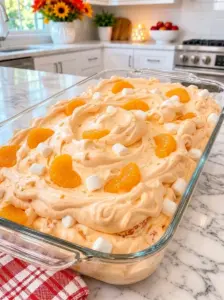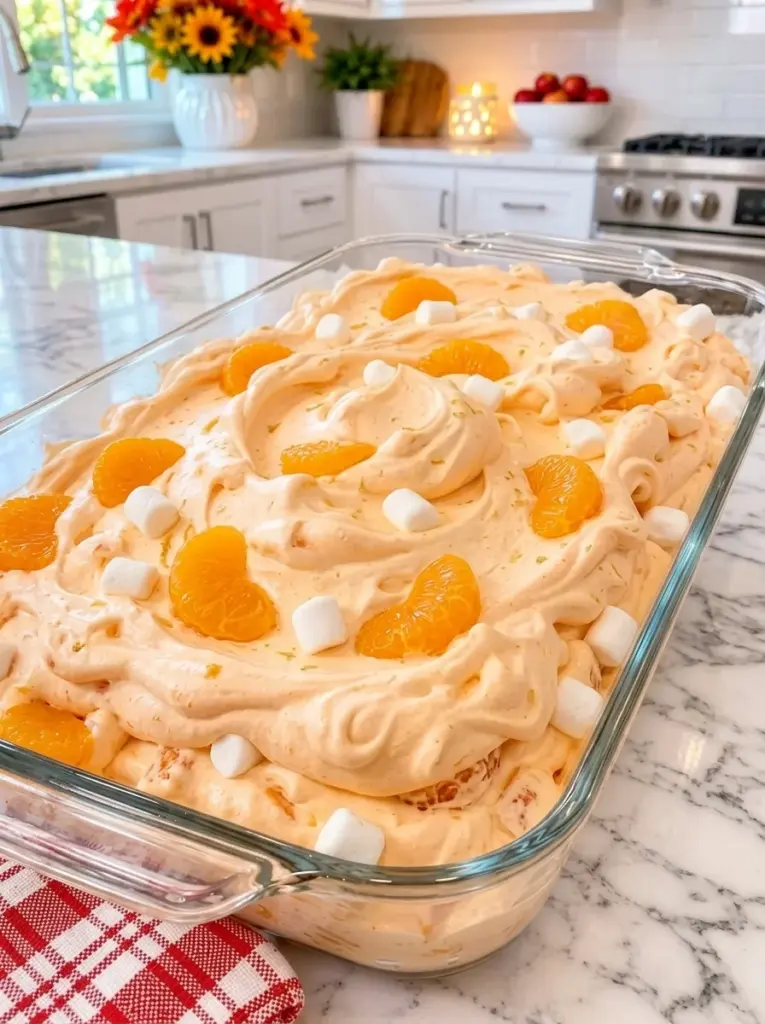
Orange Fluff with Greek Yogurt combines orange gelatin, thick yogurt, whipped topping, mandarin oranges, crushed pineapple, and miniature marshmallows over a buttery graham cracker base. It is cool, creamy, and citrusy, with a gentle tang that balances the sweet fruit and marshmallows. A swirl of whipped cream and a little orange marmalade make it an attractive no-bake dessert for a potluck or family gathering.
The yogurt gives this version a more tangy flavor than a traditional whipped-topping fluff. Orange gelatin provides color, sweetness, and some structure, while the folded topping keeps the filling lighter than a plain yogurt mixture. Drained fruit adds juicy pieces without turning the filling watery.
You can assemble it in a 9-by-13-inch dish for modest, shallow servings or divide it among individual cups. The filling is easiest to spread while freshly mixed and becomes firmer after chilling. Rather than expecting tall, sharply defined piped mounds immediately, let the refrigerator do the work and use the final whipped topping for decorative height.
Recipe note: This article expands the supplied recipe with measurement and assembly clarifications. It has not been independently kitchen-tested. Yogurt thickness, gelatin brand, fruit drainage, and whipped topping choice can affect the final texture and yield.
What to Expect
This dessert has a soft graham base, a creamy orange filling, tender fruit, and chewy marshmallows. It is a spoonable chilled dessert, not a baked cheesecake or a crisp pie. The crumbs absorb some moisture during storage, and the marshmallows become softer as they sit in the filling.
Plain yogurt makes the orange flavor tangier, while vanilla yogurt usually adds sweetness and a softer vanilla note. Either can work, but they do not taste identical. A thick, strained yogurt is more important than choosing a particular brand.
The gelatin is dissolved in a small amount of water rather than prepared according to the full package directions. That concentrated mixture is combined with yogurt and topping to support the filling. Do not add the extra cold water normally used for a separate bowl of gelatin.
Recipe at a Glance
- Prep time: Approximately 25–35 minutes
- Cooking: None beyond boiling water and optionally warming marmalade
- Chilling: At least 3–4 hours
- Total time: Approximately 3½–4½ hours
- Servings: About 12 modest dessert portions
- Pan: One 9-by-13-inch dish, or individual dessert cups
- Method: No-bake, refrigerated dessert
The crust can chill while you prepare the filling, so its fifteen-minute rest does not necessarily add fifteen separate minutes to the schedule. Fruit draining and careful gelatin cooling may take longer than expected the first time.
Ingredients
For the Graham Cracker Base
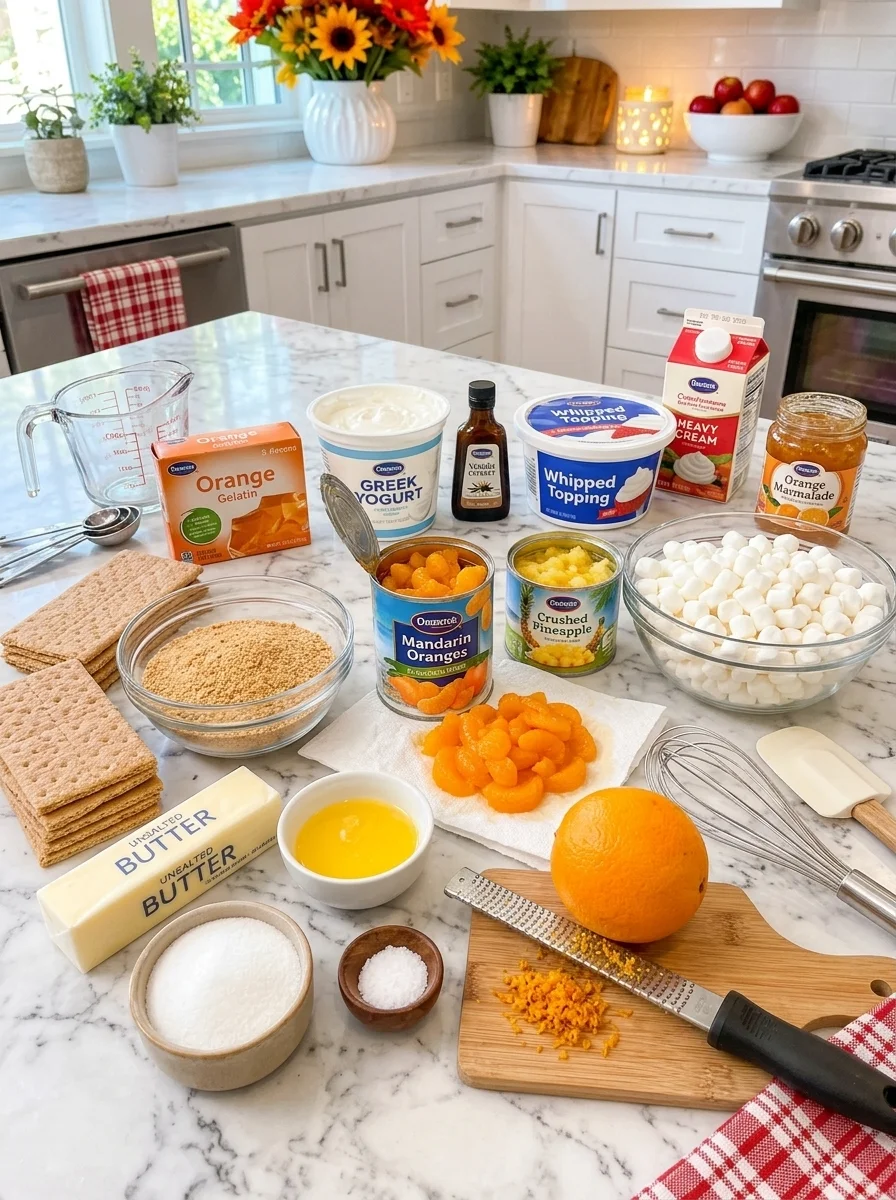
- 1½ cups finely crushed graham cracker crumbs
- ⅓ cup unsalted butter, melted
- 2 tablespoons granulated sugar
- Small pinch of fine salt
For the Orange Greek Yogurt Fluff
- 1 package regular orange-flavored gelatin mix, approximately 3 ounces
- ½ cup boiling water
- 1½ cups thick plain or vanilla full-fat Greek yogurt
- 1 teaspoon vanilla extract
- 1 tub whipped topping, 8 ounces, thawed in the refrigerator
- 2 cans mandarin oranges, 11 ounces each, thoroughly drained
- 1 can crushed pineapple, 8 ounces, thoroughly drained and gently pressed
- 2 cups miniature marshmallows
Reserve twelve to sixteen attractive mandarin segments from the drained cans for garnish before folding the remainder into the filling.
For the Topping
- 1½ cups prepared whipped cream or thawed whipped topping
- ¼ cup orange marmalade or a suitable orange-apricot glaze
- ⅓ cup toasted sweetened shredded coconut, optional
- 1 teaspoon finely grated orange zest
- Reserved mandarin orange segments
Fresh cream alternative for the filling: Use approximately 2 cups of already whipped, lightly sweetened heavy cream instead of the tub of topping. This means two cups after whipping, not two cups of liquid heavy cream. The alternatives differ in stability, volume, and sweetness, so the final texture may change.
Measurement Clarifications
Measure the Crumbs
Use one and a half cups of actual crumbs as the controlling measurement. The number of graham cracker sheets needed varies by brand and what a package calls a full sheet. Twelve full sheets may yield more than required.
Crush the crackers finely, then measure without packing the crumbs tightly into the cup. Save any extra dry crumbs separately rather than adding them automatically and making the base too dry for the butter.
Use Prepared Topping Volumes
The cup measurements for freshly whipped cream describe the finished whipped product. Liquid cream expands as it is whipped. Start with enough liquid cream to make the required prepared volume, following the yield for your preferred method, and measure after whipping.
The eight-ounce tub refers to the product’s labeled weight. It is not eight fluid ounces measured in a cup. A tub of airy whipped topping can occupy more volume than a cup of liquid cream, so the fresh-cream alternative should be treated as a variation rather than a guaranteed exact match.
Fruit Can Weights Include Liquid
The eleven-ounce mandarin cans and eight-ounce pineapple can contain packing liquid as well as fruit. Drain first and use the fruit from those cans; do not try to obtain the same labeled weight entirely in drained fruit.
Reserve the garnish segments from the stated oranges. There is no need for another can unless you want extra decoration. Keep reserved fruit covered in the refrigerator until serving.
Ingredient Notes
Greek Yogurt
Choose thick Greek yogurt rather than regular unstrained yogurt. A thin product brings more liquid into a filling that already includes fruit and a gelatin solution. If there is visible whey in the container, stir or drain according to the product’s consistency before measuring; avoid pouring a large puddle of whey into the bowl.
Full-fat yogurt gives a rich mouthfeel, but it does not guarantee a stiff dessert. Protein content and straining also affect thickness. Plain yogurt makes it easier to control sweetness, while sweetened vanilla yogurt can make the finished fluff noticeably sweeter.
Orange Gelatin
Use regular orange gelatin for the stated formulation. A sugar-free product has a different package weight and sweetener system, so do not substitute based on ounces. If adapting, follow the package’s equivalent serving yield and recognize that the dessert needs separate testing.
The gelatin should dissolve completely before dairy is added. Gritty granules do not disappear simply because the mixture is folded into whipped topping. At the same time, the dissolved gelatin must remain fluid when mixed with yogurt rather than setting into rubbery pieces.
Fruit
Commercially canned pineapple is a reliable choice for gelatin desserts. Fresh pineapple contains enzymes that can interfere with gelatin setting, so it is not a direct substitute here. Use the canned fruit specified in the recipe.
Mandarin oranges are delicate. Drain and blot them gently rather than squeezing them dry. Press crushed pineapple in a fine-mesh strainer to remove excess juice without turning it into a dry, compact paste.
Marshmallows and Sprinkles of Coconut
Miniature marshmallows distribute easily through the filling. They absorb moisture during chilling and become softer, which is part of the familiar fluff texture. They will not remain identical to freshly opened marshmallows after a full day in the mixture.
Toasted coconut is optional and belongs on top near serving for the best texture. If you need a strictly no-oven preparation, toast it carefully in a dry skillet, stirring frequently, then cool completely before using. Untoasted coconut can also be used.
Equipment
Gather a heatproof bowl, whisk, flexible spatula, mixing bowl for crumbs, measuring tools, colander or fine-mesh strainer, and a baking dish or individual cups. A food processor is convenient for crumbs, but a food bag and rolling pin also work.
A piping bag is optional for the topping. A large star tip handles whipped cream well, but fruit-filled fluff should be spooned rather than forced through a narrow decorative tip. Mandarin pieces and marshmallows can block the opening and tear the bag.
A 9-by-13-inch dish gives a relatively shallow dessert. For a thicker presentation, use a smaller appropriately deep dish that holds the full batch comfortably, understanding that chilling and serving behavior may differ. Never fill so high that the lid presses into the filling.
How to Make Orange Fluff with Greek Yogurt
1. Drain the Fruit
Drain both cans of mandarin oranges and the crushed pineapple. Set aside twelve to sixteen neat orange segments for garnish. Spread the remaining oranges on clean paper towels and blot lightly.
Press the pineapple gently in a fine-mesh strainer, then blot if still visibly wet. Refrigerate the fruit while preparing the other components. Removing loose juice now is more effective than trying to thicken a watery finished filling later.
2. Make the Crumb Base
Combine one and a half cups graham cracker crumbs, melted butter, sugar, and salt. Stir until the crumbs are evenly moistened, with no dry patches or large pools of butter.
Spread across the bottom of the dish and press into a thin, even layer. Use moderate pressure rather than compacting it extremely hard. Refrigerate for about fifteen minutes while preparing the filling. In cups, use a modest loose base that remains easy to eat with a spoon.
3. Dissolve the Gelatin
Place the orange gelatin powder in a heatproof bowl and add half a cup of boiling water. Whisk carefully for about two minutes, checking the bottom and sides until the granules dissolve completely.
This is a concentrated mixture. If a few granules remain, continue stirring while it is warm rather than immediately adding cold yogurt. Do not add the package’s usual extra cold water, since that would dilute the dessert substantially.
4. Cool Until Fluid and Lukewarm
Let the gelatin cool briefly, stirring occasionally, until it is no longer hot but still pours freely. Treat the suggested ten minutes as an estimate, not a fixed requirement. Bowl material and room temperature affect cooling speed.
Do not wait until it has thickened into a gel. If it begins setting before you add the yogurt, gently warm the bowl over warm water and stir until fluid again. Avoid heating it aggressively or adding whipped topping to hot gelatin.
5. Combine the Yogurt and Gelatin
Whisk the yogurt smooth separately if needed. To reduce abrupt chilling, stir a few spoonfuls into the cooled, fluid gelatin first, then gradually whisk in the remaining yogurt and vanilla.
Work steadily until the color is uniform and there are no gelatin streaks. The mixture should be smooth and creamy. If the gelatin forms strings because it became too cold too quickly, address that before folding in the topping; vigorous beating after the topping is added would reduce its airiness.
6. Fold in the Topping
Add the thawed whipped topping or measured prepared whipped cream. Fold with a flexible spatula using broad strokes, lifting from the bottom and turning the bowl until combined.
Do not whisk forcefully at this stage. The aim is to preserve the air in the topping while eliminating large white streaks. A few extra gentle folds are better than prolonged beating.
7. Add Fruit and Marshmallows
Fold in the drained mandarin oranges, crushed pineapple, and mini marshmallows. Handle gently so the orange segments stay recognizable. Distribute the mix-ins evenly rather than leaving all the fruit at the bottom of the bowl.
The filling may be softer now than it will be after chilling. Avoid adding extra gelatin or dry ingredients just because it does not immediately hold a tall mound. The recipe relies on refrigerated setting.
8. Assemble the Dessert
Spoon the mixture over the chilled base and spread gently. In a large dish, an even layer is more predictable than twelve tall piped mounds made from freshly mixed fluff. You can mark portions visually later with topping swirls.
For cups, divide the mixture evenly and leave space for decoration. The exact cup count depends on capacity and portion size; approximately twelve modest cups is a planning guide, not a guarantee that every size will work. Use extras if necessary rather than overfilling.
9. Chill Thoroughly
Cover without pressing wrap into the surface and refrigerate at 40°F or below for at least three to four hours. Overnight is convenient, although the crumbs and marshmallows soften further during that time.
Check that the center feels chilled and the filling has thickened before decorating. Do not freeze the dish briefly as a substitute for proper refrigeration; uneven freezing can affect the yogurt and fruit texture.
10. Decorate and Serve
Pipe or spoon the prepared topping onto the chilled dessert. Add reserved oranges, cooled toasted coconut if using, and finely grated zest. Warm the marmalade only enough to loosen it, then let it cool to a pourable room-temperature consistency before drizzling.
Hot glaze can melt whipped cream and soften the surface. Use a small drizzle, not a hot blanket. Serve cold with a spoon or dessert spatula and return the remaining dish to the refrigerator promptly.
Texture Tips
Thorough fruit draining is the first priority. The recipe already contains a measured amount of water for dissolving gelatin, so extra packing liquid makes the set less predictable. Blot gently and keep the orange segments intact.
The second priority is temperature during mixing. Hot gelatin can deflate or soften topping, while partially set gelatin can form little pieces when cold yogurt is added. Fluid, cooled gelatin and gradual yogurt addition provide a more manageable transition.
Finally, allow enough chilling time. The filling will not necessarily support decorative peaks immediately after mixing. Use the whipped topping garnish for height, and let the main layer remain soft and spoonable.
Troubleshooting
The Filling Is Watery
Look at fruit drainage, yogurt thickness, and whether extra water was accidentally added to the gelatin. Give the dessert its full chill. If it remains loose, serve in bowls or cups rather than expecting clean slices; adding dry gelatin directly to the finished dessert can create grit.
There Are Gelatin Strings or Pieces
The gelatin likely began setting before it was mixed evenly with the yogurt. Next time, cool only until no longer hot and add the yogurt gradually. A set gelatin mixture should be gently re-fluidized before proceeding.
The Topping Melts Under the Glaze
The glaze was probably too warm or too heavy. Let it cool until pourable and apply a small amount just before serving. Alternatively, serve the marmalade alongside or omit it.
The Crust Becomes Soft
Moisture from the filling naturally moves into the crumbs. This is expected in a no-bake chilled dessert. If you want a crunchier contrast, reserve a little extra dry graham crumble separately and scatter over individual servings.
The Dessert Is Very Sweet
Vanilla yogurt, gelatin, marshmallows, topping, and marmalade all contribute sweetness. Use plain yogurt and a restrained glaze to keep the tang more noticeable. Major changes to the gelatin or topping should be treated as separate recipe adaptations.
Variations
Without the crust: Spoon the fluff into bowls for a more traditional dessert-salad presentation. The filling ingredients and chilling requirements stay the same, but serving volume changes.
Without coconut: Simply omit it. A little graham crumble or orange zest provides a different finish without changing the filling.
Plain versus vanilla yogurt: Both fit the recipe, but plain produces a more tangy result. Taste the yogurt before choosing additional garnish sweetness.
Fresh whipped cream: Use the prepared volume specified and recognize that freshly whipped cream may hold differently from stabilized commercial topping. It is especially useful to decorate near serving time.
Different canned fruit: Substitutions change moisture and acidity. Start modestly and drain well. Avoid adding fresh pineapple to a gelatin-based mixture as though it were interchangeable with canned pineapple.
Make-Ahead and Serving Planning
Assemble the dessert up to a day ahead and keep covered in the refrigerator. Store garnish oranges separately, reserve coconut in a dry container, and prepare the topping according to its own storage needs.
For a gathering, decorate shortly before the dessert goes out. Serve a smaller dish or several cups at a time if the event lasts a while, keeping the remainder chilled. Transport in an insulated cooler with ice packs rather than treating it as a shelf-stable cake.
This is a sweet fruit-and-dairy dessert rather than a guaranteed high-protein or low-sugar option. Greek yogurt adds protein, but the whole formulation includes sweetened gelatin, marshmallows, crumbs, butter, and topping. Portion according to the rest of the meal.
Storage
Store tightly covered at 40°F or below and enjoy within three days, subject to any shorter ingredient storage instructions. The texture is generally best earlier, while the fruit remains distinct and the topping looks fresh.
Keep total time at room temperature within two hours, or one hour above 90°F. For the best appearance, keep it chilled even when those limits have not been reached. Fresh whipped cream can lose definition before a food-safety time limit is reached.
Freezing is not recommended for the best quality. Yogurt can release moisture, gelatin texture can change, and the fruit and crumbs may become less appealing after thawing. Refrigerated preparation is the intended method.
General handling guidance is available from the USDA Food Safety and Inspection Service. Fresh garnishes do not restart the storage period of the underlying dessert.
Frequently Asked Questions
Can I use regular yogurt?
Regular yogurt is usually thinner and is not a direct equivalent for thick Greek yogurt here. Straining may help, but the finished amount and texture should be checked rather than substituting a very liquid product unchanged.
Can I make it vegetarian?
Standard gelatin and many marshmallows contain animal-derived gelatin. A vegetarian version requires suitable alternatives with their own setting directions. Agar and gelatin are not interchangeable by the same spoonful or package weight.
Will it cut into neat squares?
It may portion reasonably after a full chill, but a soft, spoonable filling is the intended result. A shallow dish and flexible fruit-filled layer do not guarantee rigid cheesecake-style slices. Individual cups are more forgiving for neat party portions.
How many calories does it contain?
An exact estimate depends on the yogurt, topping, graham crackers, amount of drained fruit, and garnish portions. Calculate from your chosen products and actual serving count if you need nutrition information. Do not assume the presence of Greek yogurt makes the full dessert low in calories.
Quick Recipe Reference
Press one and a half cups graham crumbs mixed with melted butter, sugar, and salt into a dish and chill. Dissolve a three-ounce package of orange gelatin in half a cup boiling water, then cool until fluid and no longer hot. Gradually whisk in one and a half cups thick Greek yogurt and vanilla. Fold in thawed topping, well-drained mandarins and canned crushed pineapple, and mini marshmallows. Spread over the base and refrigerate at least three to four hours. Decorate near serving with topping, reserved oranges, cooled pourable marmalade, optional coconut, and zest.
Orange Fluff with Greek Yogurt
Description
- Prep time: Approximately 25–35 minutes
- Cooking: None beyond boiling water and optionally warming marmalade
- Chilling: At least 3–4 hours
- Total time: Approximately 3½–4½ hours
- Servings: About 12 modest dessert portions
- Pan: One 9-by-13-inch dish, or individual dessert cups
- Method: No-bake, refrigerated dessert
The crust can chill while you prepare the filling, so its fifteen-minute rest does not necessarily add fifteen separate minutes to the schedule. Fruit draining and careful gelatin cooling may take longer than expected the first time.
Ingredients
For the Graham Cracker Base
- 1½ cups finely crushed graham cracker crumbs
- ⅓ cup unsalted butter, melted
- 2 tablespoons granulated sugar
- Small pinch of fine salt
For the Orange Greek Yogurt Fluff
- 1 package regular orange-flavored gelatin mix, approximately 3 ounces
- ½ cup boiling water
- 1½ cups thick plain or vanilla full-fat Greek yogurt
- 1 teaspoon vanilla extract
- 1 tub whipped topping, 8 ounces, thawed in the refrigerator
- 2 cans mandarin oranges, 11 ounces each, thoroughly drained
- 1 can crushed pineapple, 8 ounces, thoroughly drained and gently pressed
- 2 cups miniature marshmallows
Reserve twelve to sixteen attractive mandarin segments from the drained cans for garnish before folding the remainder into the filling.
For the Topping
- 1½ cups prepared whipped cream or thawed whipped topping
- ¼ cup orange marmalade or a suitable orange-apricot glaze
- ⅓ cup toasted sweetened shredded coconut, optional
- 1 teaspoon finely grated orange zest
- Reserved mandarin orange segments
Fresh cream alternative for the filling: Use approximately 2 cups of already whipped, lightly sweetened heavy cream instead of the tub of topping. This means two cups after whipping, not two cups of liquid heavy cream. The alternatives differ in stability, volume, and sweetness, so the final texture may change.
Instructions
1. Drain the Fruit
Drain both cans of mandarin oranges and the crushed pineapple. Set aside twelve to sixteen neat orange segments for garnish. Spread the remaining oranges on clean paper towels and blot lightly.
Press the pineapple gently in a fine-mesh strainer, then blot if still visibly wet. Refrigerate the fruit while preparing the other components. Removing loose juice now is more effective than trying to thicken a watery finished filling later.
2. Make the Crumb Base
Combine one and a half cups graham cracker crumbs, melted butter, sugar, and salt. Stir until the crumbs are evenly moistened, with no dry patches or large pools of butter.
Spread across the bottom of the dish and press into a thin, even layer. Use moderate pressure rather than compacting it extremely hard. Refrigerate for about fifteen minutes while preparing the filling. In cups, use a modest loose base that remains easy to eat with a spoon.
3. Dissolve the Gelatin
Place the orange gelatin powder in a heatproof bowl and add half a cup of boiling water. Whisk carefully for about two minutes, checking the bottom and sides until the granules dissolve completely.
This is a concentrated mixture. If a few granules remain, continue stirring while it is warm rather than immediately adding cold yogurt. Do not add the package’s usual extra cold water, since that would dilute the dessert substantially.
4. Cool Until Fluid and Lukewarm
Let the gelatin cool briefly, stirring occasionally, until it is no longer hot but still pours freely. Treat the suggested ten minutes as an estimate, not a fixed requirement. Bowl material and room temperature affect cooling speed.
Do not wait until it has thickened into a gel. If it begins setting before you add the yogurt, gently warm the bowl over warm water and stir until fluid again. Avoid heating it aggressively or adding whipped topping to hot gelatin.
5. Combine the Yogurt and Gelatin
Whisk the yogurt smooth separately if needed. To reduce abrupt chilling, stir a few spoonfuls into the cooled, fluid gelatin first, then gradually whisk in the remaining yogurt and vanilla.
Work steadily until the color is uniform and there are no gelatin streaks. The mixture should be smooth and creamy. If the gelatin forms strings because it became too cold too quickly, address that before folding in the topping; vigorous beating after the topping is added would reduce its airiness.
6. Fold in the Topping
Add the thawed whipped topping or measured prepared whipped cream. Fold with a flexible spatula using broad strokes, lifting from the bottom and turning the bowl until combined.
Do not whisk forcefully at this stage. The aim is to preserve the air in the topping while eliminating large white streaks. A few extra gentle folds are better than prolonged beating.
7. Add Fruit and Marshmallows
Fold in the drained mandarin oranges, crushed pineapple, and mini marshmallows. Handle gently so the orange segments stay recognizable. Distribute the mix-ins evenly rather than leaving all the fruit at the bottom of the bowl.
The filling may be softer now than it will be after chilling. Avoid adding extra gelatin or dry ingredients just because it does not immediately hold a tall mound. The recipe relies on refrigerated setting.
8. Assemble the Dessert
Spoon the mixture over the chilled base and spread gently. In a large dish, an even layer is more predictable than twelve tall piped mounds made from freshly mixed fluff. You can mark portions visually later with topping swirls.
For cups, divide the mixture evenly and leave space for decoration. The exact cup count depends on capacity and portion size; approximately twelve modest cups is a planning guide, not a guarantee that every size will work. Use extras if necessary rather than overfilling.
9. Chill Thoroughly
Cover without pressing wrap into the surface and refrigerate at 40°F or below for at least three to four hours. Overnight is convenient, although the crumbs and marshmallows soften further during that time.
Check that the center feels chilled and the filling has thickened before decorating. Do not freeze the dish briefly as a substitute for proper refrigeration; uneven freezing can affect the yogurt and fruit texture.
10. Decorate and Serve
Pipe or spoon the prepared topping onto the chilled dessert. Add reserved oranges, cooled toasted coconut if using, and finely grated zest. Warm the marmalade only enough to loosen it, then let it cool to a pourable room-temperature consistency before drizzling.
Hot glaze can melt whipped cream and soften the surface. Use a small drizzle, not a hot blanket. Serve cold with a spoon or dessert spatula and return the remaining dish to the refrigerator promptly.