Easy Homemade Greek Flatbread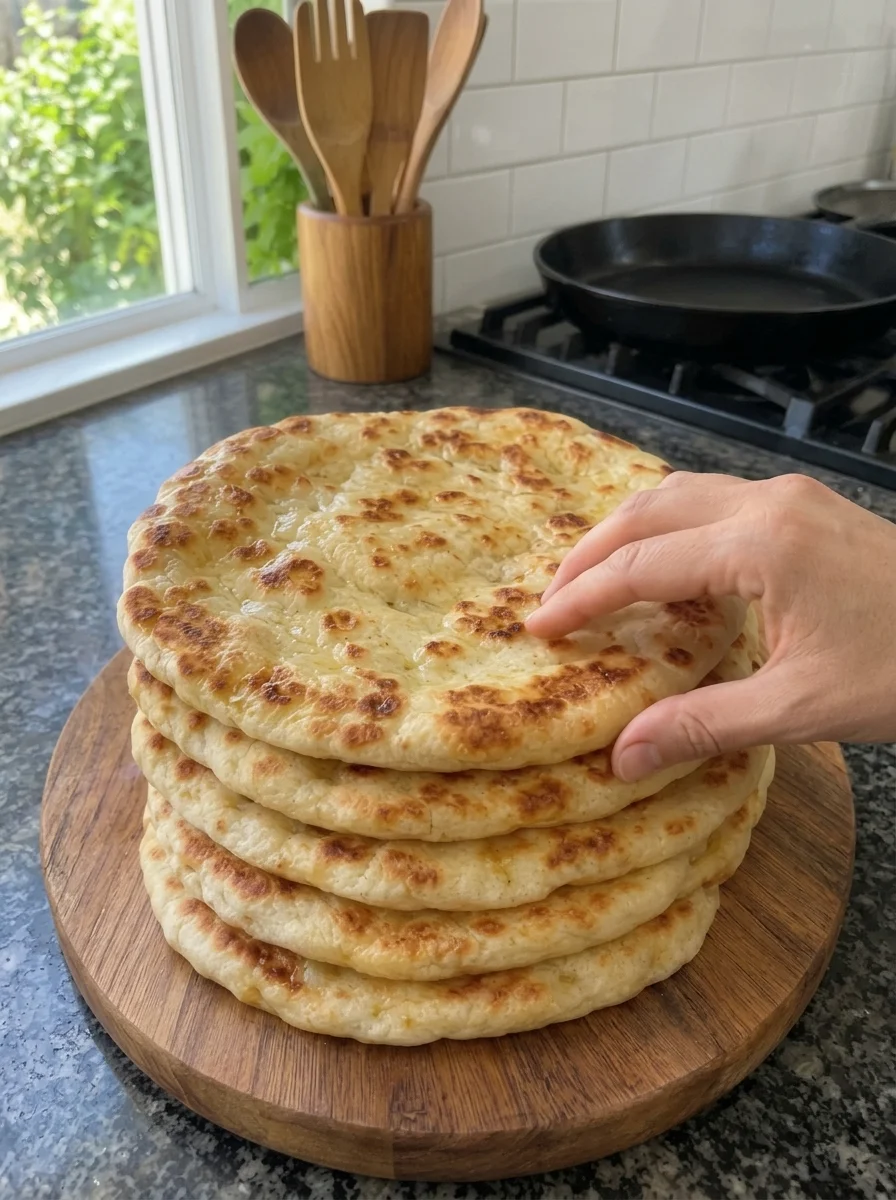
There is something deeply satisfying about tearing into a warm, golden flatbread fresh off the skillet. This easy homemade Greek flatbread is soft, fluffy, and slightly chewy, with lightly charred spots and a rich Mediterranean flavor from olive oil, oregano, and garlic. It is the kind of bread that makes any meal feel special, yet it comes together with simple pantry ingredients and no yeast.
The secret is Greek yogurt. Combined with baking powder, it creates a tender, airy dough that cooks in just a couple of minutes per side. You do not need to wait for the dough to rise, and you do not need an oven. A hot skillet does all the work.
Whether you want a wrap for chicken gyros, a base for a quick sandwich, or warm bread to scoop up hummus and tzatziki, this recipe delivers. In this complete guide you will find the full recipe, step-by-step instructions, tips for perfect texture, a look at how yogurt dough works, flavor variations, troubleshooting help, serving ideas, storage and freezing advice, and answers to the most common questions.
Why You Will Love This Greek Flatbread
Homemade flatbread has a reputation for being fussy, but this version is the opposite. Here is why it earns a regular spot in the kitchen.
- No yeast and no rising time. Baking powder and yogurt give the dough its lift, so you can go from bowl to plate in about an hour, including rest time.
- Simple pantry ingredients. Flour, Greek yogurt, baking powder, salt, and olive oil are all you need for the dough.
- Soft and slightly chewy. The texture sits between a pita and a naan, tender enough to fold and sturdy enough to hold fillings.
- No oven required. A skillet is all you need, which makes this recipe perfect for hot days or small kitchens.
- Fast cooking. Each flatbread cooks in only 1 to 2 minutes per side.
- Beginner-friendly. The dough is forgiving and easy to handle, even if you have never made bread before.
- Endlessly versatile. Use it for gyros, wraps, sandwiches, dippers, or even as a quick pizza base.
- Great for meal prep. The flatbreads store well and freeze beautifully, so you can make a big batch once and enjoy it all week.
Store-bought flatbreads are convenient, but fresh ones taste far better. Homemade flatbread is warm, fragrant, and free of preservatives, and brushing it with garlic and oregano oil takes it to another level.
Ingredients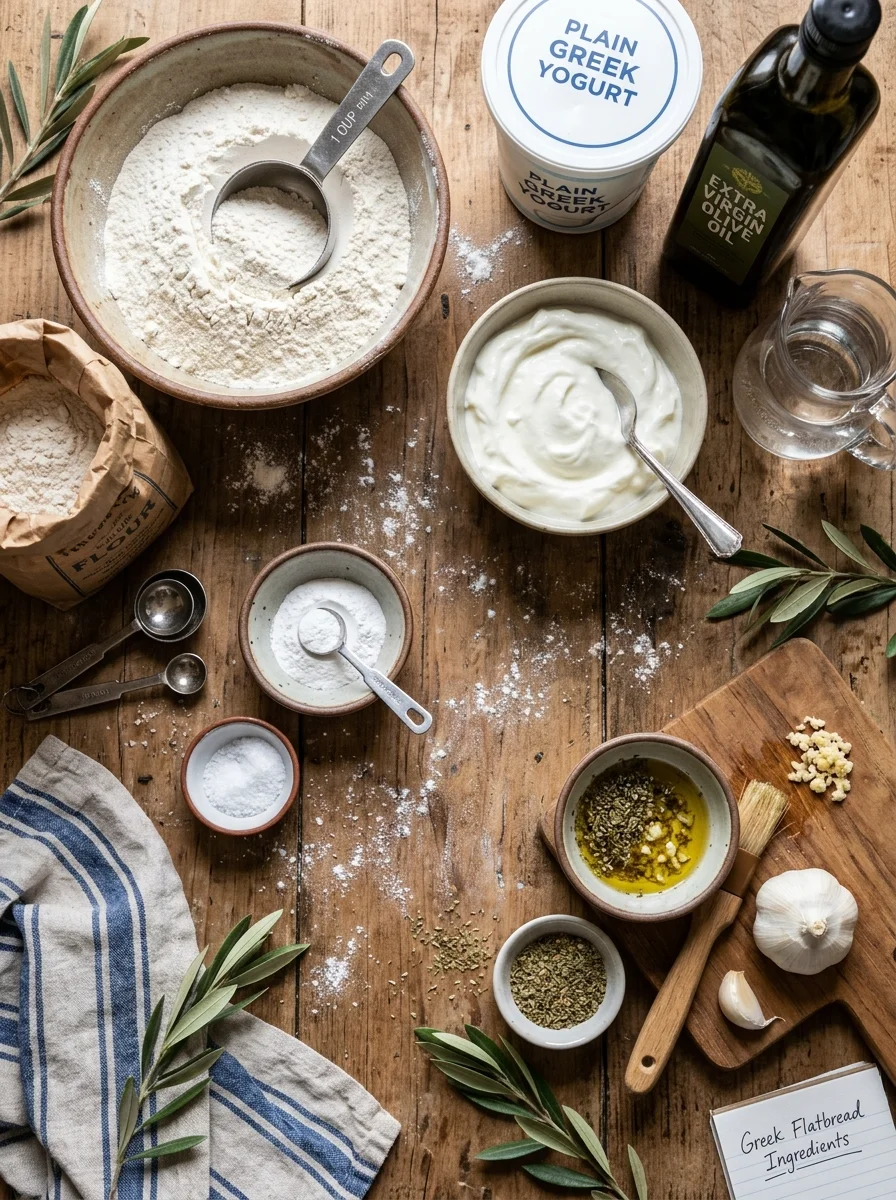
This recipe makes 6 to 8 flatbreads. Prep takes about 15 minutes, resting takes 20 to 30 minutes, and cooking takes about 15 minutes.
For the dough:
- 3 cups (375 g) all-purpose flour
- 1 cup (240 g) plain Greek yogurt
- 2 teaspoons baking powder
- 1 teaspoon salt
- 2 tablespoons olive oil
- 2 to 4 tablespoons warm water, as needed
For brushing (optional):
- 2 tablespoons olive oil
- 1 teaspoon dried oregano
- 1 small garlic clove, minced
Notes on the Ingredients
All-purpose flour. This is the easiest flour to use and gives a soft, tender result. Measure it carefully. Spoon the flour into your measuring cup and level it off, or weigh it. Too much flour makes the flatbread dry and tough.
Plain Greek yogurt. Thick, plain Greek yogurt gives the dough richness, moisture, and a gentle tang. Full-fat or 2 percent yogurt works best. Avoid flavored or very runny yogurt, since it changes the texture of the dough.
Baking powder. Baking powder reacts with the yogurt and heat to create small air pockets. Use fresh baking powder for the fluffiest result.
Salt. Salt adds flavor and strengthens the dough slightly. Do not skip it, or the bread will taste flat.
Olive oil. Olive oil makes the dough tender and adds authentic Greek flavor. Use a good extra virgin olive oil, especially for the brushing mixture.
Warm water. The amount you need depends on the thickness of your yogurt and how you measure your flour. Add it a little at a time until the dough feels soft but not sticky.
Garlic and oregano. These two ingredients turn plain flatbread into something that tastes like it came from a Greek taverna. Dried Greek oregano is ideal if you can find it.
Equipment You Will Need
- A large mixing bowl
- A rolling pin
- A heavy skillet, cast-iron pan, or nonstick pan
- A clean kitchen towel
- A small bowl and pastry brush for the garlic oil
How to Make Greek Flatbread (Step by Step)
- Mix the dry ingredients. In a large bowl, whisk together the flour, baking powder, and salt until evenly combined.
- Add the wet ingredients. Add the Greek yogurt and olive oil. Stir with a spoon or your hands until a soft, shaggy dough forms.
- Adjust the dough. If the dough feels dry or crumbly, add warm water, one tablespoon at a time, until it comes together. It should be soft and slightly tacky but not sticky.
- Knead. Turn the dough onto a lightly floured surface and knead for 5 to 7 minutes, until smooth and elastic. Add only a light dusting of flour if it sticks.
- Rest. Place the dough in the bowl, cover it with a towel or plastic wrap, and let it rest for 20 to 30 minutes. This relaxes the gluten and makes the dough easier to roll.
- Divide. Cut the dough into 6 to 8 equal pieces and roll each one into a smooth ball. Keep the balls covered so they do not dry out.
- Roll out. On a lightly floured surface, roll each ball into a round about ¼ inch thick. Do not roll too thin.
- Cook. Heat a skillet over medium-high heat. Cook each flatbread for 1 to 2 minutes per side, until golden spots and bubbles appear. Flip once and cook the second side the same way.
- Brush. Mix the olive oil, oregano, and garlic in a small bowl. Brush it lightly over the warm flatbreads.
Quick Recipe Summary
- Prep time: about 15 minutes
- Rest time: 20 to 30 minutes
- Cooking temperature: medium-high heat on the stovetop
- Cooking time: 1 to 2 minutes per side
- Yield: 6 to 8 flatbreads
- Diet: vegetarian, no yeast
Tips for Soft, Fluffy Flatbread Every Time
A few small habits make a big difference to the final texture. Keep these tips in mind each time you make the recipe.
Use Thick Greek Yogurt
Thick yogurt gives the dough a rich, soft crumb. If your yogurt is thin or watery, strain it through a fine sieve for 15 minutes before using it. Too much liquid makes the dough sticky and tempts you to add extra flour, which leads to dry bread.
Do Not Add Too Much Flour
The most common mistake is adding flour until the dough feels completely dry. A slightly tacky dough produces the softest flatbread. Flour your hands and surface lightly, and add more only when absolutely necessary.
Knead Enough, but Not Too Much
Five to seven minutes of kneading is enough to make the dough smooth and elastic. Over-kneading can make the flatbread tough. When the dough springs back gently after you press it with a finger, it is ready.
Let the Dough Rest
The 20 to 30 minute rest is not optional. It lets the flour absorb the moisture fully and relaxes the gluten, so the dough rolls out easily without shrinking back.
Do Not Roll Too Thin
Aim for about ¼ inch thick. Rolled too thin, the flatbread cooks into a crisp cracker instead of a soft, bendable bread. Thicker rounds puff up and stay tender.
Keep the Skillet Hot, but Not Smoking
Medium-high heat gives you the golden spots and bubbles you want. If the pan is too cool, the flatbread dries out before it browns. If it is too hot, the outside burns before the inside cooks. Cook in a dry skillet, with no oil, for the best results.
Do Not Overcrowd the Pan
Cook one flatbread at a time, or two at most in a large skillet. Crowding lowers the temperature and makes the bread steam instead of brown.
Keep the Cooked Flatbreads Covered
Stack the finished flatbreads on a plate and cover them with a clean kitchen towel. The trapped steam keeps them soft and pliable until you are ready to serve.
Why Yogurt Flatbread Works: The Simple Science
Understanding why this dough behaves the way it does helps you troubleshoot and adapt the recipe with confidence.
Yogurt Adds Moisture, Fat, and Acid
Greek yogurt is thick, creamy, and slightly acidic. The moisture hydrates the flour, the fat softens the crumb, and the acidity tenderizes the gluten. That is why yogurt doughs feel soft and easy to work with, even without long resting or proofing times.
Baking Powder Creates Lift
Baking powder releases gas when it meets moisture and heat. In a hot skillet, those tiny gas bubbles expand and puff up the flatbread, giving it a light, airy interior. Because the leavening happens fast, you do not need yeast or a long rise.
Resting Relaxes the Gluten
When you knead dough, the gluten strands tighten. Resting lets them relax, which makes the dough stretch more easily and prevents it from springing back when you roll it out. It also gives the flour time to absorb the liquid evenly.
High Heat Builds Flavor
Cooking on a hot skillet browns the surface quickly. Those golden spots add a toasty flavor, while the quick cooking time keeps the inside soft and moist.
How It Compares to Other Flatbreads
- Pita: pita is usually yeast-based and puffs into a pocket. This flatbread is softer and more like a wrap.
- Naan: naan is richer and often cooked in a very hot tandoor. This recipe gets similar softness from yogurt, without special equipment.
- Tortillas: tortillas are thinner and flatter. Greek flatbread is thicker, fluffier, and a bit chewier.
This balance makes it ideal for gyros and wraps, because it is flexible enough to fold but sturdy enough to hold juicy fillings.
Greek Flatbread Variations and Flavor Ideas
Once you have mastered the basic recipe, it is easy to customize. Add the extras to the dry ingredients or knead them in gently, and keep the amounts modest so the dough stays soft.
Garlic and Herb Flatbread
Mix 1 teaspoon of garlic powder and 1 teaspoon of dried oregano or thyme into the flour. Finish with the garlic-oregano brushing oil for a double hit of flavor.
Feta and Olive Flatbread
Knead in ¼ cup of crumbled feta and 2 tablespoons of finely chopped olives. The salty, briny flavors are a classic Greek combination.
Whole Wheat Greek Flatbread
Replace up to half of the all-purpose flour with whole wheat flour for a nuttier flavor and extra fiber. Whole wheat absorbs more liquid, so add a little extra warm water.
Lemon and Herb Flatbread
Add the zest of one lemon and a tablespoon of chopped fresh parsley or dill. It tastes bright and fresh, especially with grilled meats and salads.
Spicy Flatbread
Add a pinch of red pepper flakes or smoked paprika to the dough or the brushing oil for gentle heat.
Seeded Flatbread
Press sesame seeds, nigella seeds, or za’atar into the rolled dough before cooking. They add crunch and a beautiful finish.
Quick Flatbread Pizza
Top a cooked flatbread with tomato sauce, mozzarella, and vegetables, then broil for 3 to 4 minutes until the cheese melts.
Oven-Baked Option
If you prefer to use the oven, bake the rolled flatbreads on a preheated baking sheet at 450°F (230°C) for 5 to 7 minutes, flipping once. The result is slightly drier than skillet-cooked bread, but still delicious.
Dairy-Free Note
This recipe depends on yogurt for flavor and texture. If you need a dairy-free version, look for a thick plain dairy-free yogurt. Results vary by brand, and you may need less water.
Troubleshooting: Common Problems and Fixes
If your flatbread does not turn out as expected, check this list. Most problems have a simple fix.
- Dry or crumbly dough: the flour was over-measured or the yogurt was very thick. Add warm water one tablespoon at a time until the dough is soft.
- Sticky dough: the yogurt was thin or too much water was added. Dust with a little flour and knead until smooth, but avoid adding too much.
- Tough, dry flatbread: too much flour, over-kneading, or rolling too thin. Measure carefully, knead only 5 to 7 minutes, and roll to ¼ inch.
- Flatbread does not puff: the baking powder was old or the pan was not hot enough. Use fresh baking powder and preheat the skillet well.
- Burnt outside, raw inside: the heat was too high. Lower to medium-high and cook a little longer.
- Pale with no golden spots: the pan was too cool. Let the skillet heat fully before adding the dough.
- Dough shrinks when rolled: the gluten is tight. Let the dough rest 10 more minutes, then roll again.
- Flatbread turns stiff after cooking: it was left uncovered. Stack the warm flatbreads under a clean towel.
Can I Make the Dough Ahead?
Yes. After kneading, wrap the dough tightly and refrigerate it for up to 24 hours. Let it come to room temperature for 20 to 30 minutes before dividing and rolling.
Why Is the Dough Sticky After Resting?
As the flour absorbs the liquid during resting, the dough may feel slightly different. If it is still very sticky, knead in a small amount of flour for a few seconds.
What to Serve with Greek Flatbread
This flatbread is as good on its own as it is with a full meal. Serve it warm for the softest texture and the most fragrant garlic and oregano aroma.
Chicken Gyros
Pile grilled or roasted chicken onto a warm flatbread with sliced tomatoes, red onion, cucumber, and a generous spoonful of tzatziki. Fold it up and enjoy it right away.
Mediterranean Wraps
Fill a flatbread with hummus, grilled vegetables, feta cheese, olives, and fresh greens for a quick, satisfying wrap.
Dips and Spreads
- Hummus
- Tzatziki
- Baba ganoush
- Whipped feta
- Roasted red pepper dip
- Olive tapenade
Tear the flatbread into pieces and use it to scoop up your favorite dip. It is perfect for a mezze platter with olives, cucumber, tomatoes, and feta.
Sandwiches and Open-Faced Toppings
Use a flatbread as a base for a simple sandwich with sliced chicken, lettuce, and a smear of yogurt sauce. For a quick lunch, top it with hummus, sliced cucumber, tomatoes, and a sprinkle of feta.
Alongside Main Dishes
Serve flatbreads with grilled chicken, lamb, roasted vegetables, soups, or stews. They are great for mopping up sauces and juices.
Breakfast Flatbread
Top a warm flatbread with scrambled eggs, tomatoes, and feta, or spread it with labneh and drizzle with olive oil and honey.
Party Platter Idea
Cut the flatbreads into wedges, arrange them around a bowl of dip, and add fresh vegetables, olives, and cheese. It is an easy, crowd-pleasing appetizer.
How to Store, Freeze, and Reheat Greek Flatbread
Homemade flatbread tastes best fresh, but it keeps well when stored properly. Always let the flatbreads cool completely before storing them, so trapped steam does not make them soggy.
Room Temperature
Store cooled flatbreads in an airtight container or a zip-top bag at room temperature for up to 2 days. Keep them away from heat and direct sunlight.
Refrigerator
For longer storage, refrigerate the flatbreads in an airtight container for up to 5 days. Place a sheet of parchment between them to keep them from sticking together.
Freezer
Freeze the flatbreads for up to 2 months. Put a piece of parchment paper between each flatbread, then place the stack in a freezer bag and press out the extra air. You can also wrap small stacks in foil to make single servings.
Reheating
- Skillet: warm each flatbread in a dry skillet over medium heat for 30 to 60 seconds per side.
- Oven: wrap a stack in foil and heat at 350°F (180°C) for 8 to 10 minutes.
- Microwave: wrap a flatbread in a slightly damp paper towel and heat for 15 to 20 seconds.
- From frozen: thaw at room temperature for 20 to 30 minutes, or warm directly in a skillet over medium-low heat.
Storage Quick Reference
- Room temperature: airtight container, up to 2 days
- Refrigerator: airtight container, up to 5 days
- Freezer: parchment between flatbreads, up to 2 months
Freshly Brushed Tip
If you plan to store the flatbreads, brush them with the garlic-oregano oil just before serving instead of before storing. This keeps the flavor fresh and the garlic mild.
Frequently Asked Questions
Do I need yeast to make Greek flatbread?
No. This recipe uses baking powder and Greek yogurt for lift, so there is no yeast and no rising time. You only need a short rest before rolling.
Can I use regular yogurt instead of Greek yogurt?
Greek yogurt is much thicker, so it gives the best texture. If you only have regular plain yogurt, strain it through a fine sieve or cheesecloth for 30 minutes to remove extra liquid, or reduce the water and add a little more flour.
What kind of yogurt works best?
Plain, full-fat or 2 percent Greek yogurt gives the softest, richest result. Avoid flavored or sweetened yogurt.
Can I cook the flatbread in the oven?
Yes, but a skillet gives the best texture and golden spots. For oven cooking, bake on a preheated sheet at 450°F (230°C) for 5 to 7 minutes, flipping once.
What pan should I use?
A cast-iron skillet gives the best browning, but any heavy skillet or nonstick pan works well. Make sure it is fully preheated and cook without oil.
Why did my flatbread turn out hard?
The usual causes are too much flour, over-kneading, rolling too thin, or leaving the cooked bread uncovered. Keep the dough slightly tacky, roll to about ¼ inch, and wrap the cooked flatbreads in a towel.
Can I make the dough in advance?
Yes. Wrap the kneaded dough tightly and refrigerate it for up to 24 hours. Bring it to room temperature before rolling it out.
Can I freeze the dough?
You can freeze the dough balls for up to a month. Wrap them tightly, thaw overnight in the refrigerator, and let them come to room temperature before rolling. For the best texture, freezing the cooked flatbreads is usually easier.
Is this flatbread vegan?
No, it contains Greek yogurt. A thick plain dairy-free yogurt may work as a substitute, though the texture can differ.
Can I make it gluten-free?
This recipe is developed for all-purpose flour. A gluten-free flour blend may work, but the dough will behave differently and results will vary.
How thick should I roll the dough?
About ¼ inch. Thicker flatbreads stay soft and fluffy, while very thin ones turn crisp.
How many flatbreads does this recipe make?
It makes 6 to 8 flatbreads, depending on how large you roll them. Smaller portions make good wraps for kids or appetizers.
Can I add garlic directly to the dough?
Yes. Add garlic powder to the dry ingredients for flavor throughout the dough. Fresh garlic works best in the brushing oil.
Final Thoughts: Fresh Flatbread Made Easy
This easy homemade Greek flatbread proves that great bread does not need yeast, hours of waiting, or special equipment. With flour, Greek yogurt, baking powder, salt, and olive oil, you can have soft, fluffy, golden flatbreads on the table in about an hour.
Remember the key points: use thick Greek yogurt, avoid adding too much flour, let the dough rest, roll it about ¼ inch thick, cook it in a hot skillet, and keep the cooked flatbreads covered with a towel. Brush them with garlic and oregano oil while still warm for the full Mediterranean flavor.
Make a batch for gyros, wraps, or a mezze spread, and freeze the extras so you always have fresh flatbread ready to warm up. Once you try it, you may never go back to the store-bought kind.
SEO Details
- Focus keyword: Greek flatbread
- Suggested title tag: Easy Homemade Greek Flatbread (No Yeast, 5 Ingredients)
- Suggested meta description: Make soft, fluffy Greek flatbread at home with Greek yogurt and simple pantry ingredients. No yeast, no rising, ready in about an hour. Perfect for gyros and wraps.
- Suggested URL slug: /easy-homemade-greek-flatbread
- Secondary keywords: Greek yogurt flatbread, no-yeast flatbread, homemade flatbread recipe, easy flatbread, gyro flatbread, skillet flatbread
- Suggested image alt text: Golden homemade Greek flatbreads brushed with garlic and oregano oilPrint
asy Homemade Greek Flatbread
Ingredients
ScaleThis recipe makes 6 to 8 flatbreads. Prep takes about 15 minutes, resting takes 20 to 30 minutes, and cooking takes about 15 minutes.
For the dough:
- 3 cups (375 g) all-purpose flour
- 1 cup (240 g) plain Greek yogurt
- 2 teaspoons baking powder
- 1 teaspoon salt
- 2 tablespoons olive oil
- 2 to 4 tablespoons warm water, as needed
For brushing (optional):
- 2 tablespoons olive oil
- 1 teaspoon dried oregano
- 1 small garlic clove, minced
Notes on the Ingredients
All-purpose flour. This is the easiest flour to use and gives a soft, tender result. Measure it carefully. Spoon the flour into your measuring cup and level it off, or weigh it. Too much flour makes the flatbread dry and tough.
Plain Greek yogurt. Thick, plain Greek yogurt gives the dough richness, moisture, and a gentle tang. Full-fat or 2 percent yogurt works best. Avoid flavored or very runny yogurt, since it changes the texture of the dough.
Baking powder. Baking powder reacts with the yogurt and heat to create small air pockets. Use fresh baking powder for the fluffiest result.
Salt. Salt adds flavor and strengthens the dough slightly. Do not skip it, or the bread will taste flat.
Olive oil. Olive oil makes the dough tender and adds authentic Greek flavor. Use a good extra virgin olive oil, especially for the brushing mixture.
Warm water. The amount you need depends on the thickness of your yogurt and how you measure your flour. Add it a little at a time until the dough feels soft but not sticky.
Garlic and oregano. These two ingredients turn plain flatbread into something that tastes like it came from a Greek taverna. Dried Greek oregano is ideal if you can find it.
Equipment You Will Need
- A large mixing bowl
- A rolling pin
- A heavy skillet, cast-iron pan, or nonstick pan
- A clean kitchen towel
- A small bowl and pastry brush for the garlic oil
Instructions
- Mix the dry ingredients. In a large bowl, whisk together the flour, baking powder, and salt until evenly combined.
- Add the wet ingredients. Add the Greek yogurt and olive oil. Stir with a spoon or your hands until a soft, shaggy dough forms.
- Adjust the dough. If the dough feels dry or crumbly, add warm water, one tablespoon at a time, until it comes together. It should be soft and slightly tacky but not sticky.
- Knead. Turn the dough onto a lightly floured surface and knead for 5 to 7 minutes, until smooth and elastic. Add only a light dusting of flour if it sticks.
- Rest. Place the dough in the bowl, cover it with a towel or plastic wrap, and let it rest for 20 to 30 minutes. This relaxes the gluten and makes the dough easier to roll.
- Divide. Cut the dough into 6 to 8 equal pieces and roll each one into a smooth ball. Keep the balls covered so they do not dry out.
- Roll out. On a lightly floured surface, roll each ball into a round about ¼ inch thick. Do not roll too thin.
- Cook. Heat a skillet over medium-high heat. Cook each flatbread for 1 to 2 minutes per side, until golden spots and bubbles appear. Flip once and cook the second side the same way.
- Brush. Mix the olive oil, oregano, and garlic in a small bowl. Brush it lightly over the warm flatbreads.
Quick Recipe Summary
- Prep time: about 15 minutes
- Rest time: 20 to 30 minutes
- Cooking temperature: medium-high heat on the stovetop
- Cooking time: 1 to 2 minutes per side
- Yield: 6 to 8 flatbreads
- Diet: vegetarian, no yeast