
Cranberry vanilla cream scones are the kind of bake that makes a kitchen smell like a bakery before the first batch even leaves the oven. They are buttery, soft and tender on the inside, golden and slightly crisp at the edges, and studded with bright bursts of tart cranberry. A drizzle of sweet vanilla glaze finishes them like something you would pay good money for at a café.
The best part is how simple they are. There is no yeast, no rolling pin, no cutters and no complicated technique. You whisk a few pantry staples, cut in cold butter, stir in heavy cream, fold in dried cranberries, shape a round disc and slice it into eight wedges. In about an hour, including cooling and glazing, you have a tray of scones that look and taste far more impressive than the effort involved.
This guide walks you through everything: why heavy cream makes such a difference, how each ingredient works, the full step-by-step method, the most common mistakes and how to avoid them, flavor variations, serving ideas, storage and freezing, plus a detailed FAQ. If you want a reliable cranberry scones recipe you can bake again and again, you are in the right place.
Why You’ll Love These Cranberry Vanilla Cream Scones
There are plenty of scone recipes out there, so what makes this one worth bookmarking? A few things set it apart.
- They are genuinely tender. Heavy cream adds fat and moisture in one step, which gives the crumb a rich, delicate texture rather than a dry, crumbly one.
- The flavor is balanced. Sweet vanilla and buttery richness play against the natural tartness of dried cranberries, so no single note overwhelms the rest.
- They are quick. Prep takes about 15 to 20 minutes, and the scones bake in 16 to 22 minutes.
- They are forgiving. The dough does not need kneading, resting or special equipment, which makes this a great recipe for beginner bakers.
- They look special. The vanilla glaze drizzle turns a humble wedge of dough into a showpiece for brunch tables, holiday platters and afternoon tea.
- They are flexible. You can make the dough ahead, freeze the baked scones, and swap in different fruits or zests.
What Are Cream Scones?
A cream scone is a scone made with heavy cream (also called heavy whipping cream) as the main liquid instead of milk or buttermilk. Because cream is high in fat, it tenderizes the dough, adds richness and helps the scones brown beautifully. Many classic cream scone recipes use little or no butter. This version uses both: a moderate amount of cold butter for flaky pockets and cream for softness and flavor.
The result sits somewhere between a British-style scone, which is lighter and often served with clotted cream and jam, and an American café scone, which is richer, sweeter and often glazed. If you love a scone that is soft in the center with a lightly crisp exterior, this is the style for you.
Ingredients for Cranberry Vanilla Cream Scones
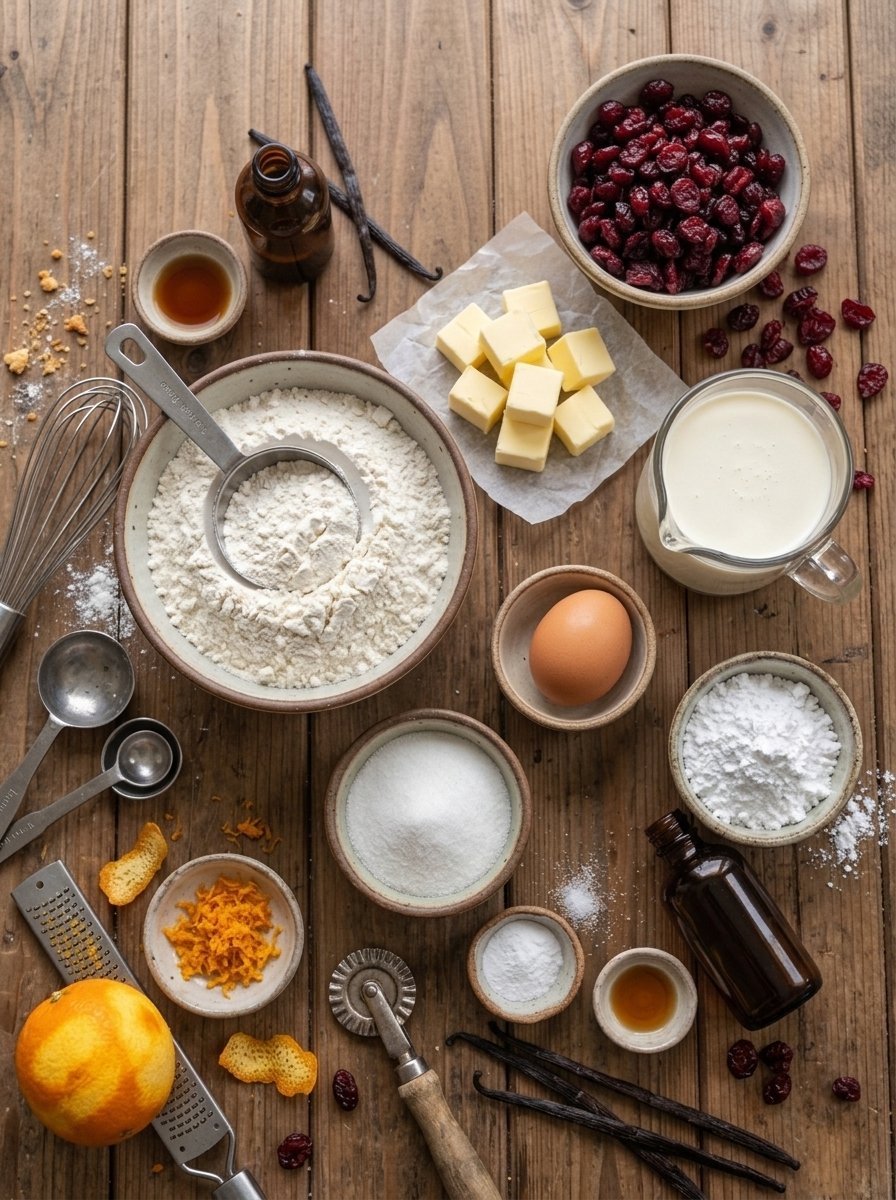
Good scones come from simple ingredients used well. Here is what you need and why each one matters.
For the Scones
- 2 cups (250 g) all-purpose flour
- ⅓ cup (65 g) granulated sugar
- 2½ tsp baking powder
- ¼ tsp salt
- 6 tbsp (85 g) cold unsalted butter, cut into small cubes
- ½ cup (120 ml) heavy cream, plus 1 to 2 tbsp if needed
- 1 large egg
- 2 tsp vanilla extract
- ¾ cup (90 g) dried cranberries
- 1 tsp finely grated orange zest (optional)
For Brushing
- 1 tbsp heavy cream
- 1 tsp granulated sugar (optional, for sprinkling)
For the Vanilla Glaze
- ½ cup (60 g) powdered sugar
- 1 to 2 tbsp heavy cream or milk
- ½ tsp vanilla extract
Ingredient Notes
All-purpose flour. It gives enough structure to hold the wedges together while staying soft. Measure by weight if you can. A cup of flour scooped straight from the bag can weigh much more than a cup that is spooned and leveled, and too much flour is the number one cause of dry scones.
Baking powder. This is the leavening that lifts the scones. Check the date on your tin: old baking powder loses strength and leads to flat, dense results.
Cold unsalted butter. The butter must stay cold. As the scones bake, the small pieces melt and release steam, creating tiny pockets that make the texture tender and slightly flaky. Unsalted butter also lets you control the salt.
Heavy cream. The star of the recipe. Its fat content creates a soft, rich crumb and a golden top when brushed over the dough. Keep it cold until you use it.
Egg. It adds structure, richness and color, and helps bind the dough without extra liquid.
Vanilla extract. Use pure vanilla extract for the best bakery-style flavor. It appears in both the dough and the glaze, so it is worth using a good one.
Dried cranberries. They provide concentrated sweetness and tartness and do not release much moisture into the dough. Fresh cranberries can work, but chop them roughly and pat away excess moisture first.
Orange zest. Optional, but highly recommended. A teaspoon of zest brightens the cranberries and adds a fragrant, bakery-style lift.
How to Make Cranberry Vanilla Cream Scones (Step by Step)
Step 1: Prepare the Oven and Baking Sheet
Preheat your oven to 400°F (200°C). Line a large baking sheet with parchment paper and set it aside. A hot oven is important because the initial blast of heat helps the scones rise quickly and set before the butter fully melts.
Step 2: Combine the Dry Ingredients
In a large mixing bowl, whisk together the flour, granulated sugar, baking powder and salt. If you are using orange zest, stir it into the dry mixture now so the citrus oils spread evenly through the dough.
Step 3: Cut in the Cold Butter
Add the cold butter cubes to the flour mixture. Use a pastry cutter, two forks or your fingertips to work the butter into the flour until the mixture looks like coarse crumbs with some pea-sized pieces still visible. Work quickly and avoid melting the butter with warm hands. Those small butter pieces are what create a tender, rich texture in the finished scones.
Step 4: Mix the Wet Ingredients and Fold in the Cranberries
In a separate bowl, whisk the heavy cream, egg and vanilla extract until smooth. Pour the wet mixture into the flour and butter mixture, then stir gently with a spatula until the dough begins to come together. Add the dried cranberries and fold them in evenly.
The dough should be slightly sticky but firm enough to shape. If it seems too dry and crumbly, add another tablespoon of cream at a time until it holds together when pressed.
Step 5: Shape the Scone Dough
Lightly flour your work surface and turn the dough out onto it. Gently bring it together with your hands and press it into a round disc about ¾ to 1 inch thick. Do not knead. A light touch keeps the scones tender.
Using a sharp knife or bench scraper, cut the disc into 8 equal wedges, as you would slice a pizza. Transfer the wedges to the prepared baking sheet, leaving 1 to 2 inches between each one.
Step 6: Brush the Tops
Brush the tops lightly with heavy cream. For a slightly sweeter, golden finish, sprinkle a little granulated sugar over the top. If the dough feels warm or soft at this point, slide the baking sheet into the refrigerator for 10 to 15 minutes before baking. Chilled dough holds its shape better and bakes up taller.
Step 7: Bake the Scones
Bake in the preheated oven for about 16 to 22 minutes, until the scones have risen, the edges are lightly golden and the tops are set. The bottoms should be golden brown while the centers stay soft. Watch them closely during the last few minutes, since oven temperature and dough thickness both affect timing.
Step 8: Cool the Scones
Let the scones rest on the baking sheet for about 5 minutes, then move them to a wire rack for another 10 to 15 minutes. They should be slightly warm or at room temperature before you glaze them. Glazing too early makes the icing melt and disappear into the surface.
Step 9: Make the Vanilla Glaze
In a small bowl, combine the powdered sugar and vanilla extract. Add 1 tablespoon of heavy cream or milk and whisk until smooth. If the glaze is too thick, add more liquid a few drops at a time until it is thick but pourable. For a stronger vanilla flavor, add a tiny extra splash of extract.
Step 10: Glaze and Serve
Drizzle the glaze over the cooled scones with a spoon or a small piping bag. Let it set for 10 to 15 minutes, then arrange the scones on a plate and serve with coffee, tea or a cold glass of milk. For the best flavor and texture, enjoy them fresh on the day they are baked.
Tips for the Best Cranberry Vanilla Cream Scones
A handful of small habits separate good scones from great ones.
- Use cold butter. Cold butter creates pockets of richness that help the scones bake up tender and delicate.
- Keep the cream cold. Cold cream helps the dough come together without turning greasy or overly soft.
- Avoid overmixing. Mix only until the dough holds together. Overworking develops gluten and makes scones tough.
- Do not add too much flour. The dough should be slightly crumbly but hold together when pressed. Extra flour dries the scones out.
- Chill before baking. If the dough warms up while you shape it, refrigerate the wedges for 10 to 15 minutes so they keep their shape in the oven.
- Add orange zest. It complements the cranberries and gives a bright, bakery-style flavor.
- Glaze after cooling. Waiting lets the glaze stay visible and set properly instead of melting away.
- Use your favorite cranberries. Dried cranberries give concentrated sweetness and tartness. With fresh cranberries, chop them roughly and pat them dry.
Common Scone Problems and How to Fix Them
My scones are dry. This usually means too much flour or too much baking time. Spoon and level your flour or use a scale, and start checking the scones a couple of minutes before the timer ends.
My scones are tough. The dough was likely overmixed or kneaded. Stir only until combined and shape it with a light hand.
My scones spread flat. Warm butter or warm dough is the usual cause. Chill the shaped wedges for 10 to 15 minutes before baking, and make sure your baking powder is fresh.
My scones are pale on top. Brush the tops with cream before baking and add a sprinkle of sugar. Make sure your oven is fully preheated to 400°F (200°C).
My glaze disappeared. The scones were too warm. Let them cool fully, or make the glaze slightly thicker.
My dough is too sticky or too crumbly. A slightly sticky dough is normal. If it will not hold together when pressed, add cream one tablespoon at a time. If it is unmanageably wet, dust your hands and work surface lightly with flour rather than mixing in more.
Variations and Flavor Ideas
Once you have mastered the base recipe, it is easy to make it your own.
- Orange cranberry scones. Use the optional orange zest and replace some of the glaze liquid with fresh orange juice for a citrus-forward finish.
- White chocolate cranberry scones. Fold in ½ cup of white chocolate chips with the cranberries for extra sweetness.
- Cranberry almond scones. Add a few drops of almond extract to the glaze and top with sliced almonds before baking.
- Cranberry pecan scones. Stir in chopped toasted pecans for crunch and a nutty depth.
- Blueberry or cherry swap. Replace the cranberries with dried blueberries, dried cherries or chopped dried apricots.
- Maple glaze. Use a little maple syrup in place of some of the glaze liquid for a cozy fall twist.
- Mini scones. Cut the disc into smaller wedges and shorten the bake time, checking them a few minutes early.
Serving Ideas
These scones suit nearly any occasion.
- Afternoon tea: Serve with a pot of black tea or Earl Grey for a classic treat.
- Coffee break: Pair with a latte, cappuccino or freshly brewed coffee.
- Breakfast: Add fresh fruit, yogurt or scrambled eggs for a satisfying morning meal.
- Holiday brunch: Arrange them on a platter with fresh berries and other pastries.
- Citrus twist: Serve with thin slices of fresh orange to echo the tart cranberries.
- Creamy finish: Offer clotted cream, whipped cream or softened butter on the side.
- Extra vanilla: Add a little more glaze just before serving for a sweeter bite.
Storage, Freezing and Make-Ahead Tips
Room temperature. Store completely cooled scones, glazed or unglazed, in an airtight container for up to 2 days.
Refrigerator. If your kitchen is warm, or you prefer them chilled, keep them in an airtight container in the fridge for up to 5 days.
Freezer. Freeze completely cooled scones in a freezer-safe container for up to 2 to 3 months. For the best presentation, freeze them unglazed and add the glaze after thawing.
Reheating. Warm a scone in a 300°F (150°C) oven for about 5 to 8 minutes to bring back its fresh-baked aroma and tender texture. Let it cool slightly, and add fresh glaze if you like.
Make ahead. Shape the wedges, cover them and refrigerate for several hours before baking. You may need to add a couple of minutes to the bake time.
One important note: do not store scones while they are still warm. Trapped steam makes them soggy.
Frequently Asked Questions
Can I use milk instead of heavy cream?
You can, but the scones will be less rich and less tender. Heavy cream is what gives this recipe its signature soft, delicate texture. If you must substitute, whole milk works best, though the result will be a little drier.
Can I use fresh or frozen cranberries?
Yes. Roughly chop fresh cranberries and pat them dry to remove excess moisture. Fresh berries are more tart, so you may want a little extra sugar in the glaze. Dried cranberries are the easiest option because they add sweetness and do not make the dough wet.
Why do my scones need cold butter?
Cold butter melts slowly in the oven, releasing steam that creates small pockets in the dough. This gives scones their tender, slightly flaky texture. Warm butter blends into the flour and leads to dense, greasy results.
Do I have to use an egg?
The egg adds structure, richness and color. It is part of what makes this recipe tender and reliable, so it is best not to skip it.
How do I know when the scones are done?
Look for risen scones with lightly golden edges and set tops. The bottoms should be golden brown, and the centers should still feel soft. This usually takes 16 to 22 minutes at 400°F (200°C).
Can I make the dough ahead of time?
Yes. Prepare and shape the dough, cut it into wedges, then cover and refrigerate for several hours before baking. Add a couple of minutes to the baking time if needed.
Can I freeze cranberry vanilla cream scones?
Absolutely. Freeze fully cooled scones in a freezer-safe container for 2 to 3 months, ideally without the glaze. Thaw them, warm briefly in the oven, and add fresh glaze.
Why did my glaze melt into the scones?
The scones were probably too hot. Let them cool for 10 to 15 minutes on a wire rack, until slightly warm or at room temperature, before drizzling.
Can I skip the glaze?
Yes. The scones are delicious with just a brush of cream and a sprinkle of sugar. The glaze adds sweetness and a polished look, but it is optional.
How many scones does this recipe make?
The recipe yields 8 large wedge-shaped scones. For smaller portions, cut the disc into 12 wedges and reduce the baking time slightly.
Cranberry Vanilla Cream Scones: Recipe Summary
| Detail | Time or Amount |
|---|---|
| Prep time | 15 to 20 minutes |
| Chilling time (optional) | 10 to 15 minutes |
| Cooking time | 16 to 22 minutes |
| Cooling and glazing time | 25 to 30 minutes |
| Total time | 55 to 75 minutes |
| Yield | 8 scones |
| Oven temperature | 400°F (200°C) |
Final Thoughts
Cranberry vanilla cream scones prove that a bakery-quality treat does not have to be complicated. With cold butter, rich heavy cream, fragrant vanilla and tart dried cranberries, you get a scone that is buttery, tender and full of flavor, finished with a sweet glaze that makes it feel special.
Bake a batch for a slow weekend breakfast, an afternoon tea with friends or a holiday brunch spread. Keep the butter cold, handle the dough gently, let the scones cool before glazing, and you will end up with a tray of golden, glossy scones that disappear fast. If you try the recipe, leave a comment with your favorite variation, and share it with a fellow scone lover.
Print
Cranberry Vanilla Cream Scones
Ingredients
Good scones come from simple ingredients used well. Here is what you need and why each one matters.
For the Scones
- 2 cups (250 g) all-purpose flour
- ⅓ cup (65 g) granulated sugar
- 2½ tsp baking powder
- ¼ tsp salt
- 6 tbsp (85 g) cold unsalted butter, cut into small cubes
- ½ cup (120 ml) heavy cream, plus 1 to 2 tbsp if needed
- 1 large egg
- 2 tsp vanilla extract
- ¾ cup (90 g) dried cranberries
- 1 tsp finely grated orange zest (optional)
For Brushing
- 1 tbsp heavy cream
- 1 tsp granulated sugar (optional, for sprinkling)
For the Vanilla Glaze
- ½ cup (60 g) powdered sugar
- 1 to 2 tbsp heavy cream or milk
- ½ tsp vanilla extract
Ingredient Notes
All-purpose flour. It gives enough structure to hold the wedges together while staying soft. Measure by weight if you can. A cup of flour scooped straight from the bag can weigh much more than a cup that is spooned and leveled, and too much flour is the number one cause of dry scones.
Baking powder. This is the leavening that lifts the scones. Check the date on your tin: old baking powder loses strength and leads to flat, dense results.
Cold unsalted butter. The butter must stay cold. As the scones bake, the small pieces melt and release steam, creating tiny pockets that make the texture tender and slightly flaky. Unsalted butter also lets you control the salt.
Heavy cream. The star of the recipe. Its fat content creates a soft, rich crumb and a golden top when brushed over the dough. Keep it cold until you use it.
Egg. It adds structure, richness and color, and helps bind the dough without extra liquid.
Vanilla extract. Use pure vanilla extract for the best bakery-style flavor. It appears in both the dough and the glaze, so it is worth using a good one.
Dried cranberries. They provide concentrated sweetness and tartness and do not release much moisture into the dough. Fresh cranberries can work, but chop them roughly and pat away excess moisture first.
Orange zest. Optional, but highly recommended. A teaspoon of zest brightens the cranberries and adds a fragrant, bakery-style lift.
Instructions
Preheat your oven to 400°F (200°C). Line a large baking sheet with parchment paper and set it aside. A hot oven is important because the initial blast of heat helps the scones rise quickly and set before the butter fully melts.
In a large mixing bowl, whisk together the flour, granulated sugar, baking powder and salt. If you are using orange zest, stir it into the dry mixture now so the citrus oils spread evenly through the dough.
Add the cold butter cubes to the flour mixture. Use a pastry cutter, two forks or your fingertips to work the butter into the flour until the mixture looks like coarse crumbs with some pea-sized pieces still visible. Work quickly and avoid melting the butter with warm hands. Those small butter pieces are what create a tender, rich texture in the finished scones.
In a separate bowl, whisk the heavy cream, egg and vanilla extract until smooth. Pour the wet mixture into the flour and butter mixture, then stir gently with a spatula until the dough begins to come together. Add the dried cranberries and fold them in evenly.
The dough should be slightly sticky but firm enough to shape. If it seems too dry and crumbly, add another tablespoon of cream at a time until it holds together when pressed.
Lightly flour your work surface and turn the dough out onto it. Gently bring it together with your hands and press it into a round disc about ¾ to 1 inch thick. Do not knead. A light touch keeps the scones tender.
Using a sharp knife or bench scraper, cut the disc into 8 equal wedges, as you would slice a pizza. Transfer the wedges to the prepared baking sheet, leaving 1 to 2 inches between each one.
Brush the tops lightly with heavy cream. For a slightly sweeter, golden finish, sprinkle a little granulated sugar over the top. If the dough feels warm or soft at this point, slide the baking sheet into the refrigerator for 10 to 15 minutes before baking. Chilled dough holds its shape better and bakes up taller.
Bake in the preheated oven for about 16 to 22 minutes, until the scones have risen, the edges are lightly golden and the tops are set. The bottoms should be golden brown while the centers stay soft. Watch them closely during the last few minutes, since oven temperature and dough thickness both affect timing.
Let the scones rest on the baking sheet for about 5 minutes, then move them to a wire rack for another 10 to 15 minutes. They should be slightly warm or at room temperature before you glaze them. Glazing too early makes the icing melt and disappear into the surface.
In a small bowl, combine the powdered sugar and vanilla extract. Add 1 tablespoon of heavy cream or milk and whisk until smooth. If the glaze is too thick, add more liquid a few drops at a time until it is thick but pourable. For a stronger vanilla flavor, add a tiny extra splash of extract.
Drizzle the glaze over the cooled scones with a spoon or a small piping bag. Let it set for 10 to 15 minutes, then arrange the scones on a plate and serve with coffee, tea or a cold glass of milk. For the best flavor and texture, enjoy them fresh on the day they are baked.