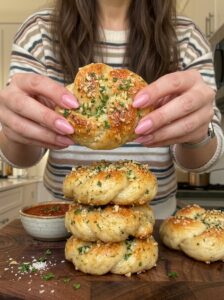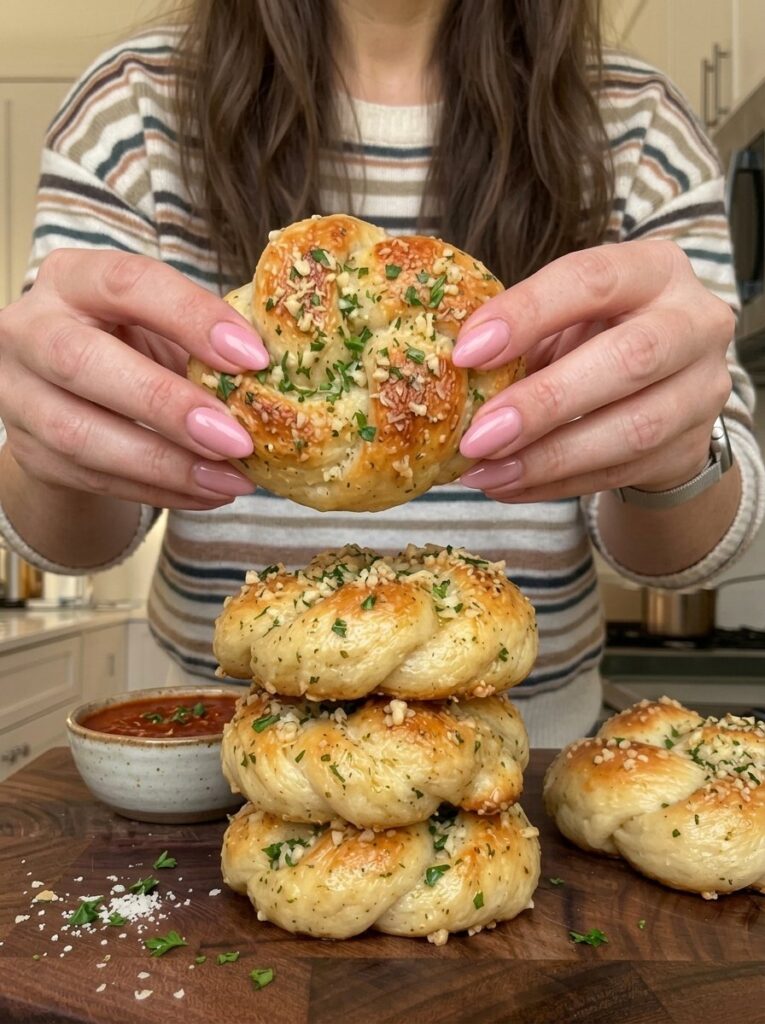
Why You Need These Cottage Cheese Garlic Knots in Your Life
There is something almost magical about a warm garlic knot. The golden, slightly crisp outside gives way to a soft, chewy center, and every bite is coated in melted butter, fresh garlic, and a snowfall of Parmesan. Restaurant garlic knots are wonderful, but they usually involve yeast, proofing, and a long wait before you can eat. They are also not exactly known for being nutritious.
These high-protein cottage cheese garlic knots change the game. They use cottage cheese as the secret ingredient in the dough, which keeps the knots tender and moist while quietly adding protein. There is no yeast, no kneading marathon, and no rising time. You mix a simple dough, shape eight knots, bake them for about 20 minutes, and brush them with a fragrant garlic butter while they are still warm.
If you have been seeing cottage cheese dough all over your feed and wondering whether it really works, this recipe is the perfect place to start. It is forgiving, quick, and delivers a result that tastes like proper garlic bread rather than a “healthy substitute.”
In this guide you will find the full recipe, step-by-step instructions, troubleshooting tips, flavor variations, serving ideas, storage and freezing advice, and answers to the most common questions about making cottage cheese garlic knots at home.
What Are Cottage Cheese Garlic Knots?
Cottage cheese garlic knots are a quick bread made from a simple dough of cottage cheese, flour, baking powder, salt, and grated Parmesan. Instead of relying on yeast to create lift and structure, the dough uses baking powder as a chemical leavener, and the cottage cheese supplies moisture, tang, and protein.
The dough is divided into equal portions, rolled into short ropes, and tied into loose knots. After baking, the knots are brushed with a garlic butter made from melted butter, minced fresh garlic, parsley, and more Parmesan. The result is a soft, savory bread that is perfect for dipping in marinara, serving alongside pasta, or eating straight from the baking sheet.
This style of dough is part of a wider trend of two- and three-ingredient doughs made with dairy such as Greek yogurt or cottage cheese. The appeal is obvious: fewer ingredients, less effort, and a boost of protein compared with traditional bread.
Why This Recipe Works
- No yeast and no rising time. From mixing bowl to oven in about 15 minutes, which makes this a true weeknight recipe.
- Extra protein. Cottage cheese and Parmesan both contribute protein, so each knot is more satisfying than a standard dinner roll.
- Soft and tender texture. Cottage cheese keeps the dough moist, so the knots stay fluffy inside rather than dry.
- Big garlic flavor. Fresh minced garlic in the butter topping gives a bold, aromatic finish that garlic powder cannot match.
- Simple pantry ingredients. You probably already have most of what you need.
- Easy to scale and store. The knots refrigerate and freeze well, so you can make a batch and enjoy them all week.
Ingredients
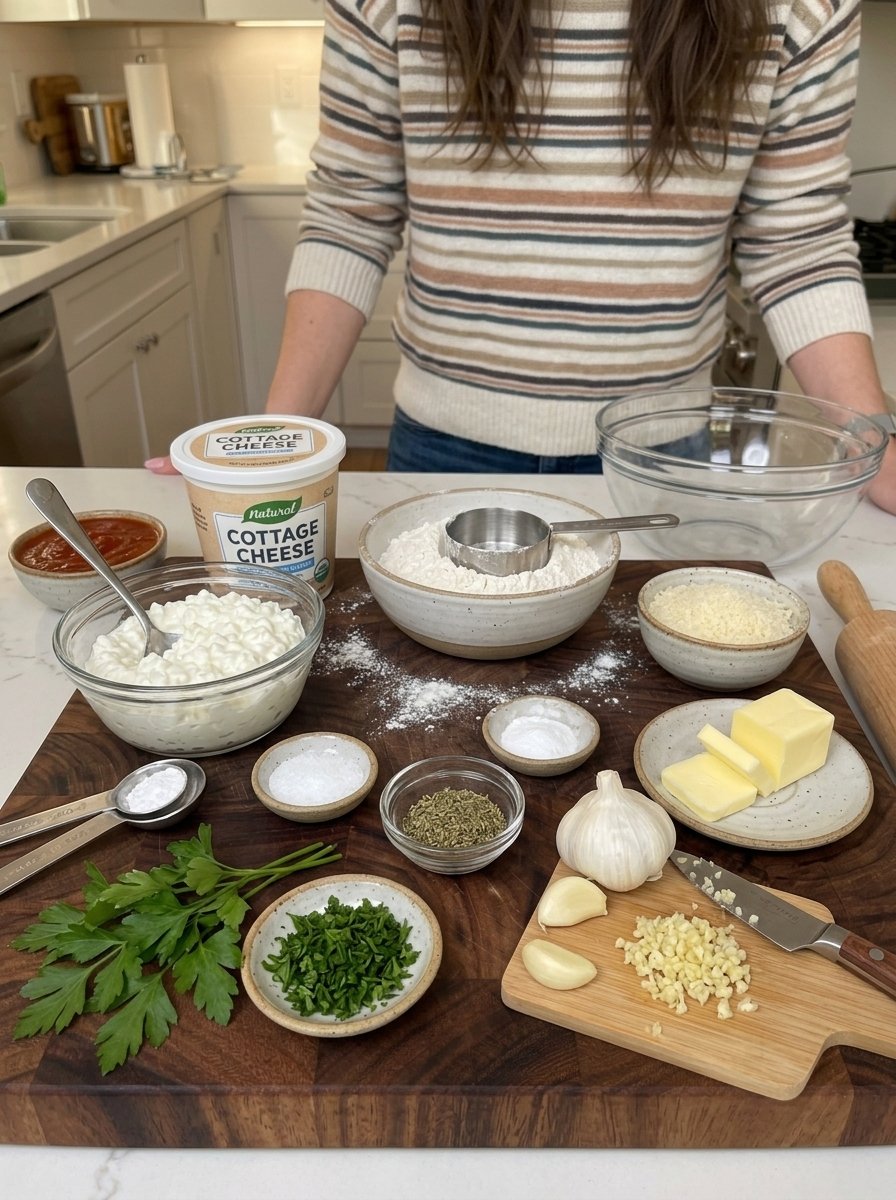
For the Garlic Knots
- 1 cup (225 g) cottage cheese
- 1 cup (125 g) all-purpose flour, plus a little extra if needed
- 1 teaspoon baking powder
- ¼ teaspoon salt
- ¼ cup (25 g) finely grated Parmesan cheese
- 1 teaspoon Italian seasoning (optional)
For the Garlic Butter Topping
- 3 tablespoons (42 g) unsalted butter, melted
- 3 cloves garlic, finely minced
- 1 tablespoon fresh parsley, finely chopped
- 2 tablespoons (10 g) grated Parmesan cheese
- Pinch of salt, to taste
For Serving
- Warm marinara sauce, for dipping
- Extra grated Parmesan (optional)
Ingredient Notes and Smart Substitutions
Cottage Cheese
Cottage cheese is the star of this recipe. Small-curd or large-curd both work, because the cheese is blended before it goes into the dough. Full-fat or 2 percent cottage cheese gives the richest flavor and the most tender crumb. Low-fat versions work too, but the knots may taste slightly less rich. If your cottage cheese looks watery in the tub, drain off the extra liquid before blending so the dough does not turn sticky.
Flour
All-purpose flour is the best choice here. If you only have self-rising flour, you can use it in place of the all-purpose flour. Simply leave out the baking powder and the salt in the dough, and check the dough consistency before adding anything extra. Whole wheat flour can be swapped in for part of the all-purpose flour for a nuttier flavor, though the knots will be a little denser.
Baking Powder
Baking powder is what gives these knots their lift without yeast. Make sure yours is fresh. If the tin has been open for more than six months, test it by stirring a half teaspoon into hot water. If it fizzes vigorously, it is still good.
Parmesan Cheese
Finely grated Parmesan melts into the dough and adds a savory, salty depth. Freshly grated cheese tastes better and blends more smoothly than the pre-grated kind in a shaker, but either will work in a pinch.
Garlic
Fresh garlic is strongly recommended for the topping. Mince it as finely as you can so it distributes evenly through the butter. If you love a sharper, more pungent garlic punch, use four cloves instead of three. For a mellow flavor, warm the garlic gently in the butter before brushing.
How to Make Cottage Cheese Garlic Knots: Step by Step
Step 1: Preheat the Oven and Prepare the Baking Sheet
Preheat your oven to 375°F (190°C). Line a baking sheet with parchment paper or lightly grease it with cooking spray. Set it aside while you make the dough.
Step 2: Blend the Cottage Cheese
Add the cottage cheese to a blender or food processor and blend until completely smooth and creamy. This step is what turns lumpy curds into a dough-friendly base, and it is the secret to a uniform texture. If your cottage cheese is on the watery side, drain it first. Transfer the blended cottage cheese to a medium mixing bowl.
Step 3: Mix the Dry Ingredients
In a separate bowl, whisk together the flour, baking powder, salt, grated Parmesan, and Italian seasoning if you are using it. Stir until everything is evenly combined. Mixing the dry ingredients first ensures the baking powder is spread throughout the dough, so the knots rise evenly.
Step 4: Make the Dough
Pour the blended cottage cheese into the dry ingredients. Stir with a sturdy spoon or spatula until a soft dough starts to form. Then use your hands to gently bring everything together, mixing only until no dry flour remains.
The dough should feel soft and slightly tacky, but manageable. If it is truly sticky and impossible to handle, add extra flour about one tablespoon at a time. Resist the urge to add too much, because extra flour is the number one cause of dry, tough knots.
Step 5: Divide and Shape the Knots
Lightly flour your work surface and turn the dough out onto it. Divide the dough into 8 equal portions. A kitchen scale makes this easy, but you can also eyeball it by cutting the dough in half, then quarters, then eighths.
Roll each portion into a rope about 6 to 8 inches long. Tie each rope into a loose knot by tucking one end underneath and bringing the other end up through the center. Do not pull the knots tight. They need a little breathing room to puff up in the oven. Place the knots on the prepared baking sheet with space between them.
Step 6: Bake
Bake the knots in the preheated oven for about 18 to 23 minutes, until they are puffed, lightly golden, and cooked through. The bottoms should be lightly browned while the centers stay tender and chewy. If they still look pale after 18 minutes, bake a few minutes longer and check often so they do not dry out.
Step 7: Make the Garlic Butter
While the knots bake, melt the butter in a small saucepan or a microwave-safe bowl. Stir in the minced garlic and a pinch of salt. For a milder garlic flavor, warm the butter and garlic together over low heat for 1 to 2 minutes, taking care not to brown the garlic. Remove from the heat and stir in the chopped parsley and grated Parmesan.
Step 8: Brush with Garlic Butter
Let the knots rest on the baking sheet for about 2 minutes after they come out of the oven. While they are still warm, brush them generously with the garlic butter, covering the tops and sides. The warm surface soaks up the butter beautifully. Finish with a little extra Parmesan and parsley if you like.
Step 9: Serve Warm
Transfer the knots to a plate or basket and serve right away with warm marinara sauce for dipping. They are at their absolute best fresh from the oven, when the centers are soft and the garlic butter is at its most fragrant.
Recipe Snapshot
- Prep time: about 15 minutes
- Resting time: none required
- Cook time: 18 to 23 minutes
- Cooling time: about 2 to 5 minutes
- Total time: about 35 to 45 minutes
- Yield: 8 garlic knots
Pro Tips for the Best Cottage Cheese Garlic Knots
Blend until silky. Chunky cottage cheese creates an uneven dough with wet spots. A smooth blend gives you a consistent texture and a better rise.
Keep the dough soft and slightly tacky. It is tempting to keep adding flour until the dough feels like traditional bread dough, but this dough is meant to be softer. A lightly floured surface and lightly floured hands are usually all you need.
Do not overwork it. Because there is no yeast and no gluten development needed, you only need to mix until the dough comes together. Overmixing can make the knots dense.
Make the knots the same size. Equal portions bake at the same rate, so you will not end up with a mix of undercooked and overbaked knots.
Brush while warm. Warm bread absorbs butter far better than cooled bread. Have your garlic butter ready the moment the knots leave the oven.
Watch the clock. Cottage cheese adds moisture, so bake times can vary depending on the size of your knots and the quirks of your oven. Start checking at 18 minutes.
Use fresh garlic. Garlic powder has its place, but fresh minced garlic gives the topping a vibrant, restaurant-style flavor.
Troubleshooting Common Problems
My dough is too sticky
The most common cause is watery cottage cheese. Next time, drain the cottage cheese before blending. For now, add flour one tablespoon at a time until the dough is tacky but workable. Flouring your hands can also help.
My knots turned out dense
Dense knots usually come from overmixing, adding too much flour, or using old baking powder. Mix just until combined, measure flour carefully (spoon it into the cup and level it, or use a scale), and check that your baking powder is fresh.
My knots are dry
Extra flour and overbaking are the usual suspects. Pull the knots out as soon as they are puffed and lightly golden, and be generous with the garlic butter afterward.
My knots came out pale
Ovens vary. Bake a few extra minutes, checking frequently. You can also brush the knots lightly with melted butter before baking for deeper color.
The knots unraveled
If your ropes are too thin or the knots are too loose, they can come undone. Roll the ropes to a consistent thickness and tuck the ends firmly underneath so they hold their shape.
Flavor Variations to Try
- Cheesy mozzarella knots: Sprinkle a little shredded mozzarella over the knots in the last two minutes of baking, or right after they come out of the oven.
- Everything-bagel knots: Skip the Italian seasoning and sprinkle everything bagel seasoning on top after brushing with butter.
- Spicy garlic knots: Add a pinch of red pepper flakes to the garlic butter for gentle heat.
- Herb-loaded knots: Stir extra basil, oregano, or chives into the butter topping.
- Lemon-garlic knots: Add a little lemon zest to the garlic butter for a bright, fresh finish.
- Whole wheat knots: Replace a quarter to half of the flour with whole wheat flour for added fiber.
- Dairy-forward dipping: Serve with a garlicky ranch or a warm cheese sauce instead of marinara.
What to Serve with Cottage Cheese Garlic Knots
These knots are versatile enough to play many roles at the table:
- Pasta night: They are a natural partner for spaghetti, lasagna, baked ziti, or creamy Alfredo.
- Soup companion: Serve them alongside tomato soup, minestrone, or a hearty vegetable soup for dunking.
- Marinara appetizer: Arrange them in a basket with a bowl of warm marinara in the center for an easy crowd-pleaser.
- Salad side: Add a knot or two to a big Caesar or Italian salad to turn it into a full meal.
- Game day snack: Serve with pizza sauce and extra cheese for a lighter take on pizza bites.
- Straight from the oven: Honestly, a warm knot on its own is hard to beat.
Storage, Freezing, and Reheating
Refrigerating: Let the knots cool completely, then store them in an airtight container in the refrigerator for up to 3 to 4 days. Because they contain cottage cheese, refrigerate leftovers promptly rather than leaving them out at room temperature for long periods.
Freezing: Freeze the cooled knots in a freezer-safe container or bag for up to 2 months for the best quality.
Reheating: Warm refrigerated knots in a 325°F (165°C) oven for about 5 to 8 minutes, until heated through. Reheating in the oven keeps the outside from turning soggy the way a microwave can.
From frozen: Thaw the knots in the refrigerator first, then reheat in the oven until hot throughout.
Refresh the topping: If the knots seem dry after storing, brush them with freshly melted garlic butter before serving.
Make-ahead tip: Prepare the garlic butter in advance and keep it in a covered container in the fridge. Gently reheat it until melted before brushing it over the warm knots.
Are Cottage Cheese Garlic Knots Healthy?
Compared with traditional garlic knots made from a white-flour yeast dough, this recipe has a notable protein advantage thanks to the cottage cheese and Parmesan. As a rough estimate, the dough ingredients provide around 5 to 7 grams of protein per knot when the recipe is divided into eight, though the exact number depends on the brands and fat levels you use. Cottage cheese is also a good source of calcium.
That said, these are still a treat. They contain butter, cheese, and refined flour, so think of them as a smarter version of a classic comfort food rather than a diet food. If you want to lighten them up further, use low-fat cottage cheese, swap in some whole wheat flour, and brush with a little less butter. If you are tracking nutrition closely, calculate the numbers with the specific products you use.
Frequently Asked Questions
Can you really make bread dough with cottage cheese?
Yes. Cottage cheese contributes moisture, protein, and structure, while baking powder provides lift. The dough is softer than traditional yeast dough, but it shapes and bakes into tender, bread-like knots.
Do cottage cheese garlic knots taste like cottage cheese?
Not in an overpowering way. Once blended, baked, and brushed with garlic butter and Parmesan, the cottage cheese flavor mellows into a subtle tang and richness. Most people who try these are surprised by how much they taste like classic garlic bread.
Do I have to blend the cottage cheese?
Blending is strongly recommended. It creates a smooth, uniform dough and prevents lumpy pockets of curds. If you do not have a blender, you can mash the cottage cheese thoroughly with a fork, but the texture will be less even.
Can I use low-fat or fat-free cottage cheese?
Yes, though full-fat or 2 percent cottage cheese gives the best flavor and the most tender texture. With fat-free cottage cheese, the dough may be a bit wetter, so drain it well before blending.
Can I make these without baking powder?
Baking powder is what lifts the dough, so it is best not to skip it. If you only have self-rising flour, use it instead and leave out the baking powder and salt.
Can I make the dough ahead of time?
Because the dough relies on baking powder, it is best baked soon after mixing. Baking powder begins working when it meets moisture, so waiting too long can reduce the rise. You can, however, make the garlic butter ahead of time.
Can I air fry cottage cheese garlic knots?
Yes, many people do. Use a lower temperature than you would in the oven, check them early, and turn if needed so they brown evenly. Cooking times will vary by air fryer model, so watch them closely.
Can I make these gluten-free?
The recipe was developed with all-purpose flour. A good one-to-one gluten-free baking blend may work, but the texture can differ, and you may need to adjust the amount of flour. Test a small batch first.
How do I get the garlic flavor stronger?
Use an extra clove of fresh garlic in the butter, mince it very finely, and brush the knots generously while they are warm. You can also add a light sprinkle of garlic powder to the dry ingredients.
How many knots does this recipe make?
The recipe yields 8 knots. You can double the ingredients to make 16, and bake them in two batches or on two baking sheets.
Final Thoughts
These high-protein cottage cheese garlic knots prove that a quick, yeast-free dough can deliver the soft, buttery, garlicky experience you crave. With a handful of simple ingredients, about 15 minutes of prep, and no waiting around for dough to rise, they fit easily into busy weeknights and relaxed weekend dinners alike.
Blend the cottage cheese until smooth, keep the dough soft and slightly tacky, and brush the knots with fresh garlic butter while they are still warm. Do those three things and you will end up with golden, tender knots that disappear almost as fast as they come out of the oven.
Serve them with warm marinara, pile them next to your favorite pasta, or simply enjoy one straight off the baking sheet. However you eat them, they are a delicious reminder that cottage cheese deserves a spot well beyond the breakfast bowl.
If you try this recipe, leave a rating and a comment, and share a photo of your knots. Happy baking!
Print
High-Protein Cottage Cheese Garlic Knots
Ingredients
For the Garlic Knots
- 1 cup (225 g) cottage cheese
- 1 cup (125 g) all-purpose flour, plus a little extra if needed
- 1 teaspoon baking powder
- ¼ teaspoon salt
- ¼ cup (25 g) finely grated Parmesan cheese
- 1 teaspoon Italian seasoning (optional)
For the Garlic Butter Topping
- 3 tablespoons (42 g) unsalted butter, melted
- 3 cloves garlic, finely minced
- 1 tablespoon fresh parsley, finely chopped
- 2 tablespoons (10 g) grated Parmesan cheese
- Pinch of salt, to taste
For Serving
- Warm marinara sauce, for dipping
- Extra grated Parmesan (optional)
Instructions
Preheat your oven to 375°F (190°C). Line a baking sheet with parchment paper or lightly grease it with cooking spray. Set it aside while you make the dough.
Add the cottage cheese to a blender or food processor and blend until completely smooth and creamy. This step is what turns lumpy curds into a dough-friendly base, and it is the secret to a uniform texture. If your cottage cheese is on the watery side, drain it first. Transfer the blended cottage cheese to a medium mixing bowl.
In a separate bowl, whisk together the flour, baking powder, salt, grated Parmesan, and Italian seasoning if you are using it. Stir until everything is evenly combined. Mixing the dry ingredients first ensures the baking powder is spread throughout the dough, so the knots rise evenly.
Pour the blended cottage cheese into the dry ingredients. Stir with a sturdy spoon or spatula until a soft dough starts to form. Then use your hands to gently bring everything together, mixing only until no dry flour remains.
The dough should feel soft and slightly tacky, but manageable. If it is truly sticky and impossible to handle, add extra flour about one tablespoon at a time. Resist the urge to add too much, because extra flour is the number one cause of dry, tough knots.
Lightly flour your work surface and turn the dough out onto it. Divide the dough into 8 equal portions. A kitchen scale makes this easy, but you can also eyeball it by cutting the dough in half, then quarters, then eighths.
Roll each portion into a rope about 6 to 8 inches long. Tie each rope into a loose knot by tucking one end underneath and bringing the other end up through the center. Do not pull the knots tight. They need a little breathing room to puff up in the oven. Place the knots on the prepared baking sheet with space between them.
Bake the knots in the preheated oven for about 18 to 23 minutes, until they are puffed, lightly golden, and cooked through. The bottoms should be lightly browned while the centers stay tender and chewy. If they still look pale after 18 minutes, bake a few minutes longer and check often so they do not dry out.
While the knots bake, melt the butter in a small saucepan or a microwave-safe bowl. Stir in the minced garlic and a pinch of salt. For a milder garlic flavor, warm the butter and garlic together over low heat for 1 to 2 minutes, taking care not to brown the garlic. Remove from the heat and stir in the chopped parsley and grated Parmesan.
Let the knots rest on the baking sheet for about 2 minutes after they come out of the oven. While they are still warm, brush them generously with the garlic butter, covering the tops and sides. The warm surface soaks up the butter beautifully. Finish with a little extra Parmesan and parsley if you like.
Transfer the knots to a plate or basket and serve right away with warm marinara sauce for dipping. They are at their absolute best fresh from the oven, when the centers are soft and the garlic butter is at its most fragrant.