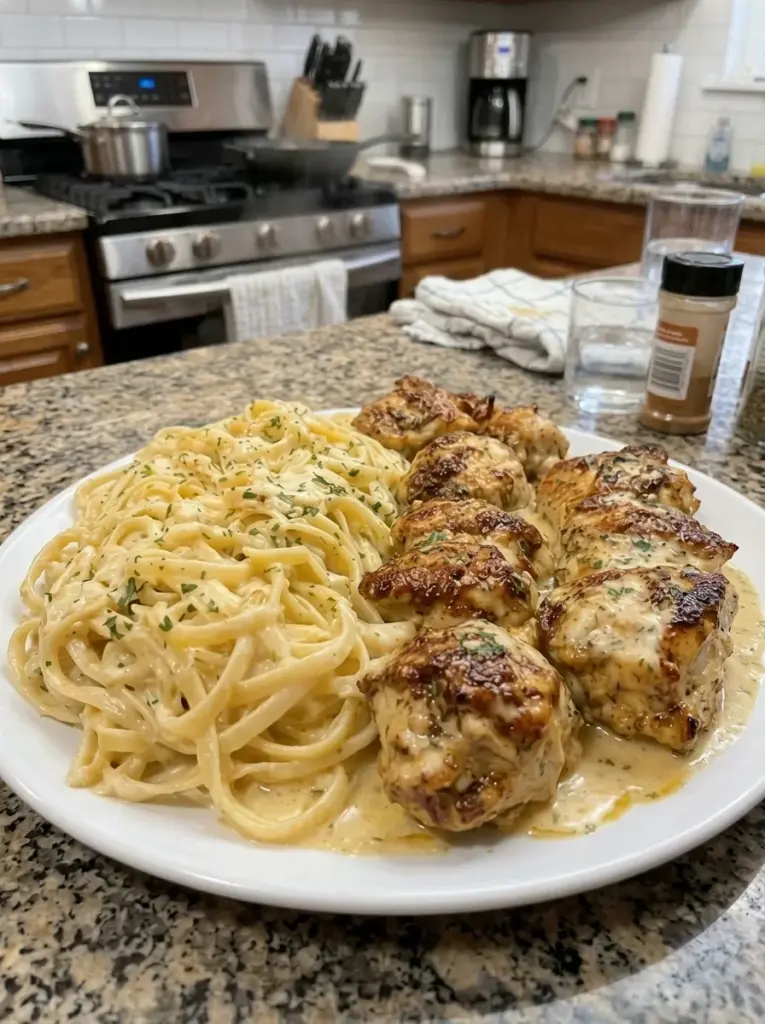
Creamy Garlic Butter Chicken & Linguine in Alfredo Sauce
Few dishes are as universally comforting as chicken Alfredo, and Creamy Garlic Butter Chicken & Linguine in Alfredo Sauce takes that classic and gives it a little extra personality. Juicy chicken is seared in garlic butter until golden, then served over linguine tossed in a from-scratch Alfredo sauce that’s rich, glossy, and made with just a handful of ingredients. There’s no jarred sauce and no shortcuts that compromise flavor, only a simple technique that delivers restaurant-quality results at home in about 35 minutes.
What makes this recipe worth bookmarking is its focus on getting the Alfredo right. Homemade Alfredo can intimidate cooks who have had a sauce turn greasy, grainy, or clumpy, but the method here is straightforward and forgiving. Garlic is gently softened in butter, cream is warmed rather than boiled, and Parmesan is added gradually off a low flame. The garlic butter that seasons the chicken carries right into the sauce, so the whole dish tastes cohesive rather than like two separate components.
In this article, you’ll find a note on the ingredients, a closer look at what makes Alfredo succeed, step-by-step instructions, troubleshooting tips, ideas for variations, storage and reheating advice, and answers to frequently asked questions.
Why This Recipe Works
The chicken and sauce share the same pan. Searing the chicken first leaves behind browned bits that dissolve into the sauce, adding savory depth you can’t get from a separate saucepan.
Garlic butter provides the flavor foundation. Cooking garlic gently in butter infuses the fat with aroma, and that fat coats both the chicken and the pasta.
Linguine is a classic match for Alfredo. Its flat, slightly wide strands give the creamy sauce plenty of surface area to cling to, so every forkful is evenly coated.
A little pasta water works like magic. The starch in the cooking water helps the sauce emulsify and cling, creating a silky texture without extra cream.
The ingredient list is short. With pantry staples and a few fresh items, you don’t need anything unusual to make this dish.
What Makes Alfredo Succeed
Alfredo sauce is essentially a simple emulsion of fat, dairy, and cheese, and a few principles make the difference between silky and separated.
Control the heat. Cream that boils vigorously can break, leaving a greasy, curdled sauce. A gentle simmer is all you need.
Add cheese gradually and off a low flame. Cheese added all at once, or to scalding liquid, can seize into clumps. Small handfuls stirred until melted give a smooth result.
Grate your own Parmesan. Pre-grated cheese often contains starches to prevent clumping in the container, which can leave a gritty texture in the sauce. A fresh wedge grated finely melts far more smoothly.
Use the pasta water. It’s the easiest tool for adjusting consistency, both thinning a sauce that has thickened and helping it cling to the noodles.
Serve immediately. Alfredo is at its best right after it’s made. As it cools, the sauce tightens up.
Ingredients You’ll Need
A note on ingredients: since no ingredient list was provided, the version below is a classic, well-balanced build for this dish. Adjust amounts to taste.
For the Chicken
- 1½ lbs boneless, skinless chicken breasts, sliced into strips or bite-size pieces — the hearty protein
- 1 tsp garlic powder — reinforces the garlic flavor in the chicken itself
- 1 tsp Italian seasoning — adds a gentle herbal note
- ½ tsp paprika — adds warmth and color
- ¾ tsp salt — seasons the chicken
- ½ tsp black pepper — adds mild heat
- 1 tbsp olive oil — helps the chicken brown without burning the butter
- 2 tbsp butter — adds richness to the sear
For the Pasta
- 12 oz linguine — flat strands that hold the sauce well
- ½ cup reserved pasta water — loosens and binds the sauce
For the Garlic Butter Alfredo Sauce
- 4 tbsp butter — the rich base of the sauce
- 5 cloves garlic, minced — the aromatic heart of the dish
- 2 cups heavy cream — creates the velvety Alfredo base
- 1½ cups freshly grated Parmesan cheese — adds salty, nutty depth and thickens the sauce
- ¼ tsp ground nutmeg (optional) — a classic subtle accent that enhances cream sauces
- Salt and black pepper to taste — for final seasoning
For Garnish
- 2 tbsp chopped fresh parsley — adds freshness and color
- Extra Parmesan — for serving
Step-by-Step Instructions
Step 1: Cook the Linguine
Bring a large pot of generously salted water to a rolling boil. Add the linguine and cook until al dente, about 9 to 11 minutes or according to the package. Before draining, scoop out ½ cup of the pasta water and set it aside. Drain the linguine and set it aside, tossing it with a teaspoon of olive oil if it will sit for more than a few minutes.
Step 2: Season the Chicken
Pat the chicken completely dry with paper towels; dry chicken browns instead of steaming. In a bowl, toss it with the garlic powder, Italian seasoning, paprika, salt, and pepper until evenly coated.
Step 3: Sear the Chicken in Garlic Butter
Heat the olive oil and 2 tablespoons of butter in a large, deep skillet over medium-high heat. When the butter foams, add the chicken in a single layer, working in batches if needed. Cook for 5 to 7 minutes, turning once or twice, until golden brown on the outside and cooked through to an internal temperature of 165°F (74°C). Transfer the chicken to a plate and tent loosely with foil.
Step 4: Build the Garlic Butter Base
Reduce the heat to medium and add the remaining 4 tablespoons of butter to the same skillet. Once melted, add the minced garlic and cook for about 60 seconds, stirring constantly, until fragrant and just barely golden. Don’t let it brown; burnt garlic turns the sauce bitter.
Step 5: Add the Cream
Pour in the heavy cream, stirring to dissolve the browned bits from the bottom of the pan. Lower the heat to medium-low and let the cream come to a gentle simmer for 2 to 3 minutes, until it thickens slightly and coats the back of a spoon. Avoid a hard boil.
Step 6: Melt in the Parmesan
Reduce the heat to low. Add the Parmesan a small handful at a time, stirring until each addition melts completely before adding the next. Stir in the nutmeg if using, then season with salt and pepper. The sauce should look smooth, glossy, and thick enough to coat a spoon.
Step 7: Combine
Add the linguine to the skillet and toss with tongs until every strand is coated. Pour in the reserved pasta water a tablespoon at a time as needed to reach a silky consistency. Nestle the chicken back into the pasta along with any juices from the plate, and warm everything together for another minute.
Step 8: Serve
Divide among warm bowls and garnish with parsley and extra Parmesan. Serve immediately for the creamiest texture.
Troubleshooting Guide
The sauce is greasy or separated. The cream was likely heated too aggressively. Remove the pan from the heat, add a splash of warm pasta water, and whisk vigorously. If needed, whisk in a tablespoon of cold cream to help it re-emulsify.
The sauce is grainy or clumpy. The cheese was probably added too quickly or to liquid that was too hot, or you used pre-grated cheese. Lower the heat and add the cheese gradually next time. To rescue a grainy sauce, whisk in warm cream a little at a time.
The sauce is too thick. Thin it with pasta water, a tablespoon at a time.
The sauce is too thin. Let it simmer a little longer, or add a bit more Parmesan. Remember it thickens as it cools.
The chicken is dry. Overcooking is usually the cause. Use a thermometer, remove the chicken at 165°F (74°C), and rest it before combining.
The dish tastes flat. Add salt gradually and taste after each addition. A squeeze of lemon juice just before serving can also brighten it.
Variations to Try
Add vegetables. Broccoli florets, peas, or baby spinach folded in at the end add color and freshness. Steamed broccoli is a classic pairing with Alfredo.
Make it spicy. A pinch of red pepper flakes with the garlic adds warmth.
Try it Cajun-style. Season the chicken with Cajun seasoning instead of Italian seasoning for a bolder, spicier dish.
Add mushrooms. Sauté sliced mushrooms after the chicken and before the garlic for an earthy, savory note.
Use shrimp. Swap the chicken for shrimp, cooking them only 2 to 3 minutes per side.
Make it lighter. Replace part of the cream with whole milk. The sauce will be thinner and less rich, but still pleasing.
Add lemon. Stir in lemon zest and a little juice at the end for a bright finish.
What to Serve With It
- A crisp green salad with lemon vinaigrette cuts the richness
- Garlic bread is a natural partner for Alfredo
- Roasted asparagus or green beans add color and a fresh vegetable
- A glass of crisp white wine, like Pinot Grigio or Chardonnay, complements the creamy sauce
Storage and Reheating
Refrigerator: Store leftovers in an airtight container for up to 3 to 4 days. Alfredo thickens significantly as it chills.
Freezer: Cream sauces tend to separate when frozen and thawed, so freezing isn’t recommended for best quality.
Stovetop reheating: Warm leftovers in a skillet over low heat with a generous splash of milk or cream, stirring frequently, until the sauce loosens and the pasta is heated through.
Microwave reheating: Add a spoonful of milk or cream, cover loosely, and reheat in 30-second increments, stirring each time.
Frequently Asked Questions
What’s the difference between Alfredo and other cream sauces? Classic Alfredo is built on butter, cream, and Parmesan, with garlic added in many American versions. Unlike a béchamel, it contains no flour or roux, so its thickness comes from the reduction of cream and the melted cheese.
Can I use fettuccine instead of linguine? Yes. Fettuccine is the traditional choice for Alfredo, and the recipe works exactly the same way.
Can I use pre-grated Parmesan? You can, but freshly grated melts more smoothly. If you use pre-grated, add it slowly and keep the heat low.
Can I use half-and-half instead of heavy cream? It will work, but the sauce will be thinner and more likely to separate. If using it, keep the heat very low and consider adding a bit more Parmesan.
Do I need to use nutmeg? No, it’s optional. A tiny pinch adds subtle depth, but the sauce is delicious without it.
Can I make this gluten-free? Yes, using gluten-free linguine. The rest of the ingredients are naturally gluten-free, though you should check seasoning labels.
How do I keep the chicken tender? Don’t crowd the pan, sear it until golden, and remove it as soon as it reaches 165°F (74°C). Resting it briefly also helps retain juices.
How many servings does this make? About 4 to 5 servings, depending on portions.
Final Thoughts
Creamy Garlic Butter Chicken & Linguine in Alfredo Sauce proves that a few good ingredients, handled carefully, can produce a dinner that tastes like it came from a restaurant. Golden garlic butter chicken, tender linguine, and a silky homemade Alfredo come together in one skillet, with every layer of flavor building on the last.
Whether it’s a weeknight meal or a cozy dinner for guests, this recipe is simple, reliable, and deeply satisfying. Save it, bookmark it, or print it out, because once you’ve mastered homemade Alfredo, you’ll find yourself making it again and again.