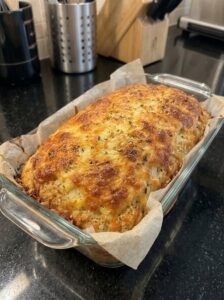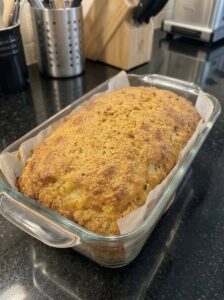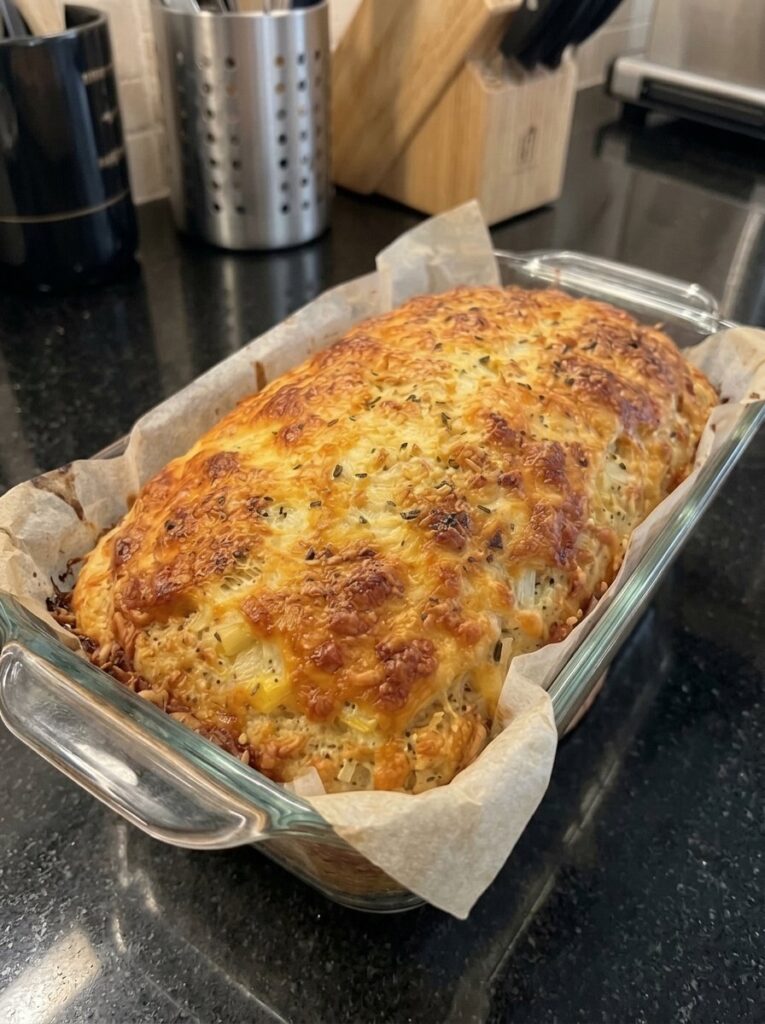
Want homemade bread that is soft, savory, cheesy, and genuinely easy to make? This cottage cheese cheddar bread checks every box. The cottage cheese adds moisture and tenderness while giving the loaf a protein boost, and sharp cheddar brings rich, tangy cheese flavor to every slice. Best of all, there is no yeast and no waiting around for dough to rise, so you can go from a bare counter to a golden, fragrant loaf in well under two hours.
If you have ever wanted fresh bread without kneading, proofing, or special equipment, this is the recipe to bookmark. Serve it warm with breakfast, set a slice next to a bowl of soup, or pop it in the toaster with a little butter for a comforting snack. Once you smell that cheesy goodness drifting from the oven, you will be ready to dig in.
In this guide, you will find the full recipe, a clear ingredient breakdown, step-by-step instructions, troubleshooting help, creative variations, serving ideas, storage and freezing tips, and answers to the most common questions about cottage cheese bread.
Table of Contents
- Why you will love this cottage cheese cheddar bread
- Why cottage cheese works so well in bread
- Ingredients and what each one does
- Substitutions and swaps
- How to make cottage cheese cheddar bread, step by step
- Tips for the best loaf
- Troubleshooting common problems
- Flavor variations
- What to serve with cheddar bread
- How to store, freeze, and reheat
- Frequently asked questions
- Recipe card
Why You Will Love This Cottage Cheese Cheddar Bread
There are plenty of cheese bread recipes out there, but this one earns its place in your regular rotation for several reasons.
It is a true no-yeast bread. Yeast breads are wonderful, but they ask for time and patience. This loaf is a quick bread, which means it rises in the oven thanks to baking powder. There is no proofing, no kneading, and no second rise. If you are new to baking, that removes most of the guesswork.
It uses simple, everyday ingredients. Cottage cheese, eggs, flour, cheddar, baking powder, and salt make up the core of the recipe. Many kitchens already have most of these on hand, and the optional seasonings are pantry staples.
It is soft and moist. Cottage cheese holds a lot of moisture and a little fat, which keeps the crumb tender instead of dry. Quick breads can sometimes turn crumbly or heavy, but the cottage cheese helps this one stay soft from the first slice to the last.
It has a protein boost. Cottage cheese and eggs both bring protein to the loaf, which makes a slice feel more satisfying than plain white bread. It is a nice option when you want something savory that keeps you full.
It is incredibly versatile. Toast it, make sandwiches, dunk it in soup, or serve it with eggs. The savory cheddar flavor fits breakfast, lunch, and dinner.
It is quick to prepare. With about 15 minutes of prep and 40 to 50 minutes of baking, it fits easily into a weeknight or a lazy weekend morning.
Why Cottage Cheese Works So Well in Bread
Cottage cheese may seem like an unusual bread ingredient at first, but it makes a lot of sense once you think about what it does in a batter.
Moisture. The curds and the liquid around them add water to the batter, which turns into steam in the oven and helps the loaf stay tender. This is why the recipe needs no butter-heavy dough or long hydration process.
Tenderness. The dairy proteins and fat in cottage cheese soften the crumb. The result is a loaf that feels almost like a savory cake in the best possible way: soft, sliceable, and not at all tough.
Mild tang. Cottage cheese has a gentle, slightly tangy flavor that plays beautifully with sharp cheddar. It does not taste like cottage cheese in the finished loaf. Instead, it deepens the cheesy, savory character of the bread.
Texture options. Because the curds are visible, you can choose how rustic you want the bread. Stir the cottage cheese with a fork and you will get small pockets of cheese throughout the crumb. Blend it first and the loaf becomes smoother and more uniform.
Protein. Cottage cheese is well known as a protein-rich food, so it is a smart way to add some staying power to a quick bread.
Ingredients and What Each One Does
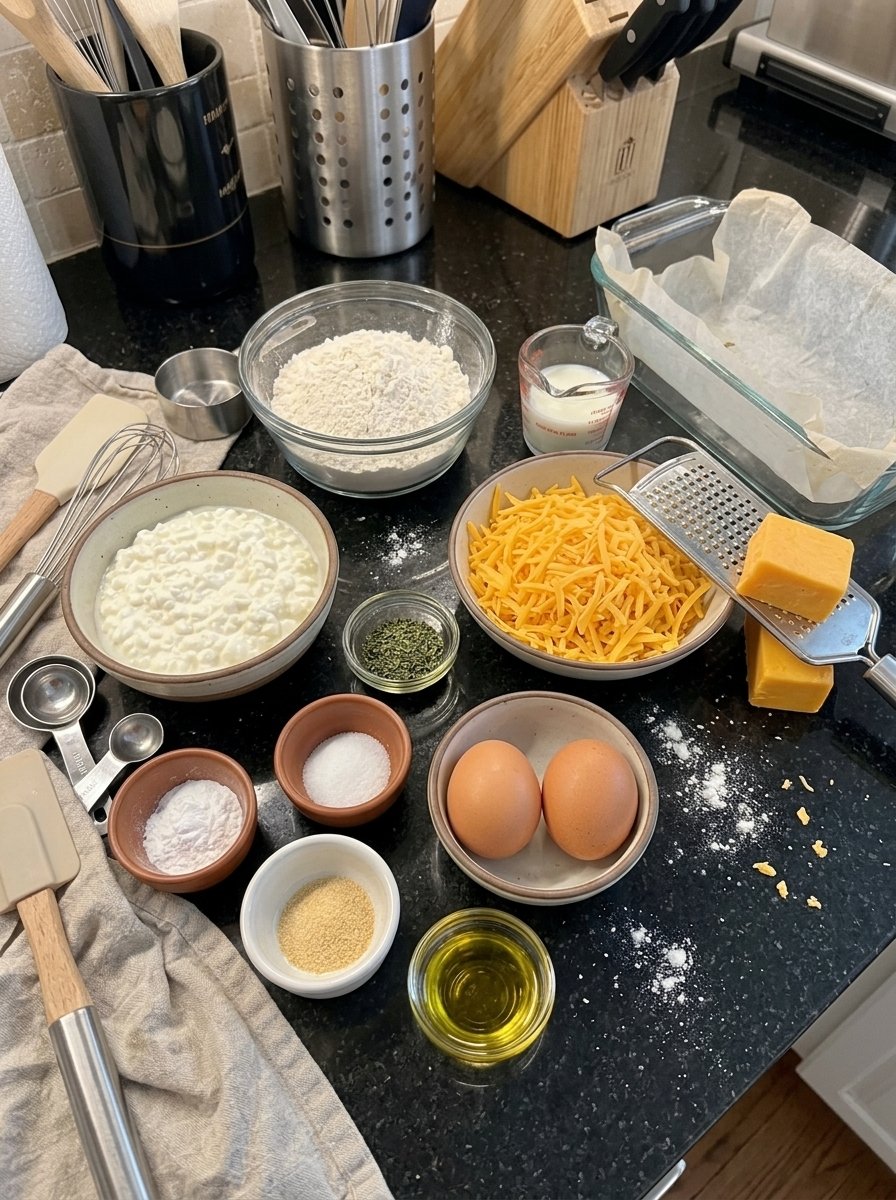
Here is everything you need to make one small loaf, which yields approximately 8 to 10 slices.
- 1 cup (225–250 g) cottage cheese
- 2 large eggs
- 1½ cups (190 g) all-purpose flour
- 1 cup (100–115 g) freshly shredded sharp cheddar cheese
- 2 teaspoons baking powder
- ½ teaspoon salt
- ½ teaspoon garlic powder (optional)
- ½ teaspoon dried parsley or Italian seasoning (optional)
- 1 tablespoon olive oil or melted butter
- 2 tablespoons milk, if needed to adjust the batter
- 2 tablespoons extra shredded cheddar cheese, for topping (optional)
Cottage cheese
This is the base of the loaf. Choose a cottage cheese you enjoy eating on its own, because the flavor carries through. If yours looks watery, drain off the excess liquid so the batter does not turn out too wet. Small-curd and large-curd both work; the difference is mainly in how visible the curds are if you do not blend them.
Eggs
The eggs bind the batter, add richness, and contribute to structure as the loaf bakes. Because the recipe has no yeast and very little gluten development, the eggs do a lot of the work of holding the loaf together.
All-purpose flour
Flour provides the structure. Measure carefully, because too much flour makes a dry, dense loaf. The best method is to spoon flour into your measuring cup and level it off rather than scooping directly from the bag, which packs it down. If you own a kitchen scale, 190 g is the most accurate way to measure.
Sharp cheddar cheese
Sharp cheddar gives the most pronounced cheese flavor. Shred it yourself from a block if you can. Freshly shredded cheddar usually melts more smoothly than pre-shredded cheese, which is often coated to keep the shreds from sticking.
Baking powder
Baking powder is the leavening agent that makes the loaf rise in the oven. Make sure yours is fresh. Old baking powder loses its strength and can leave you with a flat, heavy loaf.
Salt
Salt sharpens every other flavor in the bread. Cheese and cottage cheese both contain salt already, so measure rather than guess.
Garlic powder and herbs (optional)
Garlic powder and dried parsley or Italian seasoning add a savory, bakery-style flavor. They are optional, but they make the loaf taste a little more special, especially if you plan to serve it with dinner.
Olive oil or melted butter
A tablespoon of fat adds richness and helps keep the crumb tender. Olive oil gives a slightly fruity, savory note, while butter gives a rounder, creamier flavor. Either works well.
Milk (if needed)
Cottage cheese varies a lot from brand to brand, so the batter can sometimes come out thicker than expected. Milk is there as a small adjustment, and you should add it only if the batter seems unusually stiff or dry.
Substitutions and Swaps
This recipe is forgiving, but it helps to know what works and what to approach with caution.
Cheese swaps. Other good melting cheeses can stand in for some or all of the cheddar. Monterey Jack, Colby, pepper jack, Gruyère, or a blend all work. Keep the total quantity the same so the batter stays balanced.
Cottage cheese swaps. Low-fat and full-fat cottage cheese both work. Full-fat tends to give a richer, more tender result. Whichever you use, check the moisture level and drain if needed.
Flour swaps. All-purpose flour is the tested option. If you want to experiment with part whole wheat flour, start by replacing a small portion rather than all of it, since whole wheat absorbs more liquid and can make the loaf denser. Gluten-free flour blends may behave differently, so expect some trial and error.
Fat swaps. Olive oil and melted butter are interchangeable. Avocado oil or another mild oil should also work.
Seasoning swaps. If you do not have Italian seasoning, use dried parsley, dried oregano, or dried chives. Onion powder is another good addition.
Milk swaps. Any milk you have on hand works for adjusting the batter, since you are only using a couple of tablespoons.
How to Make Cottage Cheese Cheddar Bread, Step by Step
Step 1: Prepare the oven and loaf pan
Preheat your oven to 350°F (175°C). Lightly grease an 8 × 4-inch or 9 × 5-inch loaf pan with olive oil or butter. For easier removal, line the pan with parchment paper and leave a little overhang on the sides so you can lift the loaf out later.
An 8 × 4-inch pan gives you a taller loaf, while a 9 × 5-inch pan gives you a slightly flatter, wider loaf that may bake a bit faster.
Step 2: Prepare the cottage cheese
Add the cottage cheese to a large mixing bowl. If you want a smoother bread texture, blend the cottage cheese until creamy before transferring it to the bowl. If you prefer a more rustic loaf with little pockets of cottage cheese, simply stir it with a fork.
This is the moment to drain any excess liquid if your cottage cheese looks watery.
Step 3: Mix the wet ingredients
Add the eggs and the olive oil or melted butter to the cottage cheese. Whisk until the mixture is well combined and creamy. Taking a minute here makes sure the eggs are evenly distributed, which helps the loaf bake uniformly.
Step 4: Combine the dry ingredients
In a separate bowl, mix the flour, baking powder, salt, and the optional garlic powder and dried herbs. Stir well so the baking powder and seasonings are evenly distributed throughout the flour. Uneven baking powder can cause tunnels or uneven rise, so do not skip this step.
Step 5: Make the batter
Add the dry ingredients to the cottage cheese mixture. Stir gently with a spatula until just combined. Fold in the shredded cheddar cheese, reserving a little for the top if you like.
The mixture should be thick and scoopable, not dry like kneaded dough. If it seems unusually stiff or dry, add milk one tablespoon at a time. Avoid adding too much liquid, because the cottage cheese already provides plenty of moisture.
Step 6: Transfer to the loaf pan
Spoon the batter into the prepared loaf pan and spread it evenly into the corners. Smooth the top with a spatula, then sprinkle the reserved cheddar over the surface for an extra-cheesy finish.
Step 7: Bake until golden
Place the pan in the preheated oven and bake for approximately 40 to 50 minutes, depending on your pan size and oven. The top should be golden, and a toothpick inserted into the center should come out without wet batter. A few moist crumbs are fine.
If the cheese on top browns too quickly, loosely cover the loaf with aluminum foil during the final part of baking.
Step 8: Check that the center is cooked
If the loaf looks golden but still seems wet in the middle, continue baking for another 5 to 10 minutes and check again. The center should be set rather than gummy. Let the loaf finish baking fully before removing it from the oven.
Step 9: Cool the bread
Remove the pan from the oven and let the bread rest for about 10 to 15 minutes. Carefully lift it out and place it on a wire rack. Allow it to cool for at least 20 to 30 minutes before slicing so the crumb can firm up. Slicing too early can make the center seem gummy even when the loaf is fully baked.
Step 10: Slice and enjoy
Cut the loaf into slices with a serrated knife. Enjoy it slightly warm, when the cheddar is savory and fragrant, or toast a slice with a little butter for an easy, comforting snack.
Tips for the Best Cottage Cheese Cheddar Bread
A few small habits make a noticeable difference in the finished loaf.
Drain watery cottage cheese. If your cottage cheese contains a lot of liquid, drain off the excess so the bread does not become too wet.
Blend for a smoother texture. Blend the cottage cheese briefly if you prefer a more uniform crumb. Leaving it unblended gives the loaf a slightly more rustic texture with small pockets of cheese.
Shred your own cheddar. Freshly shredded cheddar usually melts more smoothly than pre-shredded cheese, and the flavor tends to be fresher.
Do not overmix. Stir just until the ingredients are combined. Overmixing can make the bread dense, because it develops the flour’s gluten more than a quick bread needs.
Check the batter consistency. It should be thick and scoopable. Cottage cheese moisture varies, so add the optional milk only if needed.
Let it cool before slicing. The loaf needs time to set after baking. Patience gives you cleaner slices that hold together.
Use a serrated knife. A bread knife saws through the crust and tender crumb without squashing the loaf.
Know your oven. Ovens vary, which is why the bake time is a range. Start checking around the 40-minute mark and rely on the toothpick test and the golden top rather than the clock alone.
Troubleshooting Common Problems
My bread is gummy in the middle
This usually means the loaf needs more time, or it was sliced too soon. Bake for another 5 to 10 minutes and test again, and always let the loaf cool for at least 20 to 30 minutes before cutting. Also check whether your cottage cheese was especially watery. Draining it next time can help.
My bread is dense
Density most often comes from overmixing or from measuring too much flour. Stir only until combined, and spoon and level your flour or weigh it. Old baking powder can also leave a loaf heavy, so replace it if it has been open for a long time.
The top is browning too fast
Loosely cover the loaf with foil during the final part of baking. The cheese on top is the first thing to darken, and foil protects it while the center finishes cooking.
The batter is too dry or stiff
Add milk one tablespoon at a time until the batter is thick and scoopable. Do not add too much, because cottage cheese already contributes moisture.
The batter is too wet
This typically happens when the cottage cheese has a lot of liquid. Drain it next time. For the batter you already have, a spoonful of additional flour can help, but add it sparingly.
The bread sticks to the pan
Grease the pan well and line it with parchment paper with an overhang. Cheese can stick when it melts against bare metal.
The loaf crumbles when I slice it
Allow it to cool longer and use a serrated knife. Cutting while it is still very hot is the most common cause.
Flavor Variations
Once you have made the base recipe, it is easy to customize. Keep the total amount of added mix-ins modest so the batter does not become too heavy.
- Jalapeño cheddar bread. Fold in finely diced fresh or pickled jalapeños (patted dry) for a spicy kick.
- Garlic herb cheddar bread. Increase the garlic powder slightly and use a generous amount of parsley or Italian seasoning.
- Bacon cheddar bread. Stir in crumbled, cooked bacon for a smoky, savory loaf.
- Green onion and chive bread. Add thinly sliced green onions or chives for a fresh, oniony flavor.
- Sun-dried tomato and basil bread. Chopped sun-dried tomatoes and dried basil give the loaf a Mediterranean feel.
- Everything-seasoning topping. Sprinkle everything bagel seasoning over the top along with the extra cheddar.
- Extra sharp or smoked cheddar. Swap in a more intense cheese for a bolder flavor.
What to Serve With Cottage Cheese Cheddar Bread
This loaf pairs with almost any meal. Here are some of the best ways to enjoy it.
Breakfast slices. Serve with scrambled eggs, avocado, or fresh tomatoes for a filling start to the day.
With soup. Pair it with tomato soup, broccoli cheddar soup, or a hearty vegetable soup. Dunking is highly encouraged.
Cheesy toast. Toast a slice and spread it with butter while it is still warm.
Savory sandwiches. Use thicker slices with turkey, chicken, lettuce, or roasted vegetables.
Herb and cheese snack. Serve with cream cheese, fresh parsley, or a little extra grated cheddar.
Alongside a salad. Pair it with a fresh green salad for a simple, satisfying lunch.
How to Store, Freeze, and Reheat
Because this loaf contains cottage cheese and eggs, it is best treated as a refrigerated bread.
Refrigerator. Let the bread cool completely, then store it in an airtight container in the refrigerator for up to 3 to 4 days.
Freezer. Slice the completely cooled loaf and freeze the slices in a freezer-safe bag for up to 2 months. Place parchment paper between the slices so they are easy to separate. This is perfect for grabbing a single slice whenever you want one.
Reheating. Warm slices in a toaster oven or in a skillet over low heat until heated through. If you use the microwave, heat in short intervals to avoid making the bread rubbery.
For the best texture. Toast refrigerated slices lightly to refresh the edges and bring out the cheddar flavor.
Frequently Asked Questions
Can I make cottage cheese cheddar bread without yeast?
Yes. This recipe is a yeast-free quick bread. Baking powder makes it rise in the oven, so there is no kneading, proofing, or waiting for dough to double.
Does it taste like cottage cheese?
Not really. The cottage cheese adds moisture, tenderness, and a mild tang that blends into the sharp cheddar flavor. Most people simply taste a soft, cheesy, savory loaf.
Should I blend the cottage cheese?
It depends on the texture you like. Blending gives a smoother, more uniform crumb. Stirring with a fork gives a more rustic loaf with small pockets of cheese.
What size loaf pan should I use?
Either an 8 × 4-inch or a 9 × 5-inch pan works. The smaller pan produces a taller loaf, and the larger pan produces a slightly flatter one that may bake a little faster, so start checking early.
How do I know when the bread is done?
The top should be golden, and a toothpick inserted into the center should come out without wet batter. A few moist crumbs are fine. If the center still seems wet, bake another 5 to 10 minutes and check again.
Why should I shred my own cheese?
Freshly shredded cheddar usually melts more smoothly than pre-shredded cheese, which tends to be coated to prevent clumping.
How long does it keep?
Store it in an airtight container in the refrigerator for up to 3 to 4 days, or freeze slices for up to 2 months.
Can I freeze the whole loaf?
Slicing before freezing is more convenient, since you can remove only what you need. Make sure the loaf is completely cool, wrap it well or use a freezer-safe bag, and use parchment between slices.
Can I make it ahead of time?
Yes. It keeps well in the refrigerator for a few days and reheats nicely in a toaster or skillet, so you can bake it ahead and enjoy slices as needed.
What can I serve it with?
Soup, eggs, salads, and sandwiches are all great options. It also makes excellent cheesy toast.
Recipe Card: Easy Cottage Cheese Cheddar Bread
Prep time: 15 minutes Bake time: 40–50 minutes Cooling time: 30–45 minutes Total time: Approximately 1 hour 25 minutes to 1 hour 50 minutes Yield: 1 small loaf, approximately 8–10 slices Difficulty: Easy
Ingredients
- 1 cup (225–250 g) cottage cheese
- 2 large eggs
- 1½ cups (190 g) all-purpose flour
- 1 cup (100–115 g) freshly shredded sharp cheddar cheese
- 2 teaspoons baking powder
- ½ teaspoon salt
- ½ teaspoon garlic powder (optional)
- ½ teaspoon dried parsley or Italian seasoning (optional)
- 1 tablespoon olive oil or melted butter
- 2 tablespoons milk, if needed to adjust the batter
- 2 tablespoons extra shredded cheddar cheese, for topping (optional)
Instructions
- Preheat the oven to 350°F (175°C). Grease an 8 × 4-inch or 9 × 5-inch loaf pan and, if desired, line it with parchment paper.
- Add the cottage cheese to a large bowl. Blend it first for a smooth texture, or stir with a fork for a rustic loaf.
- Whisk in the eggs and olive oil or melted butter until creamy.
- In a separate bowl, mix the flour, baking powder, salt, and optional garlic powder and herbs.
- Add the dry ingredients to the wet mixture and stir gently until just combined. Fold in the cheddar, reserving a little for the top. Add milk one tablespoon at a time only if the batter is unusually stiff.
- Spoon the batter into the pan, smooth the top, and sprinkle with the reserved cheddar.
- Bake for 40 to 50 minutes, until golden and a toothpick comes out without wet batter. Cover loosely with foil if the top browns too quickly.
- Cool in the pan for 10 to 15 minutes, then transfer to a wire rack and cool for at least 20 to 30 minutes before slicing with a serrated knife.
Final Thoughts
Easy cottage cheese cheddar bread proves that homemade bread does not have to be complicated. With a handful of ingredients, one bowl for the wet mix and one for the dry, and no yeast or rising time, you can pull a soft, tender, deeply cheesy loaf out of your oven in about an hour and a half. The cottage cheese keeps the crumb moist and adds a protein boost, the sharp cheddar delivers big savory flavor, and a few simple tips, like draining watery cottage cheese, not overmixing, and letting the loaf cool before slicing, make it reliable every time.
Bake a loaf this week, serve it warm alongside your favorite soup or toast a slice with butter for breakfast, and keep a few slices in the freezer for busy days. Once you try it, this cottage cheese cheddar bread is likely to become a go-to recipe in your kitchen.
Print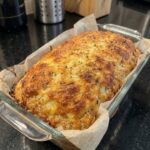
Easy Cottage Cheese Cheddar Bread
Ingredients
Here is everything you need to make one small loaf, which yields approximately 8 to 10 slices.
- 1 cup (225–250 g) cottage cheese
- 2 large eggs
- 1½ cups (190 g) all-purpose flour
- 1 cup (100–115 g) freshly shredded sharp cheddar cheese
- 2 teaspoons baking powder
- ½ teaspoon salt
- ½ teaspoon garlic powder (optional)
- ½ teaspoon dried parsley or Italian seasoning (optional)
- 1 tablespoon olive oil or melted butter
- 2 tablespoons milk, if needed to adjust the batter
- 2 tablespoons extra shredded cheddar cheese, for topping (optional)
Cottage cheese
This is the base of the loaf. Choose a cottage cheese you enjoy eating on its own, because the flavor carries through. If yours looks watery, drain off the excess liquid so the batter does not turn out too wet. Small-curd and large-curd both work; the difference is mainly in how visible the curds are if you do not blend them.
Eggs
The eggs bind the batter, add richness, and contribute to structure as the loaf bakes. Because the recipe has no yeast and very little gluten development, the eggs do a lot of the work of holding the loaf together.
All-purpose flour
Flour provides the structure. Measure carefully, because too much flour makes a dry, dense loaf. The best method is to spoon flour into your measuring cup and level it off rather than scooping directly from the bag, which packs it down. If you own a kitchen scale, 190 g is the most accurate way to measure.
Instructions
Preheat your oven to 350°F (175°C). Lightly grease an 8 × 4-inch or 9 × 5-inch loaf pan with olive oil or butter. For easier removal, line the pan with parchment paper and leave a little overhang on the sides so you can lift the loaf out later.
An 8 × 4-inch pan gives you a taller loaf, while a 9 × 5-inch pan gives you a slightly flatter, wider loaf that may bake a bit faster.
Add the cottage cheese to a large mixing bowl. If you want a smoother bread texture, blend the cottage cheese until creamy before transferring it to the bowl. If you prefer a more rustic loaf with little pockets of cottage cheese, simply stir it with a fork.
This is the moment to drain any excess liquid if your cottage cheese looks watery.
Add the eggs and the olive oil or melted butter to the cottage cheese. Whisk until the mixture is well combined and creamy. Taking a minute here makes sure the eggs are evenly distributed, which helps the loaf bake uniformly.
In a separate bowl, mix the flour, baking powder, salt, and the optional garlic powder and dried herbs. Stir well so the baking powder and seasonings are evenly distributed throughout the flour. Uneven baking powder can cause tunnels or uneven rise, so do not skip this step.
Add the dry ingredients to the cottage cheese mixture. Stir gently with a spatula until just combined. Fold in the shredded cheddar cheese, reserving a little for the top if you like.
The mixture should be thick and scoopable, not dry like kneaded dough. If it seems unusually stiff or dry, add milk one tablespoon at a time. Avoid adding too much liquid, because the cottage cheese already provides plenty of moisture.
Spoon the batter into the prepared loaf pan and spread it evenly into the corners. Smooth the top with a spatula, then sprinkle the reserved cheddar over the surface for an extra-cheesy finish.
Place the pan in the preheated oven and bake for approximately 40 to 50 minutes, depending on your pan size and oven. The top should be golden, and a toothpick inserted into the center should come out without wet batter. A few moist crumbs are fine.
If the cheese on top browns too quickly, loosely cover the loaf with aluminum foil during the final part of baking.
If the loaf looks golden but still seems wet in the middle, continue baking for another 5 to 10 minutes and check again. The center should be set rather than gummy. Let the loaf finish baking fully before removing it from the oven.
Remove the pan from the oven and let the bread rest for about 10 to 15 minutes. Carefully lift it out and place it on a wire rack. Allow it to cool for at least 20 to 30 minutes before slicing so the crumb can firm up. Slicing too early can make the center seem gummy even when the loaf is fully baked.
Cut the loaf into slices with a serrated knife. Enjoy it slightly warm, when the cheddar is savory and fragrant, or toast a slice with a little butter for an easy, comforting snack.