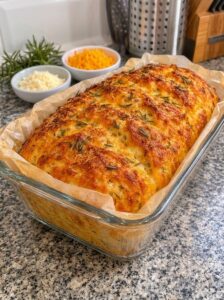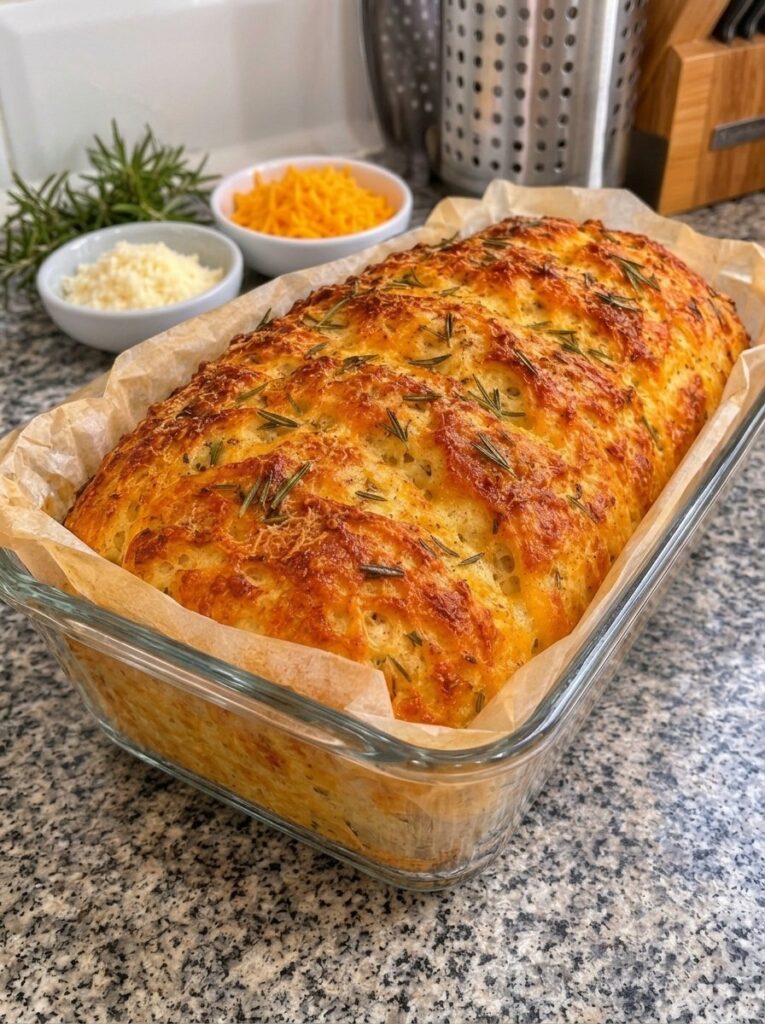
If you love the savory, cheesy flavor of a cheddar rosemary bagel but don’t want to spend hours proofing dough, boiling, and shaping, this high-protein cottage cheese cheddar rosemary bagel bread is the loaf you’ve been looking for. It bakes up with a deeply golden, crackly cheddar crust, a tender and pleasantly chewy interior, and plenty of fragrant rosemary in every slice. Best of all, it needs no yeast, no kneading, and no rising time.
This cottage cheese bread comes together in one blender and one mixing bowl. Cottage cheese and eggs are blended into a smooth, creamy base, then folded into a simple mix of flour, baking powder, baking soda, garlic powder, black pepper, rosemary, and sharp cheddar. A topping of extra cheddar, Parmesan, and fresh rosemary bakes into a golden, bubbly crust that looks like it came from a bakery.
In this guide you’ll find the complete recipe, step-by-step instructions, expert tips, easy variations, serving ideas, storage and freezing advice, troubleshooting help, and answers to the most common questions about cottage cheese bread.
Why You’ll Love This Cottage Cheese Cheddar Rosemary Bread
There are plenty of savory quick breads out there, but this one earns a permanent spot in the rotation for several reasons:
- No yeast and no waiting. There is no proofing, no kneading, and no rising time. You go from mixing bowl to oven in about 15 minutes.
- Protein-rich. Cottage cheese and eggs form the base of the loaf, giving it a protein boost compared with many traditional quick breads.
- Bagel-shop flavor. Sharp cheddar, garlic, black pepper, Parmesan, and rosemary capture the flavors of a cheesy herb bagel in an easy, sliceable loaf.
- Incredibly moist. Blended cottage cheese keeps the crumb tender and moist without making it heavy.
- Simple ingredients. Everything in this recipe is easy to find at a regular grocery store, and you likely have most of it already.
- Versatile. Toast it for breakfast, build sandwiches, dunk it in soup, or snack on a slice with butter.
- Great for meal prep. The loaf slices cleanly, refrigerates well, and freezes beautifully for quick breakfasts all week.
Why Cottage Cheese Works So Well in Bread
Cottage cheese might seem like an unexpected bread ingredient, but it does a lot of useful work in a loaf like this one.
Moisture. Cottage cheese is made up of soft curds in a creamy liquid. When blended, it becomes a smooth, thick base that distributes moisture evenly through the batter. That is why the finished loaf stays tender instead of drying out.
Structure and richness. Together, the proteins in the cottage cheese and the eggs help set the loaf as it bakes, giving the bread a soft but sturdy crumb that holds together for sandwiches. The dairy fat adds richness that makes the bread taste indulgent.
Mild tang. Cottage cheese has a subtle, creamy tang that pairs perfectly with sharp cheddar, garlic, and herbs. You won’t taste it as “cottage cheese” in the finished loaf. Instead, it simply adds depth and savory character.
Easy to blend. If you or your family are not fans of the texture of cottage cheese curds, blending them smooth with the eggs makes them virtually undetectable in the final bread.
Ingredients for Cottage Cheese Cheddar Rosemary Bagel Bread
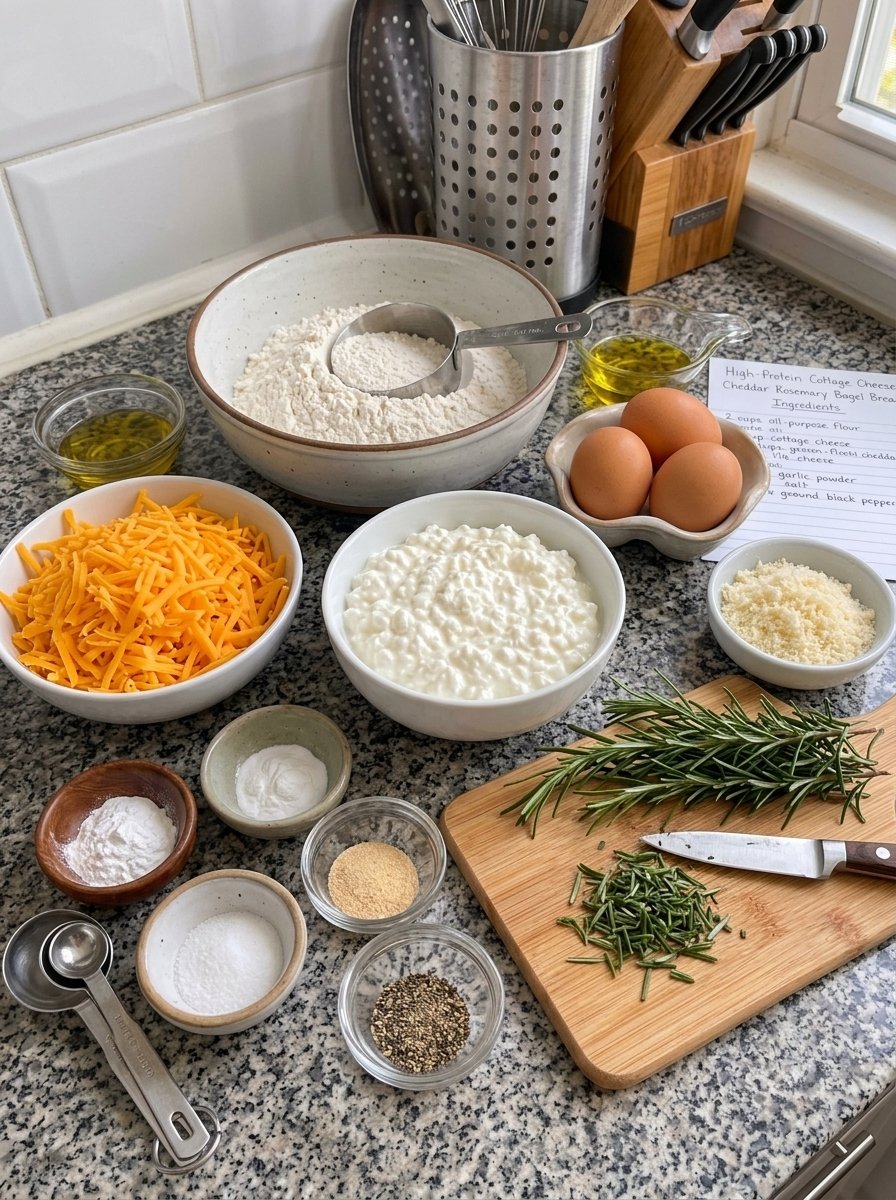
For the bread
- 1½ cups (340 g) cottage cheese, preferably 2% or full-fat
- 3 large eggs, at room temperature
- 2 cups (250 g) all-purpose flour
- 2 teaspoons baking powder
- ½ teaspoon baking soda
- ½ teaspoon salt
- ½ teaspoon garlic powder
- ¼ teaspoon freshly ground black pepper
- 1 cup (100 g) shredded sharp cheddar cheese
- 1 tablespoon fresh rosemary, finely chopped
- 2 tablespoons (10 g) grated Parmesan cheese
For the topping
- ¼ cup (25 g) shredded cheddar cheese
- 1 tablespoon (5 g) grated Parmesan cheese
- 1 teaspoon fresh rosemary, chopped
- 1 teaspoon olive oil or melted butter (optional)
Ingredient notes
Cottage cheese. Choose 2% or full-fat for the best flavor and texture. Fat-free versions can work, but the loaf may be slightly less rich. If your cottage cheese looks very watery, drain it briefly before measuring so the dough doesn’t turn out too wet.
Eggs. Room-temperature eggs blend more smoothly with the cottage cheese and help the batter mix evenly. If you forgot to take them out ahead of time, place them in a bowl of warm water for five minutes.
Flour. Standard all-purpose flour is what this recipe was developed with. Measure it carefully by spooning it into your measuring cup and leveling it off, or use a kitchen scale for the most accurate result.
Cheddar. Sharp cheddar gives the strongest bagel-like flavor. Shred it yourself from a block if you can, since freshly shredded cheese melts more smoothly and tastes richer than many pre-shredded varieties.
Rosemary. Fresh rosemary gives the best aroma and flavor. Remove the needles from the woody stem and chop them finely so you don’t get any tough pieces in a bite.
Baking powder and baking soda. These two leaveners replace yeast. Check that they are fresh, as old leaveners can lead to a dense loaf.
How to Make Cottage Cheese Cheddar Rosemary Bagel Bread
Step 1: Prepare the oven and loaf pan
Preheat your oven to 350°F (175°C). Line a 9 × 5-inch loaf pan with parchment paper, leaving some overhang on the long sides so you can lift the loaf out easily after baking. Lightly grease the parchment with cooking spray or a little olive oil.
Step 2: Blend the cottage cheese and eggs
Add the cottage cheese and eggs to a blender or food processor. Blend for about 30 to 60 seconds, scraping down the sides if necessary, until the mixture is mostly smooth and creamy. Set it aside.
Step 3: Combine the dry ingredients
In a large mixing bowl, whisk together the all-purpose flour, baking powder, baking soda, salt, garlic powder, and black pepper. Add the finely chopped rosemary and 2 tablespoons of grated Parmesan, then stir to distribute everything evenly.
Step 4: Make the cheesy dough
Pour the blended cottage cheese and egg mixture into the dry ingredients and add the 1 cup of shredded sharp cheddar. Gently fold everything together with a spatula until a thick, sticky dough forms and no dry flour remains. Avoid overmixing, which can make the finished loaf tough.
Step 5: Transfer the dough to the pan
Spoon the dough into the prepared loaf pan. Spread it evenly into the corners and gently smooth the surface with a spatula. The dough will be thick and slightly sticky, so take your time leveling it.
Step 6: Add the cheesy rosemary topping
Sprinkle the remaining ¼ cup shredded cheddar, 1 tablespoon grated Parmesan, and 1 teaspoon chopped fresh rosemary over the surface. Gently press the topping into the dough so it adheres during baking. If you like, lightly brush the exposed topping with olive oil or melted butter for extra color and flavor.
Step 7: Bake until golden
Place the loaf on the center rack and bake for 45 to 55 minutes. The top should be deeply golden, the center should feel set, and a toothpick inserted into the middle should come out without wet batter. For the most reliable check, the center should reach approximately 200–205°F (93–96°C). If the cheese topping browns too quickly, loosely cover the loaf with aluminum foil during the final 10 to 15 minutes.
Step 8: Cool the loaf
Let the bread rest in the pan for 10 to 15 minutes. Then carefully lift it out using the parchment paper and transfer it to a wire rack. Allow it to cool for at least 30 to 45 minutes before slicing so the moist interior has time to set.
Step 9: Slice and serve
Use a sharp serrated knife to cut the cooled loaf into thick slices. Enjoy it plain, lightly toasted, or spread with butter or garlic herb butter.
Expert Tips for the Best Cottage Cheese Bread
A few small details make the difference between a good loaf and a great one.
- Blend the cottage cheese. Blending with the eggs creates a smoother mixture and spreads moisture evenly throughout the loaf. This also helps the texture feel more like a classic bread than a curd-filled quick bread.
- Use thick cottage cheese. Excess liquid can make the dough too wet. If your container has a lot of liquid on top, drain it briefly before measuring.
- Shred your own cheddar. Fresh-shredded sharp cheddar melts beautifully and gives the bread a richer flavor than many pre-shredded varieties.
- Measure the flour carefully. Too much flour makes the loaf dry and dense. Spoon the flour into your measuring cup and level it, or weigh it.
- Choose fresh rosemary. It offers the best aromatic flavor. If you only have dried rosemary, reduce the amount to about 1 teaspoon for the entire loaf.
- Don’t overmix. Fold the wet and dry ingredients together just until no dry flour remains. Overmixing develops too much gluten and can make the bread tough.
- Watch the cheese topping. If the cheddar becomes deeply browned before the loaf is fully baked, loosely cover the pan with foil.
- Allow enough cooling time. Cottage cheese bread is naturally moist, so let it cool before slicing to give the crumb time to firm up.
- Use the thermometer. An instant-read thermometer takes the guesswork out of doneness. Look for an internal temperature of about 200–205°F (93–96°C).
Easy Variations and Substitutions
Once you’ve made the base recipe, it’s easy to customize. Here are a few ideas to try. Keep in mind that changes to ingredients can affect texture and baking time, so treat these as starting points.
- Different herbs. Swap the rosemary for fresh thyme, chives, or a mix of herbs. Dried herbs are more concentrated, so use less.
- Different cheeses. Try Gruyère, Monterey Jack, or a pepper jack cheese for a different flavor profile. Sharp cheddar and Parmesan are the classic pairing for a bagel-style loaf, though.
- Extra garlic flavor. Add a little more garlic powder, or brush the baked loaf with garlic herb butter while it is still warm.
- Everything-bagel style. Sprinkle the top with an everything bagel seasoning blend along with the cheddar for a more bagel-shop look.
- Add-ins. Fold in chopped green onions or jalapeños for extra savory or spicy notes. Pat wet add-ins dry first so they don’t add extra moisture.
- Whole grain. If you want to experiment with part whole wheat flour, start by replacing a small portion of the all-purpose flour, since whole grain flours absorb more liquid.
- Muffin or mini-loaf version. You can portion the dough into a muffin tin or smaller pans. Baking times will be shorter, so start checking early.
What to Serve with Cheddar Rosemary Bagel Bread
This loaf is flexible enough for breakfast, lunch, dinner, or snack time. Here are some of our favorite ways to enjoy it:
- Classic toast. Toast thick slices and spread with salted butter or garlic herb butter.
- Avocado breakfast toast. Top with mashed avocado, freshly cracked black pepper, and a fried egg for a filling breakfast.
- Cheddar rosemary sandwiches. Use the slices for sandwiches filled with turkey, chicken, lettuce, and tomato.
- Soup companion. Serve warm alongside tomato soup, creamy vegetable soup, or homemade chicken soup.
- Cream cheese spread. Add a layer of cream cheese for a simple savory breakfast or snack.
- Breakfast sandwiches. Fill toasted slices with scrambled eggs and extra cheddar for a satisfying morning meal.
- Simple snack. Enjoy a slice with hummus, a spoonful of cottage cheese, or a little olive oil for dipping.
How to Store Cottage Cheese Bread
Because this bread contains cottage cheese and eggs, it should be handled a little differently from a standard dry quick bread.
- Room temperature. Refrigerate the loaf within 2 hours of baking once it has cooled. Avoid leaving it out overnight.
- Refrigerator. Store completely cooled slices in an airtight container for up to 4 to 5 days.
- Freezer. Slice the cooled loaf and place parchment paper between the individual slices. Store them in a freezer-safe bag or airtight container for up to 2 months.
- Thawing. Thaw individual slices in the refrigerator, or reheat them directly from frozen.
- Reheating. Toast slices in a toaster or warm them in a skillet until heated through and lightly crisp. You can also warm several slices in a 325°F (165°C) oven for about 5 to 8 minutes.
Freezing pre-cut slices with parchment between them is the easiest approach for busy mornings. Pull out a slice, pop it in the toaster, and breakfast is ready.
Troubleshooting: Common Problems and Fixes
The loaf is dense or heavy. This usually comes from too much flour, overmixing, or old baking powder or baking soda. Measure flour carefully, fold the dough gently, and check the dates on your leaveners.
The center looks wet or gummy. The loaf may need more time, or the cottage cheese may have been very watery. Bake until a toothpick comes out clean and the center reaches about 200–205°F (93–96°C). Next time, drain excess liquid from the cottage cheese before measuring.
The top browns too fast. Sharp cheddar browns quickly. Loosely tent the loaf with aluminum foil for the final 10 to 15 minutes of baking.
The bread falls apart when slicing. Slicing too early is the most common cause. Let the loaf cool for at least 30 to 45 minutes and use a sharp serrated knife with a gentle sawing motion.
The loaf sticks to the pan. Always line the pan with parchment paper and lightly grease it. The overhang lets you lift the whole loaf out cleanly.
The flavor is too mild. Use sharp cheddar, fresh rosemary, and freshly ground pepper. You can also increase the garlic powder slightly, or finish with garlic herb butter after baking.
Frequently Asked Questions
Can I make this bread without yeast?
Yes. This recipe is completely yeast-free. Baking powder and baking soda give the loaf its lift in the oven, so there is no kneading, proofing, or rising time.
Does this bread taste like cottage cheese?
Not strongly. Once blended with eggs and baked with cheddar, Parmesan, garlic, and rosemary, the cottage cheese mainly contributes moisture, richness, and a subtle savory tang.
Do I have to blend the cottage cheese?
Blending is recommended because it creates a smoother batter and distributes moisture evenly. It also hides the curds if you or your family aren’t fans of their texture.
Can I use low-fat or fat-free cottage cheese?
The recipe is best with 2% or full-fat cottage cheese. Lower-fat versions may produce a slightly less rich loaf, and very wet cottage cheese should be drained briefly before measuring.
Can I use dried rosemary instead of fresh?
Yes. Use about 1 teaspoon of dried rosemary for the entire loaf, since dried herbs are more concentrated than fresh. Fresh rosemary gives the best aroma and flavor, however.
How do I know when the bread is done?
Look for a deeply golden top, a set center, and a toothpick that comes out without wet batter. For the most reliable check, the center should reach about 200–205°F (93–96°C).
Can I freeze cottage cheese cheddar rosemary bread?
Yes. Slice the cooled loaf, place parchment paper between the slices, and freeze in a freezer-safe bag or airtight container for up to 2 months. Reheat slices directly from frozen in a toaster or skillet.
How long does it keep in the refrigerator?
Store completely cooled slices in an airtight container in the refrigerator for up to 4 to 5 days.
Is this bread vegetarian?
Yes, the ingredients are vegetarian. Some Parmesan cheeses are made with animal rennet, so check the label if you follow a strict vegetarian diet.
Is this bread high in protein?
This loaf is protein-rich thanks to the cottage cheese, eggs, and cheese. Exact nutrition values depend on the brands you use, so use a nutrition calculator with your specific ingredients if you need precise numbers.
Can I make it gluten-free?
This recipe was developed with all-purpose flour. If you want to try a gluten-free flour blend, choose one designed for baking and expect differences in texture and baking time.
Why is my bread dense?
Density usually comes from overmixing, too much flour, or expired leavening agents. Fold gently, weigh or carefully level your flour, and use fresh baking powder and baking soda.
Recipe Details
- Prep time: 15 minutes
- Bake time: 45–55 minutes
- Cooling time: 45–60 minutes
- Total time: Approximately 1 hour 45 minutes to 2 hours 10 minutes
- Yield: 1 loaf
- Servings: Approximately 10–12 slices
- Pan size: 9 × 5-inch loaf pan
- Oven temperature: 350°F (175°C)
- Course: Breakfast, snack, or side dish
- Category: Homemade bread
- Cuisine: American-inspired
- Method: Baking, no yeast, no kneading
- Difficulty: Easy
- Dietary notes: Vegetarian, protein-rich, yeast-free
- Texture: Tender, moist, and pleasantly chewy with melted cheddar throughout and a golden cheesy rosemary topping
Final Thoughts
This high-protein cottage cheese cheddar rosemary bagel bread proves that homemade bread doesn’t have to be complicated. With a quick blend, a gentle fold, and less than an hour in the oven, you get a golden, cheesy loaf with all the savory flavor of your favorite bagel shop order. It’s perfect for toast, sandwiches, soup nights, and meal prep, and it freezes beautifully for later.
Print
High-Protein Cottage Cheese Cheddar Rosemary Bagel Bread
- Total Time: 1 hour 45 minutes to 2 hours 10 minutes (including cooling)
Ingredients
For the bread
- 1½ cups (340 g) cottage cheese, preferably 2% or full-fat
- 3 large eggs, at room temperature
- 2 cups (250 g) all-purpose flour
- 2 teaspoons baking powder
- ½ teaspoon baking soda
- ½ teaspoon salt
- ½ teaspoon garlic powder
- ¼ teaspoon freshly ground black pepper
- 1 cup (100 g) shredded sharp cheddar cheese
- 1 tablespoon fresh rosemary, finely chopped
- 2 tablespoons (10 g) grated Parmesan cheese
For the topping
- ¼ cup (25 g) shredded cheddar cheese
- 1 tablespoon (5 g) grated Parmesan cheese
- 1 teaspoon fresh rosemary, chopped
- 1 teaspoon olive oil or melted butter (optional)
Instructions
Preheat your oven to 350°F (175°C). Line a 9 × 5-inch loaf pan with parchment paper, leaving some overhang on the long sides so you can lift the loaf out easily after baking. Lightly grease the parchment with cooking spray or a little olive oil.
Step 2: Blend the cottage cheese and eggs
Add the cottage cheese and eggs to a blender or food processor. Blend for about 30 to 60 seconds, scraping down the sides if necessary, until the mixture is mostly smooth and creamy. Set it aside.
Step 3: Combine the dry ingredients
In a large mixing bowl, whisk together the all-purpose flour, baking powder, baking soda, salt, garlic powder, and black pepper. Add the finely chopped rosemary and 2 tablespoons of grated Parmesan, then stir to distribute everything evenly.
Step 4: Make the cheesy dough
Pour the blended cottage cheese and egg mixture into the dry ingredients and add the 1 cup of shredded sharp cheddar. Gently fold everything together with a spatula until a thick, sticky dough forms and no dry flour remains. Avoid overmixing, which can make the finished loaf tough.
Step 5: Transfer the dough to the pan
Spoon the dough into the prepared loaf pan. Spread it evenly into the corners and gently smooth the surface with a spatula. The dough will be thick and slightly sticky, so take your time leveling it.
Step 6: Add the cheesy rosemary topping
Sprinkle the remaining ¼ cup shredded cheddar, 1 tablespoon grated Parmesan, and 1 teaspoon chopped fresh rosemary over the surface. Gently press the topping into the dough so it adheres during baking. If you like, lightly brush the exposed topping with olive oil or melted butter for extra color and flavor.
Step 7: Bake until golden
Place the loaf on the center rack and bake for 45 to 55 minutes. The top should be deeply golden, the center should feel set, and a toothpick inserted into the middle should come out without wet batter. For the most reliable check, the center should reach approximately 200–205°F (93–96°C). If the cheese topping browns too quickly, loosely cover the loaf with aluminum foil during the final 10 to 15 minutes.
Step 8: Cool the loaf
Let the bread rest in the pan for 10 to 15 minutes. Then carefully lift it out using the parchment paper and transfer it to a wire rack. Allow it to cool for at least 30 to 45 minutes before slicing so the moist interior has time to set.
Step 9: Slice and serve
Use a sharp serrated knife to cut the cooled loaf into thick slices. Enjoy it plain, lightly toasted, or spread with butter or garlic herb butter.
- Prep Time: 15 minutes
- Cook Time: 45–60 minutes