Introduction: Garlic Bread Meets Bagel Chew, With a Protein Boost
If you have ever wished for a bread that tastes like warm garlic bread, has the satisfying chew of a fresh bagel, and sneaks in extra protein, this High-Protein Cottage Cheese Garlic Herb Bagel Bread is the recipe you have been looking for. It bakes up with a soft, tender center, a lovely golden crust, and a buttery garlic-and-herb finish that makes the whole kitchen smell incredible.
Best of all, it is wonderfully simple. There is no yeast to activate, no long rise, and no complicated shaping. The dough comes together with just a handful of ingredients: cottage cheese, plain Greek yogurt, flour, baking powder, and a few seasonings. A quick garlic herb butter brushed on while the bread is warm takes it from “nice homemade loaf” to “I need another slice.”
Whether you are a long-time garlic bread fan or someone who just loves trying new bread recipes, this savory loaf fits into almost any meal. Enjoy a warm slice at breakfast, turn it into a sandwich for lunch, or serve it beside a bowl of soup for a cozy dinner. In this guide you will find the full recipe, ingredient notes, step-by-step instructions, troubleshooting help, variations, storage tips, and answers to the most common questions.
Why You Will Love This Cottage Cheese Bagel Bread
There are plenty of reasons this recipe is worth adding to your regular rotation:
- Higher in protein than many typical breads. Cottage cheese and Greek yogurt are the stars of the dough, which gives the bread its hearty texture and a protein boost compared with a standard flour-and-water loaf.
- No yeast and no waiting. The dough is leavened with baking powder, so you skip proofing and rising entirely. From mixing bowl to oven in about 15 minutes.
- Beginner-friendly. If you can stir, gently knead, and brush on butter, you can make this bread. The recipe is rated easy for a reason.
- Big savory flavor. Garlic powder and Italian herbs flavor the dough itself, while fresh garlic, parsley, oregano, and optional Parmesan flavor the topping.
- Flexible shape. Bake it as a rounded loaf, a sandwich-style loaf in a pan, or a bagel-inspired ring with a hole in the center.
- Great for meal prep. It stores well in the fridge and freezes beautifully, so you can slice it and keep it ready for busy mornings.
- Uses simple, affordable ingredients. Most of what you need is probably already in your fridge and pantry.
What Is Cottage Cheese Bagel Bread?
Cottage cheese bagel bread belongs to the family of quick, high-protein breads that have become popular with home bakers who want something satisfying without a lot of fuss. Instead of relying on yeast and a long fermentation, the dough uses a combination of dairy and baking powder to create structure and lift.
The result sits somewhere between a bagel, a biscuit, and a rustic loaf. The crumb is tender and slightly dense in the best way, and the crust turns golden and lightly crisp in the oven. Because the dough is soft and slightly tacky, you can shape it into a thick round, press it into a loaf pan, or form a ring that resembles a giant bagel.
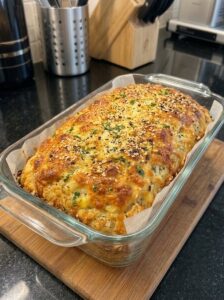
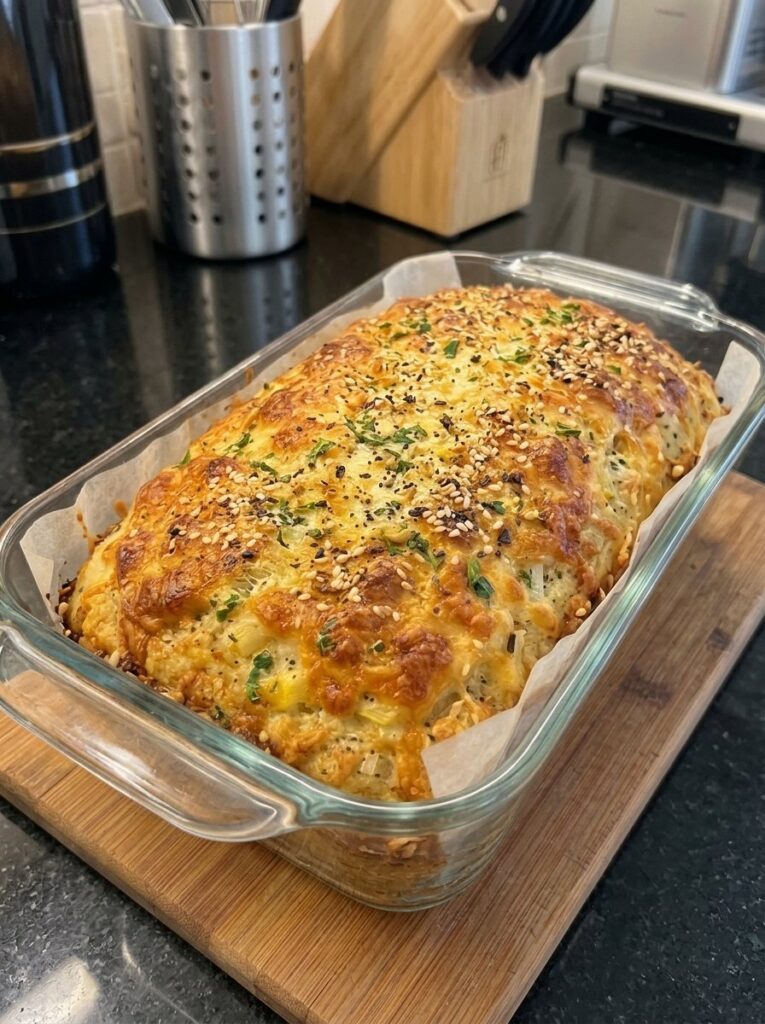
This version adds a garlic-forward flavor profile. Garlic powder, onion powder, and dried Italian herbs go into the dough, then a generous brush of garlic herb butter finishes the bread. If you like, a sprinkle of shredded Parmesan adds an extra layer of savory richness. A scattering of sesame or poppy seeds on top, like the golden, seeded loaf in the photo above, also gives it that classic bagel-shop look.
Ingredients You Will Need
For the Bread
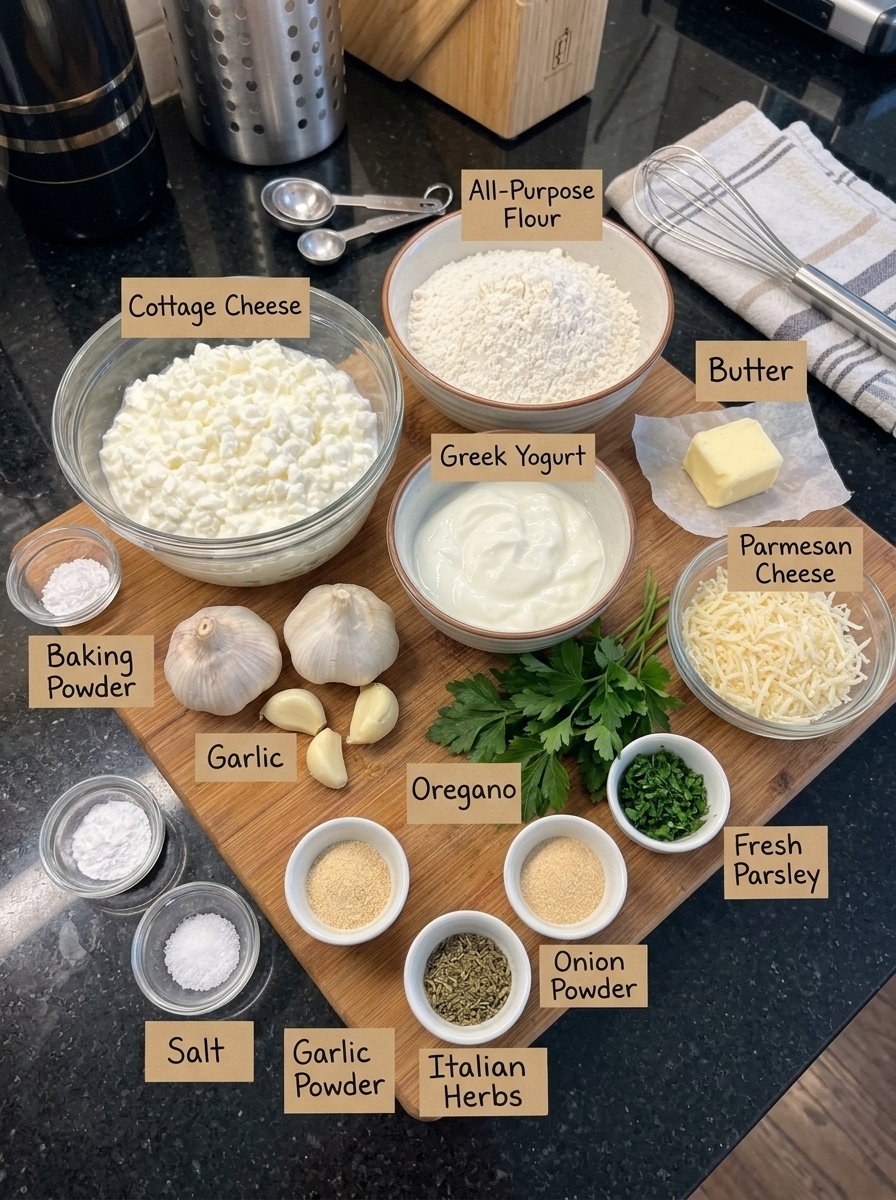
- 1 cup (225 g) low-fat cottage cheese
- 1 cup (125 g) all-purpose flour, plus a little extra for kneading
- ½ cup (120 g) plain Greek yogurt
- 2 teaspoons baking powder
- ½ teaspoon salt
- 1 teaspoon garlic powder
- 1 teaspoon dried Italian herbs
- ½ teaspoon onion powder (optional)
For the Garlic Herb Topping
- 2 tablespoons (28 g) melted butter
- 2 cloves garlic, finely minced
- 1 tablespoon chopped fresh parsley, or 1 teaspoon dried parsley
- ½ teaspoon dried oregano
- 2 tablespoons shredded Parmesan cheese (optional)
Ingredient Notes and Smart Substitutions
Knowing what each ingredient does will help you get consistent results and adapt the recipe to what you have on hand.
Cottage Cheese
Cottage cheese provides moisture, richness, and a good portion of the protein. This recipe uses low-fat cottage cheese, which keeps the loaf lighter while still producing a tender crumb. If your cottage cheese has large curds, blend it briefly until smooth. Smooth cottage cheese blends more evenly with the yogurt and flour, which gives you a more uniform texture and prevents noticeable lumps in the finished slice. If you enjoy a little texture, you can skip blending and leave the curds as they are.
Plain Greek Yogurt
Greek yogurt adds tang, tenderness, and extra protein. Choose plain yogurt rather than a flavored variety so it does not interfere with the savory seasonings. If you only have regular plain yogurt, strain it briefly or reduce the moisture elsewhere, since thinner yogurt can make the dough wetter and stickier.
All-Purpose Flour
All-purpose flour keeps things simple and gives the bread a soft, tender crumb. You will need a little extra for kneading and for adjusting the dough if it feels very wet. Add flour one tablespoon at a time, because too much flour can make the finished bread dry and dense.
Baking Powder
Baking powder is the leavening agent, so no yeast is required. Check that yours is fresh. Old baking powder loses its power, and the bread can bake up flat and heavy.
Garlic Powder, Onion Powder, and Italian Herbs
These dry seasonings flavor the dough from the inside out. Stirring them into the flour first helps distribute them evenly, so every bite tastes seasoned. Onion powder is optional but adds a subtle savory depth that works nicely with garlic.
Butter, Fresh Garlic, and Herbs for the Topping
The topping is where the garlic bread magic happens. Freshly minced garlic gives a stronger, more aromatic flavor than garlic powder alone. Fresh parsley adds brightness, while dried oregano brings a warm, Mediterranean note. If you cannot find fresh parsley, one teaspoon of dried parsley works well.
Parmesan Cheese (Optional)
Shredded Parmesan gives the topping a salty, nutty finish. It is optional, but if you love cheesy garlic bread, it is worth adding.
How to Make Cottage Cheese Garlic Herb Bagel Bread
Step 1: Prepare the Oven and Cottage Cheese
Preheat your oven to 375°F (190°C). Line a baking sheet with parchment paper, or lightly grease a small loaf pan. If you want the sandwich-style loaf shown in the photo, a parchment-lined glass or metal loaf pan works well.
If your cottage cheese has large curds, blend it briefly until smooth. This helps it combine evenly with the Greek yogurt and flour.
Step 2: Mix the Dry Ingredients
In a large mixing bowl, combine the flour, baking powder, salt, garlic powder, dried Italian herbs, and the optional onion powder. Stir until the seasonings are evenly distributed throughout the flour. Taking a moment to do this thoroughly prevents pockets of salt or baking powder in the finished bread.
Step 3: Add the Wet Ingredients
Add the cottage cheese and Greek yogurt to the dry ingredients. Mix with a spoon or spatula until a soft dough begins to form. If the dough seems very wet, add a little flour, one tablespoon at a time, until it becomes easier to handle. Remember that the dough should stay soft and slightly tacky.
Step 4: Gently Knead the Dough
Transfer the dough to a lightly floured surface. Knead gently for about 1 to 2 minutes, just until it comes together into a smooth, workable dough. Avoid excessive kneading, which can make the bread tougher. Unlike yeast dough, this dough does not need to develop gluten extensively.
Step 5: Shape the Bread
Shape the dough into a thick, rounded loaf. For a more bagel-inspired appearance, shape it into a ring with a hole in the center. Place it on the prepared baking sheet, or transfer it to your greased loaf pan if you prefer a sandwich-style loaf.
If you are making a ring, keep the center opening fairly wide, because it may shrink as the bread bakes.
Step 6: Bake Until Golden
Place the shaped dough in the preheated oven and bake for approximately 25 to 35 minutes, depending on its shape and thickness. The outside should become lightly golden, and the center should be cooked through. A thicker loaf will need the longer end of the range, while a thinner ring may be done sooner.
If the bread is browning too quickly, loosely cover it with foil for the remaining baking time. Allow the loaf to rest for a few minutes before applying the topping.
Step 7: Prepare the Garlic Herb Butter
While the bread bakes, combine the melted butter, minced garlic, parsley, and dried oregano in a small bowl. Stir well to release the fragrant garlic and herb flavors. If you like, add the shredded Parmesan for an extra savory finish.
Step 8: Brush With Garlic Herb Butter
Remove the bread from the oven and brush the warm surface generously with the garlic herb butter. Spread the mixture evenly over the crust, allowing the garlic and herbs to settle into the surface.
For a slightly toasted topping, return the bread to the oven for another 2 to 3 minutes, watching carefully so the garlic does not burn.
Step 9: Cool, Slice, and Enjoy
Let the bread cool for about 10 to 15 minutes before slicing. Serve warm while the garlic and herbs are fragrant and the crust is still slightly crisp. Enjoy it on its own, toasted with extra butter, or alongside your favorite meal.
Pro Tips for the Best Results
These small details make a noticeable difference in the final loaf:
- Blend the cottage cheese for a smoother dough. Smoother dough means a more even crumb and an easier mixing process.
- Do not add too much flour. The dough should be soft and slightly tacky. Too much flour is the most common reason quick breads turn out dry and dense.
- Mix gently. Combine the ingredients just until a dough forms. Overworking the dough can make the bread tougher.
- Use fresh garlic in the topping. Freshly minced garlic delivers a stronger, more aromatic flavor than jarred or powdered garlic.
- Brush the butter on while the bread is warm. Warm bread absorbs the garlic herb butter more readily, so the flavor soaks into the crust.
- Watch your baking time. Ovens vary. Check that the center is fully cooked before removing the loaf, and tent with foil if the top darkens too fast.
- Let it rest before slicing. A short cooling period helps the crumb set so slices hold together neatly.
Troubleshooting Common Problems
The dough is too sticky to handle. Cottage cheese varies in moisture from brand to brand. Add flour one tablespoon at a time and use a lightly floured surface. The dough should still feel soft and a little tacky, so stop as soon as it becomes manageable.
The bread is dry or dense. This usually means too much flour was added, the dough was overworked, or the loaf was baked too long. Measure the flour carefully, mix gently, and begin checking for doneness at the 25-minute mark.
The center is gummy. The loaf may need more time, especially if you shaped it thickly or baked it in a loaf pan. Bake a few minutes longer, and cover the top loosely with foil if the crust is already golden.
The bread did not rise much. Check the date on your baking powder, and make sure it was mixed evenly into the flour. Also avoid letting the wet dough sit for a long time before baking, since baking powder starts working once it meets moisture.
The garlic burned during the final toasting. Minced garlic browns quickly. If you return the bread to the oven after brushing, limit it to 2 to 3 minutes and watch closely. You can also skip the extra toasting and simply serve the bread warm.
The ring lost its hole. Bagel-style rings tend to close up a bit as they bake. Start with a wide center opening so a visible hole remains.
Delicious Variations to Try
Once you have mastered the base recipe, there are many easy ways to customize it:
- Everything-bagel style. Sprinkle sesame seeds, poppy seeds, and a little extra minced garlic or onion over the top before baking for a seeded, bakery-style crust.
- Extra-cheesy loaf. Fold a handful of shredded cheese into the dough or sprinkle it over the top during the last few minutes of baking.
- Fresh herb boost. Stir chopped chives, green onions, or additional parsley into the dough for a fresher flavor and visible green flecks.
- Spicy kick. Add a pinch of red pepper flakes to the garlic butter.
- Mini rolls or bagels. Divide the dough into smaller portions and shape each into a little round or ring. Smaller pieces will bake faster, so start checking earlier.
- Whole-grain twist. Replace part of the all-purpose flour with whole wheat flour for a heartier, nuttier flavor. You may need slightly more liquid or a little less flour to keep the dough soft.
What to Serve With Garlic Herb Bagel Bread
This versatile loaf works at every meal of the day:
- Garlic bread slices. Serve warm with an extra sprinkle of parsley and Parmesan alongside pasta or salad.
- Breakfast toast. Top toasted slices with scrambled eggs, avocado, or a little cream cheese.
- Savory sandwiches. Fill slices with grilled chicken, turkey, cheese, lettuce, and tomato for a flavorful lunch.
- Soup companion. Pair with tomato soup, creamy mushroom soup, or vegetable soup for dipping.
- Mediterranean snack plate. Serve with hummus, olives, cucumber, and sliced tomatoes.
- Cheesy toast. Add mozzarella to a slice and warm it until the cheese melts.
How to Store, Freeze, and Reheat
Because this bread contains cottage cheese and Greek yogurt, it needs to be stored properly.
- Refrigerator: Store the bread in an airtight container in the refrigerator for up to 3 to 4 days.
- Freezer: Allow the bread to cool completely, slice it, and freeze the slices in a freezer-safe bag for up to 2 months. Slicing before freezing means you can pull out just what you need.
- Reheating: Warm slices in a toaster oven or regular oven at 325°F (165°C) until heated through.
- Refresh the flavor: Brush lightly with fresh garlic butter after reheating for a fragrant, just-baked taste.
- Food safety: Refrigerate the bread within 2 hours of baking rather than leaving it at room temperature for an extended period.
Recipe at a Glance
- Prep time: 15 minutes
- Bake time: 25 to 35 minutes
- Cooling time: 10 to 15 minutes
- Total time: Approximately 50 to 65 minutes
- Yield: 1 small loaf or bagel-style ring, approximately 6 to 8 servings
- Oven temperature: 375°F (190°C)
- Main ingredients: Cottage cheese, Greek yogurt, and flour
- Flavor: Savory garlic, aromatic herbs, and buttery richness
- Texture: Tender center with a lightly golden crust
- Difficulty: Easy, beginner-friendly
Why Choose a Higher-Protein Bread?
Many people are looking for ways to add more protein to everyday foods, and bread is an easy place to start. Because cottage cheese and Greek yogurt are both naturally protein-rich dairy foods, they let you build a satisfying loaf without specialty ingredients such as protein powders. A slice of this bread can help round out a meal with eggs, lean meats, or soup, and it tends to feel more filling than a plain slice of white bread.
Keep in mind that the exact nutrition will depend on the brands you use, the size of your slices, and any toppings you add. If you track calories or macros, calculate the numbers using the specific products in your kitchen.
Frequently Asked Questions
Can I make this bread without yeast?
Yes. This recipe is completely yeast-free. Baking powder provides the lift, so there is no proofing or rising time.
Do I have to blend the cottage cheese?
No, but it helps. Blending produces a smoother dough and a more even crumb. If you like a slightly more rustic texture, you can leave the curds as they are.
Can I use full-fat cottage cheese or Greek yogurt?
Yes. Full-fat versions will make the bread a bit richer. The recipe is written with low-fat cottage cheese, but the method stays the same. Just watch the dough consistency and adjust the flour in small amounts if needed.
Why is my dough so sticky?
The dough is supposed to be soft and slightly tacky. If it is too wet to handle, add a little flour one tablespoon at a time. Avoid adding too much, which can lead to dry, dense bread.
Can I make it in a loaf pan instead of shaping a ring?
Absolutely. Transfer the dough to a greased or parchment-lined small loaf pan for a sandwich-style loaf. Thicker loaves may need closer to the full 35 minutes, so check that the center is cooked through.
How do I know when the bread is done?
The outside should be lightly golden, and the center should be cooked through. If the top browns too quickly before the middle is ready, cover the loaf loosely with foil for the remaining baking time.
Can I freeze cottage cheese bagel bread?
Yes. Cool the bread completely, slice it, and freeze the slices in a freezer-safe bag for up to 2 months. Reheat in a toaster oven or oven at 325°F (165°C).
How long does it last in the fridge?
Store it in an airtight container for up to 3 to 4 days.
Can I make the garlic herb butter ahead of time?
Yes, you can mix the butter, garlic, and herbs in advance and store it in the refrigerator. Warm it slightly so it is spreadable or brushable before using. For the best flavor, use fresh garlic and apply the topping while the bread is still warm.
Can I skip the Parmesan?
Yes. The Parmesan is optional. The bread is still flavorful with just the garlic, parsley, and oregano butter.
Is this recipe good for beginners?
Yes. There is no yeast, no rising, and minimal kneading, which makes it a great first bread recipe.
Final Thoughts
This High-Protein Cottage Cheese Garlic Herb Bagel Bread proves that homemade bread does not have to be complicated. With cottage cheese, Greek yogurt, flour, and a few pantry seasonings, you can bake a soft, golden, flavorful loaf in about an hour. The garlic herb butter finish gives it the comforting taste of classic garlic bread, while the tender, slightly chewy crumb nods to a fresh bagel.
Print
High-Protein Cottage Cheese Garlic Herb Bagel Bread
Ingredients
For the Bread
- 1 cup (225 g) low-fat cottage cheese
- 1 cup (125 g) all-purpose flour, plus a little extra for kneading
- ½ cup (120 g) plain Greek yogurt
- 2 teaspoons baking powder
- ½ teaspoon salt
- 1 teaspoon garlic powder
- 1 teaspoon dried Italian herbs
- ½ teaspoon onion powder (optional)
For the Garlic Herb Topping
- 2 tablespoons (28 g) melted butter
- 2 cloves garlic, finely minced
- 1 tablespoon chopped fresh parsley, or 1 teaspoon dried parsley
- ½ teaspoon dried oregano
- 2 tablespoons shredded Parmesan cheese (optional)
Instructions
Preheat your oven to 375°F (190°C). Line a baking sheet with parchment paper, or lightly grease a small loaf pan. If you want the sandwich-style loaf shown in the photo, a parchment-lined glass or metal loaf pan works well.
If your cottage cheese has large curds, blend it briefly until smooth. This helps it combine evenly with the Greek yogurt and flour.
In a large mixing bowl, combine the flour, baking powder, salt, garlic powder, dried Italian herbs, and the optional onion powder. Stir until the seasonings are evenly distributed throughout the flour. Taking a moment to do this thoroughly prevents pockets of salt or baking powder in the finished bread.
Add the cottage cheese and Greek yogurt to the dry ingredients. Mix with a spoon or spatula until a soft dough begins to form. If the dough seems very wet, add a little flour, one tablespoon at a time, until it becomes easier to handle. Remember that the dough should stay soft and slightly tacky.
Transfer the dough to a lightly floured surface. Knead gently for about 1 to 2 minutes, just until it comes together into a smooth, workable dough. Avoid excessive kneading, which can make the bread tougher. Unlike yeast dough, this dough does not need to develop gluten extensively.
Shape the dough into a thick, rounded loaf. For a more bagel-inspired appearance, shape it into a ring with a hole in the center. Place it on the prepared baking sheet, or transfer it to your greased loaf pan if you prefer a sandwich-style loaf.
If you are making a ring, keep the center opening fairly wide, because it may shrink as the bread bakes.
Place the shaped dough in the preheated oven and bake for approximately 25 to 35 minutes, depending on its shape and thickness. The outside should become lightly golden, and the center should be cooked through. A thicker loaf will need the longer end of the range, while a thinner ring may be done sooner.
If the bread is browning too quickly, loosely cover it with foil for the remaining baking time. Allow the loaf to rest for a few minutes before applying the topping.
While the bread bakes, combine the melted butter, minced garlic, parsley, and dried oregano in a small bowl. Stir well to release the fragrant garlic and herb flavors. If you like, add the shredded Parmesan for an extra savory finish.
Remove the bread from the oven and brush the warm surface generously with the garlic herb butter. Spread the mixture evenly over the crust, allowing the garlic and herbs to settle into the surface.
For a slightly toasted topping, return the bread to the oven for another 2 to 3 minutes, watching carefully so the garlic does not burn.
Let the bread cool for about 10 to 15 minutes before slicing. Serve warm while the garlic and herbs are fragrant and the crust is still slightly crisp. Enjoy it on its own, toasted with extra butter, or alongside your favorite meal.