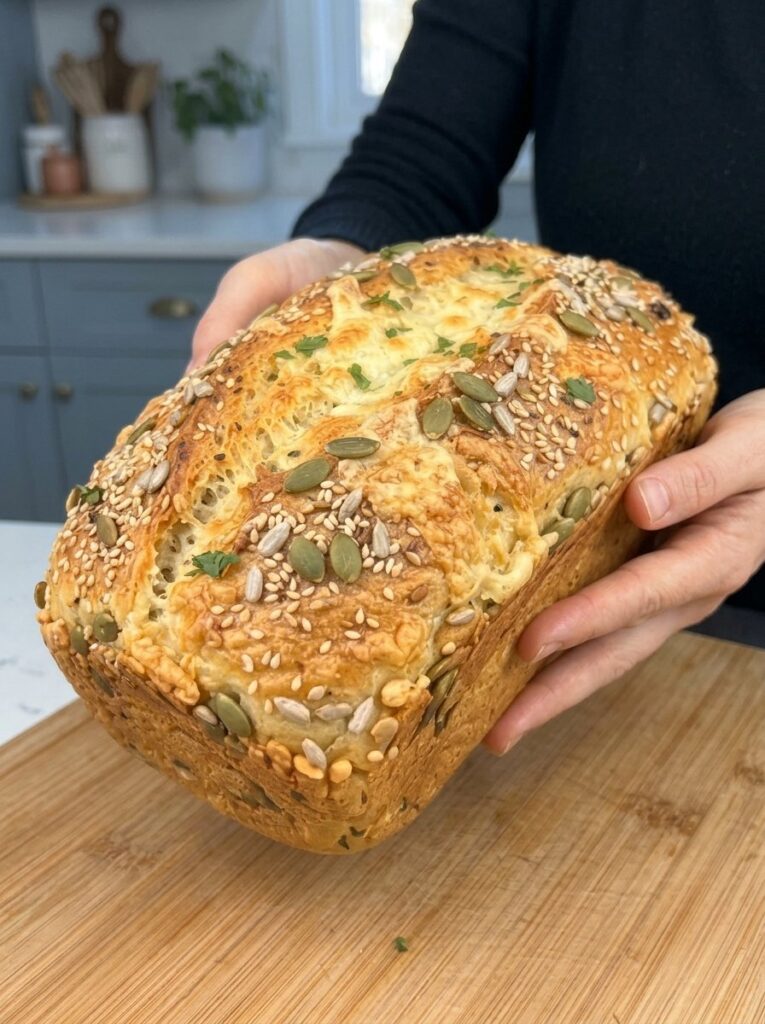
If you have ever wished for a loaf of bread that actually keeps you full, tastes wonderful, and doesn’t require a day of kneading, proofing, and babysitting dough, this High-Protein Seeded Lentil Bread is exactly what you have been looking for. It is moist and tender on the inside, golden and crackly on top, and covered in a generous layer of crunchy pumpkin, sunflower, and sesame seeds. Better still, it is made from just a handful of simple ingredients: red lentils, eggs, creamy Greek yogurt, olive oil, and a little baking powder.
There is no yeast. There is no kneading. There is no rising time. You soak the lentils, blend everything into a smooth batter, pour it into a loaf pan, sprinkle on the seeds, and bake. That is the whole method. The result is a hearty, wholesome loaf that is naturally rich in protein and fiber, and it works beautifully for breakfast, lunch, or a satisfying snack.
In this complete guide, you will find the full recipe, a clear explanation of why it works, practical tips for the best texture, serving ideas, storage and freezing instructions, and answers to the most common questions about lentil bread.
Why You Will Love This Lentil Bread Recipe
There are plenty of “healthy” bread recipes out there, but many of them are dense, dry, or complicated. This one stands out for several reasons.
It is high in protein. Red lentils, eggs, and Greek yogurt are all excellent protein sources, so every slice is far more filling than a typical slice of sandwich bread. If you are looking for a bread that supports a protein-forward way of eating, this is a great option.
It is yeast-free and no-knead. Traditional bread takes planning and technique. This loaf takes neither. The batter comes together in a blender in a couple of minutes, and the baking powder does the lifting, so you can skip proofing entirely.
It has a soft, moist crumb. Blended red lentils create a smooth, substantial texture, while the Greek yogurt and olive oil keep the inside tender rather than dry or crumbly.
It is packed with fiber. Lentils are a classic pantry staple for a reason. They bring plenty of plant-based fiber, which helps make this bread satisfying and wholesome.
It is naturally gluten-free. Because the recipe contains no wheat flour, it can be a gluten-free bread option when you use certified gluten-free ingredients. Always check labels, especially on lentils, seeds, and baking powder, if you are baking for someone with celiac disease or a gluten sensitivity.
It looks beautiful. The golden crust studded with green pumpkin seeds, pale sunflower seeds, and tiny sesame seeds makes this loaf look like it came from an artisan bakery. It is a real showstopper on a cutting board.
It uses simple pantry ingredients. Nothing here is hard to find. If you cook with lentils, eggs, and yogurt regularly, you probably have almost everything on hand already.
What Does Lentil Bread Taste Like?
This is the question most people ask before they try it, and the honest answer is that it tastes like a savory, mildly nutty, slightly tangy loaf. It does not taste like a bowl of lentil soup. Red lentils are among the mildest lentils, and once they are blended with eggs and Greek yogurt, their flavor mellows into a gentle earthiness that works well with both sweet and savory toppings.
The seeds add a pleasant nuttiness and a crisp contrast to the soft interior. The yogurt contributes a subtle tang that keeps the flavor bright. When you toast a slice, the edges turn crisp and the flavor deepens, which is why this loaf is especially good as toast.
In terms of texture, expect something between a soft sandwich loaf and a dense, moist quick bread. It is sturdier than banana bread but softer than a rustic whole-grain loaf. It slices neatly once fully cooled and holds up well to spreads, eggs, and sandwich fillings.
Ingredients for High-Protein Seeded Lentil Bread
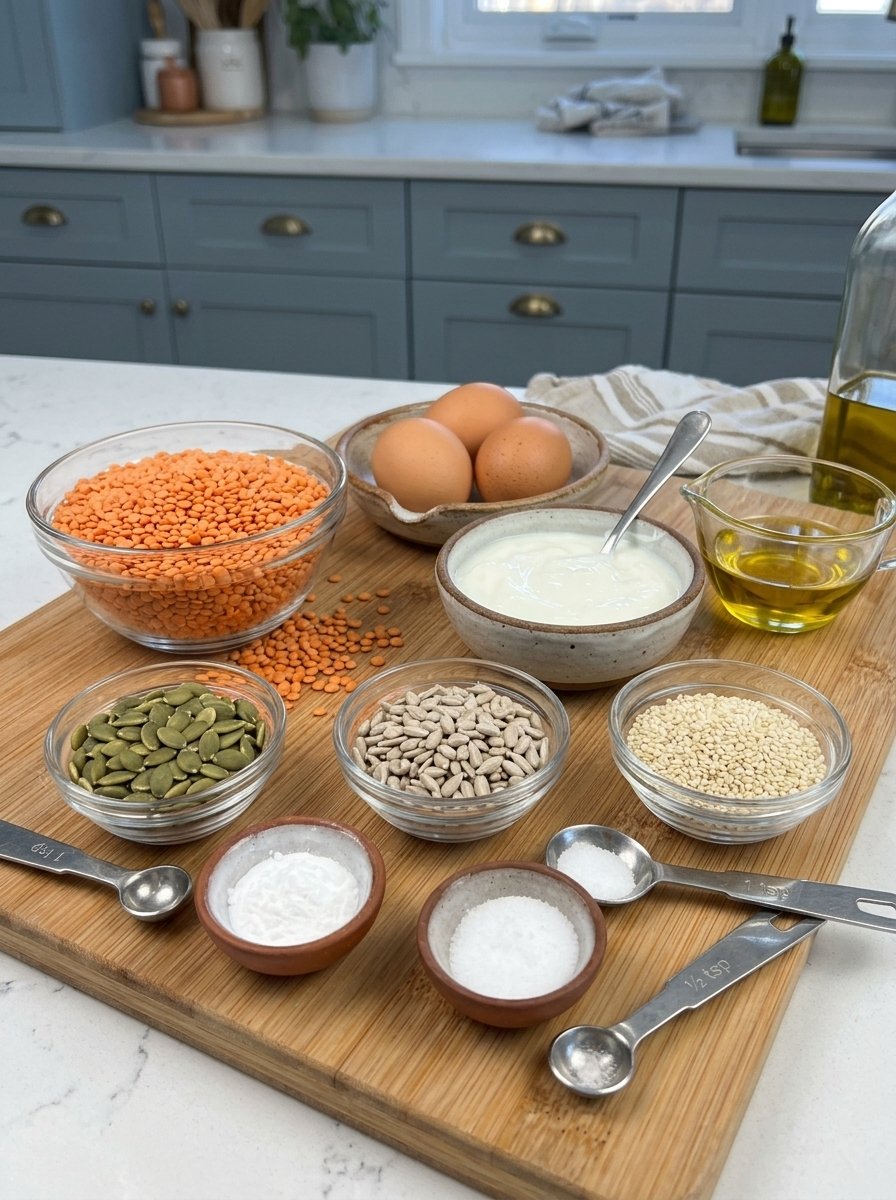
The ingredient list is short, which makes this recipe approachable even if you are new to baking.
- 1 cup (200 g) dry red lentils
- 3 large eggs, at room temperature
- ½ cup (120 g) plain Greek yogurt
- 1 teaspoon baking powder
- ½ teaspoon fine salt
- 1 tablespoon olive oil
- 1 tablespoon pumpkin seeds
- 1 tablespoon sunflower seeds
- 1 tablespoon sesame seeds
Ingredient Notes and Substitutions
Red lentils. Red lentils are the best choice here because they are hulled and split, so they soften quickly and blend into a very smooth batter. Green or brown lentils have tougher skins and may leave a grainier texture, so stick with red whenever possible.
Eggs. The eggs bind the batter and provide structure, which is essential in a bread with no gluten. Room-temperature eggs blend more evenly into the lentils and yogurt.
Greek yogurt. Thick, plain, unsweetened Greek yogurt adds moisture, tang, and extra protein. Avoid flavored or sweetened varieties, which can change both the taste and the consistency of the batter.
Baking powder. This is the only leavening agent, so make sure yours is fresh. If your baking powder is old, the loaf may bake up flatter and denser than expected.
Olive oil. A single tablespoon adds moisture and helps keep the loaf tender. It is also used to grease the pan and parchment.
The seeds. Pumpkin, sunflower, and sesame seeds create the signature crust. You can swap in flax seeds, chia seeds, or hemp seeds if you prefer, though the classic trio gives the best look and crunch.
Equipment You Will Need
- A high-speed blender or food processor
- A fine-mesh strainer
- A 9 × 5-inch loaf pan
- Parchment paper
- A spatula
- A wire cooling rack
- A sharp serrated bread knife
A high-speed blender gives the smoothest batter, but a good food processor will work too. Just be patient and scrape down the sides as you go.
How to Make High-Protein Seeded Lentil Bread
The full process takes about four hours from start to finish, but nearly all of that is hands-off soaking and cooling time. Active work is only about 25 minutes.
Step 1: Rinse and Soak the Lentils
Place the dry red lentils in a fine-mesh strainer and rinse them under cold running water until the water runs mostly clear. Transfer them to a large bowl and cover them with plenty of cool water, leaving at least 2 inches of water above the lentils. Let them soak at room temperature for about 3 hours.
Step 2: Drain the Lentils Thoroughly
Drain the lentils completely in the strainer, then rinse them once more with fresh water. Let them drain for several minutes, shaking the strainer gently to remove excess moisture. This step matters more than it seems. Too much leftover water thins the batter and can produce a dense, gummy loaf.
Step 3: Prepare the Oven and Loaf Pan
Preheat the oven to 350°F (175°C). Line a 9 × 5-inch loaf pan with parchment paper, leaving a little overhang on the sides so you can lift the bread out easily later. Lightly grease the parchment and any exposed areas of the pan with olive oil or cooking spray.
Step 4: Blend the Batter
Add the drained lentils, eggs, Greek yogurt, olive oil, baking powder, and salt to a high-speed blender or food processor. Blend for about 1 to 2 minutes, stopping to scrape down the sides as needed. Keep going until the mixture is completely smooth, creamy, and free of visible lentil pieces.
Step 5: Check the Consistency
Pour the mixture into a bowl and look at its texture. It should resemble a thick, smooth cake batter: pourable, but not watery. If the lentils were drained well, you should not need to add any extra liquid.
Step 6: Fill the Loaf Pan
Pour the batter into the prepared pan. Use a spatula to spread it into the corners and smooth the surface so the loaf bakes evenly.
Step 7: Add the Seed Topping
In a small bowl, combine the pumpkin seeds, sunflower seeds, and sesame seeds. If you like, toast them lightly in a dry skillet over medium-low heat for 2 to 3 minutes, stirring often, then let them cool. Sprinkle the seeds evenly over the batter and gently press them into the surface so they stay in place while baking.
Step 8: Bake Until Firm and Golden
Place the pan on the center rack of the preheated oven and bake for 50 to 60 minutes. The top should be golden, the edges firm, and the center fully set. A toothpick inserted into the middle should come out clean or with a few moist crumbs, not wet batter. If the top darkens too much before the center is cooked, loosely cover the loaf with aluminum foil for the final part of baking.
Step 9: Rest in the Pan
Remove the bread from the oven and set the pan on a heat-safe surface. Let it rest in the pan for 10 to 15 minutes so it can start to firm up.
Step 10: Cool Completely
Lift the loaf out using the parchment and transfer it to a wire rack. Remove the parchment and let the bread cool completely, about 1 to 1½ hours, before slicing. Lentil bread continues to set as it cools, so this step is essential for clean slices and the right texture.
Step 11: Slice and Serve
Once the loaf is fully cooled, use a sharp serrated knife to cut it into even slices. Enjoy as is, or toast the slices until lightly crisp.
Tips for the Best High-Protein Seeded Lentil Bread
Because this recipe is so simple, small details make a big difference. These are the tips that matter most.
Soak the lentils properly. About 3 hours is the sweet spot. It softens the lentils enough to blend into a silky batter without leaving gritty bits.
Drain, drain, drain. Excess water is the most common reason lentil bread turns out gummy. Let the strainer sit for several minutes and give it a shake.
Blend until completely smooth. Any visible lentil pieces will show up in the finished texture. A high-speed blender makes this easy, but a food processor works with a little extra time.
Use plain Greek yogurt. Thick, unsweetened yogurt gives the best moisture and flavor. Avoid flavored or sweetened versions.
Check the batter consistency. Aim for a thick, smooth cake batter. It should pour, but not run like pancake batter.
Toast the seeds for extra flavor. Lightly toasting the pumpkin and sunflower seeds in a dry skillet brings out a deeper, nuttier taste. Let them cool before sprinkling them over the batter.
Avoid overbaking. Bake until the center is set and a toothpick comes out clean or with a few moist crumbs. Too much time in the oven can dry the loaf out.
Cool before slicing. Cutting into the bread while it is warm can make the slices crumble or feel gummy. Patience pays off here.
Toast before serving. A quick turn in the toaster gives each slice a crisp exterior while the center stays tender.
Common Mistakes to Avoid
If your first loaf does not turn out quite right, one of these issues is usually the cause.
A gummy or dense center. This almost always comes from under-drained lentils or slicing the bread too early. Drain thoroughly and give the loaf its full cooling time.
A grainy texture. The batter was not blended long enough. Keep blending, scraping the sides, until it is perfectly smooth.
A flat loaf. Check the date on your baking powder. Old baking powder loses its power, and since this loaf relies on it for lift, freshness matters.
A dry loaf. The bread was probably overbaked. Start checking with a toothpick near the 50-minute mark.
A top that browns too fast. Every oven runs a little differently. Tent the loaf loosely with foil during the last part of baking if the seeds start to darken too much.
Delicious Ways to Serve Lentil Bread
This bread is versatile enough to fit into almost any meal. Here are some of the best ways to enjoy it.
- Avocado toast. Top toasted slices with mashed avocado, chili flakes, and a squeeze of fresh lemon juice.
- Eggs on toast. Serve with scrambled eggs and fresh herbs for a satisfying, protein-packed breakfast.
- Cream cheese and veggies. Spread with cream cheese and add sliced tomatoes or cucumber for a light lunch.
- Simple and warm. Enjoy a warm slice with butter and a pinch of flaky sea salt.
- Hearty sandwiches. Use it for turkey, chicken, or cheese sandwiches.
- Vegetarian sandwiches. Layer on hummus, roasted vegetables, and fresh greens.
- Soup companion. Serve alongside vegetable soup, lentil soup, or a fresh green salad.
For a fun finishing touch, a little chopped fresh parsley or other soft herbs scattered on top before serving adds color and a fresh flavor that pairs well with the nutty seeds.
Is Lentil Bread Healthy?
Lentil bread can be a smart addition to a balanced diet. Lentils are a nutrient-dense legume known for their protein and fiber, and eggs and Greek yogurt add further protein. The seeds contribute healthy fats, texture, and nutty flavor. Because the loaf uses whole food ingredients rather than refined flour, it tends to feel more filling than many store-bought breads.
That said, nutrition depends on your exact ingredients and how thickly you slice the loaf, so check the labels on the products you use if you need precise numbers. If you follow a specific medical or dietary plan, it is always a good idea to check with a qualified professional.
Storage, Freezing, and Reheating
One of the best things about this recipe is how well it keeps, which makes it ideal for meal prep.
Refrigerator. Because this bread contains blended lentils, eggs, and Greek yogurt, let it cool completely and store it in an airtight container in the refrigerator for up to 5 days. Refrigerate it within 2 hours of baking.
Freezer. Slice the completely cooled loaf and arrange the slices in a freezer-safe bag or container. If you like, separate the slices with parchment paper so they do not stick together. Freeze for up to 3 months.
Reheating. Toast refrigerated slices until warmed through and lightly crisp. You can also warm them in a skillet over medium-low heat with a little olive oil or butter.
From frozen. Place frozen slices directly into the toaster without thawing, adjusting the toasting time as needed.
Make ahead. Bake the loaf a day in advance, let it cool completely, and refrigerate it. Slice and toast just before serving for the best texture.
Recipe Variations to Try
Once you have mastered the base recipe, it is easy to make it your own.
- Herbed lentil bread. Blend in a small handful of fresh parsley or chives, or sprinkle chopped herbs over the top.
- Everything-style loaf. Swap the seed topping for an everything-bagel-style mix.
- Extra-seedy. Replace one of the seeds with flax, chia, or hemp seeds for a different texture and flavor.
- Garlic and spice. Add a pinch of garlic powder, smoked paprika, or cumin to the batter for a more savory loaf.
- Sweet-leaning option. Serve slices with nut butter and fruit for a snack that balances savory bread with natural sweetness.
When experimenting, change one thing at a time so you can tell what works, and keep the batter thick but pourable.
Recipe Card: High-Protein Seeded Lentil Bread
- Prep time: 15 minutes
- Soaking time: 3 hours
- Blending and assembly time: 10 minutes
- Bake time: 50 to 60 minutes
- Cooling time: 1 to 1½ hours
- Total time: approximately 4 hours 15 minutes to 4 hours 45 minutes, including cooling
- Yield: 1 loaf
- Servings: approximately 10 to 12 slices
- Pan size: 9 × 5-inch loaf pan
- Oven temperature: 350°F (175°C)
- Difficulty: Easy
- Category: High-protein bread, gluten-free bread (when using certified gluten-free ingredients)
- Cooking method: Blending and baking
- Texture: Moist, tender, hearty, and topped with crunchy seeds
- Flavor: Mildly nutty, savory, and slightly tangy
- Main ingredients: Red lentils, eggs, Greek yogurt, pumpkin seeds, sunflower seeds, and sesame seeds
Frequently Asked Questions
Do I really have to soak the lentils?
Yes. Soaking for about 3 hours softens the lentils so they blend into a completely smooth batter. Skipping this step usually results in a grainy texture.
Can I use green or brown lentils instead of red lentils?
Red lentils are strongly recommended because they are hulled and split, so they soften and blend more easily. Other lentils may produce a coarser, less tender loaf.
Is this bread really gluten-free?
The recipe contains no wheat, barley, or rye, so it can be gluten-free when you use certified gluten-free ingredients. Always read labels carefully if you are baking for someone with celiac disease or a gluten sensitivity.
Why is my lentil bread gummy?
The most common causes are lentils that were not drained well enough, a loaf that was underbaked, or slicing the bread before it had cooled completely. Drain thoroughly, bake until the center is set, and cool for the full time.
Can I make this bread dairy-free?
The recipe is written with plain Greek yogurt, which provides moisture, tang, and protein. If you want to try a dairy-free yogurt, choose a thick, plain, unsweetened one and keep a close eye on the batter consistency, since results may vary.
Why do I need to cool the bread completely?
Lentil bread continues to set as it cools. Slicing too soon can make the slices crumble or feel gummy, while a fully cooled loaf slices cleanly and has the best texture.
How long does lentil bread last?
Stored in an airtight container in the refrigerator, it keeps for up to 5 days. Sliced and frozen, it keeps for up to 3 months.
Can I make this recipe without a blender?
A food processor works well. Without either, it is very difficult to get the smooth batter this bread needs, so a blender or processor is strongly recommended.
Do I have to toast the seeds?
No, but it is worth the extra couple of minutes. Toasting the pumpkin and sunflower seeds in a dry skillet gives them a deeper, nuttier flavor. Just let them cool before sprinkling them on the batter.
What is the best way to eat lentil bread?
Toasting is hard to beat. A quick turn in the toaster crisps the outside while keeping the center soft, and it is the perfect base for avocado, eggs, cream cheese, or butter and flaky salt.
Final Thoughts
This High-Protein Seeded Lentil Bread proves that homemade bread does not have to be complicated. With a handful of simple ingredients, a blender, and a little patience while the lentils soak and the loaf cools, you end up with a golden, seed-crusted loaf that is moist, hearty, and genuinely satisfying. It is yeast-free, no-knead, rich in protein and fiber, and flexible enough to become toast, sandwiches, or a side for your favorite soup.
Bake a loaf this weekend, slice and freeze it, and you will have wholesome, ready-to-toast bread waiting for you all week long. If you try it, leave a comment and a rating, and share how you served it. Happy baking!
Print
High-Protein Seeded Lentil Bread
- Total Time: 5 hours 15 minutes to 5 hours 55 minutes
- Yield: 1 loaf (10–12 slices) 1x
Ingredients
The ingredient list is short, which makes this recipe approachable even if you are new to baking.
- 1 cup (200 g) dry red lentils
- 3 large eggs, at room temperature
- ½ cup (120 g) plain Greek yogurt
- 1 teaspoon baking powder
- ½ teaspoon fine salt
- 1 tablespoon olive oil
- 1 tablespoon pumpkin seeds
- 1 tablespoon sunflower seeds
- 1 tablespoon sesame seeds
Instructions
The full process takes about four hours from start to finish, but nearly all of that is hands-off soaking and cooling time. Active work is only about 25 minutes.
Step 1: Rinse and Soak the Lentils
Place the dry red lentils in a fine-mesh strainer and rinse them under cold running water until the water runs mostly clear. Transfer them to a large bowl and cover them with plenty of cool water, leaving at least 2 inches of water above the lentils. Let them soak at room temperature for about 3 hours.
Step 2: Drain the Lentils Thoroughly
Drain the lentils completely in the strainer, then rinse them once more with fresh water. Let them drain for several minutes, shaking the strainer gently to remove excess moisture. This step matters more than it seems. Too much leftover water thins the batter and can produce a dense, gummy loaf.
Step 3: Prepare the Oven and Loaf Pan
Preheat the oven to 350°F (175°C). Line a 9 × 5-inch loaf pan with parchment paper, leaving a little overhang on the sides so you can lift the bread out easily later. Lightly grease the parchment and any exposed areas of the pan with olive oil or cooking spray.
Step 4: Blend the Batter
Add the drained lentils, eggs, Greek yogurt, olive oil, baking powder, and salt to a high-speed blender or food processor. Blend for about 1 to 2 minutes, stopping to scrape down the sides as needed. Keep going until the mixture is completely smooth, creamy, and free of visible lentil pieces.
Step 5: Check the Consistency
Pour the mixture into a bowl and look at its texture. It should resemble a thick, smooth cake batter: pourable, but not watery. If the lentils were drained well, you should not need to add any extra liquid.
Step 6: Fill the Loaf Pan
Pour the batter into the prepared pan. Use a spatula to spread it into the corners and smooth the surface so the loaf bakes evenly.
Step 7: Add the Seed Topping
In a small bowl, combine the pumpkin seeds, sunflower seeds, and sesame seeds. If you like, toast them lightly in a dry skillet over medium-low heat for 2 to 3 minutes, stirring often, then let them cool. Sprinkle the seeds evenly over the batter and gently press them into the surface so they stay in place while baking.
Step 8: Bake Until Firm and Golden
Place the pan on the center rack of the preheated oven and bake for 50 to 60 minutes. The top should be golden, the edges firm, and the center fully set. A toothpick inserted into the middle should come out clean or with a few moist crumbs, not wet batter. If the top darkens too much before the center is cooked, loosely cover the loaf with aluminum foil for the final part of baking.
Step 9: Rest in the Pan
Remove the bread from the oven and set the pan on a heat-safe surface. Let it rest in the pan for 10 to 15 minutes so it can start to firm up.
Step 10: Cool Completely
Lift the loaf out using the parchment and transfer it to a wire rack. Remove the parchment and let the bread cool completely, about 1 to 1½ hours, before slicing. Lentil bread continues to set as it cools, so this step is essential for clean slices and the right texture.
Step 11: Slice and Serve
Once the loaf is fully cooled, use a sharp serrated knife to cut it into even slices. Enjoy as is, or toast the slices until lightly crisp.
- Prep Time: 3 hours 25 minutes
- Cook Time: 50–60 minutes