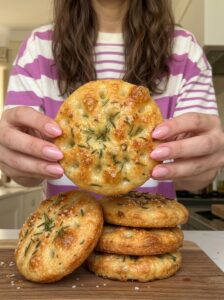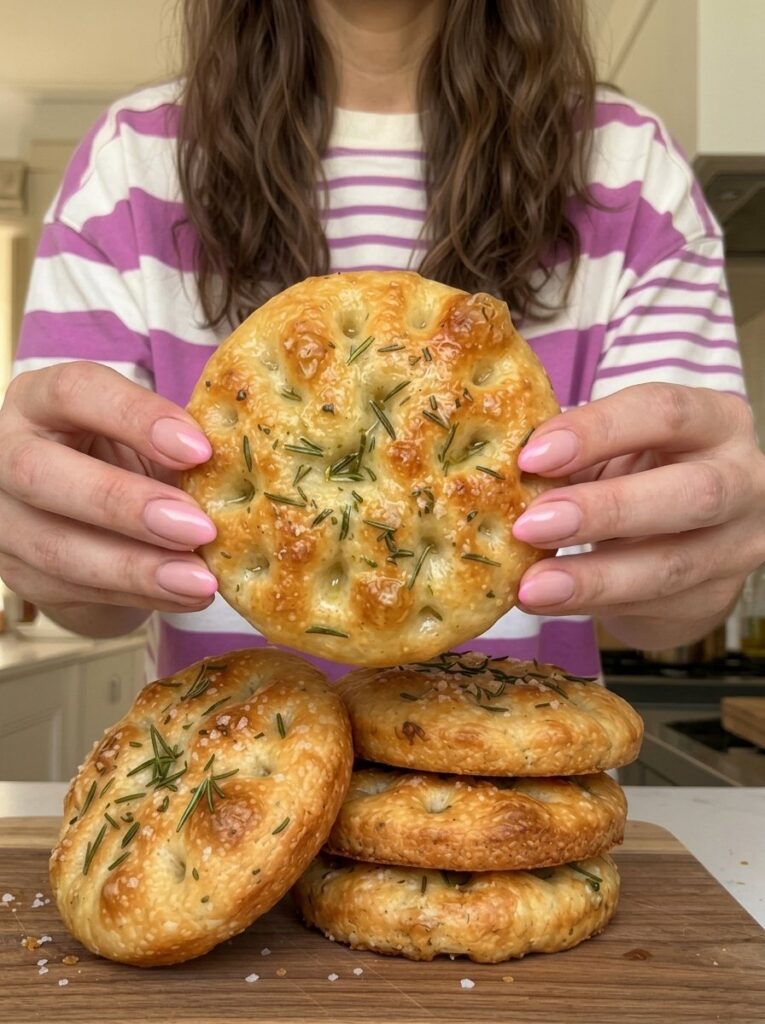
Why You Will Love This Mini Rosemary Sea Salt Focaccia
There is something almost magical about pulling a pan of golden focaccia out of the oven. The edges are crisp and glistening with olive oil, the top is dotted with deep dimples and fragrant green rosemary, and the center is soft, airy and tender. Traditionally, though, focaccia is a big-batch bread that calls for long fermentation, large baking sheets and a lot of planning.
This mini rosemary sea salt focaccia changes all of that. It is a small-batch, no-knead version baked in a 6-inch (15 cm) round pan or small oven-safe skillet. You mix the dough in one bowl with a spoon, let it rise twice, dimple it with oiled fingertips, top it with fresh rosemary and flaky sea salt, and bake it until it is beautifully golden. From start to finish, it takes roughly 1½ to 2 hours, and most of that is hands-off rising time.
If you have ever wanted to bake homemade focaccia bread but felt intimidated by yeast, kneading or a huge yield, this is the recipe to start with. It uses pantry staples, delivers bakery-style results, and makes just enough for two to four people, so there is no waste and no need to stash a giant loaf.
Here is why this recipe is worth bookmarking:
- Only seven simple ingredients. Flour, instant yeast, salt, water, olive oil, fresh rosemary and flaky sea salt are all you need.
- No kneading required. You simply stir until no dry flour remains.
- Small batch. Perfect for couples, small families or anyone who wants fresh bread without leftovers.
- Crisp edges and a soft, airy crumb. Generous olive oil in the pan fries the bottom and sides into a golden crust.
- Beginner-friendly. The dough is forgiving, and the tips below help you avoid the most common focaccia mistakes.
- Endlessly versatile. Dip it, stuff it, serve it with soup or turn it into a tiny sandwich.
What Is Focaccia?
Focaccia is a flat, oven-baked Italian bread that is closely associated with olive oil, sea salt and simple herb toppings. It is typically baked in an oiled pan, which gives it a tender interior and a crisp, almost fried bottom crust. The signature dimples, pressed into the dough with your fingertips before baking, create little pools for olive oil and seasonings to settle into. They also give focaccia its unmistakable rustic look.
Rosemary and flaky sea salt are among the most classic toppings, and for good reason. Rosemary has a piney, aromatic flavor that pairs beautifully with olive oil, and the salt adds a bright crunch that makes every bite more interesting. This mini version keeps those traditional flavors but scales everything down so that it is quick, practical and approachable for any home kitchen.
Ingredients for Mini Rosemary Sea Salt Focaccia
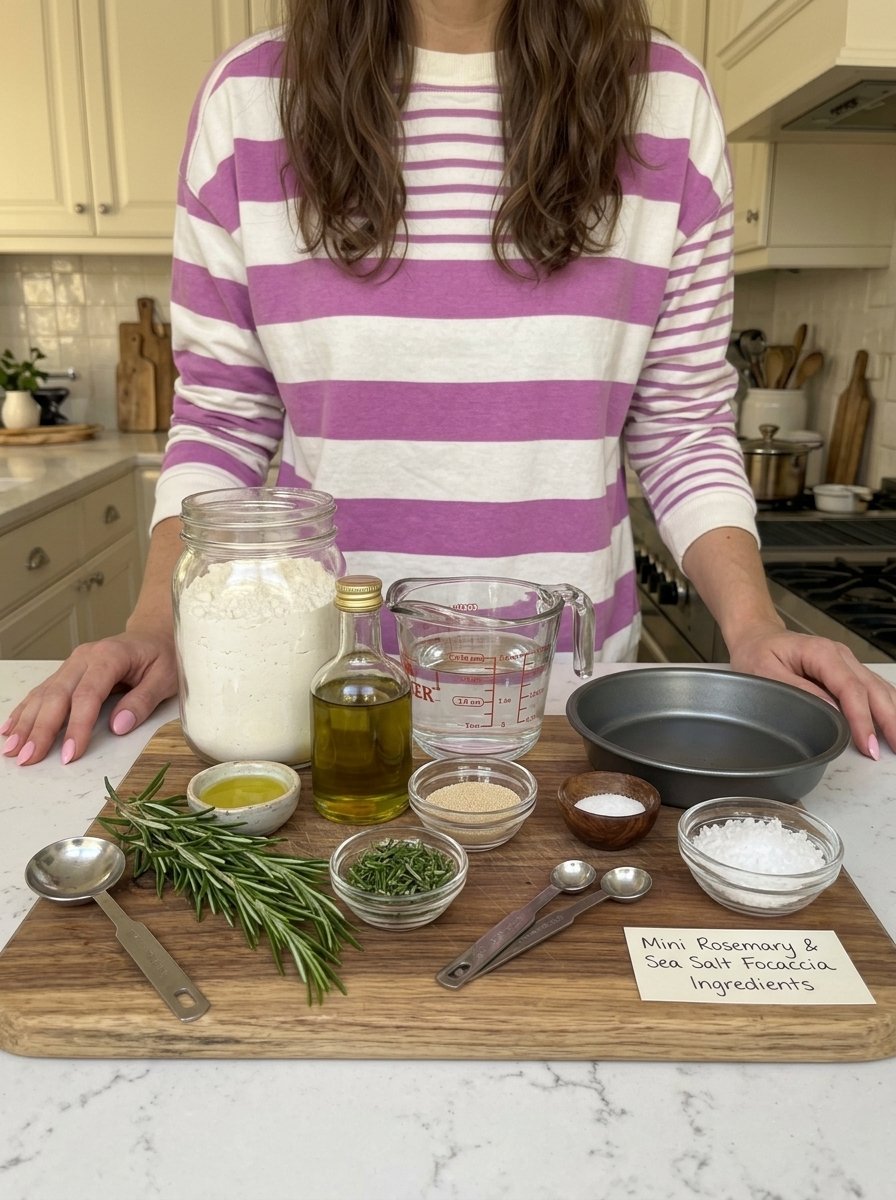
This recipe makes one 6-inch focaccia, which serves about 2 to 4 people.
- 1 cup + 2 tbsp (140 g) all-purpose flour
- ½ tsp (2 g) instant yeast
- ½ tsp salt
- ½ cup (120 ml) lukewarm water
- 1 tbsp olive oil, plus more for the pan and topping
- 1 tbsp fresh rosemary, finely chopped
- Flaky sea salt, for topping
A Closer Look at Each Ingredient
All-purpose flour. All-purpose flour is the foundation of this recipe, and it works wonderfully here. Weighing your flour (140 g) is the most accurate way to measure. If you use cups, spoon the flour into the measuring cup and level it off rather than scooping directly from the bag, which packs in too much flour and can make the focaccia dense.
Instant yeast. Instant yeast is mixed with lukewarm water at the start so you can see it begin to activate. Only a small amount is needed because the dough gets two unhurried rises. Make sure your yeast is fresh for the best puff.
Salt. The ½ teaspoon inside the dough seasons the bread from within, while the flaky sea salt on top provides texture and a burst of flavor.
Lukewarm water. Aim for water that feels comfortably warm to the touch, not hot. Water that is too hot can harm the yeast, while water that is too cold will slow the rise.
Olive oil. Olive oil is the star of focaccia. You will use it in the dough, in the pan, on your hands and on top of the dough. Choose a good-quality olive oil, because you will taste it in every bite.
Fresh rosemary. Fresh rosemary gives the best aroma and flavor. Chop it finely so it spreads evenly across such a small focaccia and does not overpower any single bite.
Flaky sea salt. Flaky salt stays visible on the golden surface and gives a pleasant crunch. Add it right before baking.
Equipment You Will Need
You do not need anything fancy for this recipe:
- A small mixing bowl and a spoon or small spatula
- A 6-inch (15 cm) round baking pan or a small oven-safe skillet
- Plastic wrap or a clean kitchen towel
- A cutting board and a sharp knife
- Measuring cups and spoons, or a kitchen scale
A small cast-iron skillet is a great option because it conducts heat well and helps create a crisp, golden bottom crust. A light-colored metal cake pan works nicely, too.
How to Make Mini Rosemary Sea Salt Focaccia (Step by Step)
Step 1: Mix the Dough
In a small mixing bowl, combine the lukewarm water and instant yeast. Let it sit for about 2 to 3 minutes. Then add the flour, salt and 1 tablespoon of olive oil.
Stir with a spoon or small spatula until a soft, sticky dough forms and no dry flour remains. There is no need to knead. Simply mix until everything is well combined. The dough should look shaggy and feel sticky, and that is exactly what you want. A wetter dough produces the open, airy crumb that makes focaccia so appealing.
Step 2: First Rise
Cover the bowl loosely with plastic wrap or a clean kitchen towel. Place it in a warm, draft-free spot and let the dough rise for about 45 to 60 minutes, or until it becomes noticeably puffy.
The timing depends on the temperature of your kitchen. In a warm room, the dough may be ready closer to 45 minutes. In a cooler space, give it the full hour or a little longer. Look for visible puffiness rather than relying only on the clock.
Step 3: Prepare the Pan
Lightly coat a small 6-inch (15 cm) round baking pan or small oven-safe skillet with olive oil. Make sure the bottom and sides are well coated. This oil is what encourages the crisp, golden crust that makes focaccia so irresistible.
Step 4: Transfer and Stretch the Dough
Drizzle a little olive oil over your hands, which keeps the sticky dough from clinging to your fingers. Gently transfer the risen dough into the prepared pan, then carefully stretch it toward the edges using your fingertips.
If the dough resists or springs back, do not force it. Let it rest for 5 to 10 minutes so the gluten can relax, then try stretching again. Patience here makes the process much easier.
Step 5: Second Rise
Cover the pan loosely and let the dough rise again for about 30 to 40 minutes, or until it looks light, airy and puffy. While it rests, preheat your oven to 425°F (220°C).
This second rise is what gives the finished focaccia its tender, pillowy texture. Do not skip it, and do not rush it.
Step 6: Dimple the Focaccia
Drizzle a little olive oil over the surface of the dough. Then, using well-oiled fingertips, gently press deep dimples all over. Press down toward the bottom of the pan without completely deflating the dough.
These dimples are both functional and beautiful. They stop the dough from puffing up like a dome, and they collect olive oil and salt, so each bite is seasoned and moist.
Step 7: Add the Rosemary and Sea Salt
Scatter the finely chopped fresh rosemary evenly over the surface. Drizzle with a little more olive oil, then finish with a light sprinkle of flaky sea salt.
Step 8: Bake
Place the pan in the preheated oven and bake for about 18 to 22 minutes, or until the focaccia is puffed, golden brown and crisp around the edges. The center should remain soft and airy while the top develops a beautiful golden crust.
Step 9: Cool and Serve
Remove the focaccia from the oven and let it cool for about 5 to 10 minutes. Carefully transfer it to a cutting board and slice it into wedges or small pieces. Serve warm for the best texture and flavor.
Recipe Timing at a Glance
- Prep time: about 10 minutes
- First rise: 45–60 minutes
- Second rise: 30–40 minutes
- Cooking time: 18–22 minutes
- Total time: about 1½–2 hours
- Yield: 1 small 6-inch focaccia, approximately 2–4 servings
Tips for the Best Mini Focaccia
Small focaccia is simple, but a few details make the difference between good and bakery-worthy.
Keep the Dough Soft and Slightly Sticky
It is tempting to add extra flour when the dough feels sticky, but resist the urge. Too much flour makes the focaccia dense and bready instead of light and airy. Oiled hands are the better solution. A soft, slightly sticky dough is exactly what you are aiming for.
Be Generous With Olive Oil in the Pan
Good-quality olive oil and a well-coated pan are essential for crisp, flavorful edges. The oil essentially shallow-fries the bottom and sides of the bread as it bakes, creating that irresistible golden crust. Do not be shy, and make sure the bottom and sides are fully coated.
Chop the Rosemary Finely
Fresh rosemary delivers the best aroma and flavor, but needles that are too long can be tough and unevenly distributed. Because this focaccia is small, finely chopped rosemary spreads evenly so every bite has a hint of herbal fragrance.
Oil Your Hands Before Stretching and Dimpling
Oiled hands make the sticky dough far easier to handle. They also help you press clean, deep dimples without tearing the surface.
Let the Dough Get Noticeably Puffy Both Times
For the lightest, airiest texture, let the dough become visibly puffy during both rises. If it still looks dense and flat, give it a little more time. Rising times in the recipe are guidelines, and your kitchen temperature will affect how fast the dough develops.
Add Flaky Sea Salt Just Before Baking
Sprinkle the flaky sea salt right before the pan goes into the oven. This keeps the crystals visible on the golden surface and preserves their crunch.
Troubleshooting Common Focaccia Problems
My focaccia is dense. This usually comes from too much flour, a dough that has not risen enough or dimpling so forcefully that the air is pressed out. Keep the dough soft and sticky, wait for noticeable puffiness and press the dimples firmly but gently.
The dough keeps springing back when I stretch it. This is completely normal. Let it rest for 5 to 10 minutes, then try again. The rest allows the dough to relax and stretch more easily.
The bottom is pale. Make sure the pan is generously oiled, and consider using a small cast-iron skillet or a metal pan, which browns the base more effectively than glass.
The rosemary is burning. Make sure the rosemary is finely chopped and tucked into the dimples and olive oil, which helps protect it as the focaccia bakes.
The dough did not rise. Check that your yeast is fresh and that the water was lukewarm rather than hot or cold. Place the dough in a warm, draft-free spot and give it extra time if your kitchen is cool.
Serving Ideas for Rosemary Focaccia
This little focaccia is wonderful on its own, but it also plays well with other dishes. Try it in one of these ways:
- With olive oil for dipping. Enjoy it warm with extra-virgin olive oil for a simple, satisfying snack.
- Alongside soups and salads. It is perfect for mopping up a warm bowl of soup or rounding out a fresh salad.
- With pasta or roasted vegetables. The herby, salty flavor complements hearty Italian-style dinners.
- As an appetizer. Cut it into small pieces and serve it on a board for a quick, crowd-pleasing starter.
- As a mini sandwich base. Slice the focaccia and use it as the base for a small sandwich.
- With butter or a savory spread. A warm piece with butter or your favorite savory spread is hard to beat.
How to Store and Reheat Leftover Focaccia
Focaccia is at its absolute best served warm, but you can keep leftovers.
- Room temperature: Store leftover focaccia in an airtight container at room temperature for up to 2 days.
- Freezer: For longer storage, wrap individual pieces tightly and freeze for up to 2 months.
- Thawing and reheating: Thaw at room temperature, then reheat in a 350°F (175°C) oven for several minutes to restore some of the crispness.
Frequently Asked Questions
Do I need to knead this focaccia dough?
No. This is a no-knead recipe. You simply stir the ingredients until no dry flour remains, and the rises do the rest of the work.
Can I use dried rosemary instead of fresh?
Fresh rosemary gives the best aroma and flavor and is recommended for this recipe. Make sure it is finely chopped so it distributes evenly across the small focaccia.
What size pan should I use?
A 6-inch (15 cm) round baking pan or a small oven-safe skillet works best for this quantity of dough.
Why is my dough so sticky?
A soft, slightly sticky dough is intentional. It creates a light, airy texture. Use oiled hands for handling instead of adding more flour.
How do I know when the focaccia is done baking?
Look for a puffed, golden-brown top and crisp edges. The baking time is typically 18 to 22 minutes at 425°F (220°C), and the center should stay soft and airy.
How many people does this recipe serve?
The recipe yields one small 6-inch focaccia, which serves approximately 2 to 4 people, depending on whether it is a snack, an appetizer or a side dish.
Can I freeze mini focaccia?
Yes. Wrap individual pieces tightly and freeze for up to 2 months. Thaw at room temperature and reheat in a 350°F (175°C) oven for several minutes.
Can I double the recipe?
Yes, you can scale the ingredients to make more. Bake the focaccia in separate small pans so each one gets the same crisp edges and golden crust.
Final Thoughts
Mini rosemary sea salt focaccia proves that wonderful bread does not have to be complicated or time-consuming. With a handful of ingredients, a spoon, a small pan and a little patience while the dough rises, you can have a warm, golden, olive-oil-rich focaccia on the table in about two hours. The crisp edges, soft airy center, fragrant rosemary and crunchy flakes of sea salt make it feel special enough for guests but easy enough for a regular weeknight.
Bake it once, and it is likely to become a regular in your kitchen. Serve it with soup, pile it next to a salad, dip it in good olive oil or tuck a filling inside for a mini sandwich. However you enjoy it, keep the dough soft, be generous with the olive oil and let those dimples do their delicious work.
If you try this recipe, let us know how it turned out in the comments below, and share it with a fellow bread lover who would enjoy a quick, no-knead focaccia of their own. Happy baking!
Print
Mini Rosemary Sea Salt Focaccia
Ingredients
This recipe makes one 6-inch focaccia, which serves about 2 to 4 people.
- 1 cup + 2 tbsp (140 g) all-purpose flour
- ½ tsp (2 g) instant yeast
- ½ tsp salt
- ½ cup (120 ml) lukewarm water
- 1 tbsp olive oil, plus more for the pan and topping
- 1 tbsp fresh rosemary, finely chopped
- Flaky sea salt, for topping
A Closer Look at Each Ingredient
All-purpose flour. All-purpose flour is the foundation of this recipe, and it works wonderfully here. Weighing your flour (140 g) is the most accurate way to measure. If you use cups, spoon the flour into the measuring cup and level it off rather than scooping directly from the bag, which packs in too much flour and can make the focaccia dense.
Instant yeast. Instant yeast is mixed with lukewarm water at the start so you can see it begin to activate. Only a small amount is needed because the dough gets two unhurried rises. Make sure your yeast is fresh for the best puff.
Salt. The ½ teaspoon inside the dough seasons the bread from within, while the flaky sea salt on top provides texture and a burst of flavor.
Lukewarm water. Aim for water that feels comfortably warm to the touch, not hot. Water that is too hot can harm the yeast, while water that is too cold will slow the rise.
Olive oil. Olive oil is the star of focaccia. You will use it in the dough, in the pan, on your hands and on top of the dough. Choose a good-quality olive oil, because you will taste it in every bite.
Fresh rosemary. Fresh rosemary gives the best aroma and flavor. Chop it finely so it spreads evenly across such a small focaccia and does not overpower any single bite.
Flaky sea salt. Flaky salt stays visible on the golden surface and gives a pleasant crunch. Add it right before baking.
Instructions
In a small mixing bowl, combine the lukewarm water and instant yeast. Let it sit for about 2 to 3 minutes. Then add the flour, salt and 1 tablespoon of olive oil.
Stir with a spoon or small spatula until a soft, sticky dough forms and no dry flour remains. There is no need to knead. Simply mix until everything is well combined. The dough should look shaggy and feel sticky, and that is exactly what you want. A wetter dough produces the open, airy crumb that makes focaccia so appealing.
Cover the bowl loosely with plastic wrap or a clean kitchen towel. Place it in a warm, draft-free spot and let the dough rise for about 45 to 60 minutes, or until it becomes noticeably puffy.
The timing depends on the temperature of your kitchen. In a warm room, the dough may be ready closer to 45 minutes. In a cooler space, give it the full hour or a little longer. Look for visible puffiness rather than relying only on the clock.
Lightly coat a small 6-inch (15 cm) round baking pan or small oven-safe skillet with olive oil. Make sure the bottom and sides are well coated. This oil is what encourages the crisp, golden crust that makes focaccia so irresistible.
Drizzle a little olive oil over your hands, which keeps the sticky dough from clinging to your fingers. Gently transfer the risen dough into the prepared pan, then carefully stretch it toward the edges using your fingertips.
If the dough resists or springs back, do not force it. Let it rest for 5 to 10 minutes so the gluten can relax, then try stretching again. Patience here makes the process much easier.
Cover the pan loosely and let the dough rise again for about 30 to 40 minutes, or until it looks light, airy and puffy. While it rests, preheat your oven to 425°F (220°C).
This second rise is what gives the finished focaccia its tender, pillowy texture. Do not skip it, and do not rush it.
Drizzle a little olive oil over the surface of the dough. Then, using well-oiled fingertips, gently press deep dimples all over. Press down toward the bottom of the pan without completely deflating the dough.
These dimples are both functional and beautiful. They stop the dough from puffing up like a dome, and they collect olive oil and salt, so each bite is seasoned and moist.
Scatter the finely chopped fresh rosemary evenly over the surface. Drizzle with a little more olive oil, then finish with a light sprinkle of flaky sea salt.
Place the pan in the preheated oven and bake for about 18 to 22 minutes, or until the focaccia is puffed, golden brown and crisp around the edges. The center should remain soft and airy while the top develops a beautiful golden crust.
Remove the focaccia from the oven and let it cool for about 5 to 10 minutes. Carefully transfer it to a cutting board and slice it into wedges or small pieces. Serve warm for the best texture and flavor.