High-Protein Cottage Cheese Oatmeal Bread: Easy 4-Ingredient Healthy Loaf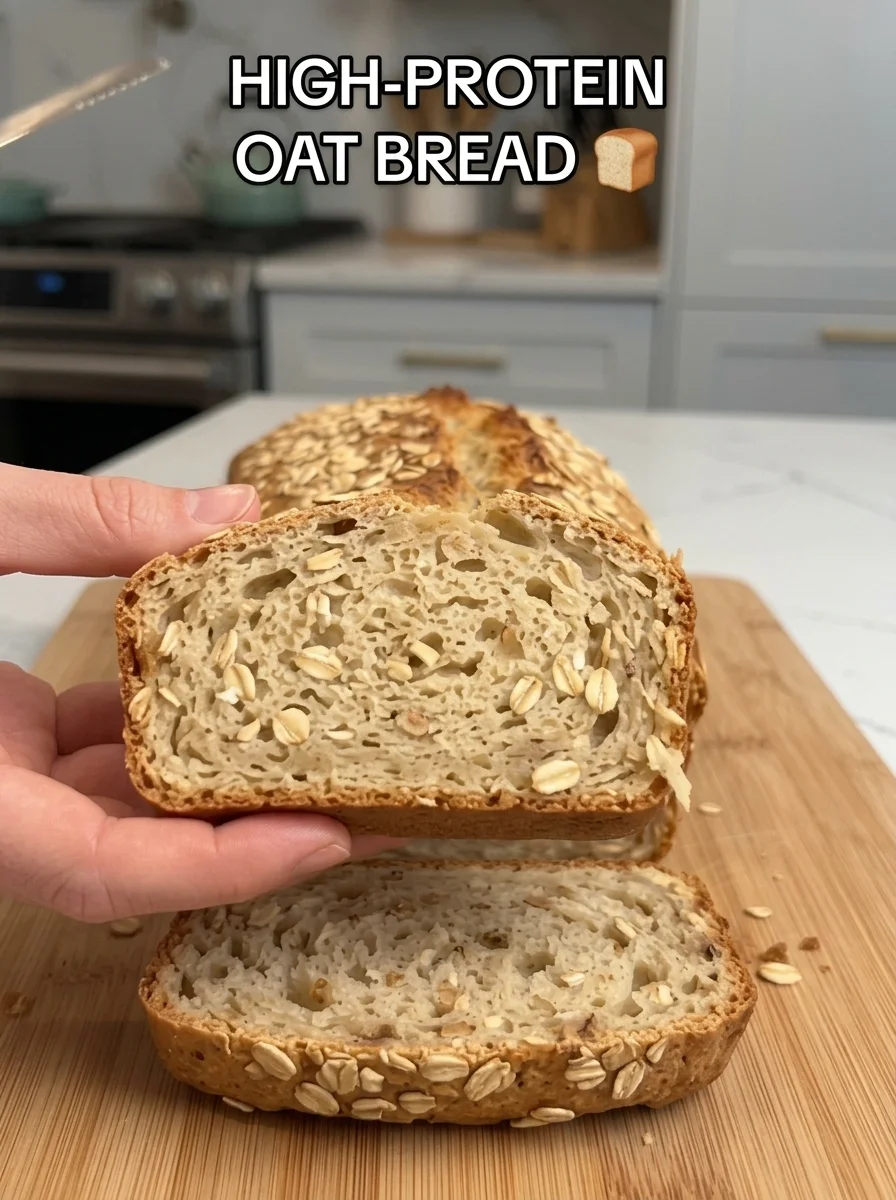
Meta description: This high-protein cottage cheese oatmeal bread is soft, hearty, and made with just oats, cottage cheese, eggs, and baking powder. Easy, flourless, and perfect for meal prep.
Focus keyword: high-protein cottage cheese oatmeal bread
Prep time: 10 minutes | Bake time: 35–45 minutes | Servings: 1 small loaf (8–10 slices)
If you have been searching for a healthy homemade bread that is simple, filling, and genuinely tasty, this high-protein cottage cheese oatmeal bread is about to become a staple in your kitchen. It is soft and tender in the center, lightly golden on the outside, and made from just a handful of wholesome ingredients: rolled oats, cottage cheese, eggs, and a little baking powder. There is no yeast, no kneading, no proofing time, and no wheat flour. You simply blend, stir, pour, and bake.
In this guide you will find the full recipe, step-by-step instructions, ingredient notes, troubleshooting help, flavor variations, serving ideas, and storage tips, so your loaf turns out right the very first time.
Why You Will Love This Cottage Cheese Oatmeal Bread
Bread is one of the most comforting foods there is, but traditional loaves can take hours and plenty of effort. This recipe flips that around. Here is why it works so well:
- Protein-rich: Cottage cheese and eggs are both well-known sources of protein, which makes this loaf a satisfying choice for breakfast or a post-workout snack.
- Ready in under an hour: With only 10 minutes of prep and 35–45 minutes in the oven, you can go from craving to fresh bread quickly.
- No yeast or kneading: Baking powder does the lifting, so there is no waiting for dough to rise.
- Simple ingredients: You probably already have most of them in your fridge and pantry.
- Great for meal prep: Slice it, store it, and grab a piece whenever you need one. It also freezes beautifully.
- Versatile: Sweet or savory, plain or loaded with seeds and herbs, it adapts to whatever you are in the mood for.
- Naturally made with oats: Rolled oats give the loaf a hearty, wholesome texture and a mild, slightly nutty flavor.
What Is Cottage Cheese Oatmeal Bread?
Cottage cheese oatmeal bread is a quick bread that replaces traditional wheat flour with oat flour (simply rolled oats blended into a fine powder) and uses blended cottage cheese and eggs as the base of the batter. The cottage cheese adds moisture, a gentle tang, and a boost of protein, while the eggs provide structure so the loaf holds together and slices cleanly.
The result is something between a soft sandwich bread and a moist, dense quick bread. It is sturdy enough to toast, spread, and top, yet tender enough to enjoy on its own. Because the cottage cheese is blended until smooth, you will not see any curds in the finished loaf, which makes it a great option even for people who are not fans of cottage cheese texture.
Ingredients You Will Need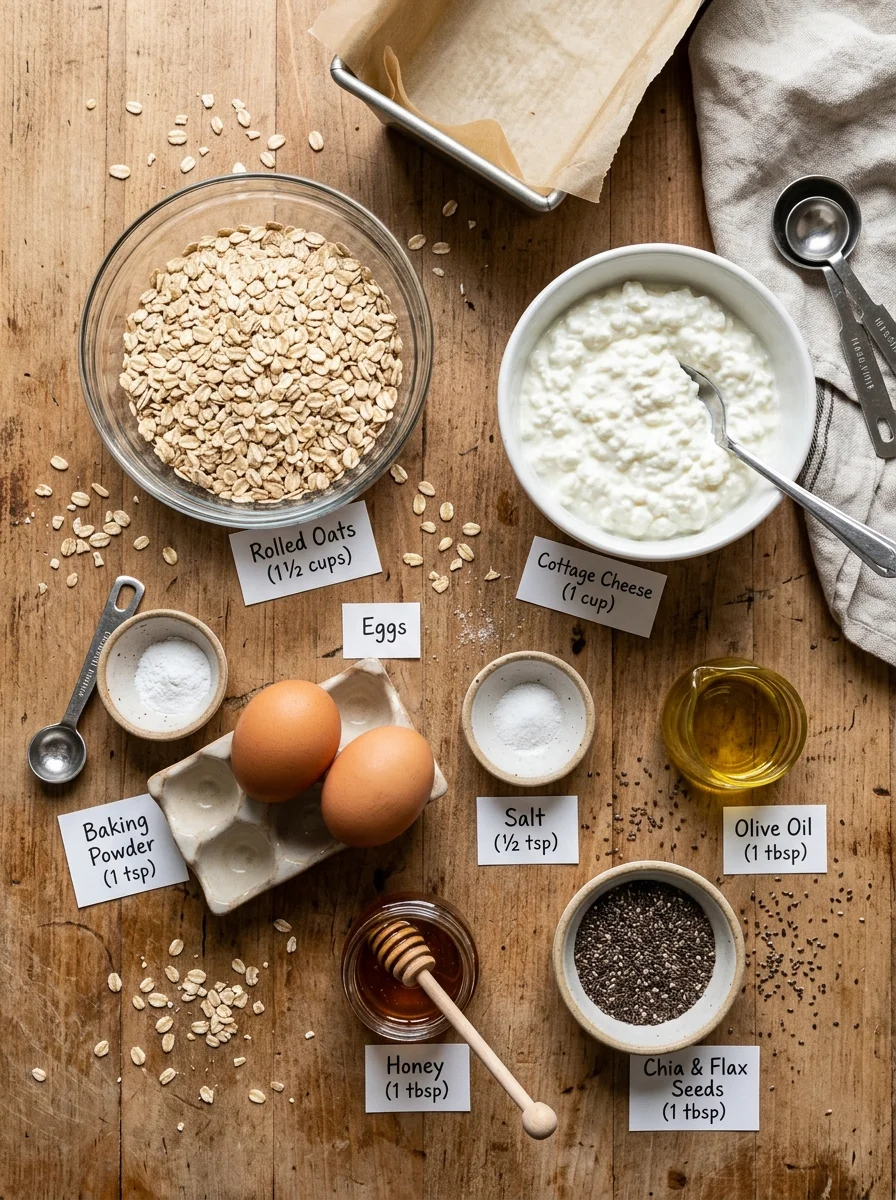
Here is everything you need for one small loaf:
- 1½ cups (135 g) rolled oats
- 1 cup (225 g) cottage cheese
- 2 large eggs
- 1 teaspoon baking powder
- ½ teaspoon salt
- 1 tablespoon olive oil (optional)
- 1 tablespoon honey (optional)
- 1 tablespoon chia seeds or flaxseeds (optional)
Ingredient Notes and Substitutions
Rolled oats. Old-fashioned rolled oats are the best choice because they blend into a flour easily and keep a hearty texture. Quick oats also work, though the loaf may be slightly softer. Steel-cut oats are not recommended because they do not blend or absorb moisture the same way. If you need a gluten-free loaf, choose oats that are labeled certified gluten-free.
Cottage cheese. Any style works, but the fat level changes the final texture. Full-fat or 4% cottage cheese gives the most tender, moist crumb, while low-fat versions still work and produce a slightly firmer slice. Small-curd cottage cheese blends more smoothly, though large curd is fine if you blend it well.
Eggs. Two large eggs provide structure and richness. Bring them to room temperature if you can, as they blend more evenly into the cottage cheese.
Baking powder. This is the only leavening agent, so make sure it is fresh. Old baking powder is a common reason for dense quick breads. To test it, stir a little into hot water; it should fizz right away.
Salt. Salt balances the mild flavor of the oats and cottage cheese. Do not skip it, even if you plan to add sweet toppings.
Olive oil (optional). A tablespoon adds softness and helps the crumb stay tender for longer.
Honey (optional). A touch of honey adds subtle sweetness and helps the crust brown. Maple syrup is a good alternative. Leave it out if you want a fully savory loaf.
Chia seeds or flaxseeds (optional). These add texture, a little extra fiber, and a rustic look. They also absorb moisture, so the batter may thicken slightly as it rests.
How to Make High-Protein Cottage Cheese Oatmeal Bread
Step 1: Prepare the Oven
- Preheat your oven to 350°F (175°C).
- Line a small loaf pan with parchment paper or lightly grease it. Parchment is the easiest option because it lets you lift the loaf out cleanly once it has cooled.
Step 2: Prepare the Oats
- Place the rolled oats in a blender or food processor.
- Blend until they resemble a coarse flour.
- For a heartier texture, leave a few small oat pieces. They give the finished bread a pleasant rustic bite.
Step 3: Blend the Wet Ingredients
- Add the cottage cheese and eggs to a blender.
- Blend until completely smooth.
- Add the olive oil and honey if using, then blend briefly to combine.
Step 4: Make the Batter
- Transfer the oat flour to a mixing bowl.
- Add the baking powder, salt, and optional chia or flaxseeds, and stir to combine.
- Pour in the cottage cheese mixture and stir until you have a thick batter.
- Let the mixture rest for 5 minutes so the oats can absorb some of the moisture. This short rest makes a noticeable difference in texture.
Step 5: Bake the Bread
- Pour the batter into the prepared loaf pan and smooth the top with a spatula.
- Bake for 35–45 minutes, until the loaf is set and golden.
- Check the center with a toothpick. It should come out without wet batter.
- If the top browns too quickly, loosely cover it with foil for the remaining baking time.
Step 6: Cool and Slice
- Let the bread cool in the pan for 10 minutes.
- Transfer it to a wire rack and allow it to cool completely before slicing.
- Use a sharp serrated knife to cut clean slices.
Tips for the Best Results
Quick breads without wheat flour can be a little different from what you are used to, so these tips will help you get a great loaf every time.
- Blend the cottage cheese. This gives the bread a uniform texture and removes any curd pockets.
- Use rolled oats. They provide a hearty texture and blend easily into oat flour.
- Do not skip the rest. Five minutes lets the oat flour hydrate, which prevents a crumbly or gritty loaf.
- Let it cool completely. Oat-based breads continue to set as they cool. Slicing too early can lead to gummy, fragile slices.
- Use the right pan size. A small loaf pan gives you a taller loaf. In a large pan the batter spreads thin and the bread bakes up flatter and drier.
- Check your oven temperature. Ovens often run hot or cool. An inexpensive oven thermometer can save you from underbaked centers or overbrowned tops.
- For extra flavor. Add rosemary, garlic powder, or grated Parmesan for a savory version.
Delicious Variations
Once you have mastered the basic loaf, try these easy twists:
Savory herb and Parmesan. Skip the honey and stir in 2 tablespoons of grated Parmesan, ½ teaspoon of garlic powder, and 1 teaspoon of dried rosemary or Italian seasoning. This version is wonderful with soups and salads.
Cinnamon-raisin style. Add 1 teaspoon of cinnamon and a small handful of raisins. Keep the honey for a lightly sweet breakfast loaf.
Seeded multigrain. Fold in a tablespoon each of chia seeds, sunflower seeds, and pumpkin seeds for extra crunch, and sprinkle a few on top before baking.
Banana-berry breakfast bread. Add a small mashed banana and a handful of blueberries for a naturally sweet loaf. Because banana adds moisture, you may need a few extra minutes of baking time.
Cheddar and chive. Stir in a little shredded sharp cheddar and chopped chives for a bakery-style savory loaf.
Serving Ideas
This bread is as flexible as it is filling. Here are some of the best ways to enjoy it:
- Savory breakfast: Top a slice with avocado, black pepper, and a poached egg.
- Protein-packed snack: Spread with cottage cheese or Greek yogurt and add sliced tomatoes.
- Sweet option: Serve with peanut butter, banana slices, and a drizzle of honey.
- Simple toast: Toast a slice and spread with butter or your favorite nut butter.
- Light lunch: Use two slices for a sandwich with turkey, lettuce, and mustard, or with hummus and cucumber.
- Side for soup: Serve a warm slice alongside tomato soup or a hearty vegetable stew.
Is This Bread Healthy?
This loaf is built from whole-food ingredients: oats, eggs, and cottage cheese. Oats are a whole grain known for their fiber, and cottage cheese and eggs contribute protein. Compared with many store-bought breads, it also has a very short ingredient list with no preservatives or added gums.
Exact nutrition depends on the brands and sizes you use, so it is best to calculate it yourself. Protein tip: the total protein depends on your cottage cheese and egg sizes. For an accurate estimate per slice, calculate the nutrition from your ingredient labels and divide by the number of slices.
If you have a food allergy or dietary restriction, check each ingredient label. This recipe contains eggs and dairy, and oats may be processed alongside gluten-containing grains unless they are certified gluten-free.
Troubleshooting Common Problems
My bread is gummy in the middle. It was likely sliced too soon or underbaked. Bake a few minutes longer, confirm that a toothpick comes out clean, and always cool the loaf completely before cutting.
My loaf is dense. Check that your baking powder is fresh, and avoid overmixing once the wet and dry ingredients are combined. A small loaf pan also helps the loaf rise higher.
The top is browning too fast. Tent the loaf loosely with foil for the remainder of the baking time.
The bread is crumbly. Oat flour that is too coarse, or skipping the 5-minute rest, can cause crumbling. Blend the oats a little finer and let the batter rest before baking.
It sticks to the pan. Use parchment paper with a bit of overhang so you can lift the loaf out easily.
It tastes eggy. Using a smooth, well-blended batter and adding a small pinch of seasoning, herbs, or a touch of honey helps balance the flavor.
How to Store Cottage Cheese Oatmeal Bread
Refrigerator: Because this bread contains fresh dairy and eggs, store it in the fridge in an airtight container for up to 4–5 days.
Freezer: Slice the cooled loaf and freeze individual slices for up to 2 months. Place parchment between slices so they do not stick together. This is a fantastic meal-prep method, since you can pull out one slice at a time.
Reheating: Toast frozen slices straight from the freezer, or warm refrigerated slices for 20–30 seconds in the microwave. Toasting brings back a lightly crisp edge and makes the bread even more delicious.
Frequently Asked Questions
Can I make this bread without a blender?
Yes. Mash the cottage cheese very well with a fork, whisk in the eggs, and use quick oats or finely chopped oats. The texture will be a bit more rustic, but the loaf will still taste great. A blender or food processor gives the smoothest result.
Can I use quick oats instead of rolled oats?
Yes. Quick oats blend into flour more easily and produce a slightly softer loaf. Use the same weight for the best results.
Is this bread gluten-free?
Oats are naturally gluten-free, but they are often cross-contaminated during processing. If you need to avoid gluten, use oats that are certified gluten-free.
Can I make it dairy-free?
Cottage cheese is the key ingredient here, so this particular recipe is not dairy-free. Swapping it will change the texture and the results, so it is best to look for a recipe developed specifically for a dairy-free version.
Can I double the recipe?
Yes, you can double it and bake it in a standard-size loaf pan. Expect a longer bake time, and check for doneness with a toothpick starting around 50 minutes.
Why do I need to let the batter rest?
Oats absorb liquid slowly. A 5-minute rest lets them hydrate, which thickens the batter and leads to a softer, more cohesive loaf.
Can I add sweetener for a dessert-style bread?
Yes. Add an extra tablespoon of honey or maple syrup, plus cinnamon or vanilla, and fold in berries, raisins, or chopped nuts.
How do I know when the bread is done?
The top should be golden, the loaf should feel set, and a toothpick inserted in the center should come out without wet batter.
Final Thoughts
This high-protein cottage cheese oatmeal bread proves that homemade bread does not need to be complicated. With a blender, a loaf pan, and a short list of everyday ingredients, you can have a soft, wholesome, flavorful loaf on the table in under an hour. Enjoy it toasted for breakfast, stacked with toppings for lunch, or simply on its own as a satisfying snack.
Bake a loaf this week, slice it for the days ahead, and see how easily it fits into your routine. Enjoy your homemade High-Protein Cottage Cheese Oatmeal Bread! Soft, wholesome, versatile, and delicious toasted with your favorite toppings.
Print
🥣🍞 High-Protein Cottage Cheese Oatmeal Bread
Ingredients
Here is everything you need for one small loaf:
- 1½ cups (135 g) rolled oats
- 1 cup (225 g) cottage cheese
- 2 large eggs
- 1 teaspoon baking powder
- ½ teaspoon salt
- 1 tablespoon olive oil (optional)
- 1 tablespoon honey (optional)
- 1 tablespoon chia seeds or flaxseeds (optional)
Ingredient Notes and Substitutions
Rolled oats. Old-fashioned rolled oats are the best choice because they blend into a flour easily and keep a hearty texture. Quick oats also work, though the loaf may be slightly softer. Steel-cut oats are not recommended because they do not blend or absorb moisture the same way. If you need a gluten-free loaf, choose oats that are labeled certified gluten-free.
Cottage cheese. Any style works, but the fat level changes the final texture. Full-fat or 4% cottage cheese gives the most tender, moist crumb, while low-fat versions still work and produce a slightly firmer slice. Small-curd cottage cheese blends more smoothly, though large curd is fine if you blend it well.
Eggs. Two large eggs provide structure and richness. Bring them to room temperature if you can, as they blend more evenly into the cottage cheese.
Baking powder. This is the only leavening agent, so make sure it is fresh. Old baking powder is a common reason for dense quick breads. To test it, stir a little into hot water; it should fizz right away.
Salt. Salt balances the mild flavor of the oats and cottage cheese. Do not skip it, even if you plan to add sweet toppings.
Olive oil (optional). A tablespoon adds softness and helps the crumb stay tender for longer.
Honey (optional). A touch of honey adds subtle sweetness and helps the crust brown. Maple syrup is a good alternative. Leave it out if you want a fully savory loaf.
Chia seeds or flaxseeds (optional). These add texture, a little extra fiber, and a rustic look. They also absorb moisture, so the batter may thicken slightly as it rests.
Instructions
How to Make High-Protein Cottage Cheese Oatmeal Bread
Step 1: Prepare the Oven
- Preheat your oven to 350°F (175°C).
- Line a small loaf pan with parchment paper or lightly grease it. Parchment is the easiest option because it lets you lift the loaf out cleanly once it has cooled.
Step 2: Prepare the Oats
- Place the rolled oats in a blender or food processor.
- Blend until they resemble a coarse flour.
- For a heartier texture, leave a few small oat pieces. They give the finished bread a pleasant rustic bite.
Step 3: Blend the Wet Ingredients
- Add the cottage cheese and eggs to a blender.
- Blend until completely smooth.
- Add the olive oil and honey if using, then blend briefly to combine.
Step 4: Make the Batter
- Transfer the oat flour to a mixing bowl.
- Add the baking powder, salt, and optional chia or flaxseeds, and stir to combine.
- Pour in the cottage cheese mixture and stir until you have a thick batter.
- Let the mixture rest for 5 minutes so the oats can absorb some of the moisture. This short rest makes a noticeable difference in texture.
Step 5: Bake the Bread
- Pour the batter into the prepared loaf pan and smooth the top with a spatula.
- Bake for 35–45 minutes, until the loaf is set and golden.
- Check the center with a toothpick. It should come out without wet batter.
- If the top browns too quickly, loosely cover it with foil for the remaining baking time.
Step 6: Cool and Slice
- Let the bread cool in the pan for 10 minutes.
- Transfer it to a wire rack and allow it to cool completely before slicing.
- Use a sharp serrated knife to cut clean slices.