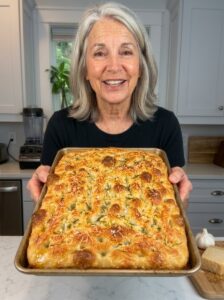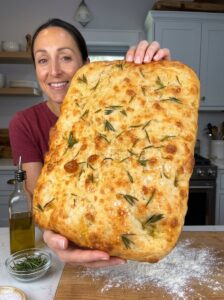
There is something almost magical about pulling a pan of golden, bubbly focaccia out of the oven. The kitchen fills with the smell of roasting garlic, melted Parmesan and fresh rosemary, and the edges crackle as the bread cools. For years, many home bakers assumed this kind of bread was out of reach. It seemed to need special skills, long kneading sessions or a professional oven.
This no-knead garlic Parmesan focaccia proves otherwise. You stir everything together in one bowl with a wooden spoon, let time do the work, and finish with a generous topping of garlic, Parmesan and rosemary. There’s no stand mixer, no kneading and no complicated shaping.
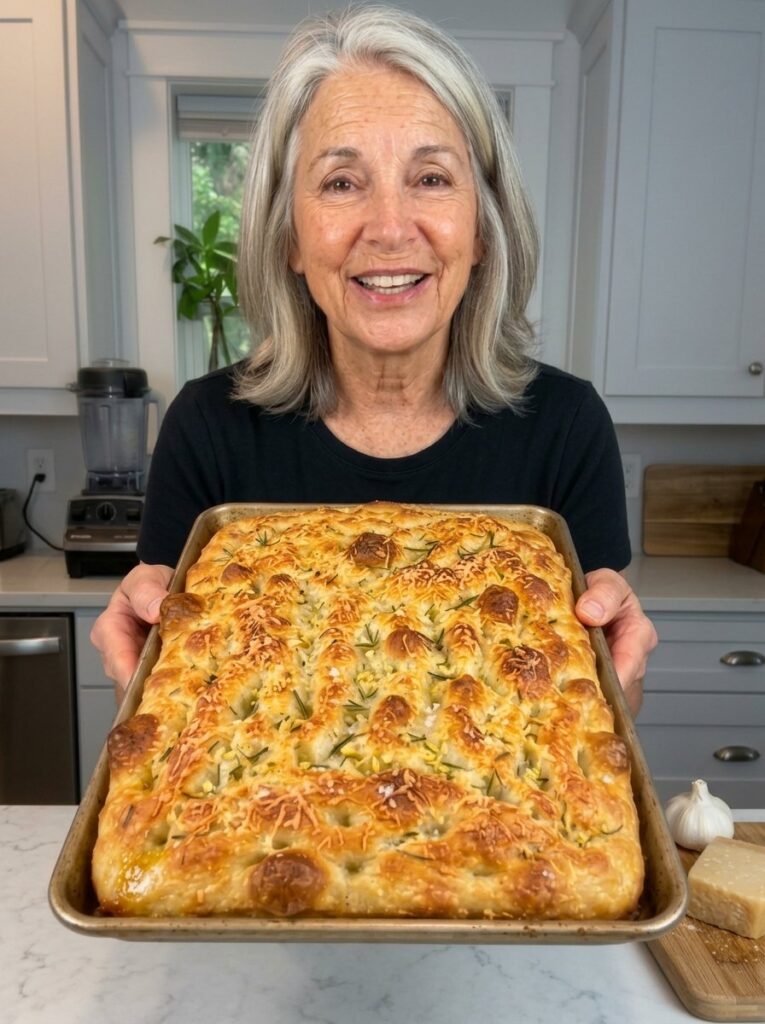
The result is a tall, pillowy focaccia with a crisp, olive-oil-fried bottom, a soft and airy crumb, and a savory crust. It takes about 15 minutes of hands-on work. Serve it with soup, pasta, salad or a bowl of olive oil for dipping, and it will disappear quickly.
In this guide you’ll find the full recipe, step-by-step instructions, troubleshooting advice, variations, serving ideas and storage tips, so you can get great results the first time.
Why You’ll Love This Garlic Parmesan Focaccia
- No kneading required. A sticky, wet dough builds its own structure during the rise, so you only stir.
- Simple pantry ingredients. Flour, water, yeast, salt, olive oil, garlic, Parmesan and rosemary.
- Big flavor. The garlic roasts as it bakes, the Parmesan turns golden and crisp, and the rosemary adds a fragrant, herbal note.
- A texture that works. You get a crisp, golden bottom and edges with a soft, airy, chewy middle.
- Beginner friendly. Focaccia is forgiving. Dimples, bubbles and uneven edges all add to its rustic charm.
- Versatile. It works as a side, an appetizer, a sandwich base or a snack on its own.
- Great for entertaining. Cut it into squares, put it on a board and watch it vanish.
What Is Focaccia?
Focaccia is a flat, oven-baked Italian bread, closely associated with Liguria in northern Italy. Traditionally it is made with a high-hydration dough, which means plenty of water relative to flour, and a very generous amount of olive oil. The dough is stretched in a pan, dimpled with fingertips, drizzled with more oil and often finished with coarse salt and herbs.
The signature dimples are more than decoration. They create little wells that hold pools of olive oil, which fry the surface as the bread bakes and give it that rich flavor and crisp-chewy texture.
This version keeps the traditional character but adds a garlic-Parmesan topping that makes it especially savory. Because the dough is no-knead, it is much easier than the classic method.
Ingredients for No-Knead Garlic Parmesan Focaccia
For the focaccia dough
- 3 cups (375 g) all-purpose flour
- 1½ cups (360 ml) lukewarm water
- 2 tsp (7 g) instant yeast
- 1½ tsp salt
- 3 tbsp olive oil, plus more for the pan and topping
For the garlic Parmesan topping
- 3–4 cloves garlic, finely minced
- ½ cup (50 g) freshly grated Parmesan cheese
- 1 tbsp fresh rosemary, finely chopped
- Flaky salt, for sprinkling
Ingredient notes
Flour: All-purpose flour works well here. It gives a tender, soft crumb. Bread flour will give a chewier texture if you prefer, though you may need a tiny bit more water.
Water: Use lukewarm water, comfortably warm to the touch but not hot. Water that is too hot can damage the yeast. If it’s too cold, the dough will rise slowly.
Instant yeast: Instant yeast is reliable and mixes straight into the dough. Check the date on the package, because old yeast is a common cause of dough that doesn’t rise.
Olive oil: Since olive oil is a major flavor here, use one you enjoy the taste of. Extra virgin olive oil is ideal for both the pan and the topping.
Parmesan: Freshly grated Parmesan melts better and tastes far more savory than the pre-grated kind in a canister, which often contains anti-caking agents. A fine grater gives the best coverage.
Garlic: Fresh garlic is a must. Mince it finely so it roasts rather than burns, and spread it evenly across the surface.
Rosemary: Fresh rosemary gives the best fragrance. Chop it finely so it distributes evenly and doesn’t leave tough pieces.
Equipment You’ll Need
- A large mixing bowl
- A wooden spoon or sturdy spatula
- A 9×13-inch (23×33 cm) baking pan
- Plastic wrap or a clean kitchen towel
- A small bowl for the topping
- A cutting board and sharp knife or pizza cutter
No mixer or dough hook is needed.
How to Make No-Knead Garlic Parmesan Focaccia
Step 1: Mix the dough
In a large mixing bowl, combine the lukewarm water and instant yeast. Let it sit for 2–3 minutes while the yeast wakes up.
Add the flour, salt and 3 tablespoons of olive oil. Stir with a wooden spoon or sturdy spatula until all the flour is incorporated and a soft, sticky dough forms. There is no need to knead. Simply mix until no dry patches remain.
The dough should look shaggy and wet. That is exactly what you want. Resist the urge to add more flour, because the high moisture is what makes the finished bread light and airy.
Step 2: First rise
Cover the bowl loosely with plastic wrap or a clean kitchen towel. Place it in a warm, draft-free spot and let it rise for about 1 to 1½ hours, until the dough is noticeably puffed and bubbly.
You should see bubbles on the surface and along the sides of the bowl, and the dough should look billowy and jiggly. In a cooler kitchen it may need a little longer.
Step 3: Prepare the baking pan
Generously coat a 9×13-inch baking pan with olive oil, covering the bottom and sides well. Pour a little extra olive oil into the center of the pan.
It may seem like a lot of oil, but this is what creates the crisp, golden, almost fried edges that make focaccia so good. A generous hand pays off.
Step 4: Transfer and stretch the dough
Drizzle a little olive oil over your hands so the dough doesn’t stick. Gently transfer the risen dough into the prepared pan.
Using your fingertips, carefully stretch the dough toward the edges of the pan. If it springs back, let it rest for about 10 minutes, then gently stretch it again. Don’t force it. Let the gluten relax so the dough spreads naturally.
Step 5: Second rise
Cover the pan loosely and let the dough rise again for 30 to 45 minutes, until it looks light, airy and puffy.
While it rises, preheat your oven to 425°F (220°C).
Step 6: Prepare the topping
In a small bowl, combine the finely minced garlic, grated Parmesan and chopped rosemary. Keep the mixture ready to scatter over the focaccia just before baking.
Step 7: Dimple the focaccia
Drizzle the surface of the dough generously with olive oil. With well-oiled fingertips, gently press deep dimples all over the dough, pushing down toward the bottom of the pan without completely deflating it.
Step 8: Add the garlic Parmesan topping
Sprinkle the minced garlic evenly over the dimpled dough. Scatter the Parmesan and chopped rosemary across the surface. Finish with a light sprinkle of flaky salt and another small drizzle of olive oil.
Step 9: Bake
Bake in the preheated oven for 22 to 28 minutes, until the focaccia is puffed, golden brown and crisp around the edges. The Parmesan should be melted and golden, while the center stays soft and airy.
Step 10: Cool and serve
Let the focaccia cool in the pan for 10 to 15 minutes. Carefully transfer it to a cutting board and slice it into squares or long pieces. Serve warm for the best texture, while the garlic and Parmesan are still fragrant.
Tips for the Best Garlic Parmesan Focaccia
- Keep the dough soft and sticky. A wetter dough creates a lighter, airier focaccia. Don’t add extra flour to make it easier to handle. Use oiled hands instead.
- Use freshly grated Parmesan. It gives the best flavor and a beautifully golden, savory crust.
- Generously oil the pan. The oil crisps the bottom and edges and adds flavor.
- Oil your hands. This lets you stretch and dimple the dough without sticking or adding flour.
- Let the dough rise fully. Look for a puffy, bubbly dough in a warm, draft-free place rather than relying only on the clock.
- Spread the garlic evenly. Even coverage helps it roast lightly instead of clumping and burning.
- Dimple deeply. Press all the way down to the pan so the focaccia keeps its signature texture.
- Serve warm. Fresh from the oven, the contrast between crisp edges and tender center is at its best.
Troubleshooting Common Focaccia Problems
My dough didn’t rise.
Check that your yeast is fresh and that the water was lukewarm rather than hot or cold. Also make sure the dough is resting somewhere warm and free of drafts. If your kitchen is cool, give it extra time.
The dough keeps shrinking back when I stretch it.
This is normal. Let it rest for about 10 minutes so the gluten relaxes, then try again gently. Oiled fingertips help.
My focaccia turned out dense.
Dense focaccia usually means too much flour was added, the dough didn’t rise enough, or the dimpling was too aggressive. Keep the dough sticky and let both rises finish properly.
The garlic burned.
Make sure it is finely minced and evenly spread rather than clumped together. Tucking it into the dimples and under a little oil and cheese protects it as it bakes. If your oven runs hot, check the focaccia a few minutes early.
The bottom isn’t crisp.
Use enough olive oil in the pan, and bake on a middle rack. A metal pan generally gives a crispier bottom than glass.
The top is browning too fast.
Tent the pan loosely with foil for the last few minutes of baking, or move it to a lower rack.
Delicious Variations
Once you’ve mastered the base recipe, it’s easy to experiment.
- Extra cheesy: Add a handful of shredded mozzarella along with the Parmesan for stretchy, melty pockets.
- Herb garden: Swap or combine the rosemary with thyme, oregano or basil.
- Tomato and olive: Press cherry tomato halves and sliced olives into the dimples before baking.
- Caramelized onion: Top with slowly cooked onions for a sweet, savory twist.
- Spicy: Sprinkle a pinch of red pepper flakes over the topping.
- Lemon zest: A little grated lemon zest adds brightness that works well with garlic and rosemary.
- Everything seasoning: Finish with everything bagel seasoning instead of flaky salt for a different crunch.
Serving Ideas
This focaccia is as versatile as it is delicious.
- With soup or salad: Serve warm alongside tomato soup, minestrone or a crisp green salad.
- With pasta: It’s perfect for mopping up sauce next to a bowl of pasta.
- With roasted vegetables: Serve it with roasted vegetables for a cozy, comforting meal.
- As an appetizer: Cut it into small squares and set it out on a board with olives and cheese.
- For dipping: Enjoy it with a small dish of extra olive oil, and maybe a splash of balsamic vinegar.
- As sandwich bread: Slice a piece in half horizontally and fill it with roasted vegetables, mozzarella, tomato or your favorite deli fillings.
- With grilled or roasted meats: It makes a flavorful side for chicken, steak or sausages.
How to Store Garlic Parmesan Focaccia
Room temperature: Store leftover focaccia in an airtight container at room temperature for up to 2 days.
Freezer: For longer storage, wrap individual pieces tightly and freeze for up to 2 to 3 months.
Reheating: Thaw frozen pieces at room temperature, then reheat them in a 350°F (175°C) oven for several minutes to restore some of the crispness. Reheating in the oven is better than the microwave, which can make the bread soft and chewy.
Recipe Summary
| Prep time | About 15 minutes |
| First rise | 1–1½ hours |
| Second rise | 30–45 minutes |
| Cook time | 22–28 minutes |
| Total time | About 2½–3 hours |
| Yield | 1 9×13-inch focaccia, about 12–16 pieces |
Frequently Asked Questions
Do I really not need to knead this focaccia dough?
Correct. The wet dough develops structure during the rises, so stirring until no dry flour remains is enough.
Can I use active dry yeast instead of instant yeast?
Yes, but it is best to dissolve it in the lukewarm water and let it sit until foamy, which may take a few minutes longer than instant yeast. The rise may also take a bit longer.
Can I make the dough ahead of time?
You can mix the dough and let it rise slowly in the refrigerator, which can deepen the flavor. Let it come back toward room temperature before stretching it into the pan. Because this recipe has been written and tested with the timings above, you may need to adjust the rise times if you change the method.
Can I use a different pan size?
A 9×13-inch pan gives a nicely thick focaccia. A larger pan will produce thinner bread that may bake faster, so check it a few minutes early.
Can I use bread flour?
Yes. Bread flour gives a chewier, slightly more structured crumb. The dough may absorb a little more water, but keep it soft and sticky.
Why is my focaccia flat?
Common causes include old yeast, a dough that didn’t rise enough, or overworking the dough when dimpling. Make sure it’s puffy and bubbly before baking.
Can I use pre-grated Parmesan?
You can, but freshly grated Parmesan melts better and tastes noticeably richer.
Can I add the garlic to the dough instead?
You can, but keeping it on the surface lets it roast lightly as the bread bakes and gives you that fragrant, golden topping.
Can I freeze the dough?
This recipe is written for fresh dough, and the tested freezing advice applies to the baked focaccia. Wrap individual baked pieces tightly and freeze for 2 to 3 months.
What should I serve with garlic Parmesan focaccia?
It pairs well with soups, salads, pasta, roasted vegetables and grilled or roasted meats, or simply with a little olive oil for dipping.
Final Thoughts
If you’ve ever wanted to bake bread at home but felt intimidated by kneading, shaping and proofing, this no-knead garlic Parmesan focaccia is the place to start. It’s a relaxed, forgiving recipe: you stir, wait, dimple, top and bake. The reward is a golden, fragrant bread with crisp edges, a tender center and a savory crust of melted Parmesan, garlic and rosemary.
Make it for a weeknight dinner, a holiday table or a casual get-together. Once you’ve tried it, it will probably become a regular in your kitchen. If you love this recipe, share it with a friend, leave a comment with your favorite variation, and save it for your next bake.
Happy baking!
Print
No-Knead Garlic Parmesan Focaccia
Ingredients
For the focaccia dough
- 3 cups (375 g) all-purpose flour
- 1½ cups (360 ml) lukewarm water
- 2 tsp (7 g) instant yeast
- 1½ tsp salt
- 3 tbsp olive oil, plus more for the pan and topping
For the garlic Parmesan topping
- 3–4 cloves garlic, finely minced
- ½ cup (50 g) freshly grated Parmesan cheese
- 1 tbsp fresh rosemary, finely chopped
- Flaky salt, for sprinkling
Ingredient notes
Flour: All-purpose flour works well here. It gives a tender, soft crumb. Bread flour will give a chewier texture if you prefer, though you may need a tiny bit more water.
Water: Use lukewarm water, comfortably warm to the touch but not hot. Water that is too hot can damage the yeast. If it’s too cold, the dough will rise slowly.
Instant yeast: Instant yeast is reliable and mixes straight into the dough. Check the date on the package, because old yeast is a common cause of dough that doesn’t rise.
Olive oil: Since olive oil is a major flavor here, use one you enjoy the taste of. Extra virgin olive oil is ideal for both the pan and the topping.
Parmesan: Freshly grated Parmesan melts better and tastes far more savory than the pre-grated kind in a canister, which often contains anti-caking agents. A fine grater gives the best coverage.
Garlic: Fresh garlic is a must. Mince it finely so it roasts rather than burns, and spread it evenly across the surface.
Rosemary: Fresh rosemary gives the best fragrance. Chop it finely so it distributes evenly and doesn’t leave tough pieces.
Instructions
In a large mixing bowl, combine the lukewarm water and instant yeast. Let it sit for 2–3 minutes while the yeast wakes up.
Add the flour, salt and 3 tablespoons of olive oil. Stir with a wooden spoon or sturdy spatula until all the flour is incorporated and a soft, sticky dough forms. There is no need to knead. Simply mix until no dry patches remain.
The dough should look shaggy and wet. That is exactly what you want. Resist the urge to add more flour, because the high moisture is what makes the finished bread light and airy.
Cover the bowl loosely with plastic wrap or a clean kitchen towel. Place it in a warm, draft-free spot and let it rise for about 1 to 1½ hours, until the dough is noticeably puffed and bubbly.
You should see bubbles on the surface and along the sides of the bowl, and the dough should look billowy and jiggly. In a cooler kitchen it may need a little longer.
Generously coat a 9×13-inch baking pan with olive oil, covering the bottom and sides well. Pour a little extra olive oil into the center of the pan.
It may seem like a lot of oil, but this is what creates the crisp, golden, almost fried edges that make focaccia so good. A generous hand pays off.
Drizzle a little olive oil over your hands so the dough doesn’t stick. Gently transfer the risen dough into the prepared pan.
Using your fingertips, carefully stretch the dough toward the edges of the pan. If it springs back, let it rest for about 10 minutes, then gently stretch it again. Don’t force it. Let the gluten relax so the dough spreads naturally.
Cover the pan loosely and let the dough rise again for 30 to 45 minutes, until it looks light, airy and puffy.
While it rises, preheat your oven to 425°F (220°C).
In a small bowl, combine the finely minced garlic, grated Parmesan and chopped rosemary. Keep the mixture ready to scatter over the focaccia just before baking.
Drizzle the surface of the dough generously with olive oil. With well-oiled fingertips, gently press deep dimples all over the dough, pushing down toward the bottom of the pan without completely deflating it.
Sprinkle the minced garlic evenly over the dimpled dough. Scatter the Parmesan and chopped rosemary across the surface. Finish with a light sprinkle of flaky salt and another small drizzle of olive oil.
Bake in the preheated oven for 22 to 28 minutes, until the focaccia is puffed, golden brown and crisp around the edges. The Parmesan should be melted and golden, while the center stays soft and airy.
Let the focaccia cool in the pan for 10 to 15 minutes. Carefully transfer it to a cutting board and slice it into squares or long pieces. Serve warm for the best texture, while the garlic and Parmesan are still fragrant.