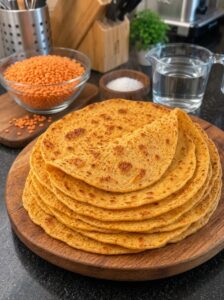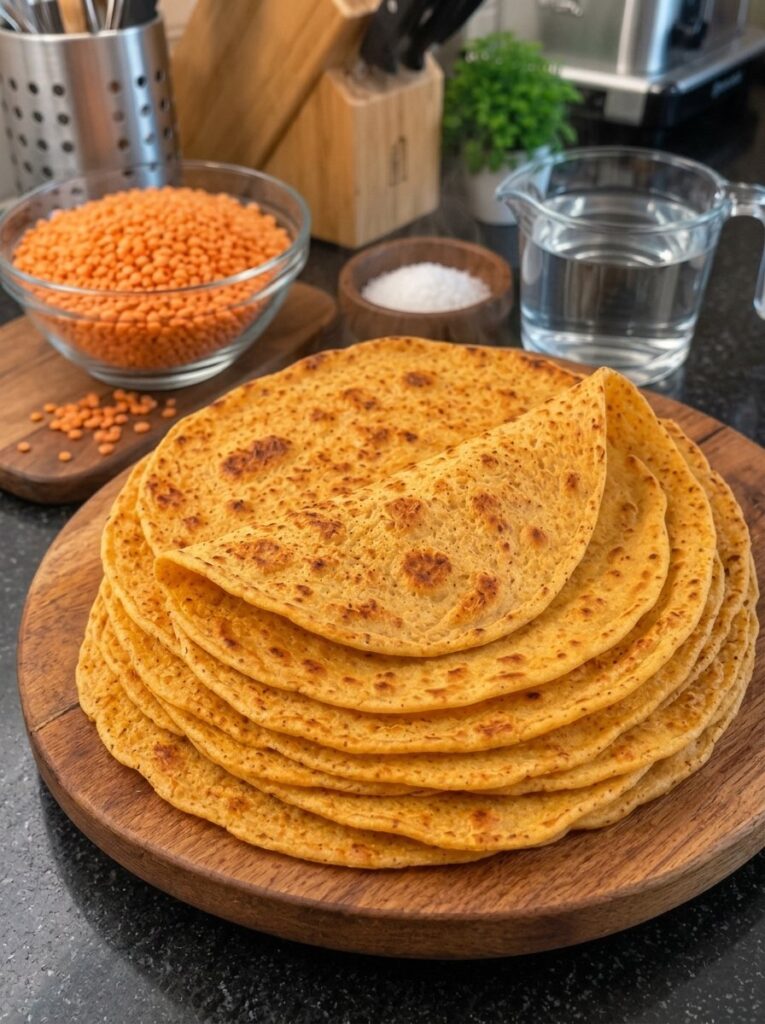
If you love homemade bread but don’t want to deal with yeast, kneading, proofing, or a long list of ingredients, this 3-ingredient red lentil flatbread is about to become a staple in your kitchen. It is made with just red lentils, water, and salt. The lentils are soaked, blended into a smooth batter, and cooked in a skillet until they turn into soft, flexible flatbreads with lightly golden edges.
These lentil flatbreads are naturally gluten-free, budget-friendly, and wonderfully versatile. Use them as wraps for a quick lunch, tear them up to scoop hummus, or serve them warm beside a bowl of soup or a fragrant curry. Whether you are a seasoned home cook or a complete beginner, this recipe is simple enough to master on your first try.
In this guide, you will find everything you need: the full ingredient list, a clear step-by-step method, expert tips for the best texture, troubleshooting advice, creative serving ideas, and storage instructions so you can make a batch ahead of time.
Table of Contents
- Why You Will Love This Red Lentil Flatbread
- Ingredients You Need
- Equipment
- How to Make Red Lentil Flatbread, Step by Step
- Tips for the Best Red Lentil Flatbread
- Common Problems and How to Fix Them
- Serving Ideas
- Flavor Variations
- Storage, Freezing, and Reheating
- Nutrition and Dietary Notes
- Recipe Details at a Glance
- Frequently Asked Questions
- Final Thoughts
Why You Will Love This Red Lentil Flatbread
There are plenty of flatbread recipes out there, but this one stands out for several reasons.
Only three ingredients. Red lentils, water, and salt are all you need. There is no flour, no yeast, no baking powder, and no complicated pantry shopping.
No kneading or proofing. Traditional flatbreads require mixing dough, resting it, and rolling it out. Here, you simply blend a batter and pour it into a pan. There is no dough to handle at all.
Naturally gluten-free. Because the flatbreads are made entirely from lentils, they are a great option for anyone avoiding gluten. They also contain no flour and no yeast, which makes them easy to fit into many different eating styles.
Budget-friendly. Dry red lentils are one of the most affordable pantry staples you can buy. A single cup makes six to eight flatbreads, which means a very low cost per serving.
Soft and flexible. When the batter is blended until silky smooth and cooked over medium heat, the flatbreads come out pliable enough to fold and roll without cracking. They are an excellent alternative to tortillas for wraps.
Beginner-friendly. If you can use a blender and a nonstick skillet, you can make this recipe. The method is forgiving, and the batter is easy to adjust if it turns out too thick or too thin.
Ingredients You Need
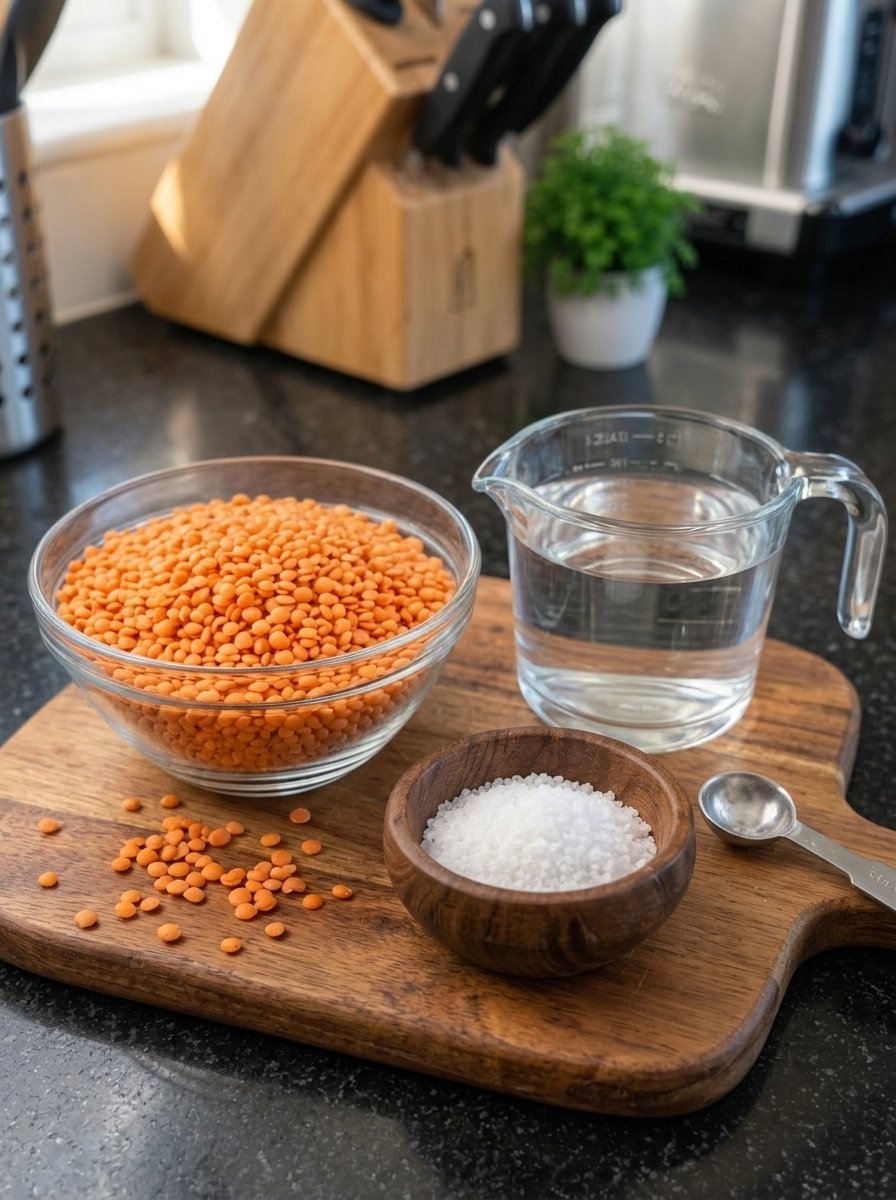
This recipe really does use only three ingredients:
- 1 cup (190 to 200 g) dry red lentils. Split red lentils work best because they soften quickly and blend into a very smooth batter.
- 1 cup (240 ml) water, plus extra for soaking. Use fresh water for blending rather than the soaking water.
- ½ teaspoon salt, or to taste.
A small amount of oil is optional. You do not need it for the recipe itself, but if your pan tends to stick, a light greasing can help.
A quick note on red lentils
Red lentils are small, orange-colored lentils that are sold either whole or split. Split red lentils are the most common type in grocery stores and are ideal here. Before soaking, it helps to pick through them for any debris and give them a quick look, then soak them as directed below. Their mild, slightly earthy flavor works well in both savory and lightly spiced dishes, and the batter turns a pretty golden color as it cooks.
Equipment
You do not need anything fancy for this recipe. Gather these basics before you begin:
- A medium bowl for soaking
- A fine-mesh strainer or colander for draining
- A blender (a high-speed blender gives the smoothest batter, but a standard one works too)
- A good nonstick skillet, about 8 to 10 inches across
- A thin, flexible spatula
- A ¼ cup measuring cup or small ladle
- A clean kitchen towel for keeping the flatbreads warm
How to Make Red Lentil Flatbread, Step by Step
Step 1: Soak the red lentils
Place the dry red lentils in a bowl and cover them generously with water. Let them soak for at least 3 hours, or up to 4 hours, until softened. If you plan to soak them for longer than that, place the bowl in the refrigerator.
Soaking is the most important step for texture. Softened lentils blend into a smooth, creamy batter, and a smooth batter is what gives you flexible flatbreads that cook evenly.
Step 2: Drain and rinse
Drain the soaked lentils thoroughly and rinse them under cool running water. Allow any excess water to drain away before transferring the lentils to your blender. Discard the soaking water, since it is best to use fresh water for the batter.
Step 3: Blend the batter
Add the soaked lentils, 1 cup (240 ml) of fresh water, and the salt to your blender. Blend until the mixture is completely smooth, stopping to scrape down the sides if necessary.
The finished batter should be pourable but not watery. Think of the consistency of a classic pancake batter or a thin crepe batter. If it seems too thick, add water one tablespoon at a time until it flows easily off a spoon.
Step 4: Heat the skillet
Place a nonstick skillet over medium heat and let it warm up thoroughly. A properly heated pan helps the batter set quickly as soon as it touches the surface. If your pan tends to stick, lightly grease it with a little oil, although oil is not required for the three-ingredient recipe itself.
Step 5: Pour and spread the batter
Pour approximately ¼ cup of batter into the center of the hot skillet. Quickly tilt the pan in a circular motion so the batter spreads into a thin, even round. Aim for a thickness similar to a small tortilla.
Work quickly here. The batter begins to set almost immediately, so tilt the pan right after pouring for the neatest circles.
Step 6: Cook until set
Cook for about 2 to 3 minutes, until the surface looks dry, the edges begin to lift, and the underside develops light golden spots. Carefully slide a thin spatula underneath and flip the flatbread.
Step 7: Cook the other side
Cook the second side for another 1 to 2 minutes, until it is set and lightly golden. Transfer the cooked flatbread to a plate and cover it with a clean kitchen towel to help keep it soft.
Step 8: Repeat and serve
Repeat with the remaining batter, stirring it gently between portions if it begins to settle. Stack the finished flatbreads under the towel to retain their warmth and flexibility. Serve warm with your favorite fillings, dips, or savory dishes.
Tips for the Best Red Lentil Flatbread
A few small habits make the difference between good flatbread and great flatbread.
Soak the lentils thoroughly. Soaking for at least 3 hours softens the lentils and makes them far easier to blend into a smooth batter. Skipping or shortening this step can leave you with a gritty texture.
Drain before blending. Use fresh water for blending rather than the soaking water. This keeps the batter clean tasting and gives you better control over the consistency.
Blend until silky smooth. A smooth batter helps the flatbreads cook evenly and gives them a more flexible texture. Take an extra minute in the blender if you are unsure.
Adjust the consistency. The batter should resemble a pourable pancake batter. If it is too thick, it will be difficult to spread and the flatbreads will turn out heavy. Add a little water to loosen it.
Use a good nonstick pan. A quality nonstick skillet makes flipping much easier and means you do not need extra oil.
Cook over medium heat. Excessive heat can brown the outside before the inside has time to set. Medium heat gives you an even golden color and a fully cooked center.
Keep the stack covered. As soon as each flatbread comes off the pan, stack it under a clean towel. The trapped steam keeps them soft and bendable.
Common Problems and How to Fix Them
My flatbread is sticking to the pan
Make sure the skillet is fully preheated before pouring in the batter. A pan that is not hot enough will cause sticking. Also check that your nonstick coating is in good condition. If needed, lightly grease the pan with a small amount of oil between flatbreads.
The flatbread tears when I flip it
This usually means it needs another 30 seconds to a minute of cooking on the first side. Wait until the surface looks dry and the edges begin to lift before flipping. A thin spatula also helps you get cleanly underneath.
The flatbread is too thick or heavy
Your batter is probably too thick. Whisk in a little water, one tablespoon at a time, until it reaches a pourable consistency. Spread the batter thinner by tilting the pan promptly after pouring.
The flatbread is too brown or crispy
Your heat is likely too high. Lower the burner to medium, which allows the inside to set before the outside darkens. Also remember to cover finished flatbreads with a towel so they stay soft.
The texture is gritty
The lentils may not have soaked long enough, or the batter may need more blending. Soak for the full 3 to 4 hours next time, and blend until completely smooth.
The batter is separating
It is normal for the batter to settle as it sits. Stir it gently between portions so every flatbread has the same consistency.
Serving Ideas
These red lentil flatbreads are mild, soft, and adaptable, so they pair with almost anything. Here are some of the best ways to enjoy them.
Fresh vegetable wraps. Fill a flatbread with lettuce, cucumber, tomatoes, avocado, and your favorite dressing for a light, refreshing lunch.
Protein-packed lunch. Add grilled chicken, eggs, tofu, or falafel with a creamy sauce for a filling meal that travels well.
Curry companion. Serve alongside lentil curry, chickpea curry, or any other saucy dish. Tear off pieces and use them to scoop up every last bite.
Hummus and flatbread. Tear the flatbreads into pieces and enjoy them with hummus, olives, and fresh vegetables for a simple snack platter.
Quick breakfast. Fill with scrambled eggs and cheese for an easy savory breakfast wrap.
Soup side. Serve warm alongside tomato soup, vegetable soup, or a hearty stew in place of a dinner roll.
Flavor Variations
Once you have mastered the basic recipe, you can experiment with small additions to the batter. Keep any additions modest so the batter stays smooth and easy to spread.
- Garlic and herb: Blend in a small clove of garlic or a pinch of dried herbs such as oregano or thyme.
- Warm spice: Add a pinch of cumin, turmeric, or paprika for color and a gentle savory note.
- Black pepper: A few cracks of fresh pepper adds a mild kick.
- Fresh greens: A small handful of fresh cilantro or parsley blended into the batter adds flecks of green and a fresh flavor.
The classic three-ingredient version is wonderful on its own, but these simple twists let you tailor the flatbreads to whatever you are serving them with.
Storage, Freezing, and Reheating
These flatbreads are great for meal prep. Make a batch at the start of the week and enjoy them for days.
Refrigerator. Let the flatbreads cool completely, then store them in an airtight container for up to 3 to 4 days.
Freezer. Separate each cooled flatbread with parchment paper and freeze in a sealed freezer-safe bag for up to 2 months. The parchment keeps them from sticking together, so you can pull out just the number you need.
Reheating. Warm the flatbreads in a skillet for about 20 to 30 seconds per side, or microwave briefly between slightly damp paper towels. Both methods restore their softness.
Keep them flexible. Stack the flatbreads and cover them with a clean towel after cooking to prevent them from drying out.
Food safety. Refrigerate cooked flatbreads within 2 hours rather than leaving them at room temperature for extended periods.
Nutrition and Dietary Notes
Red lentils are a pulse, which means they are naturally rich in plant-based protein and fiber compared with many refined flours. Because this recipe uses only lentils, water, and salt, the flatbreads are naturally gluten-free and made without flour or yeast, so they suit a wide range of dietary preferences.
Exact nutrition values will vary depending on the brand of lentils you use and the size of your flatbreads, so use a nutrition calculator if you need precise numbers. If you are following a strict gluten-free diet for medical reasons, look for lentils that are labeled gluten-free, since lentils can sometimes be processed in facilities that handle wheat.
Recipe Details at a Glance
- Prep time: 10 minutes
- Soaking time: 3 to 4 hours
- Cooking time: 15 to 20 minutes
- Total time: Approximately 3 hours 25 minutes to 4 hours 30 minutes
- Yield: Approximately 6 to 8 small flatbreads
- Cooking method: Stovetop skillet
- Main ingredients: Red lentils, water, and salt
- Texture: Soft, flexible, and lightly golden
- Dietary notes: Naturally gluten-free and made without flour or yeast
- Difficulty: Easy, beginner-friendly
Frequently Asked Questions
Can I make red lentil flatbread without soaking the lentils?
Soaking is strongly recommended. Soaked lentils blend into a much smoother batter, which gives you evenly cooked, flexible flatbreads. Without soaking, the batter is more likely to be gritty and the flatbreads less pliable.
How long should I soak the lentils?
Soak them for at least 3 hours, or up to 4 hours. If you want to soak them longer, such as overnight, keep them in the refrigerator.
Do I need oil to cook the flatbreads?
No. With a good nonstick pan, you can cook these flatbreads without any oil. If your pan tends to stick, a light greasing is fine, but it is not part of the three-ingredient recipe.
Are red lentil flatbreads gluten-free?
Yes, they are naturally gluten-free because they contain no wheat flour. If you need to avoid gluten strictly, check that your lentils are labeled gluten-free.
Can I use green or brown lentils instead?
This recipe is developed for red lentils, which soften quickly and blend into the smoothest batter. Other lentils may need longer soaking and can produce a different color and texture, so red lentils are the best choice for reliable results.
Why is my flatbread not flexible?
The most common causes are a batter that is too thick, a pan that is too hot, or flatbreads that were left uncovered after cooking. Thin the batter slightly, cook over medium heat, and stack the finished flatbreads under a clean towel.
Can I make the batter ahead of time?
You can prepare the lentils by soaking them in advance. For best results, blend the batter shortly before cooking so it is fresh. If the batter settles, stir it gently before using.
How do I keep the flatbreads soft?
Cover them with a clean kitchen towel as soon as they come off the pan. The trapped steam keeps them soft and flexible until you are ready to serve.
Can I freeze red lentil flatbread?
Yes. Let them cool completely, separate each one with parchment paper, and freeze in a sealed freezer-safe bag for up to 2 months. Reheat in a skillet for 20 to 30 seconds per side.
How many flatbreads does this recipe make?
One cup of dry red lentils yields approximately 6 to 8 small flatbreads, depending on how much batter you use for each one.
Final Thoughts
This 3-ingredient red lentil flatbread proves that great homemade bread does not have to be complicated. With just red lentils, water, and salt, you can make soft, golden, flexible flatbreads that work for wraps, dips, soups, curries, and quick breakfasts. There is no yeast, no kneading, and no flour, and the whole process is easy enough for a beginner.
The secret is simple: soak the lentils well, blend the batter until silky smooth, cook over medium heat, and keep the finished stack covered with a clean towel. Follow those four habits and you will get tender, pliable flatbreads every time.
Print
3-Ingredient Red Lentil Flatbread
Ingredients
This recipe really does use only three ingredients:
- 1 cup (190 to 200 g) dry red lentils. Split red lentils work best because they soften quickly and blend into a very smooth batter.
- 1 cup (240 ml) water, plus extra for soaking. Use fresh water for blending rather than the soaking water.
- ½ teaspoon salt, or to taste.
A small amount of oil is optional. You do not need it for the recipe itself, but if your pan tends to stick, a light greasing can help.
A quick note on red lentils
Red lentils are small, orange-colored lentils that are sold either whole or split. Split red lentils are the most common type in grocery stores and are ideal here. Before soaking, it helps to pick through them for any debris and give them a quick look, then soak them as directed below. Their mild, slightly earthy flavor works well in both savory and lightly spiced dishes, and the batter turns a pretty golden color as it cooks.
Instructions
Place the dry red lentils in a bowl and cover them generously with water. Let them soak for at least 3 hours, or up to 4 hours, until softened. If you plan to soak them for longer than that, place the bowl in the refrigerator.
Soaking is the most important step for texture. Softened lentils blend into a smooth, creamy batter, and a smooth batter is what gives you flexible flatbreads that cook evenly.
Drain the soaked lentils thoroughly and rinse them under cool running water. Allow any excess water to drain away before transferring the lentils to your blender. Discard the soaking water, since it is best to use fresh water for the batter.
Add the soaked lentils, 1 cup (240 ml) of fresh water, and the salt to your blender. Blend until the mixture is completely smooth, stopping to scrape down the sides if necessary.
The finished batter should be pourable but not watery. Think of the consistency of a classic pancake batter or a thin crepe batter. If it seems too thick, add water one tablespoon at a time until it flows easily off a spoon.
Place a nonstick skillet over medium heat and let it warm up thoroughly. A properly heated pan helps the batter set quickly as soon as it touches the surface. If your pan tends to stick, lightly grease it with a little oil, although oil is not required for the three-ingredient recipe itself.
Pour approximately ¼ cup of batter into the center of the hot skillet. Quickly tilt the pan in a circular motion so the batter spreads into a thin, even round. Aim for a thickness similar to a small tortilla.
Work quickly here. The batter begins to set almost immediately, so tilt the pan right after pouring for the neatest circles.
Cook for about 2 to 3 minutes, until the surface looks dry, the edges begin to lift, and the underside develops light golden spots. Carefully slide a thin spatula underneath and flip the flatbread.
Cook the second side for another 1 to 2 minutes, until it is set and lightly golden. Transfer the cooked flatbread to a plate and cover it with a clean kitchen towel to help keep it soft.
Repeat with the remaining batter, stirring it gently between portions if it begins to settle. Stack the finished flatbreads under the towel to retain their warmth and flexibility. Serve warm with your favorite fillings, dips, or savory dishes.