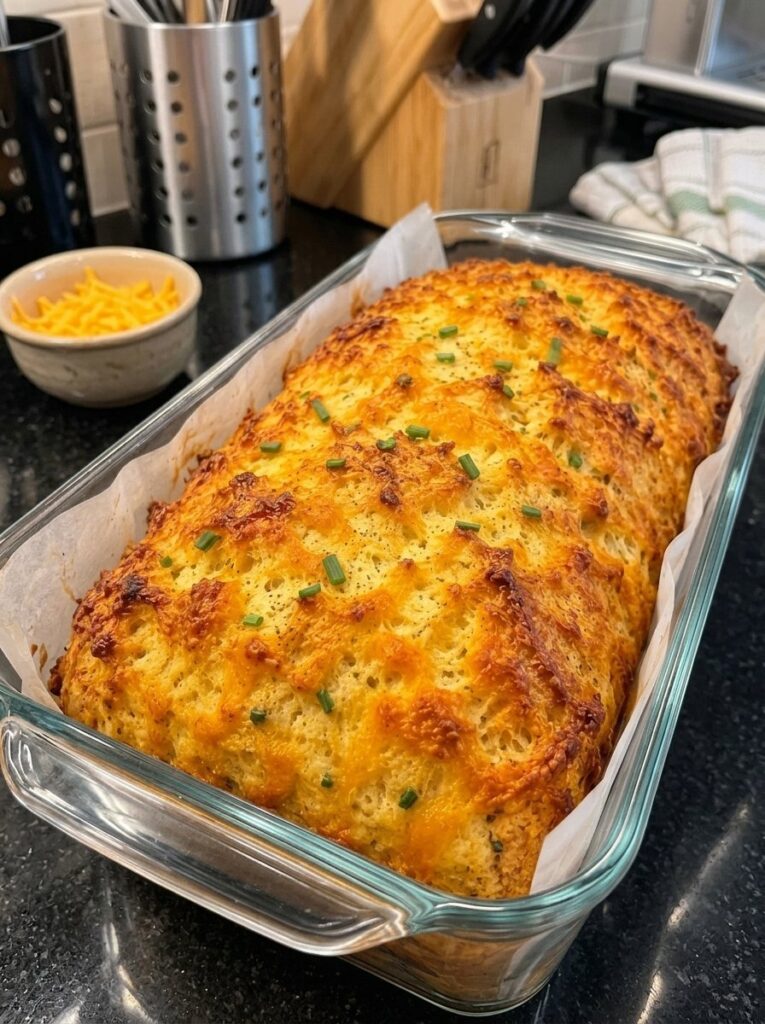
There is something deeply satisfying about slicing into a warm, golden loaf of homemade bread and finding pockets of melted cheddar inside a soft, tender crumb. The good news is that you do not need yeast, a stand mixer, or hours of rising time to get that experience. This easy cottage cheese cheddar bread is a simple quick bread that comes together in about 15 minutes of hands-on work, bakes in a standard loaf pan, and delivers a savory, moist loaf with a little extra protein.
If you have been searching for a cottage cheese bread recipe that is genuinely easy, reliably moist, and full of flavor, this is the one to bookmark. In this guide you will learn why this loaf works, what each ingredient does, how to make it step by step, how to avoid the most common mistakes, and how to store, freeze and serve it so you can enjoy it all week.
Table of Contents
- Why You Will Love This Cottage Cheese Cheddar Bread
- Why Cottage Cheese in Bread Works So Well
- Ingredients You Need (and Why)
- Tips for the Best Cottage Cheese Cheddar Bread
- Step-by-Step Instructions
- Flavor Variations and Substitutions
- Common Mistakes and How to Fix Them
- What to Serve with Cheddar Bread
- How to Store, Freeze and Reheat
- Nutrition and Why This Loaf Is a Smart Choice
- Frequently Asked Questions
- Final Thoughts
- Quick Recipe Card
Why You Will Love This Cottage Cheese Cheddar Bread
Before getting into the details, here is why this recipe earns a permanent spot in a lot of home kitchens.
It is truly easy. There is no yeast to proof, no dough to knead, and no waiting for anything to rise on the counter. You whisk the wet ingredients, stir together the dry ones, combine them gently, fold in the cheese, and bake. If you can make muffins or banana bread, you can make this loaf.
It is moist and tender. Cottage cheese brings moisture and a gentle tang to the batter, which keeps the crumb soft instead of dry. Many savory quick breads turn out crumbly or dense, but the combination of cottage cheese and eggs here produces a tender, almost custardy interior.
It is packed with cheesy flavor. Sharp cheddar is the star. Stirred through the batter and sprinkled over the top, it melts into savory pockets and forms a golden, slightly crisp crust.
It offers a bit of extra protein. Cottage cheese, eggs and cheddar all contribute protein, which makes a slice more filling than a typical plain bread. That makes it a great option for breakfast, lunch boxes and afternoon snacks.
It is incredibly versatile. Serve it warm with butter, toast it for breakfast, use it for a grilled cheese, or cube it for a snack board. It pairs with almost any soup, salad or egg dish.
It is easy to customize. Garlic powder, onion powder, chives, black pepper, and other cheeses all work beautifully, so you can adjust the flavor to match your meal.
Why Cottage Cheese in Bread Works So Well
Adding cottage cheese to bread might sound unusual if you have only ever eaten it by the spoonful, but it is actually a smart baking ingredient. Here is what it does inside the batter.
Moisture. Cottage cheese is made of soft curds suspended in a creamy liquid. When it is mixed into a batter and baked, that moisture is released slowly, helping the loaf stay soft for days instead of drying out.
Tenderness. The fat and protein in cottage cheese interrupt gluten formation just enough to keep the crumb tender. This is why the loaf feels soft rather than chewy.
Flavor. Cottage cheese has a mild, slightly tangy, salty flavor that supports the sharpness of cheddar. It does not taste like cottage cheese in the finished bread; instead it adds a rounded, creamy savoriness.
Structure. Along with the eggs, cottage cheese helps bind the batter. The proteins set as the loaf bakes, giving you a sliceable bread that holds together nicely once cooled.
Protein. A cup of cottage cheese adds a meaningful amount of protein to the loaf, which is a big reason this style of bread has become so popular with people looking for more satisfying baked goods.
If you are worried about texture, there is an easy fix: blend the cottage cheese until smooth before using it. Blended cottage cheese disappears into the batter completely, so even picky eaters will not notice the curds.
Ingredients You Need (and Why)
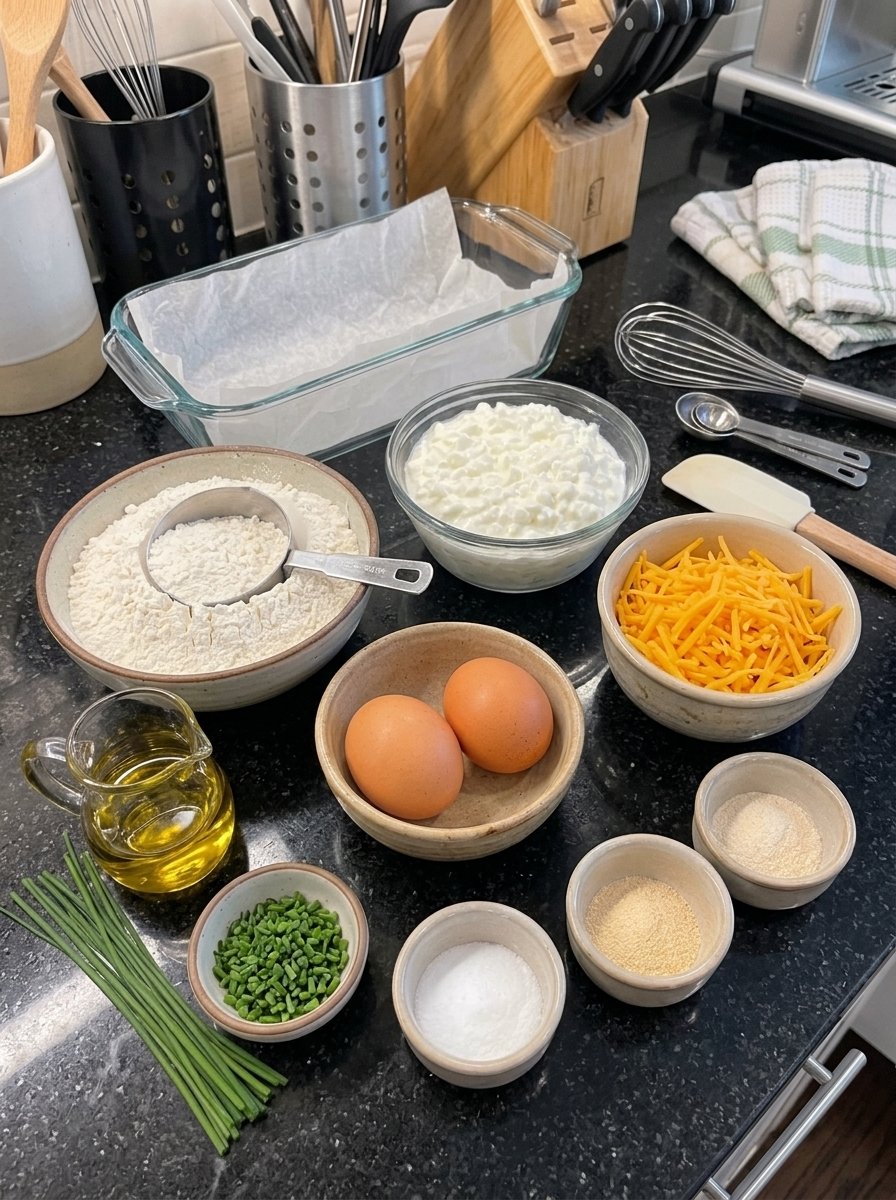
This recipe uses simple pantry and fridge staples. Here is the full list along with what each ingredient contributes.
- 1 cup (225 g) cottage cheese. The moisture and protein base of the loaf. Full-fat or low-fat both work, though full-fat gives a richer result.
- 2 large eggs. They bind the batter, add structure, and help the bread set so it slices cleanly.
- 1½ cups (180 g) all-purpose flour. The foundation of the crumb. Measure carefully, because too much flour leads to a dense loaf.
- 1 cup (100 to 115 g) shredded sharp cheddar cheese. The flavor star. Sharp cheddar stands out best against the creamy cottage cheese.
- 2 teaspoons baking powder. The leavening agent that gives the loaf lift without any yeast.
- ½ teaspoon salt. Enhances every other flavor and balances the richness of the cheese.
- ½ teaspoon garlic powder (optional). Adds savory depth.
- ½ teaspoon onion powder (optional). Adds a mellow, savory background note.
- 1 tablespoon chopped fresh chives (optional). Brings a fresh, gentle onion flavor and a pop of green.
- 1 tablespoon olive oil or melted butter. Adds richness and helps the crumb stay tender.
A note on the cheddar
Cheese choice matters. Sharp cheddar gives the boldest flavor, and shredding it yourself from a block usually produces better melting than pre-shredded cheese, which is often coated with anti-caking starches. If you prefer a milder loaf, medium cheddar works, but you may want to add a pinch of black pepper or extra garlic powder to keep the flavor lively.
A note on the flour
All-purpose flour is the standard here. The most common reason quick breads turn out heavy is too much flour. Weigh it if you have a kitchen scale (180 g is the target), or spoon the flour gently into your measuring cup and level it off instead of scooping straight from the bag, which packs in extra.
Tips for the Best Cottage Cheese Cheddar Bread
A few small habits make a big difference in the final loaf.
- Blend the cottage cheese for a smoother texture. Blending until creamy distributes moisture evenly and creates a uniform crumb. If you like a more rustic loaf, mash the cottage cheese well with a fork instead.
- Use freshly shredded cheddar. Cheese you shred yourself melts more evenly and tastes cheesier.
- Measure the flour carefully. Weigh it or spoon and level it. Too much flour is the number one cause of dense quick bread.
- Avoid overmixing. Stir just until no large patches of dry flour remain. Overmixing develops gluten and makes the loaf firm and heavy.
- Customize the seasoning. Garlic powder, onion powder, black pepper and chives all complement cheddar beautifully.
- Prepare the pan well. Grease the loaf pan or line it with parchment paper, leaving a little overhang so you can lift the bread out easily.
- Check the center before removing it. The middle should be fully cooked. If the top browns too fast, loosely tent it with foil while the center finishes baking.
- Let it rest before slicing. Cooling allows the crumb to set, so you get neat slices instead of crumbles.
Step-by-Step Instructions
Step 1: Prepare the oven and loaf pan
Preheat your oven to 350°F (175°C). Grease an 8½ × 4½-inch loaf pan with butter or oil, or line it with parchment paper, leaving a little overhang on the sides to help lift out the finished bread. Preparing the pan before you mix the batter keeps the process smooth and prevents sticking.
Step 2: Prepare the cottage cheese
Place the cottage cheese in a blender or food processor and blend until smooth and creamy. This spreads the moisture evenly through the batter and gives a more uniform texture. If you prefer a slightly more rustic loaf, skip the blending and simply mash the cottage cheese well with a fork.
Step 3: Mix the wet ingredients
In a large mixing bowl, whisk the eggs until well combined. Add the blended cottage cheese and the olive oil or melted butter, then stir until the mixture is smooth. Make sure the eggs and cottage cheese are thoroughly combined before adding the dry ingredients, since this helps the batter come together evenly.
Step 4: Combine the dry ingredients
In a separate bowl, mix the flour, baking powder, salt, and the optional garlic powder and onion powder. Stir briefly so the baking powder and seasonings are evenly distributed. This helps the loaf rise evenly and prevents concentrated pockets of seasoning.
Step 5: Make the cheddar bread batter
Add the dry ingredients to the wet mixture. Stir gently with a spatula or wooden spoon until a thick batter forms and no large patches of dry flour remain. Fold in the shredded cheddar and the optional chives, reserving a small handful of cheese for the top.
The batter should be thick and moist, not pourable like cake batter. Resist the urge to keep stirring, because excessive mixing makes the finished loaf firm and heavy.
Step 6: Transfer the batter to the pan
Spoon the batter into the prepared loaf pan. Use a spatula to spread it evenly into the corners and smooth the surface. Sprinkle the reserved cheddar over the top for an extra cheesy finish. If you like, add a small pinch of black pepper or a few more chopped chives.
Step 7: Bake until golden
Place the pan on the center rack of the preheated oven and bake for approximately 40 to 50 minutes, until the top is golden and a toothpick inserted into the center comes out without wet batter. Melted cheese can cling to the toothpick, so look for moist crumbs rather than raw batter when checking doneness.
If the top becomes too dark before the center is cooked, loosely cover the loaf with aluminum foil and continue baking until done.
Step 8: Cool the loaf properly
Remove the pan from the oven and let the bread rest for about 10 to 15 minutes. Carefully lift it out or turn it onto a wire rack, then let it cool for at least another 20 minutes before slicing. This resting period helps the interior set. Slicing too early can cause the warm, cheesy center to crumble.
Step 9: Slice and serve
Cut the cooled loaf into thick slices with a serrated bread knife. Serve it plain, spread with butter, or lightly toasted to bring out the savory cheddar flavor. Enjoy it with soup, eggs, salads or your favorite sandwich fillings.
Flavor Variations and Substitutions
Once you have made the base recipe, it is easy to make it your own.
Jalapeño cheddar bread. Fold in 2 to 3 tablespoons of finely diced fresh or pickled jalapeño (patted dry) for a gentle kick.
Garlic herb cheddar bread. Increase the garlic powder slightly and add dried or fresh herbs such as parsley, thyme or rosemary.
Black pepper cheddar bread. Add ½ teaspoon of freshly cracked black pepper to the dry ingredients for a classic, bold flavor.
Bacon cheddar bread. Stir in a few tablespoons of crumbled, cooked bacon for a smoky, indulgent loaf.
Different cheeses. Swap part of the cheddar for Monterey Jack, Colby, Gruyère or pepper jack. Keep the total amount of shredded cheese about the same.
Cottage cheese options. Full-fat cottage cheese gives the richest texture, while low-fat works too. Small-curd cottage cheese blends and mixes most easily.
Butter or oil. Melted butter adds a richer, more classic flavor, while olive oil gives a slightly fruitier, more savory note. Either works well.
Mini loaves or muffins. Divide the batter among a muffin tin for cheesy savory muffins. Bake for a shorter time, checking for doneness with a toothpick starting around 20 minutes.
Common Mistakes and How to Fix Them
The loaf is dense or heavy. This is usually caused by too much flour or overmixing. Next time, weigh the flour or spoon and level it, and stir only until the dry flour disappears.
The center is gummy. The loaf may need more time, or your oven may run cool. Bake until a toothpick comes out with moist crumbs but no wet batter, and tent with foil if the top darkens early.
The top browns too quickly. Cheese on top browns faster than plain batter. Loosely cover the loaf with foil partway through baking, and make sure the pan is on the center rack.
The bread crumbles when sliced. It was probably cut while still too warm. Let it cool at least 30 minutes total, and use a serrated knife with a gentle sawing motion.
The bread sticks to the pan. Grease the pan thoroughly or use a parchment sling with overhang so you can lift the loaf out cleanly.
The flavor is bland. Make sure you use sharp cheddar, do not skip the salt, and consider adding the optional garlic powder, onion powder and chives. A pinch of black pepper also helps.
What to Serve with Cheddar Bread
This loaf is a flexible side and a satisfying snack. Here are some of the best ways to enjoy it.
- Warm with butter. A simple, comforting snack straight from the cutting board.
- Breakfast toast. Toast a slice and top it with scrambled eggs, avocado or sliced tomatoes.
- Soup companion. Pair it with tomato soup, creamy broccoli soup, potato soup or a hearty vegetable stew.
- Grilled cheese. Use two slices for a grilled cheese sandwich with even more cheddar.
- Savory brunch. Serve alongside eggs, roasted potatoes and fresh fruit.
- Herb butter. Spread with garlic butter and fresh parsley for extra savory flavor.
- Open-faced toast. Top with avocado, cream cheese or roasted vegetables.
- Snack board. Cut into cubes or small slices and serve with cheese, olives, fresh vegetables and dips.
How to Store, Freeze and Reheat
Because this bread contains cottage cheese and eggs, storage matters for both quality and food safety.
Refrigerator. Let the loaf cool completely, then store it in an airtight container in the refrigerator for up to 4 days.
Freezer. Slice the cooled bread and place parchment paper between the slices so they do not stick together. Store in a freezer-safe bag or container for up to 2 months for the best quality.
Reheating. Warm slices in a toaster oven or in a 325°F (165°C) oven until heated through.
From frozen. Thaw slices in the refrigerator, or reheat directly from frozen in a toaster oven, adjusting the time as needed.
Meal prep. Slice the loaf after cooling and refrigerate or freeze individual portions for quick breakfasts and snacks all week.
For the best texture. Lightly toast refrigerated slices before serving. This refreshes the exterior and brings out the cheddar flavor.
Nutrition and Why This Loaf Is a Smart Choice
Nutrition varies depending on the brand of cottage cheese, the type of cheddar, and the slice size, so treat any numbers as estimates. In general, this loaf is appealing because it combines several protein-rich ingredients: cottage cheese, eggs and cheddar. That gives each slice more staying power than many traditional breads.
It is also a handy way to use up cottage cheese in the fridge, and it relies on ordinary ingredients you can find at any grocery store. Because it is made without yeast, it is a convenient option for beginner bakers and busy weeknights. If you are watching a particular nutrition goal, such as sodium or calories, consider using lower-sodium cheese or a lower-fat cottage cheese, and check labels for the exact values.
Frequently Asked Questions
Can I make cottage cheese cheddar bread without blending the cottage cheese?
Yes. If you prefer a more rustic loaf, mash the cottage cheese well with a fork instead of blending it. Blending gives the smoothest, most uniform texture, but both methods work.
Does this bread taste like cottage cheese?
Not really. The cottage cheese adds moisture, tenderness and a mild tang, but the sharp cheddar and seasonings are the dominant flavors in the finished loaf.
Do I need yeast to make this bread?
No. This is a quick bread that rises with baking powder, so there is no yeast, no proofing and no kneading involved.
How do I know when the bread is done?
The top should be golden, and a toothpick inserted into the center should come out with moist crumbs rather than wet batter. Melted cheese may cling to the toothpick, so look at the crumb rather than the cheese.
Why did my cheddar bread turn out dense?
The most common causes are too much flour and overmixing. Weigh the flour or spoon it gently into the measuring cup, and stir the batter only until combined.
Can I freeze cottage cheese cheddar bread?
Yes. Slice the cooled loaf, separate the slices with parchment paper, and freeze in a freezer-safe bag or container for up to 2 months for the best quality.
How long does it keep in the refrigerator?
Stored in an airtight container, it keeps for up to 4 days. Lightly toasting slices before serving refreshes the texture.
Can I use low-fat cottage cheese?
Yes, though full-fat cottage cheese generally gives a richer, more tender result. Blending low-fat cottage cheese can help keep the texture smooth.
Can I make this recipe as muffins?
Yes. Divide the batter among a greased or lined muffin tin and bake for a shorter time, checking doneness with a toothpick.
What size loaf pan should I use?
An 8½ × 4½-inch loaf pan is ideal. A slightly different size will work, but baking time may change, so check for doneness a little earlier or later.
Final Thoughts
This easy cottage cheese cheddar bread proves that homemade bread does not have to be complicated. With a handful of simple ingredients, one loaf pan and about 15 minutes of preparation, you get a golden, cheesy, moist loaf that works for breakfast, lunch, dinner or snacking. Blend the cottage cheese for a silky crumb, use freshly shredded sharp cheddar for the best melt, measure your flour carefully, and resist the urge to overmix. Then give the loaf time to cool so every slice cuts cleanly.
Once you have the base recipe down, experiment with herbs, spices and different cheeses to make it your own. Serve it warm with butter, alongside a bowl of soup, or toasted with eggs, and enjoy a little extra protein with every bite. If you try it, save the recipe, share it with someone who loves cheesy bread, and keep a few slices in the freezer for busy mornings.
Print
Easy Cottage Cheese Cheddar Bread
Ingredients
This recipe uses simple pantry and fridge staples. Here is the full list along with what each ingredient contributes.
- 1 cup (225 g) cottage cheese. The moisture and protein base of the loaf. Full-fat or low-fat both work, though full-fat gives a richer result.
- 2 large eggs. They bind the batter, add structure, and help the bread set so it slices cleanly.
- 1½ cups (180 g) all-purpose flour. The foundation of the crumb. Measure carefully, because too much flour leads to a dense loaf.
- 1 cup (100 to 115 g) shredded sharp cheddar cheese. The flavor star. Sharp cheddar stands out best against the creamy cottage cheese.
- 2 teaspoons baking powder. The leavening agent that gives the loaf lift without any yeast.
- ½ teaspoon salt. Enhances every other flavor and balances the richness of the cheese.
- ½ teaspoon garlic powder (optional). Adds savory depth.
- ½ teaspoon onion powder (optional). Adds a mellow, savory background note.
- 1 tablespoon chopped fresh chives (optional). Brings a fresh, gentle onion flavor and a pop of green.
- 1 tablespoon olive oil or melted butter. Adds richness and helps the crumb stay tender.
A note on the cheddar
Cheese choice matters. Sharp cheddar gives the boldest flavor, and shredding it yourself from a block usually produces better melting than pre-shredded cheese, which is often coated with anti-caking starches. If you prefer a milder loaf, medium cheddar works, but you may want to add a pinch of black pepper or extra garlic powder to keep the flavor lively.
A note on the flour
All-purpose flour is the standard here. The most common reason quick breads turn out heavy is too much flour. Weigh it if you have a kitchen scale (180 g is the target), or spoon the flour gently into your measuring cup and level it off instead of scooping straight from the bag, which packs in extra.
Instructions
This recipe uses simple pantry and fridge staples. Here is the full list along with what each ingredient contributes.
- 1 cup (225 g) cottage cheese. The moisture and protein base of the loaf. Full-fat or low-fat both work, though full-fat gives a richer result.
- 2 large eggs. They bind the batter, add structure, and help the bread set so it slices cleanly.
- 1½ cups (180 g) all-purpose flour. The foundation of the crumb. Measure carefully, because too much flour leads to a dense loaf.
- 1 cup (100 to 115 g) shredded sharp cheddar cheese. The flavor star. Sharp cheddar stands out best against the creamy cottage cheese.
- 2 teaspoons baking powder. The leavening agent that gives the loaf lift without any yeast.
- ½ teaspoon salt. Enhances every other flavor and balances the richness of the cheese.
- ½ teaspoon garlic powder (optional). Adds savory depth.
- ½ teaspoon onion powder (optional). Adds a mellow, savory background note.
- 1 tablespoon chopped fresh chives (optional). Brings a fresh, gentle onion flavor and a pop of green.
- 1 tablespoon olive oil or melted butter. Adds richness and helps the crumb stay tender.
A note on the cheddar
Cheese choice matters. Sharp cheddar gives the boldest flavor, and shredding it yourself from a block usually produces better melting than pre-shredded cheese, which is often coated with anti-caking starches. If you prefer a milder loaf, medium cheddar works, but you may want to add a pinch of black pepper or extra garlic powder to keep the flavor lively.
A note on the flour
All-purpose flour is the standard here. The most common reason quick breads turn out heavy is too much flour. Weigh it if you have a kitchen scale (180 g is the target), or spoon the flour gently into your measuring cup and level it off instead of scooping straight from the bag, which packs in extra.