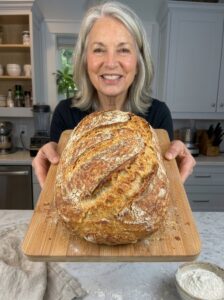
High-Protein Cottage Cheese Cheddar Dill Bagel Bread: Easy No-Knead Loaf
· @oussama
Cheesy, savory and packed with fresh dill flavor, this cottage cheese bagel bread combines the tangy taste of cheddar with the soft, hearty texture of homemade bread. It has the comforting flavor of a cheddar-dill bagel in an easy loaf-style recipe, with extra protein from cottage cheese and no complicated kneading required.
This high-protein cottage cheese bread skips the usual yeast, rising time and bagel boiling. You blend or whisk the cottage cheese with eggs and oil, stir in a seasoned flour mixture and a handful of sharp cheddar, and bake the dough in a loaf pan. About an hour and 15 minutes later, you have a golden, savory loaf with pockets of melted cheese and a fragrant dill aroma. It makes an excellent breakfast, snack or sandwich bread.
Why you will love this cottage cheese cheddar dill bread
This loaf is simple, hearty and full of flavor. Here is what makes it special.
- High in protein. Cottage cheese, eggs and cheddar all add protein, which makes slices filling.
- Bagel-inspired flavor. Dill, garlic, onion and cheddar taste like a savory everything-style bagel.
- No yeast and no rising. Baking powder and baking soda lift the loaf, so there is no waiting.
- No kneading or shaping. You stir the dough in a bowl and bake it in a loaf pan.
- Moist, tender crumb. Cottage cheese keeps the inside soft and slightly tangy.
- Ready in about 1 hour 15 minutes. It is quick enough for a weekday.
- Great for meal prep. Slices keep well in the fridge and freezer.
What does cottage cheese bagel bread taste like?
This bread tastes savory, cheesy and herby, with a soft, dense crumb, a golden cheesy top and a mild tang from the cottage cheese. The dill is fresh and bright, the garlic and onion are gentle, and the sharp cheddar adds a salty, rich flavor. It is more like a cheesy quick bread than a chewy bagel, but the flavors are clearly bagel-inspired.
Why add cottage cheese to bread?
Cottage cheese adds protein, moisture and a creamy texture. Blended or mashed into the dough, it makes the crumb tender and helps the loaf stay moist. Its mild tang also pairs well with cheddar and dill. Because it is already salty, you can use less added salt than in many breads, though the recipe still includes enough to season the loaf properly.
How does this bread rise without yeast?
Baking powder and baking soda do the work. Baking powder releases gas when it gets wet and again when it heats, and baking soda reacts with the mild acidity in the cottage cheese. Together they create bubbles that lift the dough as it bakes, which gives the loaf a soft, airy crumb without any rising time. Because the leavening starts working as soon as the wet and dry ingredients meet, you should mix the dough and bake it right away.
Cottage cheese bagel bread recipe details
This recipe makes 1 loaf of about 8 slices.
- Prep time: 15 minutes
- Bake time: 35-45 minutes
- Cooling time: 15-20 minutes
- Total time: about 1 hour 15 minutes
- Oven temperature: 180°C (350°F)
- Loaf pan size: 8½ x 4½ inches (21 x 11 cm)
- Yield: 1 loaf, approximately 8 slices
Ingredients for cheddar dill cottage cheese bread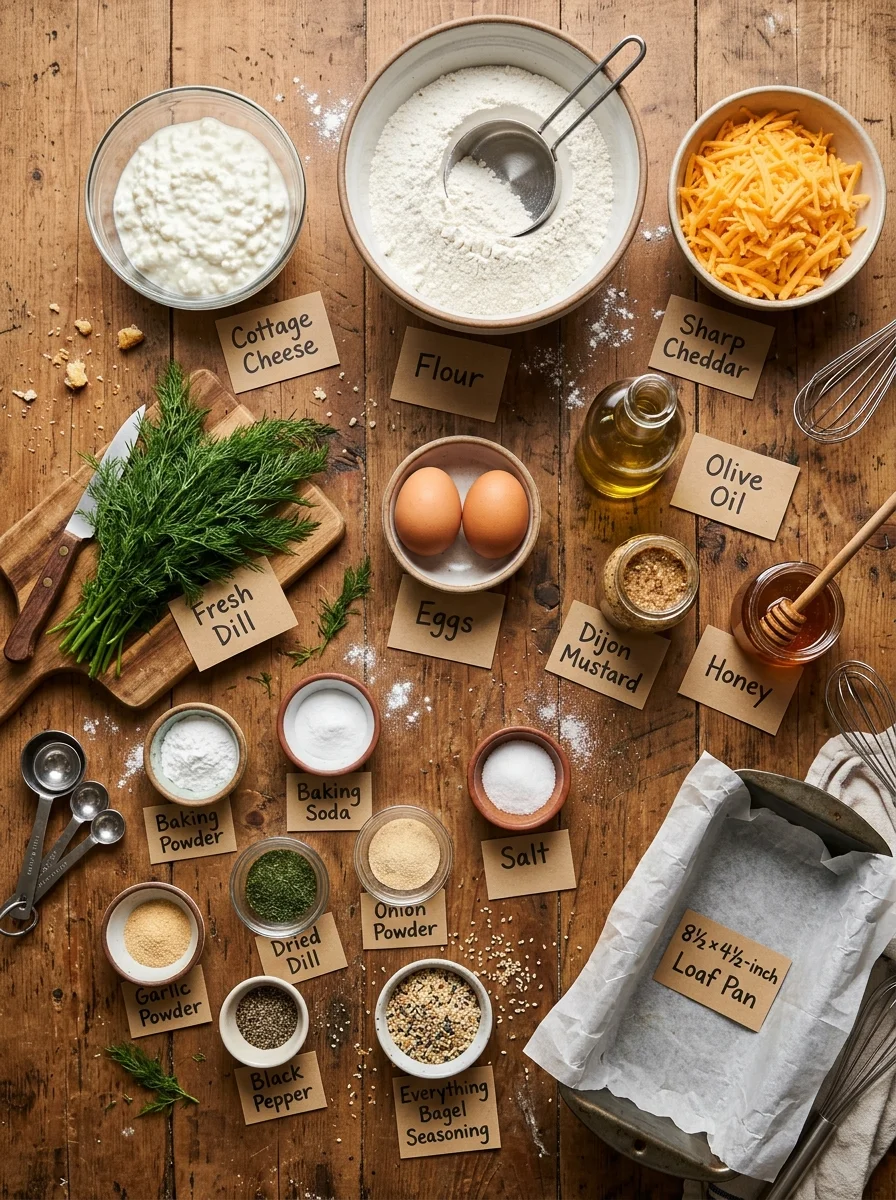
Wet ingredients
- 1 cup (225 g) cottage cheese
- 2 large eggs
- 2 tablespoons (30 ml) olive oil or melted butter
- 1 teaspoon Dijon mustard, optional
- 1 teaspoon honey, optional, for a subtle balance of flavor
Dry ingredients
- 2 cups (250 g) all-purpose flour or bread flour
- 2 teaspoons baking powder
- ½ teaspoon baking soda
- ¾ teaspoon salt, adjusted to taste
- 1 teaspoon garlic powder
- 1 tablespoon dried dill, or 2 tablespoons finely chopped fresh dill
- ½ teaspoon onion powder, optional
- ¼ teaspoon black pepper
Cheddar topping
- 1 cup (100-115 g) shredded sharp cheddar cheese, divided
- 1 teaspoon dried dill or 1 tablespoon fresh dill, for the top
- 1 tablespoon sesame seeds or everything-bagel seasoning, optional
Equipment you will need
- 8½ x 4½-inch (21 x 11 cm) loaf pan
- Parchment paper
- Two mixing bowls
- Whisk and spatula
- Blender or food processor, optional
- Wire cooling rack
- Toothpick or food thermometer
How to make cottage cheese bagel bread, step by step
Follow these seven steps for a golden, cheesy loaf. Preheat the oven first, since the dough should go in the oven right after mixing.
Step 1: Prepare the oven and pan
- Preheat the oven to 180°C (350°F).
- Grease a standard 8½ x 4½-inch (21 x 11 cm) loaf pan, or line it with parchment paper.
Step 2: Blend the cottage cheese
- For a smoother texture, blend the cottage cheese until creamy. You can skip this step if you prefer small cottage cheese curds in the finished bread.
- In a large bowl, whisk together the cottage cheese, eggs, olive oil, Dijon mustard and honey, if using.
Step 3: Mix the dry ingredients
- In a separate bowl, combine the flour, baking powder, baking soda, salt, garlic powder, dill, onion powder and black pepper.
- Stir well so the seasonings and leavening agents are evenly distributed.
Step 4: Make the dough
- Add the dry mixture to the wet ingredients. Stir until a thick, slightly sticky dough forms.
- Fold in about ¾ cup of the shredded cheddar, reserving the remaining cheese for the top.
- The mixture should be thicker than cake batter but softer and wetter than traditional kneaded bread dough.
- Avoid overmixing, which can make the bread tough. If the dough seems unusually dry, add 1 tablespoon of milk at a time until it comes together.
Step 5: Fill the loaf pan
- Transfer the dough into the prepared pan. Smooth the top with a lightly oiled spatula.
- Sprinkle the reserved cheddar over the surface, followed by the extra dill and optional sesame seeds or everything-bagel seasoning.
Step 6: Bake until golden
- Bake for 35-45 minutes, until the loaf is golden and a toothpick inserted into the center comes out without wet batter.
- If the cheese begins browning too quickly, loosely cover the loaf with foil during the final 10-15 minutes.
- For a reliable doneness check, the center should reach approximately 93-96°C (200-205°F).
Step 7: Cool before slicing
- Let the bread rest in the pan for 10 minutes, then transfer it to a wire rack.
- Cool for at least another 15-20 minutes before slicing.
- This helps the crumb set properly and prevents the center from becoming gummy.
How to tell when the bread is done
- Color: The top should be deep golden, with browned cheese.
- Toothpick: It should come out clean, with no wet batter. Melted cheese on the toothpick is fine.
- Temperature: The center should read about 93-96°C (200-205°F).
- Touch: The top should feel firm and spring back lightly.
Protein tips
This loaf is naturally protein-rich, and a few choices can boost it further.
- Choose cottage cheese with a higher protein content. Brands vary considerably, so check the label.
- Use sharp cheddar. It gives stronger flavor without needing extra cheese.
- Consider protein powder carefully. For more protein, replace up to ¼ cup of the flour with unflavored whey protein powder, but expect a slightly different texture.
- Avoid replacing too much flour. Too much protein powder can make the loaf dry or rubbery.
Estimated protein: Approximately 9-12 g per slice when cut into 8 slices. This is an estimate and varies with the brands of cottage cheese, cheddar and flour, and the final loaf size. For an accurate figure, add up the labels of the products you use.
Tips for the best cottage cheese bread
- Blend for a smooth crumb. Blending the cottage cheese gives a more even texture, while leaving it chunky gives a more rustic loaf.
- Drain very wet cottage cheese. If your cottage cheese is watery, drain off the excess liquid, or the dough may be too wet.
- Measure flour carefully. Too much flour makes the loaf dry. Weigh it, or spoon it into the cup and level it off.
- Do not overmix. Stir just until the dough comes together.
- Bake right away. The leavening starts working as soon as the wet and dry ingredients meet.
- Grate your own cheddar. Freshly grated cheese melts better than pre-shredded cheese, which contains anti-caking starch.
- Cool before slicing. The crumb sets as it cools, and slices come out cleaner.
Ingredient notes and substitutions
- Cottage cheese. Small-curd or large-curd both work. Full-fat or low-fat can be used. Full-fat gives a richer loaf.
- Flour. All-purpose flour gives a tender crumb. Bread flour gives a slightly sturdier loaf. Replace up to half with whole wheat for a heartier slice.
- Eggs. They bind the dough and add protein. Use them at room temperature.
- Cheddar. Sharp cheddar has the strongest flavor. Mild cheddar works, but the loaf will taste less cheesy.
- Dill. Fresh dill is bright and aromatic. Dried dill is more concentrated, so use less of it.
- Dijon mustard. It is optional, but it adds a subtle savory tang that goes well with cheddar.
- Salt. Cottage cheese and cheddar are salty, so taste your ingredients and adjust.
Cottage cheese bread troubleshooting
- Bread is gummy in the center: It was underbaked, or the cottage cheese was very wet. Bake longer and drain the cottage cheese.
- Bread is dry: Too much flour or overbaking. Weigh the flour and check the loaf at 35 minutes.
- Bread is dense: The dough was overmixed, or the baking powder was old. Mix gently and check the dates.
- Bread did not rise: The leavening was old, or the dough sat too long before baking. Use fresh baking powder and bake right away.
- Cheese is browning too quickly: Cover the loaf loosely with foil for the last 10-15 minutes.
- Bread is too salty: Reduce the salt next time, or use unsalted butter and a milder cheese.
- Loaf sticks to the pan: Line with parchment paper, or grease the pan generously.
- Dough is too dry: Add 1 tablespoon of milk at a time until the dough comes together.
Delicious variations
Once you know the base loaf, it is easy to change the flavors.
- Jalapeño cheddar. Add 2 tablespoons finely chopped jalapeños.
- Garlic-herb. Add 1 tablespoon chopped chives and an extra ½ teaspoon garlic powder.
- Everything-bagel style. Sprinkle everything-bagel seasoning on top before baking.
- Spicy cheddar. Add ¼ teaspoon cayenne pepper or a pinch of chili flakes.
- Mediterranean style. Add chopped sun-dried tomatoes and a little oregano.
- Whole-wheat version. Replace up to half the flour with whole-wheat flour. Add a little milk if needed.
- Muffins. Divide the dough among 8 greased muffin cups and bake for 20-25 minutes.
Serving ideas
Enjoy slices:
- Toasted with a little butter or cream cheese
- With scrambled eggs for a protein-rich breakfast
- Alongside tomato soup or vegetable soup
- As a base for turkey, chicken or egg sandwiches
- With smoked salmon, cucumber and a little extra dill
For a delicious snack, toast a slice and top it with cottage cheese, black pepper and fresh herbs.
Storage and reheating
Because this bread contains cottage cheese and eggs, handle it like other moist egg-based baked goods.
- Refrigerator: Store in an airtight container for up to 4 days.
- Freezer: Slice, separate with parchment and freeze in a sealed bag for up to 2 months.
- Reheating: Toast slices directly from the refrigerator or thaw frozen slices before toasting.
- Food safety: Refrigerate within 2 hours of baking. Do not leave it at room temperature overnight.
Make-ahead tips
- Bake on a prep day. Bake the loaf on the weekend and slice it once cool.
- Freeze in portions. Wrap a few slices together for quick grab-and-go breakfasts.
- Toast from frozen. Take out only the slices you need and toast them until crisp.
- Prepare the dry mix ahead. Whisk the flour, leavening and seasonings together in a jar, so you only need to add the wet ingredients and cheese.
Cottage cheese bagel bread FAQ
Is this bread really high in protein? Cottage cheese, eggs and cheddar all contribute protein, so it can be a protein-rich option. The exact amount depends on your ingredients, so check product labels for an estimate.
Do I need to blend the cottage cheese? No. Blending gives a smoother, more even crumb, while leaving the curds gives a more rustic loaf with small pockets of cottage cheese.
Can I use low-fat or fat-free cottage cheese? Yes. Low-fat works well. Fat-free versions can make the loaf slightly drier, so drain any extra liquid and consider adding a little extra oil.
Can I make it without yeast? This recipe is already yeast-free. Baking powder and baking soda lift the loaf, so there is no rising time.
Can I use fresh dill instead of dried? Yes. Use about 2 tablespoons of finely chopped fresh dill in the dough and 1 tablespoon on top. Fresh dill has a brighter flavor.
Can I use a different cheese? Yes. Sharp cheddar is the closest to a classic cheddar-dill bagel, but Gruyère, Monterey Jack or Colby also work well.
Why is my loaf gummy? It was probably underbaked, or the cottage cheese was very wet. Bake until a toothpick comes out clean and the center reaches 93-96°C (200-205°F).
How do I know when it is done? The top should be golden, and a toothpick in the center should come out without wet batter. A thermometer should read about 93-96°C (200-205°F).
Can I make it gluten-free? A 1:1 gluten-free baking flour blend can work, though the texture may be more delicate. Check that your baking powder is gluten-free as well.
Can I freeze it? Yes. Slice, separate with parchment and freeze in a sealed bag for up to 2 months.
Can I bake it as muffins or rolls? Yes. Divide the dough among 8 greased muffin cups and bake for 20-25 minutes, or until a toothpick comes out clean.
Final thoughts
This cottage cheese cheddar dill bagel bread is a savory, tender loaf with pockets of melted cheddar, fragrant dill and a satisfying protein boost. It delivers bagel-inspired flavor without shaping individual bagels or boiling dough, so it is perfect for meal prep, breakfast and easy high-protein snacks.
Stir it together, bake it and keep a few slices ready in the fridge or freezer. Toast a slice with cream cheese or cottage cheese, and enjoy.
Print
High-Protein Cottage Cheese Cheddar Dill Bagel Bread
Ingredients
Wet ingredients
- 1 cup (225 g) cottage cheese
- 2 large eggs
- 2 tablespoons (30 ml) olive oil or melted butter
- 1 teaspoon Dijon mustard, optional
- 1 teaspoon honey, optional, for a subtle balance of flavor
Dry ingredients
- 2 cups (250 g) all-purpose flour or bread flour
- 2 teaspoons baking powder
- ½ teaspoon baking soda
- ¾ teaspoon salt, adjusted to taste
- 1 teaspoon garlic powder
- 1 tablespoon dried dill, or 2 tablespoons finely chopped fresh dill
- ½ teaspoon onion powder, optional
- ¼ teaspoon black pepper
Cheddar topping
- 1 cup (100–115 g) shredded sharp cheddar cheese, divided
- 1 teaspoon dried dill or 1 tablespoon fresh dill, for the top
- 1 tablespoon sesame seeds or everything-bagel seasoning, optional
Equipment you will need
- 8½ x 4½-inch (21 x 11 cm) loaf pan
- Parchment paper
- Two mixing bowls
- Whisk and spatula
- Blender or food processor, optional
- Wire cooling rack
- Toothpick or food thermometer
Instructions
Follow these seven steps for a golden, cheesy loaf. Preheat the oven first, since the dough should go in the oven right after mixing.
Step 1: Prepare the oven and pan
- Preheat the oven to 180°C (350°F).
- Grease a standard 8½ x 4½-inch (21 x 11 cm) loaf pan, or line it with parchment paper.
Step 2: Blend the cottage cheese
- For a smoother texture, blend the cottage cheese until creamy. You can skip this step if you prefer small cottage cheese curds in the finished bread.
- In a large bowl, whisk together the cottage cheese, eggs, olive oil, Dijon mustard and honey, if using.
Step 3: Mix the dry ingredients
- In a separate bowl, combine the flour, baking powder, baking soda, salt, garlic powder, dill, onion powder and black pepper.
- Stir well so the seasonings and leavening agents are evenly distributed.
Step 4: Make the dough
- Add the dry mixture to the wet ingredients. Stir until a thick, slightly sticky dough forms.
- Fold in about ¾ cup of the shredded cheddar, reserving the remaining cheese for the top.
- The mixture should be thicker than cake batter but softer and wetter than traditional kneaded bread dough.
- Avoid overmixing, which can make the bread tough. If the dough seems unusually dry, add 1 tablespoon of milk at a time until it comes together.
Step 5: Fill the loaf pan
- Transfer the dough into the prepared pan. Smooth the top with a lightly oiled spatula.
- Sprinkle the reserved cheddar over the surface, followed by the extra dill and optional sesame seeds or everything-bagel seasoning.
Step 6: Bake until golden
- Bake for 35-45 minutes, until the loaf is golden and a toothpick inserted into the center comes out without wet batter.
- If the cheese begins browning too quickly, loosely cover the loaf with foil during the final 10-15 minutes.
- For a reliable doneness check, the center should reach approximately 93-96°C (200-205°F).
Step 7: Cool before slicing
- Let the bread rest in the pan for 10 minutes, then transfer it to a wire rack.
- Cool for at least another 15-20 minutes before slicing.
- This helps the crumb set properly and prevents the center from becoming gummy.