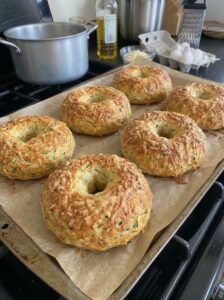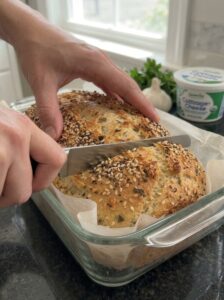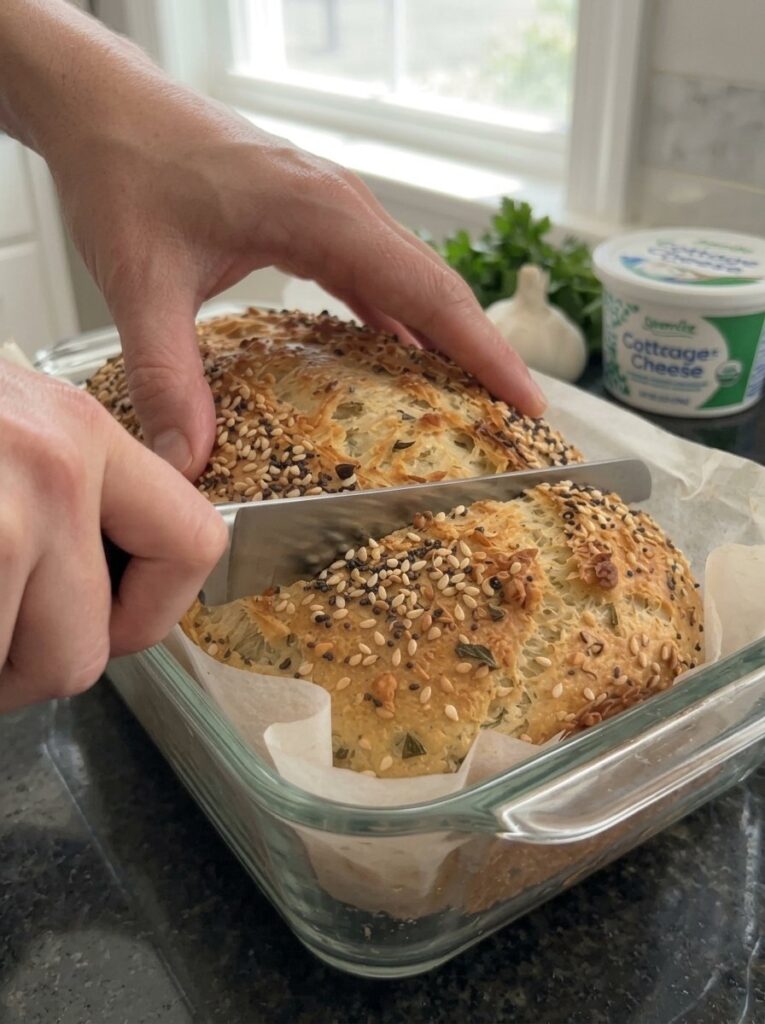
If you have ever wanted fresh, savory, bagel-style bread without kneading dough, waiting for it to rise or fussing with yeast, this high-protein cottage cheese garlic herb bagel bread is about to become your new favorite recipe. It is soft, tender and cheesy on the inside, golden on the outside, and loaded with the flavors of garlic, Italian herbs and Parmesan. Best of all, it comes together in one blender and one bowl, and it goes from pantry to oven in about 15 minutes.
This cottage cheese bread is the kind of recipe that earns a permanent spot in your weekly rotation. Slice it for breakfast sandwiches, toast it and spread it with cream cheese, serve it next to a bowl of soup, or freeze individual slices for busy mornings. In this complete guide, you will find the full ingredient list, clear step-by-step directions, expert tips for the best texture, flavor variations, serving ideas, storage instructions and answers to the most common questions.
What Is Cottage Cheese Garlic Herb Bagel Bread?
Cottage cheese garlic herb bagel bread is a savory, oven-baked quick bread made with cottage cheese, eggs, flour and baking powder. Instead of yeast, baking powder does the lifting, so there is no proofing, no kneading and no waiting for dough to double in size. The cottage cheese and eggs create a moist, rich crumb, while garlic, Italian seasoning and Parmesan give it the unmistakable savory flavor people love in a garlic herb bagel.
The result is a small loaf with a lightly golden crust and a soft, tender interior. It slices neatly, toasts beautifully and works for almost any meal. If you enjoy everything-bagel flavors, garlic bread and cheesy biscuits, this loaf sits happily in the middle of all three.
Why You Will Love This High-Protein Bread Recipe
There are plenty of reasons this loaf has become so popular with home bakers who want something simple, filling and flavorful.
- No yeast and no rising time. Baking powder makes the loaf rise in the oven, so you skip proofing and waiting entirely.
- High in protein. Cottage cheese, eggs and Parmesan all contribute protein, which makes this bread more satisfying than a typical slice of white bread.
- Easy enough for beginners. If you can whisk, stir and use a blender, you can make this recipe.
- Big savory flavor. Fresh garlic, garlic powder, Italian herbs and Parmesan deliver bakery-style taste with minimal effort.
- Meal-prep friendly. The loaf freezes well in slices, so you can toast a piece straight from the freezer whenever you want.
- Versatile. Use it for breakfast sandwiches, grilled cheese, toast with spreads, or as a side for soups and salads.
- Simple pantry ingredients. You probably already have most of what you need.
Ingredients for Cottage Cheese Garlic Herb Bagel Bread
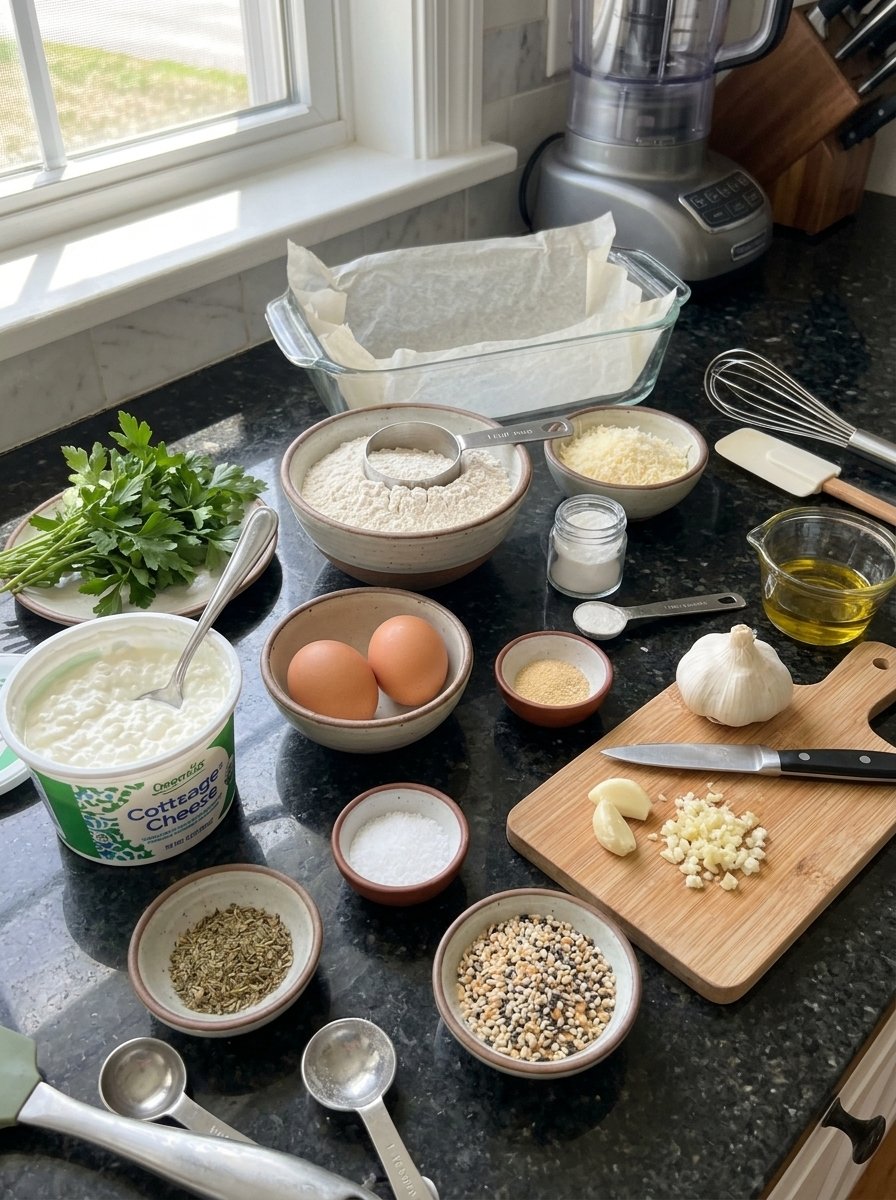
You only need a handful of ingredients. Here is exactly what goes into this recipe:
- 1 cup (225 g) cottage cheese
- 2 large eggs
- 1½ cups (180 g) all-purpose flour
- 2 teaspoons baking powder
- ½ teaspoon salt
- 2 cloves garlic, finely minced
- 1 teaspoon Italian seasoning
- ½ teaspoon garlic powder
- ½ cup (50 g) grated Parmesan cheese
- 1 tablespoon olive oil (optional, for brushing)
- 1 tablespoon chopped fresh parsley (optional, for garnish)
Ingredient Notes and Smart Substitutions
Cottage cheese. Cottage cheese is the star of this recipe. It adds moisture, richness and protein while keeping the crumb soft. Full-fat or low-fat both work, and small-curd cottage cheese blends especially smoothly. If your cottage cheese looks very wet, you can drain off any excess liquid before blending.
Eggs. The eggs provide structure and help the loaf set. Use large eggs at room temperature if possible, since they mix more evenly into the batter.
Flour. Standard all-purpose flour gives the most reliable results. Because too much flour can make the bread dense, it is best to weigh it on a kitchen scale. If you do not have a scale, spoon the flour into your measuring cup and level it off instead of scooping straight from the bag.
Baking powder. Make sure your baking powder is fresh. Old baking powder loses its power, and the loaf may bake up flat or heavy.
Garlic. Fresh minced garlic brings a bright, aromatic punch, while garlic powder adds a deeper, rounder garlic flavor that spreads evenly through the loaf. Using both gives the best result.
Herbs. Italian seasoning is the easiest choice, but dried oregano, basil or thyme also work well. Fresh parsley on top adds color and a clean, herby finish.
Parmesan. Freshly grated Parmesan melts into the loaf and forms a savory golden crust on top. Pre-grated cheese works too, but freshly grated usually tastes richer.
How to Make Cottage Cheese Garlic Herb Bagel Bread
This recipe takes about 15 minutes of prep and 35 to 45 minutes in the oven. Follow these steps for a soft, golden loaf every time.
Step 1: Prepare the Oven and Pan
Preheat your oven to 180°C (350°F). Grease a small loaf pan, about 8 × 4 inches (20 × 10 cm), and line it with parchment paper. The parchment makes it easy to lift the loaf out cleanly after baking. Set the pan aside while you make the batter.
Step 2: Blend the Cottage Cheese and Eggs
Add the cottage cheese and eggs to a blender or food processor and blend until smooth and creamy. Blending turns the curds into a uniform base, which gives the finished bread a softer, more even texture.
If you prefer a more rustic loaf, you can whisk the cottage cheese and eggs together in a bowl instead. Just keep in mind that small curds may remain visible in the baked bread.
Step 3: Combine the Dry Ingredients
In a large bowl, whisk together the flour, baking powder, salt, Italian seasoning and garlic powder. Then add the minced garlic and grated Parmesan and stir briefly so the herbs and cheese are distributed evenly throughout the flour mixture.
Step 4: Make the Dough
Pour the blended cottage cheese and egg mixture into the dry ingredients. Stir with a spatula until a thick, soft dough forms and no dry flour remains. The mixture should be moist and slightly sticky.
Resist the urge to keep mixing or to add extra flour. Overmixing and too much flour are the two most common reasons quick breads turn out dense and heavy.
Step 5: Transfer to the Loaf Pan
Spoon the dough into the prepared loaf pan and spread it evenly into the corners. Smooth the top with a spatula. For a flavorful, golden finish, sprinkle a little extra Parmesan and Italian seasoning over the surface. If you want a slightly richer crust, brush the top lightly with olive oil.
Step 6: Bake Until Golden
Place the pan on the center rack of the preheated oven and bake for about 35 to 45 minutes, until the top is golden and the center is fully set. Insert a toothpick into the middle of the loaf. It should come out without wet batter.
If the top browns too quickly, loosely cover it with aluminum foil for the final 10 minutes. Because cottage cheese and eggs make a moist dough, allow extra baking time if the center still looks underdone.
Step 7: Cool and Slice
Let the loaf rest in the pan for 10 to 15 minutes. Then lift it out using the parchment paper and transfer it to a wire rack. Let it cool for at least 20 to 30 minutes before slicing so the interior can set properly. Cut into thick slices and enjoy warm, or toast the slices lightly to bring out the garlic, herbs and Parmesan flavor.
Recipe Details at a Glance
- Prep time: 15 minutes
- Bake time: 35–45 minutes
- Cooling time: 30–45 minutes
- Total time: approximately 1 hour 20 minutes to 1 hour 45 minutes
- Yield: 1 small loaf, about 8 to 10 slices
- Difficulty: Easy
- Cooking method: Oven-baked quick bread
- Texture: Soft, tender and cheesy inside with a lightly golden crust
- Flavor: Savory garlic, fragrant Italian herbs and rich Parmesan
- Best for: Breakfast, sandwiches, meal prep and quick savory snacks
Tips for the Best Cottage Cheese Bread
A few small habits make a big difference in how your loaf turns out.
- Blend the cottage cheese. Blending until smooth creates a more uniform batter and a softer texture. It is the single best upgrade if you want a bread that feels more like a bakery loaf.
- Measure the flour carefully. Too much flour makes the bread dense. Weighing your flour gives the most consistent results, and the recipe above includes gram measurements for that reason.
- Do not overmix. Stir just until the ingredients come together. Overmixing develops gluten and can make the loaf tough instead of tender.
- Use fresh garlic. Freshly minced garlic adds a wonderful savory aroma, and garlic powder gives the flavor extra depth.
- Choose flavorful herbs. Italian seasoning works beautifully, but dried oregano, basil or thyme are great alternatives.
- Add extra Parmesan on top. A little cheese sprinkled over the surface creates a delicious golden crust.
- Check the center. Cottage cheese adds moisture, so make sure the middle is fully cooked before removing the loaf from the oven. A toothpick should come out clean.
- Toast before serving. Toasting gives the outside a lightly crisp texture that complements the soft, cheesy interior.
Common Mistakes to Avoid
Even simple recipes have a few pitfalls. Watch out for these:
- Pulling the loaf out too early. A golden top does not always mean the center is done. Always test with a toothpick, and give it extra minutes if needed.
- Slicing while hot. The inside continues to set as it cools. Cutting too soon can make the slices gummy or crumbly.
- Adding extra flour. The dough is supposed to be sticky. Extra flour will make the finished bread dry and heavy.
- Using expired baking powder. If your loaf did not rise well in the past, check the date on your baking powder.
- Skipping the parchment. A moist loaf can stick to the pan. Parchment paper makes removal effortless.
Flavor Variations to Try
Once you have mastered the base recipe, it is easy to customize. Here are a few ideas that work well with this style of bread:
- Everything-bagel style. Sprinkle the top with an everything bagel seasoning blend before baking for classic bagel flavor.
- Extra-cheesy. Fold a handful of shredded mozzarella or cheddar into the batter, or sprinkle it on top during the last few minutes of baking.
- Fresh herb loaf. Stir in chopped chives, rosemary or extra parsley for a brighter, greener flavor.
- Spicy kick. Add a pinch of red pepper flakes to the dry ingredients for gentle heat.
- Whole-wheat blend. Replace part of the all-purpose flour with whole-wheat flour for a nuttier taste. You may need to adjust slightly, so keep the batter soft and slightly sticky.
When experimenting, change one thing at a time so you can learn how each addition affects the texture and baking time.
What to Serve With Garlic Herb Cottage Cheese Bread
This loaf is flexible enough to work at any time of day. Here are some of the best ways to enjoy it:
- Garlic butter toast. Spread warm slices with garlic butter and a sprinkle of fresh parsley.
- Breakfast sandwich. Fill with scrambled eggs, melted cheese and avocado for a hearty, protein-rich start to the day.
- Cream cheese spread. Top toasted slices with cream cheese and chopped chives for a bagel-shop experience at home.
- Mediterranean-style toast. Add hummus, sliced tomatoes, cucumber and fresh herbs.
- Soup companion. Serve alongside tomato soup, vegetable soup or creamy mushroom soup.
- Savory snack. Toast a slice and drizzle it with olive oil.
- Grilled cheese. Use two slices with mozzarella or cheddar for a cheesy, herb-filled sandwich.
How to Store Cottage Cheese Bread
Proper storage keeps your loaf fresh and safe to eat.
- Refrigerator. Once completely cooled, store the bread in an airtight container for up to 4 days.
- Freezer. Slice the loaf and freeze the slices in a freezer-safe bag for up to 2 months.
- Reheating. Toast refrigerated or thawed slices until warmed through and lightly crisp.
- Room temperature. Because this bread contains cottage cheese and eggs, refrigerate it rather than leaving it out for extended periods.
- Meal prep. Freeze individual slices so you can quickly reheat a portion for breakfast or a snack.
Freezing slices separately, rather than the whole loaf, means you can take out exactly what you need and toast it in minutes.
Why Cottage Cheese Works So Well in Bread
Cottage cheese has become a favorite ingredient for high-protein baking, and this recipe shows why. It brings moisture and tenderness that you would normally get from butter or oil, while also contributing protein and a mild, creamy tang. When blended, it disappears into the batter and creates a smooth base that bakes into a soft, even crumb.
Eggs add structure and richness, and Parmesan contributes salty, savory depth. Together, these ingredients create a loaf that feels satisfying and indulgent without requiring any special equipment or advanced baking skills. If you are looking for easy ways to add more protein to your day through everyday foods like toast and sandwiches, cottage cheese bread is a practical place to start.
Frequently Asked Questions
Can I make this cottage cheese bread without a blender?
Yes. You can whisk the cottage cheese and eggs together in a bowl instead. The loaf will have a slightly more rustic texture, and small cottage cheese curds may remain visible, but it will still taste delicious.
Does this bread taste like cottage cheese?
The cottage cheese flavor is very mild once baked. Garlic, Italian herbs and Parmesan are the dominant flavors, so most people simply notice a savory, cheesy bread with a soft texture.
Why is my cottage cheese bread dense?
Dense bread is usually caused by too much flour or overmixing. Measure the flour carefully, ideally by weight, and stir only until no dry flour remains. Also make sure your baking powder is fresh.
How do I know when the bread is done?
The top should be golden and the center fully set. Insert a toothpick into the middle of the loaf. It should come out without wet batter. If it does not, bake for a few more minutes, covering the top loosely with foil if it is already browning.
Can I freeze cottage cheese garlic herb bread?
Yes. Slice the cooled loaf and freeze the slices in a freezer-safe bag for up to 2 months. Toast the slices straight from the freezer or thaw them first, then reheat until warmed through.
How long does it last in the fridge?
Store the completely cooled bread in an airtight container in the refrigerator for up to 4 days.
Can I use a different kind of flour?
All-purpose flour is the most reliable choice for this recipe. If you want to experiment with other flours, such as a portion of whole-wheat flour, change one thing at a time and keep the batter soft and slightly sticky.
Is this bread good for meal prep?
Absolutely. Bake the loaf, cool it fully, slice it and freeze the slices. You can then toast individual pieces for quick breakfasts, sandwiches or snacks throughout the week.
Do I have to use fresh garlic?
Fresh garlic gives the best flavor and aroma, but if you are in a pinch you can lean on the garlic powder. For the most flavorful loaf, use both as written in the recipe.
Can I add more cheese?
Yes. Extra Parmesan on top creates a golden, savory crust, and you can also fold in shredded mozzarella or cheddar for an even cheesier loaf.
Final Thoughts
This high-protein cottage cheese garlic herb bagel bread proves that homemade bread does not have to be complicated. With no yeast, no kneading and no rising time, it fits easily into a busy schedule, yet it delivers a soft, cheesy, deeply savory loaf that tastes like it came from a bakery. Blend the cottage cheese for the smoothest texture, measure your flour carefully, avoid overmixing and let the loaf cool before slicing, and you will be rewarded with a tender, golden bread you can enjoy all week.
Print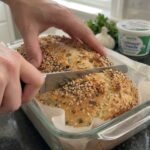
High-Protein Cottage Cheese Garlic Herb Bagel Bread
Ingredients
You only need a handful of ingredients. Here is exactly what goes into this recipe:
- 1 cup (225 g) cottage cheese
- 2 large eggs
- 1½ cups (180 g) all-purpose flour
- 2 teaspoons baking powder
- ½ teaspoon salt
- 2 cloves garlic, finely minced
- 1 teaspoon Italian seasoning
- ½ teaspoon garlic powder
- ½ cup (50 g) grated Parmesan cheese
- 1 tablespoon olive oil (optional, for brushing)
- 1 tablespoon chopped fresh parsley (optional, for garnish)
Ingredient Notes and Smart Substitutions
Cottage cheese. Cottage cheese is the star of this recipe. It adds moisture, richness and protein while keeping the crumb soft. Full-fat or low-fat both work, and small-curd cottage cheese blends especially smoothly. If your cottage cheese looks very wet, you can drain off any excess liquid before blending.
Eggs. The eggs provide structure and help the loaf set. Use large eggs at room temperature if possible, since they mix more evenly into the batter.
Flour. Standard all-purpose flour gives the most reliable results. Because too much flour can make the bread dense, it is best to weigh it on a kitchen scale. If you do not have a scale, spoon the flour into your measuring cup and level it off instead of scooping straight from the bag.
Baking powder. Make sure your baking powder is fresh. Old baking powder loses its power, and the loaf may bake up flat or heavy.
Garlic. Fresh minced garlic brings a bright, aromatic punch, while garlic powder adds a deeper, rounder garlic flavor that spreads evenly through the loaf. Using both gives the best result.
Herbs. Italian seasoning is the easiest choice, but dried oregano, basil or thyme also work well. Fresh parsley on top adds color and a clean, herby finish.
Parmesan. Freshly grated Parmesan melts into the loaf and forms a savory golden crust on top. Pre-grated cheese works too, but freshly grated usually tastes richer.
Instructions
This recipe takes about 15 minutes of prep and 35 to 45 minutes in the oven. Follow these steps for a soft, golden loaf every time.
Preheat your oven to 180°C (350°F). Grease a small loaf pan, about 8 × 4 inches (20 × 10 cm), and line it with parchment paper. The parchment makes it easy to lift the loaf out cleanly after baking. Set the pan aside while you make the batter.
Add the cottage cheese and eggs to a blender or food processor and blend until smooth and creamy. Blending turns the curds into a uniform base, which gives the finished bread a softer, more even texture.
If you prefer a more rustic loaf, you can whisk the cottage cheese and eggs together in a bowl instead. Just keep in mind that small curds may remain visible in the baked bread.
In a large bowl, whisk together the flour, baking powder, salt, Italian seasoning and garlic powder. Then add the minced garlic and grated Parmesan and stir briefly so the herbs and cheese are distributed evenly throughout the flour mixture.
Pour the blended cottage cheese and egg mixture into the dry ingredients. Stir with a spatula until a thick, soft dough forms and no dry flour remains. The mixture should be moist and slightly sticky.
Resist the urge to keep mixing or to add extra flour. Overmixing and too much flour are the two most common reasons quick breads turn out dense and heavy.
Spoon the dough into the prepared loaf pan and spread it evenly into the corners. Smooth the top with a spatula. For a flavorful, golden finish, sprinkle a little extra Parmesan and Italian seasoning over the surface. If you want a slightly richer crust, brush the top lightly with olive oil.
Place the pan on the center rack of the preheated oven and bake for about 35 to 45 minutes, until the top is golden and the center is fully set. Insert a toothpick into the middle of the loaf. It should come out without wet batter.
If the top browns too quickly, loosely cover it with aluminum foil for the final 10 minutes. Because cottage cheese and eggs make a moist dough, allow extra baking time if the center still looks underdone.
Let the loaf rest in the pan for 10 to 15 minutes. Then lift it out using the parchment paper and transfer it to a wire rack. Let it cool for at least 20 to 30 minutes before slicing so the interior can set properly. Cut into thick slices and enjoy warm, or toast the slices lightly to bring out the garlic, herbs and Parmesan flavor.