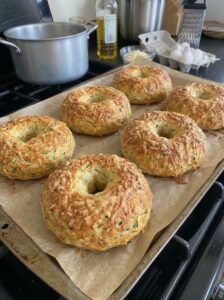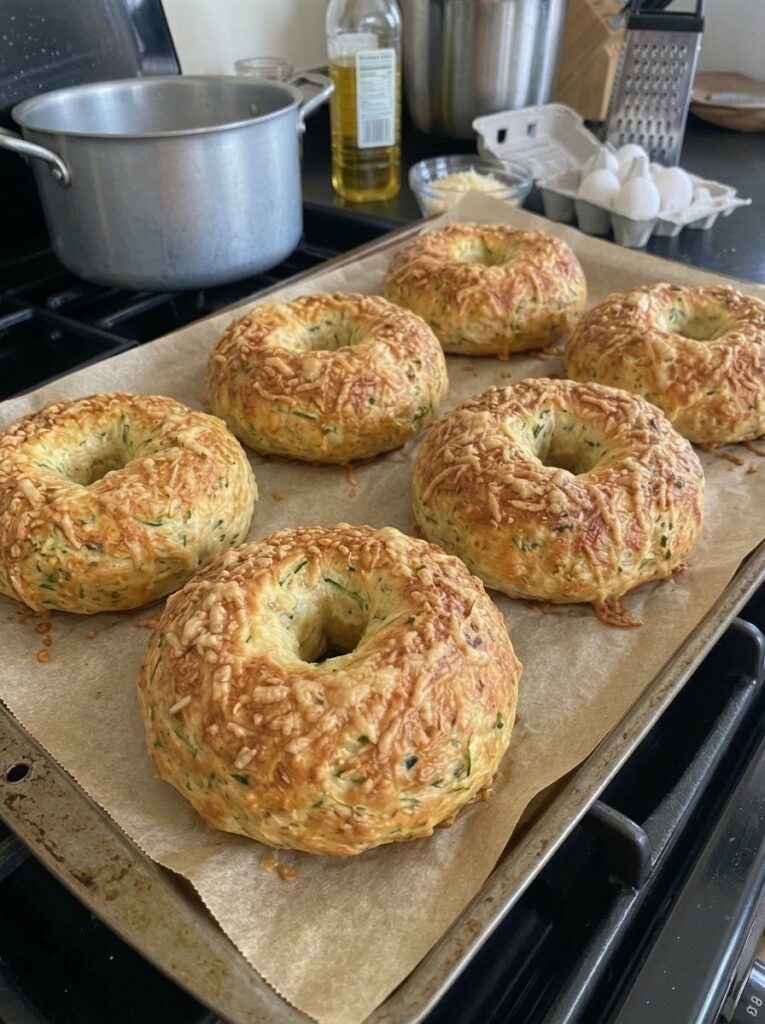
If you love the idea of a warm, chewy bagel but not the long rise, the boiling water bath and the hours of waiting, these protein-packed zucchini parmesan bagels are about to become your new favorite recipe. They are soft and savory on the inside, golden and cheesy on the outside, and they come together with a handful of everyday ingredients: cottage cheese, eggs, flour, fresh zucchini and Parmesan.
There is no yeast, no proofing and no kneading. You stir a simple dough, shape six rings, brush them with a little olive oil, scatter extra cheese on top and bake. In about an hour, including cooling time, you have a tray of fragrant homemade bagels that work for breakfast, brunch, lunch sandwiches, post-workout snacks and weekly meal prep.
In this guide you will find the complete recipe, step-by-step instructions, troubleshooting tips, flavor variations, serving ideas, storage and freezing advice, and answers to the most common questions about making cottage cheese bagels at home.
What Are Zucchini Parmesan Bagels?
Zucchini parmesan bagels are quick, no-yeast bagels made from a dough built on cottage cheese and eggs rather than a traditional yeasted dough. Finely grated zucchini adds moisture, a mild vegetable flavor and tiny flecks of green, while Parmesan brings the salty, nutty richness that makes every bite taste indulgent.
The cottage cheese is the secret to the texture. Combined with eggs and baking powder, it creates a tender, slightly dense crumb that feels hearty and satisfying, much like a bagel, but with a softer, more cake-like softness inside. It also adds a generous dose of protein, which is why these are so popular as a high-protein breakfast bagel.
Because the dough relies on baking powder instead of yeast, there is no waiting for it to rise. That is what makes this recipe so approachable for beginners, busy parents, students and anyone who wants fresh bread-style food without a big time commitment.
Why You Will Love This Recipe
There are plenty of reasons these bagels keep earning a spot in weekly meal plans:
- No yeast and no rise time. You go from mixing bowl to oven in about 20 minutes.
- High in protein. Cottage cheese, eggs and Parmesan all contribute protein, so the bagels keep you full far longer than a typical store-bought bagel.
- A smart way to use zucchini. If your garden or grocery bag is overflowing with zucchini, this is a delicious and almost effortless way to use it up.
- Cheesy, golden crust. The extra Parmesan on top bakes into a crisp, lightly toasted finish that looks as good as it tastes.
- Meal-prep friendly. They refrigerate for days and freeze beautifully, so you can toast one straight from the freezer on a busy morning.
- Endlessly versatile. Sweet toppings are not the point here. These savory bagels pair with cream cheese, avocado, eggs, smoked salmon, hummus and much more.
- Beginner friendly. The dough is a simple stir-and-shape mixture with no special equipment beyond a bowl, a grater and a baking tray.
Recipe Overview
- Prep time: 20 minutes
- Bake time: 22 to 28 minutes
- Cooling time: 15 to 20 minutes
- Total time: approximately 55 to 70 minutes
- Yield: 6 bagels
- Difficulty: Easy
- Cooking method: Oven-baked
- Texture: Soft, tender and hearty inside with a golden, cheesy crust
- Flavor: Savory Parmesan, mild zucchini and creamy cottage cheese
- Best for: Breakfast, brunch, meal prep, sandwiches and post-workout snacks
Ingredients
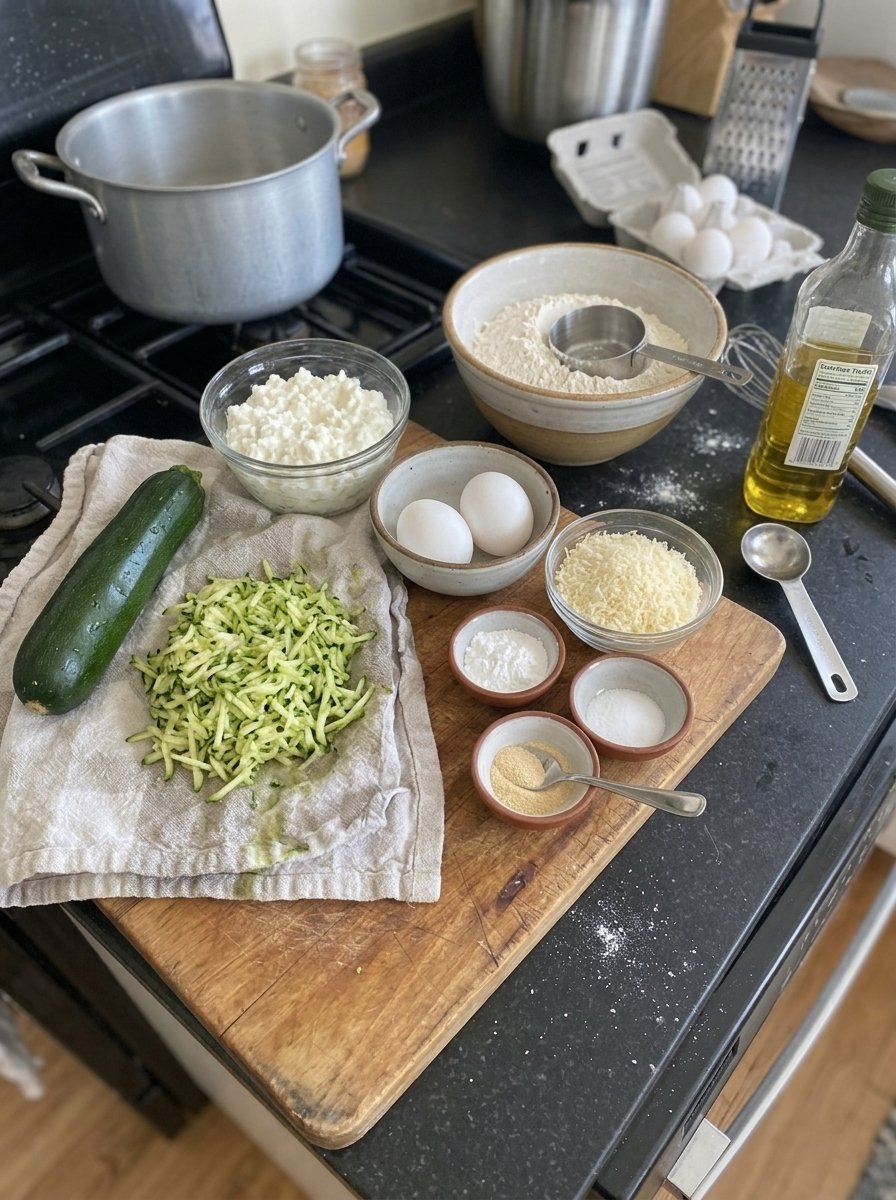
You only need a short list of ingredients, and most of them are probably already in your kitchen.
- 1 cup (225 g) cottage cheese
- 2 large eggs
- 1½ cups (180 g) all-purpose flour
- 1 cup (about 120 g) finely grated zucchini, squeezed dry
- ½ cup (50 g) grated Parmesan cheese
- 2 teaspoons baking powder
- ½ teaspoon salt
- ½ teaspoon garlic powder (optional)
- 1 tablespoon olive oil, for brushing (optional)
Ingredient Notes
Cottage cheese. Use any style you like. Small-curd cottage cheese blends into the eggs more easily, while large-curd leaves small creamy pockets in the finished bagel. If you prefer a perfectly smooth dough, blend the cottage cheese for a few seconds before mixing it with the eggs.
Eggs. Eggs bind the dough and add structure and protein. Large eggs are ideal for the right moisture balance.
All-purpose flour. Plain all-purpose flour gives the bagels a soft but sturdy crumb. Measure by weight if you can, since scooping flour with a cup can pack in more than you need and make the bagels dry.
Zucchini. Choose a firm, medium-sized zucchini and grate it on the large holes of a box grater. Squeezing out the water is the single most important prep step, so do not skip it.
Parmesan. Freshly grated Parmesan melts better and tastes noticeably richer than pre-grated cheese in a shaker. You will use some in the dough and some on top.
Baking powder. This is the leavening agent that replaces yeast. Check that yours is fresh, because old baking powder will give you flat, dense bagels.
Garlic powder and olive oil. Both are optional, but the garlic adds savory depth and the olive oil helps the cheese topping turn deeply golden.
How to Make Zucchini Parmesan Bagels
Step 1: Prepare the Zucchini
Preheat your oven to 190°C (375°F) and line a baking tray with parchment paper. Wash the zucchini and grate it using the large holes of a box grater. Transfer the grated zucchini to a clean kitchen towel and squeeze firmly to remove as much liquid as possible. Measure approximately 1 cup (120 g) of squeezed zucchini and set it aside.
Fresh zucchini is mostly water, and that water would turn your dough wet and sticky if left in. Take your time here. Wring the towel over the sink until almost nothing drips out.
Step 2: Mix the Wet Ingredients
In a large mixing bowl, combine the cottage cheese and eggs. Whisk until well blended. For a smoother texture, blend the cottage cheese first, then whisk it with the eggs. The mixture should be creamy and evenly combined.
Step 3: Add the Dry Ingredients
Add the flour, baking powder, salt and optional garlic powder to the wet mixture. Stir gently until a soft dough begins to form. Then fold in the squeezed zucchini and grated Parmesan, mixing just until everything is evenly distributed.
The dough should be soft and slightly tacky. If it is too sticky to shape, add a tablespoon of flour at a time until it becomes manageable. Avoid overmixing, which can make the bagels tough instead of tender.
Step 4: Shape the Bagels
Lightly flour your work surface and divide the dough into 6 equal portions. There are two easy ways to shape them:
- Rope method: Roll each portion into a short rope, then join the ends to form a ring. Press the ends together firmly so the bagels hold their shape during baking.
- Ball method: Roll each portion into a ball, flatten it slightly, and use your finger to create a hole in the center. Gently widen the hole, because it will shrink as the bagels bake.
Place the shaped bagels on the prepared baking tray, leaving space between each one so they can puff up without touching.
Step 5: Add the Finishing Touches
If desired, lightly brush the tops with olive oil. Sprinkle a little extra Parmesan over each bagel for a more golden, cheesy finish. This is what creates that crisp, craggy, shredded-cheese crust you see on bakery-style cheese bagels. You can also add a pinch of dried herbs or black pepper for extra flavor.
Step 6: Bake Until Golden
Place the tray on the center rack of the preheated oven and bake for approximately 22 to 28 minutes, or until the bagels are puffed and golden brown. The cheese should look lightly toasted, and the bagels should feel firm on the outside. If the tops brown too quickly, loosely cover them with foil for the remaining baking time.
Check that the centers are fully cooked before removing them from the oven, since the zucchini and cottage cheese add moisture to the dough. A toothpick or small knife inserted near the center should come out clean, without wet dough on it.
Step 7: Cool and Serve
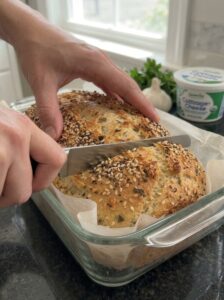
Remove the bagels from the oven and let them rest on the tray for 5 minutes before transferring them to a wire rack. Allow them to cool for another 10 to 15 minutes so the interior can set. Slice them in half and enjoy warm, or toast the halves for a crispier texture.
Tips for the Best Zucchini Parmesan Bagels
A few small habits make a big difference to the final result.
- Squeeze out the zucchini thoroughly. This is the number one rule. Excess moisture leads to wet, sticky dough and bagels that are gummy in the middle.
- Blend the cottage cheese for a smoother dough. If you do not love the look of curds in your bagels, a quick blitz in a blender or food processor creates a silky base.
- Do not overmix. Stir only until the ingredients come together. Overworking the batter develops the flour too much and makes the bagels tough rather than tender.
- Adjust the flour gradually. Zucchini moisture and cottage cheese consistency vary from brand to brand and from week to week. If the dough is very sticky, add a little flour at a time.
- Use freshly grated Parmesan. It melts beautifully and gives a richer, more savory flavor than the pre-grated kind.
- Shape with lightly floured hands. This makes it easier to form neat bagels without working in too much extra flour.
- Make the center hole bigger than you think. The dough puffs during baking, and a small hole can close up almost completely.
- Toast before serving. Toasted halves develop a crisp exterior that contrasts beautifully with the soft, cheesy interior.
Common Mistakes and How to Fix Them
My dough is too sticky to shape. This usually means the zucchini was not squeezed dry enough or the cottage cheese was especially wet. Add flour one tablespoon at a time until the dough is soft and slightly tacky but manageable. Lightly flouring your hands also helps.
My bagels came out dense. Overmixing or too much flour are the usual culprits. Stir until just combined, and measure the flour carefully, ideally with a kitchen scale. Also check that your baking powder is fresh.
The centers are still doughy. Zucchini and cottage cheese add moisture, so these bagels need their full bake time. Bake until the exterior is firm and golden, and test the center before removing them. If the tops are already dark, cover them loosely with foil and keep baking.
The holes disappeared. The dough puffs as it bakes. Make the center hole larger than seems necessary and widen it gently when shaping.
The bagels spread out and lost their shape. Press the ends of each rope together firmly if you use the rope method, and leave enough room between bagels on the tray. If the dough feels too loose, add a little more flour.
The tops browned too fast. Every oven runs a little differently. Loosely cover the bagels with foil for the remaining baking time, and confirm your oven temperature with an oven thermometer if this happens regularly.
Flavor Variations to Try
Once you have mastered the base recipe, it is easy to customize. Keep the total amount of add-ins modest so the dough stays the right consistency.
- Everything-style: Sprinkle the tops with sesame seeds, poppy seeds, dried onion and garlic before baking.
- Herb and garlic: Stir in a tablespoon of chopped chives, parsley or dill, and use the optional garlic powder.
- Black pepper and Parmesan: Add a generous crack of black pepper to the dough and on top for a gentle kick.
- Italian-inspired: Add a pinch of dried oregano or Italian seasoning to the dough and top with a little extra Parmesan.
- Spicy: Mix in a pinch of red pepper flakes for a savory, mildly spicy bagel.
- Extra cheesy: Sprinkle a little more Parmesan on top, as the recipe suggests, for a deeper golden crust.
Serving Ideas
These bagels are delicious on their own, but they really shine as the base of a satisfying meal.
- Classic breakfast bagel: Spread with cream cheese and sprinkle with fresh chives.
- Egg and cheese sandwich: Fill with scrambled eggs and a slice of cheddar for a hearty breakfast sandwich.
- Avocado bagel: Top toasted halves with mashed avocado, black pepper and a squeeze of lemon juice.
- Smoked salmon bagel: Add smoked salmon, cream cheese and fresh dill for a brunch-worthy plate.
- Post-workout snack: Pair a bagel with Greek yogurt or eggs for a protein-rich snack.
- Mediterranean-style: Fill with hummus, sliced tomatoes, cucumber and fresh herbs.
- Simple savory toast: Slice and toast with a little butter or olive oil.
How to Store, Freeze and Reheat
Because these bagels contain moist ingredients like dairy, eggs and zucchini, proper storage matters.
Refrigerator. Once completely cooled, store the bagels in an airtight container in the refrigerator for up to 4 days. Do not leave them out at room temperature for extended periods.
Freezer. Slice the cooled bagels in half and freeze them in a freezer-safe bag for up to 2 months. Slicing first means you can pull out exactly as many halves as you need.
Reheating. Toast refrigerated or thawed halves until warmed through and lightly crisp. Toasting also restores that satisfying crunch on the outside.
Meal prep. Freeze individual portions so you can quickly toast a bagel whenever you need an easy breakfast or snack. A single batch of six makes a week of grab-and-go breakfasts.
Are Zucchini Parmesan Bagels Healthy?
These bagels are a nutritious alternative to many traditional bagels. Cottage cheese and eggs supply protein, zucchini adds vegetables and moisture without much extra flavor, and Parmesan contributes calcium and a big savory punch from a relatively small amount. The result is a bagel that tends to be more filling and more balanced than a plain white bakery bagel.
They are not a diet food, and they do contain flour and cheese, so they are best enjoyed as part of a balanced meal. Pair them with eggs, avocado, fresh vegetables or Greek yogurt to round out the plate. If you have specific dietary needs or are tracking nutrition closely, calculate the values using the exact brands of ingredients you use, since cottage cheese and Parmesan vary quite a bit.
Why Cottage Cheese Works So Well in Bagels
Cottage cheese has become a favorite ingredient in high-protein baking, and for good reason. It is mild in flavor, creamy in texture and rich in protein. When it is combined with eggs and flour, it creates a moist, tender dough that bakes up soft inside while still holding its shape.
In this recipe, the cottage cheese does the job that yeasted dough would normally do in terms of body and chew, while baking powder provides the lift. The cheese flavor is subtle and blends with the Parmesan, so you will not taste a strong cottage cheese flavor in the finished bagels. If you have been hesitant to bake with it, this recipe is a gentle and delicious introduction.
Yeast Bagels vs. No-Yeast Cottage Cheese Bagels
Traditional bagels are made with a yeasted dough that rises, is shaped, rests, is boiled briefly and is then baked. The process creates a dense, chewy interior and a shiny crust, but it takes hours and a fair amount of practice.
These zucchini parmesan bagels take a different approach. They are quick-bread style bagels: the dough is mixed in one bowl, shaped immediately and baked right away. The texture is softer and more tender than a classic chewy bagel, and the flavor is cheesy and savory rather than yeasty. If you are craving the shape and the sandwich-ready format of a bagel without the work, this is the faster route. If you want the classic boiled-bagel chew, a traditional recipe is still the way to go.
Frequently Asked Questions
Can I make these bagels without yeast?
Yes. This recipe contains no yeast at all. The baking powder gives the bagels their lift, so there is no rising or proofing time.
Do I have to squeeze the zucchini?
Yes, and firmly. Zucchini holds a lot of water, and leaving it in will make the dough wet and sticky and the bagels gummy. Wrap the grated zucchini in a clean kitchen towel and squeeze until very little liquid remains.
Do I need to peel the zucchini?
No. The recipe calls for washing the zucchini and grating it, which leaves tiny flecks of green skin in the dough. These add color and are barely noticeable once baked.
Can I use a different cheese?
Parmesan gives the best savory flavor, but you can experiment with other hard, well-flavored cheeses for the topping or the dough. Keep in mind that the flavor and the way the cheese browns will change.
Do the bagels taste like cottage cheese?
Not strongly. The cottage cheese mostly contributes moisture, softness and protein, and its flavor blends with the Parmesan and zucchini into a mild, savory taste.
How do I know when the bagels are done?
They should be puffed and golden brown, with lightly toasted cheese on top and a firm feel on the outside. The centers should be fully cooked, with no wet dough when tested with a toothpick or knife.
Can I make them ahead of time?
Absolutely. Bake and cool them completely, then refrigerate for up to 4 days or freeze sliced halves for up to 2 months. Toast to reheat.
How many bagels does this recipe make?
The recipe yields 6 bagels. You can double the ingredients to make a bigger batch for freezing, but use a second tray or bake in batches so the bagels have room to puff.
Why did my bagels turn out dense?
The most common causes are overmixing the dough, adding too much flour or using old baking powder. Stir only until combined, measure flour carefully and make sure your baking powder is fresh.
Can I add extra vegetables or herbs?
Yes, in moderation. Chopped chives, parsley, dill or a pinch of dried herbs are easy additions. Avoid adding large amounts of wet vegetables, which could make the dough too sticky.
Final Thoughts
Protein-packed zucchini parmesan bagels prove that homemade bagels do not need to be complicated. With cottage cheese, eggs, flour, zucchini and Parmesan, you can create a tray of golden, cheesy, satisfying bagels in about an hour, with no yeast and no waiting for dough to rise.
Squeeze the zucchini well, stir gently, make the center holes generous and give the bagels time to cool so the insides can set. Then slice, toast and pile them high with your favorite toppings. Whether you are meal prepping for the week, feeding a hungry family at brunch or looking for a better-for-you post-workout snack, this recipe is a keeper.
Print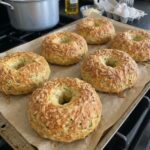
Protein-Packed Zucchini Parmesan Bagels
Ingredients
You only need a short list of ingredients, and most of them are probably already in your kitchen.
- 1 cup (225 g) cottage cheese
- 2 large eggs
- 1½ cups (180 g) all-purpose flour
- 1 cup (about 120 g) finely grated zucchini, squeezed dry
- ½ cup (50 g) grated Parmesan cheese
- 2 teaspoons baking powder
- ½ teaspoon salt
- ½ teaspoon garlic powder (optional)
- 1 tablespoon olive oil, for brushing (optional)
Ingredient Notes
Cottage cheese. Use any style you like. Small-curd cottage cheese blends into the eggs more easily, while large-curd leaves small creamy pockets in the finished bagel. If you prefer a perfectly smooth dough, blend the cottage cheese for a few seconds before mixing it with the eggs.
Eggs. Eggs bind the dough and add structure and protein. Large eggs are ideal for the right moisture balance.
All-purpose flour. Plain all-purpose flour gives the bagels a soft but sturdy crumb. Measure by weight if you can, since scooping flour with a cup can pack in more than you need and make the bagels dry.
Zucchini. Choose a firm, medium-sized zucchini and grate it on the large holes of a box grater. Squeezing out the water is the single most important prep step, so do not skip it.
Parmesan. Freshly grated Parmesan melts better and tastes noticeably richer than pre-grated cheese in a shaker. You will use some in the dough and some on top.
Baking powder. This is the leavening agent that replaces yeast. Check that yours is fresh, because old baking powder will give you flat, dense bagels.
Garlic powder and olive oil. Both are optional, but the garlic adds savory depth and the olive oil helps the cheese topping turn deeply golden.
Instructions
Step 1: Prepare the Zucchini
Preheat your oven to 190°C (375°F) and line a baking tray with parchment paper. Wash the zucchini and grate it using the large holes of a box grater. Transfer the grated zucchini to a clean kitchen towel and squeeze firmly to remove as much liquid as possible. Measure approximately 1 cup (120 g) of squeezed zucchini and set it aside.
Fresh zucchini is mostly water, and that water would turn your dough wet and sticky if left in. Take your time here. Wring the towel over the sink until almost nothing drips out.
Step 2: Mix the Wet Ingredients
In a large mixing bowl, combine the cottage cheese and eggs. Whisk until well blended. For a smoother texture, blend the cottage cheese first, then whisk it with the eggs. The mixture should be creamy and evenly combined.
Step 3: Add the Dry Ingredients
Add the flour, baking powder, salt and optional garlic powder to the wet mixture. Stir gently until a soft dough begins to form. Then fold in the squeezed zucchini and grated Parmesan, mixing just until everything is evenly distributed.
The dough should be soft and slightly tacky. If it is too sticky to shape, add a tablespoon of flour at a time until it becomes manageable. Avoid overmixing, which can make the bagels tough instead of tender.
Step 4: Shape the Bagels
Lightly flour your work surface and divide the dough into 6 equal portions. There are two easy ways to shape them:
- Rope method: Roll each portion into a short rope, then join the ends to form a ring. Press the ends together firmly so the bagels hold their shape during baking.
- Ball method: Roll each portion into a ball, flatten it slightly, and use your finger to create a hole in the center. Gently widen the hole, because it will shrink as the bagels bake.
Place the shaped bagels on the prepared baking tray, leaving space between each one so they can puff up without touching.
Step 5: Add the Finishing Touches
If desired, lightly brush the tops with olive oil. Sprinkle a little extra Parmesan over each bagel for a more golden, cheesy finish. This is what creates that crisp, craggy, shredded-cheese crust you see on bakery-style cheese bagels. You can also add a pinch of dried herbs or black pepper for extra flavor.
Step 6: Bake Until Golden
Place the tray on the center rack of the preheated oven and bake for approximately 22 to 28 minutes, or until the bagels are puffed and golden brown. The cheese should look lightly toasted, and the bagels should feel firm on the outside. If the tops brown too quickly, loosely cover them with foil for the remaining baking time.
Check that the centers are fully cooked before removing them from the oven, since the zucchini and cottage cheese add moisture to the dough. A toothpick or small knife inserted near the center should come out clean, without wet dough on it.
Step 7: Cool and Serve
Remove the bagels from the oven and let them rest on the tray for 5 minutes before transferring them to a wire rack. Allow them to cool for another 10 to 15 minutes so the interior can set. Slice them in half and enjoy warm, or toast the halves for a crispier texture.