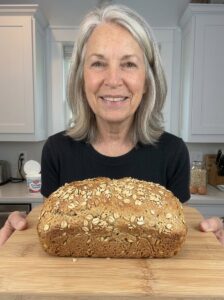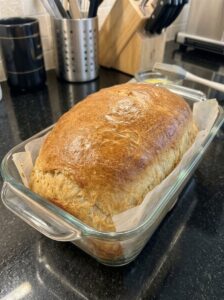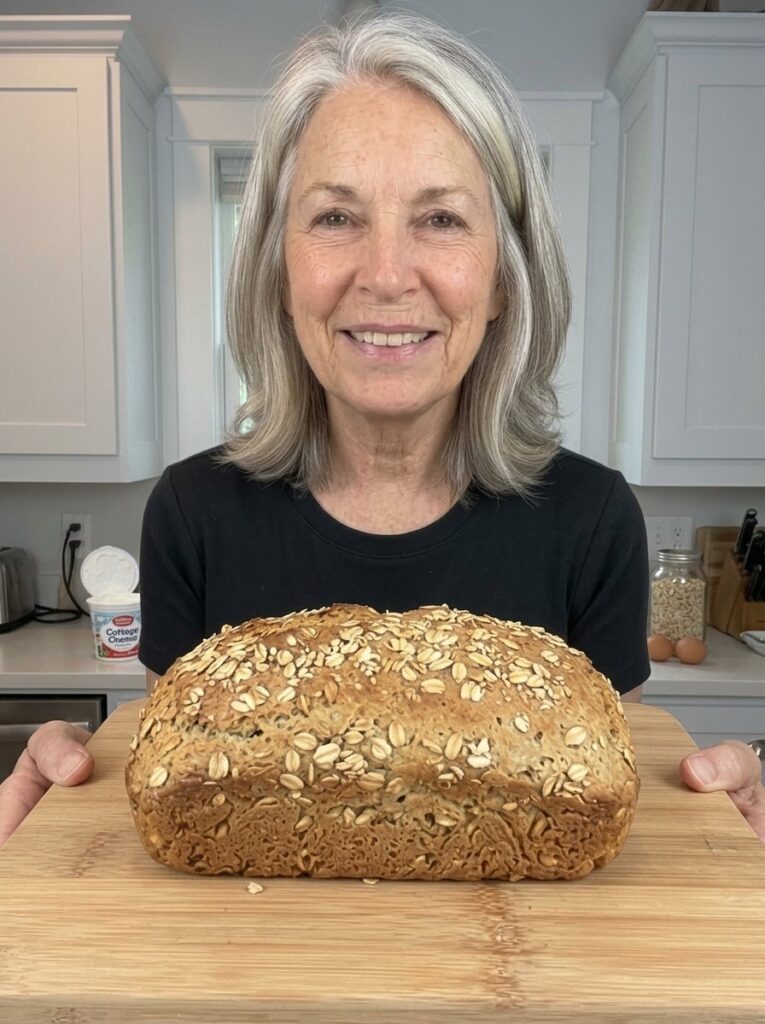
If you have ever wished you could bake a hearty, wholesome loaf without proofing yeast, kneading dough, or waiting hours for it to rise, this high-protein cottage cheese oatmeal bread is exactly what you have been looking for. It is a simple blender bread built on three humble ingredients: rolled oats, cottage cheese, and eggs. Blend, stir, pour, and bake. In about two hours from start to finish, including cooling time, you have a tender, golden loaf that is perfect for breakfast, sandwiches, snacks, and meal prep.
In this complete guide, you will learn why this bread works, what ingredients you need, how to make it step by step, how to avoid the most common mistakes, creative ways to serve it, how to store it, and answers to the questions bakers ask most often.
Why You’ll Love This Cottage Cheese Oatmeal Bread
Bread-baking has a reputation for being time-consuming and fussy. This recipe throws that reputation out the window. Here are the biggest reasons it deserves a permanent spot in your kitchen rotation:
- It is naturally high in protein. Eggs and cottage cheese are both protein-rich foods, so every slice is more filling than a typical slice of store-bought sandwich bread.
- There is no yeast and no kneading. The loaf rises thanks to baking powder, so there is no proofing, no waiting, and no sticky dough on your counters.
- It uses simple pantry and fridge staples. Most kitchens already have oats, eggs, and baking powder. Cottage cheese is the only item you might need to pick up.
- It is quick to prepare. Hands-on time is only about 10 to 15 minutes. The oven does the rest.
- It is versatile. Toast it, stack it with sandwich fillings, spread it with nut butter, or serve it alongside soup.
- It is meal-prep friendly. Slice the loaf, freeze the slices, and you have breakfast ready for weeks.
- It is easy to customize. Add seeds, adjust the sweetness, or turn it savory with herbs and cheese.
If you are searching for an easy homemade bread that feels nourishing without being complicated, this oatmeal cottage cheese loaf is a reliable winner.
What Is Cottage Cheese Bread?
Cottage cheese bread is a quick bread in which cottage cheese replaces much of the flour, fat, and moisture found in traditional recipes. Cottage cheese is a fresh, mild, slightly tangy cheese made of soft curds. When it is blended with eggs, it turns into a smooth, creamy base that gives the loaf a soft, moist crumb. Because the curds contribute both structure and tenderness, you do not need to rely on gluten development, which is why there is no kneading involved.
In this version, rolled oats are blended into a fine flour and combined with the creamy cottage cheese mixture. The result is a hearty, slightly dense but tender loaf with a lightly crisp, golden crust and a pleasant, nutty oat flavor. It is closer to a moist, sliceable quick bread than a fluffy yeast loaf, and that is part of its charm.
Ingredients You Will Need
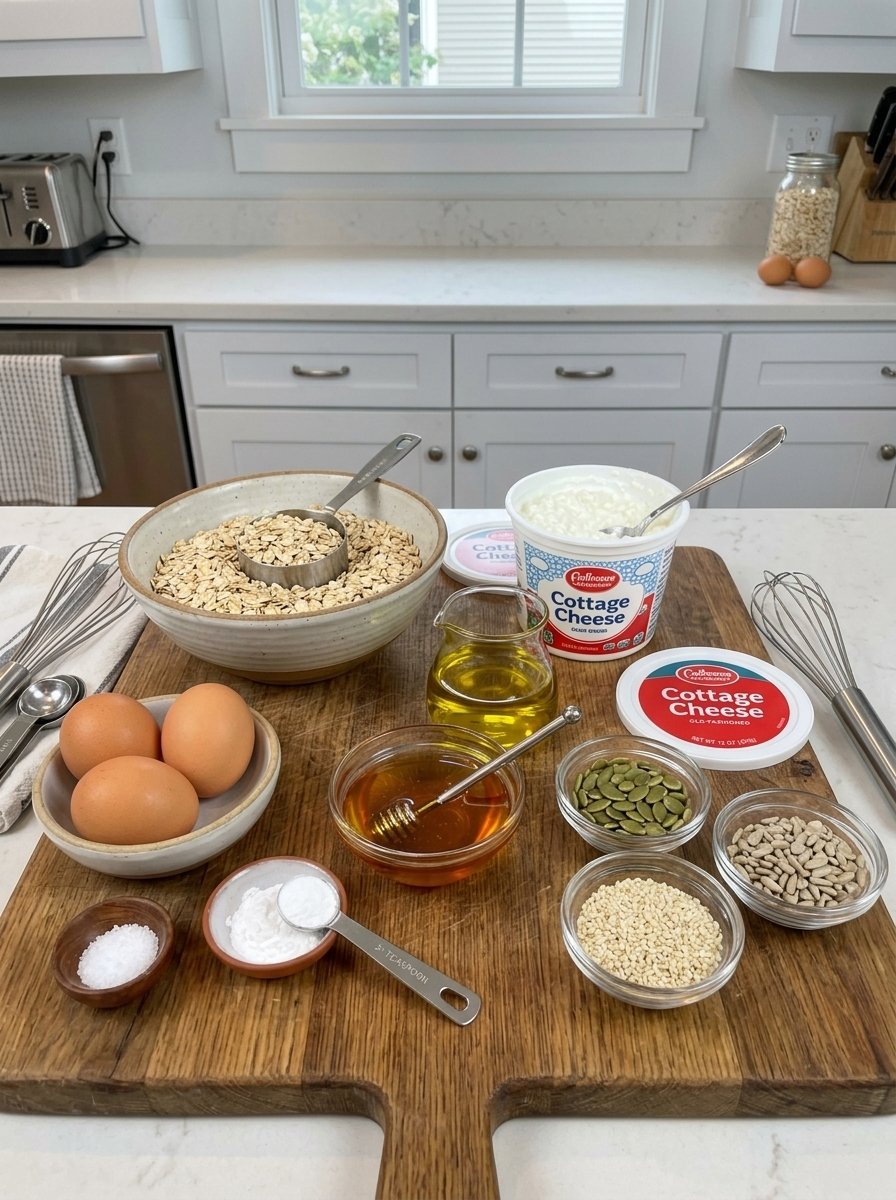
The ingredient list is short, which makes this recipe both budget-friendly and beginner-friendly.
For the Bread
- 1½ cups (135 g) old-fashioned rolled oats
- 1 cup (225 g) cottage cheese
- 3 large eggs
- 2 teaspoons baking powder
- ¼ teaspoon salt
- 1 tablespoon olive oil or melted butter
- 1 tablespoon honey (optional, for a slightly sweeter flavor)
Optional Toppings
- 1 tablespoon rolled oats, for sprinkling over the top
- 1 tablespoon sunflower seeds
- 1 teaspoon sesame seeds
- 1 tablespoon pumpkin seeds
Ingredient Notes and Smart Substitutions
Rolled oats: Old-fashioned rolled oats are the best choice. They blend into a flour-like consistency while still providing a hearty texture. Quick oats can work, but the final texture may be slightly different. Steel-cut oats are not recommended because they do not blend or absorb moisture the same way.
Cottage cheese: Full-fat cottage cheese produces a richer, creamier loaf, while low-fat cottage cheese also works well. Small-curd and large-curd varieties are both fine because the cheese is blended until smooth. Pay attention to how watery your brand is, since extra liquid can affect the batter.
Eggs: Eggs provide structure, protein, and lift. Use large eggs for consistent results.
Baking powder: This is the only leavening agent in the recipe, so do not skip it and make sure it is fresh. Old baking powder is a common reason quick breads turn out dense.
Olive oil or butter: Either adds richness and helps keep the crumb tender. Olive oil gives a slightly more savory character, while butter adds classic flavor.
Honey: Entirely optional. A single tablespoon adds a hint of sweetness and supports browning, but you can leave it out for a more savory, sandwich-style loaf.
Equipment Checklist
You do not need anything fancy to make this bread:
- A blender or food processor
- A mixing bowl
- A spatula or wooden spoon
- An 8 × 4-inch loaf pan
- Parchment paper (optional, but helpful for lifting the loaf out)
- A wire cooling rack
- A sharp serrated knife for slicing
- An instant-read thermometer (optional, but useful for checking doneness)
How to Make High-Protein Cottage Cheese Oatmeal Bread
Follow these steps for a reliably moist, sliceable loaf.
Step 1: Prepare the Oven and Loaf Pan
Preheat your oven to 350°F (175°C). Lightly grease an 8 × 4-inch loaf pan with olive oil, butter, or cooking spray. For easy removal, you can instead line the pan with parchment paper, leaving a little overhang on the sides to act as handles. Set the pan aside while you make the batter.
Step 2: Blend the Oats
Place the rolled oats in a blender or food processor and blend for about 30 to 60 seconds, until they resemble a fine flour. A few small oat pieces are perfectly fine, but a finer texture helps create a more uniform crumb. Transfer the oat flour to a mixing bowl, add the baking powder and salt, and stir to combine.
Step 3: Blend the Cottage Cheese and Eggs
Add the cottage cheese and eggs to the blender, with no need to wash it first. Blend until the mixture is smooth and creamy, with no large lumps of cottage cheese remaining. Add the olive oil or melted butter and the optional honey, then blend briefly to incorporate. Blending the wet ingredients creates a more even batter and distributes the cottage cheese throughout the bread.
Step 4: Combine the Ingredients
Pour the cottage cheese mixture into the bowl with the oat flour, baking powder, and salt. Stir with a spatula or wooden spoon until everything is evenly combined and a thick batter forms. Scrape down the sides of the bowl to catch any dry pockets. Then let the batter rest for about 5 minutes so the oats can absorb some of the moisture.
The batter should be thick and spoonable rather than runny. If it seems unusually wet, add 1 tablespoon of additional oat flour at a time until the consistency is more manageable.
Step 5: Transfer the Batter to the Pan
Spoon the batter into the prepared loaf pan and use a spatula to spread it evenly into the corners and smooth the surface. If you like, sprinkle rolled oats, sunflower seeds, sesame seeds, or pumpkin seeds over the top. Gently press larger seeds into the surface so they stay put during baking.
Step 6: Bake the Bread
Place the loaf pan in the preheated oven and bake for approximately 40 to 50 minutes, until the top is golden brown and the center is set. The loaf should feel firm to the touch, and a toothpick inserted into the center should come out without wet batter.
Because cottage cheese contains moisture, the bread may need a little extra time depending on your brand and the wetness of the batter. If the top browns too quickly, loosely cover it with aluminum foil for the final part of baking. For the most reliable check, the center should reach roughly 200 to 205°F (93 to 96°C).
Step 7: Cool the Loaf
Remove the pan from the oven and set it on a heat-safe surface. Let the bread cool in the pan for 10 to 15 minutes. Carefully lift the loaf out using the parchment paper if you used it, then move it to a wire rack. Let it cool completely before slicing. This step matters more than it seems: the eggs and cottage cheese create a moist interior that needs time to set.
Step 8: Slice and Serve
Once cooled, use a sharp serrated knife to cut the loaf into even slices. The finished bread should have a tender, hearty interior, a lightly crisp crust, and a satisfying oat flavor. Serve the slices as they are, toast them for extra crispness, or add your favorite sweet or savory toppings.
Recipe Snapshot
- Prep time: About 10 to 15 minutes
- Resting time: 5 minutes
- Cooking time: 40 to 50 minutes
- Cooling time: About 45 to 60 minutes
- Total time: About 1 hour 40 minutes to 2 hours 10 minutes, including cooling
- Yield: 1 small 8 × 4-inch loaf, approximately 8 to 10 slices
Expert Tips for the Best Cottage Cheese Oatmeal Bread
Small details make a big difference with a simple recipe like this. Keep these tips in mind:
- Use old-fashioned rolled oats. They provide hearty texture and blend into a flour-like consistency easily.
- Choose the cottage cheese you enjoy. Full-fat gives a richer loaf; low-fat works well too.
- Blend the oats thoroughly. A fine flour produces a smoother, more uniform crumb.
- Do not skip the baking powder. Without yeast, it is what helps the loaf rise and prevents a dense texture.
- Avoid overmixing. Once the wet and dry ingredients meet, stir only until evenly combined.
- Check the batter consistency. It should be thick and spoonable. If your cottage cheese is especially watery, add a little more oat flour.
- Let the loaf cool completely. Patience gives you cleaner, easier slices.
- Add seeds for crunch. Sunflower, sesame, and pumpkin seeds add texture and make the loaf look bakery-worthy.
Troubleshooting: Why Did My Loaf Turn Out Wrong?
Even simple recipes can misbehave. Here is how to fix the most common issues.
The center is gummy or wet. The loaf probably needs more time. Cottage cheese brands vary in moisture, so keep baking and check again in 5 to 10 minutes. Tent the top with foil if it is already deeply browned. Using a thermometer to confirm the center has reached about 200 to 205°F (93 to 96°C) removes the guesswork.
The bread is too dense. Check that your baking powder is fresh, since weak leavening is a frequent culprit. Also avoid overmixing once the batter is combined, and make sure you measured the oats accurately. A kitchen scale is the best way to measure the 135 grams of oats.
The batter is too runny. Watery cottage cheese is the usual cause. Add oat flour one tablespoon at a time until the batter is thick and spoonable. Letting the batter rest for 5 minutes also helps, because the oats absorb moisture as they sit.
The top browns too fast. Loosely cover the loaf with aluminum foil during the last part of baking. Ovens vary, so an oven thermometer can help you confirm that 350°F (175°C) is accurate.
The slices crumble. Almost always, this means the bread was sliced before it cooled completely. Allow the loaf to rest on a wire rack until it is fully cool, and use a sharp serrated knife with a gentle sawing motion.
The bread sticks to the pan. Grease the pan well or line it with parchment paper with an overhang, which makes lifting the loaf out effortless.
Variations to Try
Once you have mastered the base recipe, it is easy to make it your own while keeping the same basic structure:
- Sweeter breakfast loaf: Keep the honey and serve slices with fruit, yogurt, or a spread of nut butter.
- Savory herb loaf: Leave out the honey and stir a little dried or finely chopped fresh herbs into the batter for a loaf that pairs beautifully with soup.
- Seed-crusted loaf: Combine rolled oats, sunflower seeds, sesame seeds, and pumpkin seeds on top for extra crunch and visual appeal.
- Olive oil version: Use olive oil for a slightly savory, Mediterranean-style flavor.
- Buttery version: Use melted butter for a classic, richer taste.
When experimenting, change one element at a time so you can keep the batter thick and spoonable, which is the key to a good result.
Delicious Ways to Serve Cottage Cheese Oatmeal Bread
This loaf is a blank canvas. Try one of these serving ideas:
- Peanut butter toast: Spread a warm slice with peanut butter and top with banana slices or a drizzle of honey.
- Avocado toast: Top toasted bread with mashed avocado, black pepper, and a squeeze of lemon juice.
- Cream cheese toast: Spread with cream cheese and finish with fresh herbs or a sprinkle of everything bagel seasoning.
- Egg breakfast sandwich: Add scrambled eggs, sliced tomato, and cheese for a satisfying morning meal.
- Savory cottage cheese toast: Pile on fresh tomatoes and cucumber with a sprinkle of black pepper.
- Sweet breakfast plate: Serve with Greek yogurt, berries, or your favorite fruit preserves.
- Simple buttered toast: Toast a slice until golden and enjoy with a little butter or olive oil.
How to Store the Bread
Because this loaf contains cottage cheese and eggs, proper storage matters.
- Refrigerator: Once completely cooled, store the bread in an airtight container in the refrigerator for up to 4 days. Refrigeration is the safest option for a bread made with dairy and eggs.
- Freezer: Slice the cooled loaf and place the slices in a freezer-safe bag, separating them with parchment paper if you like. Freeze for up to 2 months for the best quality.
- Reheating: Toast refrigerated or thawed slices in a toaster, or warm them in a skillet until heated through.
- Meal prep: Divide the loaf into individual slices before refrigerating or freezing so you can grab a portion whenever you need it.
- Preserving texture: Always cool the loaf completely before storing it. Trapping warm bread in a container creates condensation and leads to sogginess.
For the best flavor and texture, enjoy the bread freshly baked or lightly toasted after refrigeration.
Is This Bread Healthy? A Quick Look at the Nutrition
This loaf is built from whole-food ingredients. Oats provide fiber and slow-digesting carbohydrates, eggs supply high-quality protein, and cottage cheese adds more protein along with a creamy texture. Together, they make a bread that tends to be more filling than many refined-flour breads.
As a rough estimate, the whole loaf contains somewhere around 55 to 65 grams of protein, which works out to roughly 6 to 7 grams per slice when cut into 8 to 10 slices. Exact numbers depend on the brands you use, so for precise nutrition information, enter your ingredients into a nutrition calculator. If you follow a specific eating plan or have dietary restrictions, check the ingredient labels and consult a qualified professional as needed.
A few notes for specific diets:
- Gluten: Oats are naturally gluten-free, but they can be cross-contaminated during processing. If you need to avoid gluten, look for oats labeled gluten-free.
- Dairy and eggs: This recipe relies on both, so it is not suitable for anyone avoiding them.
- Added sugar: The honey is optional and only one tablespoon for the whole loaf, so the recipe is naturally low in added sugar.
Why Blender Breads Are So Popular
Blender breads have taken off because they remove the biggest barriers to baking at home: time, equipment, and technique. Instead of measuring flour precisely, activating yeast, and kneading, you simply blend and bake. For busy families, students, meal preppers, and beginner bakers, that simplicity is a game changer. Cottage cheese bread in particular has become a favorite because it turns a familiar refrigerator staple into something that feels like a baked treat while boosting the protein content.
Frequently Asked Questions
Can I make cottage cheese oatmeal bread without a blender?
A blender or food processor gives the smoothest result because it breaks down both the oats and the cottage cheese curds. If you do not have one, you can use oat flour and mash the cottage cheese very well with a fork or whisk, but the texture will be more rustic and curds may remain visible.
Can I use quick oats instead of old-fashioned rolled oats?
Yes, quick oats can work, but the texture may be slightly different. Old-fashioned rolled oats are recommended because they blend into a flour-like consistency while keeping a hearty texture.
Does the bread taste like cottage cheese?
The cottage cheese is blended until smooth and baked into the loaf, so its flavor is very mild. Most people notice a tender, slightly tangy richness and a satisfying oat flavor rather than a distinct cottage cheese taste.
Should I use full-fat or low-fat cottage cheese?
Both work. Full-fat cottage cheese creates a richer loaf, while low-fat cottage cheese still produces a good result. Just keep an eye on the batter’s thickness.
How do I know when the bread is done?
The top should be golden brown, the loaf should feel firm, and a toothpick inserted into the center should come out without wet batter. For the most reliable check, the center should reach approximately 200 to 205°F (93 to 96°C).
Why do I have to let the bread cool before slicing?
The cottage cheese and eggs create a moist interior that needs time to set. Slicing too early can make the bread seem gummy or cause it to fall apart.
How long does it last?
Stored in an airtight container in the refrigerator, it keeps for up to 4 days. Sliced and frozen, it keeps for up to 2 months for the best quality.
Can I double the recipe?
You can bake two loaves at once in separate pans, or make a double batch of batter and divide it evenly. Keep an eye on bake times, since two pans in the oven can affect heat circulation.
Can I make it sweeter or more savory?
Yes. Keep the honey for a lightly sweet loaf, or leave it out for a more savory loaf that suits sandwiches. Toppings such as fruit preserves or tomatoes and cucumber take it in either direction.
Can I toast it?
Absolutely. Toasting adds extra crispness and brings out the nutty oat flavor, and it is the best way to enjoy refrigerated or thawed slices.
Final Thoughts
High-protein cottage cheese oatmeal bread proves that homemade bread does not have to be complicated. With just a handful of simple ingredients, a blender, and a loaf pan, you can bake a hearty, nourishing loaf with a tender crumb and a golden crust, all without yeast, kneading, or long rising times. It is wonderful fresh from the oven, great toasted, and incredibly convenient when sliced and frozen for the week ahead.
Give this recipe a try, experiment with your favorite toppings and seeds, and make it your own. Once you taste how easy and satisfying it is, you may find yourself baking it every week.
Did you make this bread? Leave a comment with your favorite topping, and share the recipe with someone who loves easy, protein-packed baking!
Print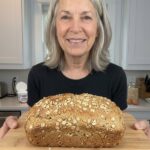
High-Protein Cottage Cheese Oatmeal Bread
Ingredients
The ingredient list is short, which makes this recipe both budget-friendly and beginner-friendly.
For the Bread
- 1½ cups (135 g) old-fashioned rolled oats
- 1 cup (225 g) cottage cheese
- 3 large eggs
- 2 teaspoons baking powder
- ¼ teaspoon salt
- 1 tablespoon olive oil or melted butter
- 1 tablespoon honey (optional, for a slightly sweeter flavor)
Optional Toppings
- 1 tablespoon rolled oats, for sprinkling over the top
- 1 tablespoon sunflower seeds
- 1 teaspoon sesame seeds
- 1 tablespoon pumpkin seeds
Ingredient Notes and Smart Substitutions
Rolled oats: Old-fashioned rolled oats are the best choice. They blend into a flour-like consistency while still providing a hearty texture. Quick oats can work, but the final texture may be slightly different. Steel-cut oats are not recommended because they do not blend or absorb moisture the same way.
Cottage cheese: Full-fat cottage cheese produces a richer, creamier loaf, while low-fat cottage cheese also works well. Small-curd and large-curd varieties are both fine because the cheese is blended until smooth. Pay attention to how watery your brand is, since extra liquid can affect the batter.
Eggs: Eggs provide structure, protein, and lift. Use large eggs for consistent results.
Baking powder: This is the only leavening agent in the recipe, so do not skip it and make sure it is fresh. Old baking powder is a common reason quick breads turn out dense.
Olive oil or butter: Either adds richness and helps keep the crumb tender. Olive oil gives a slightly more savory character, while butter adds classic flavor.
Honey: Entirely optional. A single tablespoon adds a hint of sweetness and supports browning, but you can leave it out for a more savory, sandwich-style loaf.
Instructions
Follow these steps for a reliably moist, sliceable loaf.
Preheat your oven to 350°F (175°C). Lightly grease an 8 × 4-inch loaf pan with olive oil, butter, or cooking spray. For easy removal, you can instead line the pan with parchment paper, leaving a little overhang on the sides to act as handles. Set the pan aside while you make the batter.
Place the rolled oats in a blender or food processor and blend for about 30 to 60 seconds, until they resemble a fine flour. A few small oat pieces are perfectly fine, but a finer texture helps create a more uniform crumb. Transfer the oat flour to a mixing bowl, add the baking powder and salt, and stir to combine.
Add the cottage cheese and eggs to the blender, with no need to wash it first. Blend until the mixture is smooth and creamy, with no large lumps of cottage cheese remaining. Add the olive oil or melted butter and the optional honey, then blend briefly to incorporate. Blending the wet ingredients creates a more even batter and distributes the cottage cheese throughout the bread.
Pour the cottage cheese mixture into the bowl with the oat flour, baking powder, and salt. Stir with a spatula or wooden spoon until everything is evenly combined and a thick batter forms. Scrape down the sides of the bowl to catch any dry pockets. Then let the batter rest for about 5 minutes so the oats can absorb some of the moisture.
The batter should be thick and spoonable rather than runny. If it seems unusually wet, add 1 tablespoon of additional oat flour at a time until the consistency is more manageable.
Spoon the batter into the prepared loaf pan and use a spatula to spread it evenly into the corners and smooth the surface. If you like, sprinkle rolled oats, sunflower seeds, sesame seeds, or pumpkin seeds over the top. Gently press larger seeds into the surface so they stay put during baking.
Place the loaf pan in the preheated oven and bake for approximately 40 to 50 minutes, until the top is golden brown and the center is set. The loaf should feel firm to the touch, and a toothpick inserted into the center should come out without wet batter.
Because cottage cheese contains moisture, the bread may need a little extra time depending on your brand and the wetness of the batter. If the top browns too quickly, loosely cover it with aluminum foil for the final part of baking. For the most reliable check, the center should reach roughly 200 to 205°F (93 to 96°C).
Remove the pan from the oven and set it on a heat-safe surface. Let the bread cool in the pan for 10 to 15 minutes. Carefully lift the loaf out using the parchment paper if you used it, then move it to a wire rack. Let it cool completely before slicing. This step matters more than it seems: the eggs and cottage cheese create a moist interior that needs time to set.
Once cooled, use a sharp serrated knife to cut the loaf into even slices. The finished bread should have a tender, hearty interior, a lightly crisp crust, and a satisfying oat flavor. Serve the slices as they are, toast them for extra crispness, or add your favorite sweet or savory toppings.