Introduction: All the Bagel Flavor, None of the Bagel Work
There is something deeply comforting about the flavor of a poppy seed bagel: the toasty, nutty crunch of the seeds, the chewy bite, and the way it practically begs for a swipe of cream cheese. The problem is that real bagels take time. You mix and knead the dough, let it rise, shape it, boil it, and then bake it. That is a lot to ask on a regular weekday morning.
This High-Protein Cottage Cheese Poppy Seed Bagel Bread gives you that familiar bagel-shop flavor in a simple homemade loaf. It uses baking powder and baking soda instead of yeast, so there is no kneading, no boiling and no waiting for dough to rise. You blend, whisk, stir, pour and bake.
Blended cottage cheese is the secret ingredient. It adds moisture and a mild, tangy richness to the batter, while bread flour gives the loaf a hearty structure and a pleasantly chewy texture. Poppy seeds are folded into the batter and sprinkled generously over the top, so every slice has a delicate nutty flavor and a little crunch.
Whether you want a sturdy slice for breakfast toast, a base for sandwiches or a savory afternoon snack, this cottage cheese bagel bread is a flexible, family-friendly recipe worth keeping in your rotation.
What Is Cottage Cheese Bagel Bread?
Cottage cheese bagel bread is a quick bread inspired by the flavors of a classic poppy seed bagel. Instead of relying on yeast for lift, it uses chemical leaveners (baking powder and baking soda) and the acidity and moisture of cottage cheese to create a tender, sliceable loaf.
It is different from a traditional bagel in a few ways:
- No yeast: The loaf rises in the oven thanks to baking powder and baking soda.
- No kneading or proofing: The batter is simply stirred together, so it comes together in about 15 minutes.
- No boiling: Real bagels are boiled before baking. This loaf skips that step entirely.
- Batter, not dough: The mixture is thick and spreadable rather than a firm, kneadable dough.
What it shares with a bagel is the flavor profile and the satisfying, slightly chewy texture, plus that unmistakable poppy seed topping. It is the kind of bread that toasts beautifully and holds up to spreads, toppings and sandwich fillings.
Why You Will Love This Recipe
Here is why this loaf deserves a spot in your kitchen:
- A protein-friendly bread. Cottage cheese and eggs are both protein-rich ingredients, which makes this a great choice if you are looking for a more filling slice of bread.
- Truly beginner-friendly. If you have never baked bread before, this is an excellent place to start. There is no yeast to activate and no dough to knead.
- Moist and tender. Blending the cottage cheese until smooth means you get a soft, even crumb without any large curds.
- Bagel flavor in loaf form. Poppy seeds inside and on top give you that classic bagel look and taste.
- Slices beautifully. Once cooled, the loaf cuts into neat slices that toast well and make sturdy sandwiches.
- Great for meal prep. The loaf stores well in the fridge and freezes nicely, so you can bake once and enjoy it all week.
- Simple pantry ingredients. Most of what you need is probably already in your kitchen.
Ingredients You Will Need
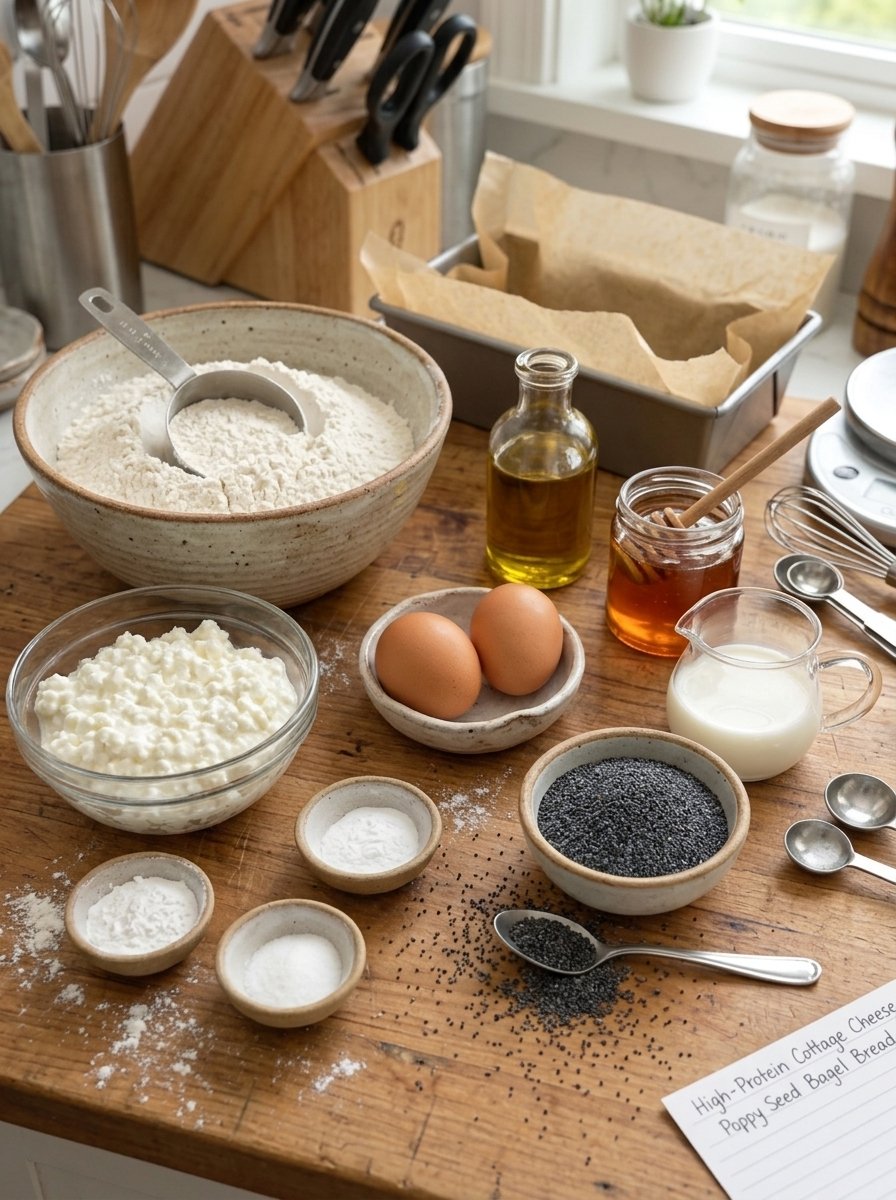
This recipe makes one loaf, about 10 to 12 slices.
- 3 cups bread flour, spooned and leveled (360 g)
- 1 cup cottage cheese (225 g)
- 2 large eggs
- 2 teaspoons baking powder (8 g)
- ½ teaspoon baking soda
- ½ teaspoon salt
- 2 tablespoons olive oil or melted butter (30 ml)
- 1 tablespoon honey (optional)
- 2 tablespoons poppy seeds, plus extra for topping
- 2 to 3 tablespoons milk, as needed
- 1 tablespoon milk or beaten egg, for brushing the top
A Closer Look at the Key Ingredients
Cottage cheese. This is the star of the show. When blended smooth, cottage cheese disappears into the batter and contributes moisture, a gentle tang and a richer crumb. Any style of cottage cheese works, though the texture and moisture can vary from brand to brand, which is why the recipe lets you add milk gradually.
Bread flour. Bread flour has a higher protein content than all-purpose flour, which helps the loaf develop a sturdier structure and a chewier, more bagel-like bite. Be sure to spoon the flour into your measuring cup and level it off rather than scooping directly from the bag, which can pack in too much flour and make the bread dry.
Baking powder and baking soda. These two leaveners replace yeast. Together they give the loaf its lift in the oven, so there is no need for a rising period.
Eggs. Eggs bind the batter, add richness and contribute to the structure of the finished loaf.
Olive oil or melted butter. Olive oil gives a subtle savory note, while melted butter adds a rounder, richer flavor. Either works well.
Honey. Optional, but a single tablespoon adds a touch of rounded flavor and helps the crust brown. It is not enough to make the bread taste sweet.
Poppy seeds. These tiny seeds provide the classic bagel flavor and a delicate crunch. Folding some into the batter and sprinkling more on top ensures you get them in every bite.
Equipment
- 9 × 5-inch loaf pan
- Parchment paper
- Blender or food processor
- Two mixing bowls
- Whisk and rubber spatula
- Pastry brush for the milk or egg wash
- Wire cooling rack
- Serrated bread knife
How to Make Cottage Cheese Poppy Seed Bagel Bread
Step 1: Prepare the Oven and Loaf Pan
Preheat your oven to 350°F (175°C). Grease a 9 × 5-inch loaf pan and line it with parchment paper, leaving a little overhang on the sides. That overhang acts like handles, making it easy to lift the baked loaf out of the pan later.
Step 2: Blend the Cottage Cheese
Place the cottage cheese in a blender or food processor and blend until completely smooth and creamy. This step helps create a moist, evenly textured loaf without large cottage cheese curds. If your blender struggles, scrape down the sides and blend again.
Step 3: Mix the Wet Ingredients
In a large mixing bowl, whisk together the blended cottage cheese, eggs, olive oil or melted butter, and honey if you are using it. Mix until the mixture is smooth and well combined.
Step 4: Combine the Dry Ingredients
In a separate bowl, whisk together the bread flour, baking powder, baking soda and salt. Whisking the dry ingredients first distributes the leavening evenly through the flour, which helps the loaf rise consistently.
Step 5: Make the Batter
Gradually add the dry ingredients to the cottage cheese mixture. Stir gently with a spatula until a thick batter forms. If the mixture seems too stiff to come together, add milk one tablespoon at a time.
Try not to overmix. The batter should be thick and spreadable, rather than as firm as traditional yeast bread dough. Overmixing can make quick breads dense and tough, so stop as soon as everything is incorporated.
Step 6: Fold in the Poppy Seeds
Add 2 tablespoons of poppy seeds to the batter and gently fold them in until evenly distributed. Be careful not to overwork the mixture.
Step 7: Transfer to the Loaf Pan
Spoon the batter into the prepared loaf pan. Use a spatula to spread it evenly into the corners and smooth the top. Lightly brush the surface with milk or beaten egg, then sprinkle additional poppy seeds over the top. A beaten egg wash gives a deeper golden, shinier crust, while milk gives a softer finish.
Step 8: Bake Until Golden
Place the loaf pan on the center rack of the preheated oven. Bake for approximately 40 to 50 minutes, or until the top is golden and a toothpick inserted into the center comes out clean or with a few moist crumbs.
If the top begins browning too quickly, loosely cover the loaf with aluminum foil during the final 10 to 15 minutes of baking.
Step 9: Cool the Bread
Remove the pan from the oven and let the bread rest for about 10 to 15 minutes. Carefully lift it out using the parchment paper and transfer it to a wire rack. Allow it to cool completely before slicing. This helps the center set and makes it much easier to cut neat slices.
Step 10: Slice and Enjoy
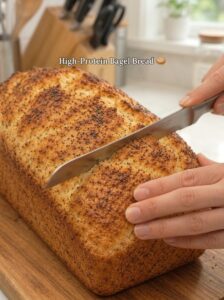
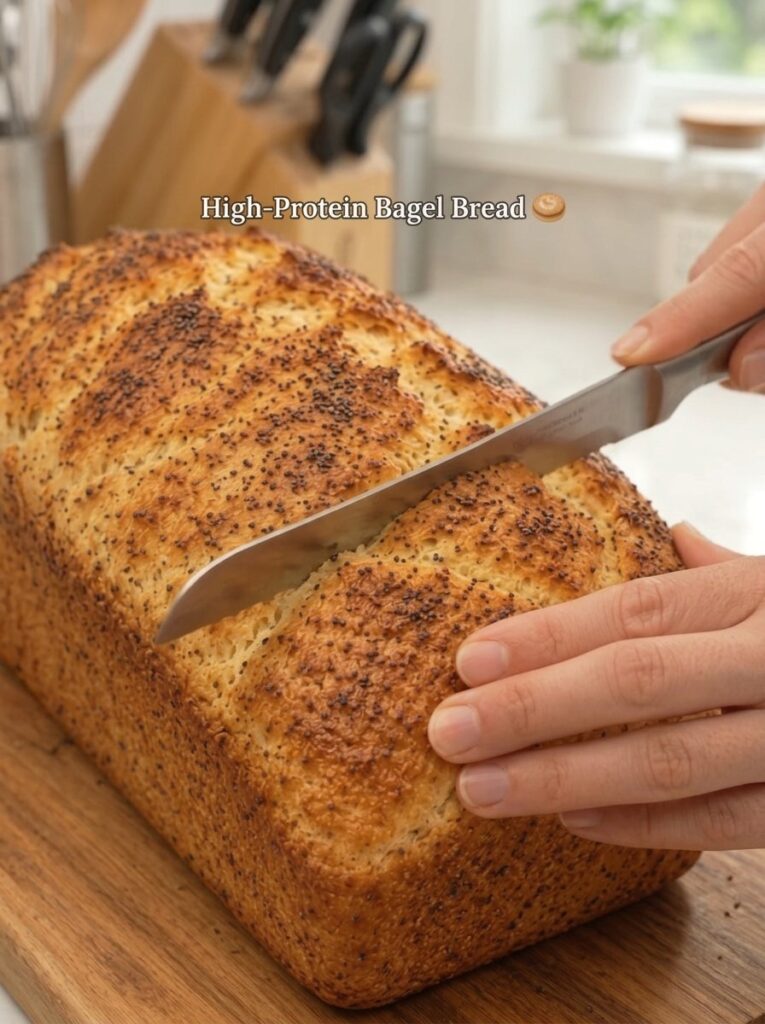
Use a serrated bread knife to slice the loaf, using a gentle sawing motion rather than pressing down. Serve fresh, toast until lightly golden, or use the slices to build hearty sandwiches.
Tips for the Best Cottage Cheese Bagel Bread
Small details make a big difference with quick breads. Keep these tips in mind:
- Blend the cottage cheese until smooth. A creamy, curd-free base gives you an even texture through the whole loaf.
- Use room-temperature ingredients. Let the eggs and cottage cheese sit out briefly before mixing so the batter combines evenly.
- Measure the flour carefully. Spoon flour into the measuring cup and level it off. Packing it down can lead to a dry, heavy loaf. If you own a kitchen scale, 360 g is the target.
- Do not overmix the batter. Stir just until the ingredients are combined to keep the bread tender.
- Add milk gradually. Cottage cheese moisture varies by brand, so add milk a tablespoon at a time if the batter feels too thick.
- Distribute the poppy seeds evenly. Fold them in gently so every slice gets a little crunch.
- Save some seeds for the top. A generous sprinkle gives the loaf its classic bagel-inspired appearance.
- Check before removing from the oven. The center should be fully baked, and a toothpick inserted into it should come out clean or with a few moist crumbs.
Common Mistakes and How to Fix Them
The loaf is dense or heavy. This is usually caused by overmixing or by packing too much flour into the measuring cup. Stir only until combined and measure the flour by spooning and leveling, or by weight.
The center is gummy. The loaf may need more time in the oven. Bake until a toothpick comes out clean or with just a few moist crumbs, and let the bread cool completely before slicing so the center can set.
The top browns too quickly. Tent the loaf loosely with aluminum foil for the final 10 to 15 minutes of baking.
The batter is too thick to stir. Add milk one tablespoon at a time until the batter is thick but spreadable.
You can see cottage cheese curds. Next time, blend the cottage cheese for longer until it is completely smooth.
The slices crumble. Wait until the bread has cooled fully, and use a serrated knife with a gentle sawing motion.
Variations to Try
Once you have made the base recipe, it is easy to customize. Here are a few ideas:
- Everything-bagel style: Swap the poppy seeds on top for a mix of sesame seeds, dried garlic, dried onion and poppy seeds.
- Seeded bagel bread: Use a combination of poppy seeds and sesame seeds in the batter and on the crust.
- Cheesy bagel bread: Fold a handful of shredded cheddar into the batter for a savory, cheesy twist.
- Herb and garlic: Stir in dried herbs such as chives or dill for an extra savory flavor.
- Butter instead of olive oil: Use melted butter for a richer, softer-tasting crumb.
- Skip the honey: The honey is optional, so leave it out if you prefer a purely savory loaf.
If you make changes to the dry or wet ingredient ratios, keep an eye on the consistency of the batter. It should remain thick and spreadable.
Serving Ideas
This bagel bread is versatile enough to fit into any meal of the day:
- Classic bagel-style breakfast: Toast a slice and spread it with cream cheese.
- Avocado toast: Add mashed avocado, a pinch of salt and a little lemon juice.
- Savory sandwiches: Layer with turkey, cheddar, lettuce, tomato or cucumber.
- Smoked salmon toast: Top with cream cheese, smoked salmon, red onion and fresh dill.
- Egg breakfast: Serve toasted slices with scrambled or fried eggs.
- Soup companion: Pair with creamy tomato soup, vegetable soup or chicken soup.
- Afternoon snack: Enjoy with hummus, whipped feta or your favorite savory spread.
Storage, Freezing and Reheating
Room temperature: Once completely cooled, store the loaf in an airtight container for up to 2 days.
Refrigerator: Keep it tightly wrapped or in an airtight container for up to 5 days.
Freezer: Slice the cooled loaf and freeze the slices in a freezer-safe bag for up to 2 months. Separate the slices with parchment paper so they are easy to remove one at a time.
Reheating: Toast individual slices straight from the refrigerator or freezer, or warm them in a toaster oven until heated through.
Make-ahead tip: Bake the loaf a day ahead, let it cool completely and store it tightly wrapped. Toast slices just before serving for the best texture.
Recipe Details at a Glance
- Prep time: 15 minutes
- Bake time: 40 to 50 minutes
- Cooling time: 30 to 45 minutes
- Total time: Approximately 1 hour 25 minutes to 1 hour 50 minutes
- Yield: 1 loaf (about 10 to 12 slices)
- Oven temperature: 350°F (175°C)
- Leavening: Baking powder and baking soda (no yeast)
Why Use Cottage Cheese in Bread?
Cottage cheese has become a popular ingredient in modern home baking, and for good reason. When blended, it works as a moisture-rich, mildly tangy base that contributes to a soft crumb. It also pairs naturally with eggs and flour, since all three bring structure and richness to the loaf.
Because it is a mild-tasting dairy product, cottage cheese will not overpower the poppy seeds or the savory toppings you add later. It simply makes the bread more tender and more satisfying. If you have been looking for creative ways to use up a tub of cottage cheese, this recipe is a delicious answer.
Frequently Asked Questions
Can I make this bagel bread without yeast?
Yes. This recipe is completely yeast-free. The loaf rises thanks to baking powder and baking soda, so there is no kneading, boiling or proofing involved.
Does this bread actually taste like a bagel?
It captures the flavor of a poppy seed bagel, thanks to the poppy seeds inside and on top and the chew that bread flour provides. The texture is that of a tender quick bread rather than a dense boiled bagel, but the flavor is very familiar.
Do I have to blend the cottage cheese?
Blending is strongly recommended. It removes the large curds and creates a smooth, even batter, which leads to a more uniform texture in every slice.
Can I use all-purpose flour instead of bread flour?
Bread flour is what the recipe was developed with, and it gives the loaf its hearty structure and chewy texture. If you substitute all-purpose flour, expect a slightly softer, less chewy result, and watch the batter consistency, adding milk only as needed.
Can I use butter instead of olive oil?
Yes. The recipe calls for either 2 tablespoons of olive oil or melted butter. Olive oil adds a subtle savory note, while butter gives a richer flavor.
Is the honey necessary?
No, the honey is optional. It adds a slight rounded flavor and helps with browning, but the bread works well without it.
How do I know when the loaf is done?
The top should be golden, and a toothpick inserted into the center should come out clean or with a few moist crumbs. If the top is browning too fast, tent it with foil for the last 10 to 15 minutes.
How long does it keep?
Stored in an airtight container at room temperature, it keeps for up to 2 days. In the refrigerator it keeps for up to 5 days, and in the freezer, sliced and bagged, for up to 2 months.
Can I freeze the bread?
Absolutely. Slice the cooled loaf, separate the slices with parchment paper, and freeze them in a freezer-safe bag. Toast slices straight from the freezer whenever you want one.
Why did my bread turn out dense?
The most common causes are overmixing the batter and packing too much flour into the measuring cup. Stir just until combined, and spoon and level the flour or weigh it.
Can I add extra mix-ins?
Yes. Sesame seeds, shredded cheese, dried herbs and everything-bagel seasoning are all good additions. Just keep the batter thick and spreadable, and avoid adding too many wet ingredients.
Final Thoughts
This High-Protein Cottage Cheese Poppy Seed Bagel Bread proves that you do not need a long afternoon, special equipment or any bread-baking experience to enjoy bagel-style flavor at home. With blended cottage cheese for moisture, bread flour for a satisfying chew and poppy seeds for that signature crunch, it is a reliable, versatile loaf that fits breakfasts, lunches and snacks alike.
Bake a loaf this weekend, slice and freeze it, and you will have toast-ready bagel bread waiting for you all week long. If you try it, leave a comment and a star rating, and share your favorite way to serve it.
Print
High-Protein Cottage Cheese Poppy Seed Bagel Bread
Ingredients
This recipe makes one loaf, about 10 to 12 slices.
- 3 cups bread flour, spooned and leveled (360 g)
- 1 cup cottage cheese (225 g)
- 2 large eggs
- 2 teaspoons baking powder (8 g)
- ½ teaspoon baking soda
- ½ teaspoon salt
- 2 tablespoons olive oil or melted butter (30 ml)
- 1 tablespoon honey (optional)
- 2 tablespoons poppy seeds, plus extra for topping
- 2 to 3 tablespoons milk, as needed
- 1 tablespoon milk or beaten egg, for brushing the top
Instructions
Preheat your oven to 350°F (175°C). Grease a 9 × 5-inch loaf pan and line it with parchment paper, leaving a little overhang on the sides. That overhang acts like handles, making it easy to lift the baked loaf out of the pan later.
Step 2: Blend the Cottage Cheese
Place the cottage cheese in a blender or food processor and blend until completely smooth and creamy. This step helps create a moist, evenly textured loaf without large cottage cheese curds. If your blender struggles, scrape down the sides and blend again.
Step 3: Mix the Wet Ingredients
In a large mixing bowl, whisk together the blended cottage cheese, eggs, olive oil or melted butter, and honey if you are using it. Mix until the mixture is smooth and well combined.
Step 4: Combine the Dry Ingredients
In a separate bowl, whisk together the bread flour, baking powder, baking soda and salt. Whisking the dry ingredients first distributes the leavening evenly through the flour, which helps the loaf rise consistently.
Step 5: Make the Batter
Gradually add the dry ingredients to the cottage cheese mixture. Stir gently with a spatula until a thick batter forms. If the mixture seems too stiff to come together, add milk one tablespoon at a time.
Try not to overmix. The batter should be thick and spreadable, rather than as firm as traditional yeast bread dough. Overmixing can make quick breads dense and tough, so stop as soon as everything is incorporated.
Step 6: Fold in the Poppy Seeds
Add 2 tablespoons of poppy seeds to the batter and gently fold them in until evenly distributed. Be careful not to overwork the mixture.
Step 7: Transfer to the Loaf Pan
Spoon the batter into the prepared loaf pan. Use a spatula to spread it evenly into the corners and smooth the top. Lightly brush the surface with milk or beaten egg, then sprinkle additional poppy seeds over the top. A beaten egg wash gives a deeper golden, shinier crust, while milk gives a softer finish.
Step 8: Bake Until Golden
Place the loaf pan on the center rack of the preheated oven. Bake for approximately 40 to 50 minutes, or until the top is golden and a toothpick inserted into the center comes out clean or with a few moist crumbs.
If the top begins browning too quickly, loosely cover the loaf with aluminum foil during the final 10 to 15 minutes of baking.
Step 9: Cool the Bread
Remove the pan from the oven and let the bread rest for about 10 to 15 minutes. Carefully lift it out using the parchment paper and transfer it to a wire rack. Allow it to cool completely before slicing. This helps the center set and makes it much easier to cut neat slices.
Step 10: Slice and Enjoy
Use a serrated bread knife to slice the loaf, using a gentle sawing motion rather than pressing down. Serve fresh, toast until lightly golden, or use the slices to build hearty sandwiches.