Homemade Mediterranean Flatbread: Soft, Herby and Easy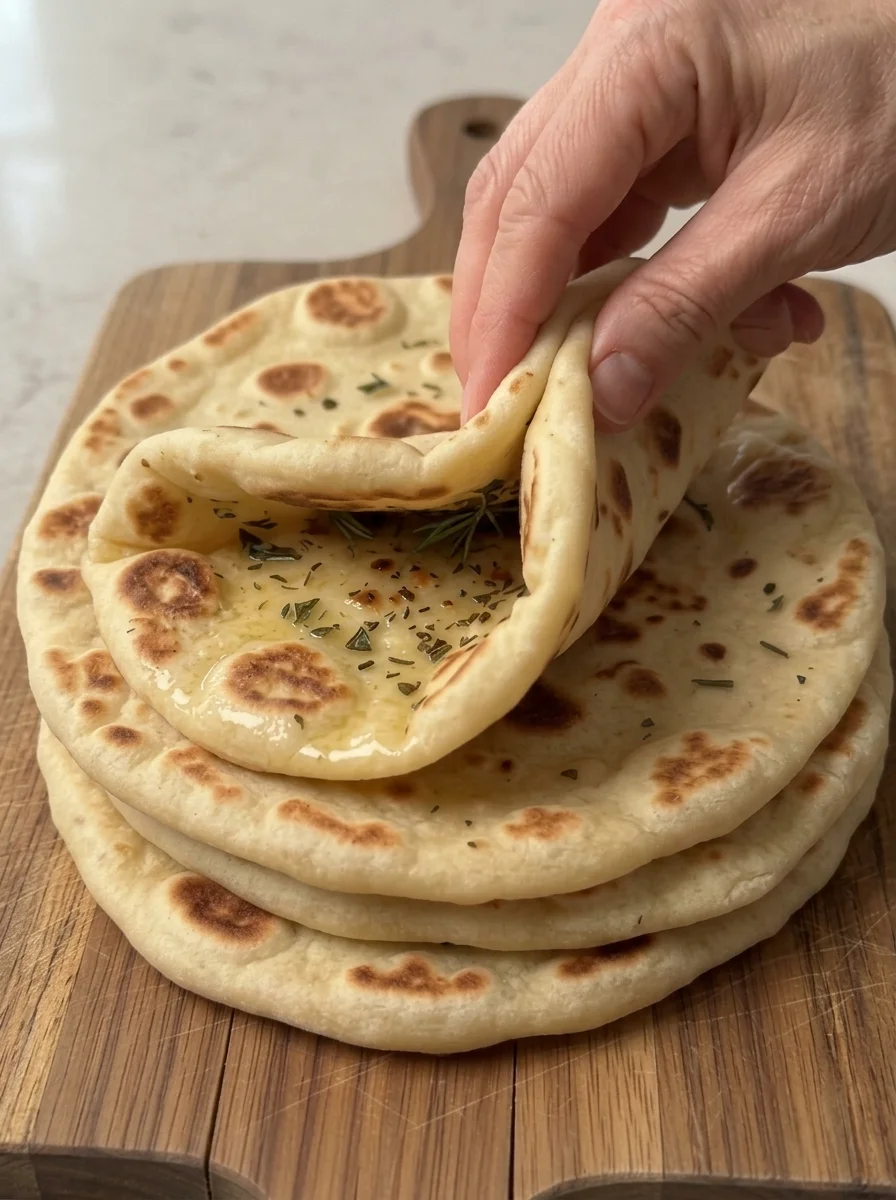
· @oussama
Soft, fluffy and lightly golden, this homemade Mediterranean flatbread is infused with olive oil and fragrant herbs. It is easy to make with everyday ingredients, and it pairs beautifully with hummus, tzatziki, grilled vegetables, salads and Mediterranean-inspired meals.
This recipe uses a simple yeast dough, a short rise and a quick cook in a skillet or oven. You brush each flatbread with a mix of olive oil, oregano, thyme and garlic, then finish it with flaky salt and fresh parsley. The result is a warm, aromatic bread that tastes like it came from a Mediterranean kitchen, and it takes only about an hour and 40 minutes, most of it hands-off.
Why you will love this Mediterranean flatbread recipe
Homemade flatbread is more flavorful and fresh than anything from a package. Here is why this version is worth making.
- Soft and fluffy texture. The yeast dough rises until airy, so the flatbreads are tender and slightly chewy.
- Full of herb flavor. Olive oil, oregano, thyme and garlic make every bite fragrant.
- Everyday ingredients. Flour, water, yeast, olive oil, sugar and salt are all you need for the dough.
- Two cooking methods. Use a skillet for golden spots or the oven for a hands-off batch.
- Endlessly customizable. Top with feta, olives, sun-dried tomatoes, seeds or chili flakes.
- Great for sharing. Serve it warm with dips, salads and grilled dishes for a casual meze-style meal.
- Freezer friendly. Make extra and keep them ready for busy nights.
What is Mediterranean flatbread?
Flatbreads are among the oldest breads in the world, and versions of them appear across the Mediterranean region, from Greek pita and Turkish lavash to Lebanese and Levantine flatbreads with za’atar. This recipe is inspired by that tradition rather than copying a single regional style. It combines a soft dough with olive oil and herbs, which are staples of Mediterranean cooking.
What does it taste like?
This flatbread tastes lightly savory and herby, with the fruity richness of olive oil and a hint of garlic. The inside is soft and slightly chewy, and the surface has golden-brown blisters from the hot pan. Toppings such as feta or olives add salty, tangy notes. It is flavorful enough to enjoy on its own and mild enough to go with almost any dip or main dish.
Mediterranean flatbread recipe details
This recipe makes 6 flatbreads. Most of the time is hands-off rising.
- Preparation time: 15 minutes
- Rising time: 60-75 minutes
- Cooking time: 12-18 minutes
- Total time: approximately 1 hour 40 minutes
- Yield: 6 flatbreads
Ingredients for homemade Mediterranean flatbread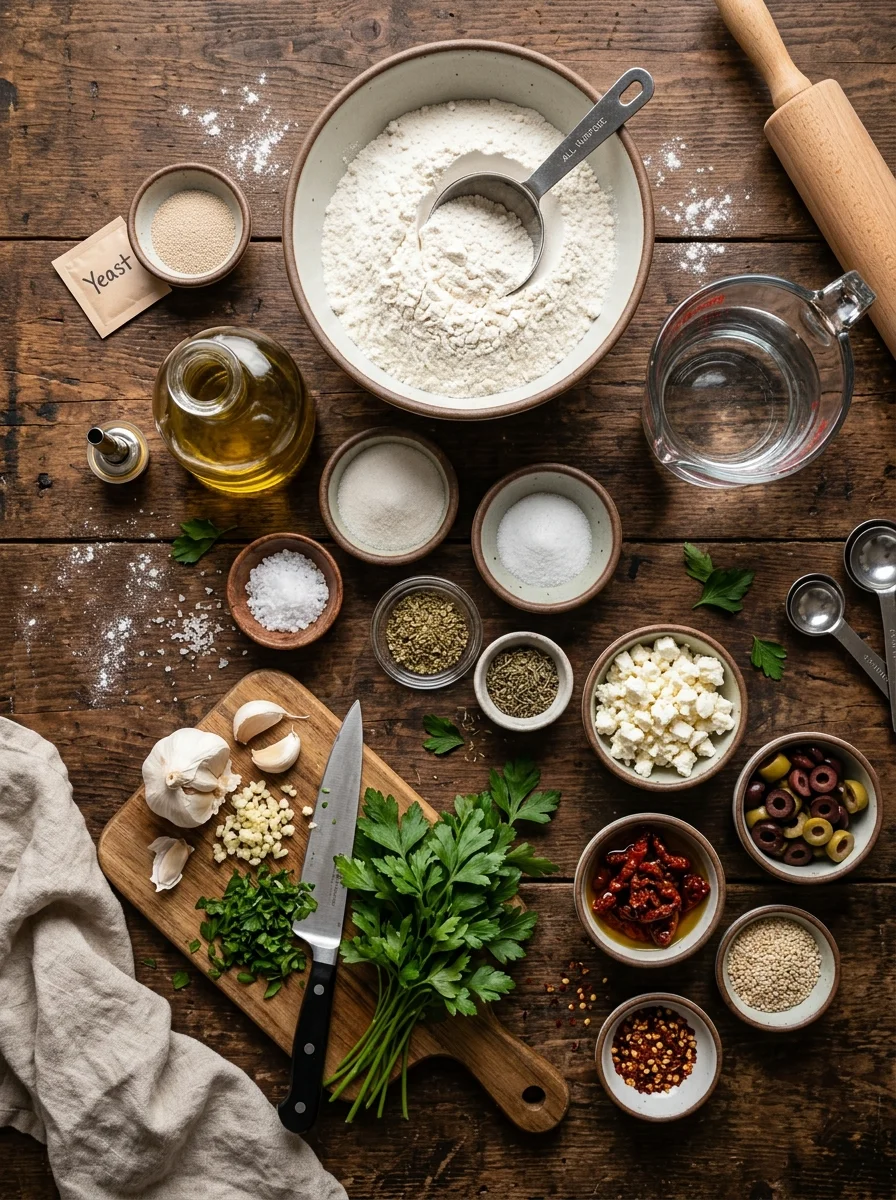
For the dough
- 375 g all-purpose flour (about 3 cups)
- 240 ml warm water (1 cup)
- 7 g instant yeast (2¼ teaspoons)
- 1 tablespoon olive oil
- 1 teaspoon sugar
- 1 teaspoon salt
For the Mediterranean herb topping
- 2 tablespoons olive oil
- 1 teaspoon dried oregano
- ½ teaspoon dried thyme
- 1 small garlic clove, finely minced (optional)
- 2 tablespoons chopped fresh parsley (optional)
- Flaky salt, to taste
Optional toppings
- Crumbled feta cheese
- Sliced black or green olives
- Chopped sun-dried tomatoes
- Sesame seeds
- Chili flakes
Equipment you will need
- Large mixing bowl
- Rolling pin
- Heavy skillet or cast-iron pan, or a baking tray with parchment paper
- Pastry brush
- Clean kitchen towel
- Small bowl for the herb oil
How to make Mediterranean flatbread, step by step
Follow these six steps for soft, golden flatbreads. Read through them once first, since the dough needs time to rise.
Step 1: Prepare the dough
- In a large bowl, combine the warm water, sugar and instant yeast.
- Let the mixture sit for 5 minutes.
- Add the flour, salt and olive oil.
- Mix until a soft dough forms.
- Knead on a lightly floured surface for 5-7 minutes, until smooth and elastic.
- If the dough feels too sticky, add a little flour gradually, avoiding too much so the flatbreads stay soft.
Step 2: Let the dough rise
- Place the dough in a lightly oiled bowl.
- Cover with a clean kitchen towel or plastic wrap.
- Leave in a warm place for 60-75 minutes, or until doubled in size.
Step 3: Divide and shape
- Gently press the dough to release excess air.
- Divide into 6 equal portions.
- Shape each portion into a ball.
- Cover and let rest for 10 minutes.
- Roll each ball into a circle or oval about 3-5 mm thick.
Step 4: Prepare the herb oil
- Mix the olive oil, oregano, thyme and minced garlic in a small bowl.
- Brush a thin layer over each flatbread.
- Sprinkle with parsley and flaky salt if desired.
- Add feta, olives or sun-dried tomatoes for extra Mediterranean flavor.
Step 5: Cook the flatbreads
Option A: Stovetop skillet
- Heat a heavy skillet over medium-high heat.
- Place one flatbread in the dry skillet.
- Cook for 1-2 minutes, until bubbles appear and golden spots develop underneath.
- Flip and cook for another 1-2 minutes.
- Repeat with the remaining flatbreads.
- Brush lightly with extra herb oil after cooking.
Option B: Oven
- Preheat the oven to 220°C (425°F).
- Arrange the flatbreads on a parchment-lined baking tray.
- Bake for 8-12 minutes, until puffed in places and lightly golden.
- Watch carefully to prevent them from becoming too crisp.
Step 6: Keep them soft
- Stack the cooked flatbreads under a clean kitchen towel.
- Let them rest for a few minutes before serving.
- Finish with fresh parsley and a drizzle of olive oil if desired.
Skillet or oven: which method should you choose?
- Skillet: Best for golden spots and a slightly chewy texture. It works well if you want to cook the flatbreads one at a time as you eat.
- Oven: Best for cooking several flatbreads at once, especially with toppings such as feta and olives that could burn in a dry pan.
- Topping tip: When using a skillet, add toppings after cooking, or press them in gently before flipping.
Tips for perfect flatbread
These small details help you get soft, flavorful flatbread every time.
- Use warm, not hot, water. Very hot water can damage the yeast, and cold water slows it down.
- Allow enough rising time. This helps create a tender, airy texture.
- Rest before rolling. The dough will stretch more easily and shrink less.
- Roll evenly. Aim for a consistent thickness so the flatbreads cook evenly.
- Preheat the skillet. A hot pan helps create those lovely golden spots.
- Cover after cooking. Trapped steam keeps the bread soft.
- Add delicate fresh herbs afterward. This preserves their color and fresh flavor.
- Do not over-flour. Too much flour on the surface makes the flatbread dry and can burn in the pan.
Ingredient notes and substitutions
- Flour. All-purpose flour gives a soft, tender flatbread. Bread flour makes it slightly chewier. Replace up to a third of the flour with whole wheat for a heartier version.
- Yeast. Instant yeast can be mixed straight in. If you use active dry yeast, use the same amount and let it foam in the warm water for 5-10 minutes.
- Olive oil. Extra virgin olive oil gives the best flavor, especially in the topping.
- Dried herbs. Oregano and thyme are classic. Rosemary, marjoram or za’atar also work well.
- Fresh herbs. Parsley adds color and freshness. Mint, dill or basil make good alternatives.
- Garlic. Mince it very finely, since it will not cook for long. Garlic powder is a gentler option.
- Salt. Fine salt goes in the dough, and flaky salt finishes the top.
Mediterranean flatbread troubleshooting
- Flatbreads are tough: Too much flour was added or the dough was not allowed to rise. Keep the dough soft and let it double.
- Flatbreads are dry or crisp: They were cooked too long. Cook for less time and cover with a towel right away.
- Dough did not rise: The yeast may be old, or the water was too hot or too cold. Check the expiry date and use warm water.
- Dough shrinks when rolling: It needs to rest. Cover the balls for 10 more minutes and try again.
- Flatbreads are pale: The pan was not hot enough. Increase the heat slightly.
- Garlic burns in the pan: Brush the herb oil on after cooking, or use garlic powder.
- Flatbreads do not puff: That is fine. This is not a pocket bread, and they stay soft either way.
Mediterranean flavor variations
The base flatbread is a blank canvas for Mediterranean flavors.
- Greek-style. Add crumbled feta, oregano and sliced Kalamata olives.
- Garlic and herb. Use garlic, parsley, rosemary and olive oil.
- Za’atar flatbread. Replace the dried herbs with za’atar and sprinkle with sesame seeds.
- Tomato and olive. Add chopped sun-dried tomatoes and sliced olives.
- Spicy Mediterranean. Add chili flakes and a little smoked paprika.
- Cheesy herb. Sprinkle with feta or grated Parmesan after cooking.
- Lemon and herb. Add lemon zest to the herb oil and finish with a squeeze of lemon.
Serving ideas
This flatbread suits many meals, from casual snacks to full dinners.
- Serve with hummus, baba ganoush or tzatziki.
- Use as a wrap for grilled chicken, falafel or roasted vegetables.
- Pair with Greek salad, lentil soup or vegetable stew.
- Cut into strips and serve with olive oil and balsamic vinegar.
- Top with feta, tomatoes, cucumber and fresh herbs for a quick lunch.
- Build a meze platter with olives, cheeses, dips and sliced vegetables.
- Serve alongside grilled fish, lamb or kebabs.
Quick Mediterranean flatbread toppings
- Fresh and light: Cucumber, cherry tomatoes, red onion, mint and a drizzle of yogurt.
- Hearty: Roasted peppers, grilled eggplant and crumbled feta.
- Protein-rich: Hummus, shredded chicken and chopped parsley.
- Simple: Olive oil, lemon juice and flaky salt.
Storage instructions
- Room temperature: Store in an airtight bag for up to 2 days.
- Refrigerator: Keep in an airtight container for up to 4-5 days.
- Freezer: Freeze with parchment paper between flatbreads for up to 3 months.
- Reheating: Warm in a skillet for 20-30 seconds per side, or wrap in foil and heat in a 160°C (320°F) oven for 5-8 minutes.
Make-ahead tips
- Refrigerate the dough. After kneading, cover and refrigerate overnight. Let it warm up for 30 minutes before dividing and rolling.
- Freeze the dough balls. Freeze them on a tray, move them to a bag and thaw in the fridge overnight before rolling.
- Prepare the herb oil ahead. Mix it and keep it in the fridge for a few days, then bring it to room temperature before brushing.
- Cook just before serving. The flatbreads are best warm, so cook them as your meal comes together.
Mediterranean flatbread FAQ
Can I make this flatbread without yeast? This recipe is designed for yeast, which gives the soft, airy texture. For a quick no-yeast version, you would need a different dough recipe, such as one using yogurt and baking powder.
Do I need to knead the dough? Yes. Kneading for 5-7 minutes develops the gluten, which gives the flatbreads a soft, stretchy texture.
Can I use active dry yeast? Yes. Use the same amount, and let it foam in the warm water and sugar for 5-10 minutes before adding the flour.
Can I use bread flour? Yes. Bread flour makes the flatbreads slightly chewier. You may need a little more water if the dough feels stiff.
How do I stop the flatbreads from becoming hard? Do not overcook them, and cover them with a clean towel right after cooking so steam keeps them soft.
Can I make the dough ahead? Yes. Refrigerate it overnight after kneading, then let it warm up for 30 minutes before dividing and rolling.
Can I freeze Mediterranean flatbread? Yes. Freeze cooled flatbreads with parchment between them for up to 3 months, then reheat in a skillet or oven.
What is the best pan to use? A heavy skillet or cast-iron pan holds heat well and gives the best golden spots. Any large non-stick pan also works.
Is this flatbread vegan? The dough contains no dairy or eggs, so it is vegan as written. Skip cheese toppings such as feta, or use a plant-based alternative.
Can I add toppings before cooking? Yes, in the oven. In a skillet, add heavier toppings after cooking, or they may burn or fall off.
Can I make smaller or larger flatbreads? Yes. Divide the dough into 8 for smaller flatbreads or 4 for larger ones, and adjust the cooking time accordingly.
Final thoughts
Homemade Mediterranean flatbread is soft, fragrant and surprisingly easy. With a simple yeast dough, a brush of herb-infused olive oil and a hot pan, you get warm bread that elevates any meal.
Serve it with your favorite dips, wrap it around grilled vegetables or tear it up beside a big salad. Once you try it fresh from the skillet, you may never buy flatbread again.
Print
Homemade Mediterranean Flatbread
Ingredients
For the dough
- 375 g all-purpose flour (about 3 cups)
- 240 ml warm water (1 cup)
- 7 g instant yeast (2¼ teaspoons)
- 1 tablespoon olive oil
- 1 teaspoon sugar
- 1 teaspoon salt
For the Mediterranean herb topping
- 2 tablespoons olive oil
- 1 teaspoon dried oregano
- ½ teaspoon dried thyme
- 1 small garlic clove, finely minced (optional)
- 2 tablespoons chopped fresh parsley (optional)
- Flaky salt, to taste
Optional toppings
- Crumbled feta cheese
- Sliced black or green olives
- Chopped sun-dried tomatoes
- Sesame seeds
- Chili flakes
Equipment you will need
- Large mixing bowl
- Rolling pin
- Heavy skillet or cast-iron pan, or a baking tray with parchment paper
- Pastry brush
- Clean kitchen towel
- Small bowl for the herb oil
Instructions
Follow these six steps for soft, golden flatbreads. Read through them once first, since the dough needs time to rise.
Step 1: Prepare the dough
- In a large bowl, combine the warm water, sugar and instant yeast.
- Let the mixture sit for 5 minutes.
- Add the flour, salt and olive oil.
- Mix until a soft dough forms.
- Knead on a lightly floured surface for 5-7 minutes, until smooth and elastic.
- If the dough feels too sticky, add a little flour gradually, avoiding too much so the flatbreads stay soft.
Step 2: Let the dough rise
- Place the dough in a lightly oiled bowl.
- Cover with a clean kitchen towel or plastic wrap.
- Leave in a warm place for 60-75 minutes, or until doubled in size.
Step 3: Divide and shape
- Gently press the dough to release excess air.
- Divide into 6 equal portions.
- Shape each portion into a ball.
- Cover and let rest for 10 minutes.
- Roll each ball into a circle or oval about 3-5 mm thick.
Step 4: Prepare the herb oil
- Mix the olive oil, oregano, thyme and minced garlic in a small bowl.
- Brush a thin layer over each flatbread.
- Sprinkle with parsley and flaky salt if desired.
- Add feta, olives or sun-dried tomatoes for extra Mediterranean flavor.
Step 5: Cook the flatbreads
Option A: Stovetop skillet
- Heat a heavy skillet over medium-high heat.
- Place one flatbread in the dry skillet.
- Cook for 1-2 minutes, until bubbles appear and golden spots develop underneath.
- Flip and cook for another 1-2 minutes.
- Repeat with the remaining flatbreads.
- Brush lightly with extra herb oil after cooking.
Option B: Oven
- Preheat the oven to 220°C (425°F).
- Arrange the flatbreads on a parchment-lined baking tray.
- Bake for 8-12 minutes, until puffed in places and lightly golden.
- Watch carefully to prevent them from becoming too crisp.
Step 6: Keep them soft
- Stack the cooked flatbreads under a clean kitchen towel.
- Let them rest for a few minutes before serving.
- Finish with fresh parsley and a drizzle of olive oil if desired.