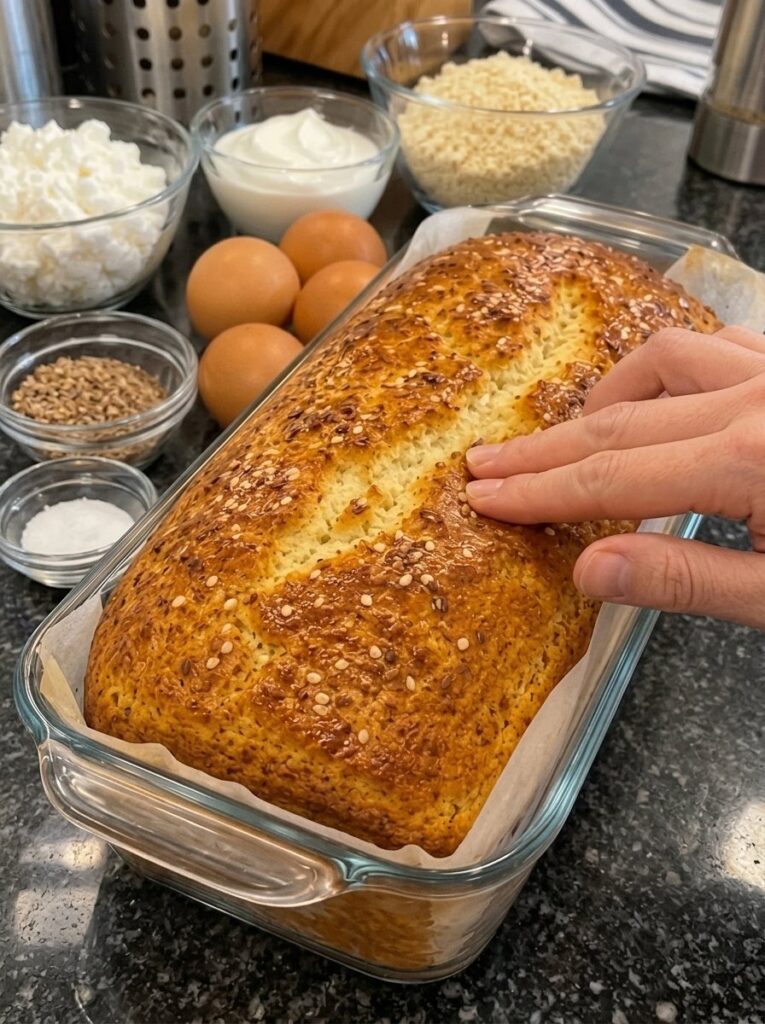
If you have ever tried to find a good keto bread, you already know the struggle. Some loaves are dry and crumbly. Others taste unmistakably eggy. Many need a long list of specialty ingredients that you will never use again. That is exactly why this Keto Fluffy Cottage Cheese Yogurt Bread deserves a permanent place in your recipe rotation.
This simple homemade quick bread uses creamy cottage cheese, thick Greek yogurt, eggs, finely ground almond flour, and a little ground flaxseed. The dairy gives the loaf a soft, tender crumb, while the almond flour adds a lightly nutty flavor. The result is a golden, sesame-flecked loaf with a mild, savory taste that works for breakfast toast, open-faced sandwiches, or a side for soup.
Best of all, there is no yeast, no kneading, and no rising time. If you can use a blender and a spatula, you can make this bread.
In this guide, you will find the complete recipe, step-by-step instructions, ingredient notes, troubleshooting advice, serving ideas, storage tips, and answers to the most common questions about low-carb bread baking.
Why You Will Love This Keto Cottage Cheese Bread
There are plenty of low-carb bread recipes online, but this one stands out for several reasons.
- Soft and moist texture. Cottage cheese and Greek yogurt bring moisture and tenderness that almond flour alone cannot deliver.
- No yeast or rising time. This is a true quick bread. Mix, pour, bake.
- Simple, everyday ingredients. Most of what you need is probably already in your refrigerator and pantry.
- Grain-free and low-carb. Almond flour replaces wheat flour, making the loaf suitable for keto, low-carb, and grain-free eating.
- Naturally protein-rich. Eggs, cottage cheese, Greek yogurt, and almond flour all contribute protein, so a slice feels satisfying.
- Great for meal prep. The loaf slices cleanly once cooled and freezes beautifully.
- Versatile flavor. The mild, slightly savory taste works with sweet and savory toppings alike.
What Is Cottage Cheese Yogurt Bread?
Cottage cheese bread has become one of the most popular low-carb baking trends, and for good reason. Instead of relying on gluten for structure, this style of bread uses eggs and dairy proteins to set the crumb. Cottage cheese adds moisture, protein, and a gentle tang. Thick Greek yogurt adds structure without making the batter too wet. Almond flour provides body, and ground flaxseed absorbs moisture to help hold everything together.
When blended and baked, the cottage cheese curds disappear into the batter. You do not taste cottage cheese in the finished loaf. What you notice instead is a tender, slightly rich bread with a delicate crumb.
Ingredients for Keto Fluffy Cottage Cheese Yogurt Bread
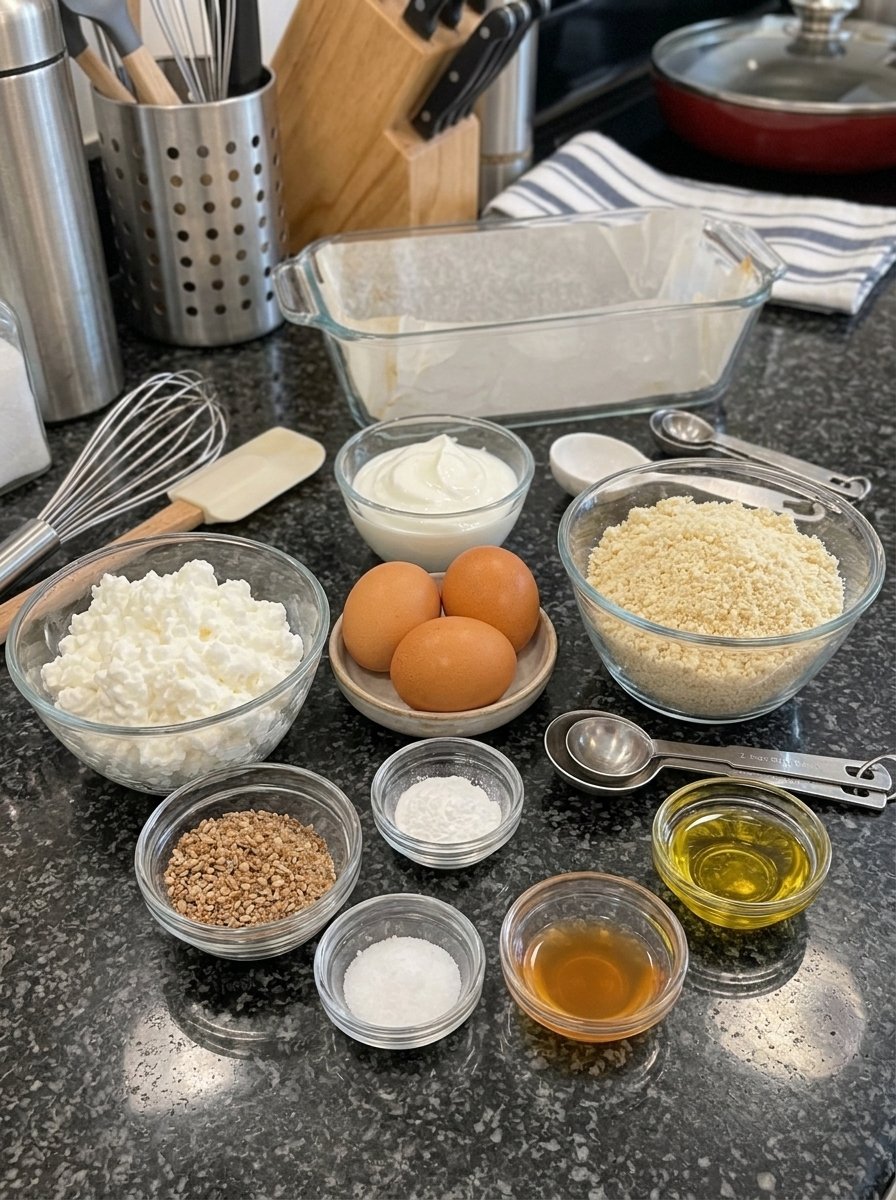
Here is everything you need for one 8 × 4-inch loaf:
- 7/8 cup plain, undrained 4% milkfat cottage cheese (200 g)
- ½ cup plain, thick Greek yogurt (approximately 120 g)
- 3 large eggs
- 2 cups finely ground almond meal or almond flour (approximately 200 g)
- ¼ cup ground flaxseed (approximately 28 g)
- 2 teaspoons baking powder
- ½ teaspoon salt
- 1 tablespoon olive oil or melted butter
- 1 teaspoon apple cider vinegar (optional, for a slightly lighter texture)
Ingredient Notes and Smart Substitutions
Cottage cheese. Use plain, full-fat (4% milkfat) cottage cheese and do not drain it. The liquid is part of the moisture balance in this recipe. Low-fat cottage cheese can work, but the loaf may be slightly less rich and tender. Avoid varieties with added flavors or sweeteners.
Greek yogurt. Thick, plain Greek yogurt is important. Thin or runny yogurt adds too much moisture and can leave the center of the loaf gummy. Full-fat Greek yogurt gives the best flavor and texture. Check the label to make sure there is no added sugar.
Eggs. Large eggs at room temperature blend more smoothly into the cottage cheese mixture and help the loaf rise evenly. If you forget to take them out ahead of time, place them in a bowl of warm water for five minutes.
Almond flour. Finely ground almond flour makes a softer, more delicate crumb than coarse almond meal. Blanched almond flour gives a lighter color, while almond meal (with skins) produces a slightly darker, more rustic loaf. Either works, but fine texture is the goal.
Ground flaxseed. Flaxseed absorbs moisture and acts as a binder. Measure it carefully, because too much can make the bread dense. Golden or brown flaxseed both work.
Baking powder. Make sure it is fresh. Old baking powder is one of the most common reasons low-carb loaves turn out flat. If yours has been open for more than six months, replace it.
Apple cider vinegar. This optional ingredient reacts with the baking powder to give the loaf a slightly lighter texture. It also helps neutralize any eggy aroma. You will not taste it in the baked bread.
Olive oil or butter. Olive oil gives a subtle savory note, while melted butter adds a richer, more classic bread flavor. Choose whichever suits how you plan to serve the loaf.
Tips for the Best Cottage Cheese Yogurt Bread
A few small habits make a big difference when baking with almond flour.
- Use thick Greek yogurt. It adds structure without extra moisture.
- Choose finely ground almond flour. A fine grind creates a softer crumb than coarse almond meal.
- Blend the wet ingredients. Blending the cottage cheese with the yogurt and eggs creates a smooth batter and an even texture. Skipping this step leaves visible curds.
- Measure the flaxseed carefully. A little goes a long way. Too much will make the loaf heavy.
- Avoid overmixing. Stir just until the ingredients are combined for a tender result.
- Let the loaf cool completely. Almond flour breads are delicate when warm and become much easier to slice once fully cooled.
How to Make Keto Fluffy Cottage Cheese Yogurt Bread
Prep time: 15 minutes | Cook time: 45–55 minutes | Cooling time: 30 minutes | Total time: about 1 hour 30 minutes to 1 hour 40 minutes | Yield: 1 loaf (10–12 slices)
Step 1: Prepare the Oven and Pan
Preheat your oven to 350°F (175°C). Line an 8 × 4-inch loaf pan with parchment paper, leaving a little overhang on the sides so you can lift the loaf out later. Lightly grease the parchment if needed to prevent sticking. A glass loaf pan works well and lets you see the browning on the sides.
Step 2: Blend the Wet Ingredients
Add the cottage cheese, Greek yogurt, eggs, and olive oil or melted butter to a blender or food processor. Blend until smooth and creamy. If you are using apple cider vinegar, add it now and blend briefly.
Step 3: Combine the Dry Ingredients
In a large mixing bowl, whisk together the almond flour, ground flaxseed, baking powder, and salt. Break up any lumps so the ingredients are evenly distributed. Almond flour tends to clump, so take a moment to whisk thoroughly.
Step 4: Make the Batter
Pour the blended cottage cheese mixture into the bowl of dry ingredients. Stir gently with a spatula until everything is combined and a thick, uniform batter forms. The batter should be thick and moist, but easy enough to spread into the loaf pan. Avoid overmixing.
Step 5: Transfer to the Pan
Spoon the batter into the prepared loaf pan. Spread it evenly with a spatula and smooth the top so the bread bakes uniformly. For a bakery-style finish, you can sprinkle sesame seeds or extra flaxseed over the top before baking.
Step 6: Bake Until Golden
Place the pan in the preheated oven and bake for approximately 45–55 minutes, or until the top is golden and the center is fully set. A toothpick inserted into the middle should come out without wet batter. If the top browns too quickly, loosely cover it with aluminum foil during the final part of baking.
Step 7: Cool the Bread
Remove the pan from the oven and let the loaf rest for about 10–15 minutes. Carefully lift it out using the parchment paper and transfer it to a wire rack. Allow the bread to cool completely before slicing. This gives the crumb time to set and helps prevent the slices from crumbling.
Step 8: Slice and Serve
Use a sharp serrated knife to cut the cooled loaf into slices. Enjoy it as it is, lightly toasted, or topped with butter, cream cheese, avocado, or your favorite savory ingredients.
Troubleshooting: Common Problems and Easy Fixes
Even simple recipes can go sideways. Here is how to solve the most common issues with low-carb quick breads.
The center is gummy or wet. The loaf likely needed more time, or the yogurt was too thin. Bake a few extra minutes, tenting with foil if the top is already dark. Next time, use thicker Greek yogurt and make sure your oven temperature is accurate with an oven thermometer.
The loaf is dense. Check your flaxseed measurement and your baking powder. Too much flaxseed or old baking powder produces a heavy loaf. Also avoid overmixing, which can knock out air.
The bread crumbles when sliced. This almost always means it was cut while still warm. Let it cool completely, and use a sharp serrated knife with a gentle sawing motion.
The top browns too fast. Almond flour browns more quickly than wheat flour. Loosely cover the loaf with foil for the last 10–15 minutes of baking.
The bread tastes eggy. Add the optional apple cider vinegar, make sure the loaf is fully baked, and let it cool completely. Eggy flavor fades as the bread rests.
The loaf sank in the middle. This usually means it was underbaked or the oven door was opened too early. Keep the door closed for at least the first 35 minutes.
Delicious Ways to Serve Keto Cottage Cheese Yogurt Bread
This loaf is mild and savory, so it pairs well with a wide range of toppings and meals.
- Breakfast toast. Toast a slice and spread it with butter, cream cheese, or mashed avocado.
- Open-faced sandwiches. Top slices with turkey, cheese, cucumber, tomatoes, or smoked salmon.
- Egg breakfast. Serve alongside scrambled eggs or a fried egg for a satisfying morning meal.
- Soup companion. Pair it with a warm bowl of tomato soup, vegetable soup, or chicken soup.
- Savory snack. Enjoy a slice with cream cheese, fresh herbs, or a drizzle of olive oil.
- Quick lunch. Use two slices to make a simple low-carb sandwich with your favorite fillings.
Flavor Variations to Try
Once you have made the basic recipe, it is easy to customize.
- Everything-bagel style: Sprinkle the top with sesame seeds, poppy seeds, and dried onion before baking.
- Herb and garlic: Stir in a teaspoon of dried Italian herbs and a little garlic powder for a savory loaf that is perfect with soup.
- Cheesy bread: Fold in a small handful of shredded cheddar or Parmesan.
- Seeded loaf: Add a tablespoon of sunflower or pumpkin seeds to the batter for extra crunch.
- Rosemary and olive oil: Use olive oil as your fat and add finely chopped fresh rosemary.
Keep additions modest. Heavy mix-ins can weigh down the batter and affect how the loaf rises.
How to Store Keto Cottage Cheese Yogurt Bread
Because this bread contains fresh dairy and eggs, proper storage matters.
Refrigerator. Once completely cooled, store the bread in an airtight container in the refrigerator for up to 4–5 days.
Freezer. Slice the loaf and place parchment paper between the slices. Store them in a freezer-safe bag for up to 2 months. Pulling out one slice at a time is easy this way.
To reheat. Toast refrigerated slices or warm them gently in a skillet until lightly golden. Frozen slices can go straight into the toaster.
Meal prep. Slice the loaf after cooling and refrigerate or freeze individual portions for convenient breakfasts and lunches throughout the week.
Is This Bread Keto-Friendly?
This recipe is designed to be keto-friendly, low-carb, and grain-free. It contains no wheat flour, no sugar, and no starches. The base ingredients are almond flour, eggs, dairy, and ground flaxseed, all of which are commonly used in low-carb baking.
Exact nutrition depends on the brands you choose, particularly the cottage cheese, Greek yogurt, and almond flour. For the most accurate carb count per slice, enter your specific products into a nutrition calculator or app. Since the loaf yields about 10–12 slices, your slice size will also affect the numbers. If you are tracking macros closely, weigh your portions.
Why Almond Flour and Flaxseed Work So Well Together
Gluten gives traditional bread its stretch and structure. Without it, low-carb bakers need other ways to hold a loaf together. In this recipe, three things work as a team.
First, eggs coagulate in the oven and set the crumb. Second, ground flaxseed absorbs moisture and forms a gel-like network that binds the batter. Third, almond flour provides bulk, a tender texture, and a naturally nutty, slightly sweet flavor.
The cottage cheese and Greek yogurt add moisture and protein, so the loaf stays soft instead of drying out. Baking powder (and the optional vinegar) provides lift, giving you a loaf that is fluffy rather than flat.
Cottage Cheese Bread vs. Other Keto Breads
If you are comparing low-carb bread options, here is how this recipe stacks up.
Versus cloud bread. Cloud bread is light and airy but fragile and very eggy. This loaf is sturdier and can be sliced for sandwiches.
Versus fathead dough bread. Fathead-style breads rely on mozzarella and cream cheese and can feel heavy. This recipe is lighter and requires no melting or kneading.
Versus coconut flour bread. Coconut flour is highly absorbent and can taste dry if the ratios are off. Almond flour is more forgiving for beginners.
Versus store-bought keto bread. Commercial loaves often contain long ingredient lists and additives. Homemade bread lets you control exactly what goes in.
Frequently Asked Questions
Can I make this keto cottage cheese bread without a blender?
Yes, but the texture may be less smooth. If you do not have a blender or food processor, mash the cottage cheese very well with a fork, then whisk it thoroughly with the yogurt and eggs. Expect a slightly more rustic crumb with small bits of curd.
Can I use low-fat or nonfat cottage cheese?
You can, but the bread will be a little less rich and tender. Full-fat (4% milkfat) cottage cheese is recommended for the best flavor and moist crumb.
Do I need to drain the cottage cheese?
No. This recipe uses undrained cottage cheese. The liquid contributes to the moisture balance of the batter.
Can I substitute the almond flour?
Almond flour is central to this recipe, so substitutions are not recommended. Coconut flour absorbs far more liquid and cannot be swapped one-for-one. If you need a nut-free version, you would need a different recipe developed for seed flours.
Can I leave out the flaxseed?
Flaxseed acts as a binder, so removing it may result in a more fragile loaf. If you do not have any, try grinding whole flaxseeds in a clean coffee grinder or spice grinder first.
Why is my loaf not rising much?
Almond flour loaves rise modestly compared to wheat bread. For the best lift, use fresh baking powder, do not overmix, and bake right after combining the batter.
Can I double the recipe?
Yes. Make two separate loaves in two pans, or bake in a larger pan and adjust the time upward, checking for doneness with a toothpick. For best results, bake two loaves rather than one very thick loaf.
Can I make it dairy-free?
This recipe depends on cottage cheese and Greek yogurt for moisture and structure, so it is not designed as a dairy-free bread. Dairy substitutes behave differently and would need testing.
How do I know when the bread is done?
The top should be golden, the center fully set, and a toothpick inserted in the middle should come out without wet batter. The loaf should feel firm when gently pressed.
Is cottage cheese bread good for meal prep?
Absolutely. Slice and freeze it with parchment between the slices, then toast slices straight from the freezer whenever you need them.
Final Thoughts
This Keto Fluffy Cottage Cheese Yogurt Bread proves that low-carb bread does not have to be complicated, dry, or disappointing. With a handful of simple ingredients, a blender, and about 15 minutes of prep, you can have a soft, golden, lightly nutty loaf that works for nearly any meal.
The keys to success are simple: use thick Greek yogurt, choose finely ground almond flour, measure your flaxseed carefully, avoid overmixing, and let the loaf cool completely before slicing. Follow those steps and you will be rewarded with a tender, sliceable bread that holds up to toasting, sandwiches, and everything in between.
Print
Keto Fluffy Cottage Cheese Yogurt Bread
Ingredients
Here is everything you need for one 8 × 4-inch loaf:
- 7/8 cup plain, undrained 4% milkfat cottage cheese (200 g)
- ½ cup plain, thick Greek yogurt (approximately 120 g)
- 3 large eggs
- 2 cups finely ground almond meal or almond flour (approximately 200 g)
- ¼ cup ground flaxseed (approximately 28 g)
- 2 teaspoons baking powder
- ½ teaspoon salt
- 1 tablespoon olive oil or melted butter
- 1 teaspoon apple cider vinegar (optional, for a slightly lighter texture)
Instructions
Prep time: 15 minutes | Cook time: 45–55 minutes | Cooling time: 30 minutes | Total time: about 1 hour 30 minutes to 1 hour 40 minutes | Yield: 1 loaf (10–12 slices)
Step 1: Prepare the Oven and Pan
Preheat your oven to 350°F (175°C). Line an 8 × 4-inch loaf pan with parchment paper, leaving a little overhang on the sides so you can lift the loaf out later. Lightly grease the parchment if needed to prevent sticking. A glass loaf pan works well and lets you see the browning on the sides.
Step 2: Blend the Wet Ingredients
Add the cottage cheese, Greek yogurt, eggs, and olive oil or melted butter to a blender or food processor. Blend until smooth and creamy. If you are using apple cider vinegar, add it now and blend briefly.
Step 3: Combine the Dry Ingredients
In a large mixing bowl, whisk together the almond flour, ground flaxseed, baking powder, and salt. Break up any lumps so the ingredients are evenly distributed. Almond flour tends to clump, so take a moment to whisk thoroughly.
Step 4: Make the Batter
Pour the blended cottage cheese mixture into the bowl of dry ingredients. Stir gently with a spatula until everything is combined and a thick, uniform batter forms. The batter should be thick and moist, but easy enough to spread into the loaf pan. Avoid overmixing.
Step 5: Transfer to the Pan
Spoon the batter into the prepared loaf pan. Spread it evenly with a spatula and smooth the top so the bread bakes uniformly. For a bakery-style finish, you can sprinkle sesame seeds or extra flaxseed over the top before baking.
Step 6: Bake Until Golden
Place the pan in the preheated oven and bake for approximately 45–55 minutes, or until the top is golden and the center is fully set. A toothpick inserted into the middle should come out without wet batter. If the top browns too quickly, loosely cover it with aluminum foil during the final part of baking.
Step 7: Cool the Bread
Remove the pan from the oven and let the loaf rest for about 10–15 minutes. Carefully lift it out using the parchment paper and transfer it to a wire rack. Allow the bread to cool completely before slicing. This gives the crumb time to set and helps prevent the slices from crumbling.
Step 8: Slice and Serve
Use a sharp serrated knife to cut the cooled loaf into slices. Enjoy it as it is, lightly toasted, or topped with butter, cream cheese, avocado, or your favorite savory ingredients.
Troubleshooting: Common Problems and Easy Fixes
Even simple recipes can go sideways. Here is how to solve the most common issues with low-carb quick breads.
The center is gummy or wet. The loaf likely needed more time, or the yogurt was too thin. Bake a few extra minutes, tenting with foil if the top is already dark. Next time, use thicker Greek yogurt and make sure your oven temperature is accurate with an oven thermometer.
The loaf is dense. Check your flaxseed measurement and your baking powder. Too much flaxseed or old baking powder produces a heavy loaf. Also avoid overmixing, which can knock out air.
The bread crumbles when sliced. This almost always means it was cut while still warm. Let it cool completely, and use a sharp serrated knife with a gentle sawing motion.
The top browns too fast. Almond flour browns more quickly than wheat flour. Loosely cover the loaf with foil for the last 10–15 minutes of baking.
The bread tastes eggy. Add the optional apple cider vinegar, make sure the loaf is fully baked, and let it cool completely. Eggy flavor fades as the bread rests.
The loaf sank in the middle. This usually means it was underbaked or the oven door was opened too early. Keep the door closed for at least the first 35 minutes.