No-Knead Sun-Dried Tomato & Kalamata Olive Mini Focaccia (Muffin Tin Recipe)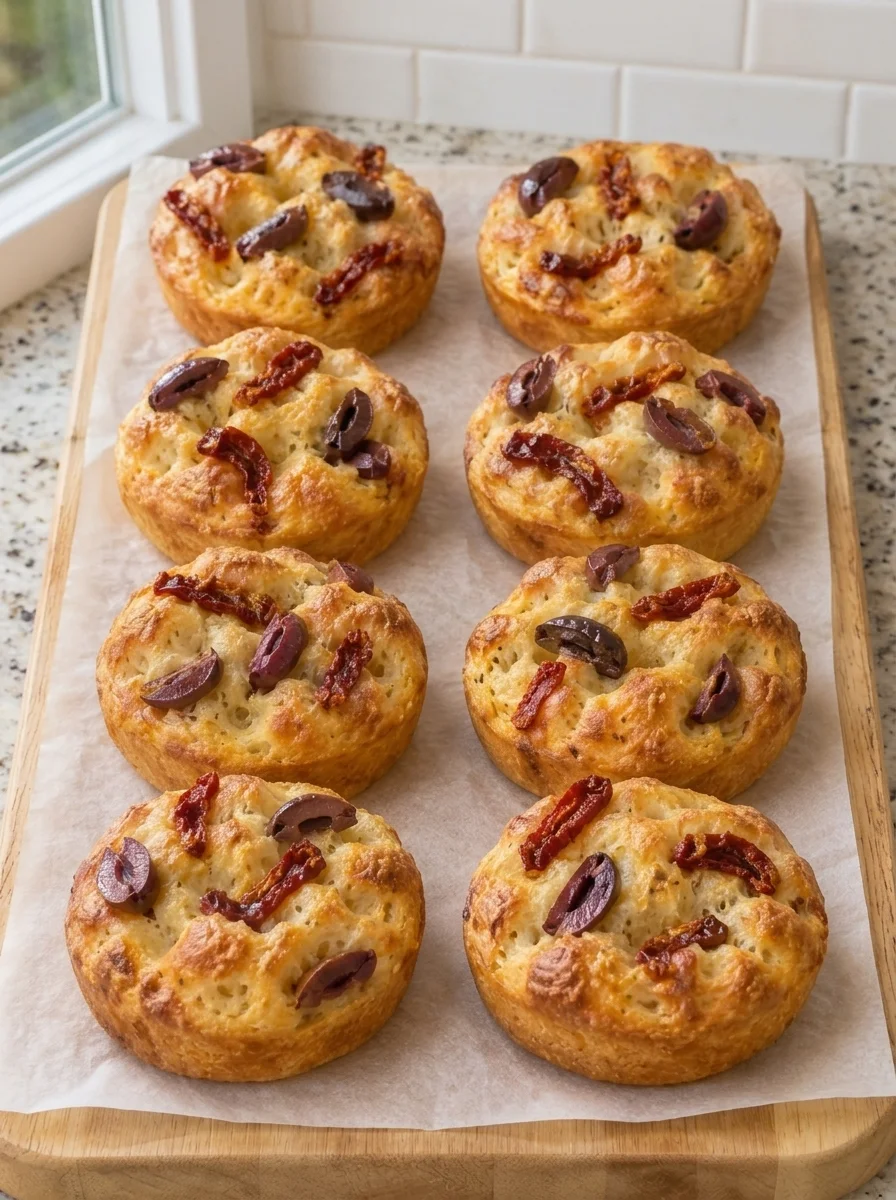
Meta title: No-Knead Mini Focaccia with Sun-Dried Tomatoes & Olives
Meta description: Make no-knead mini focaccia in a muffin tin with sun-dried tomatoes and Kalamata olives. Crisp golden edges, soft airy centers, and just 2 cups of flour.
Focus keyword: no-knead mini focaccia
Secondary keywords: muffin tin focaccia, sun-dried tomato olive focaccia, easy focaccia recipe, no-knead bread, Kalamata olive bread, mini focaccia rolls
There is something irresistible about focaccia: the crackly, olive-oil-fried edges, the pillowy interior, and those deep dimples that hold pools of flavor. The trouble is that a full sheet-pan focaccia is a commitment. It is big, it can take most of a day, and it is easy to find yourself with far more bread than you need.
These no-knead sun-dried tomato and Kalamata olive mini focaccias solve that problem. They bake in a standard muffin tin, so each round gets its own crisp, golden rim and soft, airy center. The dough is mixed with a spoon in one bowl, there is no kneading at all, and the tangy sun-dried tomatoes and briny olives are pressed right into the dimples so they stay tucked into the bread as it bakes.
The result is eight individual rolls that look bakery-made, taste like a Mediterranean antipasto platter, and are perfectly portioned for soup dinners, sandwiches, picnics, and holiday tables.
Table of Contents
- Why you will love these mini focaccias
- Ingredients
- Ingredient notes and substitutions
- Step-by-step instructions
- Tips for success
- Troubleshooting
- Flavor variations
- Serving suggestions
- Storage, freezing, and reheating
- Frequently asked questions
- Final thoughts
Why You Will Love These Mini Focaccias
They are truly no-knead. You stir the flour, yeast, and salt together, add water and a little olive oil, and mix until no dry flour remains. The dough is sticky, and that is exactly right. Time does the work that kneading would otherwise do.
They need only a handful of ingredients. Bread flour, instant yeast, salt, water, olive oil, sun-dried tomatoes, and Kalamata olives are all you need. Most of these are probably in your pantry already.
The muffin tin gives you more crust. Every roll has its own edges, and those edges fry in the olive oil at the bottom of each well. That means more of the crisp, golden crust that people love most about focaccia.
They are portion-friendly. Instead of cutting a big slab, you simply lift out a round. They are easy to serve, easy to pack, and easy to split for sandwiches.
They are beginner-friendly. There is no shaping skill required. You portion the sticky dough with a spoon, press in your toppings, and bake. If you have ever been nervous about bread, this is a gentle place to start.
They keep well. The rolls store at room temperature for a day and freeze for up to two months, so you can bake once and enjoy them later.
Recipe at a Glance
- Yield: 8 mini focaccias
- Hands-on time: About 20 minutes
- Rise time: 75 to 105 minutes for the first rise, plus 30 to 45 minutes in the tin
- Bake time: 17 to 21 minutes at 425°F (220°C)
- Equipment: Large bowl, sturdy spoon, standard 12-cup metal muffin tin, dough scraper or spoon, wire rack
Ingredients
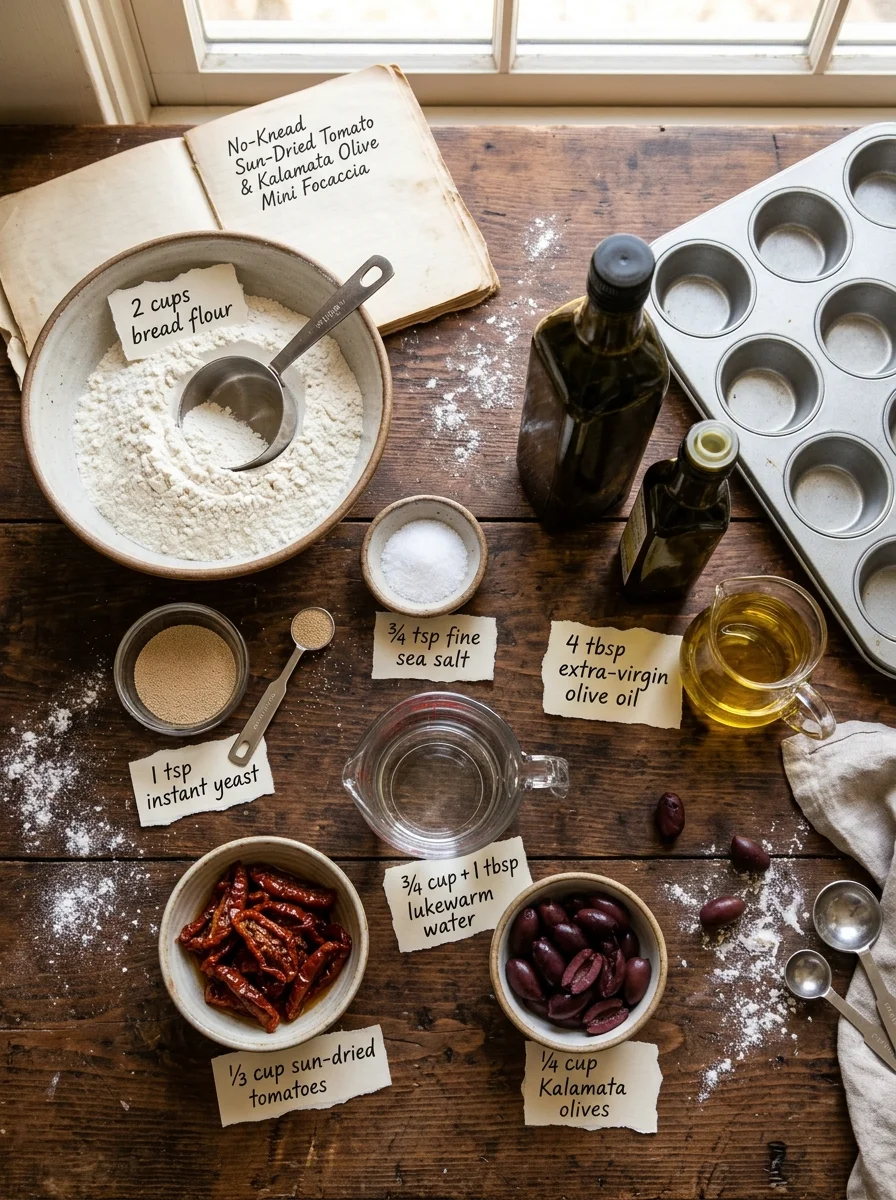
- 2 cups (250 g) bread flour
- 1 teaspoon (3 g) instant yeast
- ¾ teaspoon (4 to 5 g) fine sea salt
- ¾ cup plus 1 tablespoon (190 g) lukewarm water
- 4 tablespoons extra-virgin olive oil, divided
- ⅓ cup (about 45 g) oil-packed sun-dried tomatoes, drained and cut into short strips
- ¼ cup (about 40 g) pitted Kalamata olives, drained and halved lengthwise
Ingredient Notes and Substitutions
Bread Flour
Bread flour has a higher protein content than all-purpose flour, which helps the dough develop gluten with no kneading and gives the finished focaccia a chewy, airy crumb. If you only have all-purpose flour, you can use it. The rolls will be a little softer and less chewy, and the dough may feel slightly slacker, so handle it with oiled hands and a scraper.
For the best accuracy, weigh the flour. Scooping flour with a cup can pack in significantly more than the recipe intends, and a dough that is too dry will not turn out puffy and open. If you must use cups, spoon the flour into the measuring cup and level it off rather than scooping directly from the bag.
Instant Yeast
Instant yeast can be mixed straight into the flour with no activation step, which keeps this recipe simple. If you only have active dry yeast, you can usually use it in the same amount, but it is a good idea to dissolve it in the lukewarm water first and expect the rise to take a little longer.
Fine Sea Salt
Salt controls the yeast and gives bread its flavor. Because olives and sun-dried tomatoes are already salty, this recipe uses a modest amount in the dough. Measure it by weight if you can, since coarse salts take up more space per teaspoon and can throw off the seasoning.
Lukewarm Water
Aim for water that feels barely warm to the touch, like a comfortable bath. Water that is too hot can damage the yeast, while water that is too cold will slow the rise considerably. If your kitchen is cool, the first rise may take closer to the 105-minute end of the range.
Extra-Virgin Olive Oil
Olive oil is a major flavor in focaccia, so use one you enjoy tasting. It does three jobs here: it enriches the dough, it fries the bottoms and edges of each roll in the muffin tin, and it adds richness to the top. Do not skimp on it, since the oil in each well is what creates those crisp, golden rims.
Oil-Packed Sun-Dried Tomatoes
Oil-packed sun-dried tomatoes are soft, flavorful, and ready to use. Drain them well and pat them with a paper towel so excess oil and moisture do not make the dough soggy. Cut them into short strips so they are easy to press into the dimples. If you only have dry-packed sun-dried tomatoes, soak them in hot water for 10 minutes, drain, and pat dry before using.
Kalamata Olives
Kalamata olives bring a fruity, briny, slightly wine-like flavor that pairs beautifully with sweet-tart tomatoes. Choose pitted olives for convenience, drain them, and halve them lengthwise. If you like, blot them on a paper towel so they do not add extra liquid to the surface of the dough. Green olives, such as Castelvetrano, are a good substitute if you prefer a milder, buttery flavor.
Step-by-Step Instructions
Step 1: Mix the Dough
In a large bowl, stir the bread flour, instant yeast, and salt together so the yeast and salt are evenly distributed. Add the lukewarm water and 2 teaspoons of olive oil. Stir with a sturdy spoon until no dry flour remains. The dough will look shaggy and feel very sticky, and that is exactly what you want. A wet, sticky dough is what gives focaccia its open, airy crumb. Resist the urge to add more flour.
Step 2: Let It Rise
Cover the bowl and leave it at room temperature for 75 to 105 minutes, until the dough is puffy, bubbly, and nearly doubled in size. You may see bubbles along the sides of the bowl and on the surface. Rise time depends on the temperature of your kitchen, so look for the dough’s signs rather than relying only on the clock. In a warm kitchen it will be ready sooner, and in a cool one it needs longer.
Step 3: Portion and Proof
Add 1 teaspoon of olive oil to each of eight wells in a standard metal muffin tin. Divide the dough among the oiled wells, about 55 to 57 g each. Use a spoon or dough scraper to portion the sticky dough, and lightly oil your fingers or the tool so it does not cling. Cover the tin loosely and let the dough rise for 30 to 45 minutes, until visibly puffy. Toward the end of this rise, heat your oven to 425°F (220°C).
Step 4: Dimple and Top
Drizzle the remaining 2 teaspoons of olive oil across the rounds. With oiled fingertips, press two or three dimples into each round. Divide the sun-dried tomatoes and olives among the rounds, pressing them partway into the dough. Pressing the toppings in helps them stay in place and keeps the thin tomato ends from drying out and burning in the oven.
Step 5: Bake
Bake on the middle rack for 17 to 21 minutes, until the rims are deep golden and the sides are set. Let the focaccias rest in the tin for 5 minutes, then lift them out onto a wire rack. Moving them to a rack keeps the bottoms crisp rather than letting steam soften them in the tin.
Tips for Success
Use a spoon or dough scraper to divide the sticky dough. Wet fingers or a lightly oiled scraper make portioning much easier than trying to handle the dough with dry hands.
Give the rounds their full second rise before dimpling. The second proof in the tin is what makes the rolls light and airy. Pressing dimples into dough that has not risen enough can leave the rolls dense.
Tuck any thin tomato ends into the dough. Exposed, thin pieces of tomato can dry out and scorch. Pressing them in lets them stay tender.
Use a metal muffin tin. Metal conducts heat well and encourages the crisp, golden edges that make focaccia special. Silicone molds will not brown the rolls the same way.
Oil the wells generously. The teaspoon of olive oil in each well helps the bottoms and sides fry and release cleanly.
Do not overbake. The rims should be deep golden and the sides set. Pulling them out at that point keeps the centers soft.
Cool on a wire rack. Letting steam escape from underneath preserves that crisp bottom crust.
Troubleshooting
My dough did not rise. The most common culprits are old yeast, water that was too hot or too cold, or a kitchen that is quite cool. Check the date on your yeast, use lukewarm water, and give the dough extra time in a warmer spot.
The dough is too sticky to handle. It is supposed to be sticky. Use oiled hands, a spoon, or a dough scraper rather than adding flour, which will make the rolls denser.
The rolls are dense. This usually means the dough was underproofed, the flour was packed too tightly into the measuring cup, or the oven was not hot enough. Weigh your flour, give both rises their full time, and make sure the oven is fully preheated.
The bottoms are pale. Make sure you used a metal tin, oiled the wells, and baked on the middle rack. Moving the tin to a lower rack for the last few minutes can help brown the bottoms.
The toppings burned. Thin pieces of tomato are the usual culprit. Press them into the dough and make sure they are not sitting on top in a dry layer.
The rolls stuck to the tin. Be sure to oil the wells thoroughly, and let the rolls rest for 5 minutes before lifting them out. A small knife or offset spatula can help release stubborn edges.
Flavor Variations
The base dough is a blank canvas, so feel free to experiment.
- Rosemary and sea salt: Press fresh rosemary into the dimples and finish with flaky salt.
- Garlic and herb: Stir minced garlic into the olive oil for brushing, and add oregano or thyme.
- Feta and oregano: Crumble a little feta over the tops before baking for a salty, creamy bite.
- Cherry tomato and basil: Use halved cherry tomatoes, and add fresh basil after baking.
- Parmesan crust: Sprinkle a little grated Parmesan over the tops during the last few minutes of baking.
- Hot honey drizzle: Finish baked rolls with a thin drizzle of hot honey for a sweet and spicy contrast.
- Caramelized onion: Top with a spoonful of jammy caramelized onions for a deeper, sweeter flavor.
Serving Suggestions
With soup. These rolls are made for dunking. Serve them warm alongside tomato soup, minestrone, or a creamy white bean soup.
On an antipasto platter. Pair them with cured meats, cheeses, marinated vegetables, and extra olives for an easy appetizer spread.
As mini sandwiches. Split the rounds and fill them with fresh mozzarella and arugula for a quick lunch, picnic, or party snack.
With pasta night. They are a lovely side for lasagna, baked ziti, or any red-sauce dinner.
On a holiday table. Individual rolls look elegant in a bread basket, and guests can grab one without anyone needing to slice a loaf.
As a dipping companion. Serve with a small dish of good olive oil and balsamic vinegar, or with hummus or whipped feta.
Storage, Freezing, and Reheating
Room temperature: Store the cooled focaccias in an airtight container at room temperature for up to 1 day. They are at their best on the day they are baked.
Freezing: For longer storage, freeze the cooled rolls for up to 2 months. Wrap them well or place them in a freezer-safe bag, removing as much air as you can.
Reheating: Reheat at 350°F (175°C) until warm and crisp at the edges. This revives the crust and brings back the fresh-baked texture much better than a microwave, which tends to make bread soft and chewy.
Frequently Asked Questions
Can I make this focaccia without a muffin tin?
Yes, but the shape and crust will differ. You can bake the dough in an oiled baking dish as a single focaccia, though the timing will change. The muffin tin gives you individual rolls with more crisp edges.
Can I use all-purpose flour instead of bread flour?
You can. The rolls will be a bit softer and less chewy, and the dough may be slightly stickier, so use oiled hands and a scraper.
Why is no-knead dough so sticky?
A high hydration dough develops gluten over time without kneading and bakes into a light, open crumb. The stickiness is a feature, not a mistake.
Can I make the dough ahead of time?
The recipe as written is designed for a same-day bake. If you want to adapt it, a slower rise in the refrigerator can add flavor, but you would need to adjust the timing, so watch the dough rather than the clock.
Do I have to use Kalamata olives?
No. Green olives, black olives, or a mix all work. Choose pitted olives and drain them well.
Can I double the recipe?
Yes, but you will need a second muffin tin or to bake in batches. Keep the dough covered while the first batch bakes.
Are these vegan?
As written, the recipe contains no dairy or eggs. Check the labels on your ingredients to be sure they suit your needs.
What is the best way to keep the crust crisp?
Move the baked rolls to a wire rack after resting in the tin for 5 minutes, and reheat them in the oven rather than the microwave.
Can I freeze the unbaked dough?
This recipe is tested with baked rolls for freezing. Freezing unbaked dough would require different timing, so for best results, bake first and freeze the finished rolls.
What should I serve with them?
Tomato soup, an antipasto platter, a green salad, or pasta dishes all pair beautifully.
Final Thoughts
These no-knead sun-dried tomato and Kalamata olive mini focaccias offer all the best parts of classic focaccia, including crisp golden edges, a soft airy center, and plenty of olive oil richness, in a form that is quick to portion and easy to serve. With only a handful of ingredients and no kneading, they are approachable for beginners and satisfying for experienced bakers alike.
Mix the dough in the morning or afternoon, let time work its magic, and pull a tray of warm, fragrant rolls out of the oven in time for dinner. Serve them with soup, tuck them into sandwiches, or set them out with an antipasto platter. However you enjoy them, they will disappear fast.
If you try the recipe, leave a rating and a comment with your favorite topping, and share it with a friend who loves homemade bread.
Pin it for later: No-Knead Sun-Dried Tomato & Kalamata Olive Mini Focaccia | Easy Muffin Tin Bread 🍅🫒
Print
No-Knead Sun-Dried Tomato & Kalamata Olive Mini Focaccia
Ingredients
- 2 cups (250 g) bread flour
- 1 teaspoon (3 g) instant yeast
- ¾ teaspoon (4 to 5 g) fine sea salt
- ¾ cup plus 1 tablespoon (190 g) lukewarm water
- 4 tablespoons extra-virgin olive oil, divided
- ⅓ cup (about 45 g) oil-packed sun-dried tomatoes, drained and cut into short strips
- ¼ cup (about 40 g) pitted Kalamata olives, drained and halved lengthwise
Ingredient Notes and Substitutions
Bread Flour
Bread flour has a higher protein content than all-purpose flour, which helps the dough develop gluten with no kneading and gives the finished focaccia a chewy, airy crumb. If you only have all-purpose flour, you can use it. The rolls will be a little softer and less chewy, and the dough may feel slightly slacker, so handle it with oiled hands and a scraper.
For the best accuracy, weigh the flour. Scooping flour with a cup can pack in significantly more than the recipe intends, and a dough that is too dry will not turn out puffy and open. If you must use cups, spoon the flour into the measuring cup and level it off rather than scooping directly from the bag.
Instant Yeast
Instant yeast can be mixed straight into the flour with no activation step, which keeps this recipe simple. If you only have active dry yeast, you can usually use it in the same amount, but it is a good idea to dissolve it in the lukewarm water first and expect the rise to take a little longer.
Fine Sea Salt
Salt controls the yeast and gives bread its flavor. Because olives and sun-dried tomatoes are already salty, this recipe uses a modest amount in the dough. Measure it by weight if you can, since coarse salts take up more space per teaspoon and can throw off the seasoning.
Lukewarm Water
Aim for water that feels barely warm to the touch, like a comfortable bath. Water that is too hot can damage the yeast, while water that is too cold will slow the rise considerably. If your kitchen is cool, the first rise may take closer to the 105-minute end of the range.
Extra-Virgin Olive Oil
Olive oil is a major flavor in focaccia, so use one you enjoy tasting. It does three jobs here: it enriches the dough, it fries the bottoms and edges of each roll in the muffin tin, and it adds richness to the top. Do not skimp on it, since the oil in each well is what creates those crisp, golden rims.
Oil-Packed Sun-Dried Tomatoes
Oil-packed sun-dried tomatoes are soft, flavorful, and ready to use. Drain them well and pat them with a paper towel so excess oil and moisture do not make the dough soggy. Cut them into short strips so they are easy to press into the dimples. If you only have dry-packed sun-dried tomatoes, soak them in hot water for 10 minutes, drain, and pat dry before using.
Kalamata Olives
Kalamata olives bring a fruity, briny, slightly wine-like flavor that pairs beautifully with sweet-tart tomatoes. Choose pitted olives for convenience, drain them, and halve them lengthwise. If you like, blot them on a paper towel so they do not add extra liquid to the surface of the dough. Green olives, such as Castelvetrano, are a good substitute if you prefer a milder, buttery flavor.
Instructions
In a large bowl, stir the bread flour, instant yeast, and salt together so the yeast and salt are evenly distributed. Add the lukewarm water and 2 teaspoons of olive oil. Stir with a sturdy spoon until no dry flour remains. The dough will look shaggy and feel very sticky, and that is exactly what you want. A wet, sticky dough is what gives focaccia its open, airy crumb. Resist the urge to add more flour.
Step 2: Let It Rise
Cover the bowl and leave it at room temperature for 75 to 105 minutes, until the dough is puffy, bubbly, and nearly doubled in size. You may see bubbles along the sides of the bowl and on the surface. Rise time depends on the temperature of your kitchen, so look for the dough’s signs rather than relying only on the clock. In a warm kitchen it will be ready sooner, and in a cool one it needs longer.
Step 3: Portion and Proof
Add 1 teaspoon of olive oil to each of eight wells in a standard metal muffin tin. Divide the dough among the oiled wells, about 55 to 57 g each. Use a spoon or dough scraper to portion the sticky dough, and lightly oil your fingers or the tool so it does not cling. Cover the tin loosely and let the dough rise for 30 to 45 minutes, until visibly puffy. Toward the end of this rise, heat your oven to 425°F (220°C).
Step 4: Dimple and Top
Drizzle the remaining 2 teaspoons of olive oil across the rounds. With oiled fingertips, press two or three dimples into each round. Divide the sun-dried tomatoes and olives among the rounds, pressing them partway into the dough. Pressing the toppings in helps them stay in place and keeps the thin tomato ends from drying out and burning in the oven.
Step 5: Bake
Bake on the middle rack for 17 to 21 minutes, until the rims are deep golden and the sides are set. Let the focaccias rest in the tin for 5 minutes, then lift them out onto a wire rack. Moving them to a rack keeps the bottoms crisp rather than letting steam soften them in the tin.