One-Skillet Cheesy Garlic Beef Farfalle: A 35-Minute Dinner Built on Three Cheeses
Every household has a handful of dinners that get requested again and again, and this One-Skillet Cheesy Garlic Beef Farfalle has all the makings of one. Browned ground beef, tender bowtie pasta, and a sauce built from garlic butter, heavy cream, and a trio of melty cheeses come together in about 35 minutes, with one skillet doing most of the work. It’s the kind of meal that feels like a restaurant plate but behaves like a weeknight shortcut.
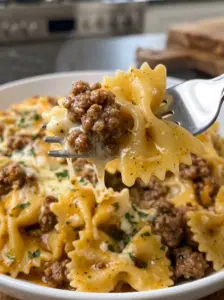
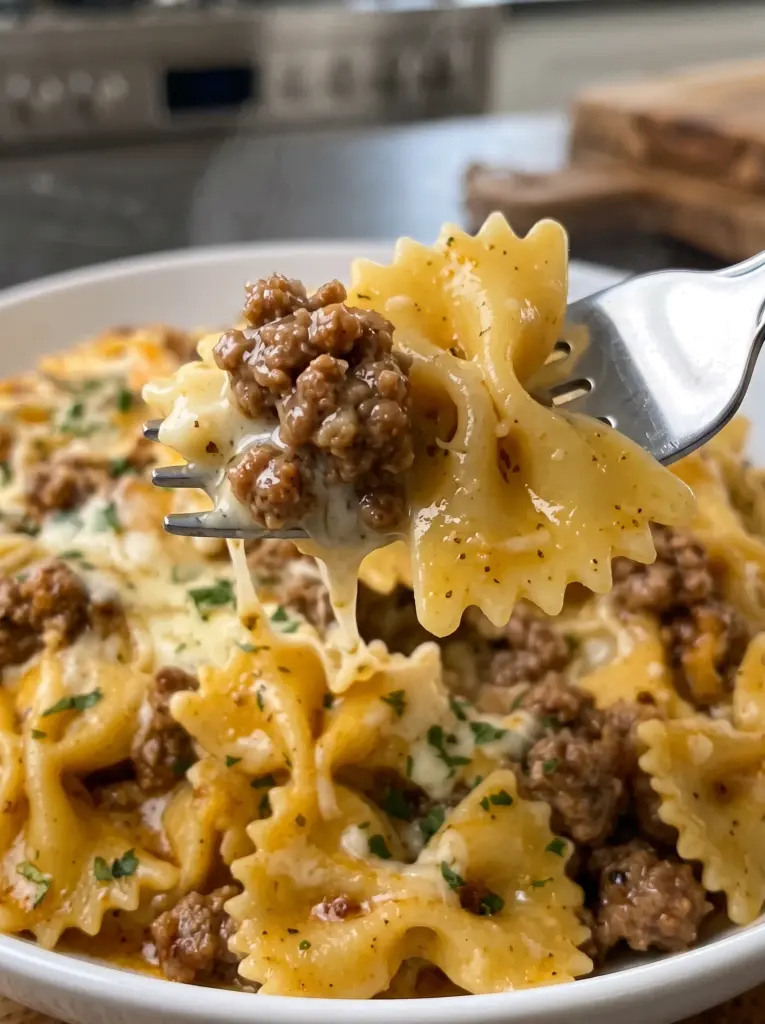
This version leans into simplicity. There’s no roux to whisk, no separate sauce pan to wash, and no long list of specialty ingredients. Instead, the flavor comes from technique: browning the beef properly, cooking eight cloves of garlic gently in butter, and melting three different cheeses into the cream one at a time so the sauce stays silky. Bowtie pasta (farfalle) finishes the dish, its pinched centers and ruffled edges trapping pockets of sauce in every bite.
Below you’ll find a quick overview, a closer look at what each cheese contributes, the full ingredient list, a step-by-step method with timing, a troubleshooting guide for common sauce problems, ways to customize the recipe, meal prep and storage advice, and answers to frequently asked questions.
Recipe at a Glance
- Total time: about 35 minutes
- Servings: 6 generous portions
- Cooking method: one large skillet plus one pot for the pasta
- Best for: weeknight dinners, family meals, easy entertaining, leftovers
- Flavor profile: savory, garlicky, creamy, and mildly herby with a rich, cheesy finish
Why This Combination Works
Ground beef and cream sauce might seem like an unusual pairing at first, but the match is a natural one. Beef brings savory depth and a little rendered fat, while cream rounds out those flavors into something smooth and cohesive. Garlic and butter act as the bridge between the two, adding aroma and richness. Add cheese, and every element ties together.
Here are the specific reasons this recipe works so well:
Farfalle holds sauce in a way smooth noodles don’t. The folds and pinched center of a bowtie catch cream and cheese, while the thinner wings stay tender. You get a pleasant mix of textures in a single piece of pasta.
The garlic is cooked in butter, not oil. Butter mellows garlic’s sharp edge and gives the sauce a fuller, rounder flavor. Because it’s added after the beef is browned and the heat is lowered, it perfumes the dish without burning.
Three cheeses do three different jobs. Rather than relying on a single cheese, this recipe uses each one for what it does best, which we’ll cover in detail next.
Simple seasoning lets the main ingredients shine. Black pepper, onion powder, and Italian seasoning support the beef and garlic without competing with them.
It all happens in one pan. Browned bits from the beef stay in the skillet and flavor the sauce, so nothing is wasted and cleanup stays easy.
The Cheese Trio, Explained
Understanding what each cheese brings makes it easier to adjust the recipe to your taste.
Mozzarella (1½ cups): This is your stretch and gloss. Low-moisture mozzarella melts into long, creamy strands and gives the sauce its signature pull when you lift a forkful. On its own it’s mild, which is why it needs partners.
Parmesan (1 cup): This is your salt and savory depth. Freshly grated Parmesan adds a nutty, umami-rich backbone and also helps thicken the sauce as it melts. Grated from a wedge, it dissolves far more smoothly than the shelf-stable pre-grated kind.
Provolone (¾ cup): This is your mellow, slightly tangy middle ground. Provolone melts beautifully and adds a faint smokiness and creaminess that mozzarella alone doesn’t provide. It smooths out the sharper edges of the Parmesan.
Together they create a sauce that’s stretchy, savory, and balanced, rather than one-note.
Ingredients
A note on ingredients: your list didn’t include salt, reserved pasta water, or a garnish. I’ve added them below and marked them as additions so you can adjust to taste.
For the Beef
- 1½ lbs ground beef — the savory, hearty base of the dish
- 1 tsp onion powder — adds a rounded, sweet-savory background note
- 1 tsp Italian seasoning — brings gentle herbal flavor
- 1 tsp black pepper — adds a mild peppery warmth
- 1 tsp salt (added) — seasons the beef and sauce
For the Garlic Butter Sauce
- 6 tbsp butter — builds the rich, garlicky foundation
- 8 cloves garlic, minced — the aromatic star of the dish
- 2 cups heavy cream — the velvety liquid base for the cheeses
- 1½ cups shredded mozzarella — for stretch and gloss
- 1 cup freshly grated Parmesan — for salty, nutty depth
- ¾ cup shredded provolone — for mellow creaminess and subtle smokiness
- ½ cup reserved pasta water (added) — to loosen and bind the sauce
For the Pasta and Garnish
- 1 lb bowtie (farfalle) pasta — the sauce-trapping base
- 2 tbsp chopped fresh parsley (added) — for color and freshness
Step-by-Step Method with Timing
Minutes 0 to 5: Start the Pasta Water
Fill a large pot with water, salt it generously, and bring it to a rolling boil. While it heats, shred the mozzarella and provolone and grate the Parmesan if you haven’t already. Having the cheeses ready before you start the sauce makes the whole process smoother.
Minutes 5 to 15: Boil the Pasta and Brown the Beef
Add the farfalle to the boiling water and cook until just al dente, about 10 to 12 minutes, following the package directions. Before draining, ladle out ½ cup of the starchy cooking water and set it aside.
While the pasta cooks, heat a large, deep skillet over medium-high heat. Add the ground beef and break it into small pieces with a wooden spoon. Sprinkle in the onion powder, Italian seasoning, black pepper, and salt. Cook for 7 to 9 minutes, stirring occasionally, until the beef is deeply browned with no pink remaining. Letting it sit undisturbed for a minute at a time between stirs encourages better browning.
Drain off most of the rendered fat, leaving about a tablespoon in the pan to carry flavor.
Minutes 15 to 20: Build the Garlic Butter
Reduce the heat to medium and add the butter. Once melted, stir in the minced garlic and cook for about 60 to 90 seconds, stirring constantly, until fragrant and just barely golden. Watch it closely, because garlic that browns too far turns bitter, and this dish uses plenty of it.
Minutes 20 to 25: Pour in the Cream
Reduce the heat to medium-low and pour in the heavy cream. Stir well, scraping up the browned bits from the bottom of the skillet. Bring the cream to a gentle simmer, small bubbles around the edges rather than a rolling boil, and let it cook for 2 to 3 minutes so it thickens slightly.
Minutes 25 to 30: Melt the Cheeses, One at a Time
Reduce the heat to low. Add the Parmesan first, a small handful at a time, stirring until each addition disappears into the sauce. Next add the provolone, then the mozzarella, repeating the same process. Taking your time here is what keeps the sauce smooth rather than stringy or grainy.
If the sauce looks very thick, stir in a splash of the reserved pasta water.
Minutes 30 to 35: Combine and Serve
Add the drained pasta to the skillet and toss with tongs until every piece is coated. Pour in the reserved pasta water a tablespoon or two at a time until the sauce looks glossy and clings to the pasta without pooling. Taste, and adjust with a pinch more salt or pepper if needed.
Remove from the heat, garnish with parsley and a little extra Parmesan, and serve right away while the sauce is at its creamiest.
Troubleshooting Guide
Even simple cream sauces can misbehave. Here’s how to fix the most common problems.
The sauce is grainy or gritty. This usually means the heat was too high when the cheese went in, or pre-shredded cheese with anti-caking starch was used. Next time, keep the heat low and shred your own cheese. To rescue a grainy sauce, remove the pan from the heat and whisk in a splash of warm cream.
The sauce looks oily or separated. Cream that boils hard can break. Lower the heat, add a tablespoon or two of warm pasta water, and stir vigorously to bring the sauce back together.
The sauce is too thick. Stir in reserved pasta water a spoonful at a time. The starchy water loosens the sauce while helping it stay glossy.
The sauce is too thin. Let it simmer gently for another minute or two over low heat, or stir in a small handful of extra Parmesan. Remember that it thickens further as it cools.
The beef is greasy. Drain more of the rendered fat after browning. An 80/20 blend adds flavor but also more fat, so draining thoroughly matters.
The garlic tastes bitter. It cooked too long or too hot. If this happens, it’s worth starting the garlic step over with fresh cloves, because bitterness spreads through the whole sauce.
The pasta turned mushy. Pull it at the early end of the package time. It keeps softening once it’s tossed in the hot sauce.
Make It Your Own
The base recipe is intentionally straightforward, which makes it easy to customize.
Add vegetables. Stir in baby spinach at the end and let it wilt, or fold in sautéed mushrooms, diced bell peppers, or steamed broccoli for color and nutrition.
Add heat. A pinch of red pepper flakes with the garlic, or a dash of cayenne in the sauce, gives the dish a gentle kick.
Swap the protein. Mild or spicy Italian sausage can replace half the beef for extra seasoning. Ground turkey or chicken makes a lighter version, though you may want a touch more salt and seasoning.
Add tomato. Stir in a few spoonfuls of tomato paste with the garlic for a rosy, slightly tangy sauce, or fold in chopped sun-dried tomatoes.
Bake it. Transfer the finished pasta to a baking dish, top with extra mozzarella, and broil for a few minutes until golden and bubbling.
Lighten it up. Half-and-half can replace some of the cream, and lean ground beef reduces the fat. The sauce will be a little less rich but still creamy.
What to Serve With It
This dish is filling enough to stand alone, but a few simple sides round out the meal:
- A crisp green salad with a sharp vinaigrette to cut through the richness
- Garlic bread or crusty bread for mopping up leftover sauce
- Roasted or steamed vegetables, such as broccoli, green beans, or asparagus
- A glass of medium-bodied red wine, like Chianti, or a crisp white such as Pinot Grigio
Meal Prep, Storage, and Reheating
In the refrigerator: Store leftovers in an airtight container for up to 4 days. The sauce will firm up as it chills, which is completely normal.
In the freezer: Cream sauces can separate slightly after freezing, but this dish keeps for up to 2 months. Thaw it overnight in the refrigerator before reheating.
On the stovetop (best method): Warm leftovers in a skillet over low heat with a splash of milk or cream, stirring often, until the sauce loosens and the pasta is hot throughout.
In the microwave: Add a spoonful of milk, cover loosely, and heat in 30-second bursts, stirring between each, until evenly warmed.
Prepping ahead: You can brown and season the beef up to a day in advance and store it covered in the refrigerator. When you’re ready to eat, cook the pasta, then build the sauce and finish the dish fresh for the best texture.
Frequently Asked Questions
Can I use a different pasta shape? Absolutely. Penne, rotini, shells, rigatoni, or fettuccine all work well. Shapes with ridges or hollows hold the most sauce.
Is it okay to use pre-shredded cheese? You can, but freshly shredded or grated cheese melts more smoothly because it lacks the anti-caking coating found in bagged cheese. If you do use bagged cheese, keep the heat low and add it slowly.
What if I can’t find provolone? Substitute extra mozzarella or a mild white cheddar. The sauce will be slightly less smoky but still creamy.
Can I use ground turkey or chicken instead of beef? Yes. These leaner meats produce a lighter dish. Consider adding a little extra butter or seasoning, since they have less natural flavor and fat.
How do I keep the sauce from getting too thick as it sits? Serve it promptly, and keep a little reserved pasta water or warm cream on hand to loosen it if needed.
Can this be made gluten-free? Yes, with a gluten-free bowtie or short pasta. The other ingredients are naturally gluten-free, but check labels on your seasonings and cheeses to be safe.
Can I double the recipe? Yes, use a very large skillet or a wide Dutch oven, and brown the beef in batches if the pan is crowded so it browns instead of steams.
How many people does this feed? It makes about 6 generous servings, depending on appetite and what you serve alongside.
Final Thoughts
One-Skillet Cheesy Garlic Beef Farfalle proves that a short ingredient list can still deliver a deeply satisfying dinner. Well-browned beef, garlic gently cooked in butter, and a sauce made from three carefully melted cheeses give you rich, comforting flavor without fuss, and the bowtie pasta makes every forkful a little more interesting.
Whether you’re feeding a hungry family on a Tuesday, bringing a dish to share, or just craving something cheesy and warm, this recipe is easy to make and easy to love. Save it, bookmark it, or print it out, because it has a way of becoming the dinner everyone asks for next.