Tuscan Chicken Rigatoni with Spinach and Provolone Sauce
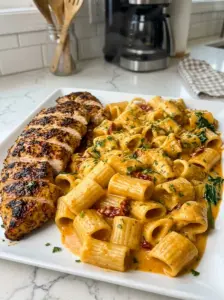
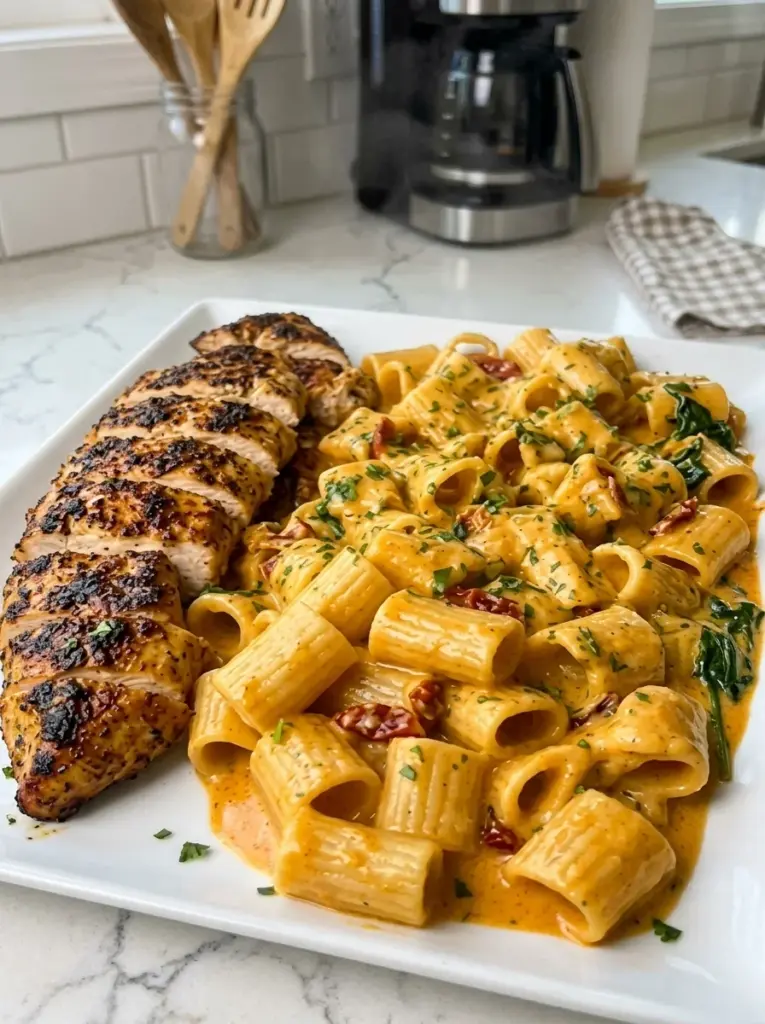
Tuscan-style cooking is built on a simple idea: a few bold ingredients, treated with care, can taste far more impressive than the effort involved. Tuscan Chicken Rigatoni with Spinach and Provolone Sauce follows that philosophy. Seasoned chicken is seared until golden, then tossed with sturdy rigatoni, wilted spinach, and chewy sun-dried tomatoes in a garlicky cream sauce made silky with melted provolone. The result is a rich, colorful, deeply satisfying pasta dinner that comes together in about 40 minutes.
What sets this version apart is the provolone. Most Tuscan chicken recipes rely on Parmesan alone, but provolone melts into a smoother, creamier sauce with a mild, slightly smoky tang that plays beautifully against the sweetness of the sun-dried tomatoes. A small amount of Parmesan still joins in for salty depth, but provolone is the star, giving the sauce a luxurious texture that coats every ridge of the rigatoni.
In this article, you’ll find a complete ingredient breakdown, step-by-step instructions, tips for juicy chicken and a smooth sauce, a troubleshooting section, ideas for variations, storage and reheating advice, and answers to frequently asked questions.
Why This Recipe Works So Well
Tuscan chicken pasta has become a favorite for good reason, and this version brings together several elements that make it especially satisfying:
Provolone makes the sauce silkier. Provolone melts more smoothly than many aged cheeses and adds a gentle tang and subtle smokiness. It creates a sauce that’s rich without being heavy-handed or sharp.
Rigatoni is the ideal pasta for a creamy sauce. Its wide tubes and deep ridges trap sauce inside and out, so every bite is generously coated, and its sturdy texture holds up to chunky add-ins like chicken and spinach.
Sun-dried tomatoes add concentrated flavor. Their sweet-tart, slightly chewy character cuts through the richness of the cream and cheese, keeping the dish balanced.
The spice blend gives the chicken its own personality. Italian seasoning, smoked paprika, and onion powder add herby, smoky, and savory notes to the chicken before it ever meets the sauce.
Spinach brings freshness and color. Wilted right into the sauce, it adds a vibrant green contrast and a nutritional boost without changing the comforting character of the dish.
Ingredients You’ll Need
A note on ingredients: your original list was cut off after the salt, and it didn’t include the spinach, provolone, sauce liquid, or sun-dried tomatoes that define this dish. I’ve added standard amounts for each and marked them as additions, so you can adjust to taste.
For the Chicken
- 1 lb boneless, skinless chicken breasts, cut into thick bite-sized pieces — thick pieces stay juicier than thin ones
- 1 tsp Italian seasoning — adds herby, classic flavor
- ½ tsp smoked paprika — adds warmth, light smokiness, and golden color
- ½ tsp onion powder — adds a rounded, savory background note
- ¾ tsp salt — seasons the chicken and sauce
- ½ tsp black pepper (added) — adds gentle heat
- 1 tbsp olive oil (added) — helps the chicken brown without burning the butter
For the Pasta
- 12 oz rigatoni — wide, ridged tubes that hold plenty of sauce
- ½ cup reserved pasta water (added) — loosens the sauce and helps it cling to the pasta
For the Tuscan Provolone Sauce
- 3 tbsp unsalted butter, divided — used for searing and for building the sauce
- 5 garlic cloves, minced — the aromatic base of the sauce
- ½ cup sun-dried tomatoes, drained and chopped (added) — the signature Tuscan ingredient, adding sweet-tart intensity
- ½ cup chicken broth (added) — deglazes the pan and adds savory depth
- 1½ cups heavy cream (added) — creates the creamy base of the sauce
- 1½ cups shredded provolone cheese (added) — melts into a smooth, mildly smoky sauce
- ½ cup freshly grated Parmesan (added) — adds salty, nutty depth
- 5 cups fresh baby spinach (added) — wilts into the sauce for color and freshness
Step-by-Step Instructions
Step 1: Cook the Rigatoni
Bring a large pot of well-salted water to a rolling boil. Add the rigatoni and cook until just shy of al dente, about 1 minute less than the package directions, since the pasta will keep softening in the hot sauce. Before draining, scoop out ½ cup of the cooking water and set it aside. Drain the pasta and set it aside.
Step 2: Season the Chicken
Pat the chicken pieces dry with paper towels. This simple step helps them brown rather than steam. In a bowl, toss the chicken with the Italian seasoning, smoked paprika, onion powder, salt, and black pepper until evenly coated.
Step 3: Sear the Chicken
Heat the olive oil and 1 tablespoon of the butter in a large, deep skillet over medium-high heat. Add the chicken in a single layer, working in two batches if needed so the pan isn’t crowded. Cook for 6 to 8 minutes, turning occasionally, until the pieces are golden brown and cooked through to an internal temperature of 165°F (74°C). Transfer the chicken to a plate.
Step 4: Cook the Garlic and Sun-Dried Tomatoes
Reduce the heat to medium and add the remaining 2 tablespoons of butter to the same skillet. Once it melts, add the garlic and cook for about 60 seconds, stirring constantly, until fragrant. Stir in the sun-dried tomatoes and cook for another minute so they soften and release their flavor into the butter.
Step 5: Deglaze and Add the Cream
Pour in the chicken broth, scraping up the browned bits from the bottom of the pan. Let it simmer for 1 to 2 minutes to reduce slightly. Lower the heat to medium-low and pour in the heavy cream, stirring to combine. Bring it to a gentle simmer, avoiding a hard boil that could cause the cream to separate.
Step 6: Melt the Cheeses
Reduce the heat to low. Add the provolone a handful at a time, stirring until each addition melts completely before adding more. Once the provolone is smooth, stir in the Parmesan. Adding cheese gradually keeps the sauce silky instead of clumpy. If the sauce becomes too thick, stir in a splash of the reserved pasta water.
Step 7: Wilt the Spinach
Add the spinach to the skillet in handfuls, stirring gently as it wilts into the sauce, about 1 to 2 minutes total. It will look like a lot at first, but it cooks down significantly.
Step 8: Bring It All Together
Return the chicken and any collected juices to the skillet, then add the drained rigatoni. Toss everything together until the pasta and chicken are well coated. Add reserved pasta water a tablespoon at a time if you want a looser, glossier sauce. Taste and adjust the seasoning with a pinch more salt or pepper if needed.
Step 9: Serve
Serve immediately, garnished with a little extra Parmesan and a few sun-dried tomato pieces if desired. The sauce thickens as it cools, so it’s best enjoyed right away.
Troubleshooting Guide
The sauce is grainy. Heat that’s too high, or pre-shredded cheese coated in anti-caking starch, are the usual causes. Keep the heat low when adding cheese and shred it fresh from a block.
The sauce separated or looks oily. Boiling the cream can cause this. Lower the heat, add a splash of warm pasta water, and stir vigorously to bring it back together.
The chicken is dry. Overcooking is the likely culprit. Cut the pieces thick, don’t crowd the pan, and check the temperature with a thermometer, removing the chicken as soon as it reaches 165°F (74°C).
The sauce is too thin. Let it simmer gently for a minute or two before adding the pasta, or stir in a bit more Parmesan.
The sauce is too thick. Loosen it with reserved pasta water, a spoonful at a time.
The spinach turned the sauce watery. This can happen if the spinach is added too early or wasn’t dry. Add it near the end and cook just until wilted.
Variations to Try
Add mushrooms. Sauté sliced mushrooms in the pan after the chicken and before the garlic for earthy depth.
Turn up the heat. A pinch of red pepper flakes with the garlic adds gentle warmth.
Swap the cheese. Mozzarella or fontina can stand in for provolone, though the sauce will taste slightly different.
Use chicken thighs. Boneless, skinless thighs are a juicy, forgiving alternative to breasts.
Add artichokes. Quartered marinated artichoke hearts add a tangy, briny note that suits the Tuscan theme.
Make it lighter. Replace some of the cream with half-and-half, which gives a lighter sauce that’s still creamy.
Bake it. Transfer the finished pasta to a baking dish, top with extra provolone, and broil for a few minutes until bubbling and golden.
What to Serve With It
- A simple arugula or mixed green salad with lemon vinaigrette brightens the richness
- Crusty bread is ideal for soaking up extra sauce
- Roasted vegetables, such as asparagus or zucchini, round out the plate
- A glass of white wine, such as Pinot Grigio or Vermentino, pairs nicely with the creamy, savory flavors
Storage and Reheating
Refrigerator: Store leftovers in an airtight container for up to 4 days. The sauce will thicken as it chills.
Freezer: Cream sauces can change texture after freezing, but this dish keeps for up to 2 months. Thaw it overnight in the refrigerator.
Stovetop reheating: Warm gently in a skillet over low heat with a splash of milk or cream, stirring often, until hot and silky again.
Microwave reheating: Add a spoonful of milk, cover loosely, and heat in short bursts, stirring between each, until evenly warmed.
Frequently Asked Questions
Why is it called Tuscan chicken? The name comes from the flavor profile common in Tuscan-inspired American dishes: garlic, sun-dried tomatoes, leafy greens, and a creamy sauce. It’s a modern interpretation rather than a traditional dish from Tuscany.
Can I use a different pasta shape? Yes. Penne, rotini, shells, and fettuccine all work well. Choose a shape that can trap sauce.
Do I need to use fresh spinach? Fresh baby spinach gives the best color and texture. If using frozen, thaw it and squeeze out as much liquid as possible, using about 1 cup of well-drained spinach in place of the 5 cups fresh.
Can I use oil-packed or dry sun-dried tomatoes? Either works. Drain oil-packed tomatoes well before chopping. Dry-packed tomatoes should be soaked in hot water for about 10 minutes, then drained.
Why did my sauce turn grainy? High heat or pre-shredded cheese is usually to blame. Keep the heat low and use freshly shredded provolone.
Can I make it gluten-free? Yes, use gluten-free rigatoni and check the labels on your broth and seasonings.
How many servings does it make? About 4 to 5 servings, depending on appetite and sides.
Final Thoughts
Tuscan Chicken Rigatoni with Spinach and Provolone Sauce takes a familiar favorite and gives it a smoother, creamier twist. Golden chicken, sweet sun-dried tomatoes, fresh spinach, and a silky provolone sauce come together into a dish that feels special but stays simple, and the rigatoni ensures every forkful is full of flavor.
Whether it’s a weeknight dinner or a casual meal with guests, this recipe is easy to prepare and easy to love. Save it, bookmark it, or print it out, because it’s the kind of pasta that earns a spot in your regular rotation.