Simple Blender Lentil Bread
If you have ever wanted homemade bread without the kneading, the proofing, or the wait for yeast to do its work, this blender lentil bread is for you. It is hearty, wholesome, and naturally rich in protein, and it comes together in a blender with a handful of pantry ingredients.
The recipe uses soaked red lentils, eggs, olive oil, and a few simple seasonings. The lentils blend into a smooth, creamy batter that bakes into a moist, tender loaf with a mild, nutty flavor. A mix of sunflower seeds, pumpkin seeds, sesame seeds, flaxseeds, and rolled oats adds crunch and texture to every slice.
In this guide you will find the full recipe, step-by-step instructions, troubleshooting advice, serving ideas, storage tips, and answers to the questions people ask most about lentil bread.
Why You Will Love This Red Lentil Bread
There are plenty of “healthy” bread recipes, but few are as approachable as this one. Here is what makes it worth baking.
It is truly easy. There is no dough to knead and no yeast to activate. You soak the lentils, blend the batter, fold in the seeds, and bake. If you can operate a blender, you can make this bread.
It is naturally protein-rich. Red lentils and eggs form the base of the loaf, so each slice is more filling than a typical sandwich bread. That makes it a good fit for breakfast, lunch, or a snack that keeps you satisfied.
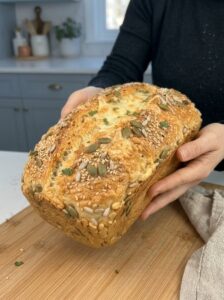
It has a great texture. Blending the lentils produces a wonderfully moist, tender crumb. The crust turns lightly crisp, and the seeds on top add a satisfying crunch.
It uses simple pantry ingredients. Dry red lentils, eggs, olive oil, apple cider vinegar, baking powder, salt, and a few seeds are all you need. Most of these are probably already in your kitchen.
It is versatile. Slice it for sandwiches, toast it for avocado toast, or serve it alongside soup. It works for breakfast, lunch, and dinner.
It can be naturally gluten-free. When all your ingredients, especially the rolled oats, are certified gluten-free, this loaf contains no wheat flour. Always check labels if you are baking for someone with celiac disease or a gluten sensitivity.
What Is Blender Lentil Bread?
Blender lentil bread is a yeast-free loaf where the “flour” is made from lentils that have been soaked and blended into a batter. Instead of milling dry lentils into flour, you soften them in water first, so they blend into a smooth, creamy base. The eggs bind the batter, the baking powder and vinegar help it rise, and the olive oil keeps the crumb tender.
Because there is no gluten network to develop, there is no kneading and no rising time. The batter goes straight from blender to loaf pan to oven. The result is closer to a savory quick bread than a traditional yeasted loaf, which is why its texture is moist and tender rather than airy and chewy.
Ingredients for Simple Blender Lentil Bread
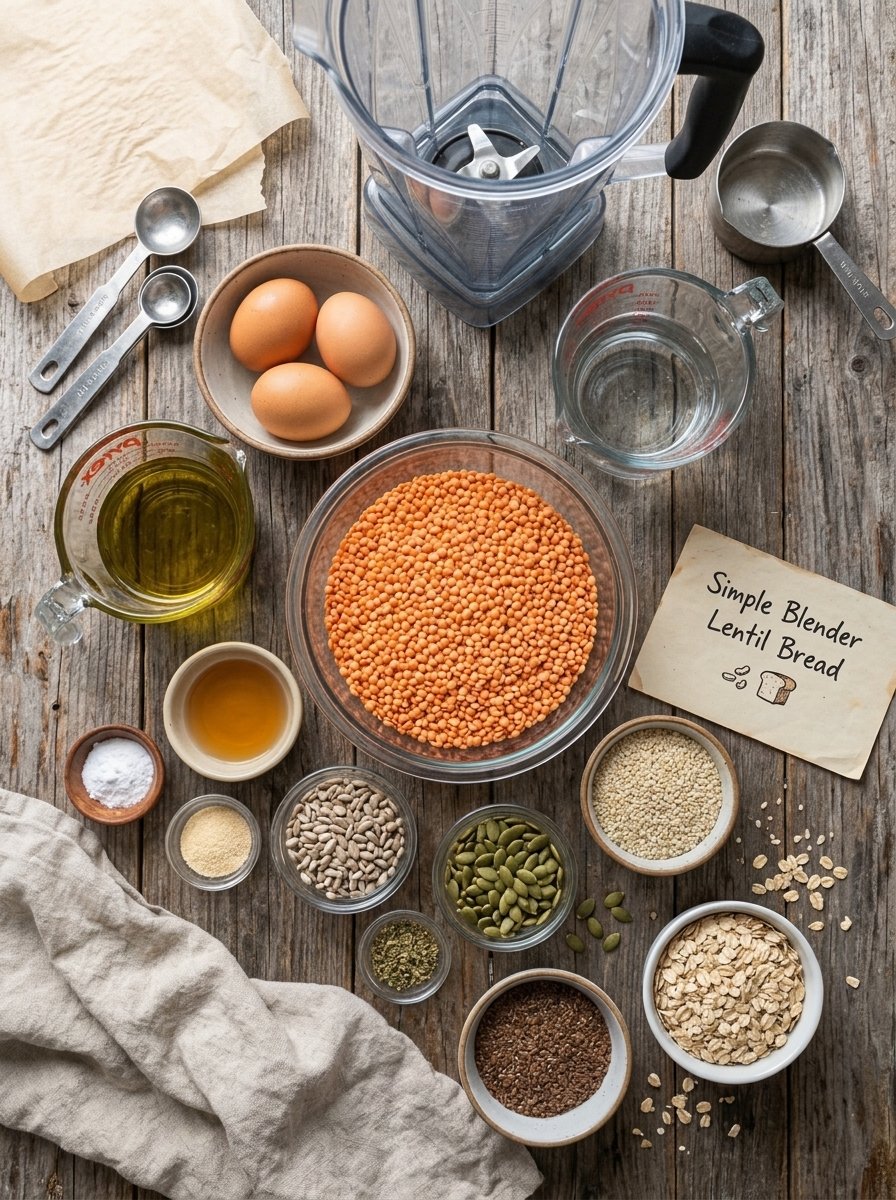
For the bread
- 300 g (1½ cups) dry red lentils
- 3 large eggs, at room temperature
- 120 ml (½ cup) water
- 60 ml (¼ cup) extra-virgin olive oil
- 1 tablespoon apple cider vinegar
- 2 teaspoons baking powder
- 1 teaspoon salt
- ½ teaspoon garlic powder (optional)
- ½ teaspoon dried oregano (optional)
For the seed and oat mix-in
- 2 tablespoons sunflower seeds
- 2 tablespoons pumpkin seeds
- 1 tablespoon sesame seeds
- 1 tablespoon ground flaxseeds
- 2 tablespoons rolled oats
For the topping
- 1 tablespoon sunflower seeds
- 1 tablespoon pumpkin seeds
- 1 tablespoon sesame seeds
- 1 teaspoon rolled oats
Ingredient Notes and Smart Substitutions
Red lentils. Red lentils are ideal here because they are soft, cook quickly, and blend into a smooth batter. They also have a milder, slightly sweet flavor compared with brown or green lentils. If you can, stick with red lentils for the best texture.
Eggs. The eggs provide structure and help the loaf hold together. Using them at room temperature helps them blend evenly into the batter. This recipe relies on eggs, so it is not suitable as written for anyone avoiding them.
Olive oil. Extra-virgin olive oil adds richness, moisture, and a subtle savory note. A neutral oil also works if you prefer a milder flavor.
Apple cider vinegar. The acid reacts with the baking powder to help the loaf rise and also brightens the flavor. You can swap in lemon juice if needed.
Baking powder. This is the only leavening in the recipe. Check that yours is fresh, since old baking powder can lead to a denser loaf.
Seeds and oats. Feel free to customize. Chia seeds, extra flaxseeds, or chopped walnuts can be added to the batter, as long as the overall proportions stay reasonably similar. Use certified gluten-free oats if you need the loaf to be gluten-free.
Garlic powder and oregano. Both are optional, but they give the bread a savory, bakery-style aroma that works especially well for sandwiches and toast.
How to Make Blender Lentil Bread: Step by Step
Step 1: Soak the lentils
Rinse the red lentils under cold running water until the water runs clear. Transfer them to a large bowl and cover with plenty of cool water, leaving at least 2 inches (5 cm) of water above the lentils to allow for expansion.
Let them soak for at least 3–4 hours, or overnight. Once softened, drain completely and rinse again. Let any excess water drain away before you blend. This matters, because too much moisture can make the finished bread dense or gummy.
Step 2: Prepare the blender batter
Preheat your oven to 350°F (175°C). Line a 9 × 5-inch loaf pan with parchment paper, leaving some overhang along the sides so the loaf is easy to lift out later.
Add the drained lentils, eggs, water, olive oil, and apple cider vinegar to a high-speed blender. Blend for 1–2 minutes, stopping to scrape down the sides as needed, until the mixture is smooth and creamy with no visible whole lentils. A uniform batter gives you a more even crumb.
Step 3: Add the dry ingredients
Add the baking powder, salt, garlic powder, and dried oregano (if using) to the blended mixture. Blend briefly, just until everything is evenly incorporated. Avoid overblending at this stage, since extended mixing after the baking powder goes in can reduce its leavening effect.
Step 4: Fold in the seeds
Pour the batter into a large mixing bowl. Add the sunflower seeds, pumpkin seeds, sesame seeds, ground flaxseeds, and rolled oats. Fold gently with a spatula until everything is evenly distributed. The mixture should be thick, moist, and easy to spread.
Step 5: Transfer to the loaf pan
Pour the batter into the prepared pan and spread it evenly, smoothing the surface. Sprinkle the topping seeds and oats over the top. Gently press the larger seeds into the batter so they stay in place during baking without sinking too deeply.
Step 6: Bake until golden
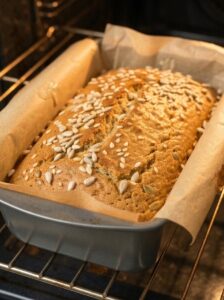
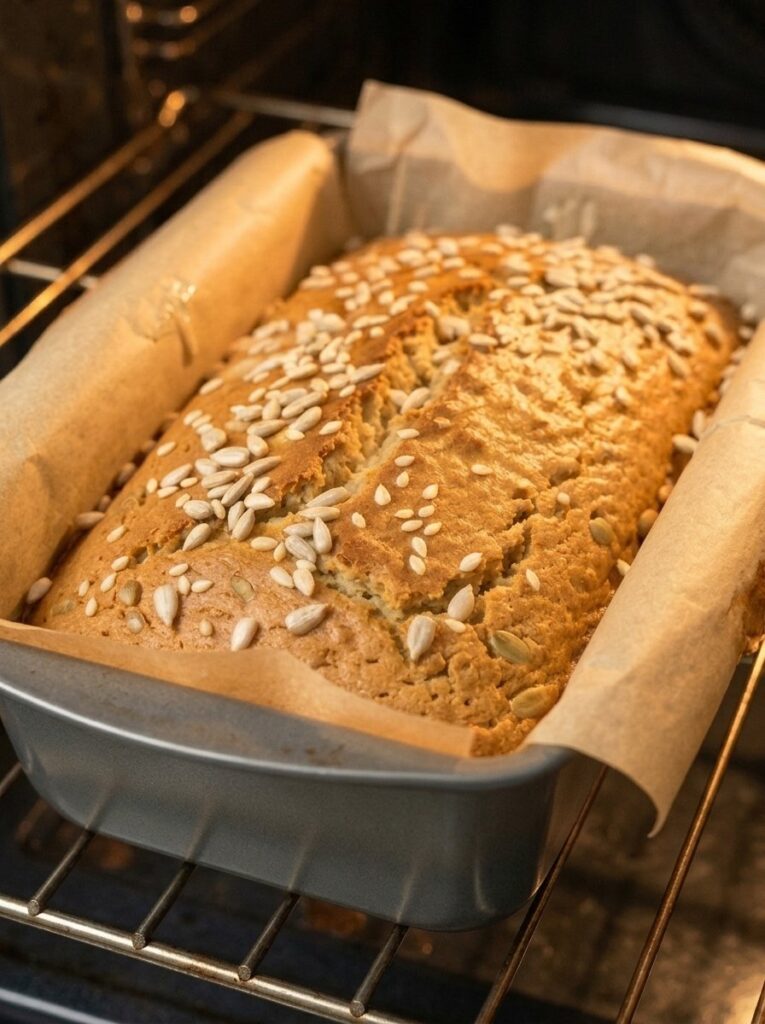
Place the pan on the middle rack of the preheated oven. Bake for 50–60 minutes, until the top is golden brown, the loaf feels firm, and a toothpick inserted into the center comes out clean or with a few moist crumbs.
If the top browns too quickly, loosely cover the loaf with aluminum foil during the final 10–15 minutes. If the center still feels soft or wet, keep baking for a few more minutes until it is fully set. Blender lentil bread has a naturally moist crumb, so check the middle carefully.
Step 7: Cool completely
Let the bread rest in the pan for 10–15 minutes. Then lift it out using the parchment overhang and move it to a wire rack. Allow it to cool for at least 1 hour before slicing. This resting time lets the interior set, which gives you firm, tender slices instead of a gummy texture. Slice with a sharp serrated knife.
Tips for the Best Blender Lentil Bread
Small details make a big difference with this loaf. Keep these tips in mind:
- Soak the lentils properly. At least 3–4 hours of soaking softens the lentils so they blend smoothly and give you a better texture.
- Drain thoroughly. Remove all excess soaking water before blending. Extra liquid is the most common cause of dense, gummy bread.
- Blend until completely smooth. A creamy batter with no visible whole lentils gives a more uniform crumb.
- Do not overblend after adding baking powder. Blend just long enough to incorporate it.
- Customize the seeds. Chia seeds, extra flaxseeds, or chopped walnuts all work well if you keep the overall proportions similar.
- Press the topping gently. Lightly pressing the seeds into the surface helps them stick.
- Check the center carefully. Because the crumb is naturally moist, give it enough time for the middle to set.
- Cool before slicing. Cutting into a hot loaf can make the slices gummy or cause them to fall apart.
Troubleshooting Common Problems
My bread is gummy in the middle. This usually comes from too much moisture, slicing too early, or underbaking. Drain the soaked lentils very well, bake until a toothpick comes out clean or with only a few moist crumbs, and let the loaf cool for at least an hour.
The loaf did not rise much. Check that your baking powder is fresh. Also avoid overblending once it has been added. Remember that this is a dense, hearty loaf, not an airy yeasted bread, so a modest rise is normal.
The top is browning too fast. Cover the loaf loosely with aluminum foil for the final 10–15 minutes of baking.
The batter looks gritty. The lentils probably needed more blending time or a longer soak. Pause to scrape down the sides and blend until the mixture is completely smooth.
The seeds fell off the top. Press them gently into the batter before baking so they adhere without sinking.
How to Serve Lentil Bread
This bread is flexible enough to fit into almost any meal. Here are some of the best ways to enjoy it:
- Toast slices and spread with butter, cream cheese, or hummus.
- Top with mashed avocado, a sprinkle of salt, and freshly cracked black pepper for avocado toast.
- Serve with scrambled or fried eggs for a satisfying breakfast.
- Make hearty sandwiches with turkey, cheese, tomatoes, lettuce, or cucumber.
- Pair it with vegetable soup, tomato soup, or a warm bowl of stew.
- Enjoy it with olive oil, balsamic vinegar, or your favorite savory dip.
- Toast slices and top with cottage cheese and fresh herbs for a nourishing snack.
Toasting is especially worthwhile. It crisps the edges and brings out the nutty flavor of the lentils and seeds.
How to Store Blender Lentil Bread
Because this bread is made from blended lentils and eggs and has a moist crumb, proper storage matters.
Refrigeration. Once completely cooled, store the bread in an airtight container in the refrigerator for up to 5 days. Refrigeration is recommended for this loaf.
Freezing. Slice the completely cooled loaf and place the slices in a freezer-safe bag or container. Freeze for up to 2 months. Separate the slices with parchment paper so you can remove just what you need.
Reheating. Toast refrigerated or thawed slices in a toaster, or warm them in a skillet over medium-low heat. You can also heat them in a 325°F (165°C) oven for a few minutes.
Room temperature. Avoid leaving the bread out for extended periods. Refrigerate it once it has cooled, within 2 hours of baking.
Recipe Details at a Glance
- Prep time: 15 minutes
- Soaking time: 3–4 hours (or overnight)
- Bake time: 50–60 minutes
- Cooling time: 1 hour 15 minutes
- Total time: Approximately 4 hours 20 minutes to 5 hours 30 minutes, including cooling (with a 3–4 hour soak)
- Yield: 1 loaf (approximately 10–12 slices)
- Pan size: 9 × 5-inch loaf pan
- Course: Breakfast, bread, snack
- Cuisine: Healthy homemade
- Difficulty: Easy
- Baking temperature: 350°F (175°C)
- Texture: Moist, tender, hearty interior with a lightly crisp, crunchy seeded crust
- Method: Blender bread, yeast-free, oven-baked
- Dietary notes: Naturally gluten-free when all ingredients are certified gluten-free
Most of the total time is hands-off. Active work takes about 15 minutes, and the rest is soaking, baking, and cooling.
Frequently Asked Questions
Can I make lentil bread without soaking the lentils?
Soaking is an important step in this recipe. It softens the lentils so they blend into a smooth, creamy batter. Skipping it is likely to leave a gritty texture, so plan to soak for at least 3–4 hours or overnight.
Do I need a high-speed blender?
A high-speed blender gives the smoothest result, and the recipe is written with one in mind. If your blender is less powerful, blend in stages, scrape down the sides often, and make sure no whole lentils remain before moving on.
Can I use other types of lentils?
Red lentils are recommended because they blend smoothly and have a mild flavor. Other varieties have firmer skins and a stronger taste, and they may change the texture of the loaf.
Is this bread yeast-free?
Yes. It rises with baking powder and apple cider vinegar, so there is no yeast, kneading, or proofing involved.
Is blender lentil bread gluten-free?
It contains no wheat flour, so it is naturally gluten-free when all of your ingredients, particularly the rolled oats, are certified gluten-free. Always check labels if gluten is a concern.
Can I make it without eggs?
The eggs are a key part of this recipe’s structure, and the instructions here are written for three large eggs. Egg-free versions would require a different formulation, so I would not recommend simply leaving them out.
How do I know when the bread is done?
Look for a golden brown top, a firm feel, and a toothpick that comes out clean or with a few moist crumbs. If the center still feels soft or wet, bake a few more minutes.
Why do I have to wait an hour before slicing?
Cooling lets the interior set. Slicing too soon can make the crumb gummy and cause slices to fall apart.
How long does it keep?
In an airtight container in the refrigerator, it keeps for up to 5 days. Sliced and frozen, it keeps for up to 2 months.
Can I add other seeds or nuts?
Yes. Chia seeds, extra flaxseeds, or chopped walnuts all work well. Try to keep the overall proportions reasonably similar so the batter stays the right consistency.
Final Thoughts
This simple blender lentil bread proves that wholesome homemade bread does not need to be complicated. With soaked red lentils, eggs, olive oil, and a crunchy mix of seeds and oats, you get a moist, nutty, protein-rich loaf from a single blender and a loaf pan. There is no yeast, no kneading, and no special skill involved.
Soak your lentils tonight, and you can have a golden, seeded loaf ready for tomorrow’s breakfast. Toast a slice, add your favorite toppings, and enjoy.
If you try the recipe, leave a comment and tell us which seeds you used and how you served it. And if you found this guide helpful, save it to Pinterest or share it with a friend who loves easy, healthy baking.
Print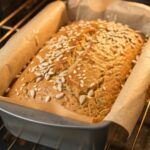
Simple Blender Lentil Bread
- Total Time: 5 hours 20 minutes to 6 hours 30 minutes
Ingredients
For the bread
- 300 g (1½ cups) dry red lentils
- 3 large eggs, at room temperature
- 120 ml (½ cup) water
- 60 ml (¼ cup) extra-virgin olive oil
- 1 tablespoon apple cider vinegar
- 2 teaspoons baking powder
- 1 teaspoon salt
- ½ teaspoon garlic powder (optional)
- ½ teaspoon dried oregano (optional)
For the seed and oat mix-in
- 2 tablespoons sunflower seeds
- 2 tablespoons pumpkin seeds
- 1 tablespoon sesame seeds
- 1 tablespoon ground flaxseeds
- 2 tablespoons rolled oats
For the topping
- 1 tablespoon sunflower seeds
- 1 tablespoon pumpkin seeds
- 1 tablespoon sesame seeds
- 1 teaspoon rolled oats
Instructions
Rinse the red lentils under cold running water until the water runs clear. Transfer them to a large bowl and cover with plenty of cool water, leaving at least 2 inches (5 cm) of water above the lentils to allow for expansion.
Let them soak for at least 3–4 hours, or overnight. Once softened, drain completely and rinse again. Let any excess water drain away before you blend. This matters, because too much moisture can make the finished bread dense or gummy.
Preheat your oven to 350°F (175°C). Line a 9 × 5-inch loaf pan with parchment paper, leaving some overhang along the sides so the loaf is easy to lift out later.
Add the drained lentils, eggs, water, olive oil, and apple cider vinegar to a high-speed blender. Blend for 1–2 minutes, stopping to scrape down the sides as needed, until the mixture is smooth and creamy with no visible whole lentils. A uniform batter gives you a more even crumb.
Add the baking powder, salt, garlic powder, and dried oregano (if using) to the blended mixture. Blend briefly, just until everything is evenly incorporated. Avoid overblending at this stage, since extended mixing after the baking powder goes in can reduce its leavening effect.
Pour the batter into a large mixing bowl. Add the sunflower seeds, pumpkin seeds, sesame seeds, ground flaxseeds, and rolled oats. Fold gently with a spatula until everything is evenly distributed. The mixture should be thick, moist, and easy to spread.
Pour the batter into the prepared pan and spread it evenly, smoothing the surface. Sprinkle the topping seeds and oats over the top. Gently press the larger seeds into the batter so they stay in place during baking without sinking too deeply.
Place the pan on the middle rack of the preheated oven. Bake for 50–60 minutes, until the top is golden brown, the loaf feels firm, and a toothpick inserted into the center comes out clean or with a few moist crumbs.
If the top browns too quickly, loosely cover the loaf with aluminum foil during the final 10–15 minutes. If the center still feels soft or wet, keep baking for a few more minutes until it is fully set. Blender lentil bread has a naturally moist crumb, so check the middle carefully.
Let the bread rest in the pan for 10–15 minutes. Then lift it out using the parchment overhang and move it to a wire rack. Allow it to cool for at least 1 hour before slicing. This resting time lets the interior set, which gives you firm, tender slices instead of a gummy texture. Slice with a sharp serrated knife.
- Prep Time: 3 hours 15 minutes to 4 hours 15 minutes
- Cook Time: 50–60 minutes