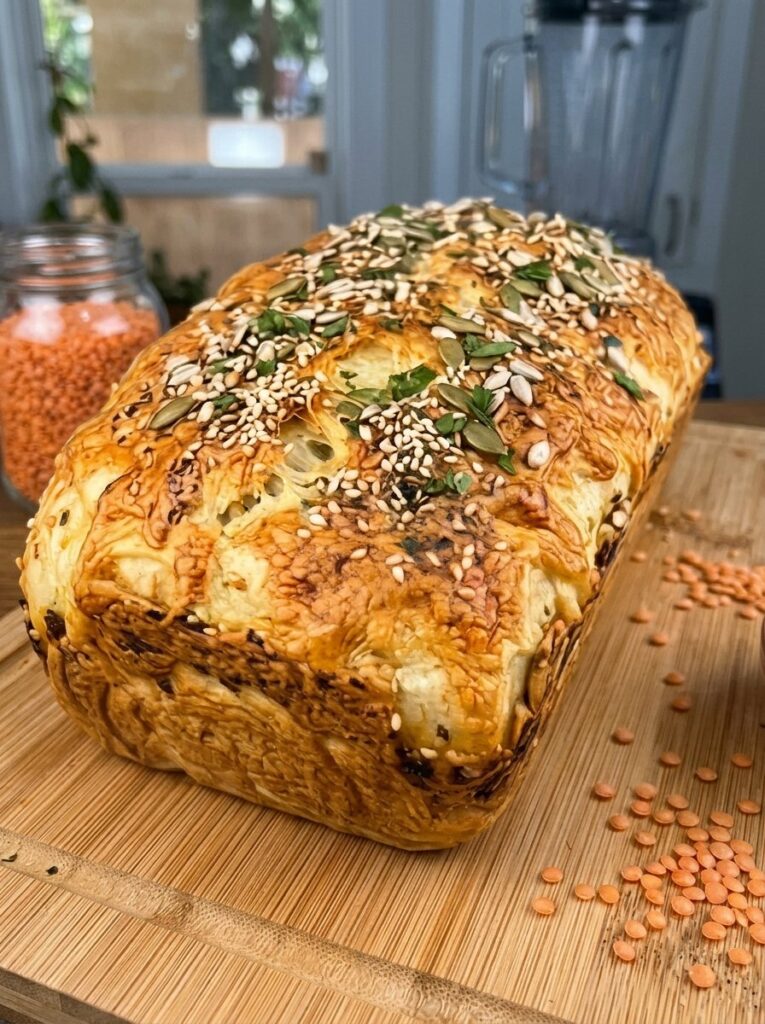
If you have ever wanted fresh homemade bread without the waiting, the kneading, or the worry about whether your yeast is alive, this recipe is for you. Simple blender lentil bread is a soft, hearty loaf made from soaked red lentils, blended into a smooth batter, poured into a pan, and baked until golden. There is no yeast, no dough to knead, and no shaping skill required. If you own a blender and a loaf pan, you can make it.
This red lentil bread has a golden crust, a tender interior, and a crunchy seeded topping that makes every slice look like it came from a bakery. It is perfect for breakfast toast, sandwiches, snack plates, or serving next to a warm bowl of soup. In this complete guide, you will find the full recipe, ingredient notes, step-by-step instructions, troubleshooting help, creative variations, serving ideas, and storage advice, so your first loaf turns out beautifully.
What Is Lentil Bread?
Lentil bread is a yeast-free loaf where legumes take the place of flour. Instead of building structure with gluten, the bread relies on blended lentils. When red lentils are soaked and blended with water, they turn into a thick, smooth batter. Baking powder gives the loaf a little lift, and the oven sets the batter into a firm, sliceable bread.
Red lentils are the best choice for this recipe for a few reasons. They are small, they soften quickly when soaked, and they blend into a very smooth batter compared with larger lentil varieties. They also have a mild, slightly sweet flavor that works well with both savory and lightly sweet toppings.
Because the bread is made from lentils rather than wheat flour, its texture is different from a traditional sandwich loaf. It is hearty, tender, and slightly dense, closer to a moist, sturdy quick bread than to a fluffy white loaf. That density is part of its charm: a single slice feels satisfying, and it holds up well to toppings like avocado, hummus, and cheese.
Why You Will Love This Simple Blender Lentil Bread
There are plenty of reasons this recipe has become a favorite for busy home cooks and curious bakers alike.
- No yeast required. You do not need to proof anything, wait for a rise, or hope the kitchen is warm enough.
- No kneading and no shaping. The batter is poured straight into the pan. It is one of the most beginner-friendly bread recipes you can make.
- Only a handful of ingredients. You need dry red lentils, water, baking powder, olive oil, salt, lemon juice, and mixed seeds. Most of these are likely already in your pantry.
- Made in a blender. Cleanup is easy, and the blender does the hard work of creating a smooth batter.
- Hearty and satisfying. Lentils bring a naturally wholesome, filling quality to every slice.
- Versatile. Enjoy it plain, toasted, or topped. It works for breakfast, lunch, snacks, and dinner sides.
- Freezer friendly. Slice the loaf, freeze it, and toast slices whenever you need them.
If you are looking for a simple homemade bread that does not depend on flour or yeast, this lentil loaf is a great place to start.
Simple Blender Lentil Bread Ingredients
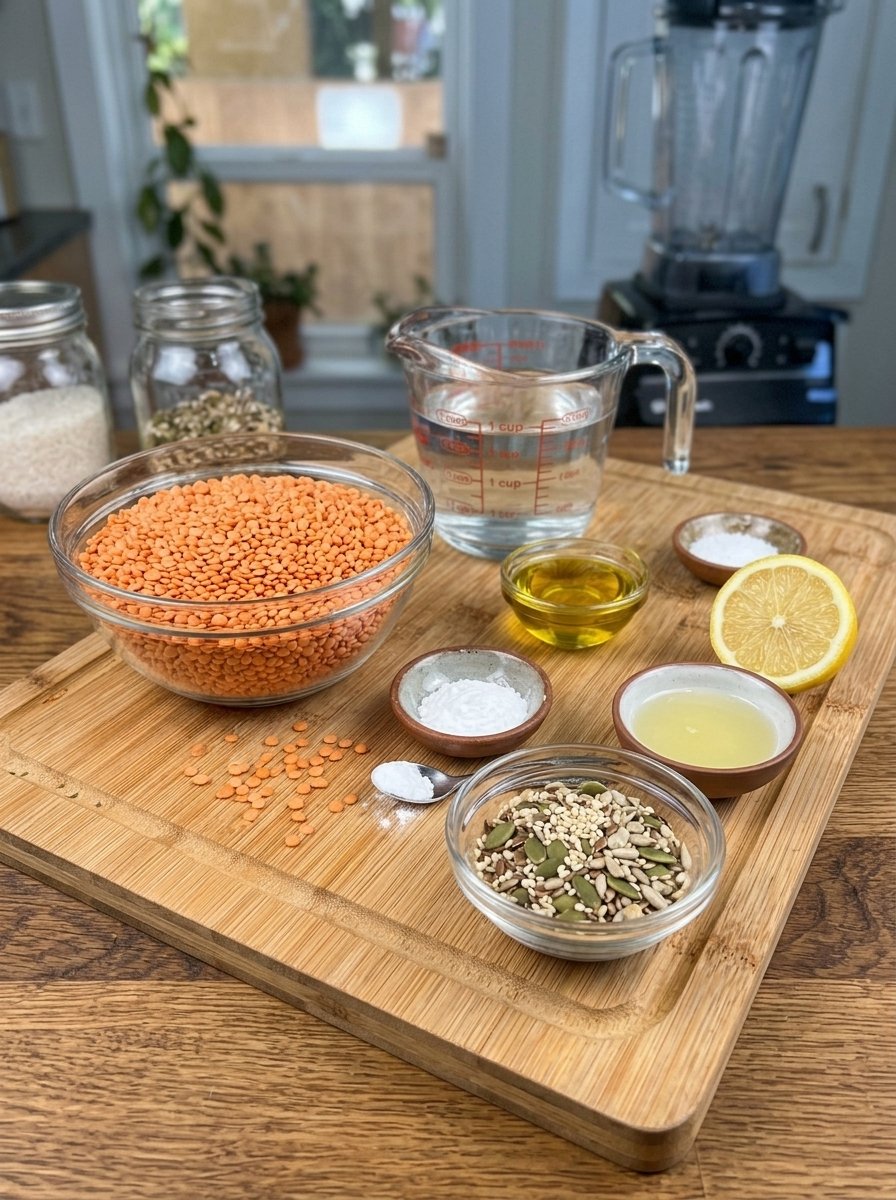
Here is everything you need to make one loaf, which yields roughly 8 to 10 slices.
- 2 cups (380 to 400 g) dry red lentils
- 1 cup (240 ml) water, plus extra for soaking
- 1 teaspoon baking powder
- 1 tablespoon olive oil
- 1 teaspoon salt
- 1 tablespoon lemon juice
- 2 tablespoons mixed seeds, such as sesame, sunflower, pumpkin, or flax seeds
Ingredient Notes
Dry red lentils. These are the foundation of the bread. Look for split red lentils, which are widely available in supermarkets, bulk bins, and international grocery stores. Rinse them before soaking to remove dust. Because they are sold dry, the weight can vary slightly by brand, which is why the recipe gives a range of 380 to 400 g.
Water. You will use water twice: generously for soaking the lentils, and then one cup of fresh water for blending. Using fresh water for the batter, rather than the soaking liquid, gives a better bread texture.
Baking powder. This is the only leavening agent in the recipe. It helps the loaf lift slightly so the interior is tender instead of heavy. Make sure your baking powder is fresh. If it has been sitting in the cupboard for a long time, replace it.
Olive oil. A tablespoon adds moisture and richness, and it helps the loaf release more easily from the pan if you use it to grease the pan as well.
Salt. Lentils taste flat without enough salt. One teaspoon seasons the whole loaf so it tastes like real bread instead of cooked lentil paste.
Lemon juice. A small amount of acidity brightens the flavor and balances the earthy taste of the lentils. Lime juice or a small splash of apple cider vinegar can work in a pinch.
Mixed seeds. Sesame, sunflower, pumpkin, and flax seeds all work. The seeds create a crunchy, attractive topping and add a pleasant nutty flavor. Use one kind or a combination of your favorites.
Equipment You Will Need
This recipe keeps the equipment list short.
- A blender (a high-speed blender gives the smoothest result, but a standard blender works if you scrape the sides)
- A large bowl for soaking
- A fine-mesh strainer or colander for draining
- A standard loaf pan
- Parchment paper or oil for the pan
- A spatula
- A wire rack for cooling
- A sharp serrated knife for slicing
How to Make Simple Blender Lentil Bread Step by Step
The whole process is straightforward. Most of the time is hands-off, spent soaking the lentils, baking the loaf, and letting it cool.
Step 1: Soak the Red Lentils
Place the dry red lentils in a large bowl and cover them generously with water. The lentils will absorb water and expand, so use more water than you think you need. Let them soak for at least 3 to 4 hours, or until they are softened. For convenience, you can soak them overnight in the refrigerator and bake the next morning.
Soaking is the most important step for texture. Softened lentils blend into a smooth batter, while under-soaked lentils can leave the bread gritty.
Step 2: Drain and Rinse
Drain the lentils thoroughly and rinse them under cool running water. Let the excess water drain away before blending. This keeps the batter from becoming too watery, which would affect how well the loaf sets in the oven.
Step 3: Blend the Ingredients
Transfer the soaked lentils to your blender. Add 1 cup of fresh water, the olive oil, lemon juice, salt, and baking powder. Blend until the mixture is as smooth as possible, stopping to scrape down the sides if necessary.
The finished batter should be thick but pourable. If your blender struggles to process it, add a very small splash of water, but only if it truly needs help. Too much water makes the loaf soft and damp in the center.
Step 4: Prepare the Loaf Pan
Preheat your oven to 350°F (175°C). Grease a standard loaf pan or line it with parchment paper. Pour the lentil batter into the pan and smooth the surface with a spatula.
Step 5: Add the Seeded Topping
Sprinkle the mixed seeds evenly over the top of the batter. Gently press them onto the surface so they stay in place during baking. You can use sesame, sunflower, pumpkin, or flax seeds, or a combination of whatever you have on hand.
Step 6: Bake Until Golden
Place the pan in the preheated oven and bake for approximately 50 to 60 minutes, until the top is golden and the loaf feels firm in the center. A toothpick inserted into the middle should come out without wet batter. If the center is still soft or damp, continue baking for a little longer.
Step 7: Cool Completely
Remove the loaf from the oven and let it rest in the pan for about 10 to 15 minutes. Carefully transfer it to a wire rack and allow it to cool completely before slicing. This step matters. The inside continues to firm up as it cools, and cutting too early can lead to gummy, crumbly slices.
Step 8: Slice, Toast, and Enjoy
Use a sharp serrated knife to cut the cooled loaf into slices. Enjoy the bread as it is, toast it until lightly crisp, or top it with avocado, hummus, cheese, or your favorite sandwich fillings.
Recipe Details at a Glance
- Prep time: 15 minutes
- Soaking time: 3 to 4 hours, or overnight
- Bake time: 50 to 60 minutes
- Cooling time: 45 to 60 minutes
- Total time: approximately 4 hours 15 minutes to 5 hours 15 minutes, excluding overnight soaking
- Yield: 1 loaf, approximately 8 to 10 slices
- Oven temperature: 350°F (175°C)
- Texture: hearty, tender, and slightly dense with a golden crust
- Topping: crunchy mixed seeds
- Difficulty: easy and beginner-friendly
Tips for the Best Simple Blender Lentil Bread
A few small habits make the difference between a good loaf and a great one.
Soak the lentils thoroughly. Soaking softens the lentils and helps them blend into a smooth batter. If you are short on time, make sure they are at least tender enough to squish easily between your fingers before you blend.
Drain before blending. Remove the soaking water and use fresh water for the batter. This gives a better bread texture and a cleaner flavor.
Blend until smooth. Scrape down the sides of the blender as needed to avoid gritty pieces. Take your time here. A smooth batter produces a more even, tender crumb.
Adjust the consistency carefully. The batter should be thick but pourable. Add a little water only if your blender needs help processing it. It is much easier to thin a batter that is too thick than to rescue one that is too watery.
Add seeds for crunch. Sprinkling mixed seeds over the top before baking adds texture and a beautiful finish. Press them in lightly so they do not fall off when you slice the loaf.
Cool before slicing. Lentil bread needs time to firm up, so let it cool completely for cleaner slices. This is the tip people most often skip, and it is the one that matters most.
Use a serrated knife. A sharp serrated knife glides through the crust without squashing the crumb.
Toast your slices. Fresh from the fridge, the bread is tender and soft. A quick trip to the toaster gives it a lightly crisp edge that makes sandwiches and toppings even better.
Troubleshooting Common Lentil Bread Problems
Even simple recipes can have hiccups. Here is how to fix the most common issues.
My bread is gummy or wet in the middle
This usually means the loaf needs more baking time, or the batter contained too much water. Continue baking until a toothpick comes out without wet batter, and make sure you drained the soaked lentils well. Also, resist the urge to slice the loaf while it is warm, because the interior is still setting.
My bread is gritty
Grittiness comes from lentils that were not soaked long enough or were not blended long enough. Soak for the full 3 to 4 hours, or overnight, and blend until the batter is as smooth as possible. Scrape down the sides of the blender so no lentils escape the blades.
My bread did not rise much
Lentil bread is naturally dense, so it will not puff like a yeasted loaf. If it seems especially flat, check the freshness of your baking powder and measure it accurately. Bake the batter soon after blending rather than letting it sit for a long time.
The top is browning too fast
If the top gets deep golden before the center is firm, loosely cover the pan with foil and keep baking. Ovens vary, so keep an eye on the loaf during the last 15 minutes.
The loaf is sticking to the pan
Line the pan with parchment paper, leaving a little overhang on the sides so you can lift the loaf out. If you grease the pan instead, make sure to coat the bottom and sides generously.
The bread tastes bland
Lentil bread depends on salt and acidity. Make sure you used the full teaspoon of salt and the tablespoon of lemon juice. Toasting the slices and adding flavorful toppings will also bring out the best taste.
Variations and Flavor Ideas
Once you have mastered the basic recipe, it is easy to make it your own. Keep additions modest so the batter does not become too wet or too heavy.
- Herb lentil bread: Blend in a small handful of fresh parsley or dill, or add a teaspoon of dried herbs such as oregano or thyme.
- Garlic and onion: Add a small amount of garlic powder or onion powder to the batter for a savory, sandwich-style loaf.
- Spiced lentil bread: A pinch of cumin, turmeric, or paprika adds warmth and color.
- Everything-seed topping: Use a mix of sesame, sunflower, pumpkin, and flax seeds for a bakery-style finish.
- Cheesy lentil bread: Sprinkle a little grated cheese over the top during the last 10 minutes of baking.
- Olive or sun-dried tomato loaf: Fold in a few chopped olives or sun-dried tomatoes after blending.
When testing a variation, change one thing at a time. That way, you will know exactly what worked and what you would like to adjust next time.
What to Serve With Lentil Bread
This bread is versatile enough to fit into any meal of the day.
- Avocado toast: Top a toasted slice with mashed avocado, lemon juice, and black pepper.
- Savory breakfast: Serve with scrambled eggs, sliced tomatoes, and fresh herbs.
- Hummus snack: Spread with creamy hummus and add cucumber or roasted peppers.
- Cheese toast: Add your favorite cheese and toast until warm and melty.
- Open-faced sandwiches: Layer with cottage cheese, cucumber, lettuce, or other fresh toppings.
- Soup companion: Serve alongside vegetable soup, lentil soup, or a hearty stew.
Because the bread is sturdy, it also works well for packed lunches. Spread your filling, close the sandwich, and it holds together nicely.
How to Store Lentil Bread
Proper storage keeps your loaf fresh and safe to eat.
- Refrigerator: Once completely cooled, store the bread in an airtight container in the refrigerator for up to 4 days.
- Freezer: Slice the loaf and separate the slices with parchment paper. Freeze in a sealed freezer-safe bag for up to 2 months.
- Reheating: Toast slices straight from the refrigerator or freezer until warmed through and lightly crisp.
- Food safety: Because the bread is moist and made from soaked lentils, refrigerate it within 2 hours of baking rather than leaving it at room temperature for extended periods.
Slicing before freezing is a real time saver. You can pull out exactly the number of slices you need, toast them, and enjoy fresh-tasting bread in minutes.
Is Lentil Bread a Healthy Choice?
Lentils are a pulse, a plant-based food known for providing protein and fiber, and bread made from them is naturally built around those ingredients rather than refined wheat flour. Many people enjoy lentil bread as a hearty alternative to conventional loaves, and it contains no yeast. The seeds on top add extra crunch and a little more nutrition.
This recipe does not use wheat flour, but it is important to be careful if you need to avoid gluten for medical reasons. Lentils and seeds can be processed in facilities that also handle gluten-containing grains, so check package labels and look for products labeled gluten-free if that applies to you. If you have allergies, especially to seeds, or follow a special medical diet, talk with a qualified health professional before adding new foods to your routine.
Frequently Asked Questions
Do I really need to soak the lentils?
Yes. Soaking is what softens the lentils enough to blend into a smooth batter. Skipping it can lead to a gritty texture and an uneven bake. Plan for at least 3 to 4 hours, or soak them overnight in the refrigerator.
Can I use green or brown lentils instead of red lentils?
This recipe was developed with red lentils, which soften quickly and blend smoothly. Green or brown lentils are firmer and may produce a grittier batter and a different texture, so red lentils are strongly recommended for best results.
Does lentil bread taste like lentils?
It has a mild, earthy flavor that is pleasant and slightly nutty, especially when toasted. The salt, lemon juice, and seed topping help it taste like a savory bread rather than a bowl of lentils. Toppings like avocado, cheese, or hummus balance the flavor even further.
Can I make lentil bread without baking powder?
Baking powder gives the loaf a little lift and a tender crumb. You can bake it without, but the bread will be denser. For the best texture, use fresh baking powder.
How do I know when the bread is done?
The top should be golden and the loaf should feel firm in the center. Insert a toothpick into the middle. It should come out without wet batter. If the center is still soft or damp, keep baking for a little longer.
Why do I have to wait for it to cool?
The inside of the loaf continues to firm up as it cools. If you slice it while warm, the crumb can be gummy and the slices can fall apart. Letting it cool completely gives you clean, neat slices.
Can I freeze lentil bread?
Yes. Slice the cooled loaf, separate the slices with parchment paper, and freeze them in a sealed freezer-safe bag for up to 2 months. Toast slices straight from the freezer.
How long does lentil bread last in the fridge?
Stored in an airtight container, the bread keeps for up to 4 days in the refrigerator.
Is this bread good for sandwiches?
Yes. The loaf is sturdy enough for open-faced and closed sandwiches. Toasting the slices makes them even more reliable for fillings like cheese, cucumber, lettuce, or cottage cheese.
Can I use a different seed or skip the seeds?
Absolutely. Sesame, sunflower, pumpkin, and flax all work well, and you can mix them. If you prefer, you can leave the seeds off entirely, though you will miss the crunchy topping.
Final Thoughts
Simple blender lentil bread proves that great homemade bread does not need yeast, flour, or hours of kneading. With red lentils, a blender, and a loaf pan, you can create a golden, hearty loaf with a tender interior and a crunchy seeded top. Soak the lentils well, blend until smooth, bake until the center is firm, and be patient while the loaf cools. Those four habits are the secret to success.
Print
Simple Blender Lentil Bread
Ingredients
Here is everything you need to make one loaf, which yields roughly 8 to 10 slices.
- 2 cups (380 to 400 g) dry red lentils
- 1 cup (240 ml) water, plus extra for soaking
- 1 teaspoon baking powder
- 1 tablespoon olive oil
- 1 teaspoon salt
- 1 tablespoon lemon juice
- 2 tablespoons mixed seeds, such as sesame, sunflower, pumpkin, or flax seeds
Ingredient Notes
Dry red lentils. These are the foundation of the bread. Look for split red lentils, which are widely available in supermarkets, bulk bins, and international grocery stores. Rinse them before soaking to remove dust. Because they are sold dry, the weight can vary slightly by brand, which is why the recipe gives a range of 380 to 400 g.
Water. You will use water twice: generously for soaking the lentils, and then one cup of fresh water for blending. Using fresh water for the batter, rather than the soaking liquid, gives a better bread texture.
Baking powder. This is the only leavening agent in the recipe. It helps the loaf lift slightly so the interior is tender instead of heavy. Make sure your baking powder is fresh. If it has been sitting in the cupboard for a long time, replace it.
Olive oil. A tablespoon adds moisture and richness, and it helps the loaf release more easily from the pan if you use it to grease the pan as well.
Salt. Lentils taste flat without enough salt. One teaspoon seasons the whole loaf so it tastes like real bread instead of cooked lentil paste.
Lemon juice. A small amount of acidity brightens the flavor and balances the earthy taste of the lentils. Lime juice or a small splash of apple cider vinegar can work in a pinch.
Mixed seeds. Sesame, sunflower, pumpkin, and flax seeds all work. The seeds create a crunchy, attractive topping and add a pleasant nutty flavor. Use one kind or a combination of your favorites.
Instructions
The whole process is straightforward. Most of the time is hands-off, spent soaking the lentils, baking the loaf, and letting it cool.
Place the dry red lentils in a large bowl and cover them generously with water. The lentils will absorb water and expand, so use more water than you think you need. Let them soak for at least 3 to 4 hours, or until they are softened. For convenience, you can soak them overnight in the refrigerator and bake the next morning.
Soaking is the most important step for texture. Softened lentils blend into a smooth batter, while under-soaked lentils can leave the bread gritty.
Drain the lentils thoroughly and rinse them under cool running water. Let the excess water drain away before blending. This keeps the batter from becoming too watery, which would affect how well the loaf sets in the oven.
Transfer the soaked lentils to your blender. Add 1 cup of fresh water, the olive oil, lemon juice, salt, and baking powder. Blend until the mixture is as smooth as possible, stopping to scrape down the sides if necessary.
The finished batter should be thick but pourable. If your blender struggles to process it, add a very small splash of water, but only if it truly needs help. Too much water makes the loaf soft and damp in the center.
Preheat your oven to 350°F (175°C). Grease a standard loaf pan or line it with parchment paper. Pour the lentil batter into the pan and smooth the surface with a spatula.
Sprinkle the mixed seeds evenly over the top of the batter. Gently press them onto the surface so they stay in place during baking. You can use sesame, sunflower, pumpkin, or flax seeds, or a combination of whatever you have on hand.
Place the pan in the preheated oven and bake for approximately 50 to 60 minutes, until the top is golden and the loaf feels firm in the center. A toothpick inserted into the middle should come out without wet batter. If the center is still soft or damp, continue baking for a little longer.
Remove the loaf from the oven and let it rest in the pan for about 10 to 15 minutes. Carefully transfer it to a wire rack and allow it to cool completely before slicing. This step matters. The inside continues to firm up as it cools, and cutting too early can lead to gummy, crumbly slices.
Use a sharp serrated knife to cut the cooled loaf into slices. Enjoy the bread as it is, toast it until lightly crisp, or top it with avocado, hummus, cheese, or your favorite sandwich fillings.