4-Ingredient High-Protein Cottage Cheese English Muffins
If you’ve been looking for a breakfast bread that is easy, filling, and doesn’t require yeast or hours of waiting, these cottage cheese English muffins are worth trying. They’re soft and fluffy inside, lightly golden outside, and turn wonderfully crisp when toasted. They need only four simple ingredients and a skillet, and they work for everything from a quick butter-and-jam breakfast to a loaded egg sandwich.
In this guide you’ll find the full recipe, step-by-step instructions, troubleshooting advice, serving ideas, storage tips, and answers to the most common questions about making English muffins with cottage cheese.
Why You’ll Love These Cottage Cheese English Muffins
Traditional English muffins are a project. You mix a yeasty dough, wait for it to rise, shape it, wait again, and then cook it slowly on a griddle. These muffins skip the waiting while keeping the nooks, the tender crumb, and the toasty bite.
- Only four ingredients. Cottage cheese, self-rising flour, one egg, and a little olive oil or melted butter. That’s the whole shopping list.
- High in protein. Cottage cheese and egg make these muffins more filling than a typical bread product, so they’re a smart base for a breakfast that keeps you satisfied.
- No yeast and no rising time. The self-rising flour does the leavening, so you can go from bowl to plate in about 35 to 45 minutes.
- No oven required. Everything cooks in a skillet on the stovetop, which keeps your kitchen cool and cleanup minimal.
- Freezer-friendly. Make a batch on the weekend and toast them straight from the freezer all week.
- Endlessly versatile. Sweet or savory, plain or stuffed, they adapt to whatever you’re craving.
Ingredients You’ll Need
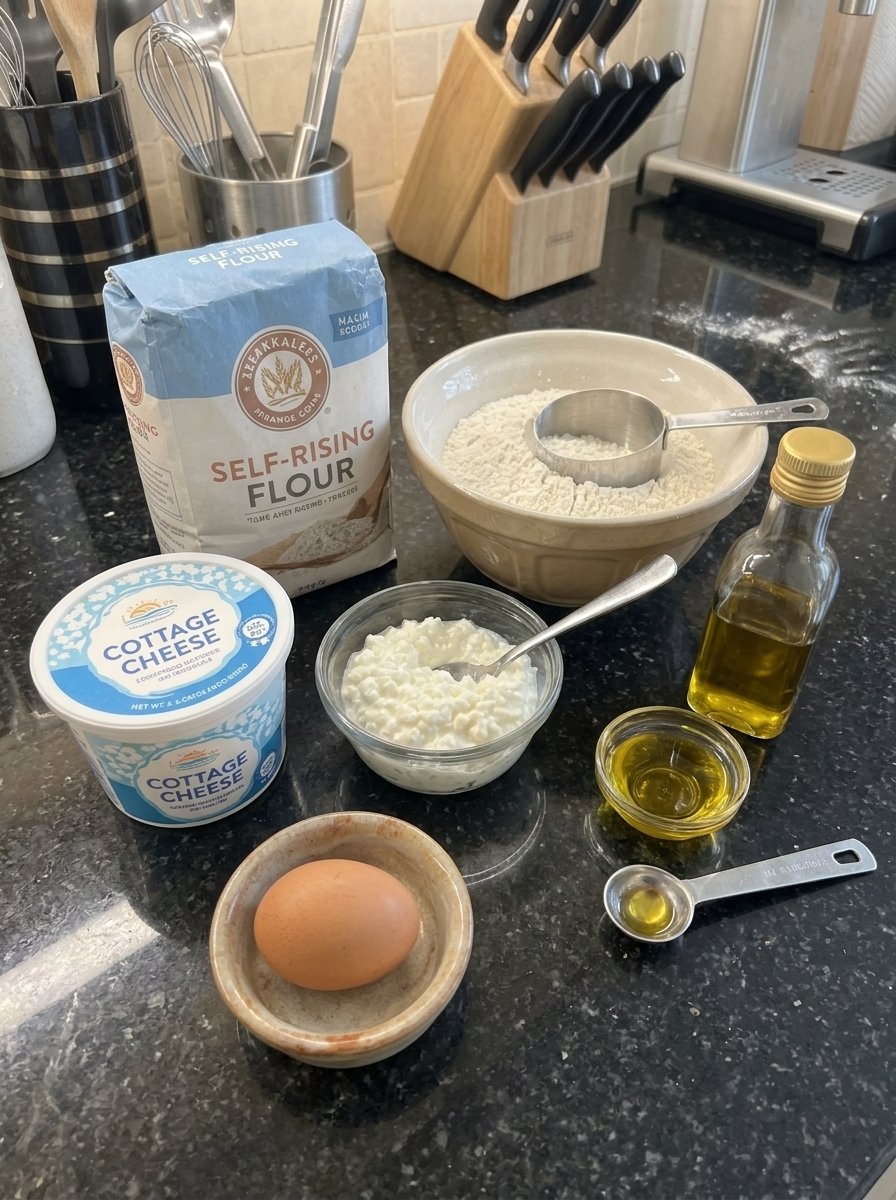
Here’s everything you need for 6 to 8 English muffins:
- 1 cup (225 g) cottage cheese
- 2 cups (240 g) self-rising flour
- 1 large egg
- 1 tablespoon olive oil or melted butter
You’ll also want a little extra flour for dusting your hands and work surface, and a bit of oil or butter for greasing the skillet.
A Closer Look at Each Ingredient
Cottage cheese. This is the star of the recipe. It adds moisture, a gentle tang, and a good dose of protein. Because cottage cheese varies by brand, texture matters here. Thick, creamy cottage cheese gives the most manageable dough. If yours is watery, drain off the excess liquid before you start. Small-curd and large-curd both work. If you prefer a more uniform crumb with no visible curds, blend the cottage cheese until creamy first.
Self-rising flour. Self-rising flour is all-purpose flour that already contains baking powder and salt. That’s what lets these muffins puff up without yeast. Measure it carefully, since too much flour is the fastest way to end up with dense muffins.
Egg. The egg binds the dough and adds richness and structure, helping the muffins hold together while they cook through in the center.
Olive oil or melted butter. Either works. Olive oil gives a lightly fruity, savory character, while melted butter adds a buttery flavor that suits sweet toppings and classic breakfast sandwiches.
Quick Recipe Details
- Prep time: 15 minutes
- Cooking time: 12 to 16 minutes per batch
- Cooling time: 5 to 10 minutes
- Total time: approximately 35 to 45 minutes
- Yield: 6 to 8 English muffins
- Difficulty: Easy
- Cooking method: Skillet
- Texture: Soft, fluffy center with a lightly golden exterior that crisps when toasted
- Flavor: Mild, slightly tangy, and buttery, with a satisfying cottage cheese richness
How to Make Cottage Cheese English Muffins (Step by Step)
Step 1: Prepare the Cottage Cheese
Place the cottage cheese in a mixing bowl. If you want a smoother dough and a more even crumb, blend it briefly until creamy first. Add the egg and the olive oil or melted butter, then whisk until the mixture is well combined and looks mostly smooth.
Tip: If your cottage cheese looks very wet, drain it before measuring. Extra liquid makes the dough sticky and tempts you to add too much flour later.
Step 2: Add the Self-Rising Flour
Add the self-rising flour to the cottage cheese mixture. Stir with a spoon or spatula until a soft dough begins to form.
The dough should be slightly tacky but manageable. If it’s extremely sticky, lightly flour your hands and work surface rather than adding a lot of extra flour to the dough itself. Too much additional flour can make the muffins dense.
Step 3: Knead Gently and Shape
Transfer the dough to a lightly floured surface. Knead gently for about 30 to 60 seconds, just until it comes together smoothly. This isn’t a bread dough that needs developing, so resist the urge to knead longer.
Pat the dough into a circle about 2 cm (¾ inch) thick. Use a round biscuit cutter or the rim of a glass to cut out 6 to 8 muffins, depending on the size you like. Gather the scraps gently and reshape them into additional muffins without repeatedly kneading the dough.
Tip: Keep the muffins an even thickness so they cook at the same rate and don’t brown too much on the outside before the center sets.
Step 4: Prepare the Skillet
Heat a nonstick skillet or heavy-bottomed frying pan over medium-low heat. Lightly grease it with a little oil or butter. Let the pan warm evenly before adding the muffins.
Moderate heat is important. Because these muffins are fairly thick, the outsides can brown quickly while the centers are still doughy if the pan is too hot.
Step 5: Cook the English Muffins
Place the muffins in the skillet, leaving space between them. Cover with a lid and cook for approximately 5 to 7 minutes on the first side, until the bottoms are golden.
Flip carefully and cook for another 5 to 7 minutes, keeping the heat moderate. If your muffins are on the thick side, reduce the heat slightly and cook a little longer so the centers have time to set.
The muffins should be golden on both sides and cooked through in the middle. If you’re unsure, check the center of one muffin before removing the batch from the pan.
Step 6: Cool and Split
Transfer the cooked muffins to a wire rack and let them cool for 5 to 10 minutes. Cooling lets the interior finish setting and makes splitting much easier.
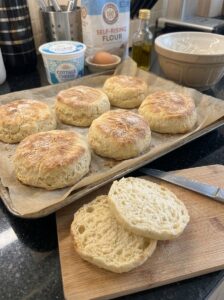
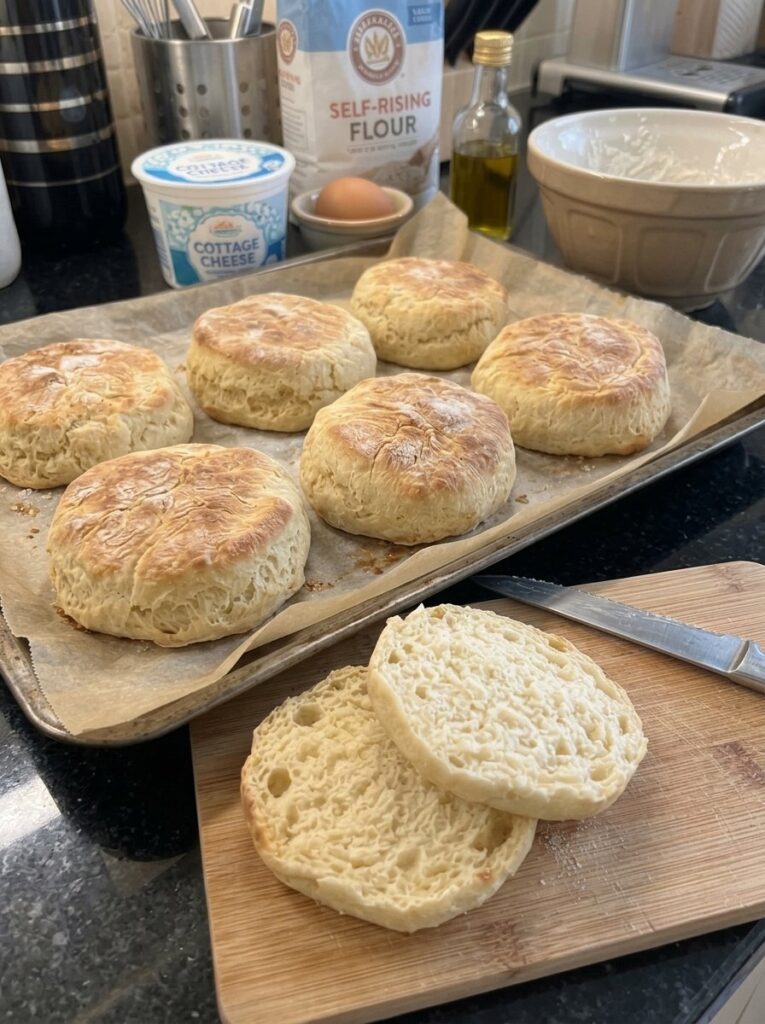
Once they’ve cooled slightly, split them horizontally with a fork for a traditional English muffin texture (those craggy surfaces are what catch melted butter), or use a serrated knife for neat, even halves.
Toast the halves in a toaster or dry skillet until the edges are crisp and lightly golden. Serve warm with your favorite toppings.
Tips for the Best Cottage Cheese English Muffins
A few small habits make the difference between good muffins and great ones:
- Use thick cottage cheese. Drain off excess liquid if needed so the dough stays manageable.
- Blend for a smoother texture. If you prefer a uniform crumb, blend the cottage cheese until creamy before mixing.
- Avoid overworking the dough. Mix only until the ingredients come together. Overworking can make the muffins tougher rather than soft and tender.
- Dust, don’t dump. The dough may feel slightly sticky, so dust your hands and surface with a little flour as needed instead of working in lots of extra flour.
- Shape evenly. Muffins of similar thickness cook evenly and avoid over-browning.
- Keep the heat at medium-low. English muffins need enough time to cook through without burning on the outside.
- Toast before serving. Splitting and toasting gives you a crisp exterior and a warm, fluffy center. This step really transforms the texture.
Troubleshooting Common Problems
My dough is too sticky. Cottage cheese brands differ in moisture. Drain excess liquid next time, and for now dust your hands and surface lightly with flour. Avoid adding large amounts of flour to the dough itself.
The outsides browned but the centers are doughy. The heat was likely too high, or the muffins were cut too thick. Lower the heat to medium-low, keep the lid on, and cook a bit longer. Aim for muffins about 2 cm (¾ inch) thick.
My muffins turned out dense. This usually comes from overworking the dough or adding too much extra flour. Knead for only 30 to 60 seconds and measure the flour carefully.
They’re soggy after storing. Condensation is the culprit. Always let the muffins cool completely before sealing them in a container.
Flavor Variations to Try
The base recipe is mild and slightly tangy, which makes it a good blank canvas. Here are some ideas you can try. Add mix-ins gently and avoid overworking the dough.
- Everything-style: Sprinkle the tops with seeds or seasoning before cooking.
- Herb and cheese: Fold in chopped herbs and a little shredded cheese for a savory muffin.
- Cinnamon-sweet: Add a pinch of cinnamon for a breakfast muffin that pairs well with butter and honey.
Keep in mind that heavy or wet add-ins can change the dough’s texture, so add them in moderation.
Serving Ideas
Because these muffins are mild, they go with almost anything.
- Classic breakfast: Spread with butter and your favorite jam or honey.
- Egg sandwiches: Fill with scrambled or fried eggs and a slice of cheese for a hearty, portable breakfast.
- Avocado toast: Top toasted halves with mashed avocado, black pepper, and a squeeze of lemon.
- High-protein breakfast: Pair with Greek yogurt, eggs, or smoked salmon.
- Savory lunch: Add turkey, chicken, cheese, lettuce, and tomato for a quick sandwich.
- Pizza-style muffins: Add a little tomato sauce, mozzarella, and herbs, then toast until the cheese melts.
How to Store Cottage Cheese English Muffins
- Room temperature: Store fully cooled muffins in an airtight container for up to 1 day.
- Refrigerator: Keep in an airtight container for up to 4 days.
- Freezer: Split the cooled muffins and freeze them in a sealed freezer-safe bag for up to 2 months.
- Reheating: Toast refrigerated or thawed muffins until warm and crisp.
- For best texture: Always let the muffins cool before storing to prevent condensation from making them soggy.
Because the muffins contain cottage cheese and egg, the refrigerator is the best place for anything you won’t eat within a day.
Meal Prep with Cottage Cheese English Muffins
These muffins are a great fit for weekly meal prep. Cook a full batch on Sunday, let them cool completely, split them, and freeze them in a sealed bag. On busy mornings, pop a split muffin straight into the toaster and top it however you like.
You can also build breakfast sandwiches ahead of time by pairing toasted muffins with cooked eggs and cheese. Having a protein-rich base on hand makes it much easier to put together a filling breakfast in a few minutes.
Why Cottage Cheese Works So Well in Baking
Cottage cheese is often thought of as a side dish or snack, but it’s an excellent baking ingredient. It brings moisture, which keeps baked goods tender, and a mild tang that adds depth without overpowering. It also contributes protein, which is why recipes like these muffins feel more substantial than ordinary bread.
When blended, cottage cheese becomes creamy and blends invisibly into batters and doughs. When left unblended, it leaves tiny pockets of richness throughout the crumb. Either approach works here, so choose based on the texture you prefer.
Frequently Asked Questions
Do I need yeast to make these English muffins?
No. Self-rising flour contains baking powder, which provides the lift. There is no rising time, which is why the whole recipe takes only 35 to 45 minutes.
Can I use regular all-purpose flour instead of self-rising flour?
This recipe is written for self-rising flour, which already contains the leavening and salt. If you only have all-purpose flour, you would need to add baking powder and salt yourself, and results may vary from the original recipe.
Should I blend the cottage cheese?
It’s optional. Blending gives a smoother dough and a more uniform crumb. Leaving it unblended is fine if you don’t mind a slightly more rustic texture.
What kind of cottage cheese works best?
Thick cottage cheese works best. If yours has a lot of liquid, drain off the excess so the dough is easier to handle.
Can I cook them in the oven instead?
This recipe is developed for the stovetop. Skillet cooking, with the lid on and medium-low heat, gives the English muffin–style exterior and lets the centers cook gently.
How do I know when they’re done?
The muffins should be golden on both sides and cooked through in the middle. If you’re not sure, check the center of one before removing the whole batch from the pan.
How do I get that classic English muffin texture?
Split the cooled muffins with a fork rather than a knife. This creates the rough, craggy surfaces that catch butter. Then toast them until crisp.
Why do I need to let them cool before splitting?
Cooling allows the inside to finish setting. Splitting too soon can tear the muffin and leave the center gummy.
How long do they keep?
Up to 1 day at room temperature, up to 4 days in the refrigerator, and up to 2 months in the freezer.
Can I make them ahead of time?
Yes. They freeze very well. Split them after cooling, freeze them in a sealed bag, and toast straight from the freezer or after thawing.
How many muffins does the recipe make?
About 6 to 8, depending on the size of your cutter.
Final Thoughts
Cottage cheese English muffins prove that a great breakfast bread doesn’t need a long ingredient list or a complicated process. With four simple ingredients, one skillet, and about 35 to 45 minutes, you get muffins that are soft and fluffy inside, golden outside, and crisp when toasted. They’re high in protein, easy to batch and freeze, and flexible enough for sweet or savory toppings.
Keep the heat moderate, handle the dough gently, let the muffins cool, and always toast before serving. Once you have the routine down, this recipe will likely become a staple in your weekly rotation.
Print
4-Ingredient High-Protein Cottage Cheese English Muffins
Ingredients
Here’s everything you need for 6 to 8 English muffins:
- 1 cup (225 g) cottage cheese
- 2 cups (240 g) self-rising flour
- 1 large egg
- 1 tablespoon olive oil or melted butter
You’ll also want a little extra flour for dusting your hands and work surface, and a bit of oil or butter for greasing the skillet.
A Closer Look at Each Ingredient
Cottage cheese. This is the star of the recipe. It adds moisture, a gentle tang, and a good dose of protein. Because cottage cheese varies by brand, texture matters here. Thick, creamy cottage cheese gives the most manageable dough. If yours is watery, drain off the excess liquid before you start. Small-curd and large-curd both work. If you prefer a more uniform crumb with no visible curds, blend the cottage cheese until creamy first.
Self-rising flour. Self-rising flour is all-purpose flour that already contains baking powder and salt. That’s what lets these muffins puff up without yeast. Measure it carefully, since too much flour is the fastest way to end up with dense muffins.
Egg. The egg binds the dough and adds richness and structure, helping the muffins hold together while they cook through in the center.
Olive oil or melted butter. Either works. Olive oil gives a lightly fruity, savory character, while melted butter adds a buttery flavor that suits sweet toppings and classic breakfast sandwiches.
Instructions
Place the cottage cheese in a mixing bowl. If you want a smoother dough and a more even crumb, blend it briefly until creamy first. Add the egg and the olive oil or melted butter, then whisk until the mixture is well combined and looks mostly smooth.
Tip: If your cottage cheese looks very wet, drain it before measuring. Extra liquid makes the dough sticky and tempts you to add too much flour later.
Add the self-rising flour to the cottage cheese mixture. Stir with a spoon or spatula until a soft dough begins to form.
The dough should be slightly tacky but manageable. If it’s extremely sticky, lightly flour your hands and work surface rather than adding a lot of extra flour to the dough itself. Too much additional flour can make the muffins dense.
Transfer the dough to a lightly floured surface. Knead gently for about 30 to 60 seconds, just until it comes together smoothly. This isn’t a bread dough that needs developing, so resist the urge to knead longer.
Pat the dough into a circle about 2 cm (¾ inch) thick. Use a round biscuit cutter or the rim of a glass to cut out 6 to 8 muffins, depending on the size you like. Gather the scraps gently and reshape them into additional muffins without repeatedly kneading the dough.
Tip: Keep the muffins an even thickness so they cook at the same rate and don’t brown too much on the outside before the center sets.
Heat a nonstick skillet or heavy-bottomed frying pan over medium-low heat. Lightly grease it with a little oil or butter. Let the pan warm evenly before adding the muffins.
Moderate heat is important. Because these muffins are fairly thick, the outsides can brown quickly while the centers are still doughy if the pan is too hot.
Place the muffins in the skillet, leaving space between them. Cover with a lid and cook for approximately 5 to 7 minutes on the first side, until the bottoms are golden.
Flip carefully and cook for another 5 to 7 minutes, keeping the heat moderate. If your muffins are on the thick side, reduce the heat slightly and cook a little longer so the centers have time to set.
The muffins should be golden on both sides and cooked through in the middle. If you’re unsure, check the center of one muffin before removing the batch from the pan.
Transfer the cooked muffins to a wire rack and let them cool for 5 to 10 minutes. Cooling lets the interior finish setting and makes splitting much easier.
Once they’ve cooled slightly, split them horizontally with a fork for a traditional English muffin texture (those craggy surfaces are what catch melted butter), or use a serrated knife for neat, even halves.
Toast the halves in a toaster or dry skillet until the edges are crisp and lightly golden. Serve warm with your favorite toppings.